
BRET Modern methods in Language Teaching Approaches used
BRET Modern methods in Language Teaching
Approaches used • • Communicative Approach Lexical Approach Task Based Approach Blended learning Approach
Methods used • PPP (Presentation, Practice, Production) • Total Physical Response • Guided Discovery • Test – Teach – Test
Communicative Approach • Meaningful and authentic language use (often information gap) • Learners interact with each other (pair and group work, mingles) • Emphasis on completing task • Teacher provides feedback
Communicative Approach: example • Talk to different people and find out: Name, Job, one interest • There’s an info gap here. You talked to different people.

Lexical Approach • Language isn’t divided into grammar and vocabulary. It consists of ‘chunks’. • More attention to: lexis, listening and reading, L 1/L 2 comparisons • Less attention to: sentence grammar, talking in L 2 for sake of it
Lexical Approach: example • Read the text: I get up at 7 am. I wash my face and then get dressed. After that I have breakfast and read the newspaper. • Find word partnerships in the text.
Task Based Approach • Focuses on students doing a task – fluency based • Students use language for a particular outcome • Real life language, meaning is important • Students generate language • Get feedback (for accuracy)
Task Based Approach: example • (see Cutting Edge Int p 12 -13) • Lead-in: listening or reading which uses possible language students could use in the task • Students are given task. Teacher supports. • Students do task • Students report back to class • Language feedback
Blended Learning Approach • Two facets to learning programme: 1. Face-to-face with teacher 2. Computer-based programme • The two facets support each other
PPP • Presentation: language is presented in some way in context (situation, dialogue, reading. . ) and teacher shows form and meaning • Practice: students produce the language through controlled exercises • Production: freer practice of the language presented. • Useful for introducing language at lower levels or for language you think will be new
PPP: example
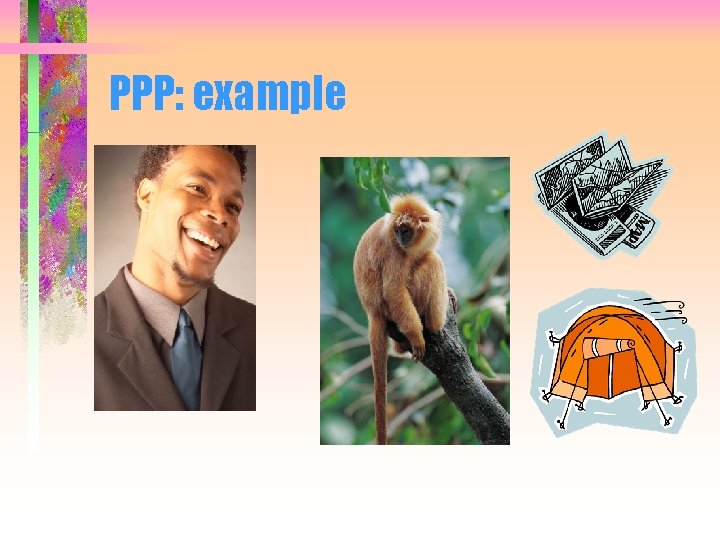
PPP: example (continued) • • Andy didn’t take any of these things with him What do you think of Andy? Elicit ideas “He should have taken a map”. Elicit more examples Controlled practice – gap fill Freer practice – Andy talking with rescue team
Total Physical Response • Students are exposed to language before they are expected to produce it. • Students learn language through listening and responding • Limited - useful for ‘action’ verbs
TPR: example • Teacher asks students to put objects in different places to teach/reinforce Prepositions of Place
Guided Discovery • Students are exposed to language through a reading or listening text • Students answer questions about the text which lead them to ‘discover’ the rules of the language • Good for higher levels
Guided Dicovery: example • • (see Cutting Edge Int p 18) Lead-in: to get students interested Students listen to song and fill in gaps Students answer the questions about the grammar • Follow up practice
Test – Teach - Test • Test: Students are given an exercise/activity in which they could produce the TL structure • Teacher monitors and listens • Teach: Teacher ‘teaches’ as necessary • Test: Students are given another exercise/activity
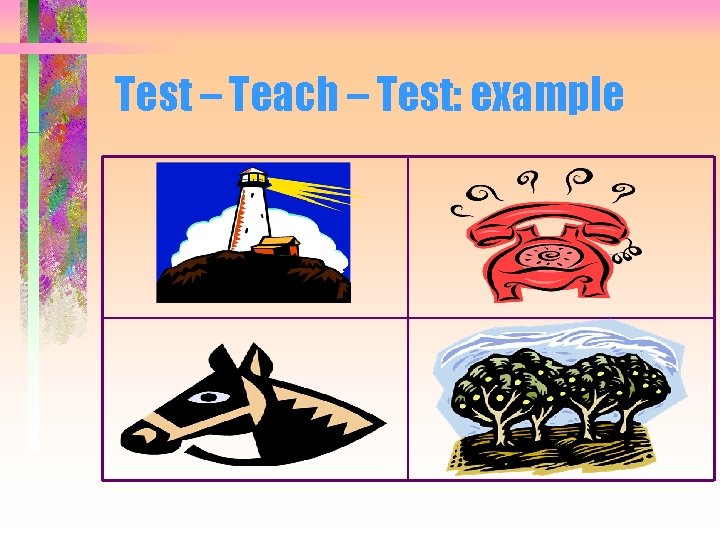
Test – Teach – Test: example
An Eclectic Approach • Most teachers use a combination of approaches and methods • Why? To create variety and interest in the learning programme and to tailor the programme for the students. • How to decide? Level, students’ interests, lesson aim, learning styles
- Slides: 20