
Breeds and Life Cycles of Swine Life Cycle
Breeds and Life Cycles of Swine Life Cycle - History and General Production of Swine

Swine Genealogy: • Genus and species: Sus scrofa • Sub-species 1: domesticus – European breeds, such as Hampshire • Sub-species 2: indicus – Asian breeds, such as Meishan • Common term for hogs: Porcine
Historical Perspectives: • Domesticated about 5000 years ago • China produces nearly one-half of the world’s hogs • Vast majority of market hogs are crossbreds • Production concentrated in the Midwest due to availability of corn and soybeans • Revolution: The pork industry became highly horizontally integrated in the 1990’s
Hogs in the Americas: • 1493: Columbus Santo Domingo • 1539: Brought to Florida by Desoto – Wild hogs common to southeastern US in colonial times were likely “escapees” from as early as Spanish exploration
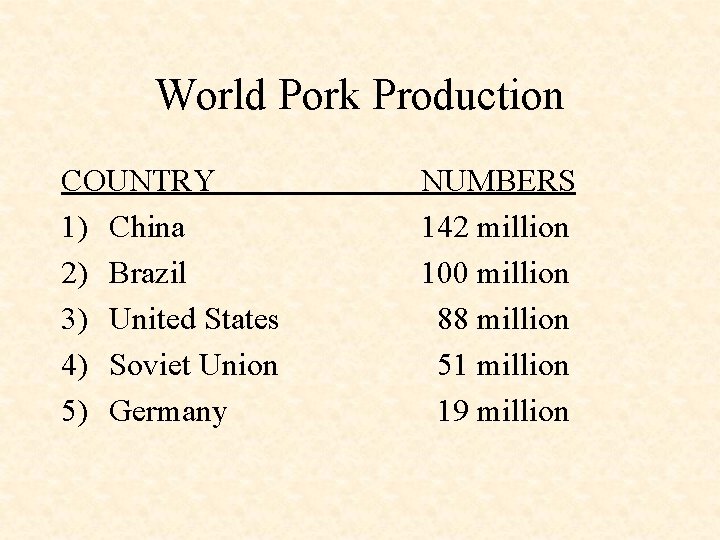
World Pork Production COUNTRY 1) China 2) Brazil 3) United States 4) Soviet Union 5) Germany NUMBERS 142 million 100 million 88 million 51 million 19 million

Swine numbers - 2007 Rank State 1 Iowa Swine (millions) 25. 0 2 North Carolina 9. 5 3 Minnesota 5. 6 4 Illinois 4. 2 5 Indiana 3. 2 6 Missouri 3. 0 Total All States 58. 5

Animal Selection (Visuals)
Animal Selection (Visuals) • • Carcass Merit - Length Soundness feet/legs Wide Chest floor Meatiness qualities Backfat Appear Healthy Trimness Underline

Animal Selection (Measurable)
Animal Selection (Measurable) • • A. D. G. F. E. Age Weight Litter Size Underline Price / Cost • • • Sperm Count Testicle Size Health Records Loin Eye Area Backfat
Replacement Males: • Performance evaluation – Items such as average daily gain, feed efficiency, backfat thickness and rib-eye area will be evaluated • Limited use in breeding at one year of age • AI collection for breeding with unfrozen semen use is common
Female Replacements: • Goal: first litter born at one year of age – Selected females will be bred at about 7 to 8 months of age • Subsequent breeding times will be determined by management strategies – Sows are typically polyestrous – Multiple litters per year possible
When to Breed • Puberty at about 5 - 5 ½ months • Sexual Maturity at 8 months • Best results at 1 year of age
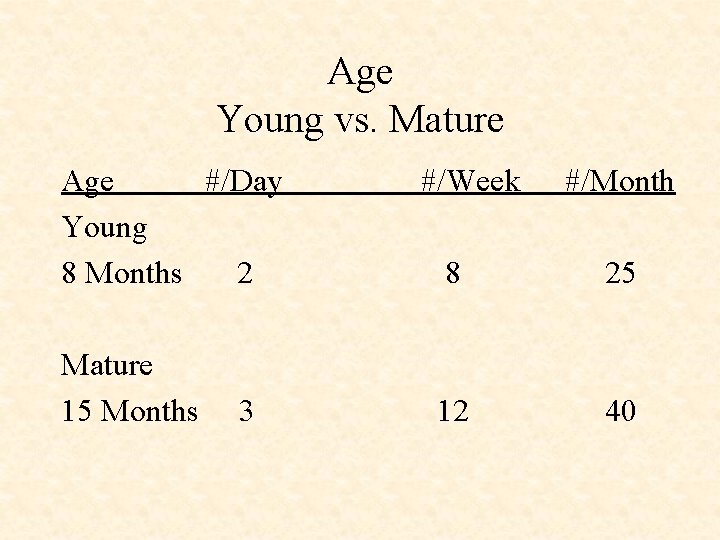
Age Young vs. Mature Age #/Day Young 8 Months 2 Mature 15 Months 3 #/Week #/Month 8 25 12 40
Swine Life Cycle: Farrowing • Well developed gilts are bred to farrow at approximately one year of age • Sows are limit-fed to control weight during gestation • Farrowing crates or stalls commonly used in the US
Newborn Piglet Management: DAY 0 • Birth weight: 3. 0 -3. 5 pounds typical • Newborns do not effectively control body temperature; require heat source • Sow’s colostrum “first milk” is critical • Navel dipping - antiseptic to prevent infection
Baby Pig Management DAY 1 • Iron Shots – 1 cc - Iron Paste, Ferrous Sulfate, Ashes • Ear Notch or other identification - Record keeping begins • Clip Needle teeth – reduce injuries • Clip tails – reduce tail biting
Pig Management: First Month • Castrate - US market pigs must be castrated - Belly - preferred for sanitation - preferred when you have 2 people Disadvantage – hernia or rupture • Behind - preferred for ease of handling - preferred when you are alone Disadvantage – infections are easier to get
Pig Management: First Month • Weaning – Commonly done at about one month of age – New: “segregated early weaning” at 12 -16 days • Creep feeding - may be fed extra energy
Feedlot Animals: • Barrows and gilts commonly marketed for meat • Free-choice feeding of high corn and soybean meal diets common in US • Common market goals: – 6 months of age or less – 230 to 270 pounds live weight
- Slides: 20