
Breeding Sheep Breeding Goats Compiled by Jared Jackson
Breeding Sheep & Breeding Goats Compiled by: Jared Jackson
Sheep Terminology • Lamb- A sheep that is under one year of age • Ewe lamb- A female sheep under one year of age • Ram lamb- intact male that is under one year of age • Wether- castrated male sheep that is under one year of age • Ewe- a female sheep that is over one year of age • Ram- a male sheep that is over one year of age • Mutton- a castrated male sheep that is over one year of age • Flock- is a group of sheep

Goat Terminology • • • Kid- a goat that is under one year of age Doe- female goat Buck- male goat Wether- a castrated goat of any age Nanny- slang term for a female goat Billy- slang term for a male goat
U. S. Sheep Breeds
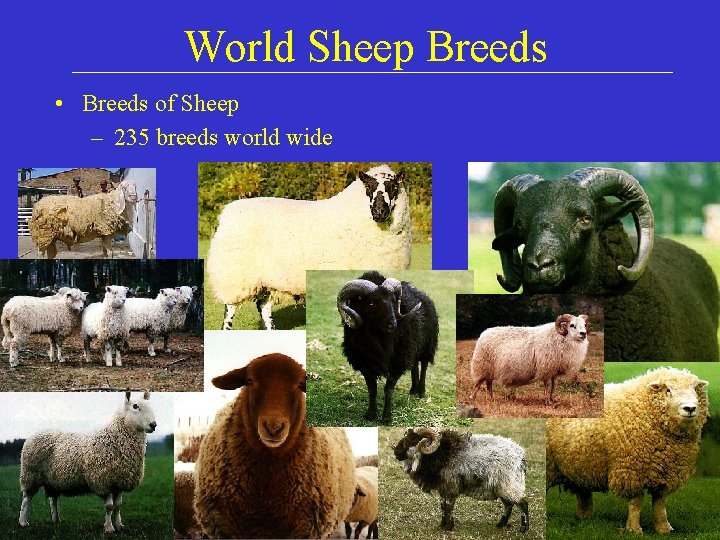
World Sheep Breeds • Breeds of Sheep – 235 breeds world wide

Sheep Type • Frame- Sheep Genetics Lines that are selected for Growth, Skeletal Size (Frame), and Skeletal Design • Wether- Sheep Genetic Lines that are selected for carcass merit, meat production, market show lamb production
US Sheep Breeds - 26 – 30 Breeds in US - Only 8 - 10 Industry Impact Three Classifications • Fine Wool Breeds • Medium Wool Breeds • Hair Breeds
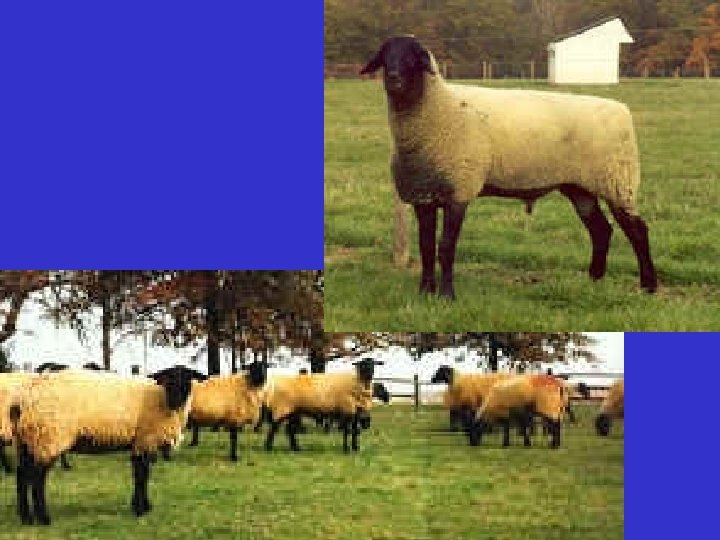
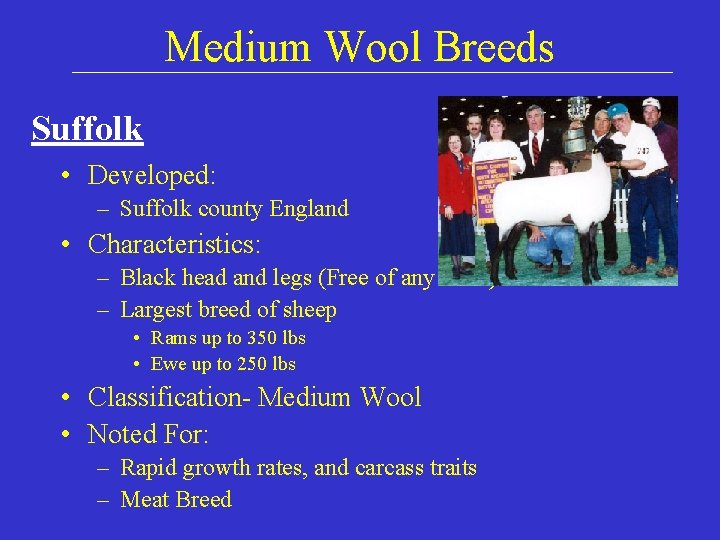
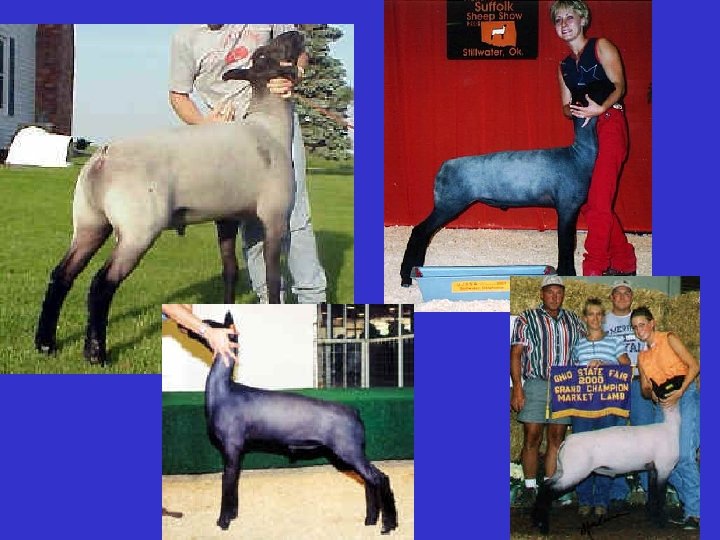
Medium Wool Breeds Suffolk • Developed: – Suffolk county England • Characteristics: – Black head and legs (Free of any wool) – Largest breed of sheep • Rams up to 350 lbs • Ewe up to 250 lbs • Classification- Medium Wool • Noted For: – Rapid growth rates, and carcass traits – Meat Breed
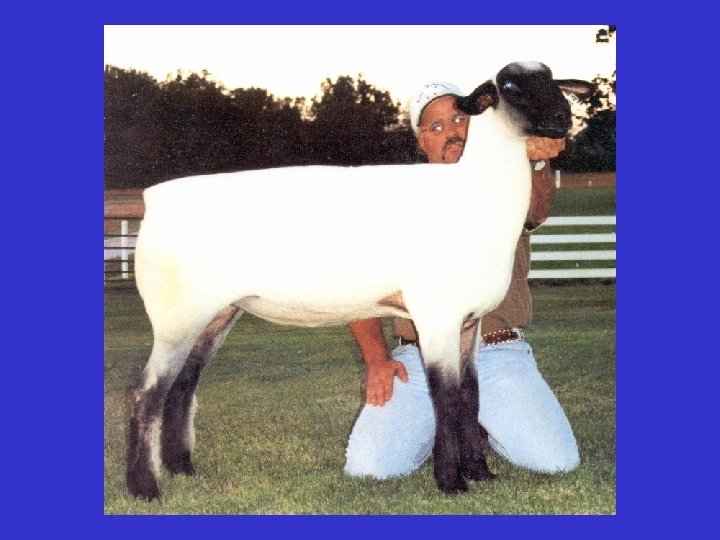
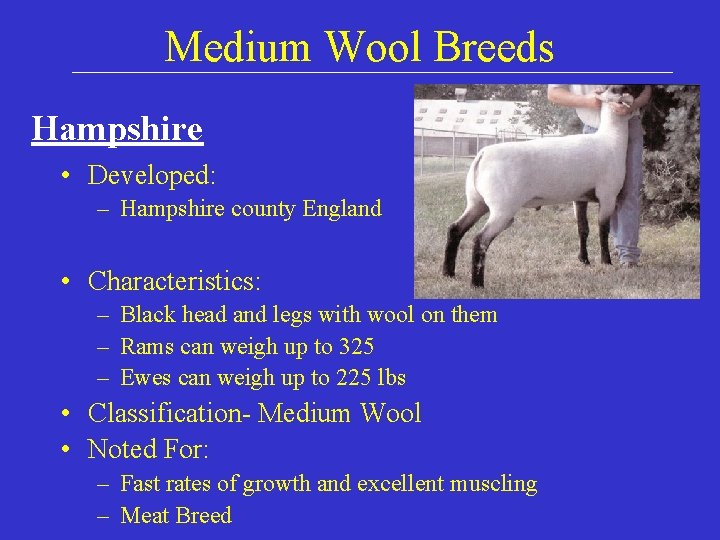
Medium Wool Breeds Hampshire • Developed: – Hampshire county England • Characteristics: – Black head and legs with wool on them – Rams can weigh up to 325 – Ewes can weigh up to 225 lbs • Classification- Medium Wool • Noted For: – Fast rates of growth and excellent muscling – Meat Breed
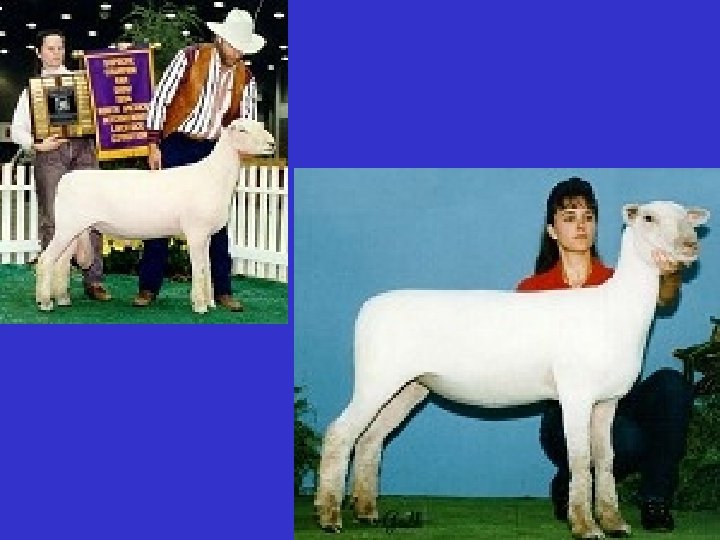
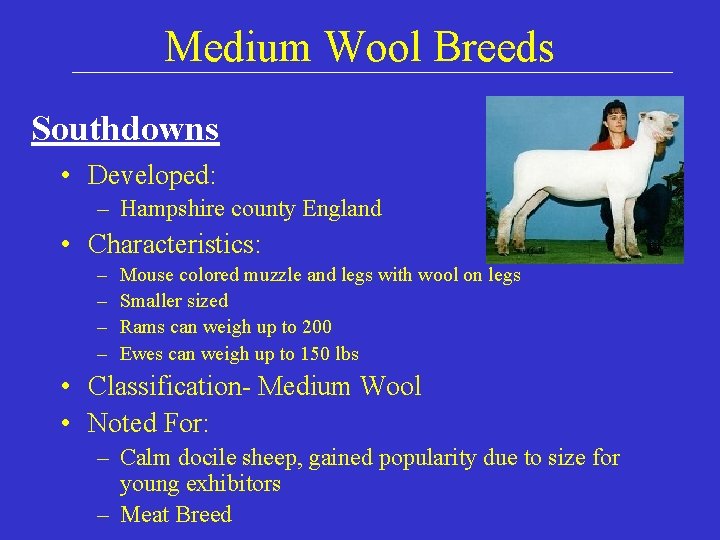
Medium Wool Breeds Southdowns • Developed: – Hampshire county England • Characteristics: – – Mouse colored muzzle and legs with wool on legs Smaller sized Rams can weigh up to 200 Ewes can weigh up to 150 lbs • Classification- Medium Wool • Noted For: – Calm docile sheep, gained popularity due to size for young exhibitors – Meat Breed
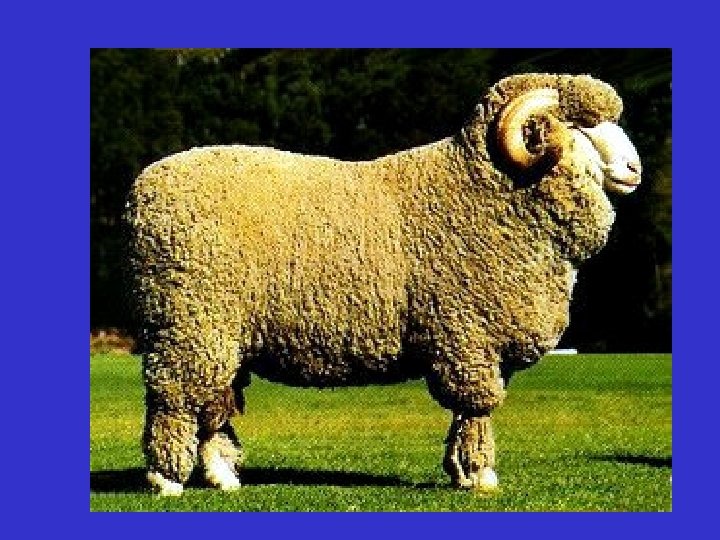
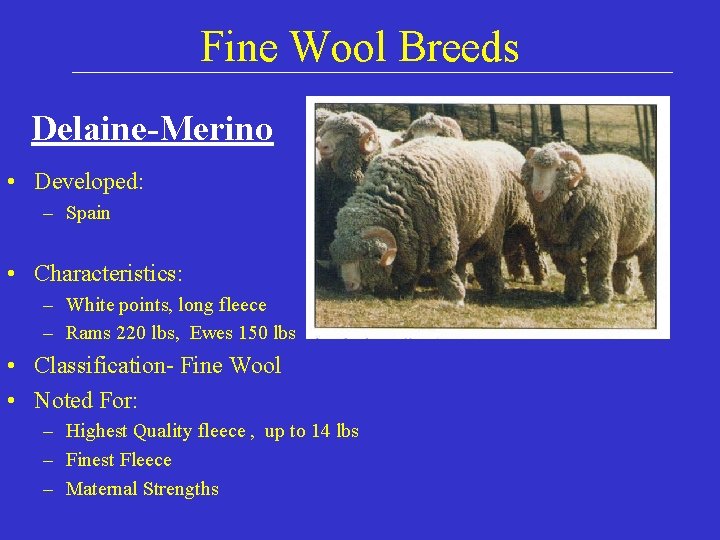
Fine Wool Breeds Delaine-Merino • Developed: – Spain • Characteristics: – White points, long fleece – Rams 220 lbs, Ewes 150 lbs • Classification- Fine Wool • Noted For: – Highest Quality fleece , up to 14 lbs – Finest Fleece – Maternal Strengths
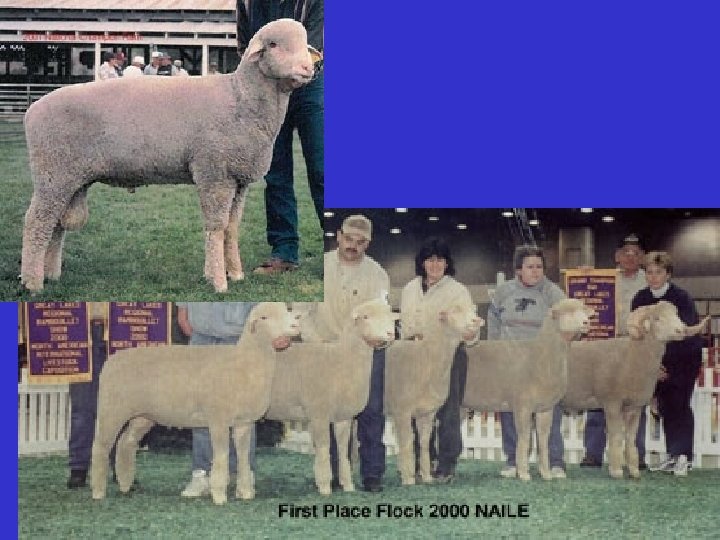
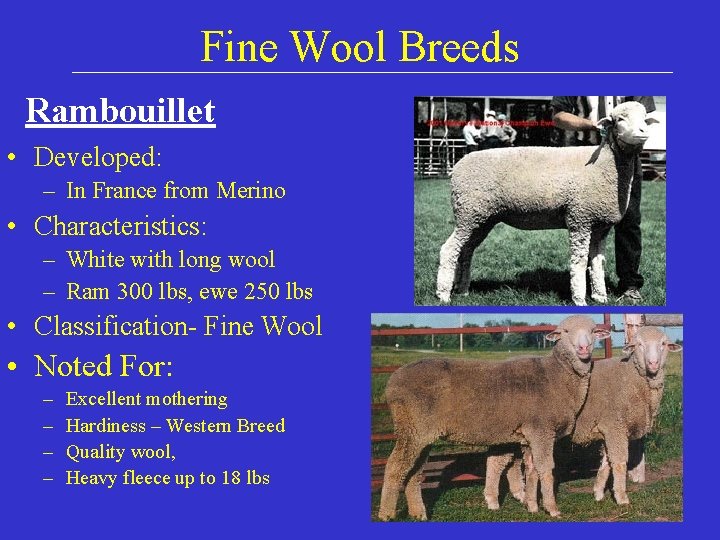
Fine Wool Breeds Rambouillet • Developed: – In France from Merino • Characteristics: – White with long wool – Ram 300 lbs, ewe 250 lbs • Classification- Fine Wool • Noted For: – – Excellent mothering Hardiness – Western Breed Quality wool, Heavy fleece up to 18 lbs
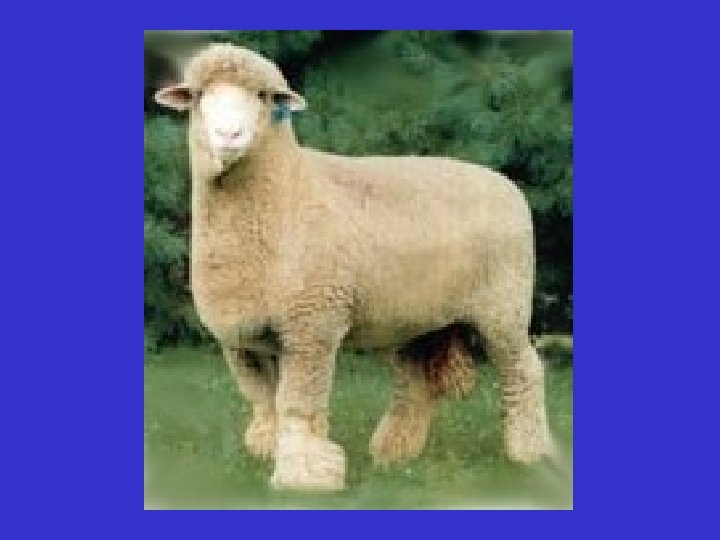
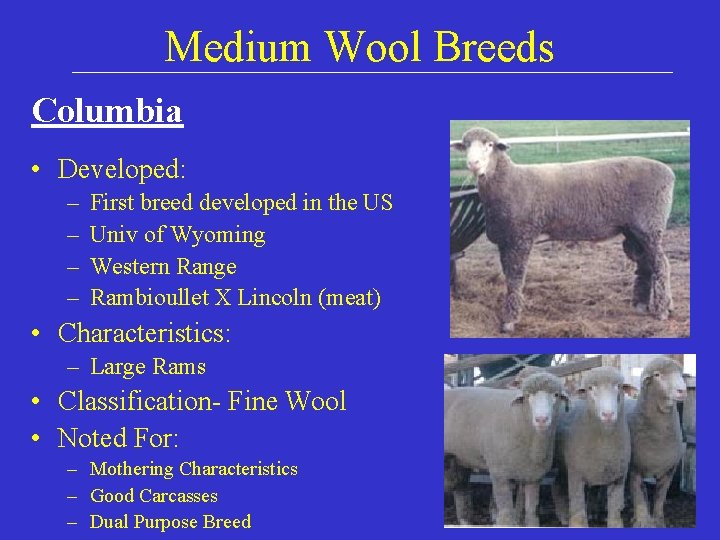
Medium Wool Breeds Columbia • Developed: – – First breed developed in the US Univ of Wyoming Western Range Rambioullet X Lincoln (meat) • Characteristics: – Large Rams • Classification- Fine Wool • Noted For: – Mothering Characteristics – Good Carcasses – Dual Purpose Breed
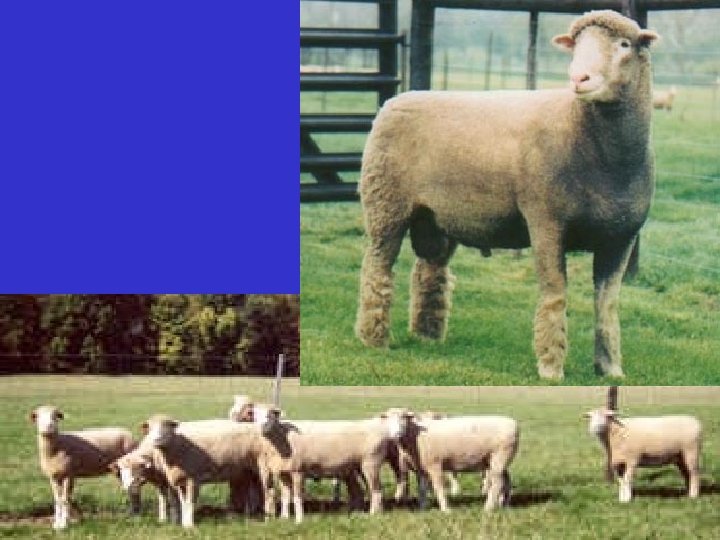
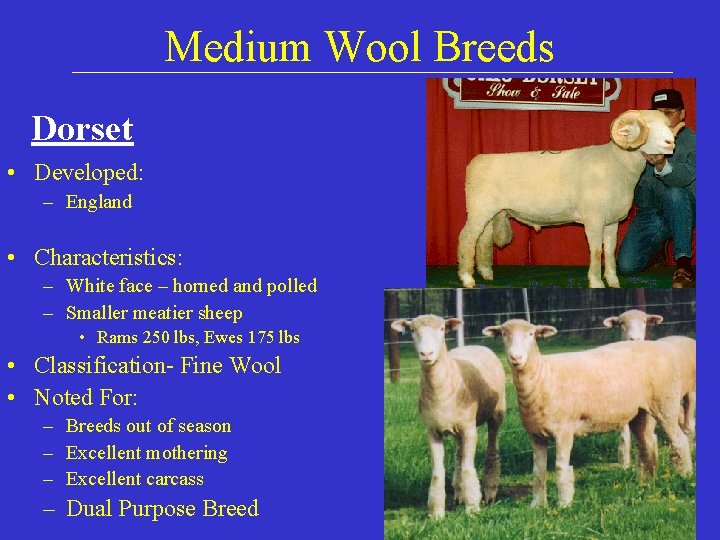
Medium Wool Breeds Dorset • Developed: – England • Characteristics: – White face – horned and polled – Smaller meatier sheep • Rams 250 lbs, Ewes 175 lbs • Classification- Fine Wool • Noted For: – Breeds out of season – Excellent mothering – Excellent carcass – Dual Purpose Breed

Medium Wool Breeds • Corriedale • Cross between Merino and Lincoln or Leicester • Developed in New Zealand • Polled • Classification- Fine Wool • Dual Pupose Breed
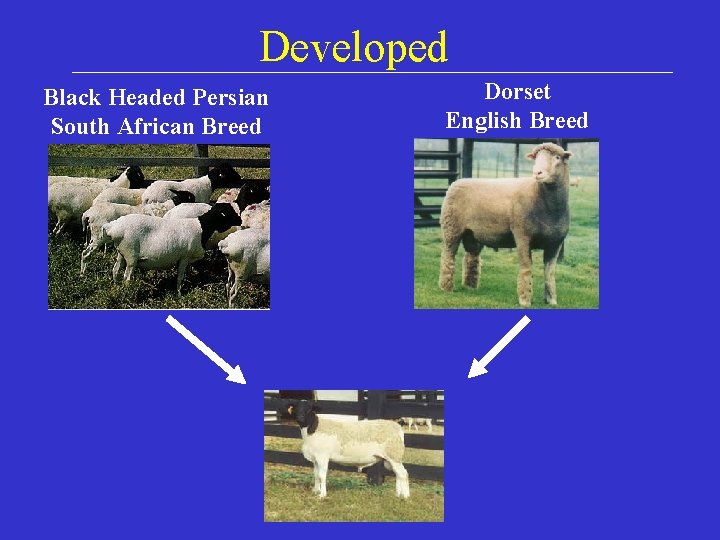
Developed Black Headed Persian South African Breed Dorset English Breed
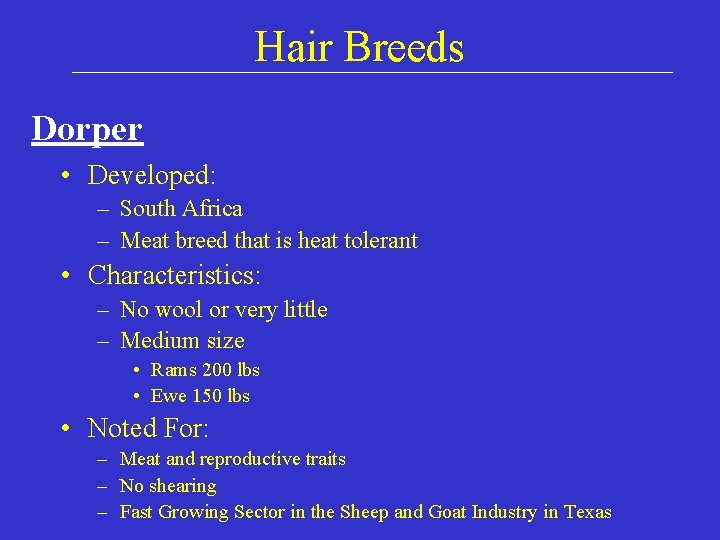
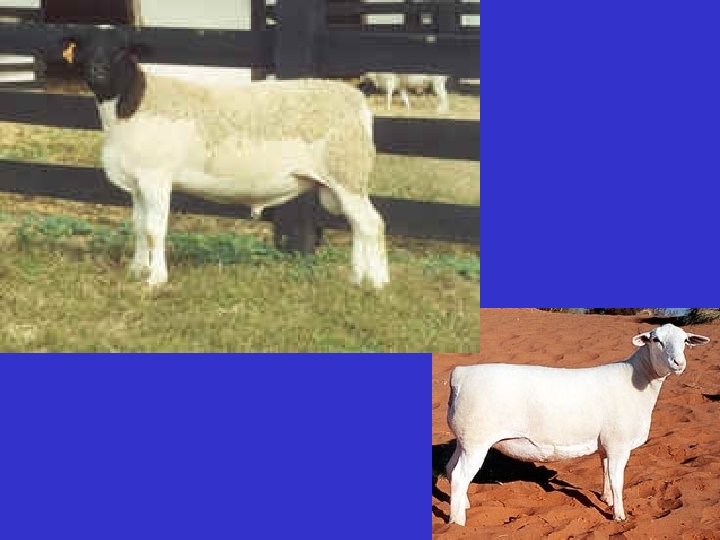
Hair Breeds Dorper • Developed: – South Africa – Meat breed that is heat tolerant • Characteristics: – No wool or very little – Medium size • Rams 200 lbs • Ewe 150 lbs • Noted For: – Meat and reproductive traits – No shearing – Fast Growing Sector in the Sheep and Goat Industry in Texas
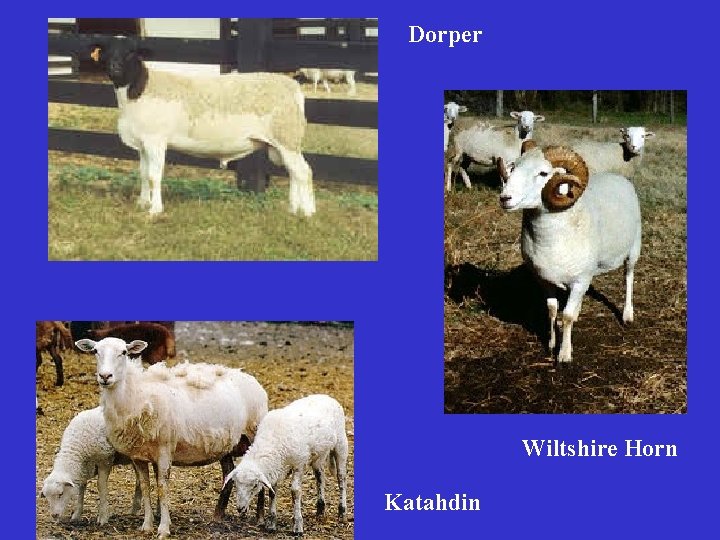
Dorper Wiltshire Horn Katahdin
Goat Breeds • 4 classifications Dairy Dual Purpose Meat Hair
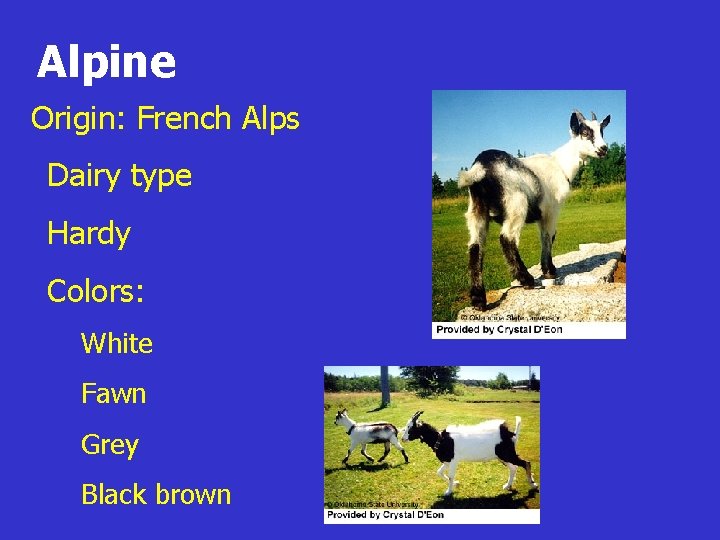
Alpine Origin: French Alps z. Dairy type z. Hardy z. Colors: y. White y. Fawn y. Grey y. Black brown
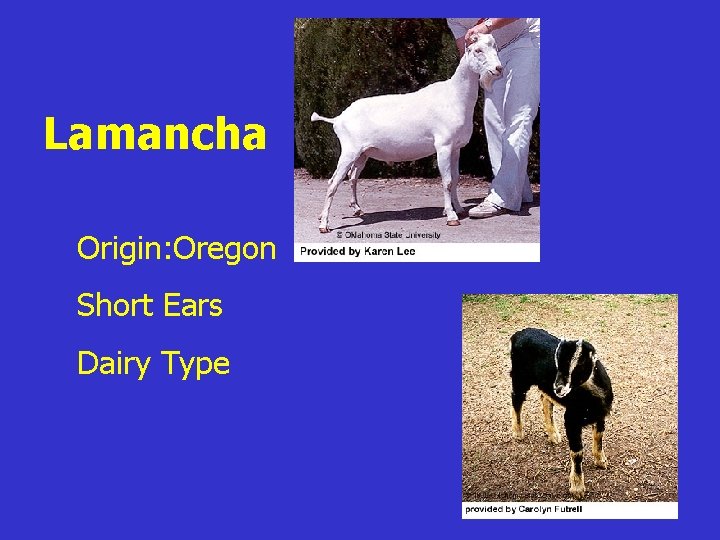
Lamancha z. Origin: Oregon z. Short Ears z. Dairy Type
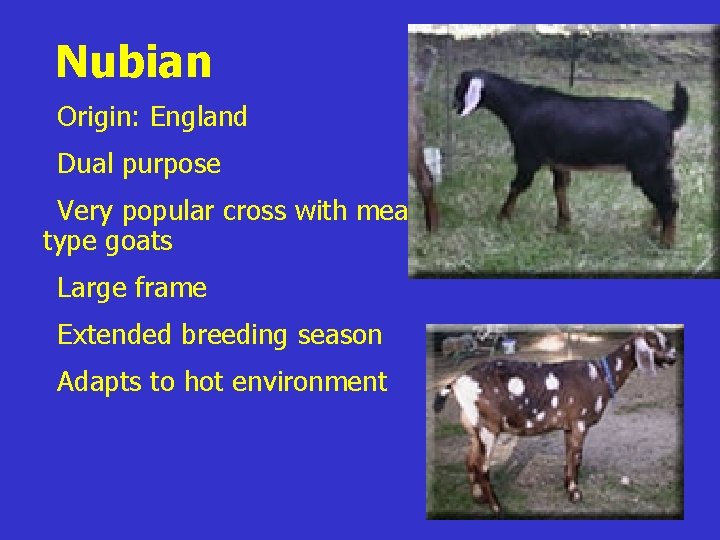
Nubian z. Origin: England z. Dual purpose z. Very popular cross with meat type goats z. Large frame z. Extended breeding season z. Adapts to hot environment
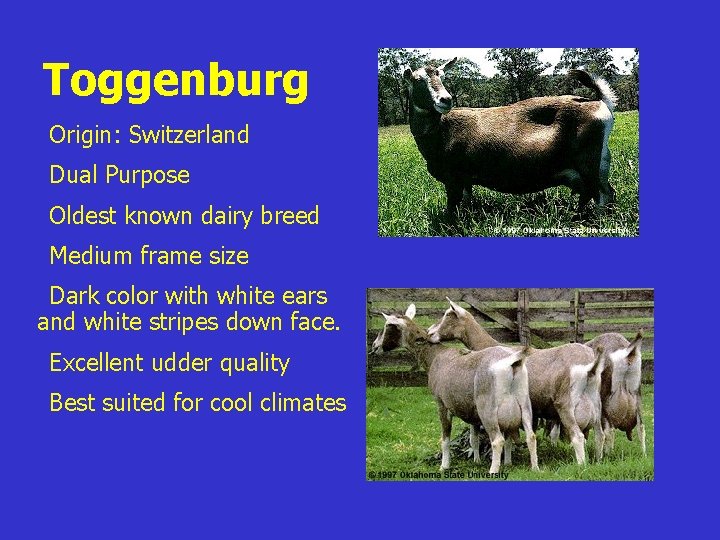
Toggenburg z. Origin: Switzerland z. Dual Purpose z. Oldest known dairy breed z. Medium frame size z. Dark color with white ears and white stripes down face. z. Excellent udder quality z. Best suited for cool climates

Boer • Origin: South Africa • Meat Type • Horned • Early Puberty • Extended Breeding Season • Heavy Muscle • Most popular Breed of Goat in the USA
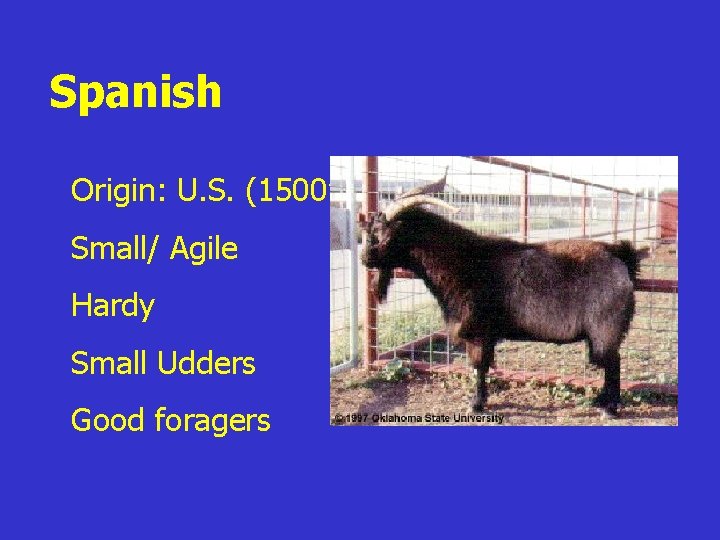
Spanish z. Origin: U. S. (1500’s) z. Small/ Agile z. Hardy z. Small Udders z. Good foragers
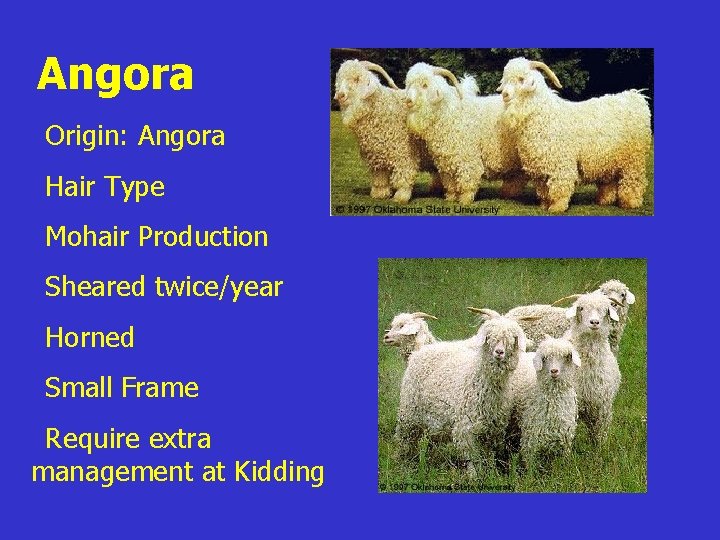
Angora z. Origin: Angora z. Hair Type z. Mohair Production z. Sheared twice/year z. Horned z. Small Frame z. Require extra management at Kidding
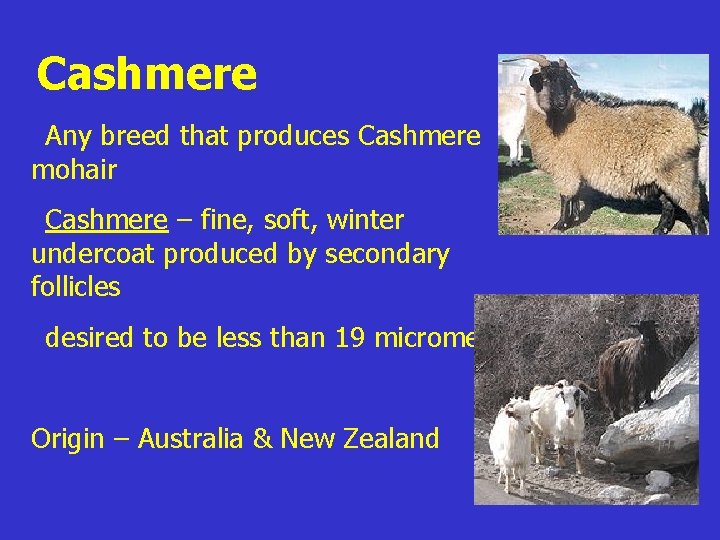
Cashmere z. Any breed that produces Cashmere mohair z. Cashmere – fine, soft, winter undercoat produced by secondary follicles zdesired to be less than 19 micrometers Origin – Australia & New Zealand
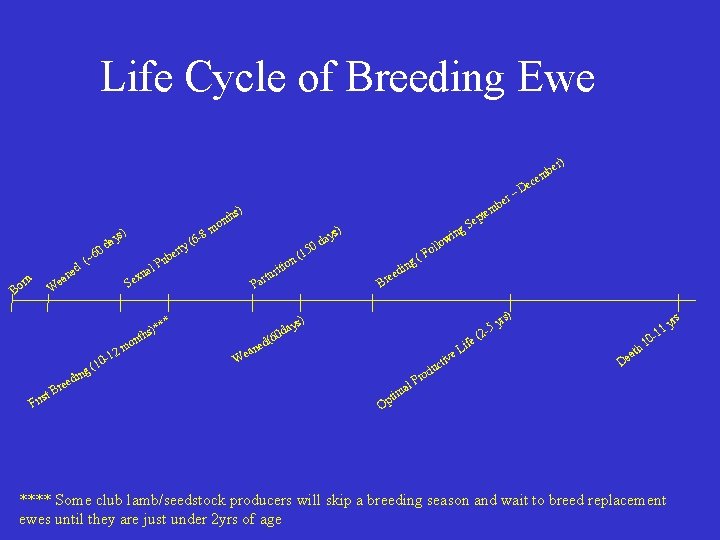
Life Cycle of Breeding Ewe m 6 -8 ( y s) 60 n or B d (~ ne ea al xu Se W n tio uri 2 g din (F a We pte Se ee Br n di ree B st Fir De ow oll s) day 0 (6 ned * s)* th -1 10 g( a 0 d 5 (1 rt Pa * n mo ing ys) ert b Pu er) m ) ths n o y da r– be b cem ti Op od ma r l. P u v cti ife e. L rs 5 y ) rs (2 - y 11 - 0 h 1 at De **** Some club lamb/seedstock producers will skip a breeding season and wait to breed replacement ewes until they are just under 2 yrs of age

Breeding Patterns • Most sheep are seasonally bred – Most females begin tocycle when days are short and nights are long (Fall) – Lamb in the spring (January- May) • Some breeds cycle year round – Polypays – Dorsets – Finnsheep
Scrapie • In the family of diseases known as Transmissable Spongioform Encephalopathies (TSEs) – Neurodegenerative Brainwasting Diseases – Similar to BSE in cattle, chronic wasting disease in deer – Prion – Affects nervous system – Symptoms • “Star gazing” • Awkward, uncoordinated gait • Loss of wool – Death is imminent • No Treatment • Eradication of infected animals
Scrapie Susceptibility • Determined by codon 171 within the genetic code – RR – Resistant – QR – Resistant, but Carrier – QQ – Susceptible – Determined by blood test – Basic Punnett Sqaure/ Mendalian Genetics Applies
Scrapie Susceptibility Continued Codon 136 • AA- free of Scrapie • Av- will show clinical signs of Scrapie • vv- suffering from Scrapie

Spider Gene • A heritable genetic defect that results in skeletal abnormalities – Spider offspring typically do not survive – Basic Punnett Square • NN – normal • NS – carrier • SS – Spider
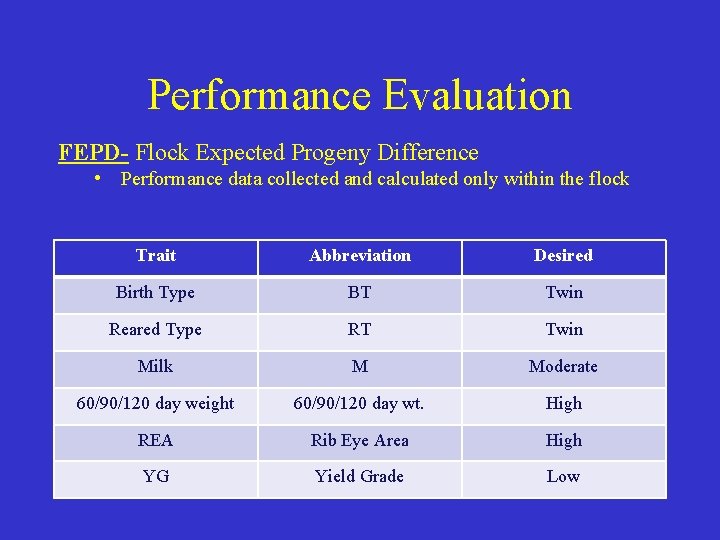
Performance Evaluation FEPD- Flock Expected Progeny Difference • Performance data collected and calculated only within the flock Trait Abbreviation Desired Birth Type BT Twin Reared Type RT Twin Milk M Moderate 60/90/120 day weight 60/90/120 day wt. High REA Rib Eye Area High YG Yield Grade Low
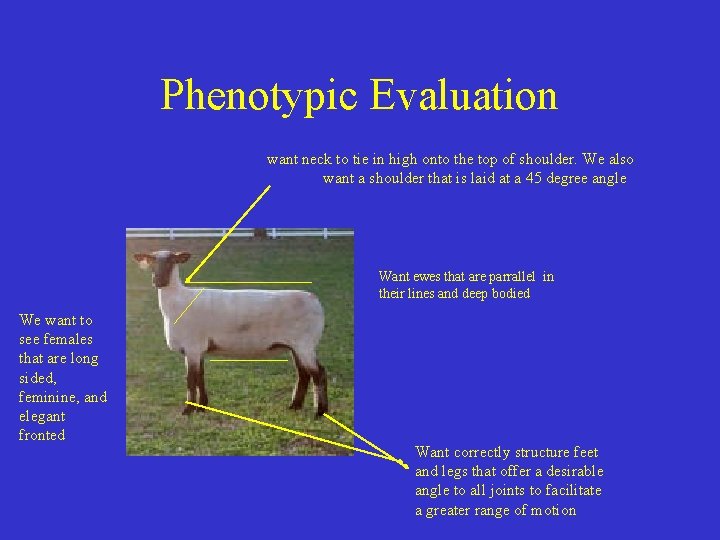
Phenotypic Evaluation want neck to tie in high onto the top of shoulder. We also want a shoulder that is laid at a 45 degree angle Want ewes that are parrallel in their lines and deep bodied We want to see females that are long sided, feminine, and elegant fronted Want correctly structure feet and legs that offer a desirable angle to all joints to facilitate a greater range of motion
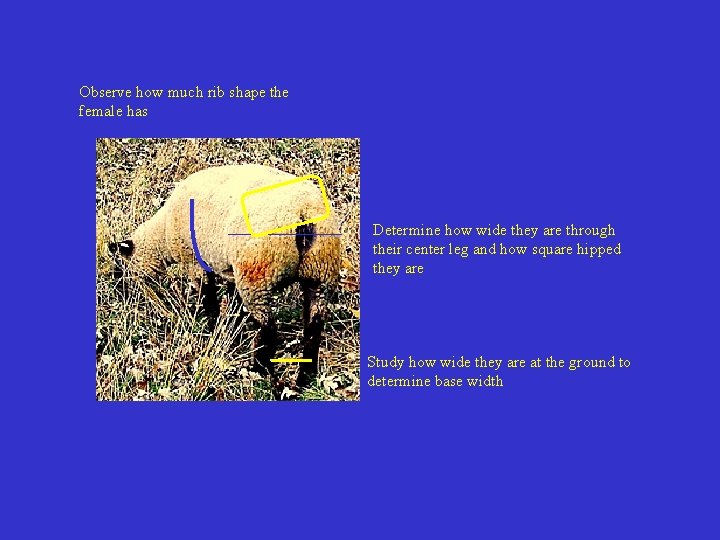
Observe how much rib shape the female has Determine how wide they are through their center leg and how square hipped they are Study how wide they are at the ground to determine base width
- Slides: 45