
Breathing reeducation 1 Positioning 2 Awareness of breathing
Breathing re-education (1) Positioning (2) Awareness of breathing (3) Inhale through nose (4) Relaxation (5) Rhythmic br. (6) Pursed lips br. (7) Yoga breathing (8) Abdominal br. (9) Square br. (10) Praise! (12) Integrate. .
Breathing re-education (1) Positioning (2) Awareness of breathing (3) Inhale through nose (4) Relaxation (5) Rhythmic br. (6) Pursed lips br. (7) Yoga breathing (8) Abdominal br. (9) Square br. (10) Praise! (12) Integrate. .
Breathing re-education (1) Positioning (2) Awareness of breathing (3) Inhale through nose if poss (4) Relaxation (5) Rhythmic breathing (6) Pursed lips breathing (7) Yoga breathing (8) Abdominal breathing (9) Square breathing (10) Praise! (12) Integrate. .
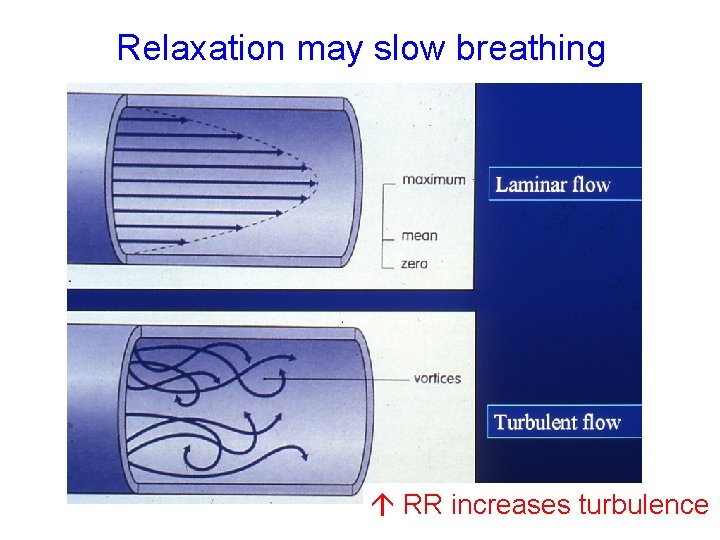
Relaxation may slow breathing RR increases turbulence
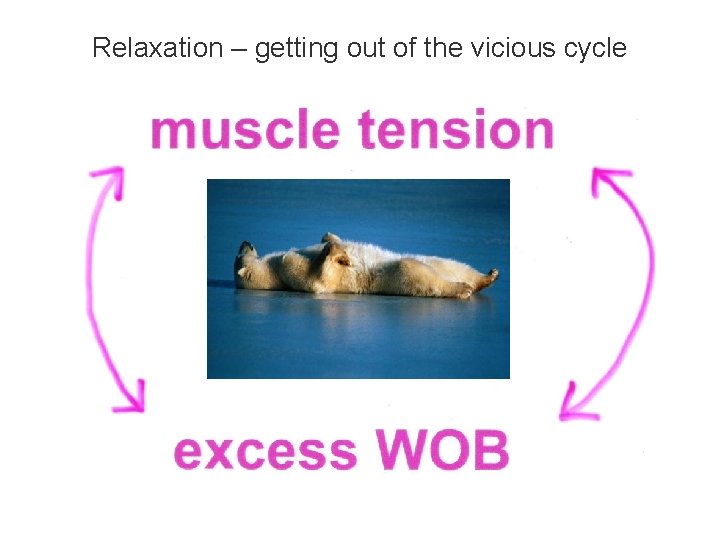
Relaxation – getting out of the vicious cycle
(4) Relaxation – follow up ‘… 5 -year follow-up showed that hospitalisation for cardiac problems was still lower in the relaxation group’. Gilbert 1999

(4) Relaxation ‘Symptom relief and time constraints seem to be the primary factors affecting compliance’ Lazo 2003
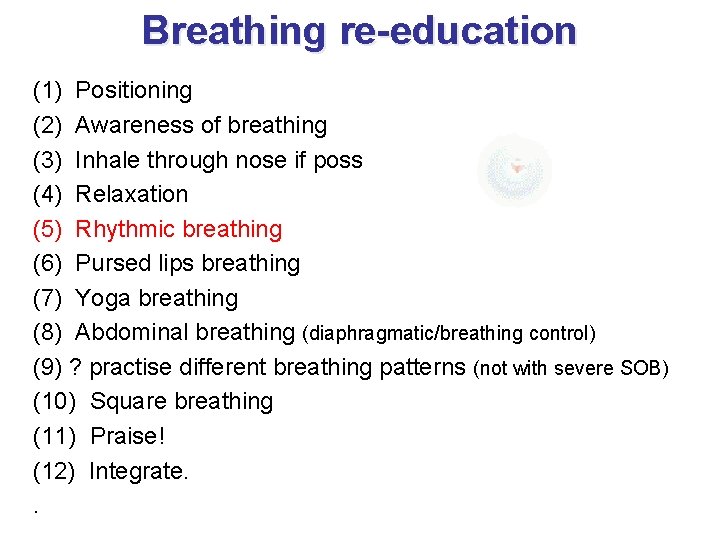
Breathing re-education (1) Positioning (2) Awareness of breathing (3) Inhale through nose if poss (4) Relaxation (5) Rhythmic breathing (6) Pursed lips breathing (7) Yoga breathing (8) Abdominal breathing (diaphragmatic/breathing control) (9) ? practise different breathing patterns (not with severe SOB) (10) Square breathing (11) Praise! (12) Integrate. .
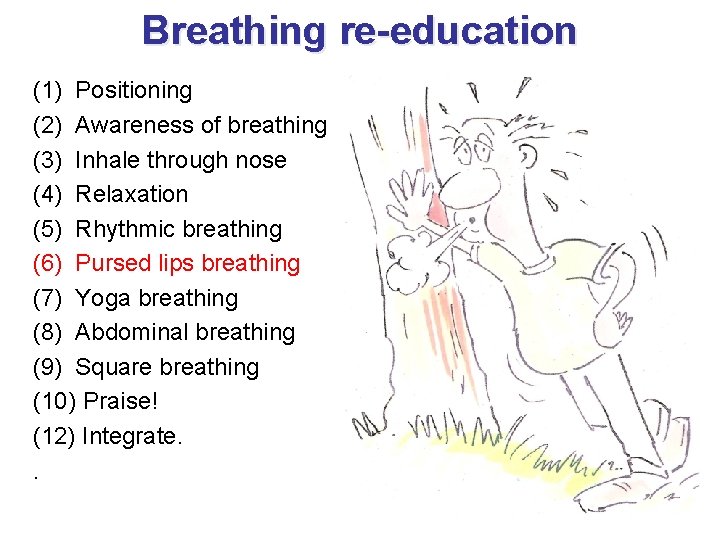
Breathing re-education (1) Positioning (2) Awareness of breathing (3) Inhale through nose (4) Relaxation (5) Rhythmic breathing (6) Pursed lips breathing (7) Yoga breathing (8) Abdominal breathing (9) Square breathing (10) Praise! (12) Integrate. .
Breathing re-education (1) Positioning (2) Awareness of breathing (3) Inhale through nose if poss (4) Relaxation (5) Rhythmic breathing (6) Pursed lips breathing (7) Yoga breathing (8) Abdominal breathing (diaphragmatic/breathing control) (9) Square breathing (10) Praise! (12) Integrate. .
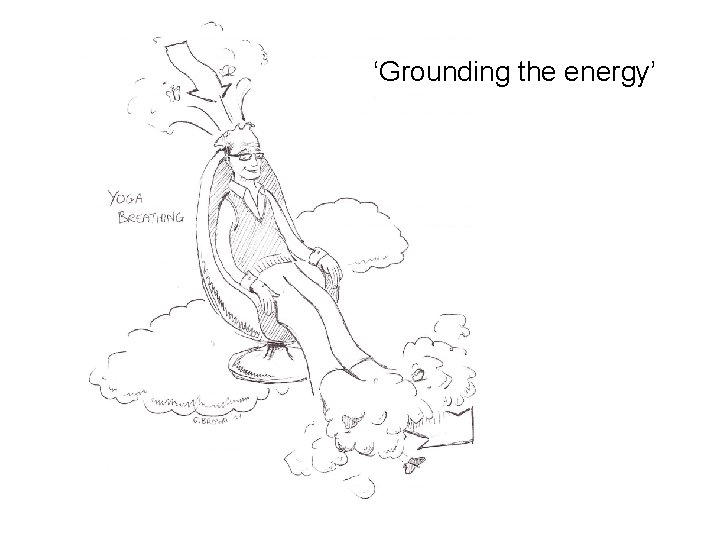
‘Grounding the energy’
Breathing re-education (1) (2) (3) (4) (5) (6) (7) Positioning Awareness of breathing Inhale through nose if poss Relaxation Rhythmic breathing Pursed lips breathing Yoga breathing (8) Abdominal breathing (diaphragmatic/breathing control) (9) ? practise different breathing patterns (not with severe SOB) (10) Square breathing (11) Praise! (12) Integrate. .
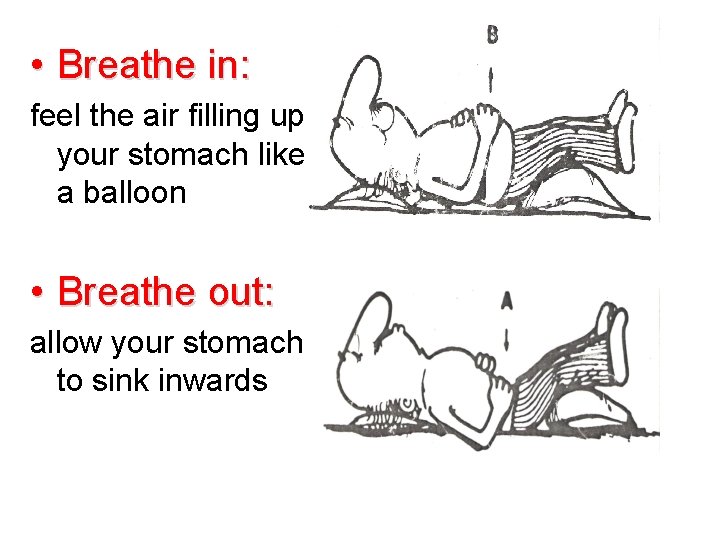
• Breathe in: feel the air filling up your stomach like a balloon • Breathe out: allow your stomach to sink inwards
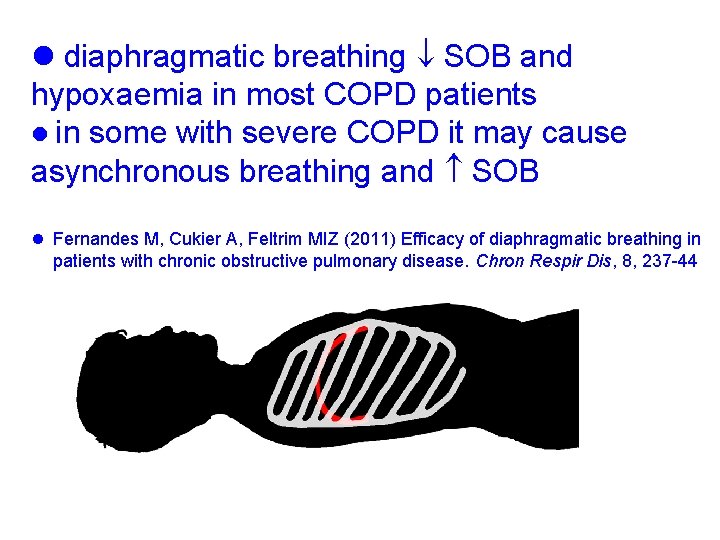
diaphragmatic breathing SOB and hypoxaemia in most COPD patients in some with severe COPD it may cause asynchronous breathing and SOB Fernandes M, Cukier A, Feltrim MIZ (2011) Efficacy of diaphragmatic breathing in patients with chronic obstructive pulmonary disease. Chron Respir Dis, 8, 237 -44 breathing and SOB
Critique ‘A pattern of slow exhalation with pursed lips is stressed. This is commonly referred to as abdominal breathing, diaphragmatic breathing or breathing exercises. ’ Berzius (1970) An occupational therapy programme for the COPD patient. Am J OT, 24, 181 -6
Critique ‘A pattern of slow exhalation with pursed lips is stressed. This is commonly referred to as abdominal breathing, diaphragmatic breathing or breathing exercises. ’ Berzius (1970) An occupational therapy programme for the COPD patient. Am J OT, 24, 1816
Breathing re-education (1) (2) (3) (4) (5) (6) (7) (8) Positioning Awareness of breathing Inhale through nose if poss Relaxation Rhythmic breathing Pursed lips breathing Yoga breathing Abdominal breathing (diaphragmatic/breathing control) (9) ? practise different breathing patterns (not with severe SOB) - enables patients to feel in control (10) Breathing round a square (11) Praise! (12) Integrate.
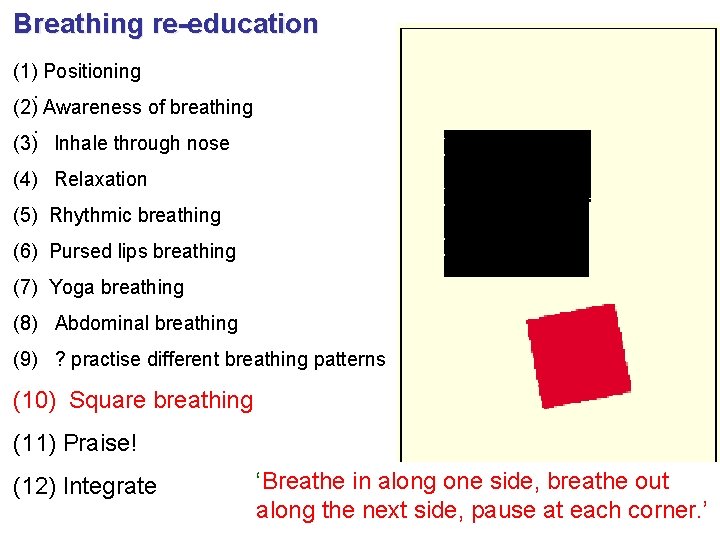
Breathing re-education (1) Positioning . (2) Awareness of breathing. (3) Inhale through nose (4) Relaxation (5) Rhythmic breathing (6) Pursed lips breathing (7) Yoga breathing (8) Abdominal breathing (9) ? practise different breathing patterns (10) Square breathing (11) Praise! (12) Integrate ‘Breathe in along one side, breathe out along the next side, pause at each corner. ’
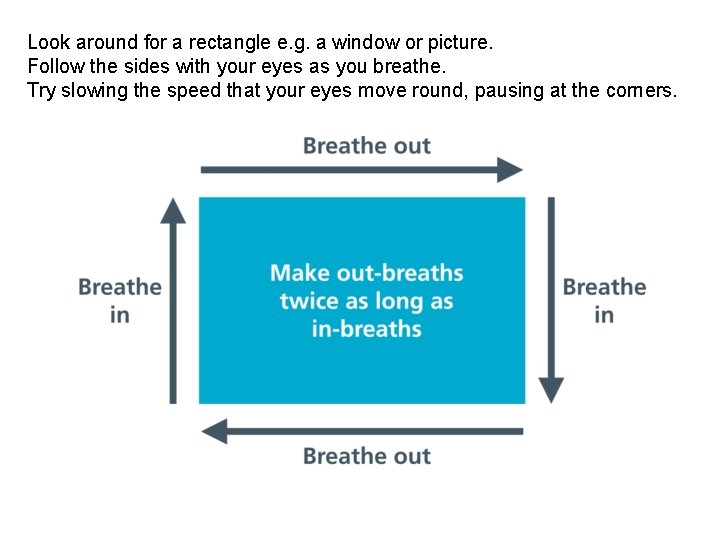
Look around for a rectangle e. g. a window or picture. Follow the sides with your eyes as you breathe. Try slowing the speed that your eyes move round, pausing at the corners.
(11) Praise!
(12) Integraten
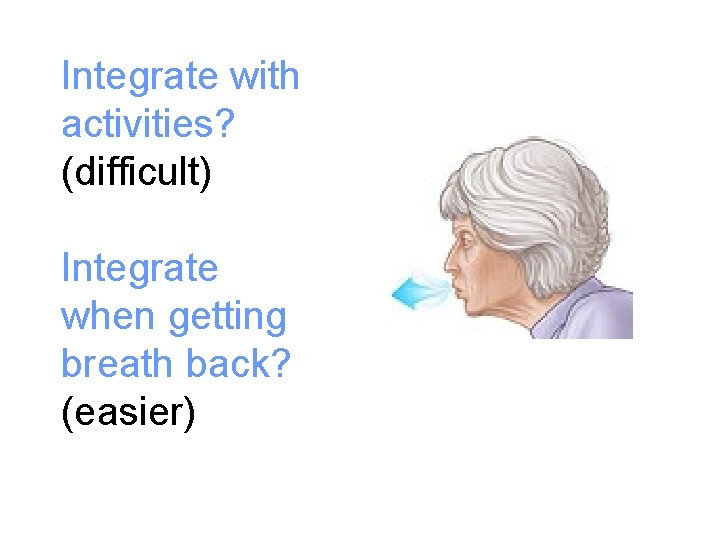
Integrate with activities? (difficult) Integrate when getting breath back? (easier)
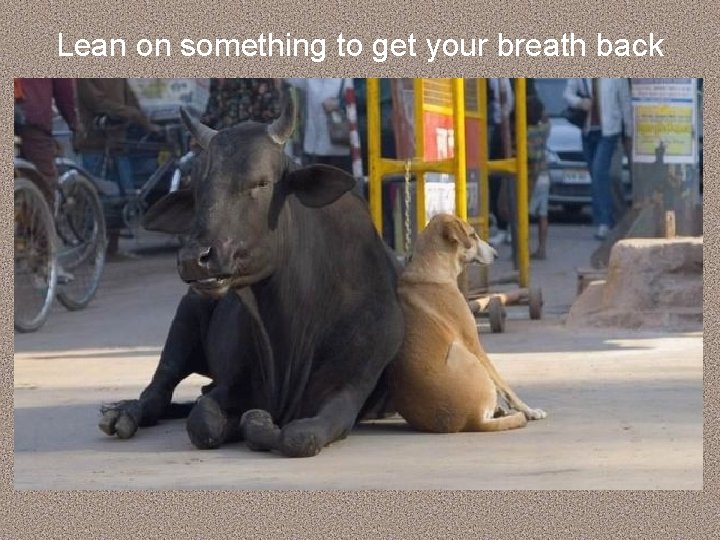
Lean on something to get your breath back
Lean on your shopping trolley - positioning + ADL
Pacing
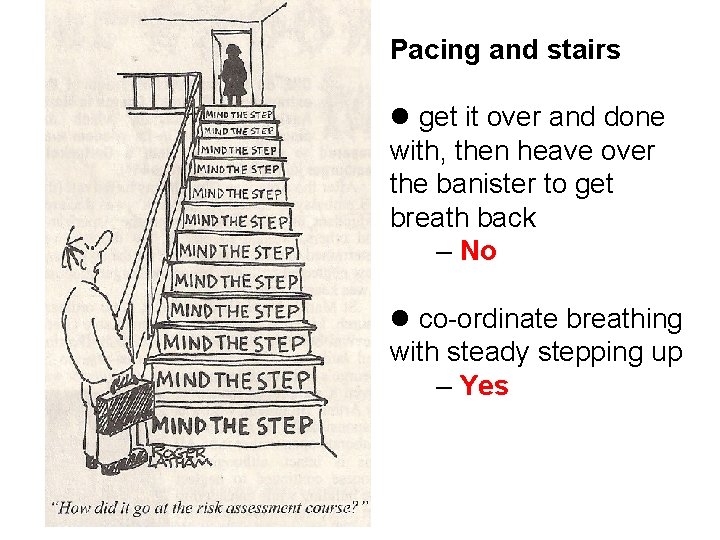
Pacing and stairs get it over and done with, then heave over the banister to get breath back – No co-ordinate breathing with steady stepping up – Yes
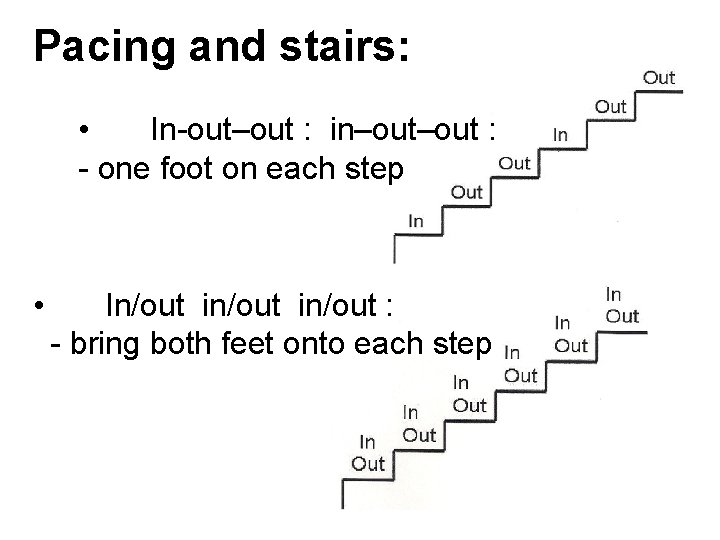
Pacing and stairs: • In-out–out : in–out : - one foot on each step • In/out in/out : - bring both feet onto each step
End of stairs “Wonderful! Just wonderful!… So much for instilling them with a sense of awe. ”
Good Practice Points ‘If the patient walks slightly flexed, it is worth consideration of the above facts before correcting posture ‘For those patients who do not need or wish to use a walking aid, methods for passively fixing the shoulder girdle when ambulating should be taught • hands in pockets or thumbs in belt loops/waistbands • hands resting on a handbag, carried by an across the shoulder strap. ’ ACPRC + BTS
End of breathless management
- Slides: 32