
BREASTFEEDNG Prof Dr Emel Gr Cerrahpaa Tp Fakltesi
BREASTFEEDİNG Prof. Dr. Emel Gür İ. Ü. Cerrahpaşa Tıp Fakültesi Çocuk Sağlığı ve Hastalıkları A. B. D.
RECOMMENDATIONS • Start breastfeeding within ½-1 hour of birth • Breastfeed exclusively from 0 -6 months of age • Give complementary foods to all children from 6 months of age • Continue breastfeeding up to 2 years of age or beyond
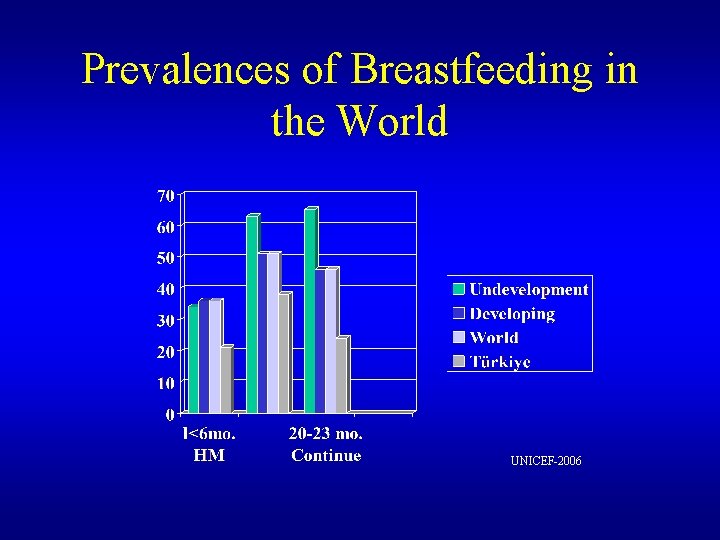
Prevalences of Breastfeeding in the World UNICEF-2006
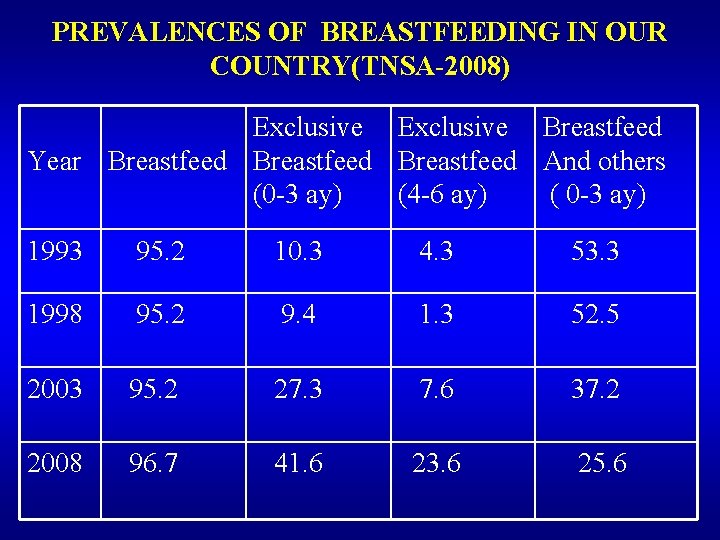
PREVALENCES OF BREASTFEEDING IN OUR COUNTRY(TNSA-2008) Exclusive Breastfeed Year Breastfeed And others (0 -3 ay) (4 -6 ay) ( 0 -3 ay) 1993 95. 2 10. 3 4. 3 53. 3 1998 95. 2 9. 4 1. 3 52. 5 2003 95. 2 27. 3 7. 6 37. 2 2008 96. 7 41. 6 23. 6 25. 6
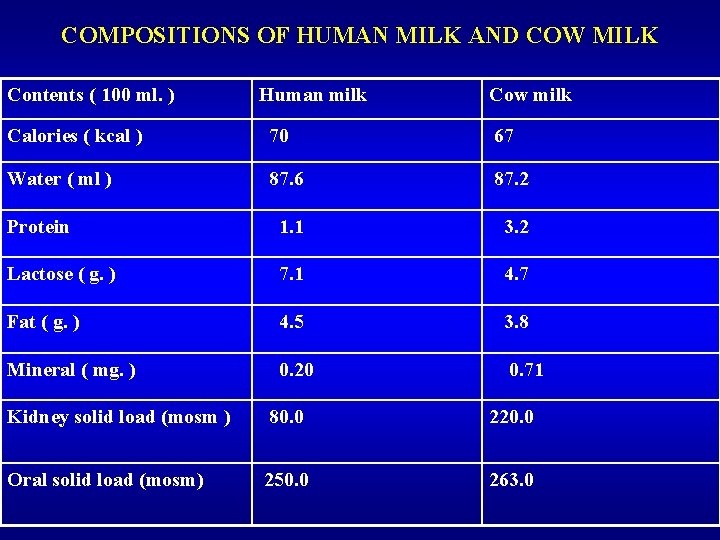
COMPOSITIONS OF HUMAN MILK AND COW MILK Contents ( 100 ml. ) Human milk Cow milk Calories ( kcal ) 70 67 Water ( ml ) 87. 6 87. 2 Protein 1. 1 3. 2 Lactose ( g. ) 7. 1 4. 7 Fat ( g. ) 4. 5 3. 8 Mineral ( mg. ) 0. 20 0. 71 Kidney solid load (mosm ) 80. 0 220. 0 Oral solid load (mosm) 250. 0 263. 0
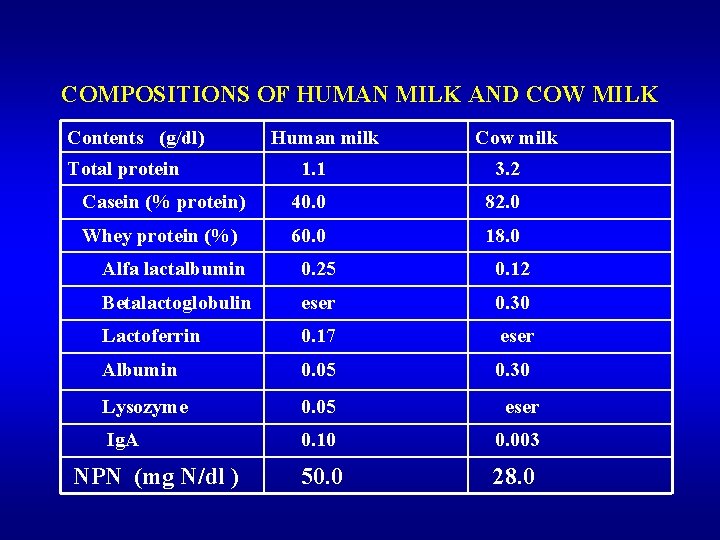
COMPOSITIONS OF HUMAN MILK AND COW MILK Contents (g/dl) Total protein Human milk Cow milk 1. 1 3. 2 Casein (% protein) 40. 0 82. 0 Whey protein (%) 60. 0 18. 0 Alfa lactalbumin 0. 25 0. 12 Betalactoglobulin eser 0. 30 Lactoferrin 0. 17 eser Albumin 0. 05 0. 30 Lysozyme 0. 05 eser Ig. A 0. 10 0. 003 50. 0 28. 0 NPN (mg N/dl )
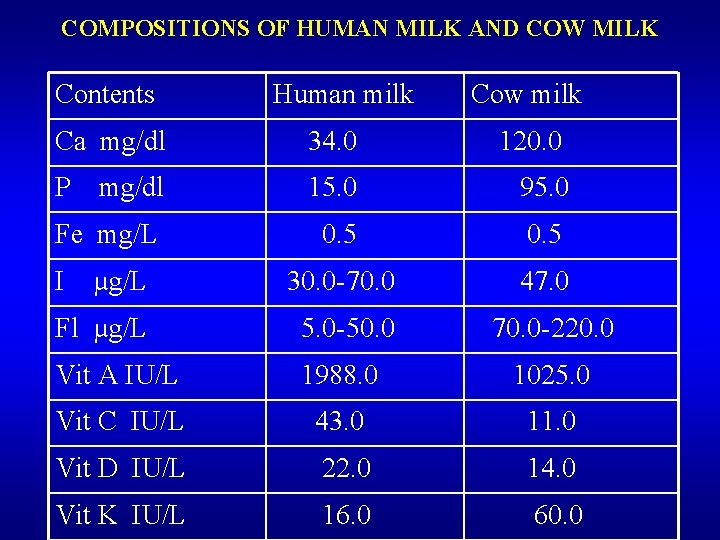
COMPOSITIONS OF HUMAN MILK AND COW MILK Contents Human milk Cow milk Ca mg/dl 34. 0 120. 0 P mg/dl 15. 0 95. 0 Fe mg/L 0. 5 µg/L 30. 0 -70. 0 47. 0 Fl µg/L 5. 0 -50. 0 70. 0 -220. 0 Vit A IU/L 1988. 0 1025. 0 Vit C IU/L 43. 0 11. 0 Vit D IU/L 22. 0 14. 0 Vit K IU/L 16. 0 60. 0 I
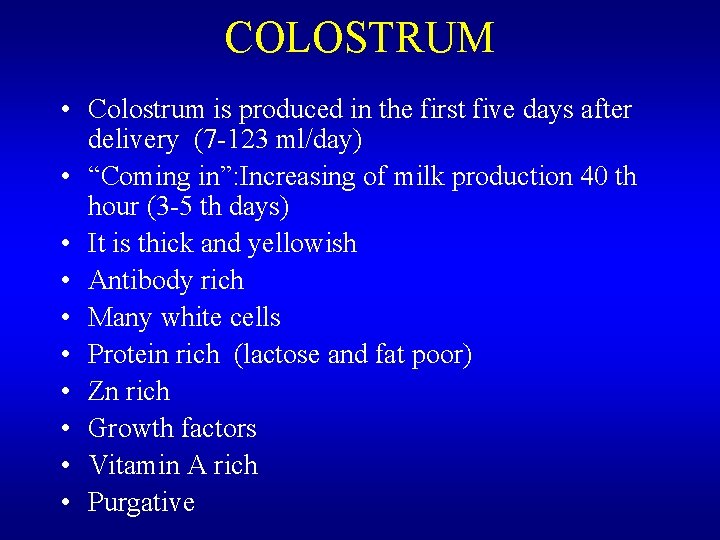
COLOSTRUM • Colostrum is produced in the first five days after delivery (7 -123 ml/day) • “Coming in”: Increasing of milk production 40 th hour (3 -5 th days) • It is thick and yellowish • Antibody rich • Many white cells • Protein rich (lactose and fat poor) • Zn rich • Growth factors • Vitamin A rich • Purgative
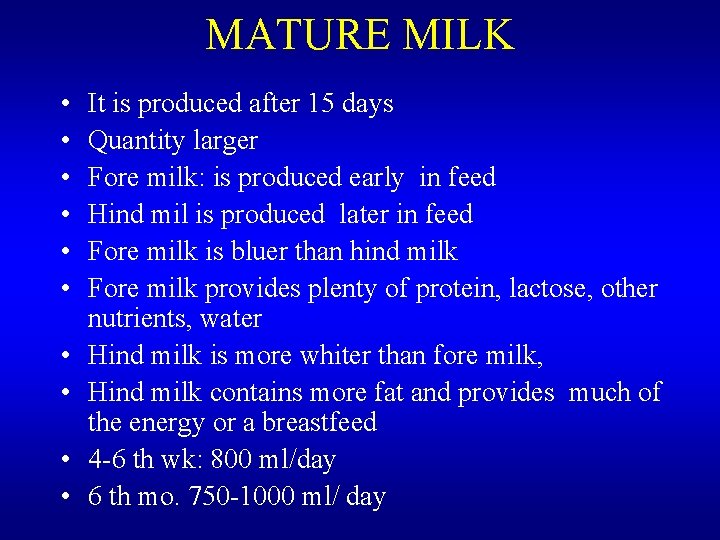
MATURE MILK • • • It is produced after 15 days Quantity larger Fore milk: is produced early in feed Hind mil is produced later in feed Fore milk is bluer than hind milk Fore milk provides plenty of protein, lactose, other nutrients, water Hind milk is more whiter than fore milk, Hind milk contains more fat and provides much of the energy or a breastfeed 4 -6 th wk: 800 ml/day 6 th mo. 750 -1000 ml/ day
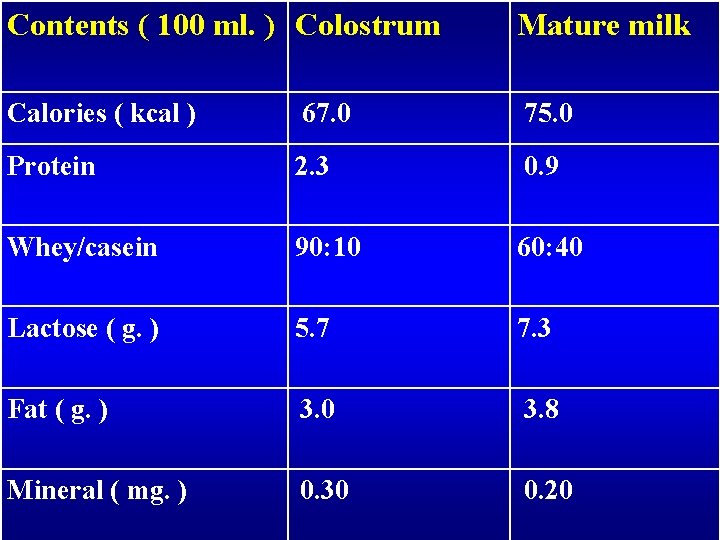
Contents ( 100 ml. ) Colostrum Mature milk Calories ( kcal ) 67. 0 75. 0 Protein 2. 3 0. 9 Whey/casein 90: 10 60: 40 Lactose ( g. ) 5. 7 7. 3 Fat ( g. ) 3. 0 3. 8 Mineral ( mg. ) 0. 30 0. 20
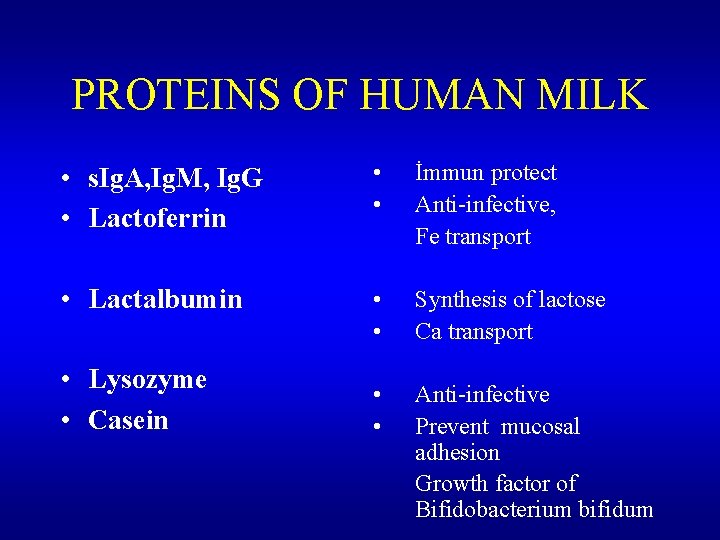
PROTEINS OF HUMAN MILK • s. Ig. A, Ig. M, Ig. G • Lactoferrin • • İmmun protect Anti-infective, Fe transport • Lactalbumin • • Synthesis of lactose Ca transport • • Anti-infective Prevent mucosal adhesion Growth factor of Bifidobacterium bifidum • Lysozyme • Casein
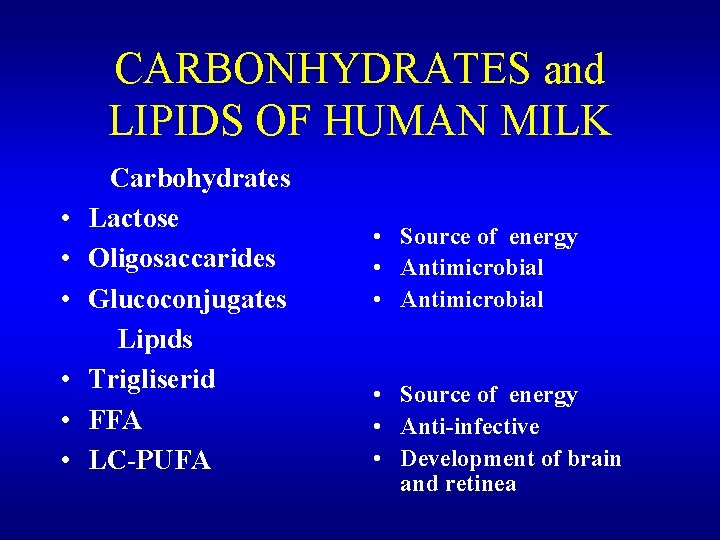
CARBONHYDRATES and LIPIDS OF HUMAN MILK • • • Carbohydrates Lactose Oligosaccarides Glucoconjugates Lipıds Trigliserid FFA LC-PUFA • Source of energy • Antimicrobial • Source of energy • Anti-infective • Development of brain and retinea
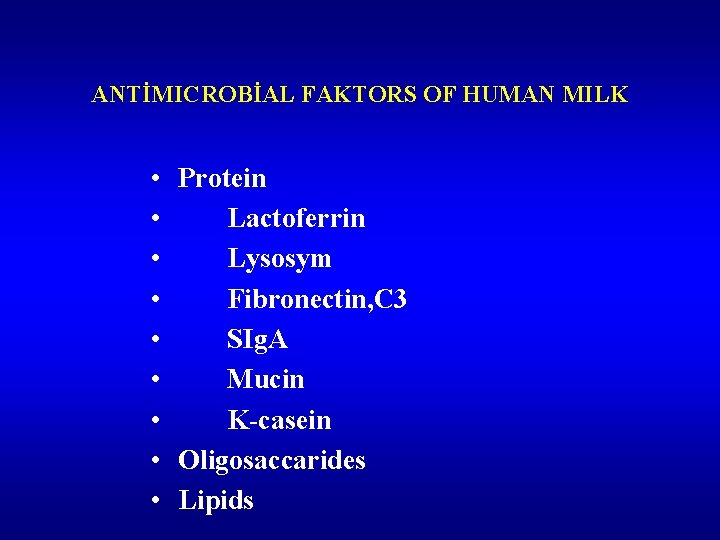
ANTİMICROBİAL FAKTORS OF HUMAN MILK • Protein • Lactoferrin • Lysosym • Fibronectin, C 3 • SIg. A • Mucin • Κ-casein • Oligosaccarides • Lipids
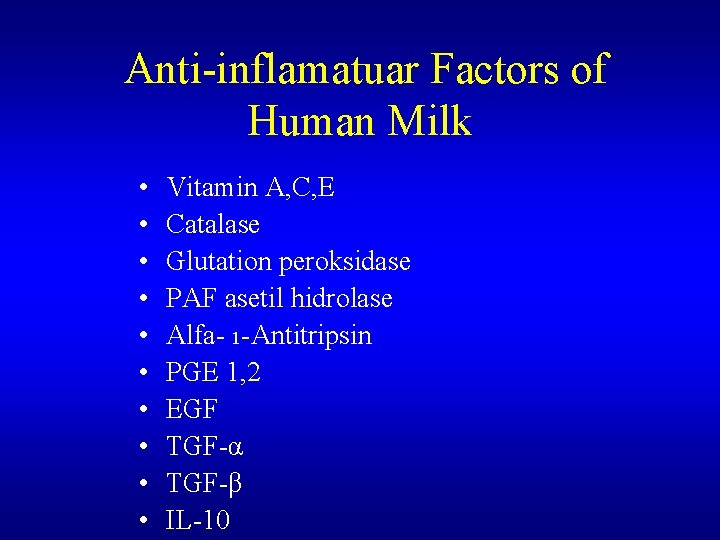
Anti-inflamatuar Factors of Human Milk • • • Vitamin A, C, E Catalase Glutation peroksidase PAF asetil hidrolase Αlfa- 1 -Antitripsin PGE 1, 2 EGF TGF-α TGF-β IL-10
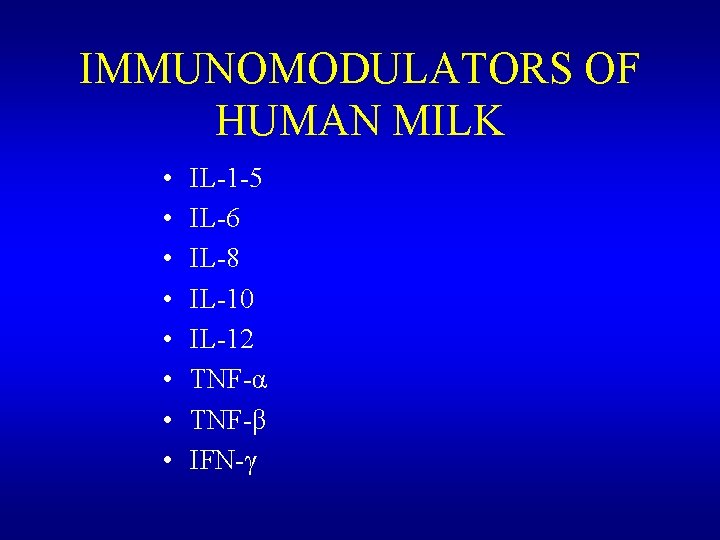
IMMUNOMODULATORS OF HUMAN MILK • • IL-1 -5 IL-6 IL-8 IL-10 IL-12 TNF-α TNF-β IFN-γ
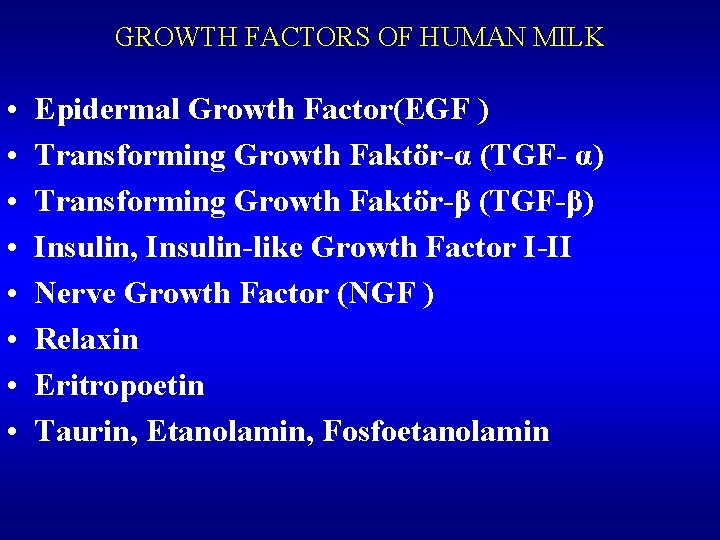
GROWTH FACTORS OF HUMAN MILK • • Epidermal Growth Factor(EGF ) Transforming Growth Faktör-α (TGF- α) Transforming Growth Faktör-β (TGF-β) Insulin, Insulin-like Growth Factor I-II Nerve Growth Factor (NGF ) Relaxin Eritropoetin Taurin, Etanolamin, Fosfoetanolamin
Hormones • • • Prolactin GH, GHRH, Somatostatin TRH, TSH, T 4, T 3, reverse T 3 Gn. RH, LH Parathormon, calsitonin Estrogen, progesteron, adrenal steroids
ENZYMES OF HUMAN MILK • • • Lipase Lipoprotein lipase Galactosll transferase Sülfidril oksidase Lactoperoksidase, tiyosiyanat, hidrojen peroksit • Lysosyme, peroksidase
ADVANTAGES OF BREASTFEEDING • Protect the babies from diarrheal disease (Shigella sp, E. coli G. lambilia, rotavirus) • Protect the babies from respiratory disease (H. influenzae tip b S. pneumoniae) • Protect the babies from other infections: urinary infection, AOM, sepsis, meningitis • Prevent allerjik reactions, diaper rash • Prevent some chronic disease: • IDDM, Çölyak hast. , Ülseratif kolit, crohn hast. • Prevent obesity, atherosclerosis • Higher scores on intelligence tests • Establish bonding between mother and baby • Protect the mothers from breast ca. , over ca. , anemia, spinal and pelvis fractures Family Planning Economical

LACTOGENESIS • Stage 1 Pregnancy Second trimester • Stage ll Delivery • Estrogen, progesteron, placental prolactin produced ductal ve alveolar maturation • Estrogen, progesteron decrease, prolaktin level is high Proactin stimulated breast gland milk production starts
PHYSIOLOGY OF LACTATION • Infant sucks • Prolaktin (milk production) • Oksitosin (milk secretion) • Message reaches Hypothalamus • Oxytocin is secreted from posterior pituitary gland • Prolactin is secreted from anterior pituitary gland • Situmulates milk producing cells and milk production can start • Stimulates the contraction of the myoepithelial cells around the milk glands, ducts. Milk is transported to lactiferous sinuses.


ADVANTAGES OF ROOMİNG-IN DEMAND FEEDING Advantages of rooming in Advantages of demand feeding Mother can respond to baby Babies cry less, so less temptation to give bottle feeds Mothers more confident about breastfeeding Breastfeeding continue longer Breastmilk comes in sooner Baby gains weight faster Fewer difficulties such as engorgement Breastfeeding more easily estabilished
MORE FEEDING=MORE SIGNALS=MORE MILK (PROVIDED THAT THE SUCKING IS EFFICIENT)
HOW TO HELP A MOTHER WİTH AN EARLY BREASTFEED • Avoid hurry and noise • Ask the mother how she feels and how breastfeeding is going • Observe a breastfeed • Help with positioning if necessary • Give her relevant information • Answer the mothers questions
CONFIDENCE AND SUPPORT SKILLS • Accept what a mother thinks and feels • Recognize praise what a mother and baby are doing right • Give practical help • Give a little, relevant information • Use simple language • Make one or two suggestions, not commands
BREASTFEED OBSERVATION • • • Body position Responses Emotional bonding Anatomy of breast Suckling Time spend suckling
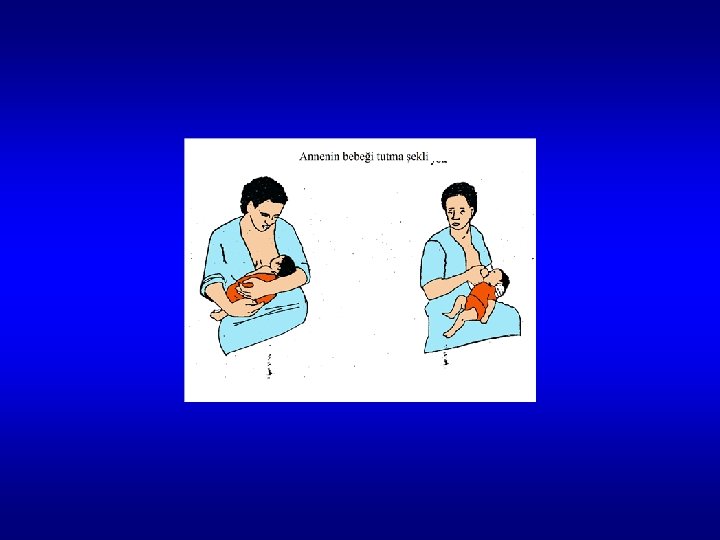
HOW TO HELP A MOTHER TO POSITION HER BABY The Four Key Points: • Mother should hold baby’s body close to hers • Baby’s head and body should be straight line • Baby’s face should face the breast • If baby is newborn, baby’s bottom supported
HOW TO HELP A MOTHER TO HELP THE BABY ATTACH HOW TO HELP THE BABY ATTACH • Touch her baby’s lips with her nipple • Wait until her baby’s mouth is opening wide • Move her baby quickly on to her breast, aim his lower lip below the nipple
SIGNS OF WELL ATTACHMENT TO BREAST AND SUCKLİNG • • • Mouth wide open Lower lip turned outwards Cheeks round More areola above baby’s mouth Slow deep sucks Can see or hear swallowing
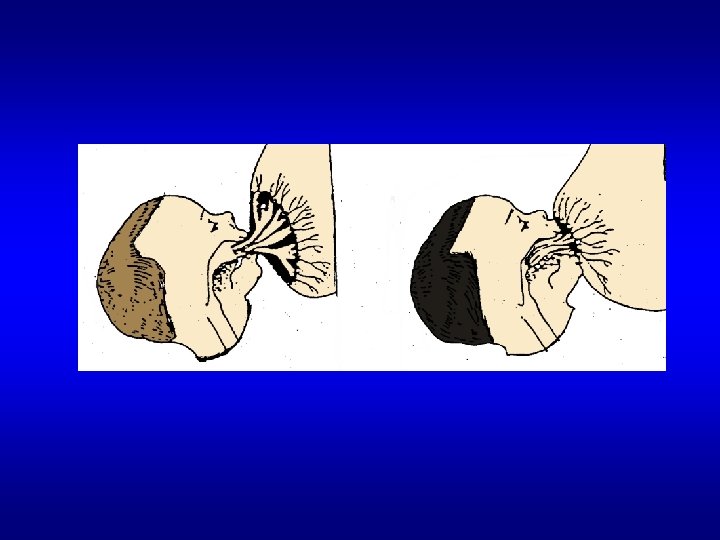
CAUSES AND RESULTS OF POOR ATTACHMENT CAUSES • Inexperienced mother • Small or weak baby • Use of feeding bottle • Breast poorly protractile • Lack of skilled support RESULTS • Sore nipples • Fissures • Engorgement • Baby unsatisfied, wants to feed a lot • Baby refuses to suckle • Baby fails to gain
RELIABLE SINGS THAT A BABY MAY NOT BE GETTING ENOUGH BREASTMILK • Poor weight gain • Less than 500 g a month • Less than birth weight after 2 weeks • Passing small amount • Less than 6 times a day, yellow and of concentrated urine strong smelling
POOSIBLE SINGS THAT A BABY MAY NOT BE GETTING ENOUGH BREASTMILK • • • Baby not satisfied after breastfeeds Baby cries often Very frequent breastfeeds Very long breastfeeds Baby refuses to breastfeed Baby has hard, dry or green stools No milk comes when mother express Breasts did not enlarge (during pregnancy) Milk did not come in (after delivery)
COMMEN REASONS WHY A BABY MAY NOT GET ENOUGH BREASTMILK BREASTFEEDİNG FACTORS • • Delayed start Infrequent feeds No night feeds Short feeds Poor attachment Bottles Complementary feeds MOTHER: PSYCHOLOGICAL FACTORS • Lack of confidence • Worry , stress • Dislike of breastfeeding • Rejection of baby • Triedness
RARE REASONS WHY A BABY MAY NOT GET ENOUGH BREASTMILK MOTHER: PHYSICAL CONDITION • Contraceptive pill, diuretics • Pregnancy • Severe malnutrition • Alcohol • Smoking • Retained piece placenta • Poor breast development BABY’S CONDITION • Illness • Abnormality
THIS DO NOT EFFECT THE BREASTMİLK SUPPLY • • Age of mother Menstruation Returning to a job Age of baby Caesarian section Many children Simple, ordinary diet
CONTRENDİCATIONS OF BREASTFEEDING • • Mother with severe disease Mother with psychosis or severe depression Mothers with HIV infection Mothers with HTLV-I (İnsan T-cell lymphotrophic virus-I) infection Mother with active pulmoner tuberculosis Mother with active HSV infection on her nipple Mothers treated with radioactive substances and chemoterapy Infants with rare metabolic diseases (galactosemia, phenylketonuria and maple syrup urine disease)
BREASTFEEDING WILL BE SUCCESSFUL IN MOST CASES IF : • The mother feels good about herself • The baby is well attached to the breast so that he suckles effectively • The baby suckles as often and for as long as he wants ( at least 10 minutes) • The environment supports breastfeeding
HOW HEALTH SERVICES CAN SUSTAIN BREASTFEEDING • Praise all mothers who are breastfeeding • Help mothers to breastfeed in the most healthy way (breasfeeding counselling) • Encourage mothers to come for help before they decide to start artificial feeds • Remember to encourage breastfeeding when you see a mother for a reason • Help mothers to continue breastfeeding in difficult situations ( returning to work, twin, LBW newborn)
- Slides: 43