
Breast Cancer Submitted July 2014 Breast cancer is

Breast Cancer Submitted: July, 2014
Breast cancer is a disease in which malignant cells form in the tissues of the breast – “National Breast Cancer Foundation”. • The American Cancer Society estimates that 235, 030 Americans will be diagnosed with invasive Breast Cancer and 40, 430 will die of the Breast Cancer in the United States in 2014. 3 • Breast cancer is the most common cancer diagnosed in women in the United States. 2, 3 • Breast cancer can occur in both men and women. 2, 3 Introduction
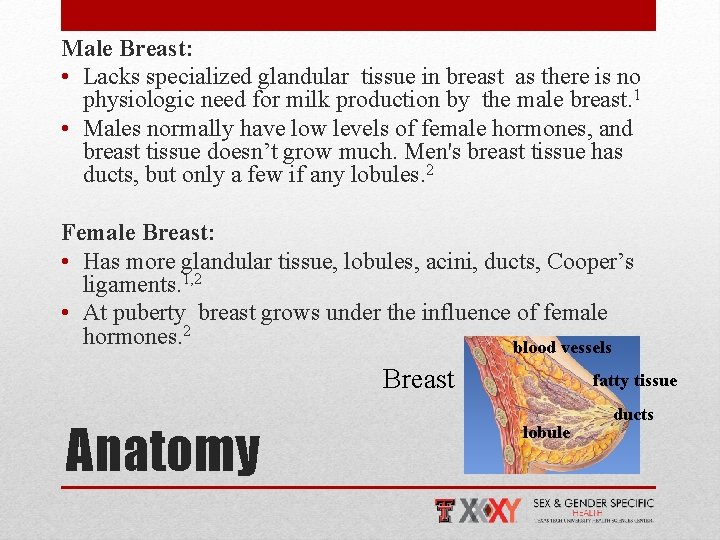
Male Breast: • Lacks specialized glandular tissue in breast as there is no physiologic need for milk production by the male breast. 1 • Males normally have low levels of female hormones, and breast tissue doesn’t grow much. Men's breast tissue has ducts, but only a few if any lobules. 2 Female Breast: • Has more glandular tissue, lobules, acini, ducts, Cooper’s ligaments. 1, 2 • At puberty breast grows under the influence of female hormones. 2 blood vessels Breast Anatomy fatty tissue lobule ducts
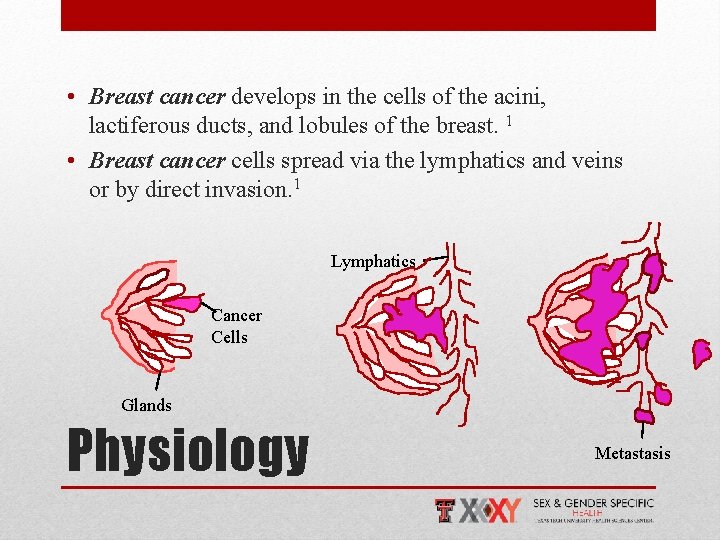
• Breast cancer develops in the cells of the acini, lactiferous ducts, and lobules of the breast. 1 • Breast cancer cells spread via the lymphatics and veins or by direct invasion. 1 Lymphatics Cancer Cells Glands Physiology Metastasis
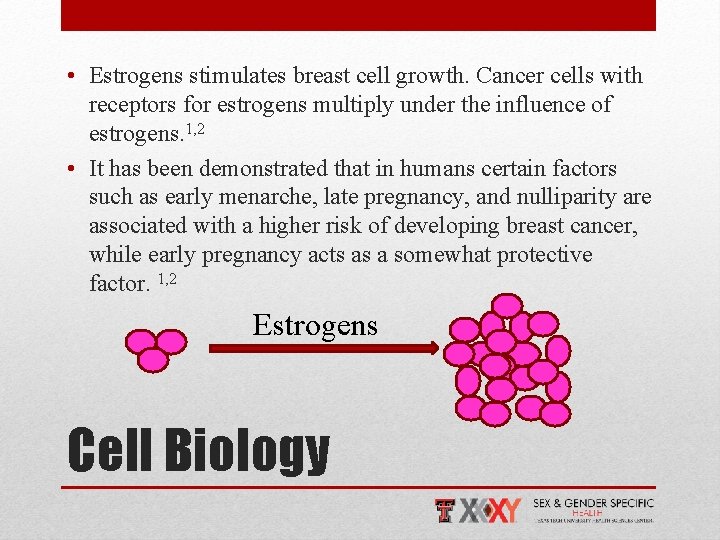
• Estrogens stimulates breast cell growth. Cancer cells with receptors for estrogens multiply under the influence of estrogens. 1, 2 • It has been demonstrated that in humans certain factors such as early menarche, late pregnancy, and nulliparity are associated with a higher risk of developing breast cancer, while early pregnancy acts as a somewhat protective factor. 1, 2 Estrogens Cell Biology
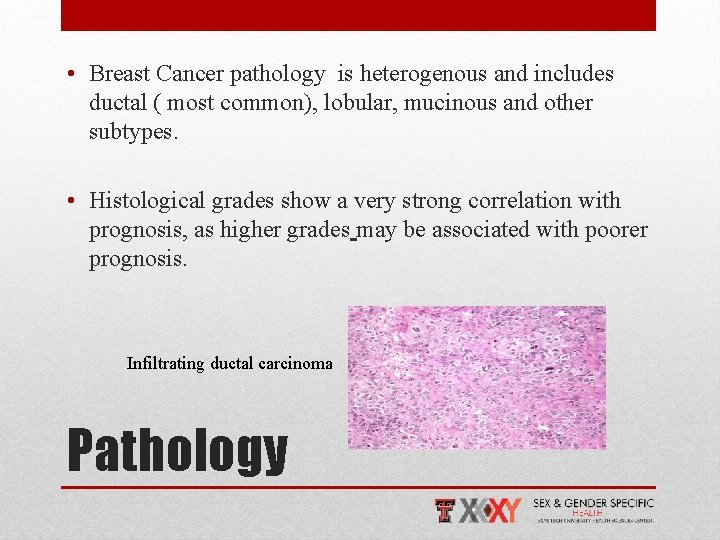
• Breast Cancer pathology is heterogenous and includes ductal ( most common), lobular, mucinous and other subtypes. • Histological grades show a very strong correlation with prognosis, as higher grades may be associated with poorer prognosis. Infiltrating ductal carcinoma Pathology
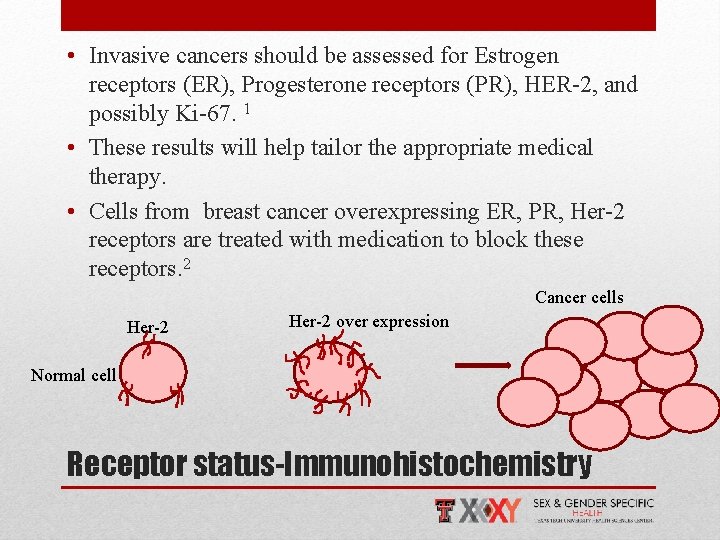
• Invasive cancers should be assessed for Estrogen receptors (ER), Progesterone receptors (PR), HER-2, and possibly Ki-67. 1 • These results will help tailor the appropriate medical therapy. • Cells from breast cancer overexpressing ER, PR, Her-2 receptors are treated with medication to block these receptors. 2 Cancer cells Her-2 over expression Normal cell Receptor status-Immunohistochemistry
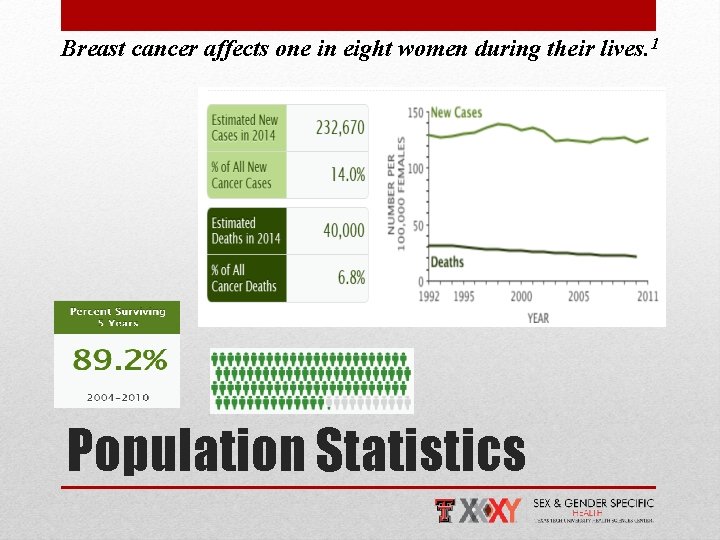
Breast cancer affects one in eight women during their lives. 1 Population Statistics
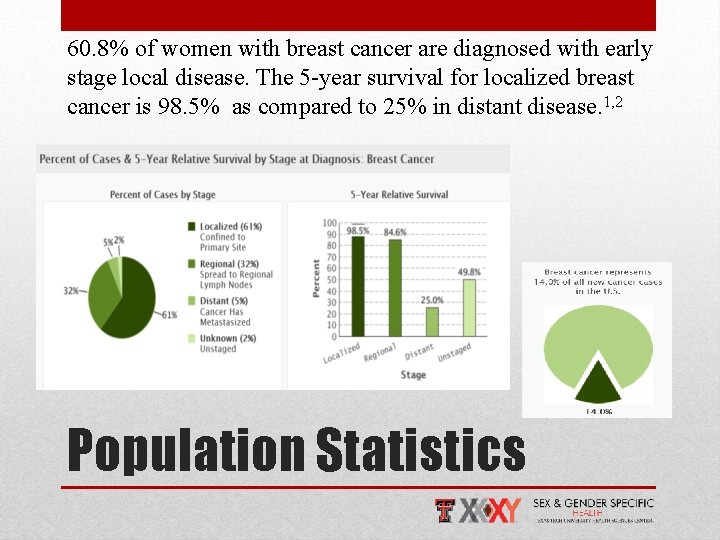
60. 8% of women with breast cancer are diagnosed with early stage local disease. The 5 -year survival for localized breast cancer is 98. 5% as compared to 25% in distant disease. 1, 2 Population Statistics
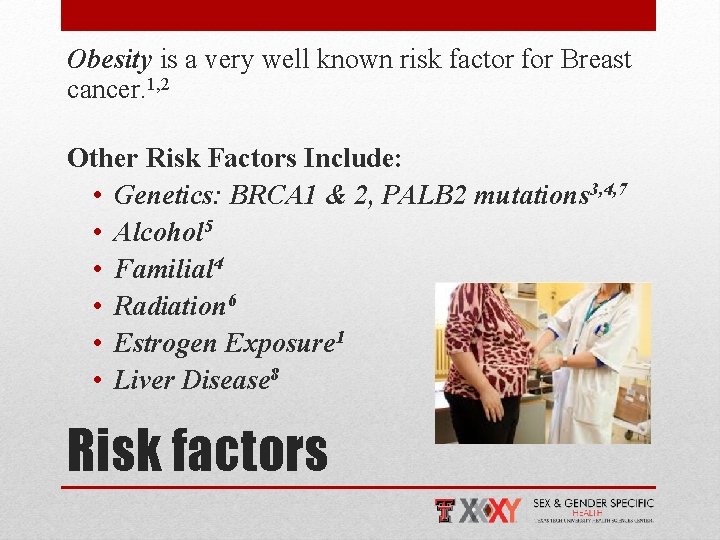
Obesity is a very well known risk factor for Breast cancer. 1, 2 Other Risk Factors Include: • Genetics: BRCA 1 & 2, PALB 2 mutations 3, 4, 7 • Alcohol 5 • Familial 4 • Radiation 6 • Estrogen Exposure 1 • Liver Disease 8 Risk factors
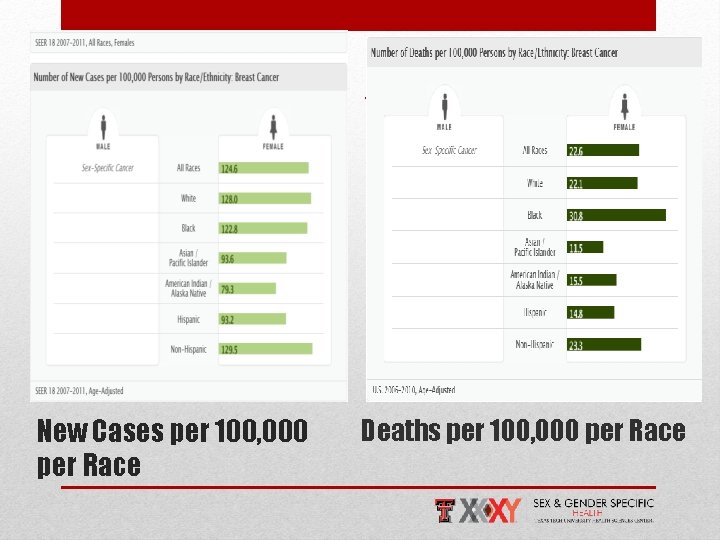
New Cases per 100, 000 per Race Deaths per 100, 000 per Race
MEN GET IT TOO !! • Men with breast cancer make up less than 1% of all the breast cancers. Male compared with female breast cancers occurred later in life with higher stage, lower grade, and more estrogen receptor–positive tumors. 1 • Life time risk is 1 in 1000 men will be affected. 4 • Male breast cancer is treated the same as female breast cancer and stage for stage the survival is similar. Breast Cancer and Men
The American Cancer Society estimates for breast cancer in men in the United States for 2014 are: • About 2, 360 new cases of invasive breast cancer will be diagnosed. 1 • About 430 men will die from breast cancer. 1 • Risk in men is 1 in 1000 as compared to 1 in 8 for women. 1 Incidence
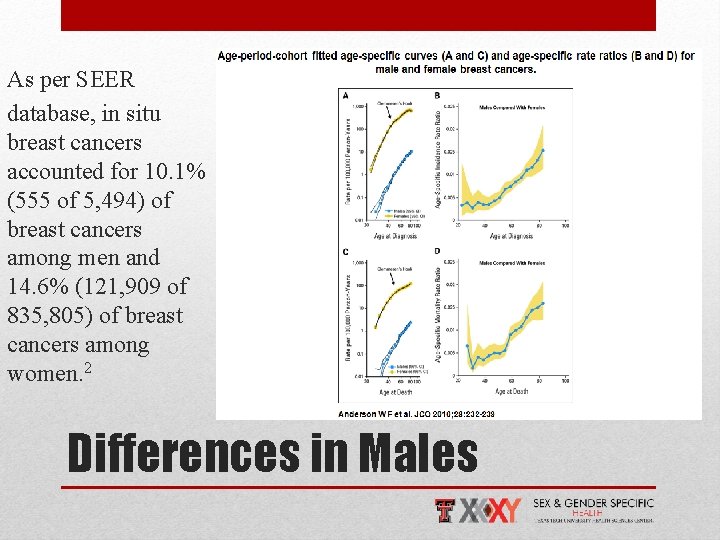
As per SEER database, in situ breast cancers accounted for 10. 1% (555 of 5, 494) of breast cancers among men and 14. 6% (121, 909 of 835, 805) of breast cancers among women. 2 Differences in Males
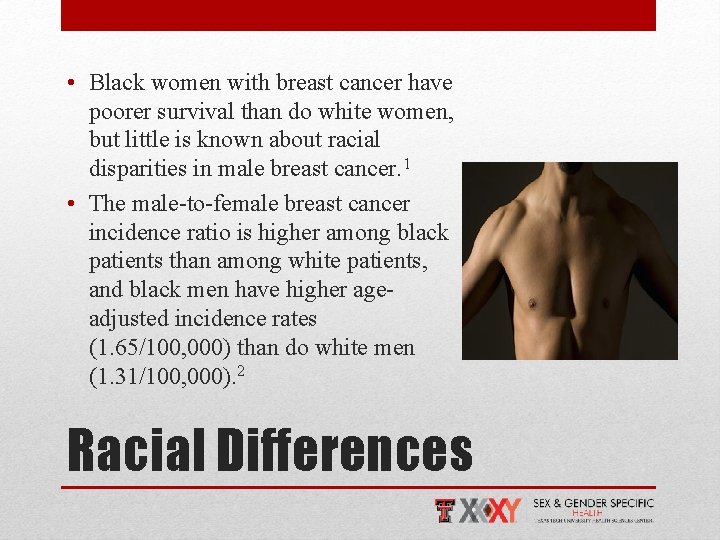
• Black women with breast cancer have poorer survival than do white women, but little is known about racial disparities in male breast cancer. 1 • The male-to-female breast cancer incidence ratio is higher among black patients than among white patients, and black men have higher ageadjusted incidence rates (1. 65/100, 000) than do white men (1. 31/100, 000). 2 Racial Differences
• The U. S. Preventive Services Task Force recommends biennial screening mammography for women aged 50 to 74 years. 1 • The decision to start regular, biennial screening mammography before the age of 50 years should be an individual one and take patient context into account. 1 • The American Cancer Society (ACS), the American College of Radiology (ACR) and the World Health Organization (WHO) strongly disagree with the suggested new guidelines. • ACS recommend annual mammograms starting at age 40 and continuing as long as the patient’s medical status is good. 2 Screening in Females
• Women who are at high risk for breast cancer based on certain factors should get an MRI and a mammogram every year. 1 • The American Cancer Society recommends against MRI screening for women whose lifetime risk of breast cancer is less than 15%. 1 • There is not enough evidence to make a recommendation for or against yearly MRI screening for women who have a moderately increased risk of breast cancer (a lifetime risk of 15% to 20% according to risk assessment tools that are based mainly on family history) or who may be at increased risk of breast cancer. 1 Screening

• SCRENING GUIDELINES FOR MEN ? Screening in Males
• MRI is a recommended annual screening tool for women with an assessed risk of 20% or higher (BRCA carrier)2. • Some men may have a higher risk of breast cancer, including those with: • BRCA 2 or BRCA 1 gene mutation (or a first-degree relative with a mutation). 1 • Strong family history of breast cancer, such as mother and/or sister diagnosed at age 40 or younger. 1 Men Who Would Benefit From Screening
• BRCA 2 mutations clearly increase the risk of breast cancer in men. The lifetime risk of breast cancer is 1 in 1, 000 for men in the general population and about 65 in 1, 000 for men with a BRCA 2 mutation. 1 • BRCA 1 mutations may also increase this risk, but the link is less clear 2. BRCA Mutation in Men
The Breast Cancer Risk Assessment Tool is an interactive tool designed by scientists at the National Cancer Institute (NCI) and the National Surgical Adjuvant Breast and Bowel Project (NSABP) to estimate a woman's risk of developing invasive breast cancer. Screening Tool
Females and Males are they treated same? Are they same ? Treatment of Breast Cancer
• The main treatment for breast cancer in men is surgery to remove the tumor. This is usually a mastectomy. • Lumpectomy is an option if technically feasible. Men are also candidates for sentinel lymph node biopsy. 1, 2 • Most breast cancers in men are hormone receptor-positive. For men with hormone receptor-positive breast cancers, hormone therapy with tamoxifen is usually the first drug therapy used. 1, 2 Treatment of Breast Cancer
• The most powerful predictor of outcome in men is the status of the axillary lymph nodes, and the only prognostic factor that adds significantly to this predictive power is the duration of symptoms. 1, 2 • The profile of the stages at diagnosis, the treatment approach, and the survival rates approximate those reported in series of female breast cancers, and overall, the two diseases are remarkably similar. 1, 2 Prognosis-Same or Different in Males as Compared to Females
- Slides: 24