
Breast cancer is the development of cancer from


Breast cancer: is the development of cancer from breast tissue
Risk Factors for Breast Cancer n n Female (1% male) increase age Relative (mother or sister) Menstrual history u Early menarche u late menopause n Nulliparity
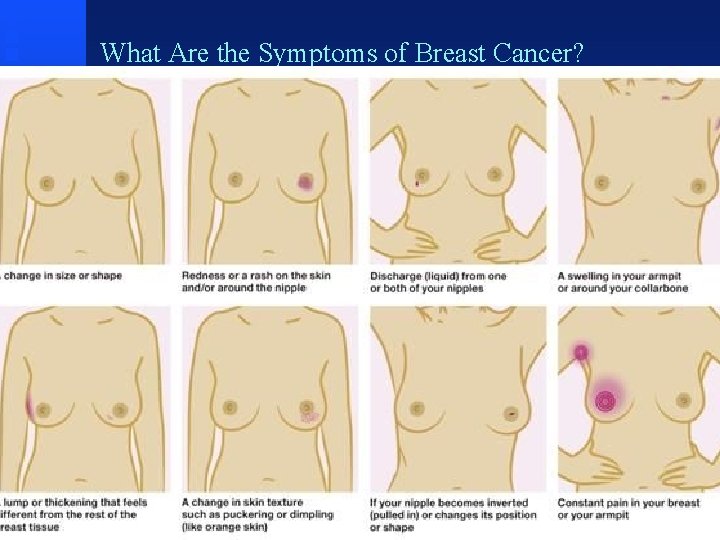
What Are the Symptoms of Breast Cancer?

Methods of Detection n Mammography n Monthly breast self-exam (BSE)
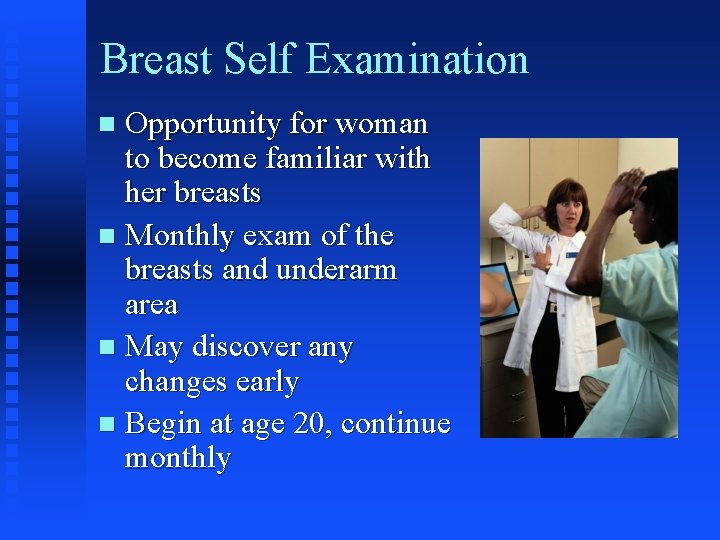
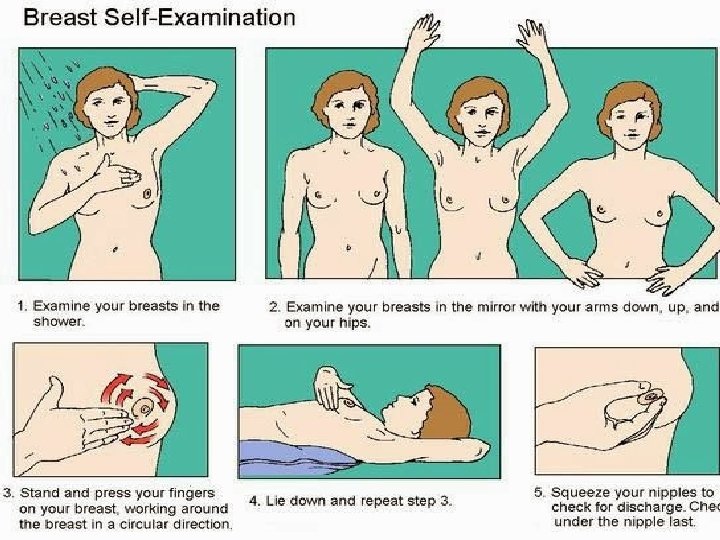
Breast Self Examination Opportunity for woman to become familiar with her breasts n Monthly exam of the breasts and underarm area n May discover any changes early n Begin at age 20, continue monthly n
When to do BSE n n n Menstruating women- 5 to 7 days after the beginning of their period Menopausal women same date each month Pregnant women – same date each month Takes about 20 minutes Perform BSE at least once a month Examine all breast tissue

Why don’t more women practice BSE? Fear n Embarrassment n Youth n Lack of knowledge n Too busy, n
Mammography n n n It help detect very small tumor long before they might be found abnormal breast examination It should be done at 40 -50 years repeated every 1 -2 years Avoid do mammography week before period &don’t use powder or cream
Breast Cancer Staging Stage 0 – non-invasive breast cancer with • no invasion of surrounding tissue •
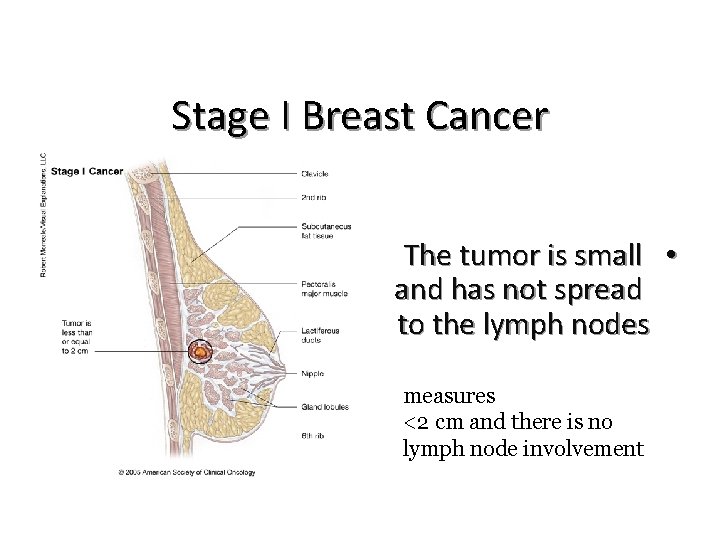
Stage I Breast Cancer The tumor is small • and has not spread to the lymph nodes measures <2 cm and there is no lymph node involvement
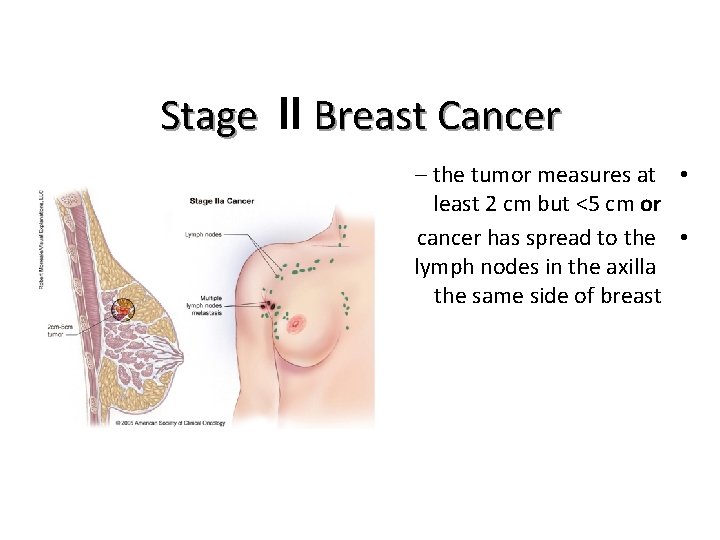
Stage II Breast Cancer – the tumor measures at • least 2 cm but <5 cm or cancer has spread to the • lymph nodes in the axilla the same side of breast
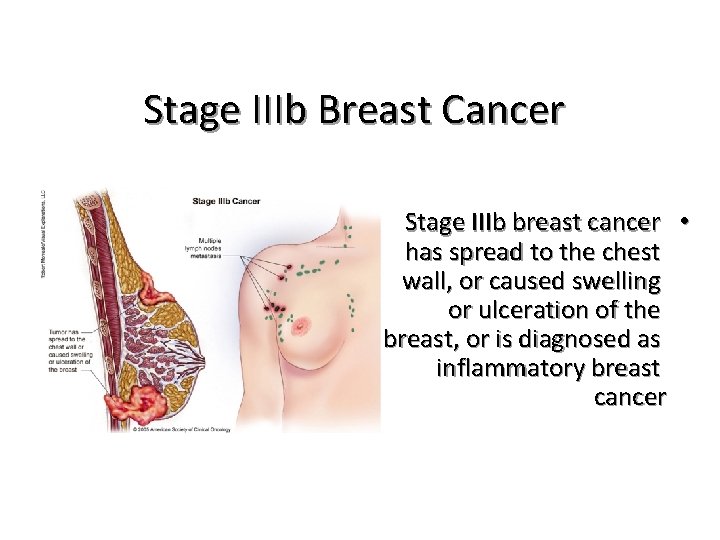
Stage IIIb Breast Cancer Stage IIIb breast cancer • has spread to the chest wall, or caused swelling or ulceration of the breast, or is diagnosed as inflammatory breast cancer
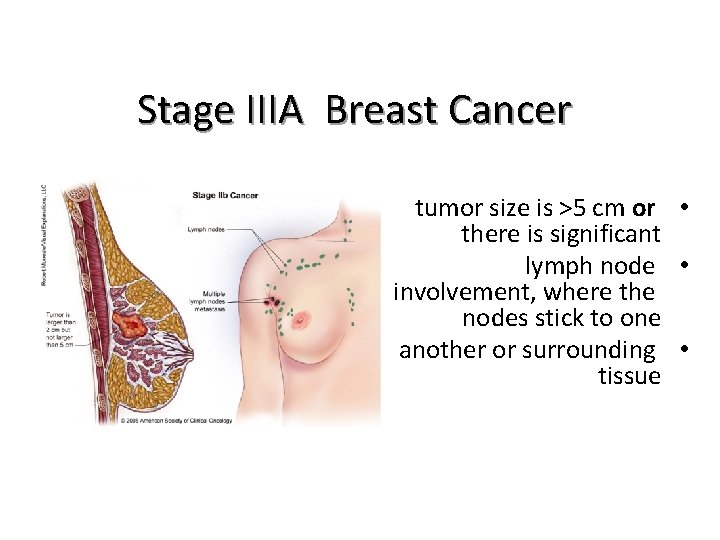
Stage IIIA Breast Cancer tumor size is >5 cm or • there is significant lymph node • involvement, where the nodes stick to one another or surrounding • tissue
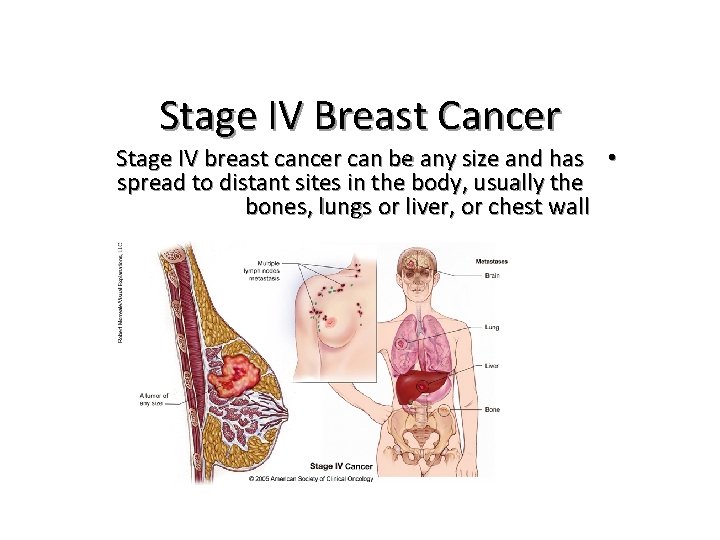
Stage IV Breast Cancer Stage IV breast cancer can be any size and has • spread to distant sites in the body, usually the bones, lungs or liver, or chest wall
COMPLICATIONS of breast cancer Anémia Anorexie Fatigue Secondary infection Depression
- Pretreatment assessment as: 1. 2. 3. 4. 5. 6. 7. history & physical examination. chest x-ray. complete blood count. liver chemistries. mammography of opposite breast. bone scan or liver scan. tumor markers (substance produced either by tumor itself or by body in response to tumor tissue) may be present in serum.
TREATMENT of breast cancer Prompt Referral and Diagnosis ü Surgery may include: – lumpectomy – mastectomy – lymphadenectomy
Chemotherapy treats the ü entire system by disrupting the ability of cancer cells to divide and grow. A combination of drugs is often used, as different drugs attack cancer cells
radiotherapy involves ü the use of high-energy X-rays to destroy the cancer cells. This painless administration of X-rays is usually given over a period of time to optimize the effect of destroying the cancer cells Radiotherapy may reduce the risk of recurrence by 50– 60%.
Hormone Therapy ü Estrogen-sensitive cancers comprise 50 – 75% of breast cancers. Commonly-used hormone drugs include anti-oestrogens (e. g. tamoxifen), LHRH agonists (e. g. Zoladex) and aromatase
Psychological Support As many as 30% of women diagnosed with breast cancer will develop a depressive illness within a year of diagnosis. The psychological impact of a diagnosis of breast cancer the input of the multi-disciplinary team to support the woman and her family.
Side effects of treatment: – radiotherapy: lethargy, anorexia, localized skin reactions – chemotherapy ) nausea, vomiting, hair loss, fatigue, infections, mouth sores and irregular menstruation – hormone therapy: mood swings, depression, weight gain, hot flushes, bloating and early menopause
Levels of prevention 1 -primary prevention -eat low fat diet -maintain weight 2 -seecondary prevention -perform monthly breast self exam -mammogram 3 -tertiary prevention -Breast reconstruction -Arm exercise after surgery exercise position to prevent lymph edema-

- Slides: 27