
BREAST anatomy imaging techniques clinicalradiological cases Istituto di
BREAST: anatomy, imaging techniques & clinical/radiological cases Istituto di Radiologia Ambra Sangiovanni
ANATOMY
Imaging techniques • Mammography • Ultrasound • MRI
Imaging techniques • Mammography • Ultrasound • MRI
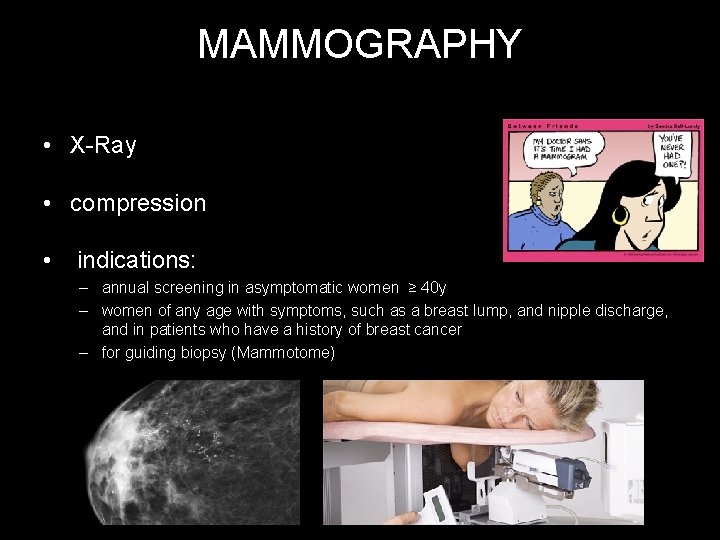
MAMMOGRAPHY • X-Ray • compression • indications: – annual screening in asymptomatic women ≥ 40 y – women of any age with symptoms, such as a breast lump, and nipple discharge, and in patients who have a history of breast cancer – for guiding biopsy (Mammotome)
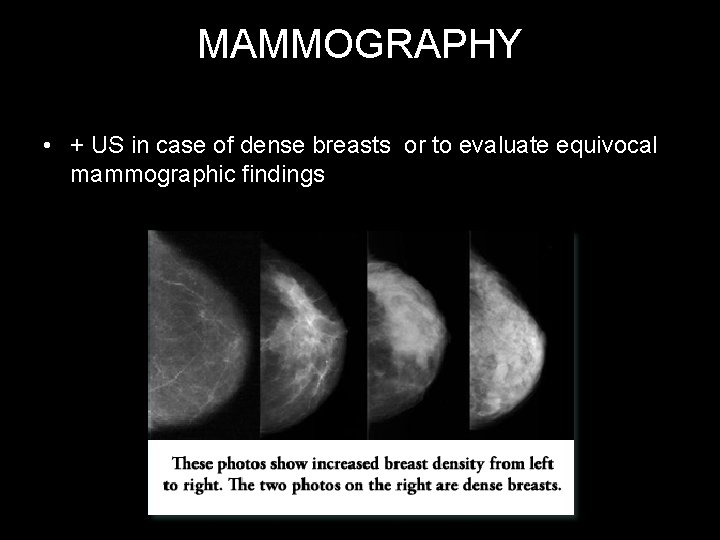
MAMMOGRAPHY • + US in case of dense breasts or to evaluate equivocal mammographic findings
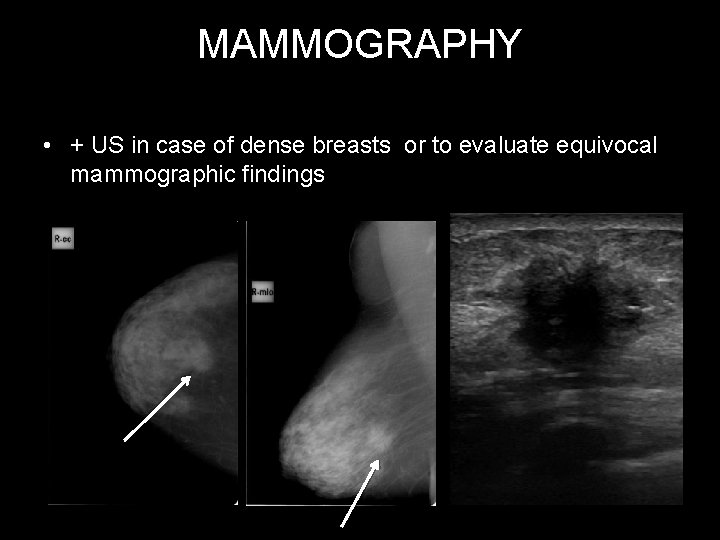
MAMMOGRAPHY • + US in case of dense breasts or to evaluate equivocal mammographic findings
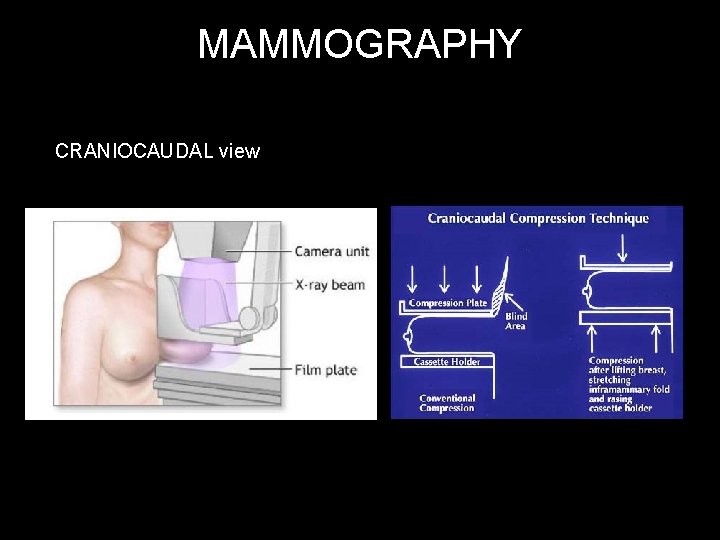
MAMMOGRAPHY CRANIOCAUDAL view
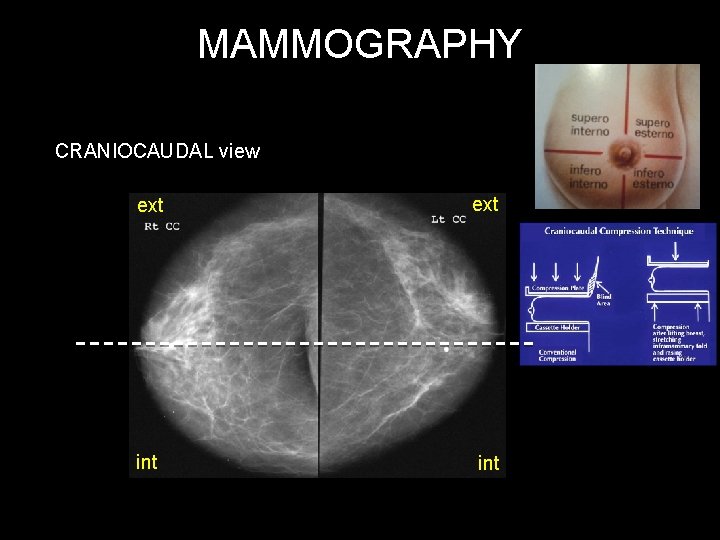
MAMMOGRAPHY CRANIOCAUDAL view ext int
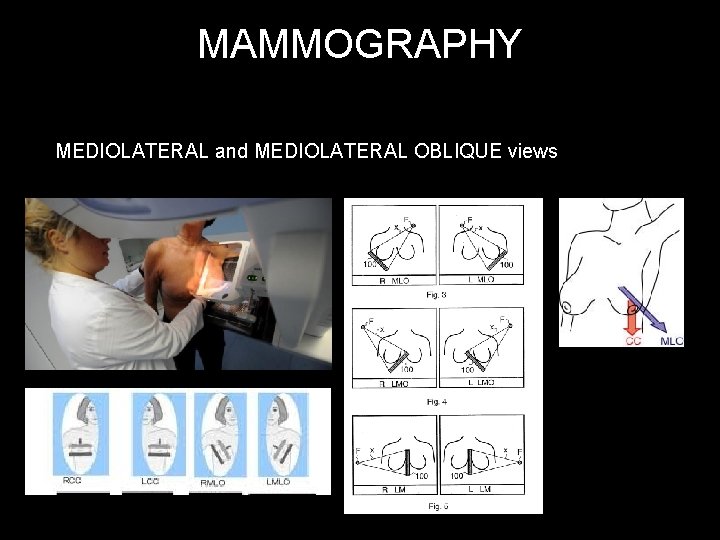
MAMMOGRAPHY MEDIOLATERAL and MEDIOLATERAL OBLIQUE views
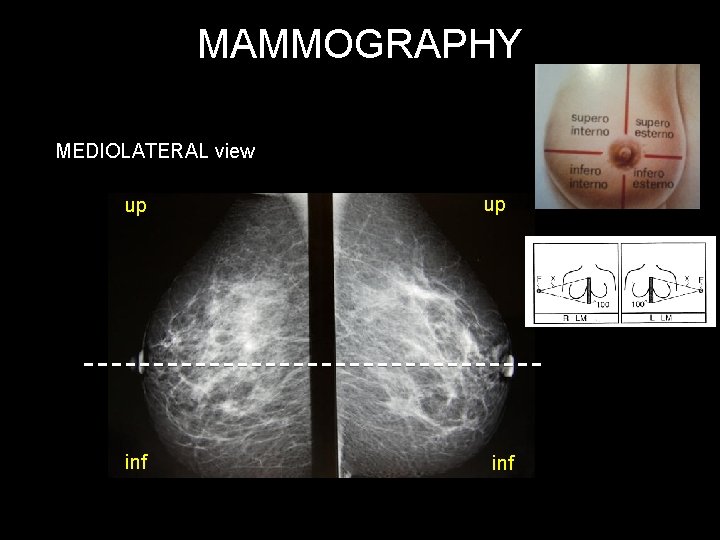
MAMMOGRAPHY MEDIOLATERAL view up inf
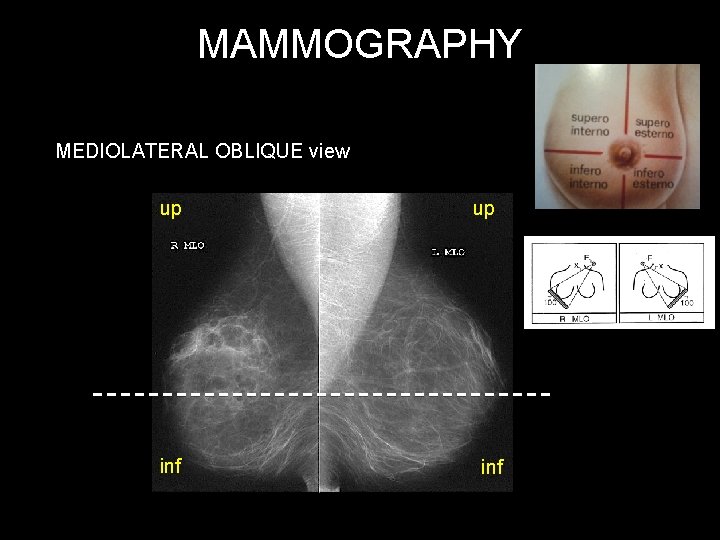
MAMMOGRAPHY MEDIOLATERAL OBLIQUE view up inf
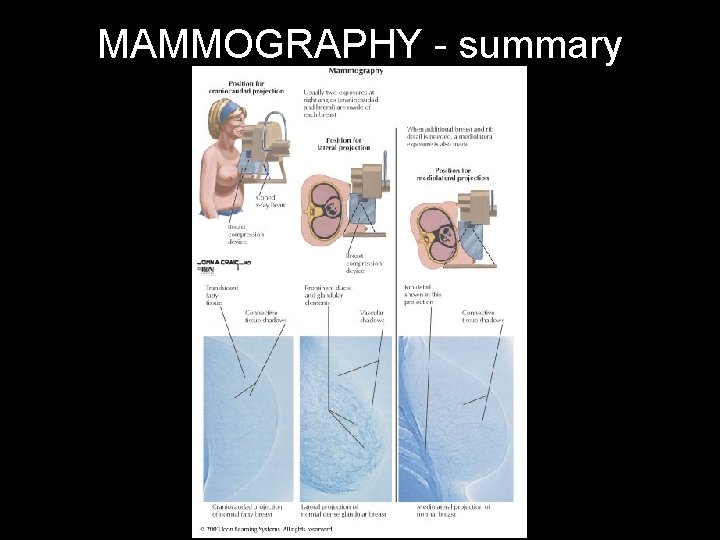
MAMMOGRAPHY - summary
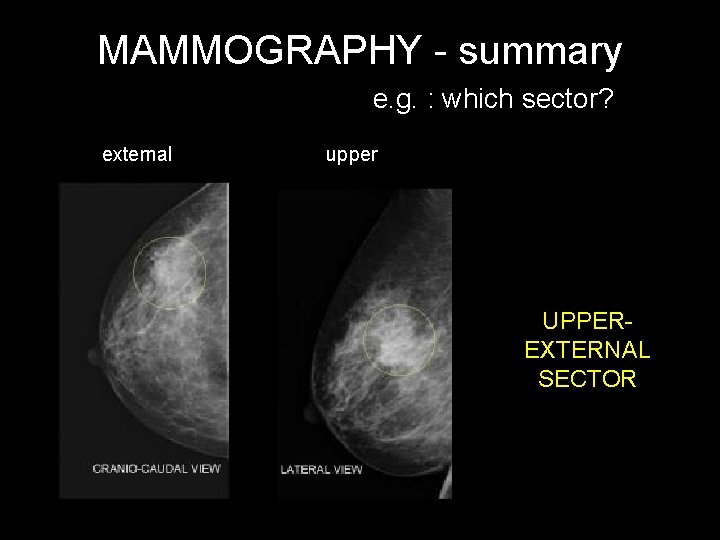
MAMMOGRAPHY - summary e. g. : which sector? external upper UPPEREXTERNAL SECTOR
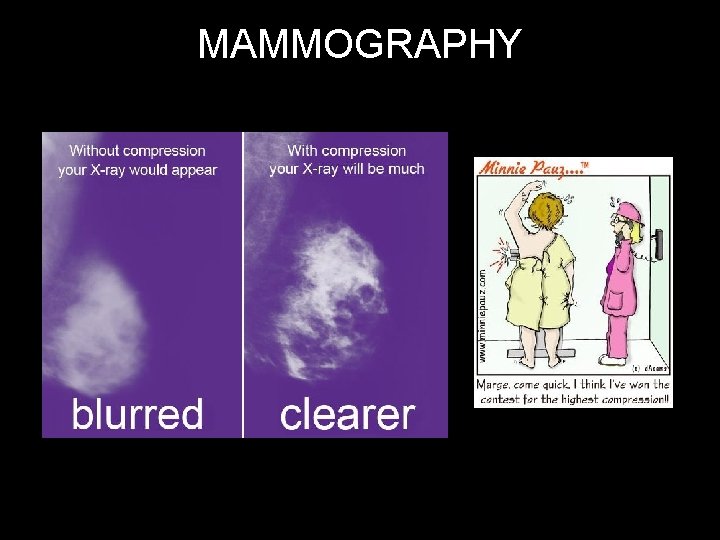
MAMMOGRAPHY
Imaging techniques • Mammography • Ultrasound • MRI
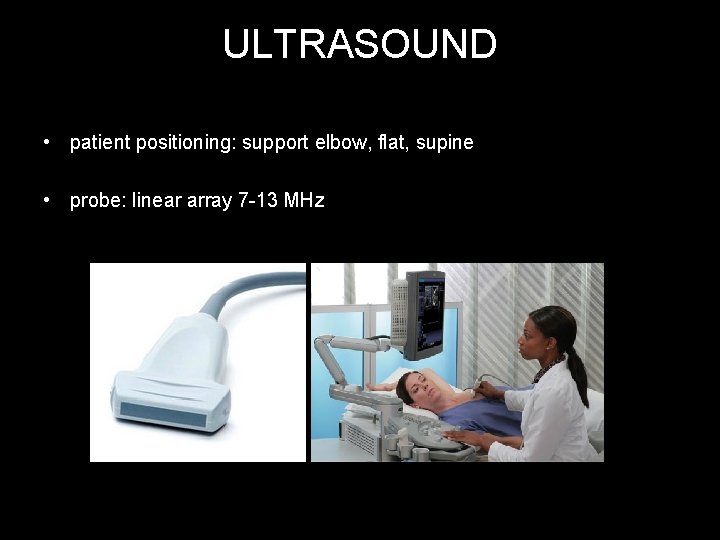
ULTRASOUND • patient positioning: support elbow, flat, supine • probe: linear array 7 -13 MHz
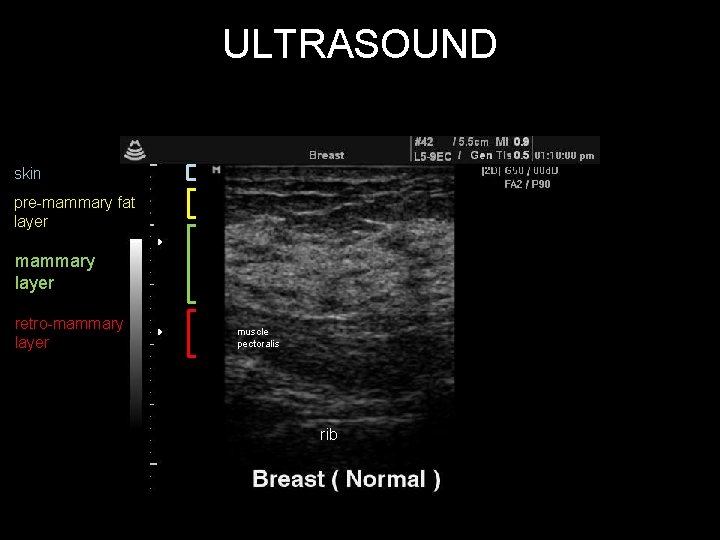
ULTRASOUND skin pre-mammary fat layer mammary layer retro-mammary layer muscle pectoralis rib
ULTRASOUND • indications: – young (usually under 30 years of age) or pregnant patient who is symptomatic
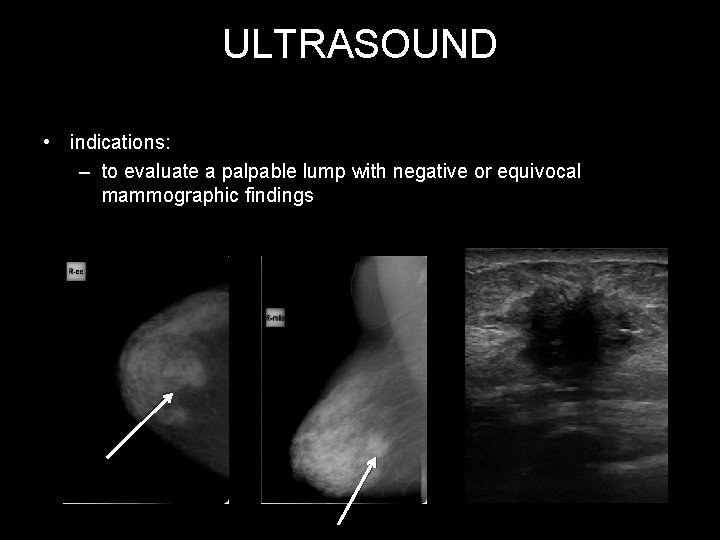
ULTRASOUND • indications: – to evaluate a palpable lump with negative or equivocal mammographic findings
ULTRASOUND • indications: – can help to distinguish between benign vs malignant characteristics – Color. Doppler and Power. Doppler can help distinguish malignant from benign tumours
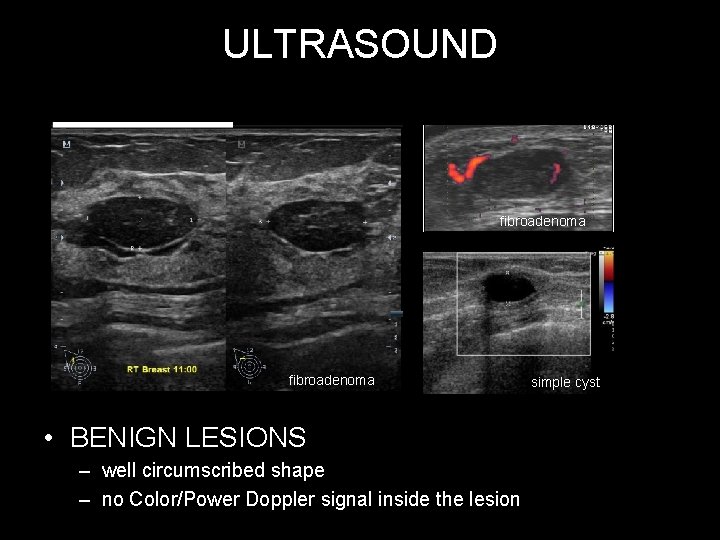
ULTRASOUND fibroadenoma • BENIGN LESIONS – well circumscribed shape – no Color/Power Doppler signal inside the lesion simple cyst
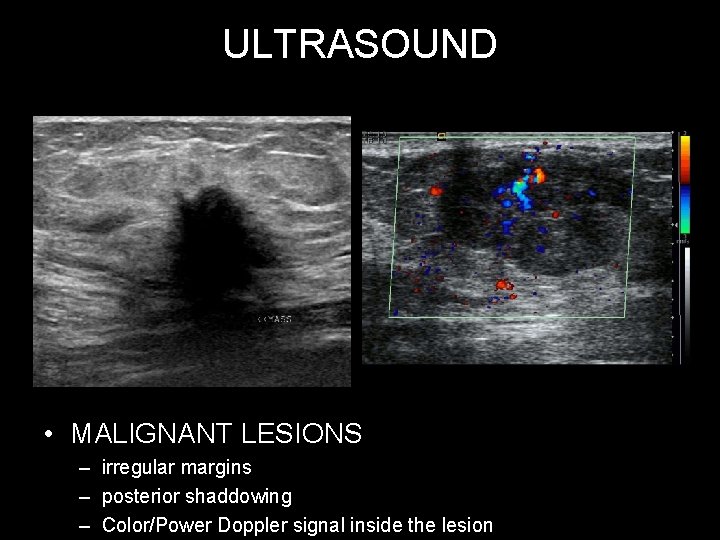
ULTRASOUND • MALIGNANT LESIONS – irregular margins – posterior shaddowing – Color/Power Doppler signal inside the lesion
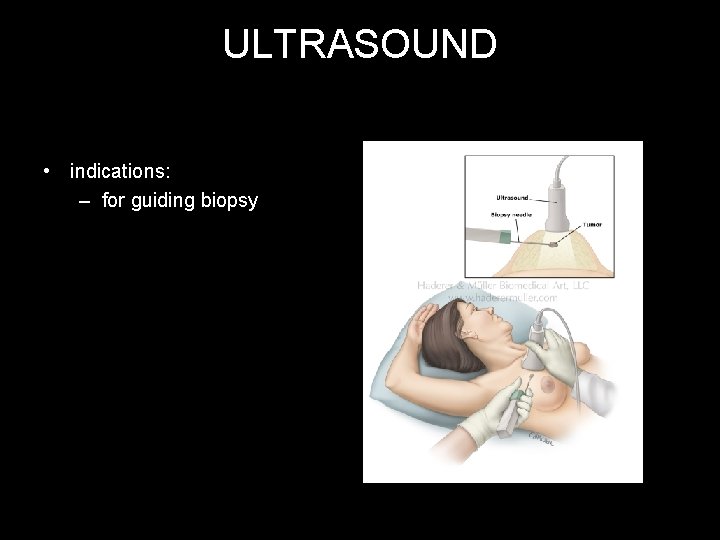
ULTRASOUND • indications: – for guiding biopsy
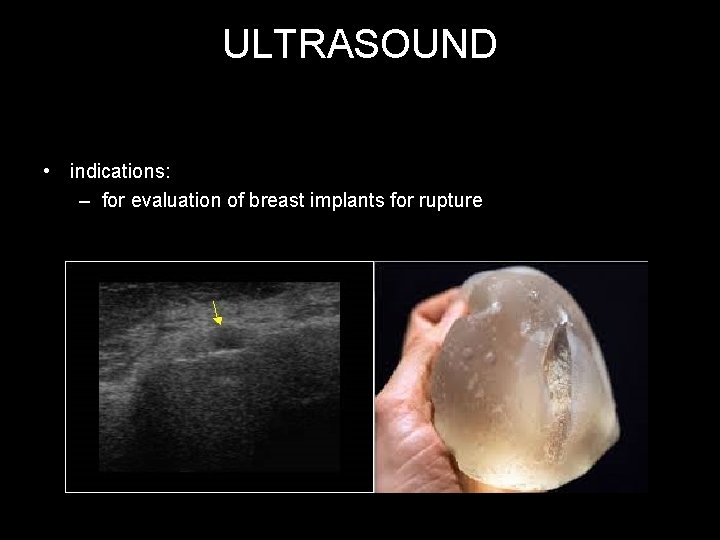
ULTRASOUND • indications: – for evaluation of breast implants for rupture
Imaging techniques • Mammography • Ultrasound • MRI
MRI • Sequences used – T 1 – T 2 – T 1 C+ (Gd) : dynamic and kinetic analysis
MRI • Indications for breast MRI – high risk screening : • • personal/family history high risk lesions : ADH / ALH / LCIS BRCA 1 / BRCA 2 gene positivity mantle radiotherapy (>4 Gray) – extent of disease (EOD) evaluation in ipsilateral and contralateral breast
MRI • Indications for breast MRI – positive margins – neo-adjuvant chemotherapy: to assess residual disease – metastatic axillary lymphadenopathy of unknown primary – to assess chest wall invasion – to assess for synchronous, multifocal or multicentric disease
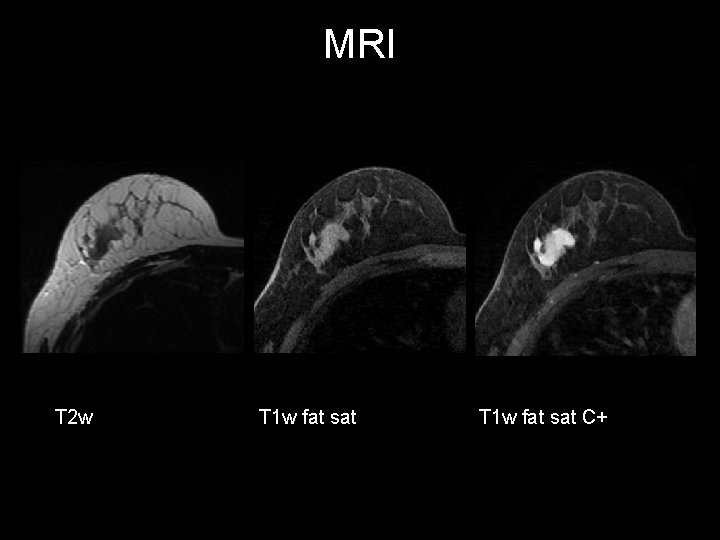
MRI T 2 w T 1 w fat sat C+
BIRADS CLASSIFICATION • BIRADS 0: incomplete, further imaging or information is required (e. g. compression, magnification, special mammographic views, ultrasound). • BIRADS I: negative, symmetrical and no masses, architectural disturbances or suspicious calcifications present. • BIRADS II: benign findings • BIRADS III: probably benign, short interval follow-up suggested. • BIRADS IV: suspicious abnormality • BIRADS V: highly suggestive of malignancy • (BIRADS VI: known biopsy proven malignancy) http: //radiopaedia. org/articles/breast-imaging-reporting-and-data-system-birads
Annual screening; round calcified mass CASE 1 • Annual screening • previous mammograms: known calcified round in the right breast • Age: >40 years old • Gender: Female • First study? – Ultrasound – Mammography – MRI w contrast
Annual screening; round calcified mass CASE 1 • Annual screening • previous mammograms: known calcified round in the right breast • Age: >40 years old • Gender: Female • First study? – Ultrasound – Mammography – MRI w contrast
Annual screening; round calcified mass
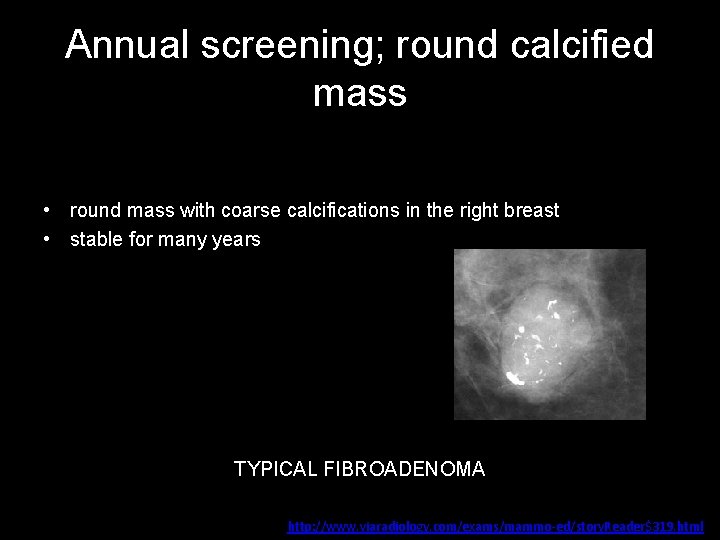
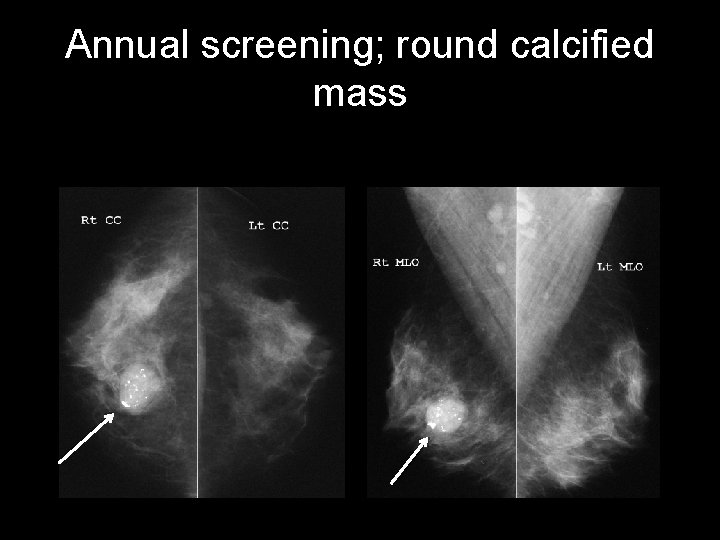
Annual screening; round calcified mass • round mass with coarse calcifications in the right breast • stable for many years TYPICAL FIBROADENOMA http: //www. viaradiology. com/exams/mammo-ed/story. Reader$319. html
Annual screening; round calcified mass https: //acsearch. acr. org/docs/69495/Narrative/
Right breast lump CASE 2 • • Right breast lump Age: 71 years old Gender: Female Race: Middle eastern • First study? – Ultrasound – Mammography – MRI w contrast
Right breast lump CASE 2 • • Right breast lump Age: 71 years old Gender: Female Race: Middle eastern • First study? – Ultrasound – Mammography – MRI w contrast
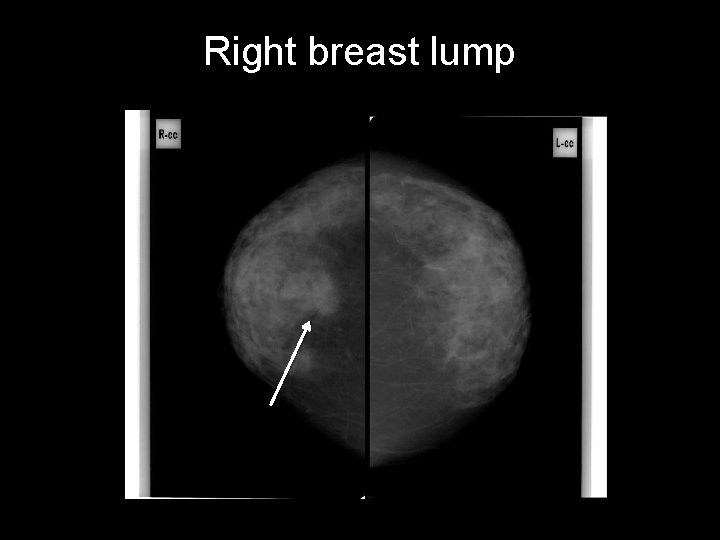
Right breast lump
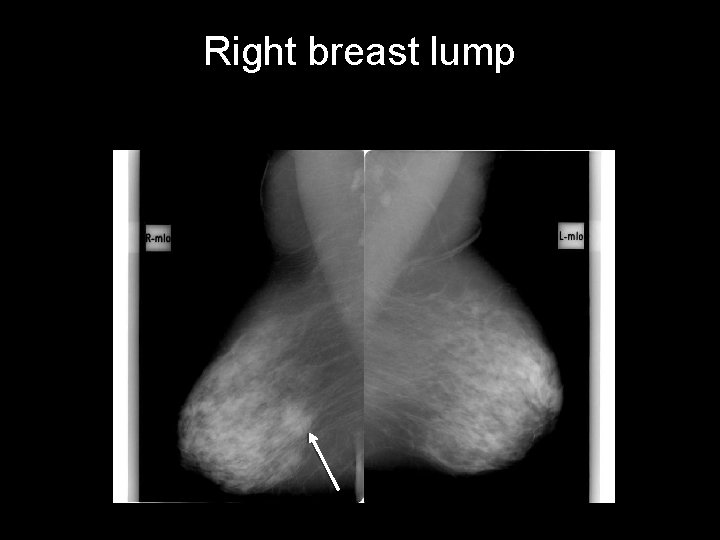
Right breast lump
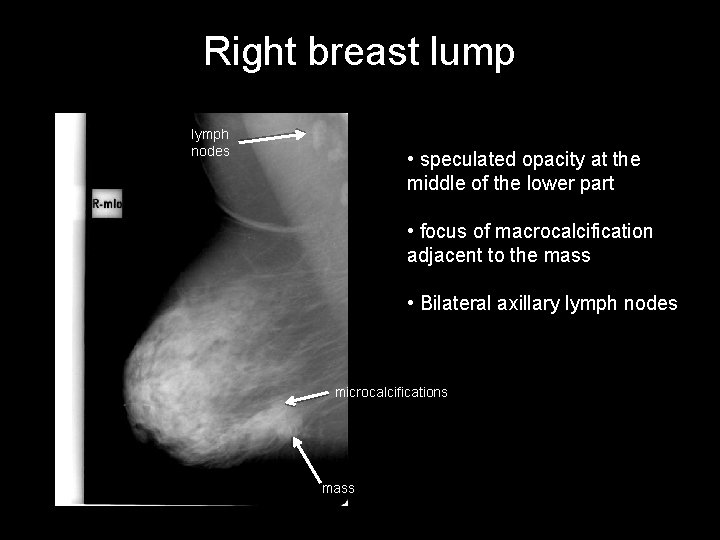
Right breast lump lymph nodes • speculated opacity at the middle of the lower part • focus of macrocalcification adjacent to the mass • Bilateral axillary lymph nodes microcalcifications mass
Right breast lump • Second study? – Ultrasound – Mammography – MRI w contrast
Right breast lump • Second study? – Ultrasound – Mammography – MRI w contrast
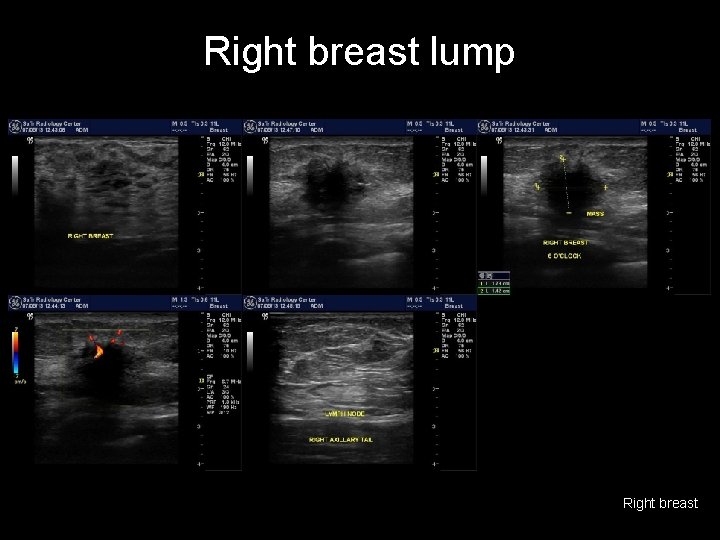
Right breast lump Right breast
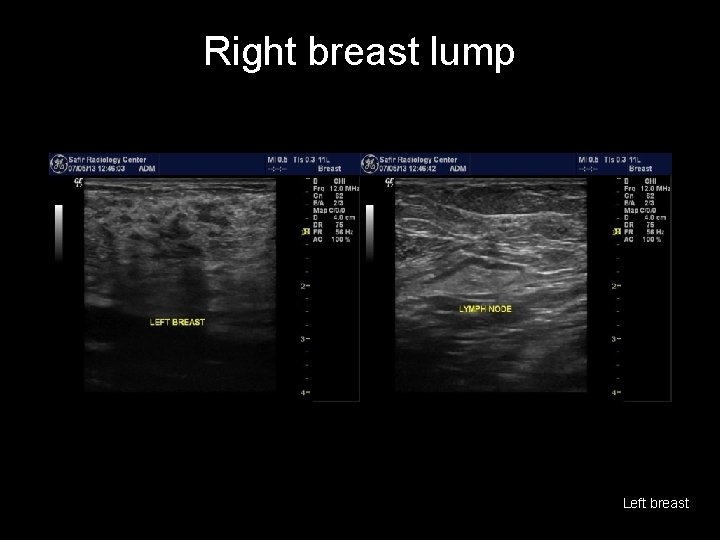
Right breast lump Left breast
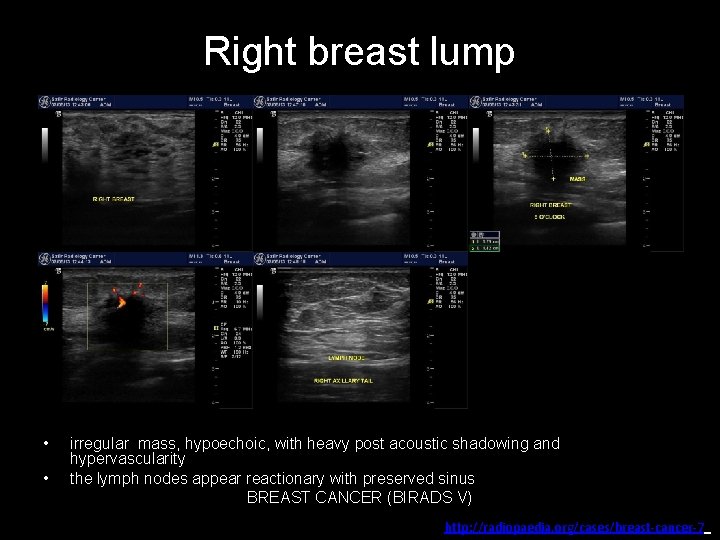
Right breast lump • • irregular mass, hypoechoic, with heavy post acoustic shadowing and hypervascularity the lymph nodes appear reactionary with preserved sinus BREAST CANCER (BIRADS V) http: //radiopaedia. org/cases/breast-cancer-7
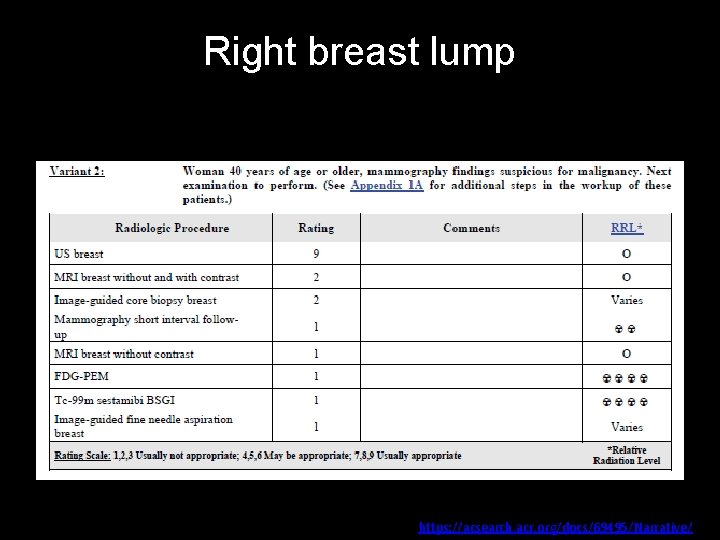
Right breast lump https: //acsearch. acr. org/docs/69495/Narrative/
Palpable left breast lump CASE 3 • Left breast lump • Age: 45 years old • Gender: Female • First study? – Ultrasound – Mammography – MRI w contrast
Palpable left breast lump CASE 3 • Left breast lump • Age: 45 years old • Gender: Female • First study? – Ultrasound – Mammography – MRI w contrast
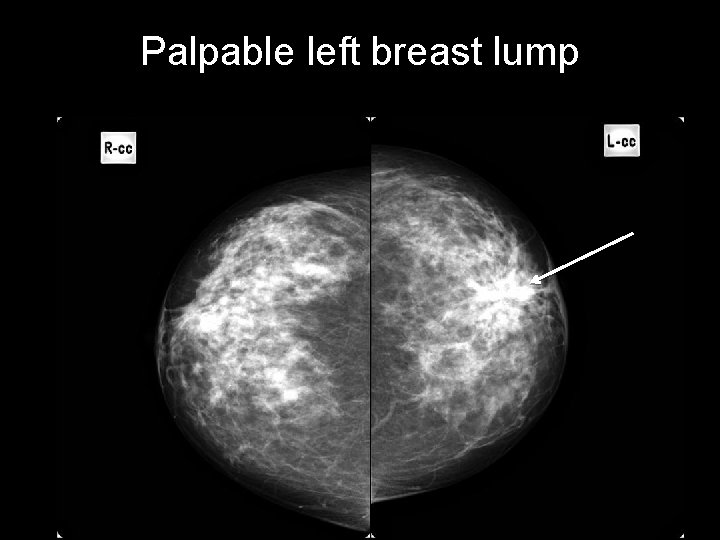
Palpable left breast lump
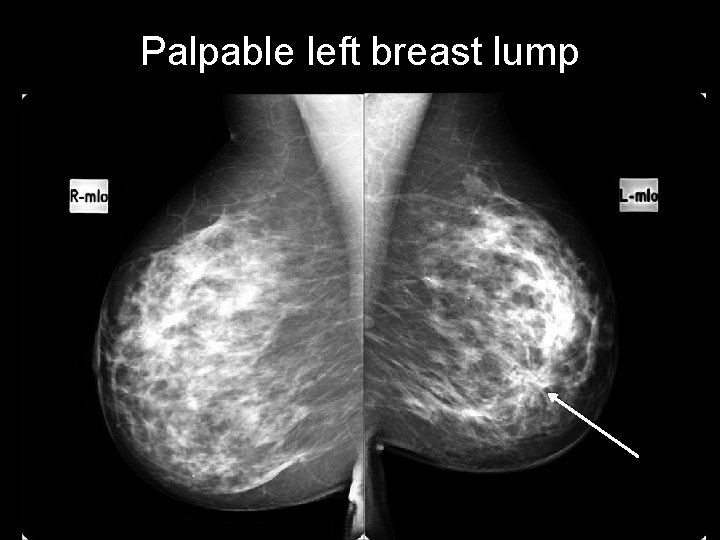
Palpable left breast lump
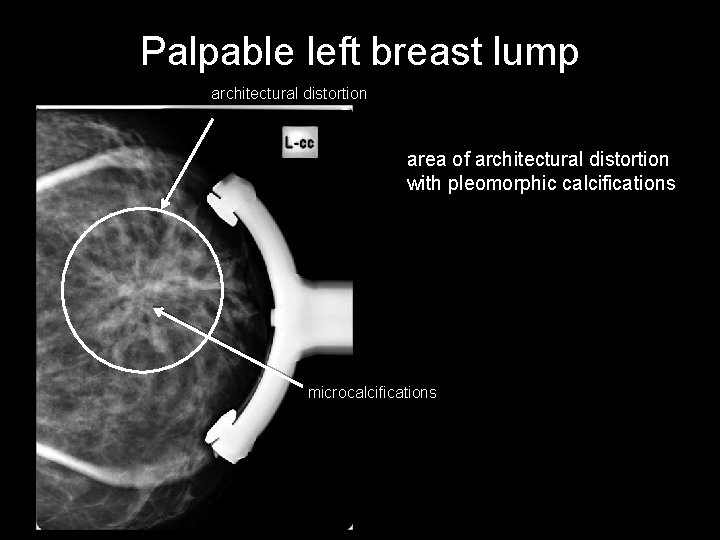
Palpable left breast lump architectural distortion area of architectural distortion with pleomorphic calcifications microcalcifications
Palpable left breast lump • Second study? – Ultrasound – Mammography – MRI w contrast
Palpable left breast lump • Second study? – Ultrasound – Mammography – MRI w contrast
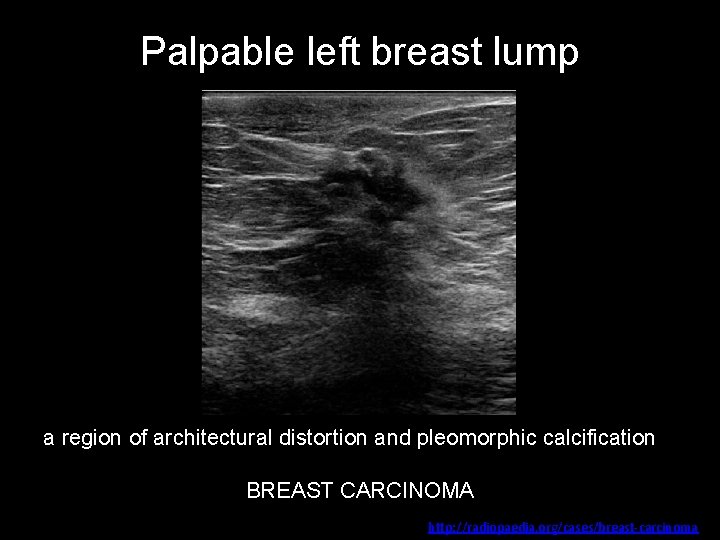
Palpable left breast lump a region of architectural distortion and pleomorphic calcification BREAST CARCINOMA http: //radiopaedia. org/cases/breast-carcinoma
Palpable left breast lump https: //acsearch. acr. org/docs/69495/Narrative/
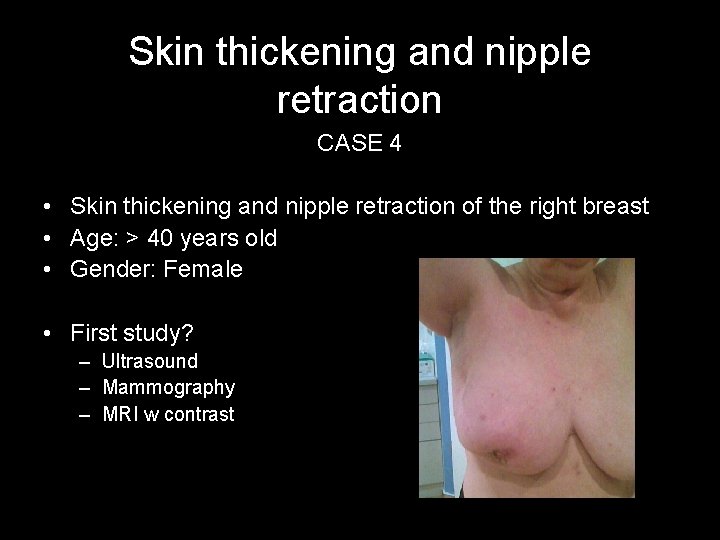
Skin thickening and nipple retraction CASE 4 • Skin thickening and nipple retraction of the right breast • Age: > 40 years old • Gender: Female • First study? – Ultrasound – Mammography – MRI w contrast
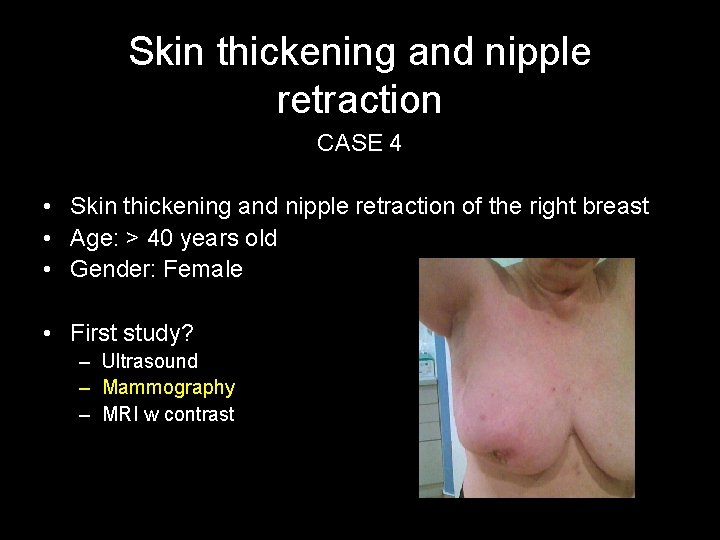
Skin thickening and nipple retraction CASE 4 • Skin thickening and nipple retraction of the right breast • Age: > 40 years old • Gender: Female • First study? – Ultrasound – Mammography – MRI w contrast
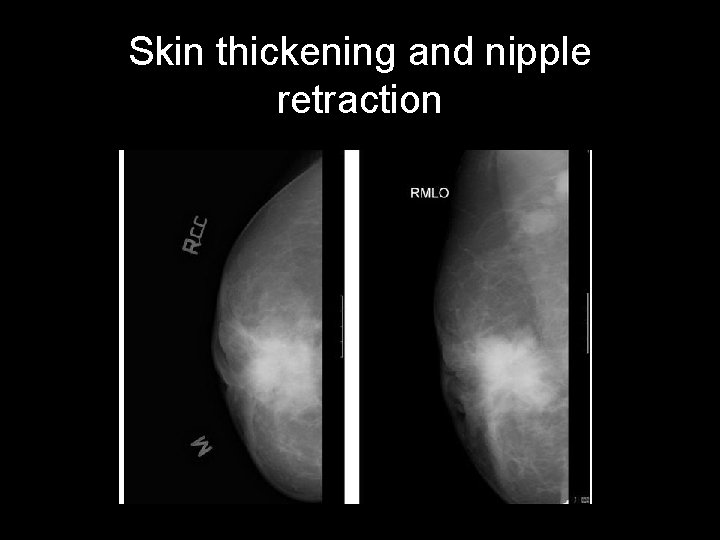
Skin thickening and nipple retraction
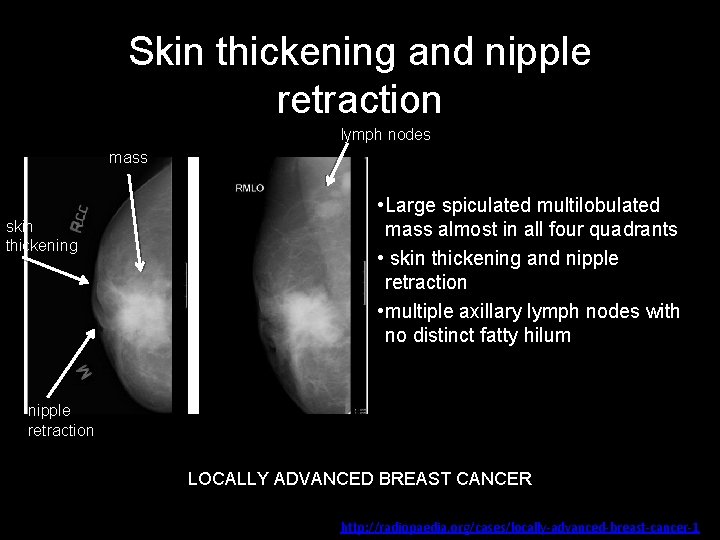
Skin thickening and nipple retraction lymph nodes mass skin thickening • Large spiculated multilobulated mass almost in all four quadrants • skin thickening and nipple retraction • multiple axillary lymph nodes with no distinct fatty hilum nipple retraction LOCALLY ADVANCED BREAST CANCER http: //radiopaedia. org/cases/locally-advanced-breast-cancer-1
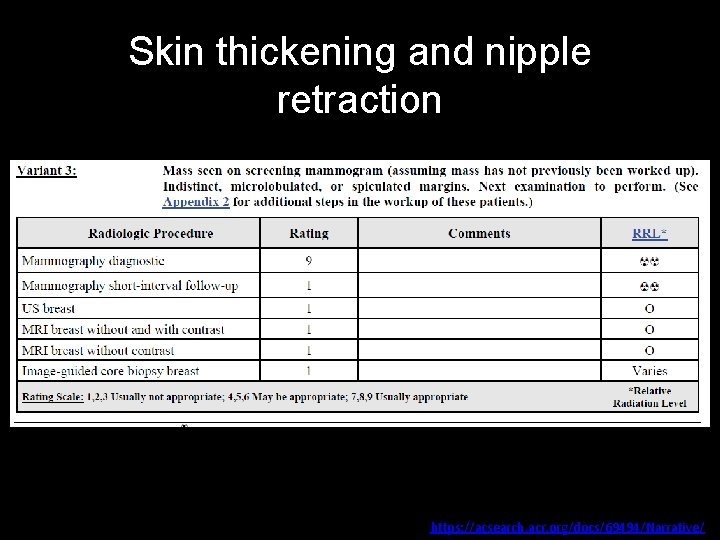
Skin thickening and nipple retraction https: //acsearch. acr. org/docs/69494/Narrative/
Prevalent round breast screen CASE 5 • • Prevalent round breast screen. Asymptomatic. Age: 41 years old Gender: Female Race: Caucasian • First study? – Ultrasound – Mammography – MRI w contrast
Prevalent round breast screen CASE 5 • • Prevalent round breast screen. Asymptomatic. Age: 41 years old Gender: Female Race: Caucasian • First study? – Ultrasound – Mammography – MRI w contrast
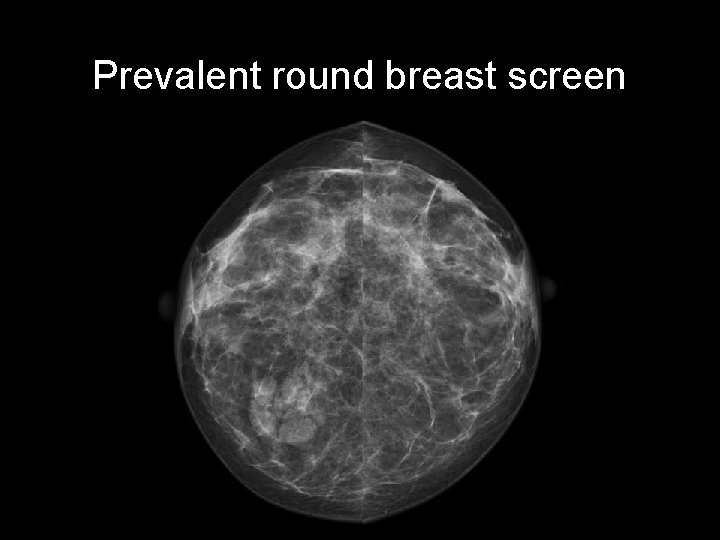
Prevalent round breast screen
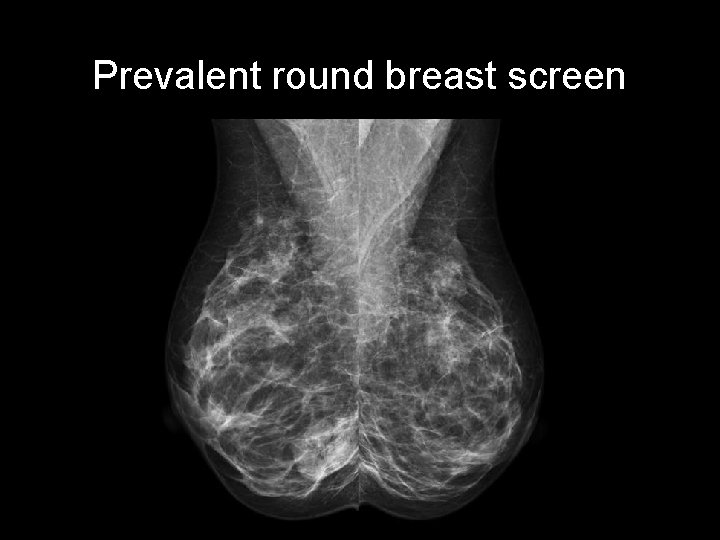
Prevalent round breast screen
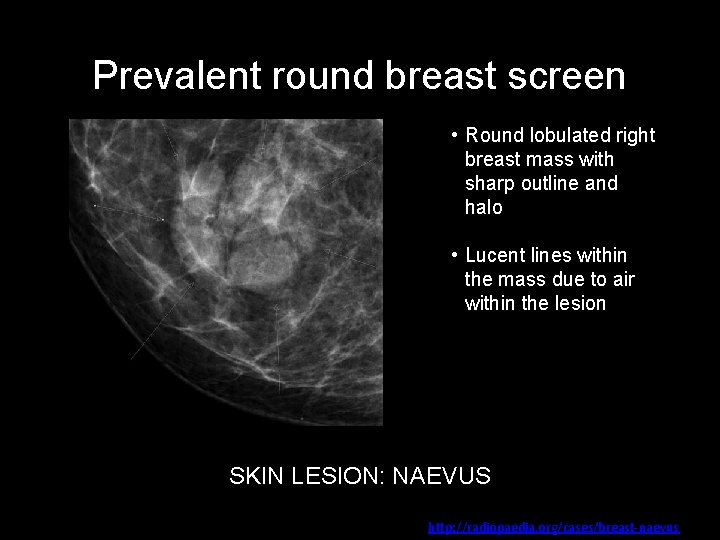
Prevalent round breast screen • Round lobulated right breast mass with sharp outline and halo • Lucent lines within the mass due to air within the lesion SKIN LESION: NAEVUS http: //radiopaedia. org/cases/breast-naevus
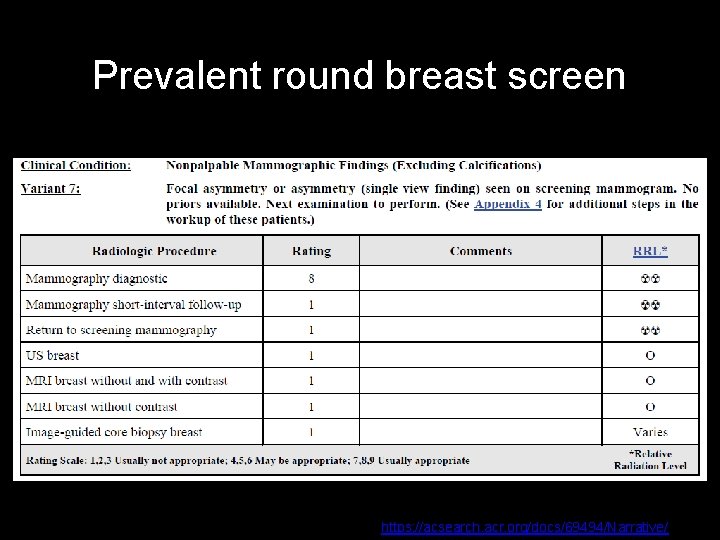
Prevalent round breast screen https: //acsearch. acr. org/docs/69494/Narrative/
Two concentric opacities CASE 6 • • Racing pulse and anxiety Age: 34 years old Gender: Female Race: Caucasian • First study? – – Chest X-Ray Ultrasound Mammography MRI w contrast
Two concentric opacities CASE 6 • • Racing pulse and anxiety Age: 34 years old Gender: Female Race: Caucasian • First study? – – Chest X-Ray Ultrasound Mammography MRI w contrast
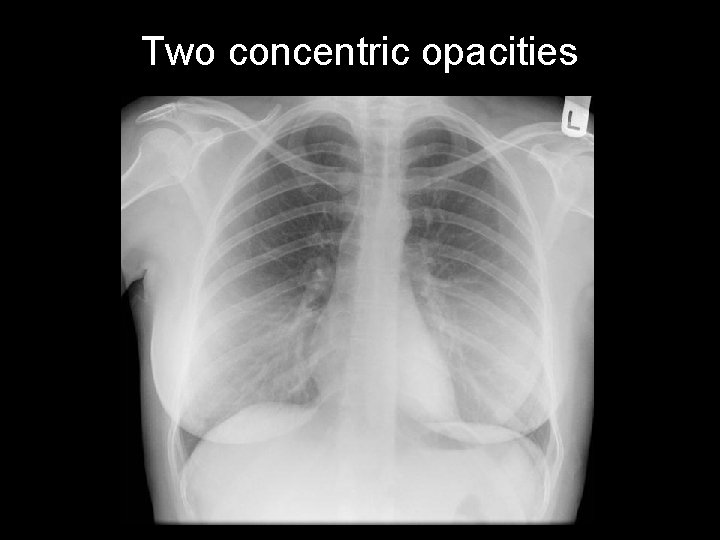
Two concentric opacities
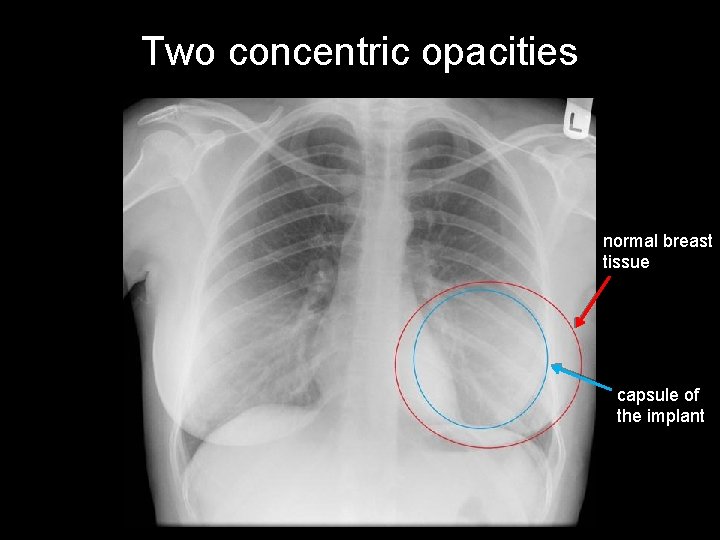
Two concentric opacities normal breast tissue capsule of the implant
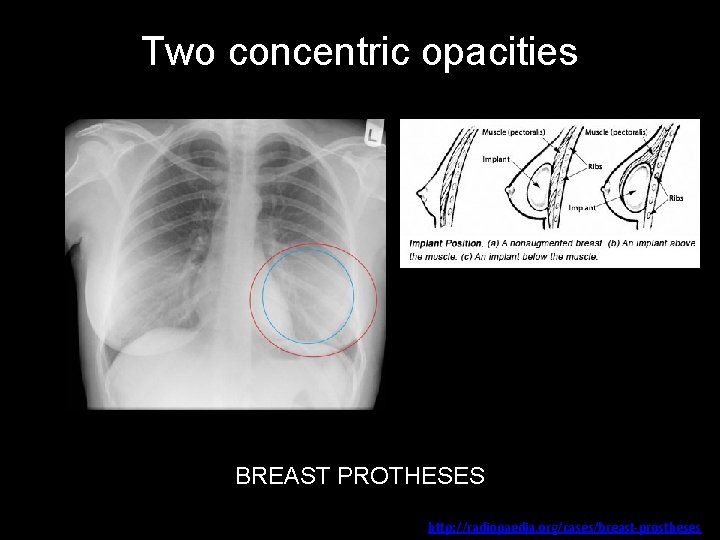
Two concentric opacities BREAST PROTHESES http: //radiopaedia. org/cases/breast-prostheses
Breast implants CASE 7 • • Breast implants; complications? Age: 30 years old Gender: Female Race: Hispanic/Latino • First study? – Ultrasound – Mammography – MRI w/o contrast
Breast implants CASE 7 • • Breast implants; complications? Age: 30 years old Gender: Female Race: Hispanic/Latino • First study? – Ultrasound – Mammography – MRI w/o contrast
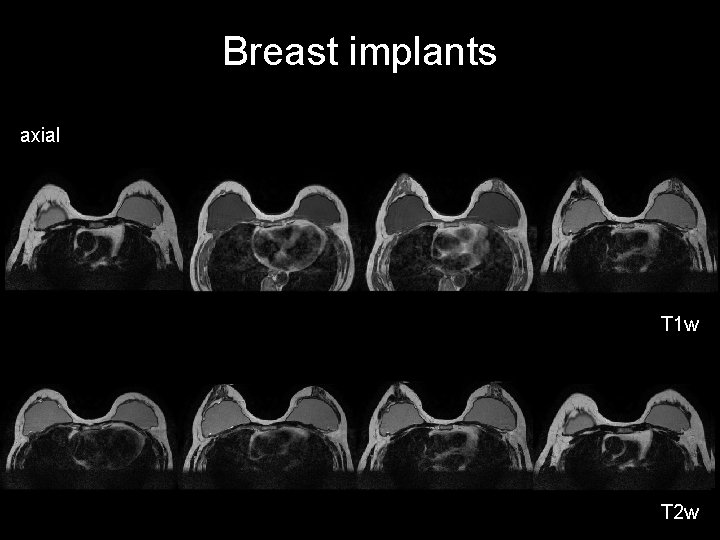
Breast implants axial T 1 w T 2 w
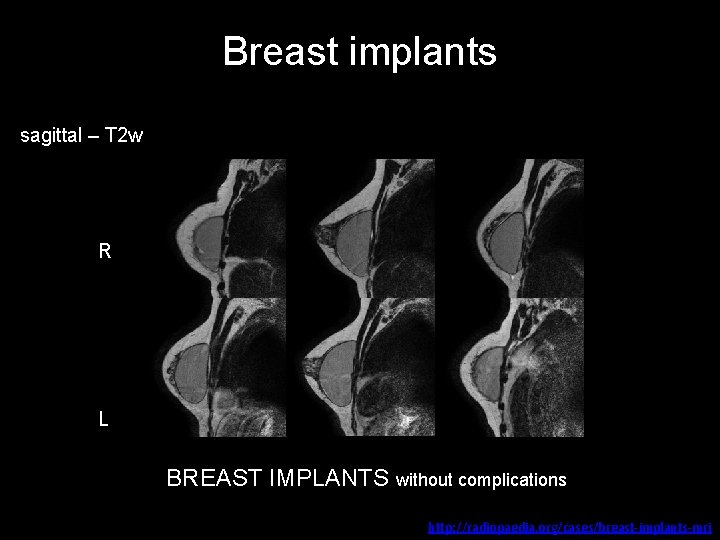
Breast implants sagittal – T 2 w R L BREAST IMPLANTS without complications http: //radiopaedia. org/cases/breast-implants-mri
Breast implants - sudden softening of the right breast CASE 8 • Right mastectomy for breast cancer and reconstruction with a silicone implant • Age: 47 years old • Gender: Female • Race: Caucasian • First study? – Ultrasound – Mammography – MRI w/o contrast
Breast implants - sudden softening of the right breast CASE 8 • Right mastectomy for breast cancer and reconstruction with a silicone implant • Age: 47 years old • Gender: Female • Race: Caucasian • First study? – Ultrasound – Mammography – MRI w/o contrast
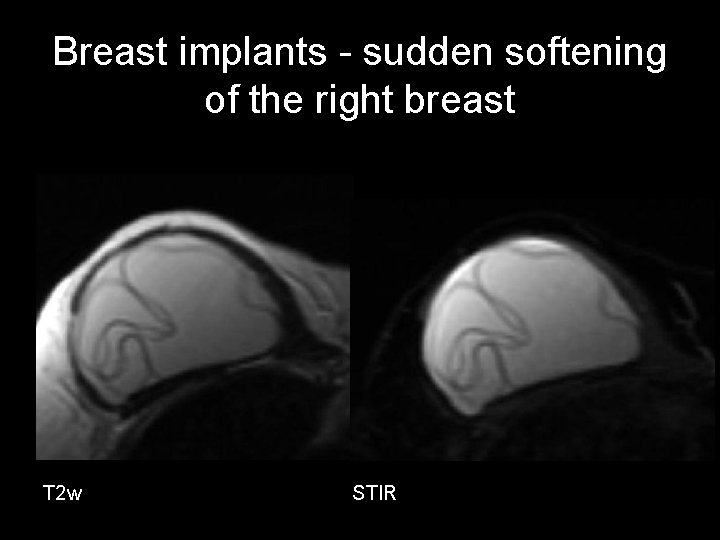
Breast implants - sudden softening of the right breast T 2 w STIR
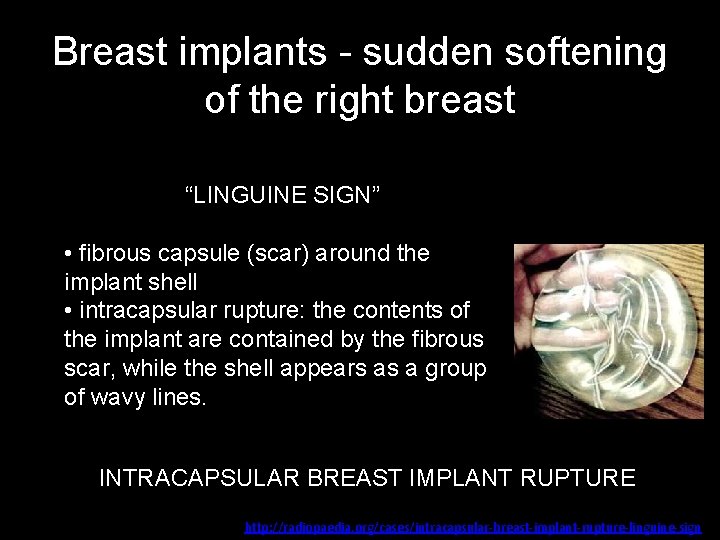
Breast implants - sudden softening of the right breast “LINGUINE SIGN” • fibrous capsule (scar) around the implant shell • intracapsular rupture: the contents of the implant are contained by the fibrous scar, while the shell appears as a group of wavy lines. INTRACAPSULAR BREAST IMPLANT RUPTURE http: //radiopaedia. org/cases/intracapsular-breast-implant-rupture-linguine-sign
Annual screening CASE 9 • • Annual screening Age: 56 years old Gender: Female Race: Caucasian • First study? – – Ultrasound Mammography MRI w/o contrast MRI w contrast
Annual screening CASE 9 • • Annual screening Age: 56 years old Gender: Female Race: Caucasian • First study? – – Ultrasound Mammography MRI w/o contrast MRI w contrast
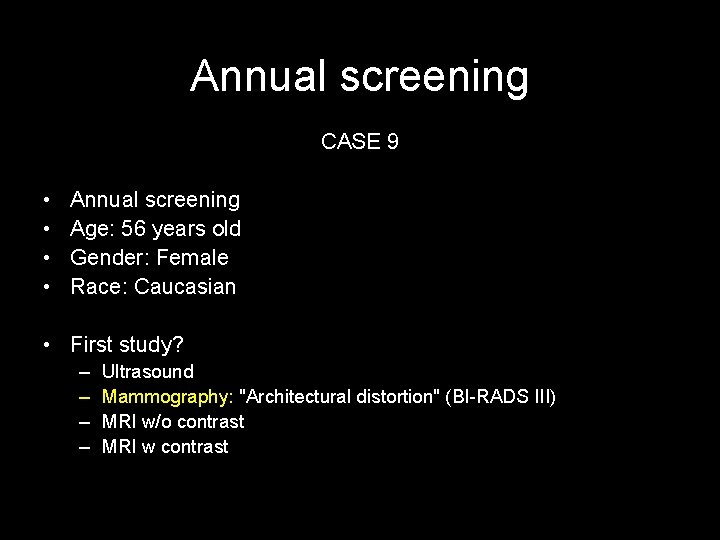
Annual screening CASE 9 • • Annual screening Age: 56 years old Gender: Female Race: Caucasian • First study? – – Ultrasound Mammography: "Architectural distortion" (BI-RADS III) MRI w/o contrast MRI w contrast
Annual screening CASE 9 • • Annual screening Age: 56 years old Gender: Female Race: Caucasian • Second study? – – Ultrasound Mammography MRI w/o contrast MRI w contrast
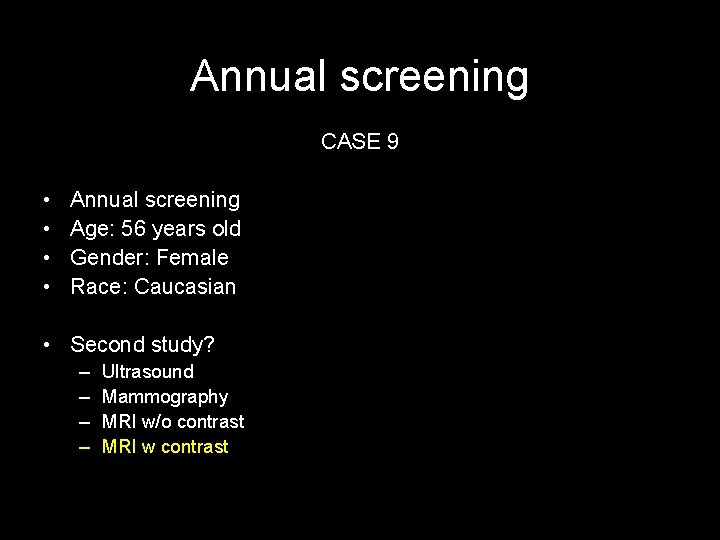
Annual screening CASE 9 • • Annual screening Age: 56 years old Gender: Female Race: Caucasian • Second study? – – Ultrasound Mammography MRI w/o contrast MRI w contrast
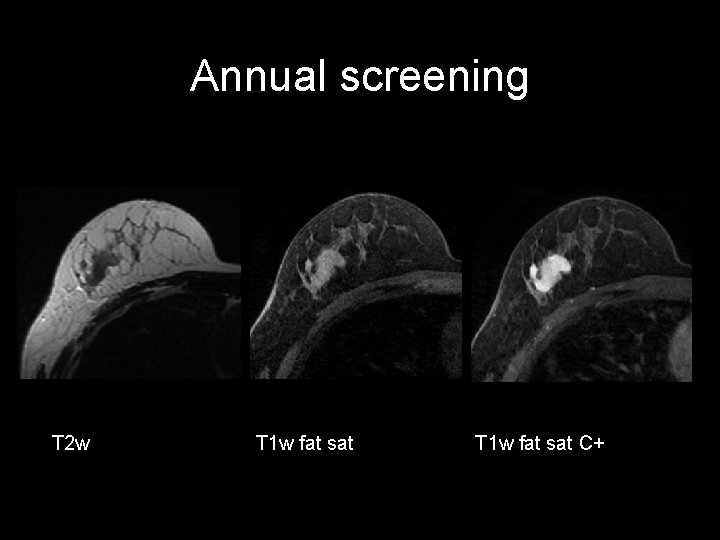
Annual screening T 2 w T 1 w fat sat C+
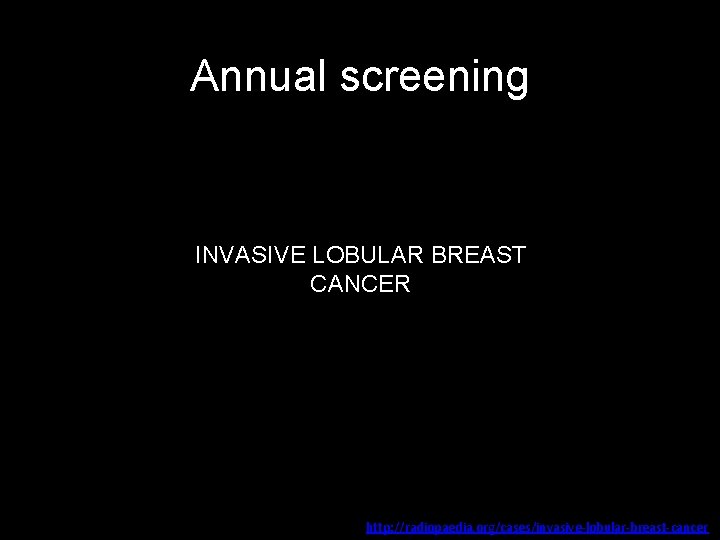
Annual screening INVASIVE LOBULAR BREAST CANCER http: //radiopaedia. org/cases/invasive-lobular-breast-cancer
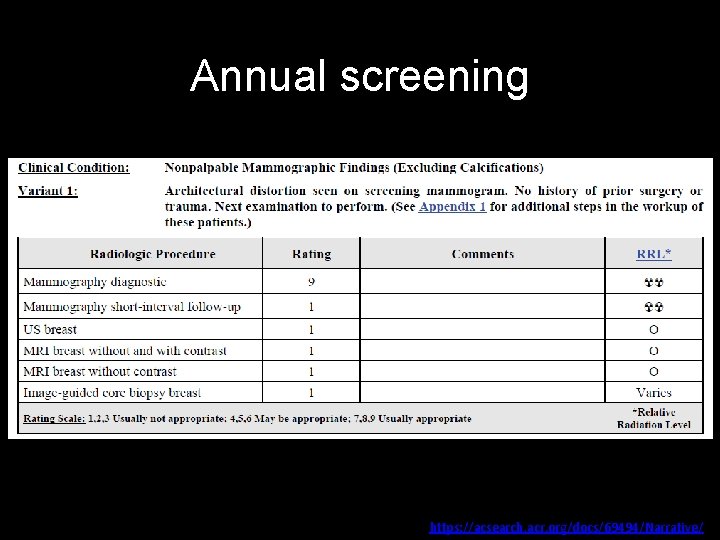
Annual screening https: //acsearch. acr. org/docs/69494/Narrative/

GRAZIE PER L’ATTENZIONE
- Slides: 89