
Breakthroughs and Persistent Weaknesses in Pellet Stoves By

Breakthroughs and Persistent Weaknesses in Pellet Stoves By Scott Williamson, Pelletstoveservice. com
“Any product that needs a manual to explain it is already broken. ” –Elon Musk
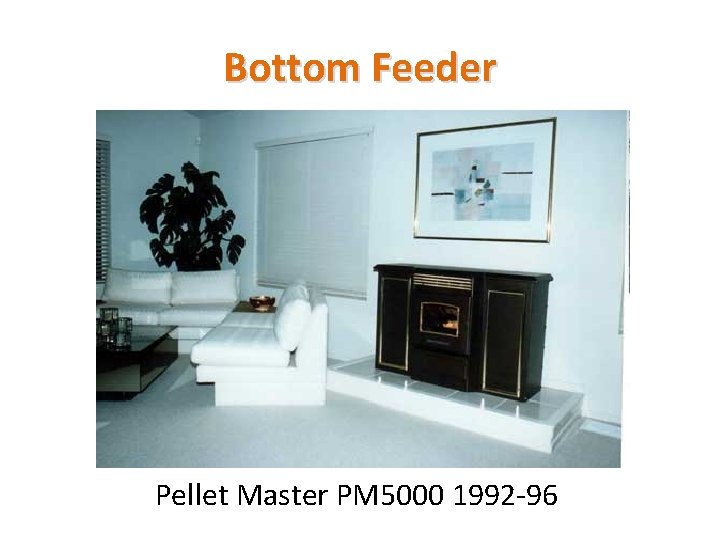
Bottom Feeder Pellet Master PM 5000 1992 -96
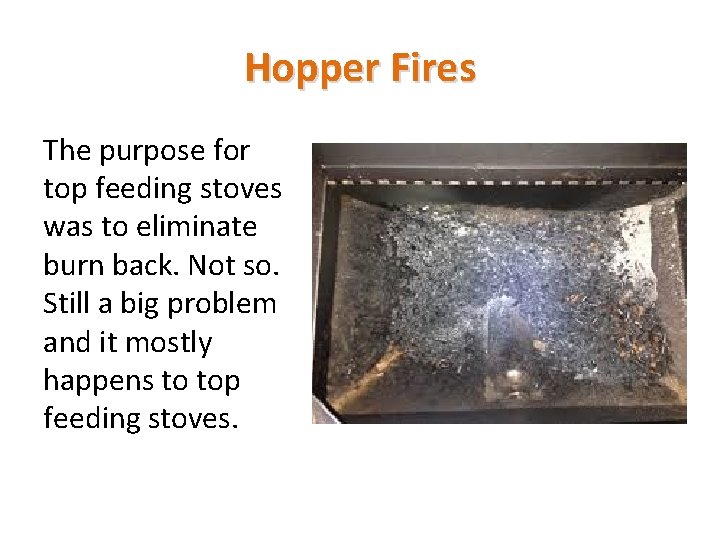
Hopper Fires The purpose for top feeding stoves was to eliminate burn back. Not so. Still a big problem and it mostly happens to top feeding stoves.
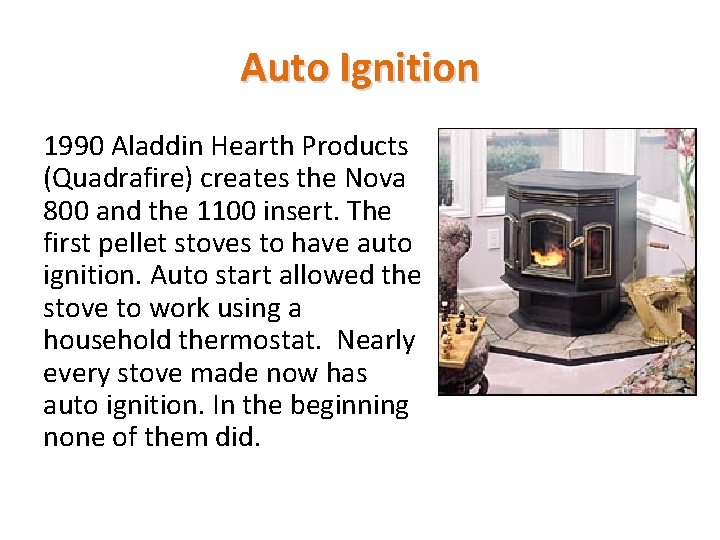
Auto Ignition 1990 Aladdin Hearth Products (Quadrafire) creates the Nova 800 and the 1100 insert. The first pellet stoves to have auto ignition. Auto start allowed the stove to work using a household thermostat. Nearly every stove made now has auto ignition. In the beginning none of them did.
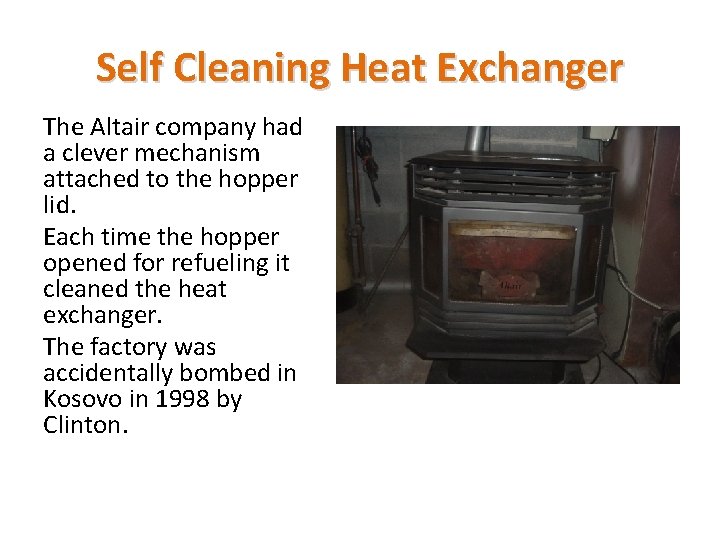
Self Cleaning Heat Exchanger The Altair company had a clever mechanism attached to the hopper lid. Each time the hopper opened for refueling it cleaned the heat exchanger. The factory was accidentally bombed in Kosovo in 1998 by Clinton.
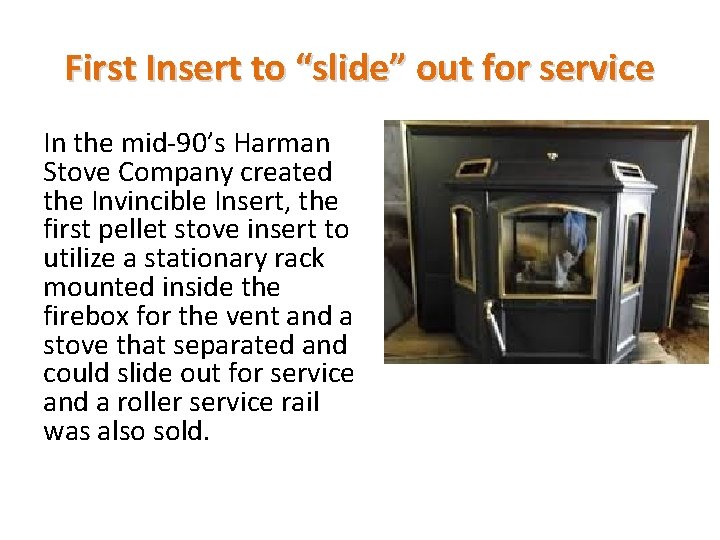
First Insert to “slide” out for service In the mid-90’s Harman Stove Company created the Invincible Insert, the first pellet stove insert to utilize a stationary rack mounted inside the firebox for the vent and a stove that separated and could slide out for service and a roller service rail was also sold.
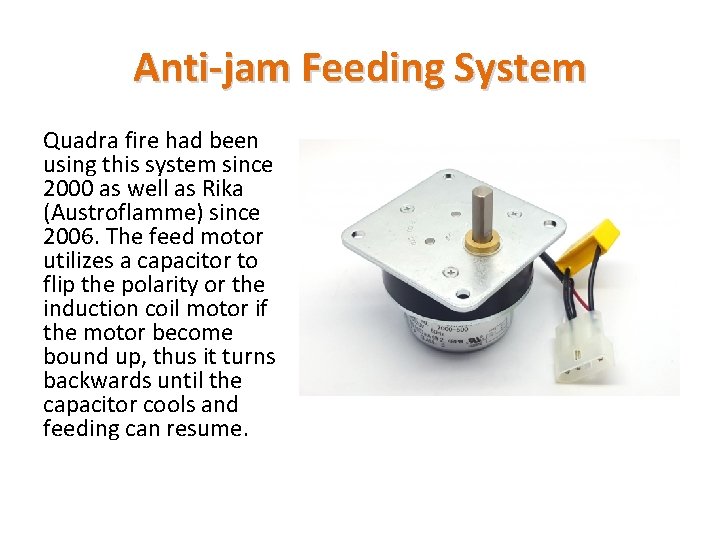
Anti-jam Feeding System Quadra fire had been using this system since 2000 as well as Rika (Austroflamme) since 2006. The feed motor utilizes a capacitor to flip the polarity or the induction coil motor if the motor become bound up, thus it turns backwards until the capacitor cools and feeding can resume.
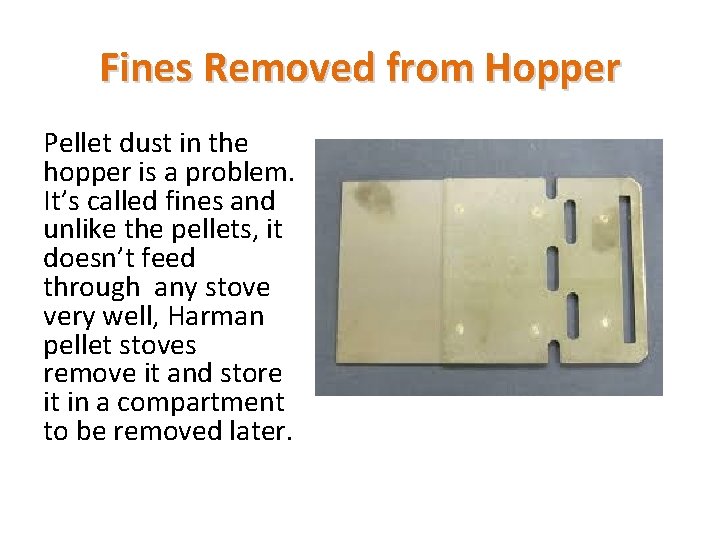
Fines Removed from Hopper Pellet dust in the hopper is a problem. It’s called fines and unlike the pellets, it doesn’t feed through any stove very well, Harman pellet stoves remove it and store it in a compartment to be removed later.
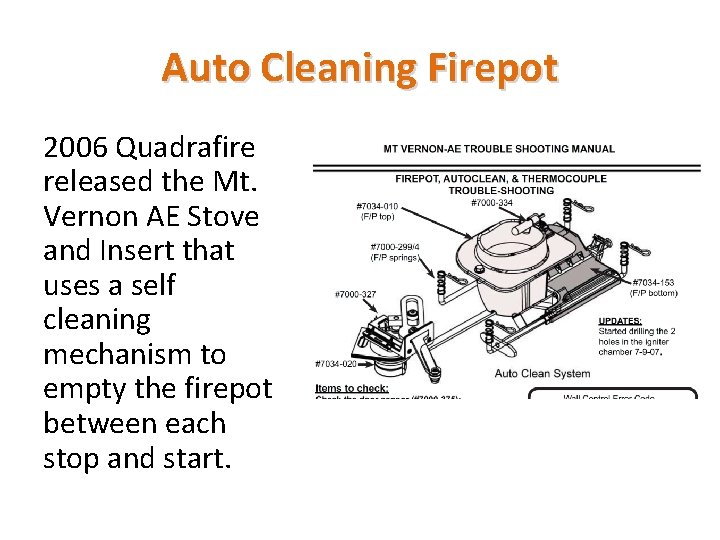
Auto Cleaning Firepot 2006 Quadrafire released the Mt. Vernon AE Stove and Insert that uses a self cleaning mechanism to empty the firepot between each stop and start.
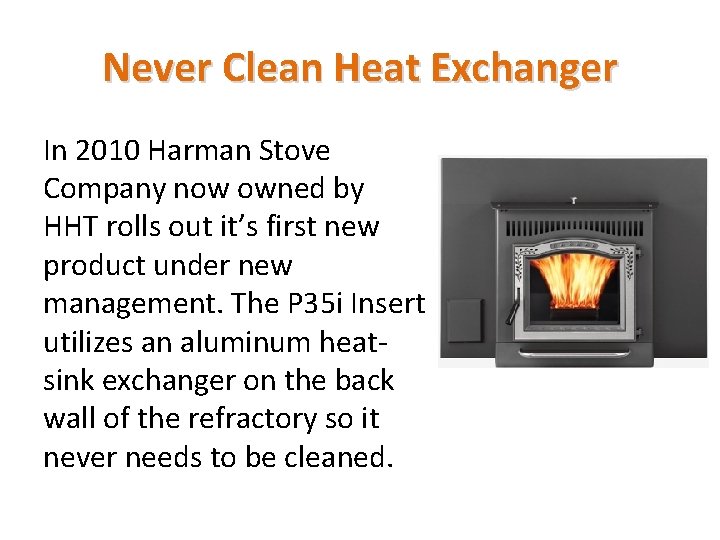
Never Clean Heat Exchanger In 2010 Harman Stove Company now owned by HHT rolls out it’s first new product under new management. The P 35 i Insert utilizes an aluminum heatsink exchanger on the back wall of the refractory so it never needs to be cleaned.

Everyone Understands Switches and Knobs
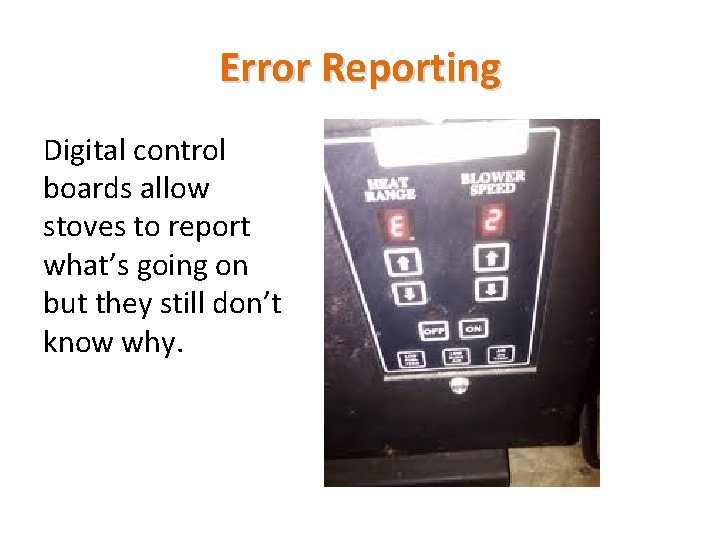
Error Reporting Digital control boards allow stoves to report what’s going on but they still don’t know why.
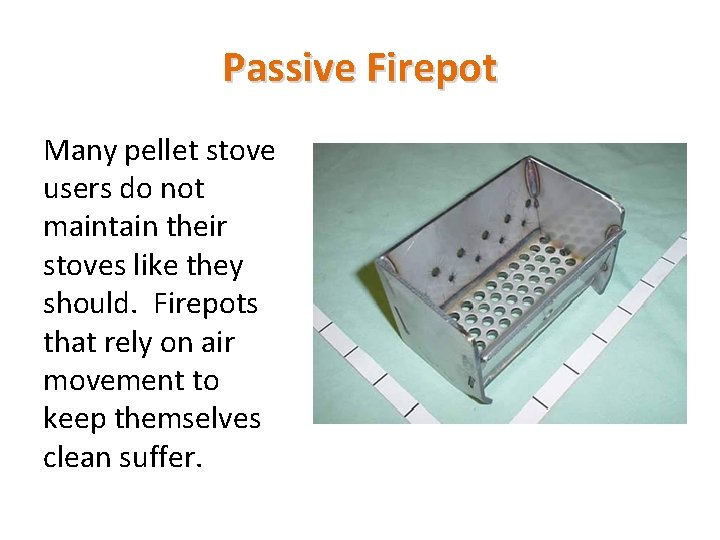
Passive Firepot Many pellet stove users do not maintain their stoves like they should. Firepots that rely on air movement to keep themselves clean suffer.
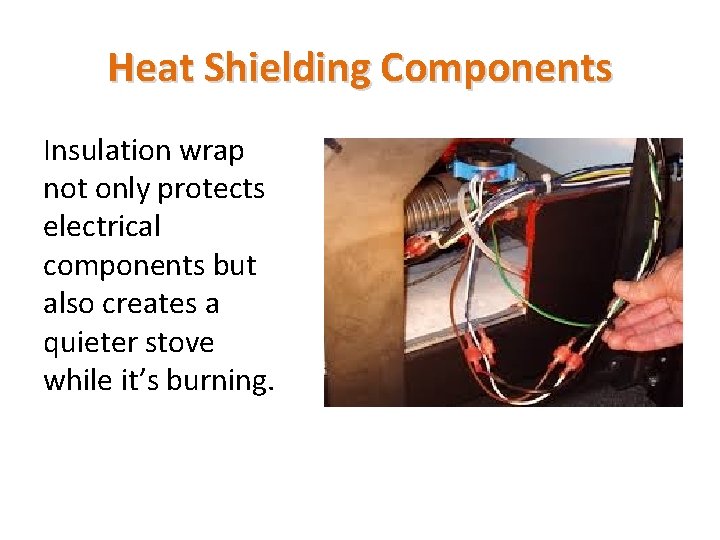
Heat Shielding Components Insulation wrap not only protects electrical components but also creates a quieter stove while it’s burning.
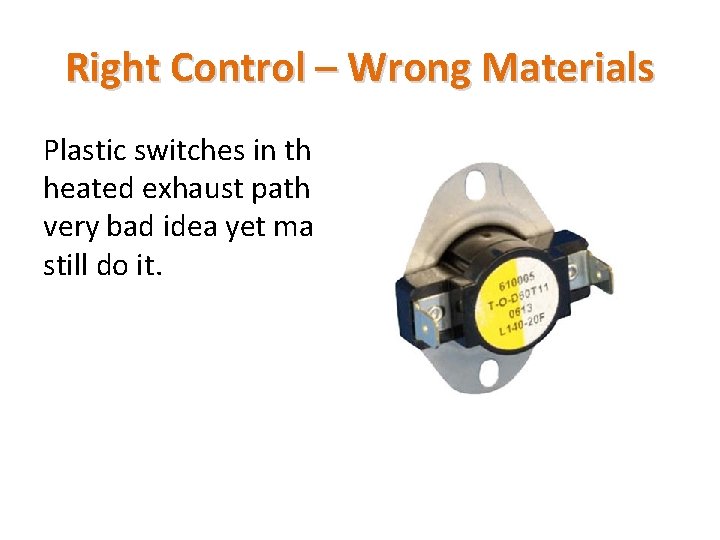
Right Control – Wrong Materials Plastic switches in the heated exhaust path is a very bad idea yet many still do it.

Questions?
Early sizzle • Introduction at 1 st tradeshow (Reno 1984) – received requests for >1000 stoves and 50+ dealers wanting to sell pellet stoves • 3 years later, September 1987, orders for Whitfield Advantage exceeded $1 M in 1 day
A little History • Pellet Stove introduced in 1984 – Whitfield Legend • Original Pellet stove solved yesterday’s problems. Wood smoke emissions A more convenient form of wood heating.
1980’s Technology • Continuous variable top feed • Negative pressure combustion • 24 -hour hopper capacity • Thermostatic control of heat output • Electric Ignitor • Hand removal of ash and cleaning of burn pot/firebox
Has technology changed since the original design? Not substantially • Fuel quality may be worse • Component quality (blowers, motors, controls) may be worse • Efficiency and emissions are much the same • Service levels are still high

Our World Today. What’s changed since the ‘ 80’s? • Deregulation of natural gas • Low Energy prices • Convenience of gas stoves These are all barriers to growth
see opportunities for growth? Clean Energy is a huge opportunity We recognize the critical need for processes that remove excess CO 2 from the atmosphere • Early days saw wood pellets as a beneficial “carbon neutral” fuel • Today this is not strictly accurate nor does it address the problem fully Can our industry address the problem, create new markets and put the sizzle back in the pellet stove?
Move from “carbon neutral” to “carbon negative” Move from Combustion to Pyrolysis provides the opportunity to return 50% of the fuel carbon to the soil permanently, as biochar, for long term reduction in atmospheric CO 2
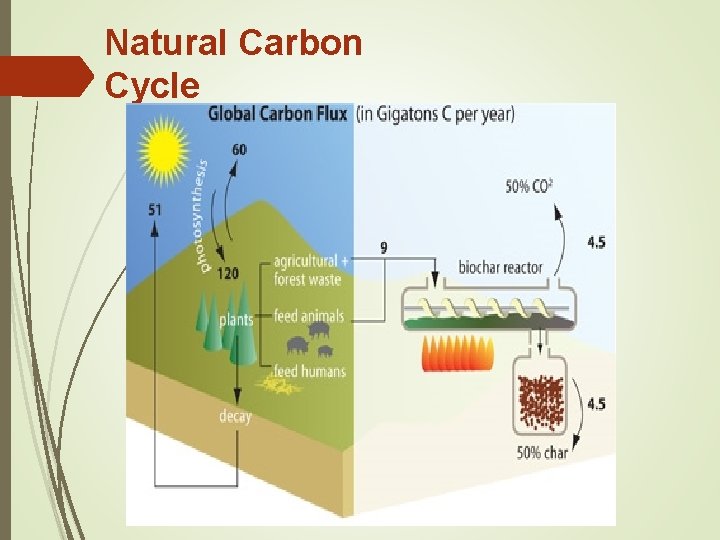
Natural Carbon Cycle
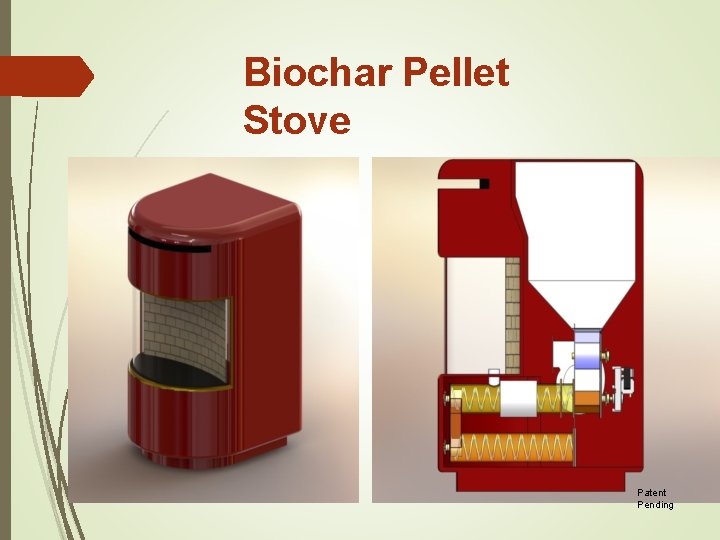
Biochar Pellet Stove Patent Pending
Efficiency of Pellet Stoves Dominated by additional “excess air” often 100% 300% • Agitation of pellets in the burn grate • Window wash • Uncontrolled flow through pellet feed system Improved combustion efficiency with pyrolysis • Premixing of gas and air prior to combustion • Airlock on the pellet feed system limits extra air
Benefits of Pyrolysis • Pyrolysis operates at temperatures below the melting point of ash • Enables the use of low grade/high ash pellet fuels • Opens new markets for low cost pellet fuels, Ag residues, woody wastes etc. • More market opportunities for pellet manufacturers • Creates a marketable co-product, biochar
Biochar -- The Added Value Co. Product Existing and emerging markets for biochar • Soil amendment for improving plant production in horticulture, forestry, and agriculture • Filter medium displacing higher cost activated charcoal • Land reclamation • Current market values are in the
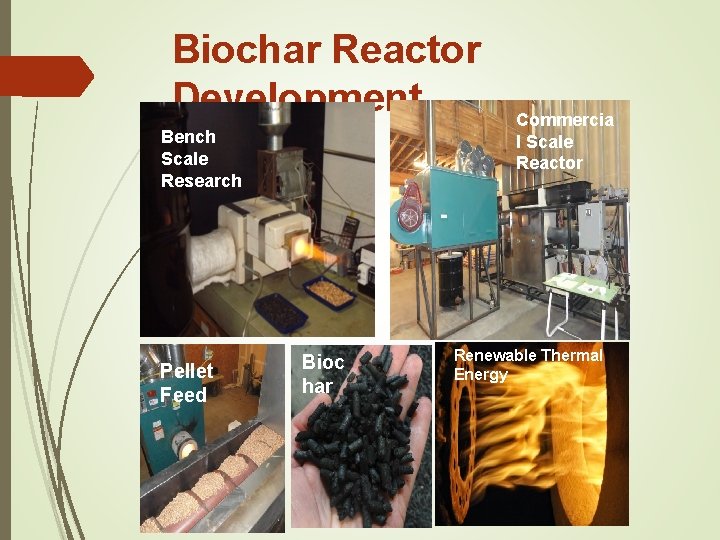
Biochar Reactor Development Bench Scale Research Pellet Feed Bioc har Commercia l Scale Reactor Renewable Thermal Energy
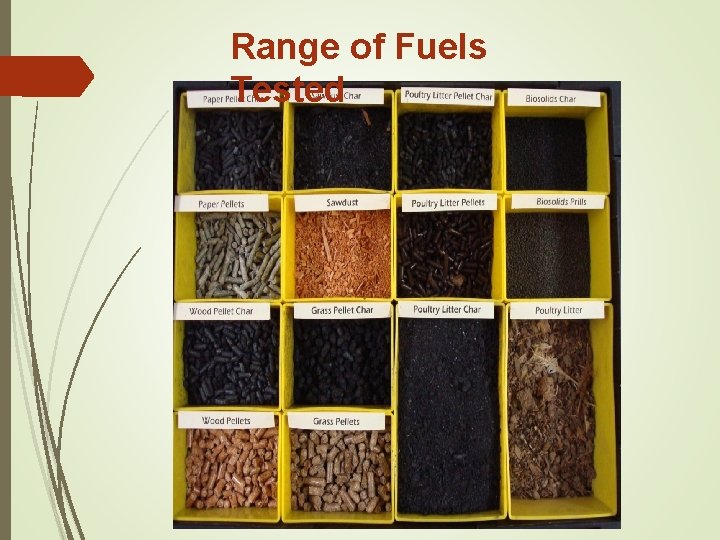
Range of Fuels Tested
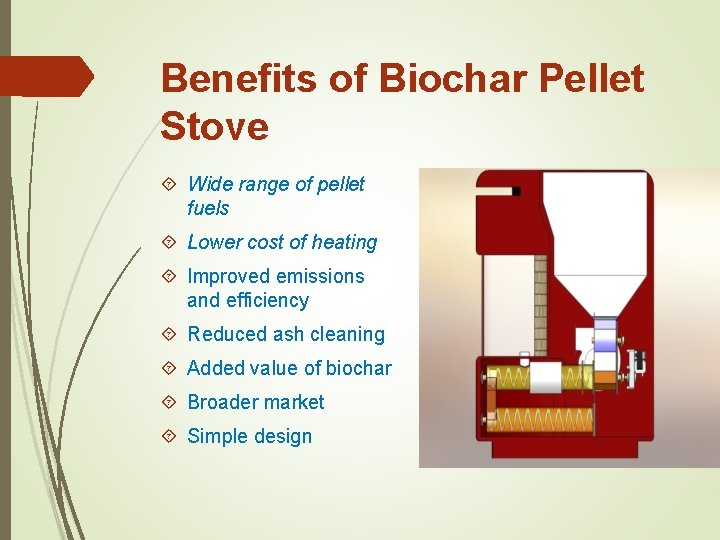
Benefits of Biochar Pellet Stove Wide range of pellet fuels Lower cost of heating Improved emissions and efficiency Reduced ash cleaning Added value of biochar Broader market Simple design
Can This Technology Gain Widespread Traction? • Relatively low risk transition for this industry • Majority of the infrastructure (manufacturing, marketing) already exists • Increases the diversity of feedstocks that can be used
Lead or Follow? • There is evidence that similar technology is currently under development in Europe • The US was the early leader in the Pellet Industry. • Do we want to regain our leadership position?

Follow On If you would like to further explore this opportunity or need more information, please contact Jerry at: jerry. whitfield@gmail. com cell phone 360 708 0808

Questions?
- Slides: 37