
Breaking the Mercury Cycle Session 7 Collection Programs
Breaking the Mercury Cycle Session 7: Collection Programs for Mercury-Added Products - May 2, 2002 - Boston, MA Gail Savina Communications Specialist Local Hazardous Waste Management Program in King County - www. metrokc. gov/hazwaste/ 130 Nickerson St. #100 Seattle, WA 98109 206 -263 -3062 gail. savina@metrokc. gov
Managing Mercury Waste in King County, Washington 1991 - 2001 Local Hazardous Waste Management Program in King County www. metrokc. gov/hazwaste/ Gail Savina 206 -263 -3062 gail. savina@metrokc. gov
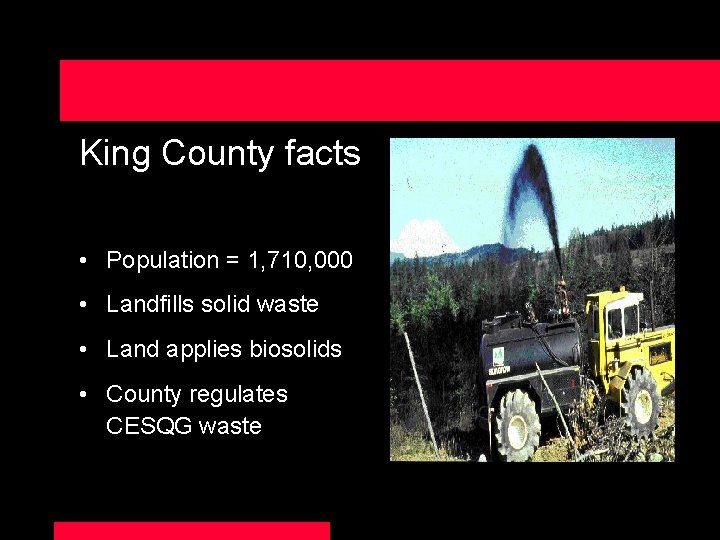
King County facts • Population = 1, 710, 000 • Landfills solid waste • Land applies biosolids • County regulates CESQG waste

Local Hazardous Waste Management Program in King County • Funded by surcharge on sewer and garbage accounts (household and commercial); $10 million/year • Sophisticated communication tools - ads, radio, print • Technical assistance visits - 30 field staff • Business recognition program: Enviro. Stars • Voucher rebate program
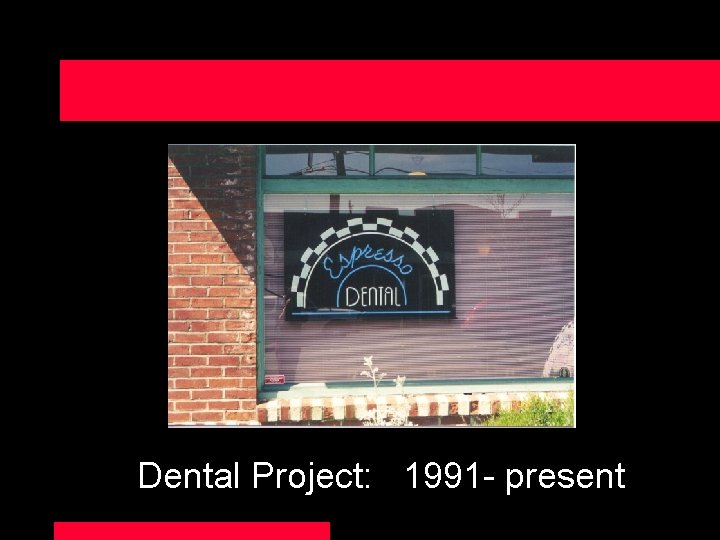
Dental Project: 1991 - present
Background: 1991 - 1994 • Problem: mercury spikes - early ‘ 90’s • Findings: 1500 dentists discharge 14% of mercury entering WWTP, or 50 lb/yr. (Current estimate is 40 - 60%). • Solution: propose local rule mandating amalgam separation equipment • Upshot: strong resistance results in voluntary program to promote separators and proper management of amalgam
Barriers to behavior change • Knowledge: dentists think that amalgam waste = infectious waste. • Norms: “No one else has a separator. ” • Infrastructure: no haulers are willing to service dentists.
Voluntary Program, 1994 -2000 • • Provide information - e. g. poster, ads Work with local dental society and waste haulers Promote Enviro. Stars-ceritified dentists Work with dental supply houses, dental assistants and hygienists • Use voucher rebate money to stimulate spending • Do technical assistance visits (currently 600)
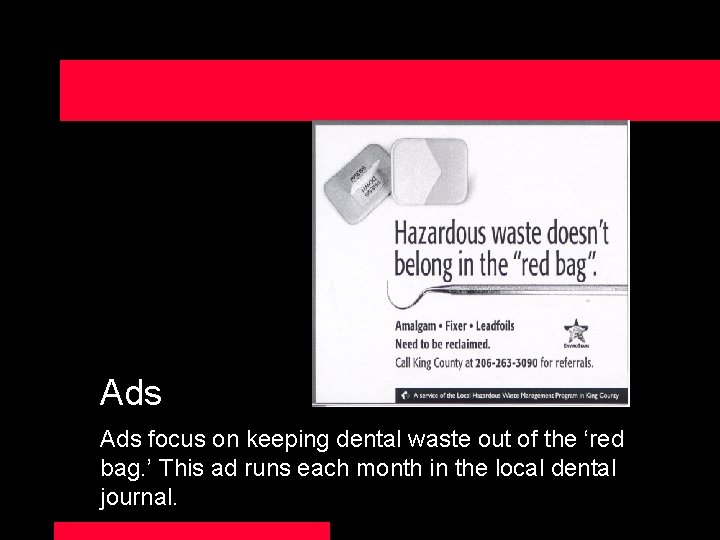
Ads focus on keeping dental waste out of the ‘red bag. ’ This ad runs each month in the local dental journal.
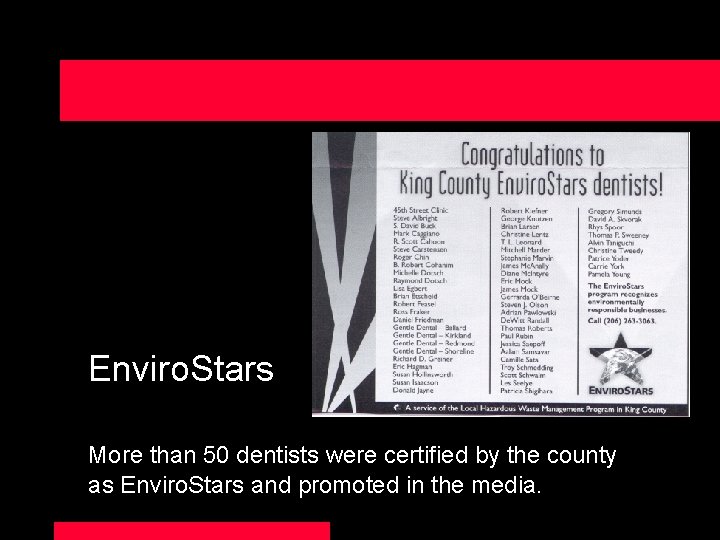
Enviro. Stars More than 50 dentists were certified by the county as Enviro. Stars and promoted in the media.
Summary of voluntary phase • Ran 7 years • Cost ? $20, 000 - $50, 000/year? • Involved county staff, dental society, dental supply houses, colleges • Goal: 100 amalgam separators installed (1000 potential offices) • Goal: majority of offices use proper BMPs for scrap amalgam, chairside traps and pump filters

Amalgam waste disposal, 1999 -2000 % illegally disposed Amalgam scrap (n = 160) 27 Chairside traps (n = 172) 53 Vacuum pump filters (n = 143) 56
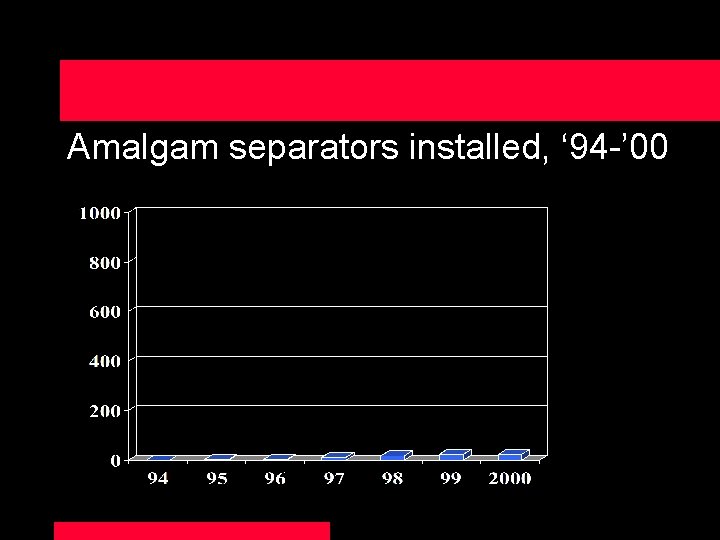
Amalgam separators installed, ‘ 94 -’ 00
Mandatory program: 2001 - present • King County local discharge limits for mercury = 0. 2 ppm • July 2000: letter to all dental offices discharging to King County WWTP Deadline: July 1, 2002 for new offices July 1, 2003 for existing offices • What it means: office must a) install amalgam separator or prove it meets limits without a separator; b) follow BMPs for amalgam waste.
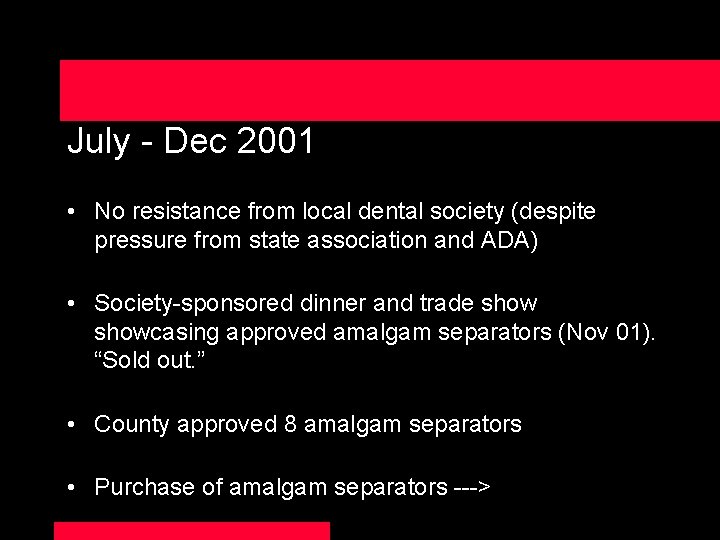
July - Dec 2001 • No resistance from local dental society (despite pressure from state association and ADA) • Society-sponsored dinner and trade showcasing approved amalgam separators (Nov 01). “Sold out. ” • County approved 8 amalgam separators • Purchase of amalgam separators --->
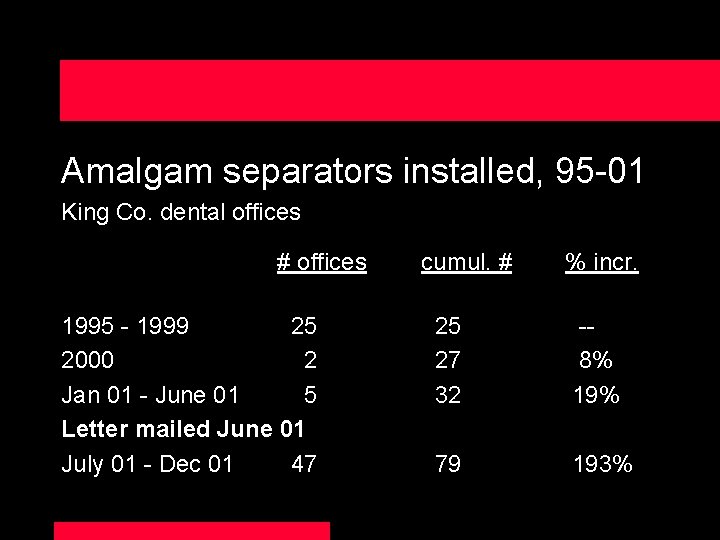
Amalgam separators installed, 95 -01 King Co. dental offices # offices 1995 - 1999 25 2000 2 Jan 01 - June 01 5 Letter mailed June 01 July 01 - Dec 01 47 cumul. # % incr. 25 27 32 -8% 19% 79 193%
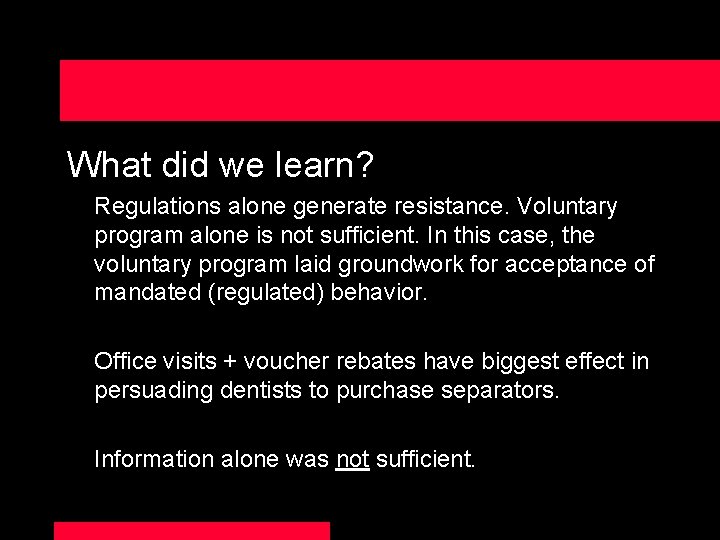
What did we learn? Regulations alone generate resistance. Voluntary program alone is not sufficient. In this case, the voluntary program laid groundwork for acceptance of mandated (regulated) behavior. Office visits + voucher rebates have biggest effect in persuading dentists to purchase separators. Information alone was not sufficient.
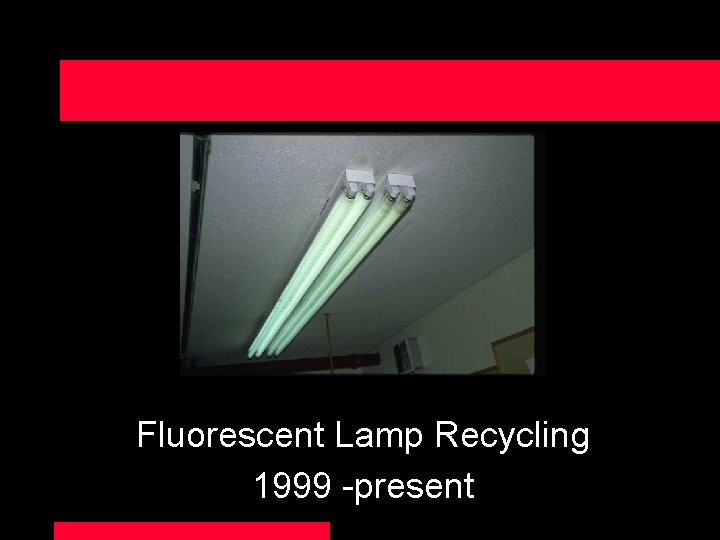
Fluorescent Lamp Recycling 1999 -present
Project rationale: Why lamps? • Opportunistic: State adds lamps to Universal Waste - May 2000 • Feasibility: solution to the problem exists • Demand: property managers cite lamps as one of top three wastes • Strategic: lamp initiative offers chance to build alliances
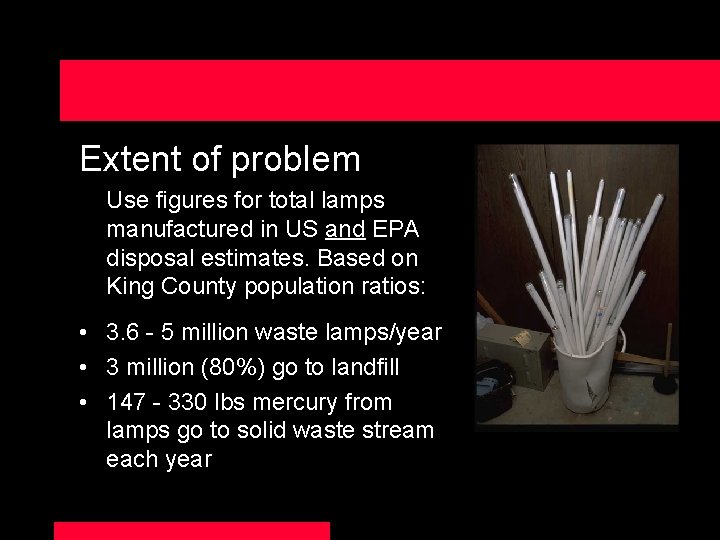
Extent of problem Use figures for total lamps manufactured in US and EPA disposal estimates. Based on King County population ratios: • 3. 6 - 5 million waste lamps/year • 3 million (80%) go to landfill • 147 - 330 lbs mercury from lamps go to solid waste stream each year
Fluorescent lamp recycling project First step: coordinated regulatory approach Pull together a task force of those involved: Regulators - state and county Landfill operators (city and county) Waste Haulers Lighting contractors/facility managers Lamp recyclers and manufacturers Utilities
Fluorescent lamp recycling project Key audiences • Electric utilities: piggyback lamp recycling onto utility lighting retrofit project • Lighting contractors • Property and facility managers • CESQGs doing retrofits
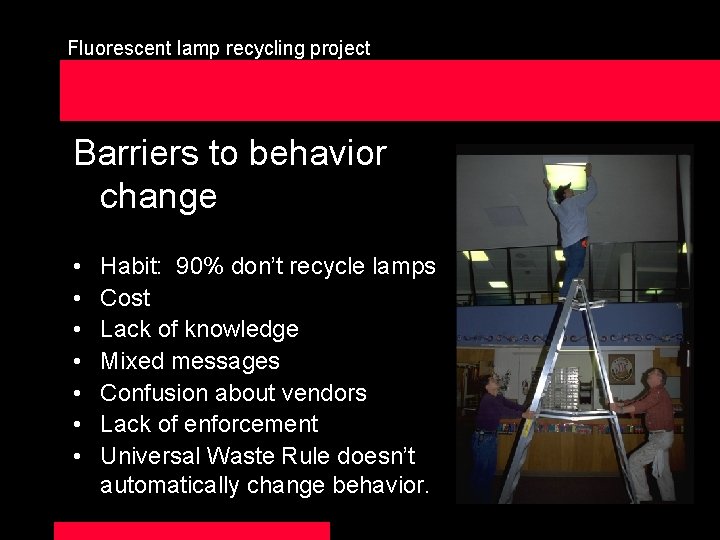
Fluorescent lamp recycling project Barriers to behavior change • • Habit: 90% don’t recycle lamps Cost Lack of knowledge Mixed messages Confusion about vendors Lack of enforcement Universal Waste Rule doesn’t automatically change behavior.
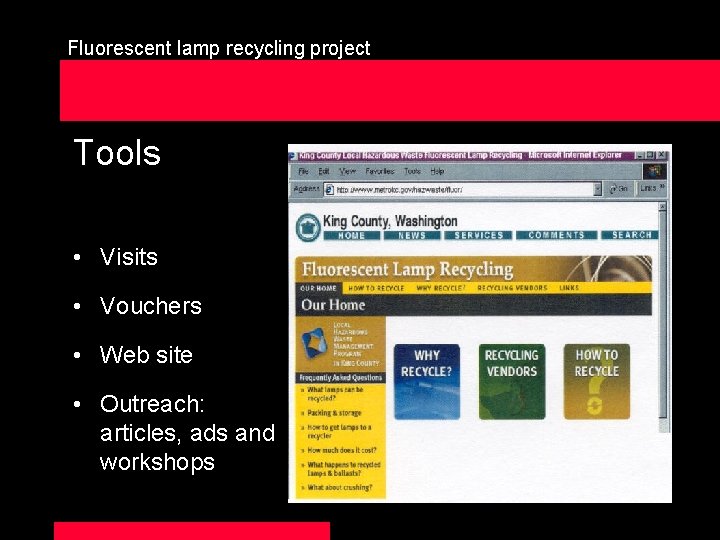
Fluorescent lamp recycling project Tools • Visits • Vouchers • Web site • Outreach: articles, ads and workshops
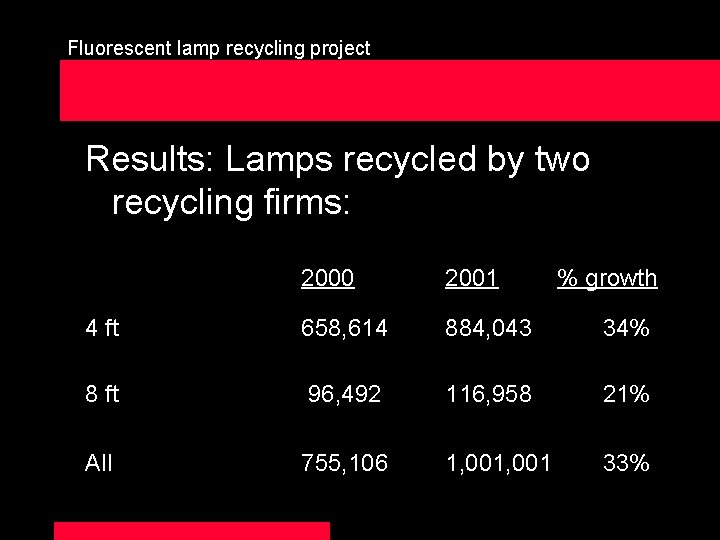
Fluorescent lamp recycling project Results: Lamps recycled by two recycling firms: 2000 2001 % growth 4 ft 658, 614 884, 043 34% 8 ft 96, 492 116, 958 21% All 755, 106 1, 001 33%
Fluorescent lamp recycling project What did we learn? Regulations alone aren’t sufficient, especially if they aren’t enforced. Office visits + voucher rebates have biggest effect in persuading small businesses to recyle lamps
Fluorescent lamp recycling project Contact for lamp project: Susan Mc. Donald Local Hazardous Waste Management Program in King County 206 -263 -3059 susan. mcdonald@metrokc. gov Web site: www. metrokc. gov/hazwaste/fluor
- Slides: 27