
BRC Science Highlight Combining genomescale experimental and computational
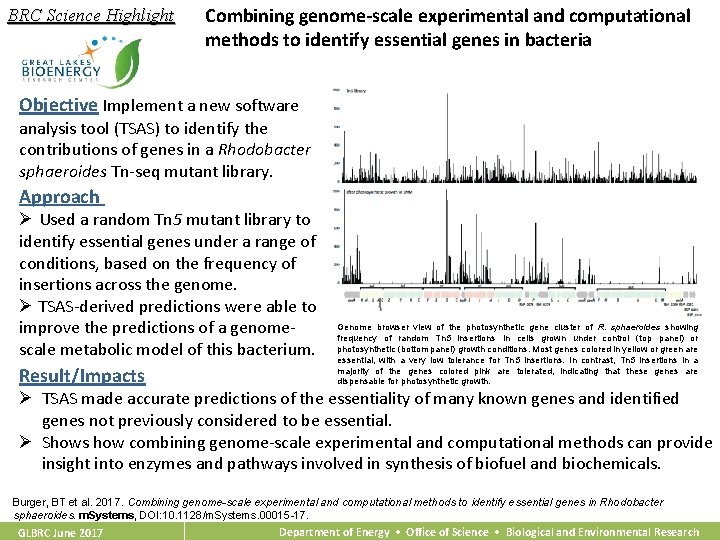
BRC Science Highlight Combining genome-scale experimental and computational methods to identify essential genes in bacteria Objective Implement a new software analysis tool (TSAS) to identify the contributions of genes in a Rhodobacter sphaeroides Tn-seq mutant library. Approach Ø Used a random Tn 5 mutant library to identify essential genes under a range of conditions, based on the frequency of insertions across the genome. Ø TSAS-derived predictions were able to improve the predictions of a genomescale metabolic model of this bacterium. Result/Impacts Genome browser view of the photosynthetic gene cluster of R. sphaeroides showing frequency of random Tn 5 insertions in cells grown under control (top panel) or photosynthetic (bottom panel) growth conditions. Most genes colored in yellow or green are essential, with a very low tolerance for Tn 5 insertions. In contrast, Tn 5 insertions in a majority of the genes colored pink are tolerated, indicating that these genes are dispensable for photosynthetic growth. Ø TSAS made accurate predictions of the essentiality of many known genes and identified genes not previously considered to be essential. Ø Shows how combining genome-scale experimental and computational methods can provide insight into enzymes and pathways involved in synthesis of biofuel and biochemicals. Burger, BT et al. 2017. Combining genome-scale experimental and computational methods to identify essential genes in Rhodobacter sphaeroides. m. Systems, DOI: 10. 1128/m. Systems. 00015 -17. GLBRC June 2017 Department of Energy • Office of Science • Biological and Environmental Research
- Slides: 1