
Brazos Bend State Park A Land Resource of
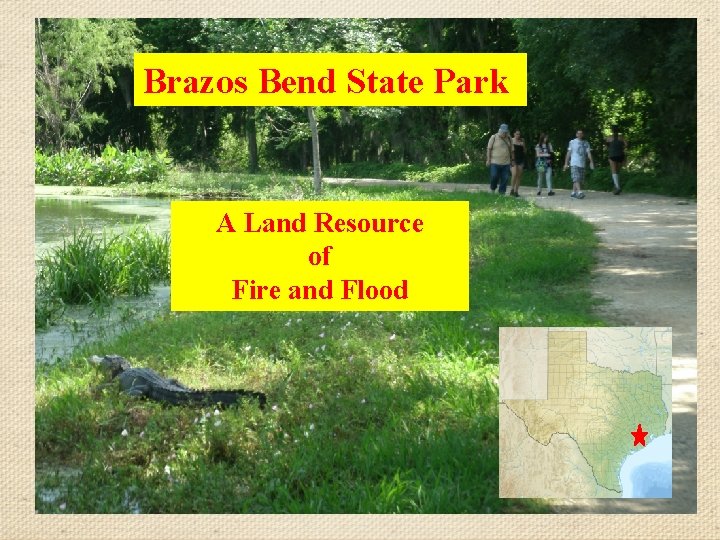
Brazos Bend State Park A Land Resource of Fire and Flood
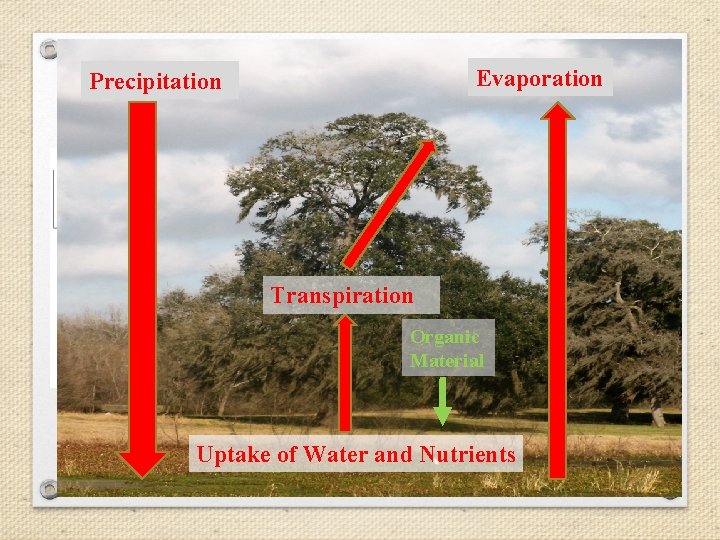
Precipitation Climate Evaporation Precipitation and Temperature Transpiration Organic Material Precipitation: 42 -46 Inches Soil temperature: Hyperthermic Uptake of Water and Nutrients
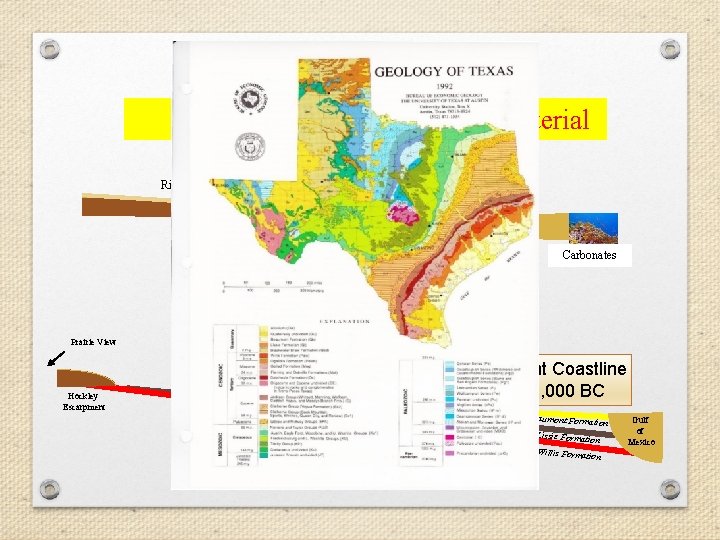
Texas Coastal Plain Parent Material Surf Zone River Reef Sand 2 -. 05 mm Silt <05 -0. 02 mm Clay >0. 02 mm Carbonates Prairie View Houston Hockley Escarpment Current Coastline Brazos Bend 5 -3, 000 BC Beaumont Formati on Lissie Format ion Willis Formatio n Gulf of Mexico
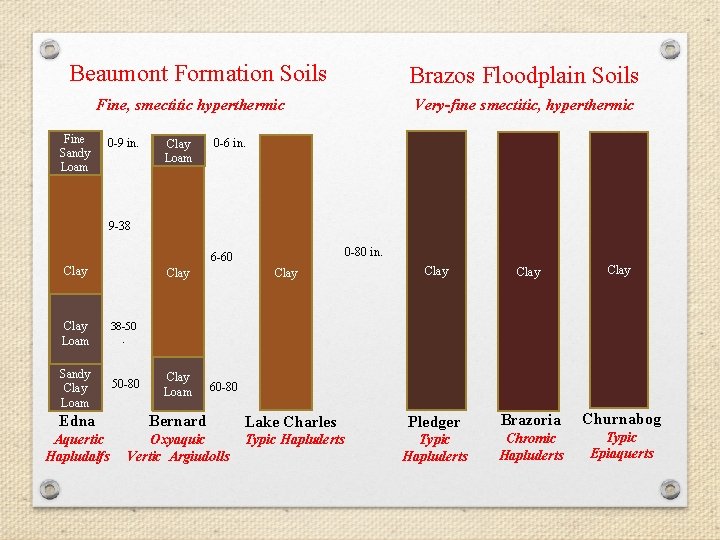
Beaumont Formation Soils Brazos Floodplain Soils Very-fine smectitic, hyperthermic Fine, smectitic hyperthermic Fine Sandy Loam 0 -9 in. Clay Loam 0 -6 in. 9 -38 0 -80 in. 6 -60 Clay Loam 38 -50. Sandy Clay Loam 50 -80 Clay Loam Clay 60 -80 Edna Bernard Lake Charles Pledger Brazoria Churnabog Aquertic Hapludalfs Oxyaquic Vertic Argiudolls Typic Hapluderts Chromic Hapluderts Typic Epiaquerts

Fire Preserves the Prairie Grassland Secondary Succession Old Field Pioneer Species Fire Climax Species Intolerant Time Fire
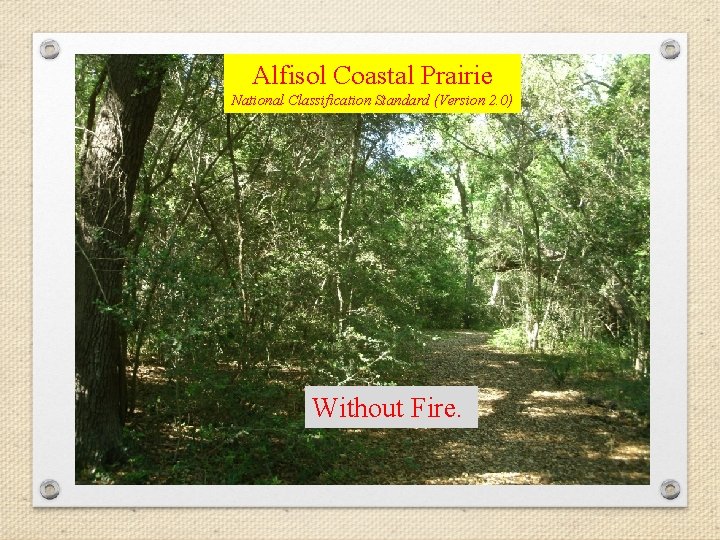
Alfisol Coastal Prairie National Classification Standard (Version 2. 0) Without Fire. 2 -3 years between controlled burns
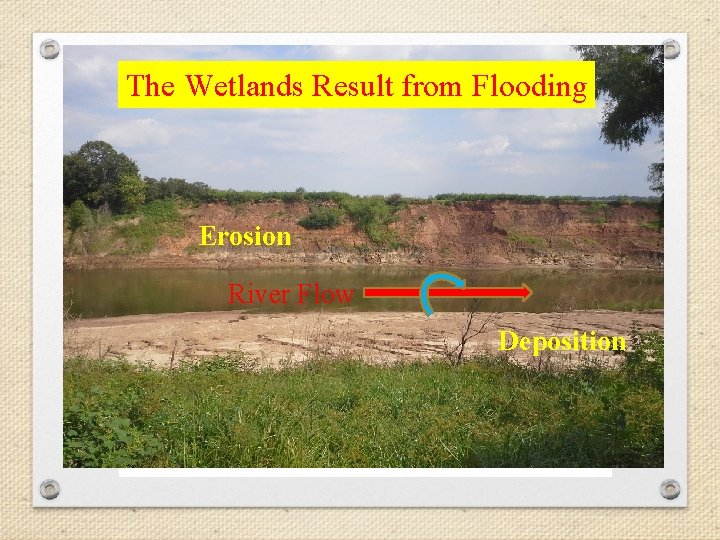
The Wetlands Result from Flooding Erosion River Flow Deposition
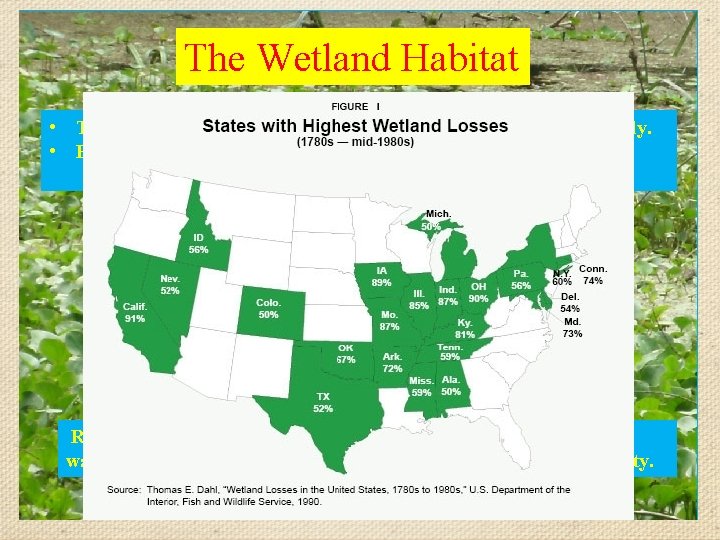
The Wetland Habitat • The area is saturated with water , either permanently or seasonally. • Primary characteristic that distinguishes wetlands is vegetation adapted to hydric soils. Roles in the environment: water purification, flood control, carbon sink and shoreline stability.
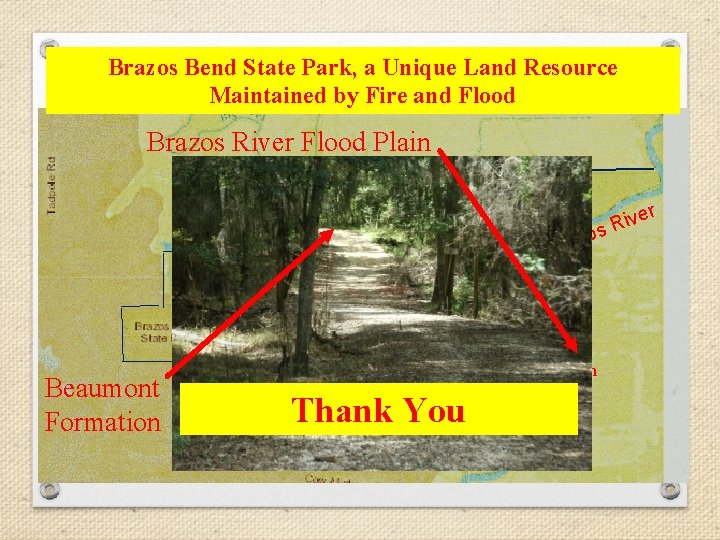
Brazos Bend State Park, a Unique Land Resource Maintained by Fire and Flood Brazos River Flood Plain s zo a r B Horse Shoe Lake 40 -acre Lake Beaumont Formation Elm Lake Nature Center Hale Lake Thank You Direction of Flow er v i R
- Slides: 9