
Brazilian Agriculture Development In a Global Perspective Milton
Brazilian Agriculture Development In a Global Perspective Milton Suzuki Bayer Crop. Science Development and Field Trial - Latin America Nuffield International Contemporary Scholars Conference New Zealand - March 2011
Content 1. Latin America Agriculture Potential 2. Brazilian Agriculture Overview 3. Opportunities 4. Challenges
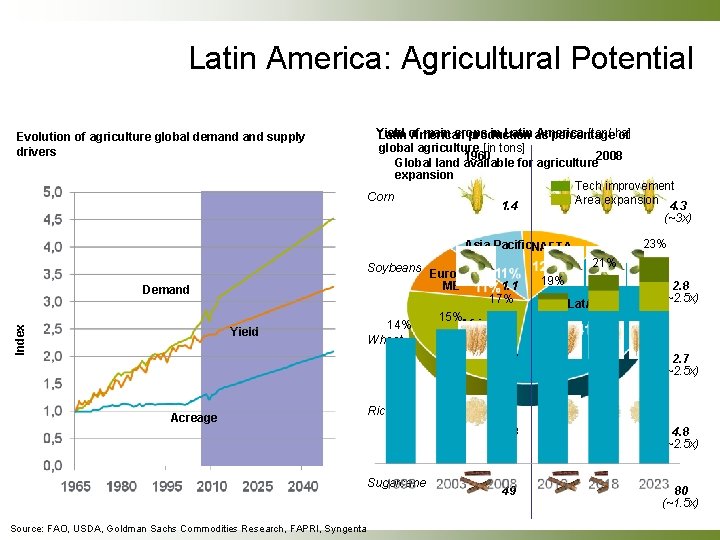
Latin America: Agricultural Potential Evolution of agriculture global demand supply drivers Yield main crops in Latin as America [ton/ ha] Latin of American production percentage of global agriculture [in tons] 1960 2008 Global land available for agriculture expansion Tech improvement Corn Area expansion 4. 3 1. 4 (~3 x) 23% Asia Pacific. NAFTA Soybeans Europe/ ME Index Demand Yield Acreage 14% Wheat 1. 1 17% 15% Africa 19% Lat. Am 2. 8 (~2. 5 x) 1. 1 2. 7 (~2. 5 x) 1. 8 4. 8 (~2. 5 x) 49 80 (~1. 5 x) Rice Sugarcane Source: FAO, USDA, Goldman Sachs Commodities Research, FAPRI, Syngenta 21%
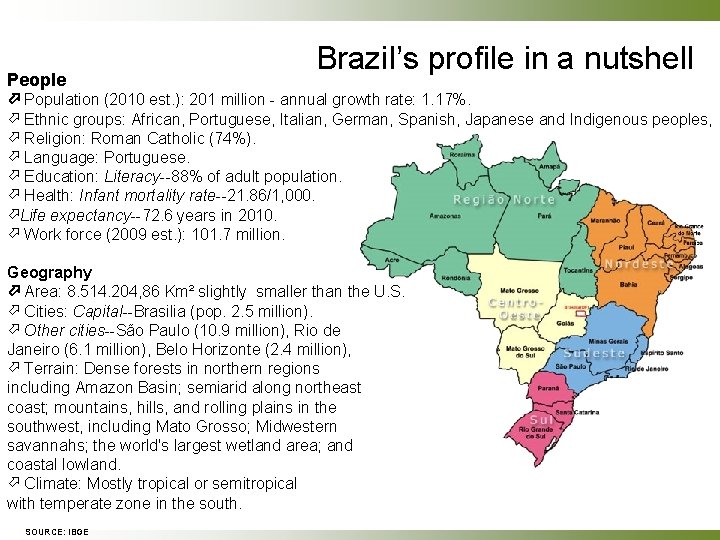
People Brazil’s profile in a nutshell Population (2010 est. ): 201 million - annual growth rate: 1. 17%. Ethnic groups: African, Portuguese, Italian, German, Spanish, Japanese and Indigenous peoples, Religion: Roman Catholic (74%). Language: Portuguese. Education: Literacy--88% of adult population. Health: Infant mortality rate--21. 86/1, 000. Life expectancy--72. 6 years in 2010. Work force (2009 est. ): 101. 7 million. Geography Area: 8. 514. 204, 86 Km² slightly smaller than the U. S. Cities: Capital--Brasilia (pop. 2. 5 million). Other cities--São Paulo (10. 9 million), Rio de Janeiro (6. 1 million), Belo Horizonte (2. 4 million), Terrain: Dense forests in northern regions including Amazon Basin; semiarid along northeast coast; mountains, hills, and rolling plains in the southwest, including Mato Grosso; Midwestern savannahs; the world's largest wetland area; and coastal lowland. Climate: Mostly tropical or semitropical with temperate zone in the south. SOURCE: IBGE
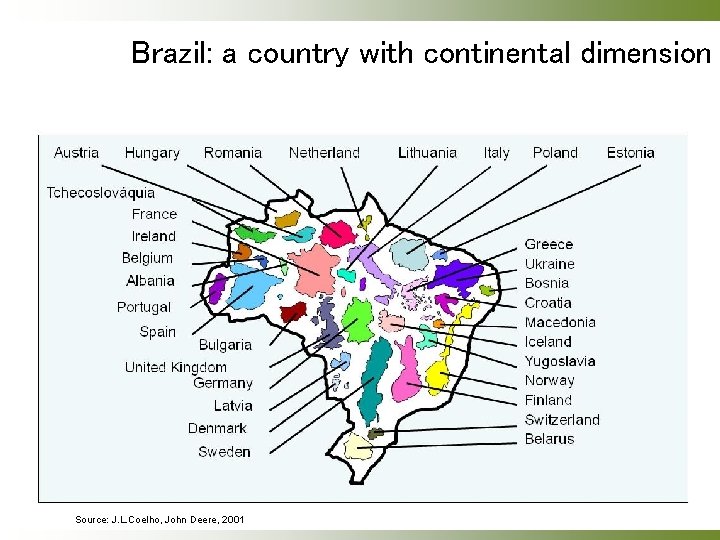
Brazil: a country with continental dimension Source: J. L. Coelho, John Deere, 2001
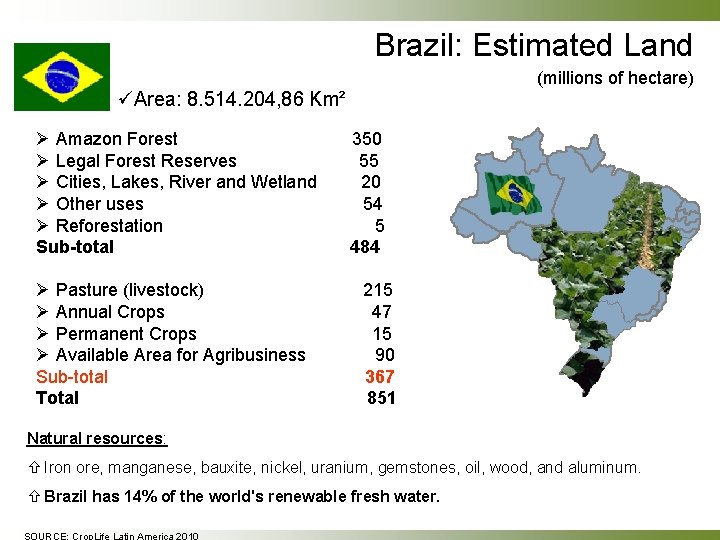
Brazil: Estimated Land (millions of hectare) üArea: 8. 514. 204, 86 Km² Amazon Forest Legal Forest Reserves Cities, Lakes, River and Wetland Other uses Reforestation Sub-total Pasture (livestock) Annual Crops Permanent Crops Available Area for Agribusiness Sub-total Total 350 55 20 54 5 484 215 47 15 90 367 851 Natural resources: Iron ore, manganese, bauxite, nickel, uranium, gemstones, oil, wood, and aluminum. Brazil has 14% of the world's renewable fresh water. SOURCE: Crop. Life Latin America 2010
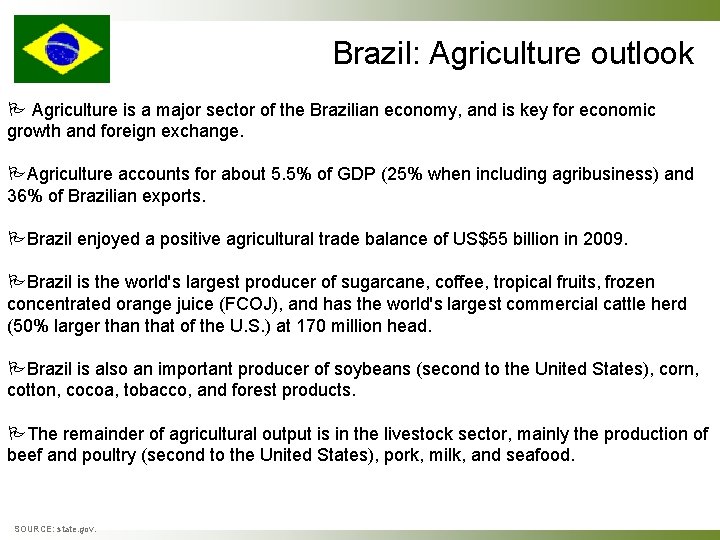
Brazil: Agriculture outlook Agriculture is a major sector of the Brazilian economy, and is key for economic growth and foreign exchange. Agriculture accounts for about 5. 5% of GDP (25% when including agribusiness) and 36% of Brazilian exports. Brazil enjoyed a positive agricultural trade balance of US$55 billion in 2009. Brazil is the world's largest producer of sugarcane, coffee, tropical fruits, frozen concentrated orange juice (FCOJ), and has the world's largest commercial cattle herd (50% larger than that of the U. S. ) at 170 million head. Brazil is also an important producer of soybeans (second to the United States), corn, cotton, cocoa, tobacco, and forest products. The remainder of agricultural output is in the livestock sector, mainly the production of beef and poultry (second to the United States), pork, milk, and seafood. SOURCE: state. gov.

Brazilian Agribusiness – Production and Exportation World wide ranking - 2009 Products Sugar Coffee Orange Juice Soybean Cattle Beef Ethanol Poultry Corn Swine Sources: Production Exportation Market Exportation amount US$ Mio

Brazil: The Opportunity, Still a Challenge ?
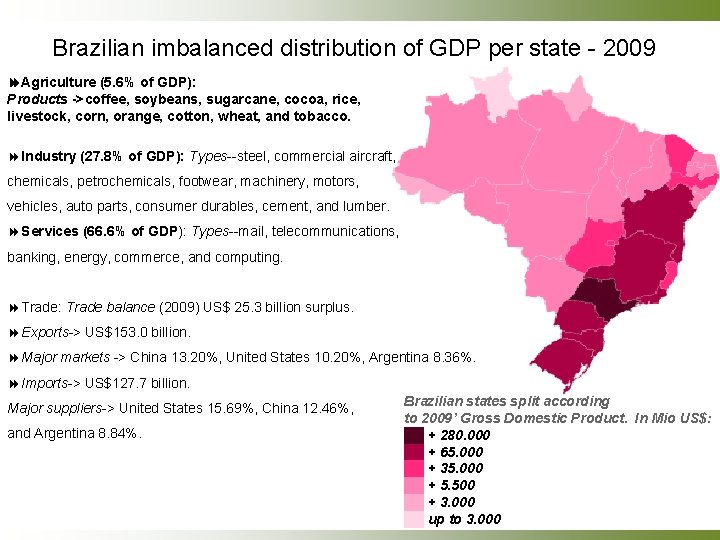
Brazilian imbalanced distribution of GDP per state - 2009 Agriculture (5. 6% of GDP): Products ->coffee, soybeans, sugarcane, cocoa, rice, livestock, corn, orange, cotton, wheat, and tobacco. Industry (27. 8% of GDP): Types--steel, commercial aircraft, chemicals, petrochemicals, footwear, machinery, motors, vehicles, auto parts, consumer durables, cement, and lumber. Services (66. 6% of GDP): Types--mail, telecommunications, banking, energy, commerce, and computing. Trade: Trade balance (2009) US$ 25. 3 billion surplus. Exports-> US$153. 0 billion. Major markets -> China 13. 20%, United States 10. 20%, Argentina 8. 36%. Imports-> US$127. 7 billion. Major suppliers-> United States 15. 69%, China 12. 46%, and Argentina 8. 84%. Brazilian states split according to 2009’ Gross Domestic Product. In Mio US$: ██ + 280. 000 ██ + 65. 000 ██ + 35. 000 ██ + 5. 500 ██ + 3. 000 ██ up to 3. 000
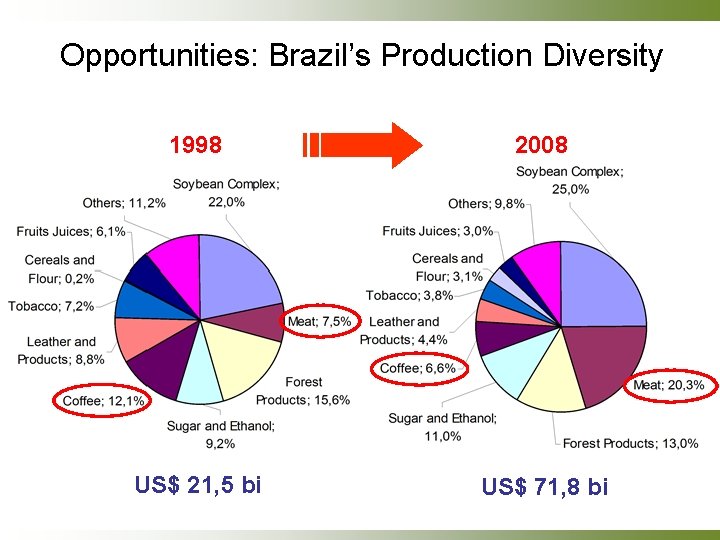
Opportunities: Brazil’s Production Diversity 1998 2008 US$ 21, 5 bi US$ 71, 8 bi
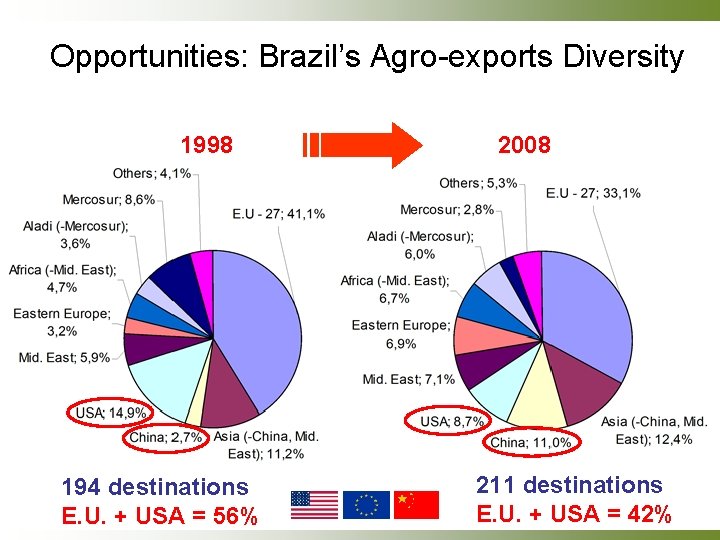
Opportunities: Brazil’s Agro-exports Diversity 1998 194 destinations E. U. + USA = 56% 2008 211 destinations E. U. + USA = 42%
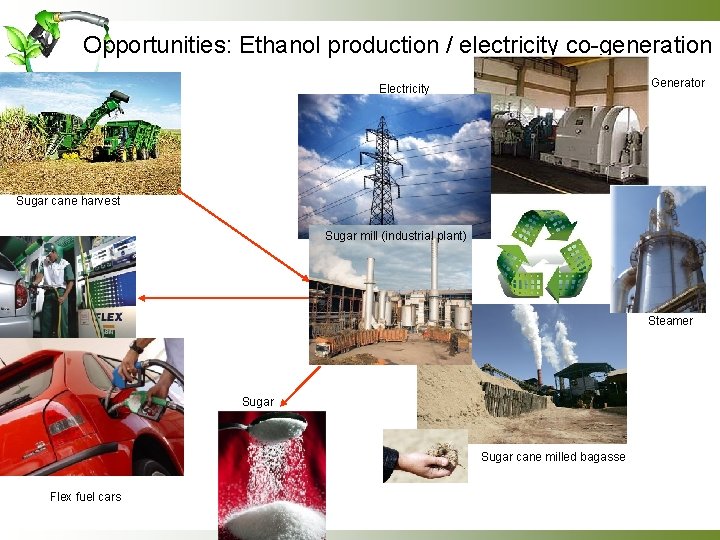
Opportunities: Ethanol production / electricity co-generation Generator Electricity Sugar cane harvest Sugar mill (industrial plant) Steamer Sugar cane milled bagasse Flex fuel cars
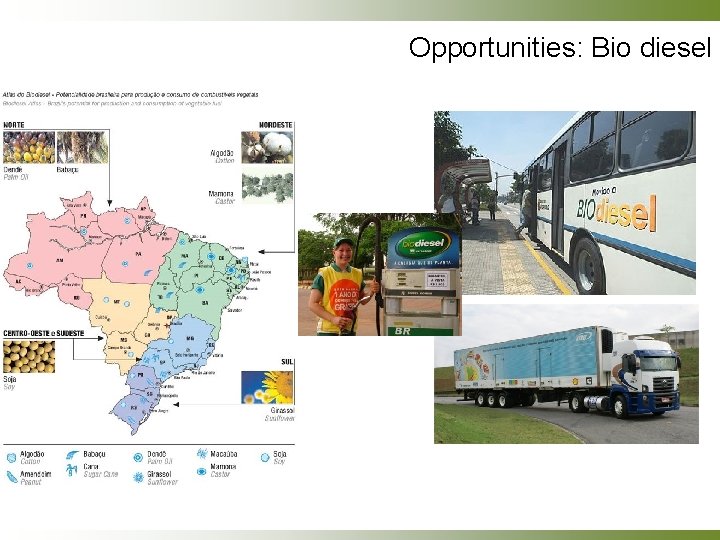
Opportunities: Bio diesel
Issues and bottle necks SOURCE: Crop. Life Latin America 2010
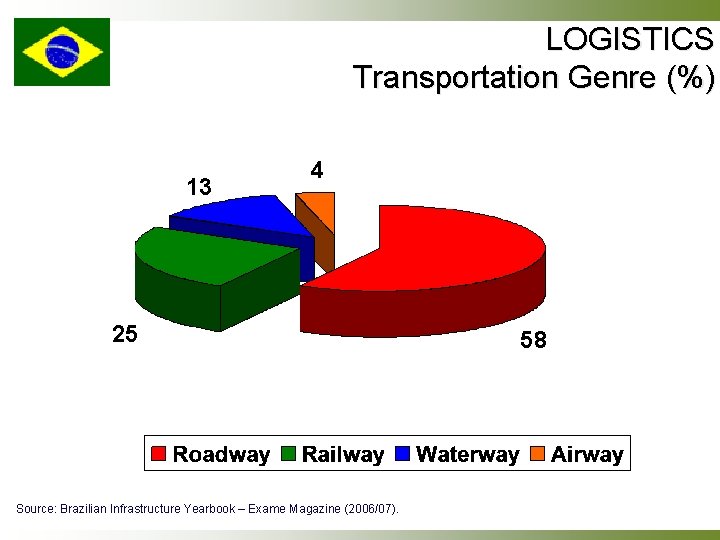
LOGISTICS Transportation Genre (%) 13 4 25 Source: Brazilian Infrastructure Yearbook – Exame Magazine (2006/07). 58
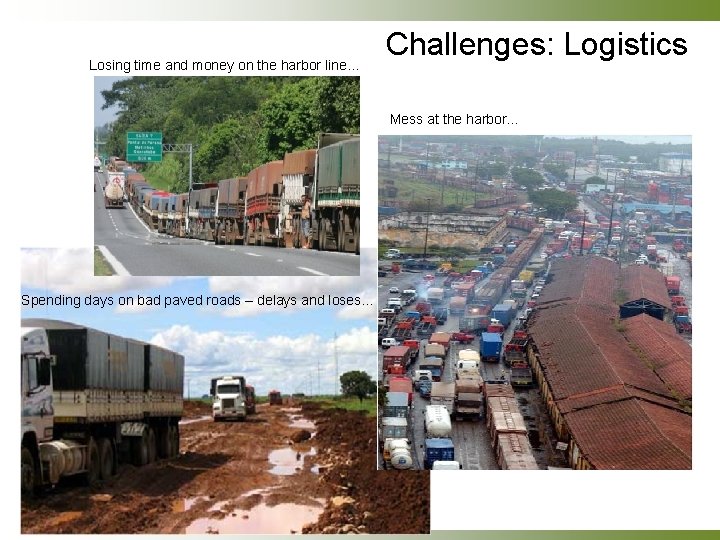
Losing time and money on the harbor line… Challenges: Logistics Mess at the harbor… Spending days on bad paved roads – delays and loses…
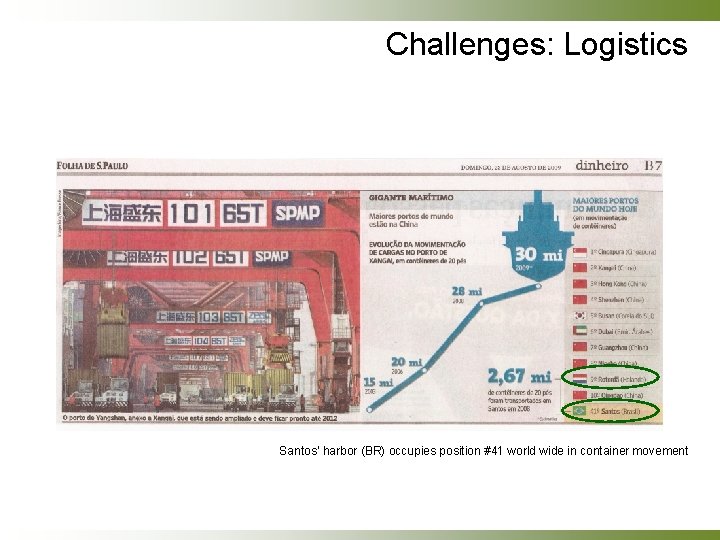
Challenges: Logistics Santos’ harbor (BR) occupies position #41 world wide in container movement
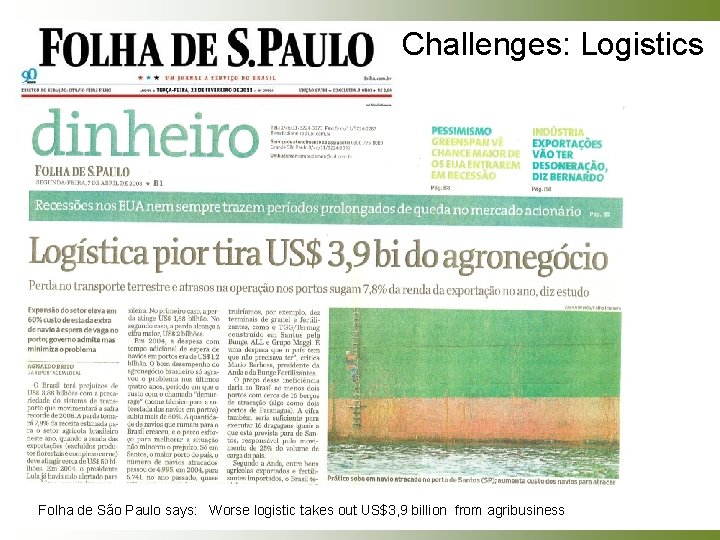
Challenges: Logistics Folha de São Paulo says: Worse logistic takes out US$3, 9 billion from agribusiness
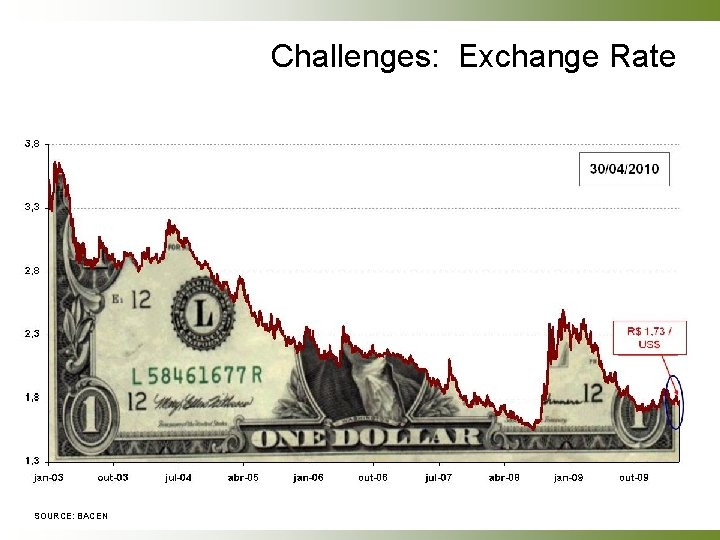
Challenges: Exchange Rate SOURCE: BACEN
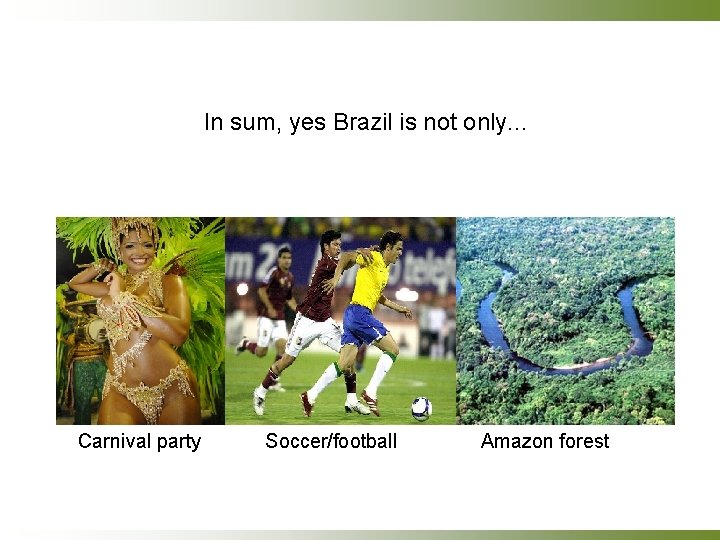
In sum, yes Brazil is not only. . . Carnival party Soccer/football Amazon forest
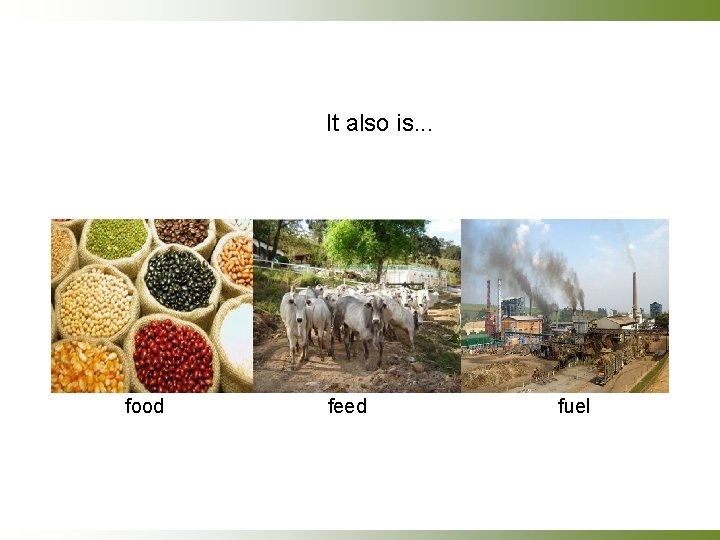
It also is. . . food feed fuel
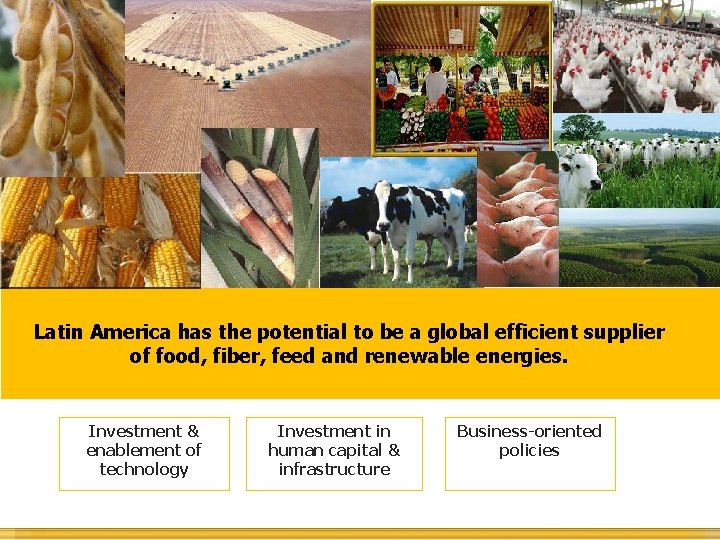
Latin America has the potential to be a global efficient supplier of food, fiber, feed and renewable energies. Investment & enablement of technology Investment in human capital & infrastructure Business-oriented policies
2007 2008 Thank you very much for your attention ! milton. suzuki@bayer. com 2009 2010
- Slides: 24