
Brazil is named after the Brazilwood tree Photo
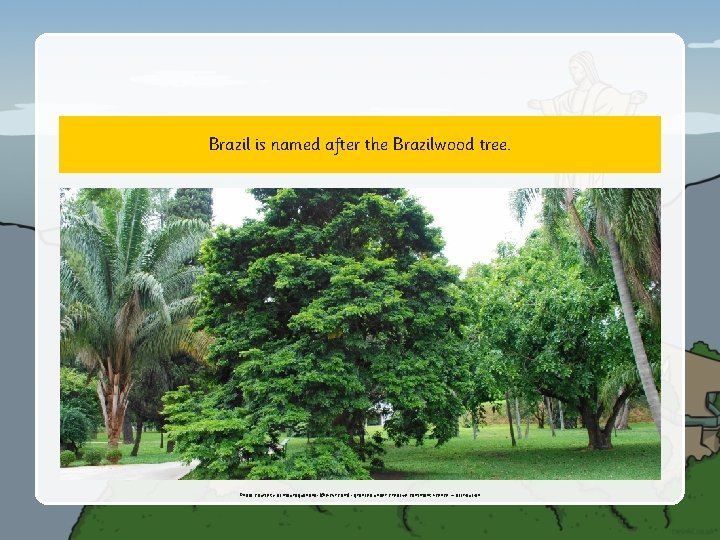
Brazil is named after the Brazilwood tree. Photo courtesy of mauroguanandi (@flickr. com) - granted under creative commons licence – attribution
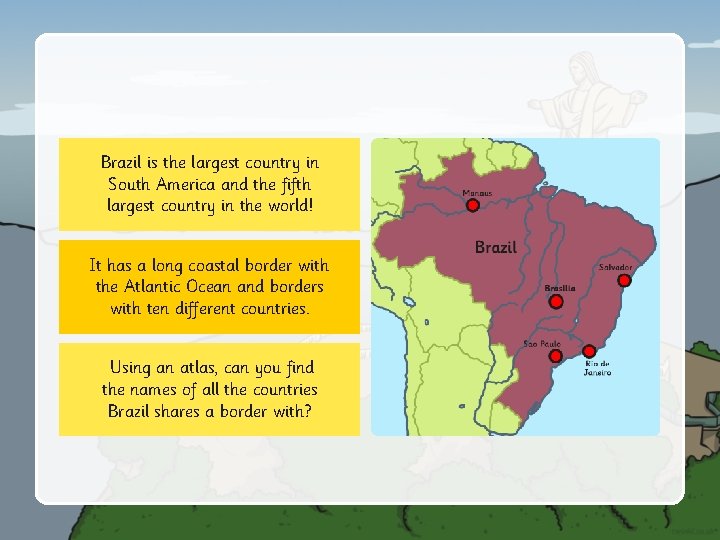
Brazil is the largest country in South America and the fifth largest country in the world! It has a long coastal border with the Atlantic Ocean and borders with ten different countries. Using an atlas, can you find the names of all the countries Brazil shares a border with?
*although there about 180 indigenous languages!
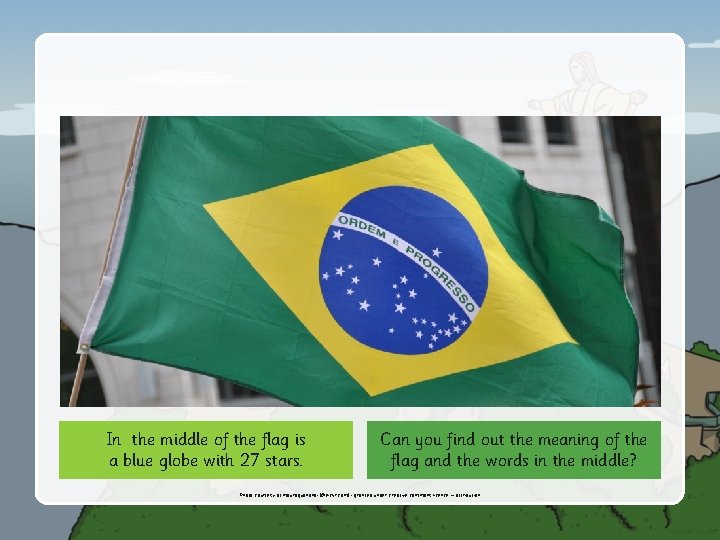
In the middle of the flag is a blue globe with 27 stars. Can you find out the meaning of the flag and the words in the middle? Photo courtesy of mauroguanandi (@flickr. com) - granted under creative commons licence – attribution
Brazil is the only Portuguese speaking country in South America. In 1494, the treaty of Tordesillas divided the Americas between Spain and Portugal (Line of Demarcation). Portugal claimed possession of Brazil on 22 nd April 1500, as Pedro Alvares Cabral, the Portuguese fleet commander, landed on the coast. Brazil gained its independence from Portugal in 1822. The culture of Brazil is still mainly influenced by the Portuguese.
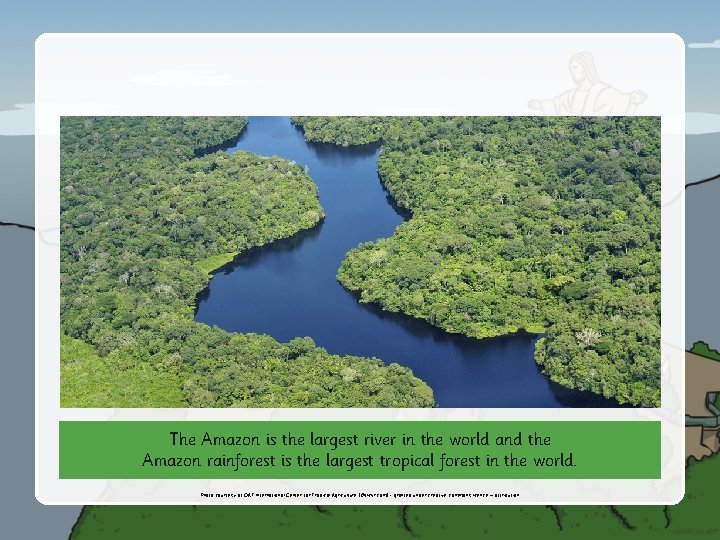
The Amazon is the largest river in the world and the Amazon rainforest is the largest tropical forest in the world. Photo courtesy of CIAT International Center for Tropical Agriculture (@flickr. com) - granted under creative commons licence – attribution
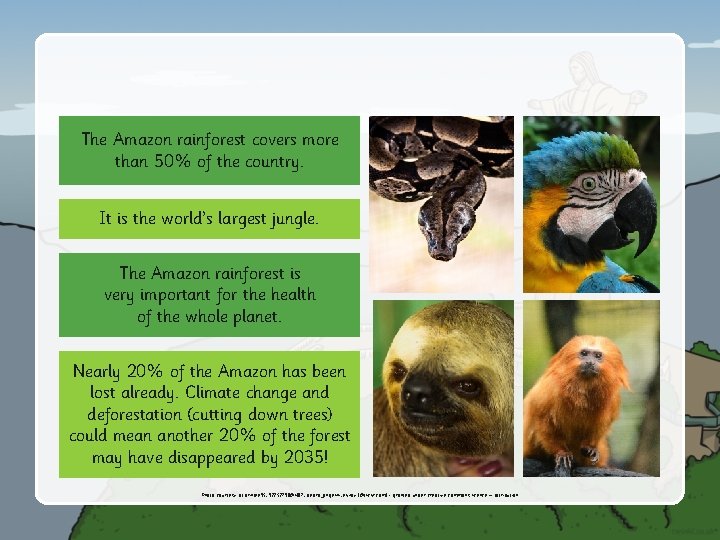
The Amazon rainforest covers more than 50% of the country. It is the world’s largest jungle. The Amazon rainforest is very important for the health of the whole planet. Nearly 20% of the Amazon has been lost already. Climate change and deforestation (cutting down trees) could mean another 20% of the forest may have disappeared by 2035! Photo courtesy of brindle 95, 92252798@N 07, pedro_angelini, ekilby (@flickr. com) - granted under creative commons licence – attribution
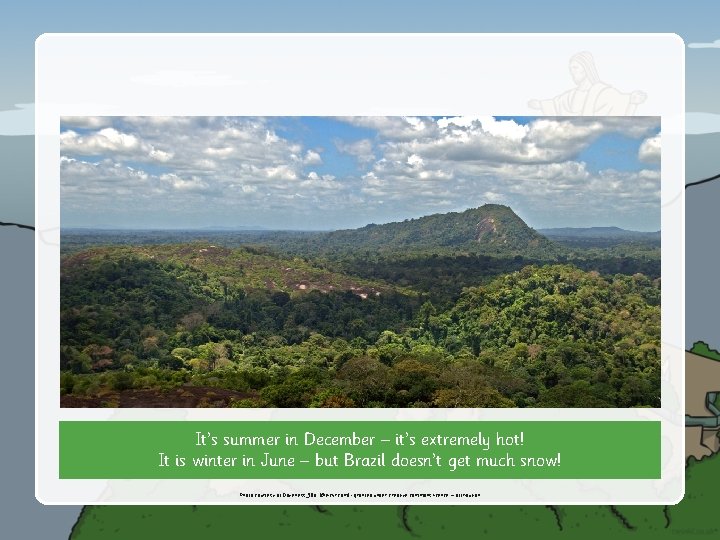
It’s summer in December – it’s extremely hot! It is winter in June – but Brazil doesn’t get much snow! Photo courtesy of Daveness_98 o (@flickr. com) - granted under creative commons licence – attribution
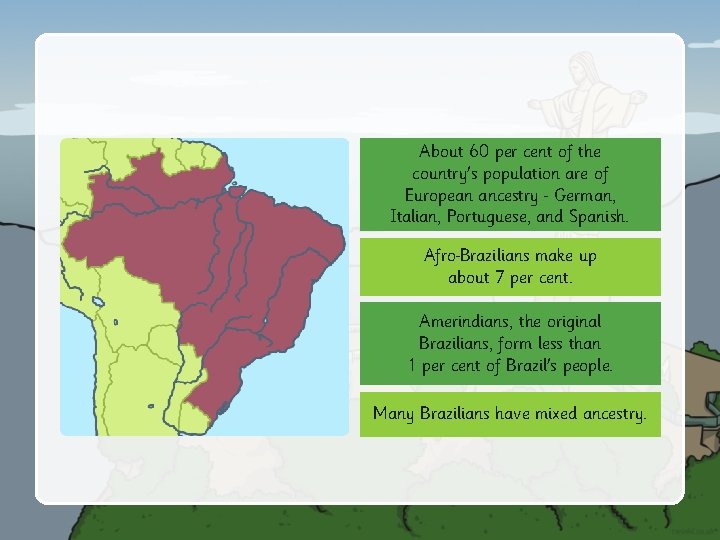
About 60 per cent of the country's population are of European ancestry German, Italian, Portuguese, and Spanish. Afro Brazilians make up about 7 per cent. Amerindians, the original Brazilians, form less than 1 per cent of Brazil's people. Many Brazilians have mixed ancestry.
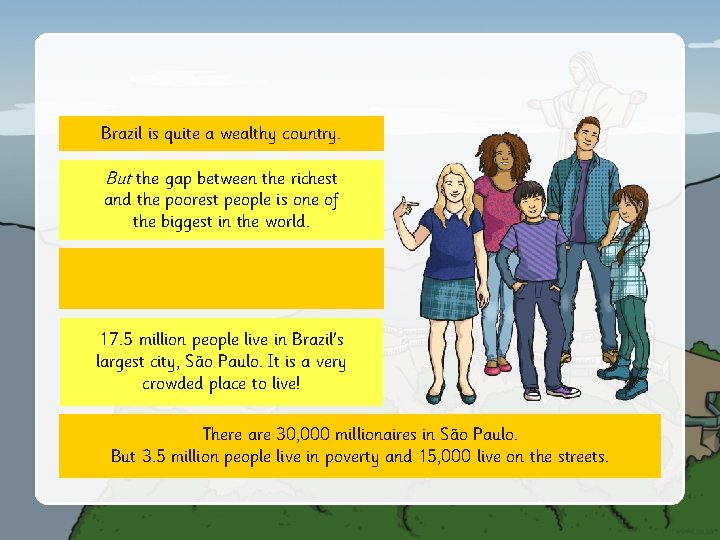
Brazil is quite a wealthy country. But the gap between the richest and the poorest people is one of the biggest in the world. 17. 5 million people live in Brazil's largest city, São Paulo. It is a very crowded place to live! There are 30, 000 millionaires in São Paulo. But 3. 5 million people live in poverty and 15, 000 live on the streets.
People from indigenous communities are some of the poorest in Brazil. Amerindian groups in the Amazon area still use their own languages. Many indigenous people living in Brazil live in the Amazon region. The indigenous people who live in the forest have to move when the trees are cut down.
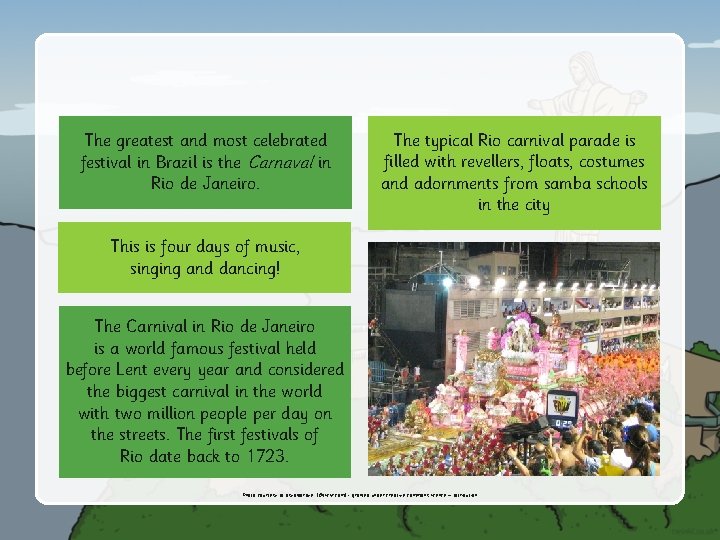
The greatest and most celebrated festival in Brazil is the Carnaval in Rio de Janeiro. The typical Rio carnival parade is filled with revellers, floats, costumes and adornments from samba schools in the city This is four days of music, singing and dancing! The Carnival in Rio de Janeiro is a world famous festival held before Lent every year and considered the biggest carnival in the world with two million people per day on the streets. The first festivals of Rio date back to 1723. Photo courtesy of osvaldorove (@flickr. com) - granted under creative commons licence – attribution
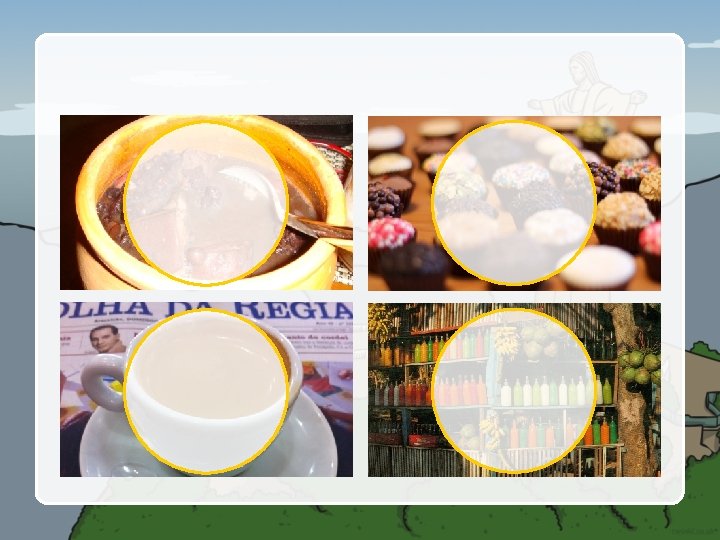
Can you think of any products which are produced in Brazil? Brazil is the largest coffee producer in the world. Brazil is also the world leader in the production of livestock. There are many mines in Brazil, mining minerals and steel. Brazil has many natural resources such as iron ore, manganese, and many other minerals. There is also a wide range of agricultural products, such as coffee, bananas, cacao beans, cattle, cotton, horses, lemons, maize, oranges, pineapples, rice, sheep, soybeans, sugar cane, nuts, timber, and tobacco, that helped make Brazil a growing economic power.
- Slides: 16