
BRAZIL History The Brazilian Empire 1822 1889 The

BRAZIL

History • The Brazilian Empire (1822 -1889) • The Old Republic (1889 -1930) – decentralized • The 1930 coup and Vargas (1930 -1945) – Centralized, statist • The Populist Republic (1945 -1964) • Bureaucratic Authoritarianism (1964 -85) • The transition to democracy (1974 -2001) – Abertura – The Constitution (1988) • President Lula da Silva (2002 -2011) • President Dilma Roussef (2011 -)
Political Economy • Until 1930 export-led growth – Coffee – 1929 great depression-> reduced demand-> – ISI • 1930 -> State-led growth (developmentalism) • 1989 - privatization? – BNDES: state-owned development bank
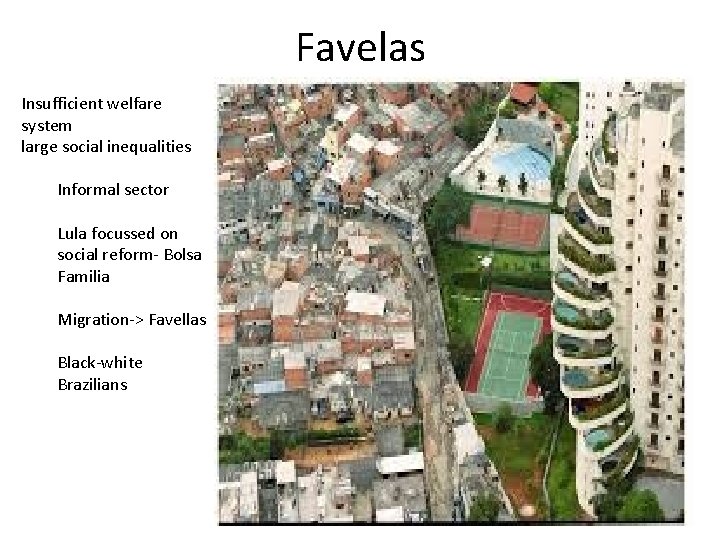
Favelas Insufficient welfare system large social inequalities Informal sector Lula focussed on social reform- Bolsa Familia Migration-> Favellas Black-white Brazilians
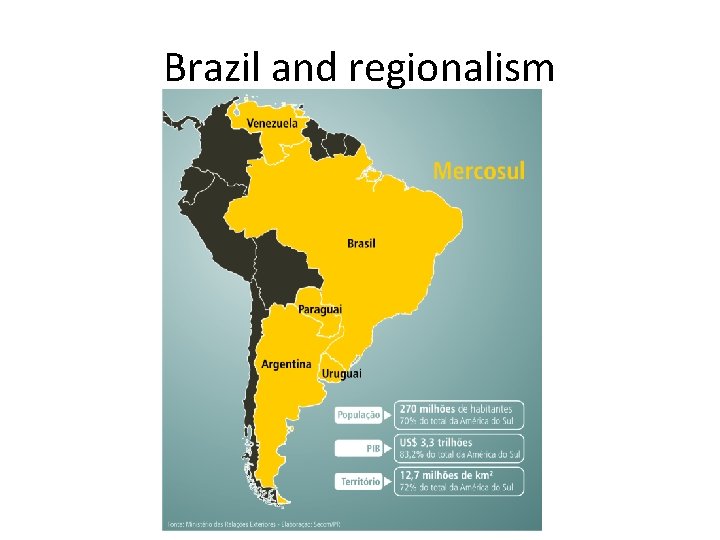
Brazil and regionalism
Government and Policy-making • The Executive – Presidential system – Centralized authority in the executive • Federalism – 26 states – competition between the centre and states • The Legislature: Bicameral • No strict separation of powers
The Executive • • • The President: head of state and government Directly elected every four years Since 1997 - two terms Emergency measures (2001 changes) Power to appoint bureaucrats Personal ties
The Judiciary • Supreme Court • No clear power to review the executive • It can review corruption cases by parliamentarians • Appointed by the President, approved by the senate
Subnational government • • Governor (elected) Chief advisors Unicameral legislature Governors and mayors are essential support fore Presidents and legislators
The Legislature • Upper house: Senate (81 members) – Each state elect 3 senators – Part of the senate opens for elections in every 4 years • Lower house: the Chamber of Deputies (513 members) – Elections every four years
The legislature • Each chamber is equal in law making. • No reconciliation committee • Once both houses pass a bill, the President can veto or accept • The two houses can override the veto by a majority of votes • Constitutional amendments require 3/5 of the votes in each house
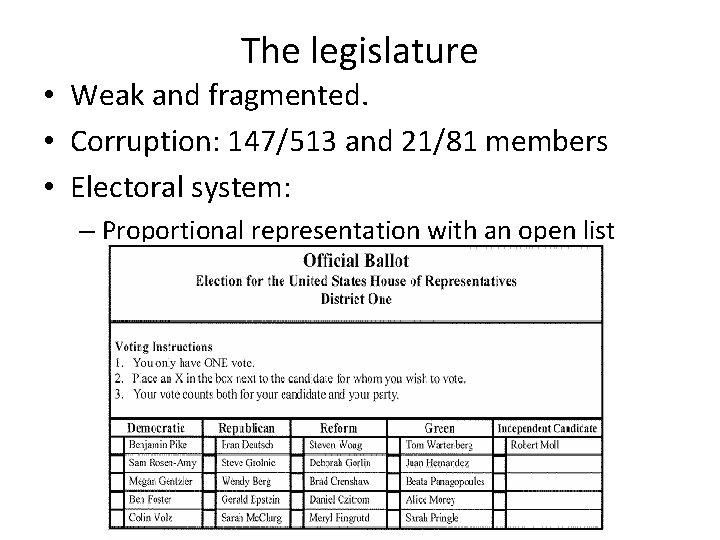
The legislature • Weak and fragmented. • Corruption: 147/513 and 21/81 members • Electoral system: – Proportional representation with an open list
Political Parties • Right – Democrats, Liberal Party, Progressive Party – Neoliberal economic policy • Center: – Party of the Brazilian Democratic Movement, Party of Brazilian Social Democracy, Brazilian Labor. Party • Left – Workers Party, Socialist Party, Communist Party – Reduce inflation, but maintain public sector and welfare state
- Slides: 13