
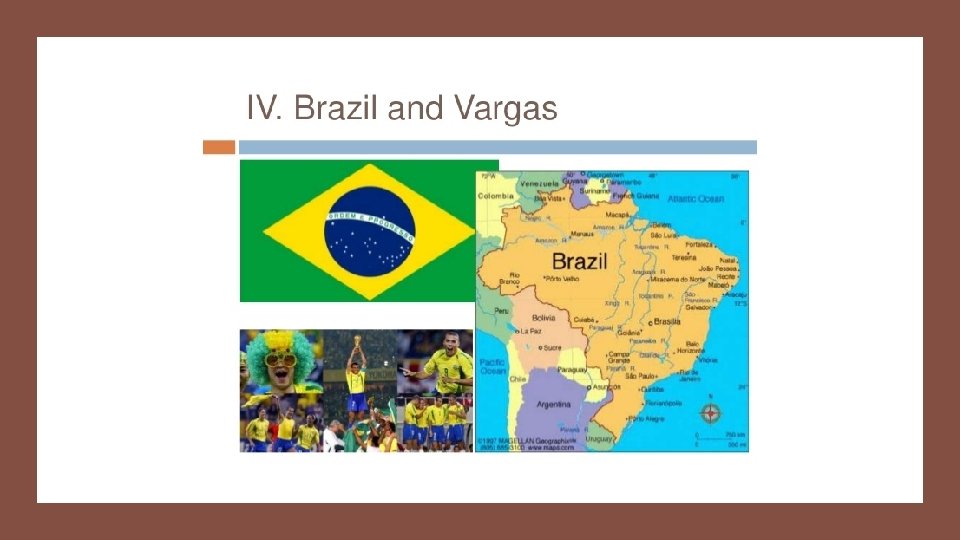
Brazil DURING THE DEPRESSION Like most Latin American

Brazil DURING THE DEPRESSION
Like most Latin American countries, Brazil historically was run by rich landowning oligarchs. (Caudillos) Political Differences Brazil’s central government was weak even by Latin American standards up until the Great Depression. Had once had a relatively strong central government under a Brazilian monarchy (Pedro I and Pedro II)
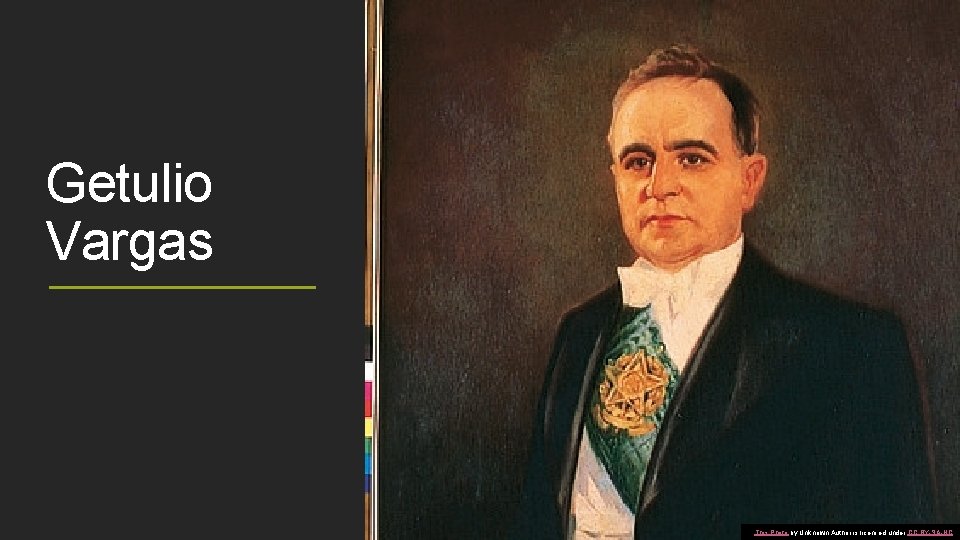
Getulio Vargas This Photo by Unknown Author is licensed under CC BY-SA-NC
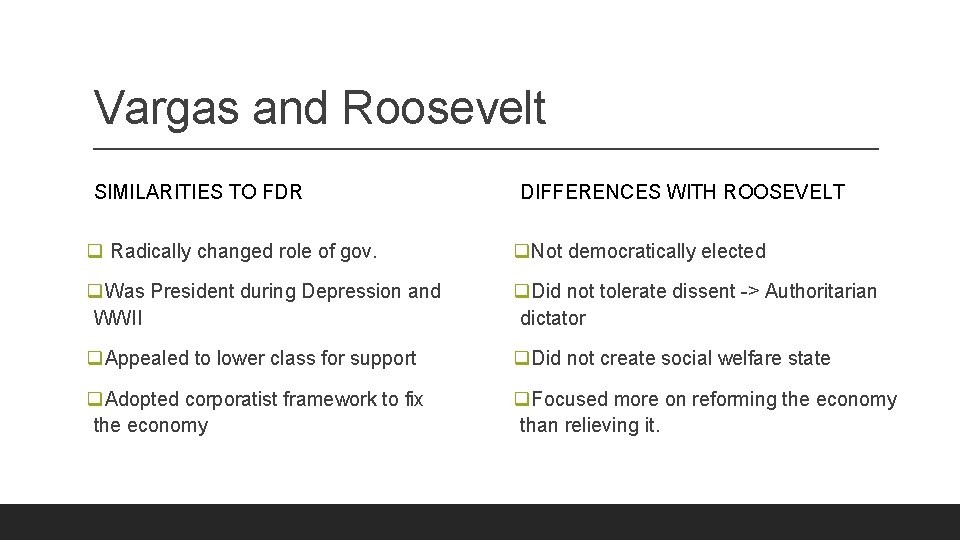
Vargas and Roosevelt SIMILARITIES TO FDR DIFFERENCES WITH ROOSEVELT q Radically changed role of gov. q. Not democratically elected q. Was President during Depression and WWII q. Did not tolerate dissent -> Authoritarian dictator q. Appealed to lower class for support q. Did not create social welfare state q. Adopted corporatist framework to fix the economy q. Focused more on reforming the economy than relieving it.
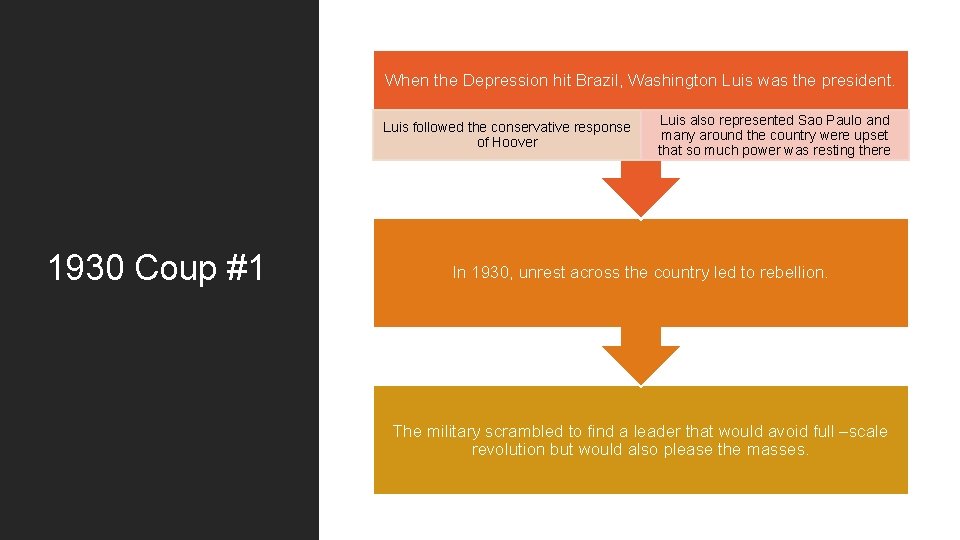
When the Depression hit Brazil, Washington Luis was the president. Luis followed the conservative response of Hoover 1930 Coup #1 Luis also represented Sao Paulo and many around the country were upset that so much power was resting there In 1930, unrest across the country led to rebellion. The military scrambled to find a leader that would avoid full –scale revolution but would also please the masses.
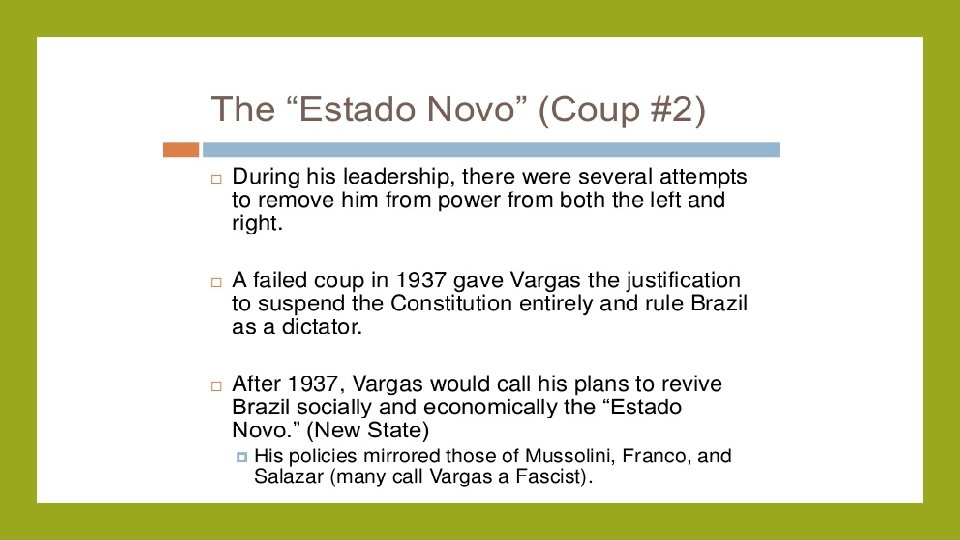
Vargas Economic Reforms (Trade Policy) Varagas’ economic goals met with his political goal of reducing the power of Sao Paulo. Vargas pursued Diversification through ISI (Import substitution industrialization) In other words, tariffs would be placed on specific goods that Vargas wanted Brazil to make (airplanes, steel, etc. ) Incentives would be given to infant industries to produce these goods for Brazilian consumers
Vargas Economic Policy q. To deal specifically with Coffee, Vargas created the National Department of Coffee. q. Reduced coffee tree planting ordered. q. Coffee planters in Brazil would be forced in a ‘cartel’ wherein they would have the amount that they could sell on the market reduced in exchanged for higher prices. q. The goal was to make Coffee exports more profitable for the country and reduce the country’s reliance on those exports q. Critics would point out that this increased unemployment in the Coffee sector.
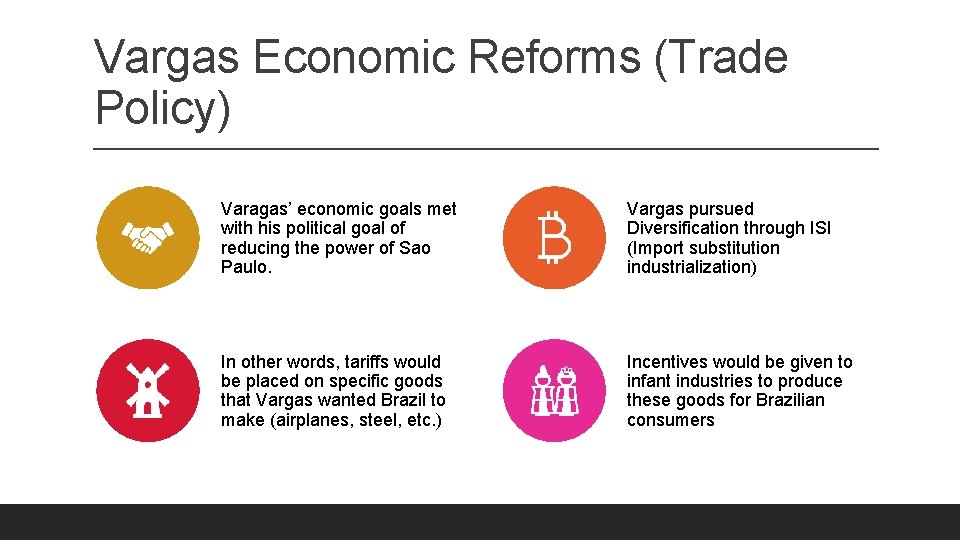
Vargas-Brazil Parallels between Vargas and the European police states began to appear by 1934, when a new constitution was enacted with some direct almost- fascist influences Fascist-style programs would serve two important aims in Brazil, – stimulating industrial growth and – suppressing the communist influence in the country.
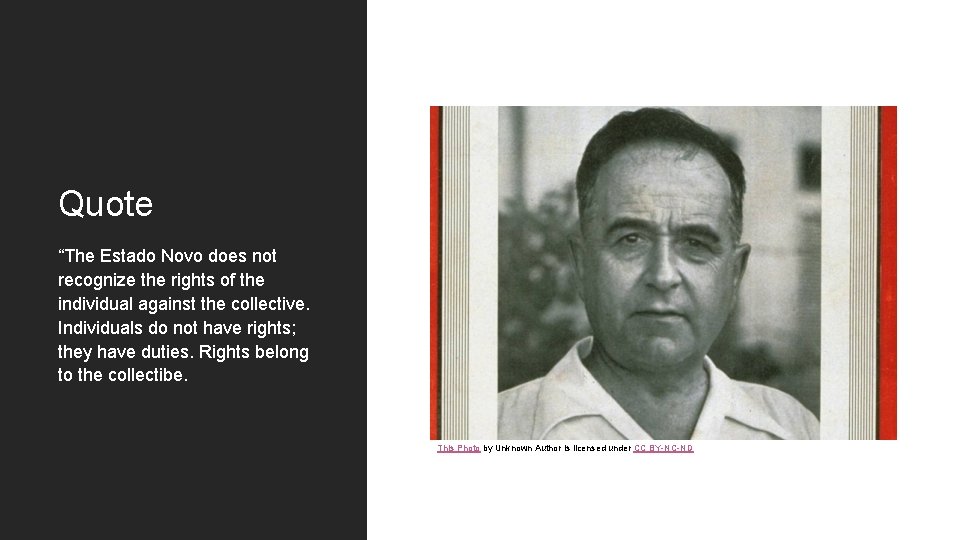
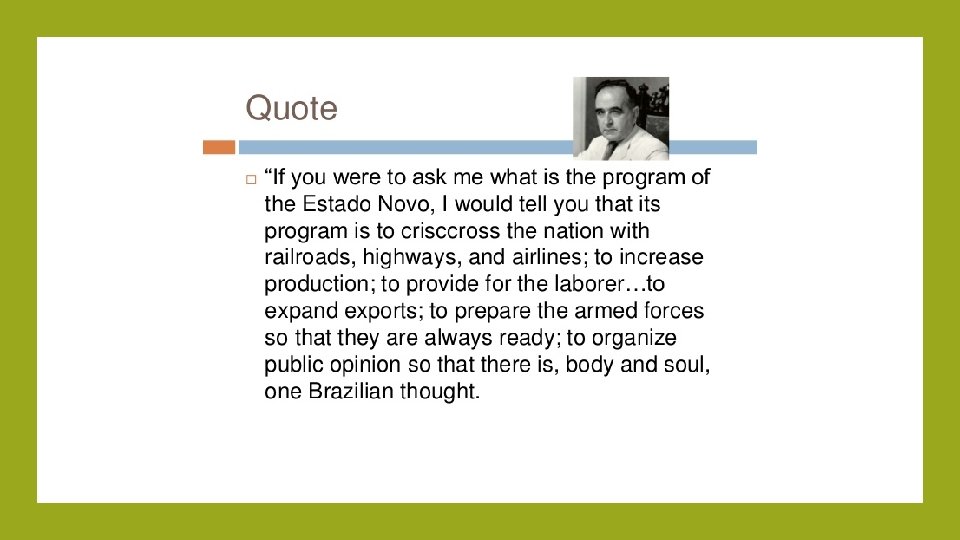
Quote “The Estado Novo does not recognize the rights of the individual against the collective. Individuals do not have rights; they have duties. Rights belong to the collectibe. This Photo by Unknown Author is licensed under CC BY-NC-ND
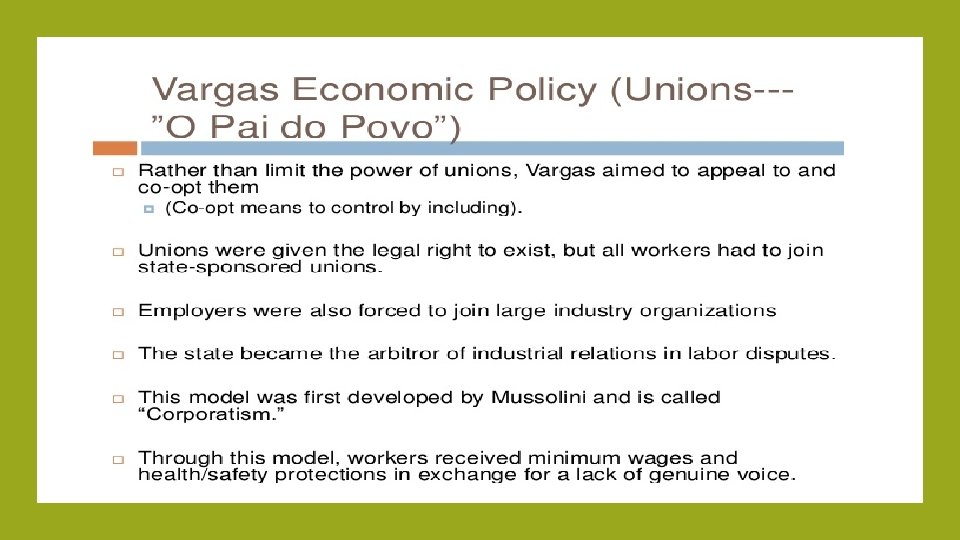
ISI in Brazil The Brazilian constitution established a Chamber of Deputies that placed government authority over the private economy Established a system of state-guided capitalism aimed at industrialization and reducing foreign dependency. Brazilian corporatism, was actually a strategy to increase industrial output utilizing a strong nationalist appeal and co- opting workers' demands under the banner of nationalism. While increasing worker’s rights, Vargas greatly imposed labor regulations on labor. The new constitution, drafted by Vargas allies, expanded social programs and set a minimum wage but also placed stringent limits on union organizing and "unauthorized" strikes.
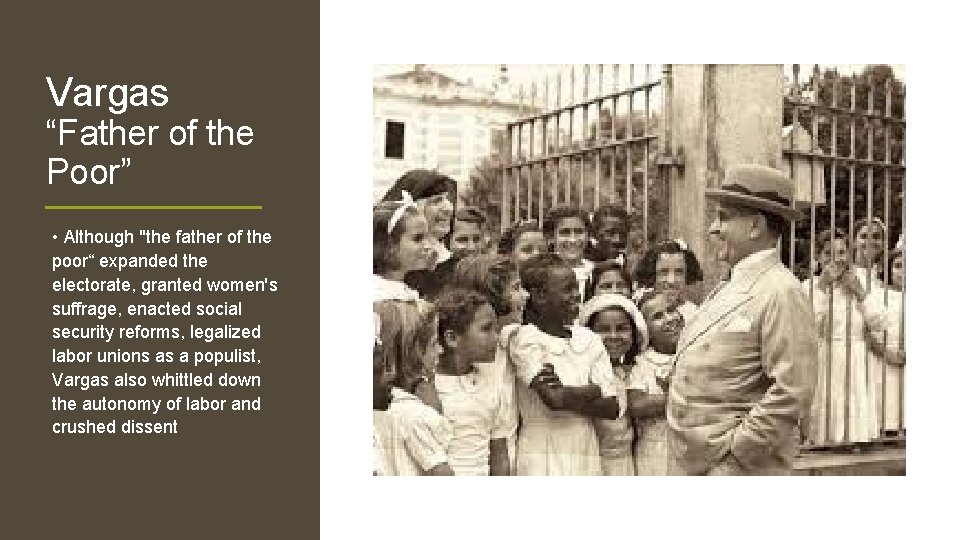
Vargas “Father of the Poor” • Although "the father of the poor“ expanded the electorate, granted women's suffrage, enacted social security reforms, legalized labor unions as a populist, Vargas also whittled down the autonomy of labor and crushed dissent
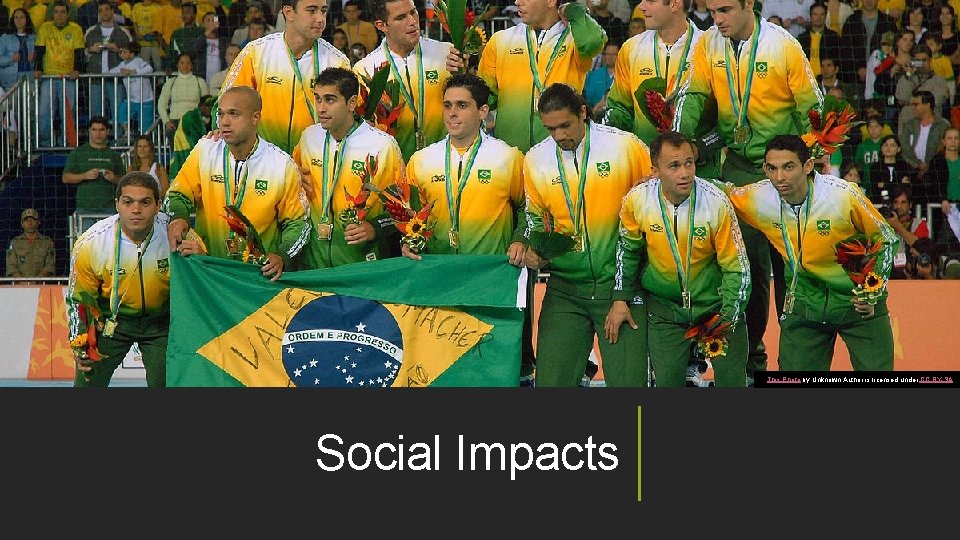
Vargas Racial Policy Vargas promote the idea that racial distractions were contrary to the unified vision of the Estado Novo. All discussions of racism were banned. Eugenicists were arrested. Brazilians were taught nobody was one race, but all Brazilians were a mixture of races. A racial class system still existed in many ways, but he indoctrinated Brazilians to believe in a color-blind society.
This Photo by Unknown Author is licensed under CC BY-SA Social Impacts
- Slides: 21