
Brayton Cycle Modifications Instructional Design Document STAM Interactive
Brayton Cycle Modifications Instructional Design Document STAM Interactive Solutions

Demo Outline (For reference)

Change Log
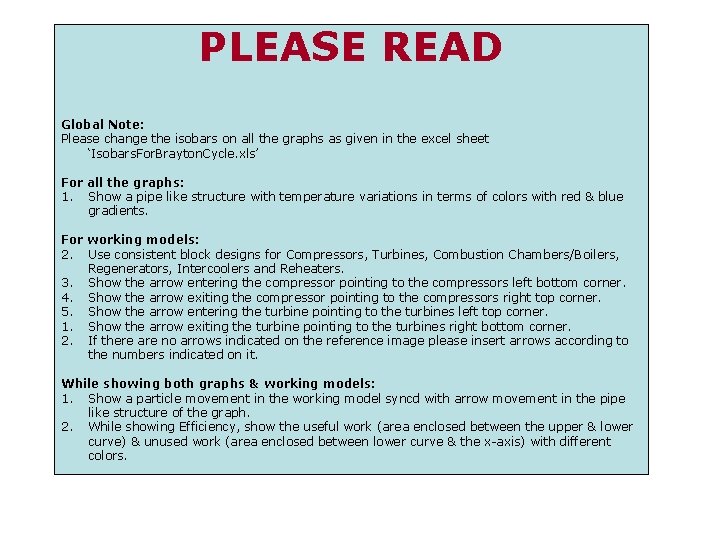
PLEASE READ Global Note: Please change the isobars on all the graphs as given in the excel sheet ‘Isobars. For. Brayton. Cycle. xls’ For all the graphs: 1. Show a pipe like structure with temperature variations in terms of colors with red & blue gradients. For working models: 2. Use consistent block designs for Compressors, Turbines, Combustion Chambers/Boilers, Regenerators, Intercoolers and Reheaters. 3. Show the arrow entering the compressor pointing to the compressors left bottom corner. 4. Show the arrow exiting the compressor pointing to the compressors right top corner. 5. Show the arrow entering the turbine pointing to the turbines left top corner. 1. Show the arrow exiting the turbine pointing to the turbines right bottom corner. 2. If there are no arrows indicated on the reference image please insert arrows according to the numbers indicated on it. While showing both graphs & working models: 1. Show a particle movement in the working model syncd with arrow movement in the pipe like structure of the graph. 2. While showing Efficiency, show the useful work (area enclosed between the upper & lower curve) & unused work (area enclosed between lower curve & the x-axis) with different colors.
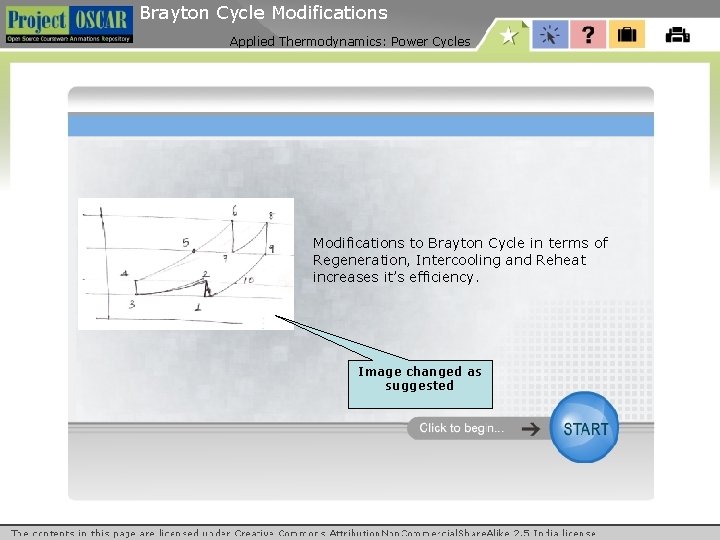
Brayton Cycle Modifications Applied Thermodynamics: Power Cycles Modifications to Brayton Cycle in terms of Regeneration, Intercooling and Reheat increases it’s efficiency. Image changed as suggested
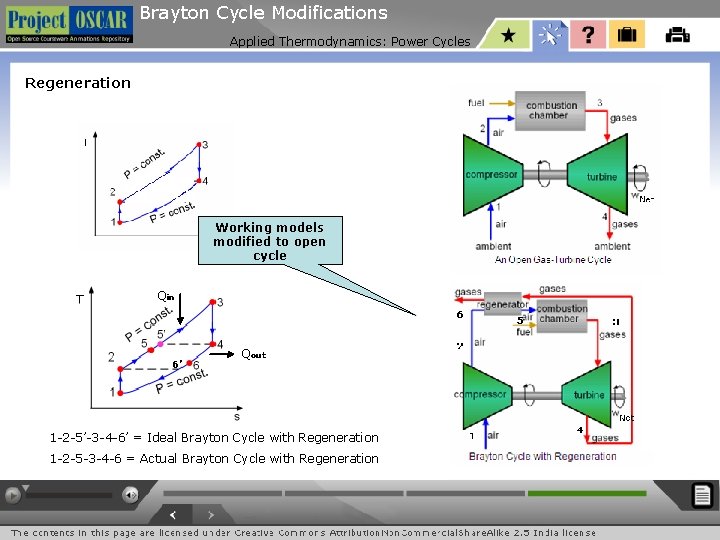
Brayton Cycle Modifications Applied Thermodynamics: Power Cycles Regeneration Working models modified to open cycle Qin 6’ Qout 1 -2 -5’-3 -4 -6’ = Ideal Brayton Cycle with Regeneration 1 -2 -5 -3 -4 -6 = Actual Brayton Cycle with Regeneration
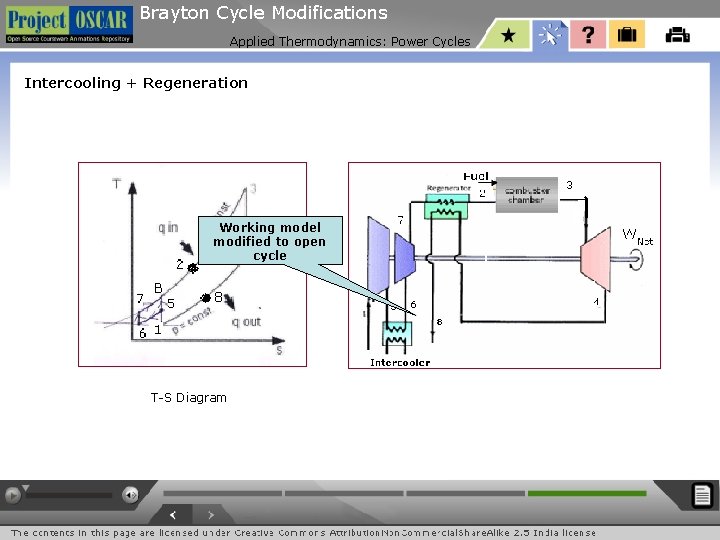
Brayton Cycle Modifications Applied Thermodynamics: Power Cycles Intercooling + Regeneration Working model modified to open cycle T-S Diagram
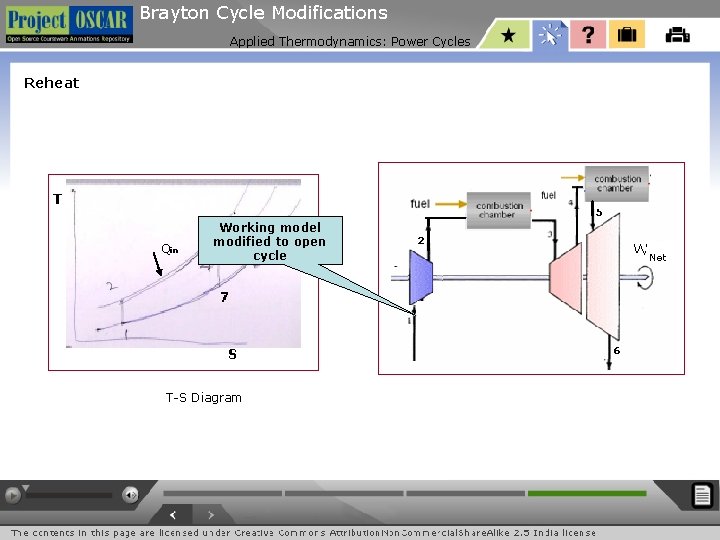
Brayton Cycle Modifications Applied Thermodynamics: Power Cycles Reheat Qin Working model modified to open cycle T-S Diagram
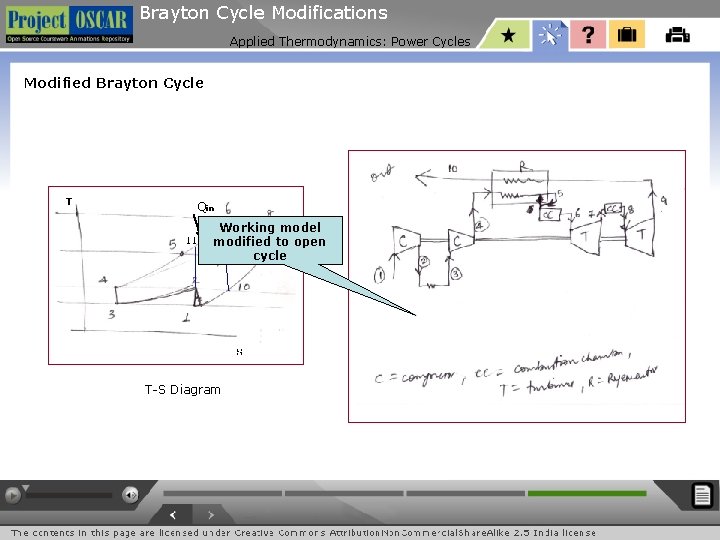
Brayton Cycle Modifications Applied Thermodynamics: Power Cycles Modified Brayton Cycle Qin Working model modified to open cycle T-S Diagram
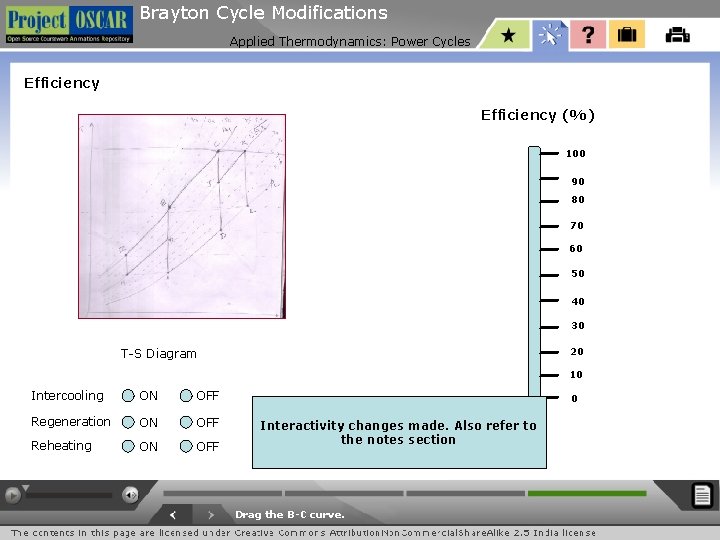
Brayton Cycle Modifications Applied Thermodynamics: Power Cycles Efficiency (%) 100 90 80 70 60 50 40 30 20 T-S Diagram 10 Intercooling ON OFF Regeneration ON OFF Reheating ON OFF 0 Interactivity changes made. Also refer to the notes section Drag the B-C curve.
Brayton Cycle Modifications Applied Thermodynamics: Power Cycles Resources Books: • G. J. Van Wylen's, "Thermodynamics“.
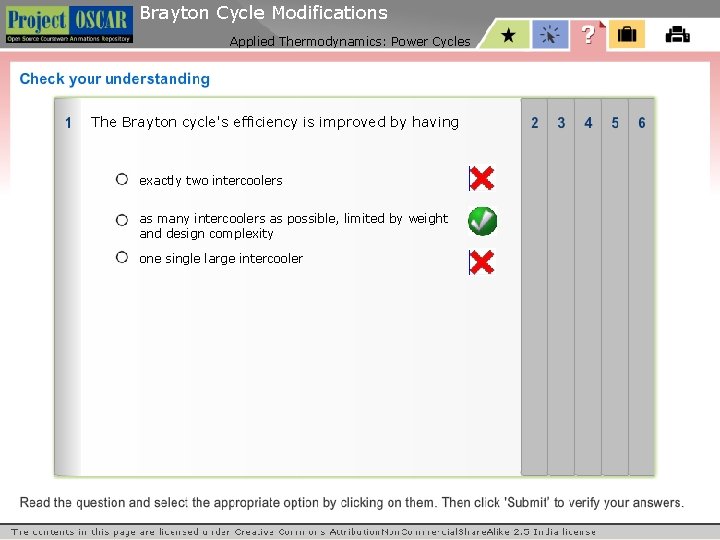
Brayton Cycle Modifications Applied Thermodynamics: Power Cycles The Brayton cycle's efficiency is improved by having exactly two intercoolers as many intercoolers as possible, limited by weight and design complexity one single large intercooler
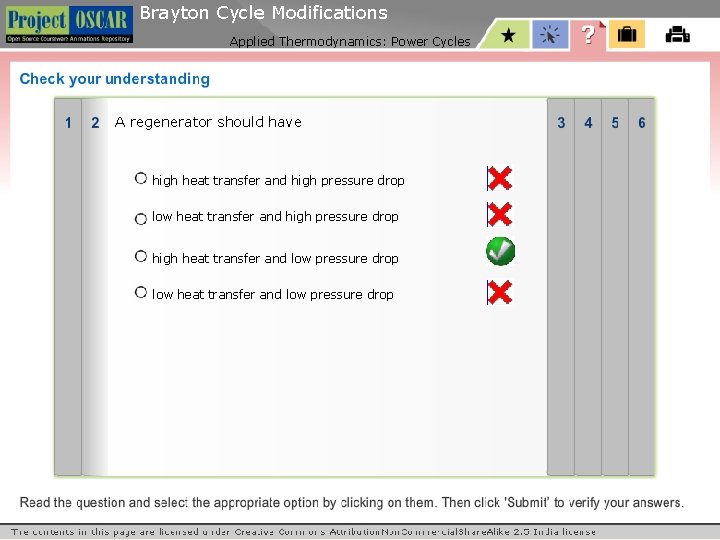
Brayton Cycle Modifications Applied Thermodynamics: Power Cycles A regenerator should have high heat transfer and high pressure drop low heat transfer and high pressure drop high heat transfer and low pressure drop low heat transfer and low pressure drop
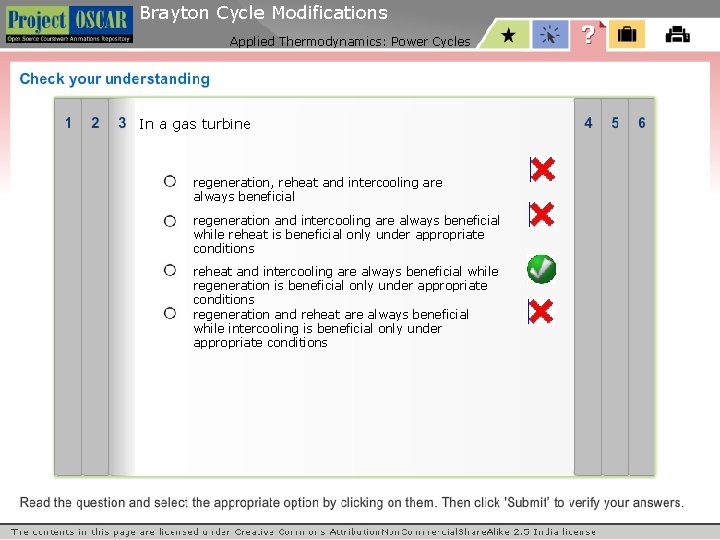
Brayton Cycle Modifications Applied Thermodynamics: Power Cycles In a gas turbine regeneration, reheat and intercooling are always beneficial regeneration and intercooling are always beneficial while reheat is beneficial only under appropriate conditions reheat and intercooling are always beneficial while regeneration is beneficial only under appropriate conditions regeneration and reheat are always beneficial while intercooling is beneficial only under appropriate conditions
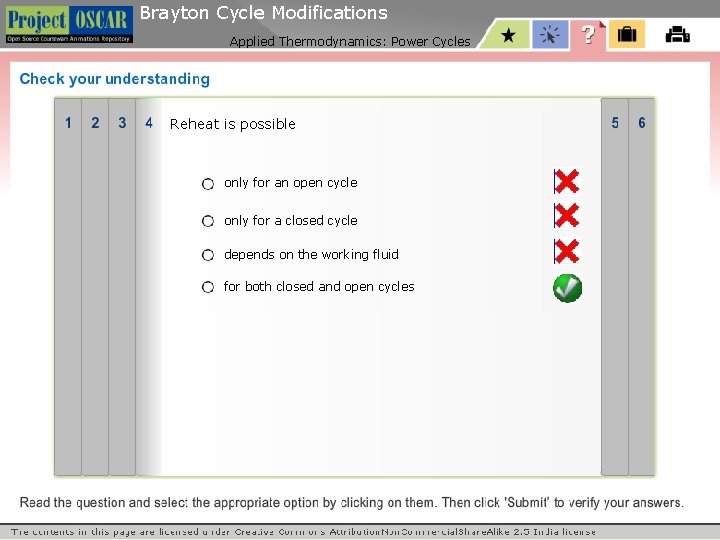
Brayton Cycle Modifications Applied Thermodynamics: Power Cycles Reheat is possible only for an open cycle only for a closed cycle depends on the working fluid for both closed and open cycles
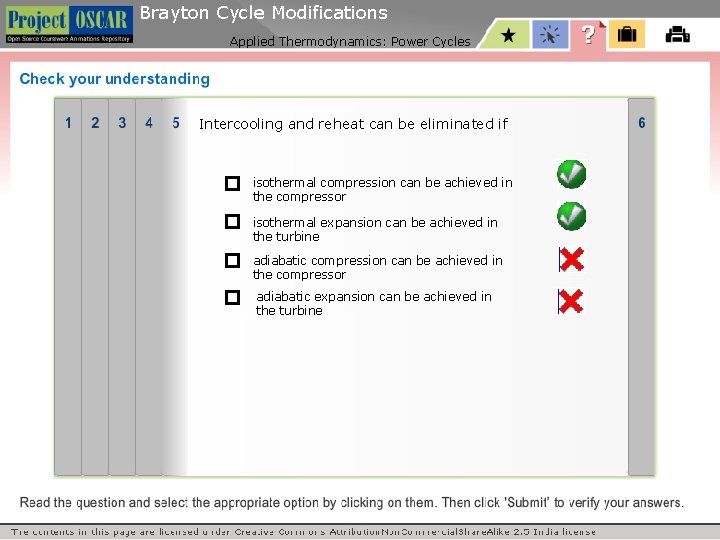
Brayton Cycle Modifications Applied Thermodynamics: Power Cycles Intercooling and reheat can be eliminated if isothermal compression can be achieved in the compressor isothermal expansion can be achieved in the turbine adiabatic compression can be achieved in the compressor adiabatic expansion can be achieved in the turbine
- Slides: 16