
Brassica rapa History of Fast Plants Fast Plants
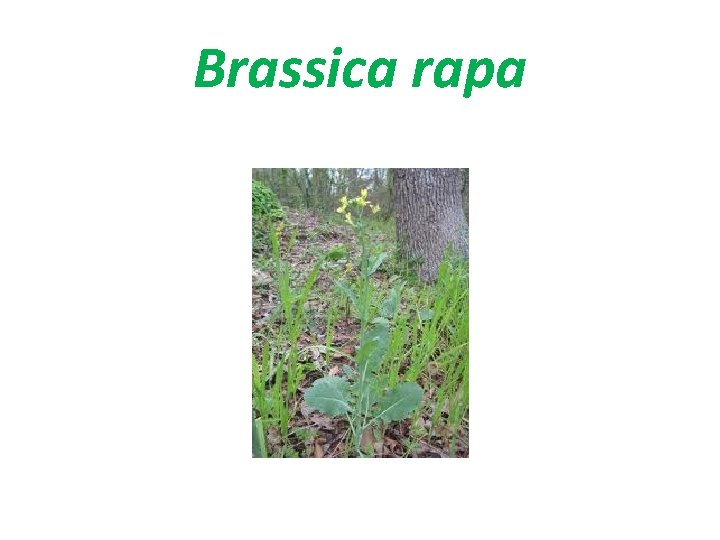
Brassica rapa
History of “Fast Plants” • Fast Plants® were developed by Professor Emeritus Paul H. Williams, in the Department of Plant Pathology at the University of Wisconsin-Madison. Dr. Williams bred these rapid-cycling Brassica rapa plants as a research tool that could be used for improving disease resistance of cruciferous plants (a large group of plants that includes mustard, radish, cabbage, broccoli, kohlrabi, and more). In order to speed up the genetic research in the crucifers, he began breeding Brassica rapa and six related species from the family Cruciferae for shorter life cycles. The end result: petite, quick-growing plants known as Fast Plants®.
• Belongs to the “Cabbage & Mustard” Family • Family = Brassicaceae • Developed in 1986, Dr. Williams developed the plants over a 15 year period • Plants were continuously genetically selected (Selective Breeding) to select plants that had characteristics most suitable for laboratory and classroom use.

Desired Characteristics of “Fast Plants” • Speed: Planting to flowering (approx. 2 wks), rapid seed maturation (no dormancy required) • Productive: Produces a lot of seeds • Small: Petite plant size • Ease of growing: Grows best under continuous fluorescent lighting in standard potting mix.

Brassica Info • Average life cycle of the cruciferous plants (a large group that includes Brassica, mustard, radish, cabbage, broccoli, and more) is 6 – 12 months. • Average life cycle of Brassica rapa is 35 – 40 days.
- Slides: 5