
Brass instruments in the Renaissance By Brieann Nathan
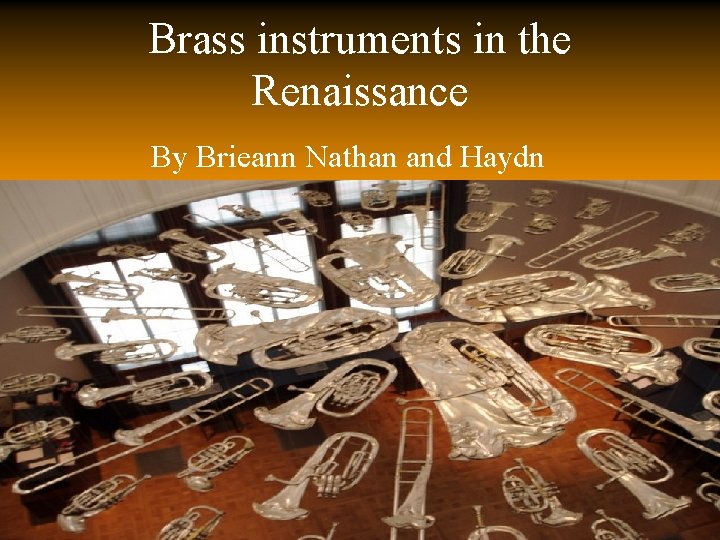
Brass instruments in the Renaissance By Brieann Nathan and Haydn
History of the natural Trumpet • They date back to the 2 nd millennium BC in Egypt • They only made one or two notes • Most had a straight barrel that was 2 ft.
Other facts about the Natural Trumpet • With the natural trumpet the playing tube cannot be altered • Modern European trumpets were made of wood or metal • The natural trumpet was used in war • Another name for the natural trumpet is the valve less trumpet
Other Facts about the Natural Trumpet • They were s-shaped with bell ends for easier portability

Sackbut

History of Sackbut • The sackbut is the ancestor of the modern day trombone. • There weren’t very many musicians using the trombone, but one known musician was Erhardus Borussus of Dresden.
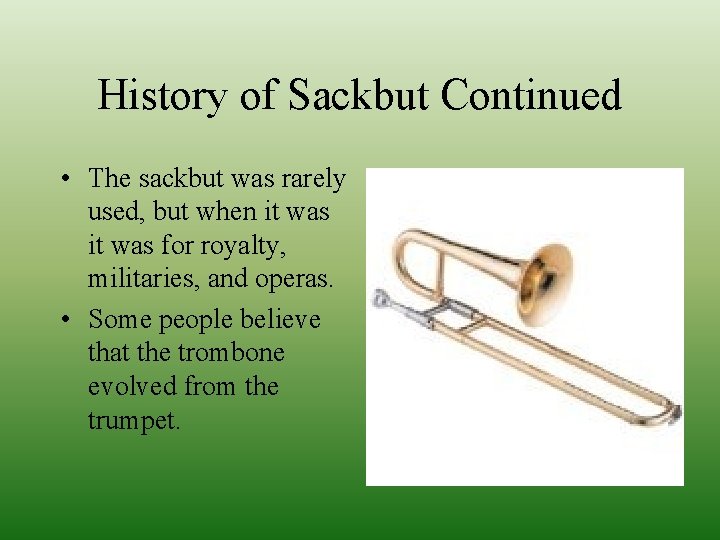
History of Sackbut Continued • The sackbut was rarely used, but when it was for royalty, militaries, and operas. • Some people believe that the trombone evolved from the trumpet.
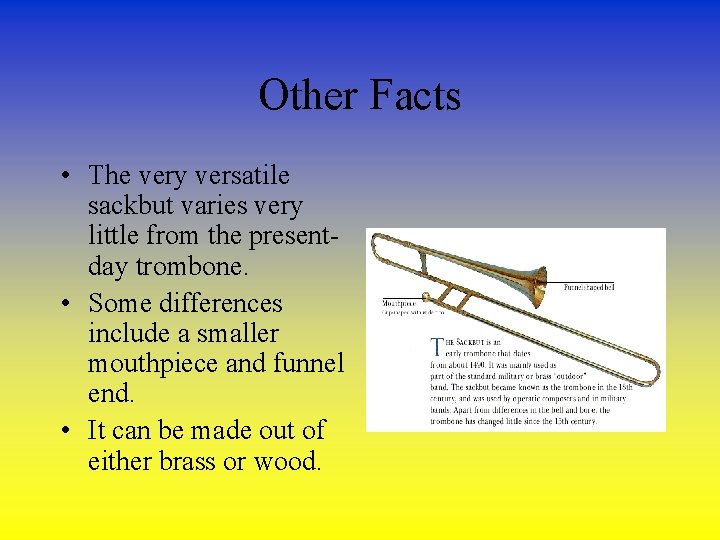
Other Facts • The very versatile sackbut varies very little from the presentday trombone. • Some differences include a smaller mouthpiece and funnel end. • It can be made out of either brass or wood.
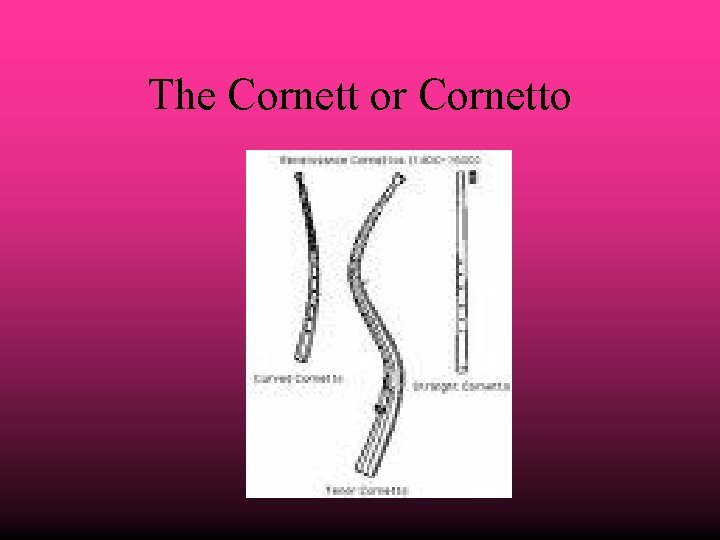
The Cornett or Cornetto
The Cornett or cornetto history • Usually made of ivory or wood • Holes like that of a recorder • Made by cutting apart two pieces and holowing each one out then regluing them. • takes lots of practice to play • Often curved and leather is applied to seal any weak places in the wood
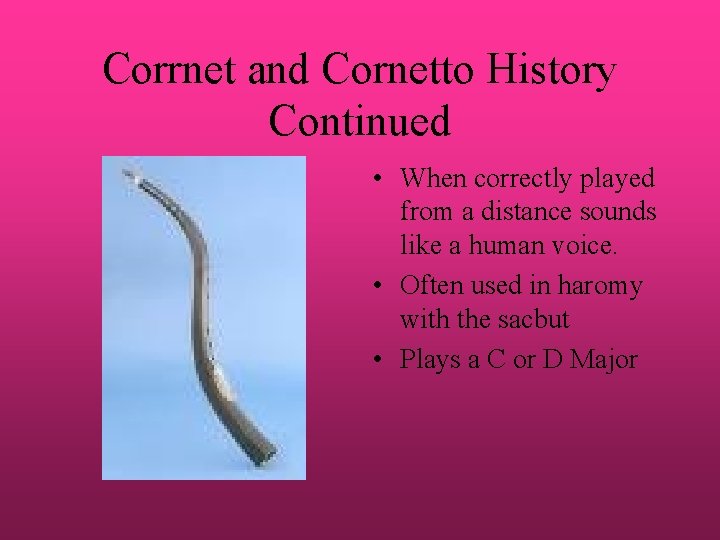
Corrnet and Cornetto History Continued • When correctly played from a distance sounds like a human voice. • Often used in haromy with the sacbut • Plays a C or D Major

- Slides: 12