
BRAND POSITIONING INTRODUCTION POSITIONING is a marketing strategy

BRAND POSITIONING
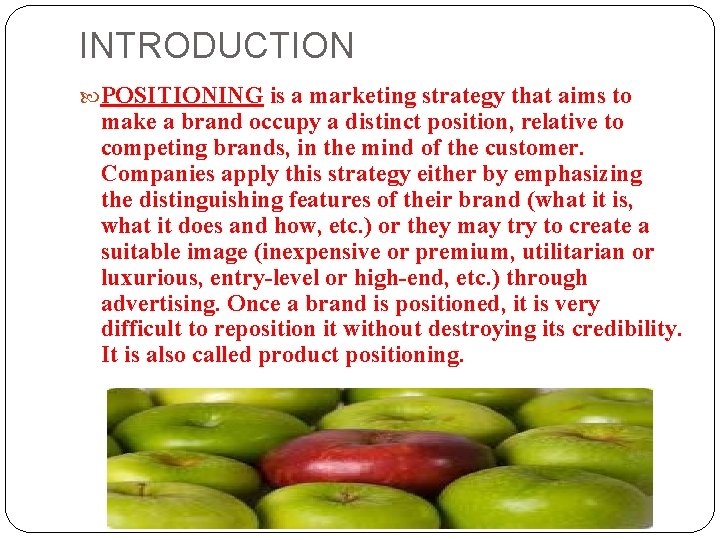
INTRODUCTION POSITIONING is a marketing strategy that aims to make a brand occupy a distinct position, relative to competing brands, in the mind of the customer. Companies apply this strategy either by emphasizing the distinguishing features of their brand (what it is, what it does and how, etc. ) or they may try to create a suitable image (inexpensive or premium, utilitarian or luxurious, entry-level or high-end, etc. ) through advertising. Once a brand is positioned, it is very difficult to reposition it without destroying its credibility. It is also called product positioning.
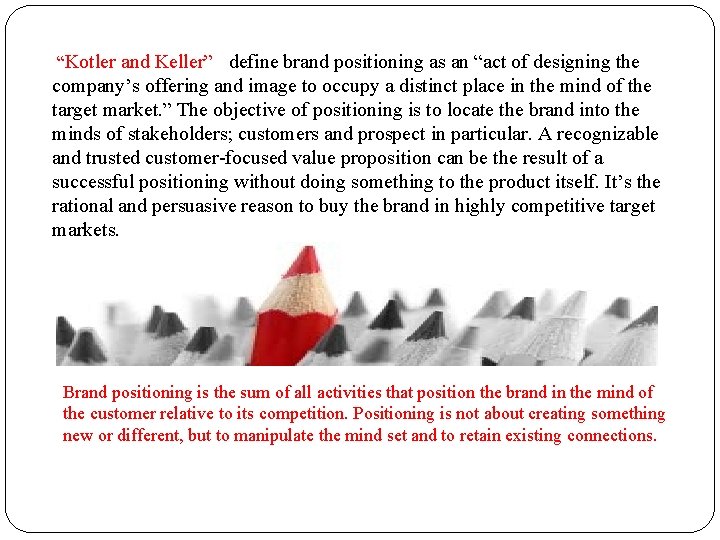
“Kotler and Keller” define brand positioning as an “act of designing the company’s offering and image to occupy a distinct place in the mind of the target market. ” The objective of positioning is to locate the brand into the minds of stakeholders; customers and prospect in particular. A recognizable and trusted customer-focused value proposition can be the result of a successful positioning without doing something to the product itself. It’s the rational and persuasive reason to buy the brand in highly competitive target markets. Brand positioning is the sum of all activities that position the brand in the mind of the customer relative to its competition. Positioning is not about creating something new or different, but to manipulate the mind set and to retain existing connections.

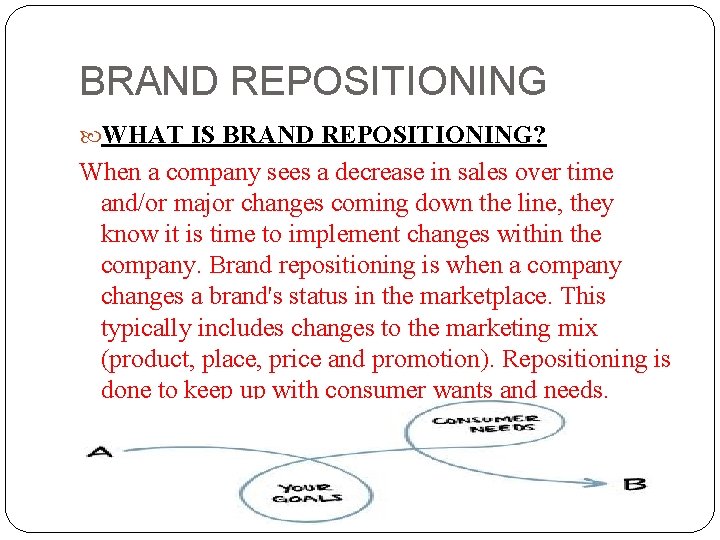
BRAND REPOSITIONING WHAT IS BRAND REPOSITIONING? When a company sees a decrease in sales over time and/or major changes coming down the line, they know it is time to implement changes within the company. Brand repositioning is when a company changes a brand's status in the marketplace. This typically includes changes to the marketing mix (product, place, price and promotion). Repositioning is done to keep up with consumer wants and needs.
STRATEGIES To implement brand repositioning the company must choose a strategy. Each strategy determines where the main focus of the new campaign will be. The new campaign may focus on the consumer, other businesses or the general public. Identity - The most important aspect of building a brand is to give the company an identity. The brand is tied together through the logo, slogan, color scheme, marketing materials, employees, etc. Everything about the company should tie together and provide a unified identity that the consumer can understand. Spirit of giving - The world is starting to expect businesses to be socially responsible and embrace the spirit of giving. Social responsibility is an organization's obligation to better the welfare of society. To utilize this strategy the company can include its partnership with charities in its advertising.
BRAND REPOSITIONING Four-phased brand repositioning approach will help guide you through the process and allow your company and brand group to best calibrate based on timing, budget, and resources to get the job done. Phase I. Determining the Current Status of the Brand The purpose of this phase is to understand the company and brand, including exploring key issues, opportunities, and challenges. The reason is to obtain a clear snapshot of the company and brand in present terms, which will offer a clear insight to opportunity identification and assessment. Ø Understanding the brand includes reviewing the complete history of the company and brand, including its current brand positioning, the original positioning, how it has evolved, and most important: what the company and brand stands for today. Key questions to ask and answer: Ø What differentiates our company and brand from the competition? Ø What are the equity drivers of the company and brand? Ø What are the historical ways to communicate the company and brand equity to consumers and customers alike? Ø As we dive deeper into the current status of the company and brand, we also need to get a clear understanding of the company and brand, including a review of the current brand customer. Key questions to ask and answer: Ø Who is the current target customer base?
Ø How will we promote the brand product purchase, collection, and user patterns? The most important guidelines to success will be to ensure that all aspects of where to take your brand are carefully reviewed to ensure that the core values and essence of your brand are maintained. With this in mind, as a general guideline, there are four key ingredients as part of the brand repositioning work. The new Brand Positioning will be. . . Ø Ownable—Unique to the brand Ø Leverageable—Important and relevant to the target Ø Sustainable—Relevant other categories in the future Ø Extendable—Appropriate for partnership marketing and other marketing programs § There are two key components to the brand positioning workshops—strategic and creative—and they should involve two sessions. ü The first session would be "Developing the brand is and what it should become tomorrow, as well as mapping out where to take the brand in the short and long term. ü The second session would be "Stretching The Brand. " Essentially, you would take everything you have heard and learned, and review consumer insights with the goal of taking your brand where it should go. This process should include exercises to stretch your brand into the future.
Phase IV. Refining the Brand Positioning and Management Presentation Now we have a great start, a new thinking, and (most important) the beginnings of the new brand positioning for your company, business, and brand. As part of this final and very important phase in brand repositioning, we need to refine the positioning. This includes finalizing the brand by incorporating all fee agencies, as well as the brand group, to ensure achievable positioning vs. aspirational positioning. The ultimate final stage results in building a strong team to carry the message to senior management and leaders within your company. This includes developing and presenting to the brand group and senior management the new brand positioning. Once the entire senior management and leadership buy in and endorse the new brand positioning, there is still much work to be done. The main focus now shifts from research and development to solidifying marketing.
CONCLUSION As such, we need to create a "brand identity manual" that provides a clear direction on the new brand positioning. Most important, it describes how the new brand positioning will deliver growth for the business. The "Brand Identity Manual" showcases industry and competitive trends and consumer attitudes that resulted in the new brand positioning. Now that we have developed new brand positioning platforms, we need to test it and validate it with consumers as well as key customers. The ultimate purpose and goal is to refine the brand positioning platforms. So, we go back to the focus group format in which we would again talk to key consumers and customers with the purpose of checking back with them to validate the new brand positioning. This essentially allows for refinement of the new brand positioning. It will also help determine just how far your brand can be stretched. It is also essential to develop visual concept boards to position your brand its products in a new light in front of consumers and customers. The final output of this phase includes a concise and clear understanding of consumer views on key new brand positioning platforms as well as the final brand positioning. This will provide and deliver an overview of consumer attitudes toward the new brand positioning, with a focus on retaining existing brand customers and acquiring new users. It will also showcase the final new brand positioning statement, explaining in detail the reasoning behind the new brand positioning.

THANK YOU
- Slides: 11