
Branching Simulation Designs for Virtual Patients Kira King

Branching Simulation Designs for Virtual Patients Kira King, Ph. D Decision Simulation Rosalyn P. Scott, MD, MSHA Dayton Veterans Affairs Medical Center Wright State University Mary Davidson, MSN APRN CHPN Veterans Affairs Healthcare System of Ohio Edward Bope, MD Chief of Primary Care/Palliative Care Physician Columbus Veterans Affairs Ambulatory Care Center 1
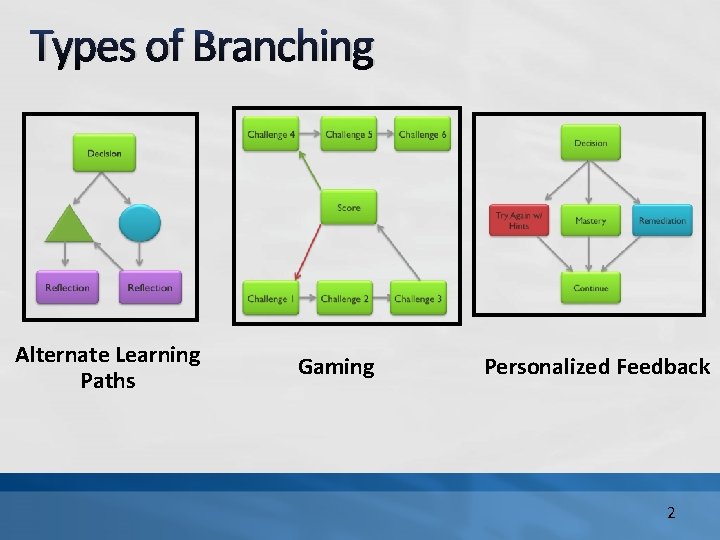
Types of Branching Alternate Learning Paths Gaming Personalized Feedback 2

Branching: Examples & Non-Examples Concept: Triangle Decision Reflection Example: Triangle Conceptual knowledge “kinds of” Explore examples of what is and what is not the concept Reflection highlights the distinguishing criteria of the concept Works with a variety of media Reflection Non-Example: Circle (Merrill, 2009) 3
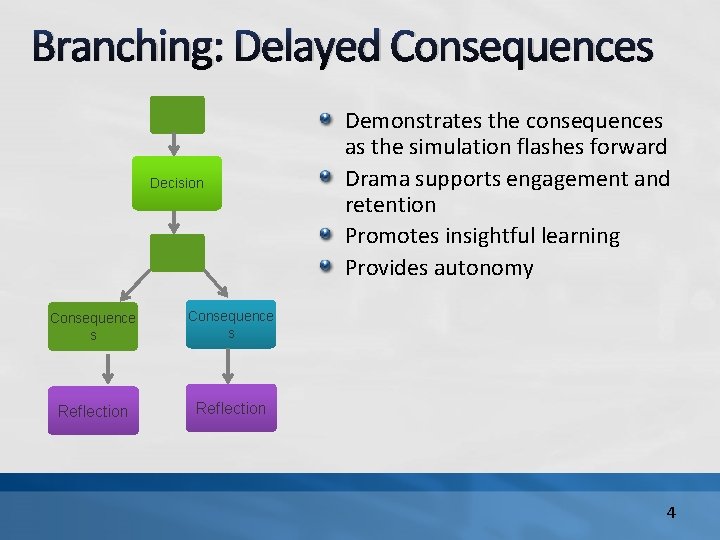
Branching: Delayed Consequences Decision Consequence s Reflection Demonstrates the consequences as the simulation flashes forward Drama supports engagement and retention Promotes insightful learning Provides autonomy 4
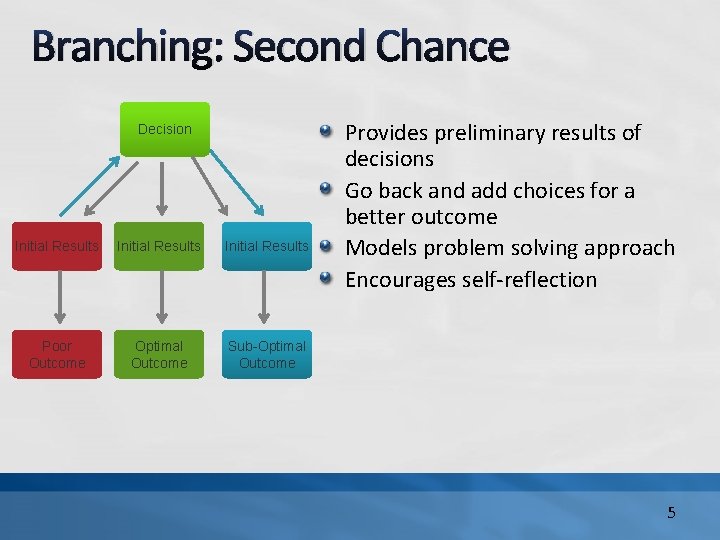
Branching: Second Chance Decision Initial Results Poor Outcome Optimal Outcome Sub-Optimal Outcome Provides preliminary results of decisions Go back and add choices for a better outcome Models problem solving approach Encourages self-reflection 5

Branching: Interrupter Patient Interview Patient Deteriorates Stabilize Patient Too Many Questions Order Lab Tests Interrupt learners if they make a dangerous decision Create an alternate path or remediate via a mentor Models the real world Uses drama to portray dire consequences Results Essential Questions Only 6
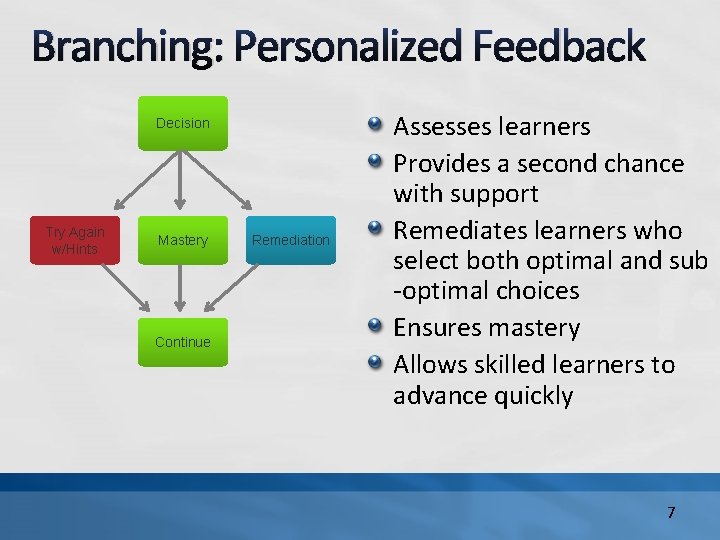
Branching: Personalized Feedback Decision Try Again w/Hints Mastery Continue Remediation Assesses learners Provides a second chance with support Remediates learners who select both optimal and sub -optimal choices Ensures mastery Allows skilled learners to advance quickly 7
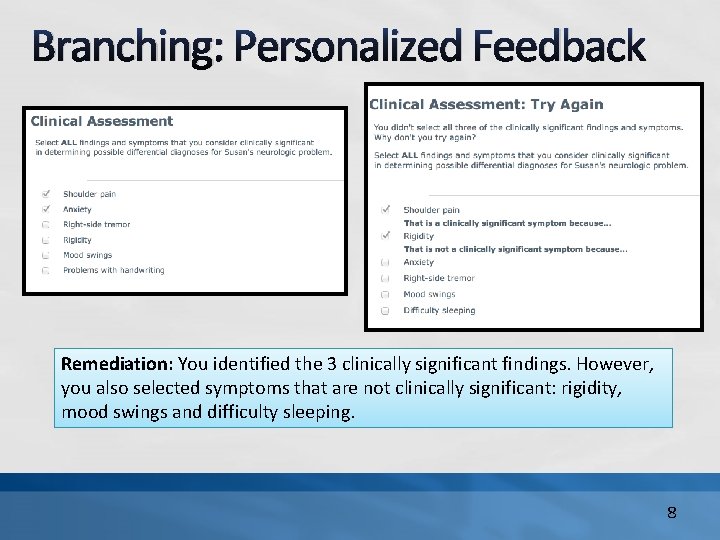
Branching: Personalized Feedback Remediation: You identified the 3 clinically significant findings. However, you also selected symptoms that are not clinically significant: rigidity, mood swings and difficulty sleeping. 8
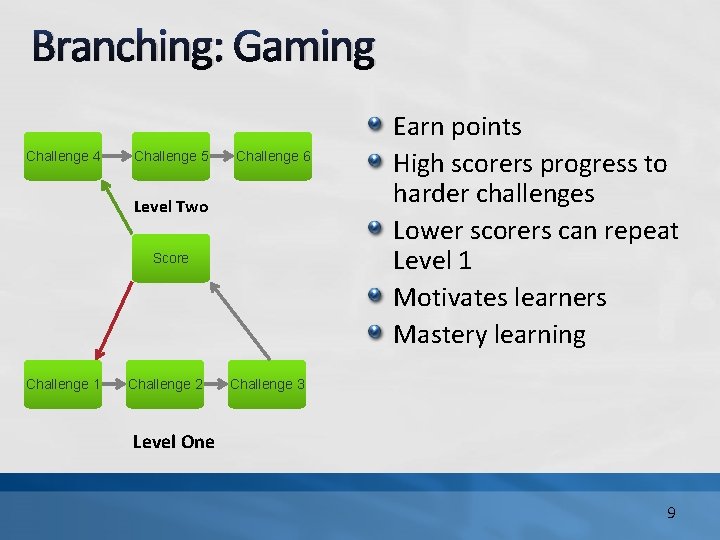
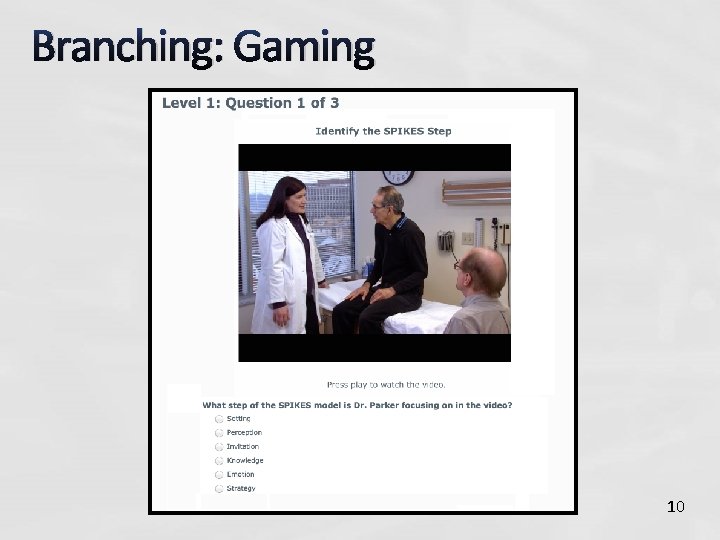
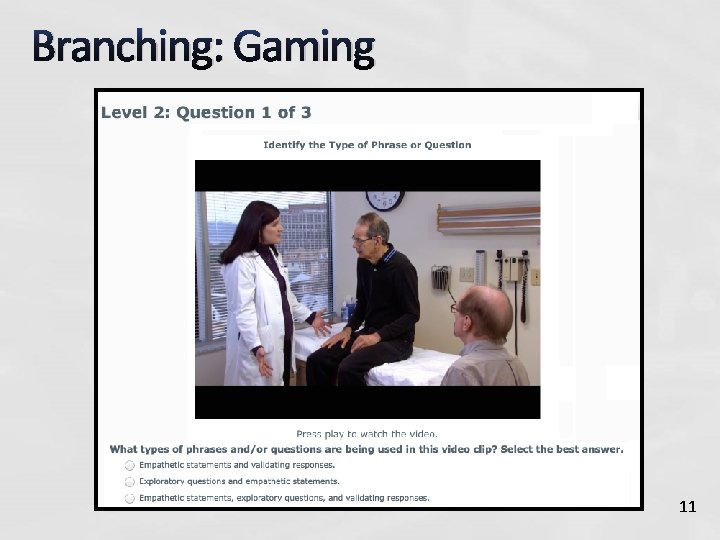
Branching: Gaming Challenge 4 Challenge 5 Challenge 6 Level Two Score Challenge 1 Challenge 2 Earn points High scorers progress to harder challenges Lower scorers can repeat Level 1 Motivates learners Mastery learning Challenge 3 Level One 9
Branching: Gaming 10
Branching: Gaming 11

Types of Branching Type Purpose Matched Examples & Non-Examples Teaches concepts by showing what is and what is not the concept Delayed Consequences Promotes insight, provides autonomy, creates drama to support learning Second Chance Models problem solving by doubling back to search for solutions Interrupter Redirects learners who make egregious choices to demonstrate dire consequences Personalized Feedback Ensures mastery by tailoring feedback to learner’s comprehension level Gaming Provides motivating challenges and ensures mastery 12
Questions? 13
- Slides: 13