
Branches of Oceanography 5 PRINCIPLE OCEANS Earth can
Branches of Oceanography
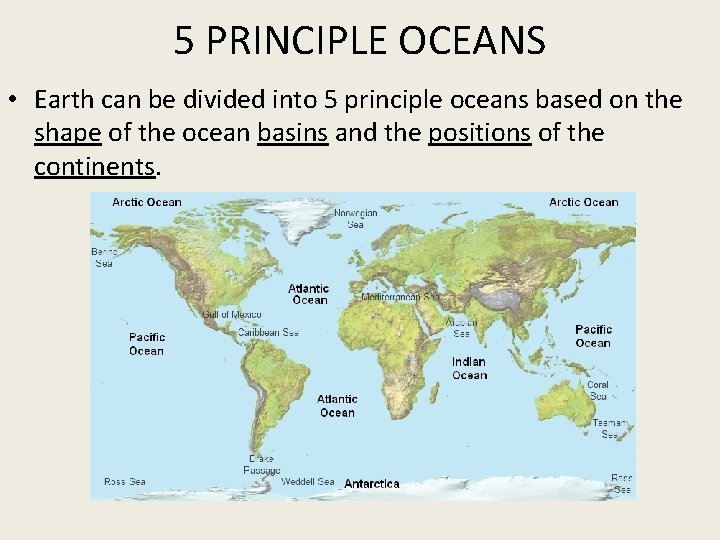
5 PRINCIPLE OCEANS • Earth can be divided into 5 principle oceans based on the shape of the ocean basins and the positions of the continents.
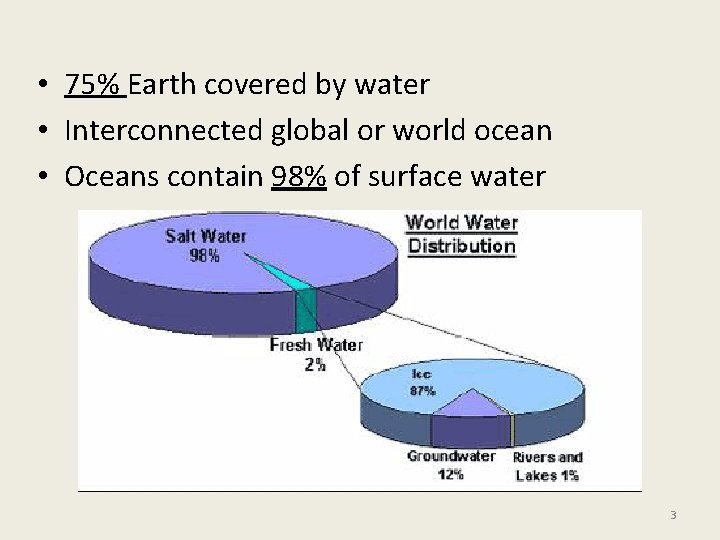
• 75% Earth covered by water • Interconnected global or world ocean • Oceans contain 98% of surface water 3
• Pacific – Largest, deepest, least salty • Atlantic – Second largest, saltiest • Indian – Mainly in Southern Hemisphere • Arctic – Smallest, shallowest, ice-covered • Antarctic or Southern Ocean – Connects Pacific, Atlantic, and Indian – South of about 50 o S latitude 4
Seas • Smaller and shallower than oceans • Salt water • Usually enclosed by land – Sargasso Sea defined by surrounding ocean currents The “Seven Seas” are actually the oceans • North and South Pacific, North and South Atlantic, Indian, Arctic, Antarctic 5
Comparison of elevation and depth: • Average depth 3729 m (12, 234 ft); about 2. 5 miles • Average elevation 840 m (2756 ft); about 1/2 mile • Deepest part of the ocean Mariana Trench 11, 022 m (36, 161 ft); about 7 miles • Highest mountain Mt. Everest 8850 m (29, 935 ft); just under 5 miles 6
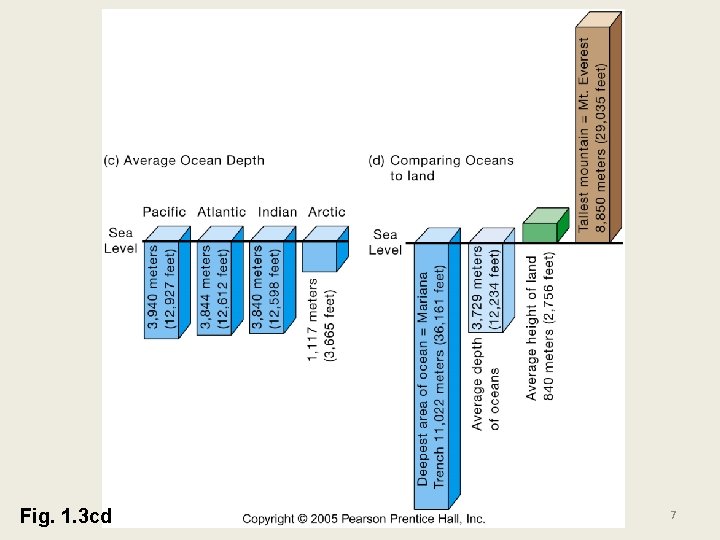
Fig. 1. 3 cd 7
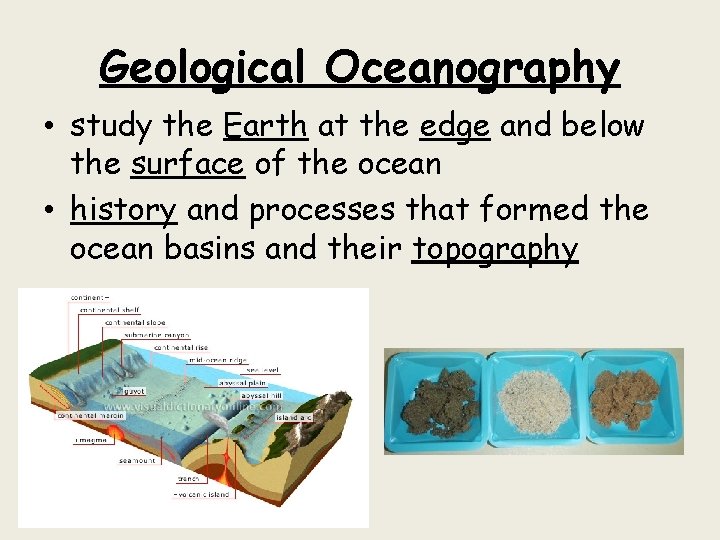
Geological Oceanography • study the Earth at the edge and below the surface of the ocean • history and processes that formed the ocean basins and their topography
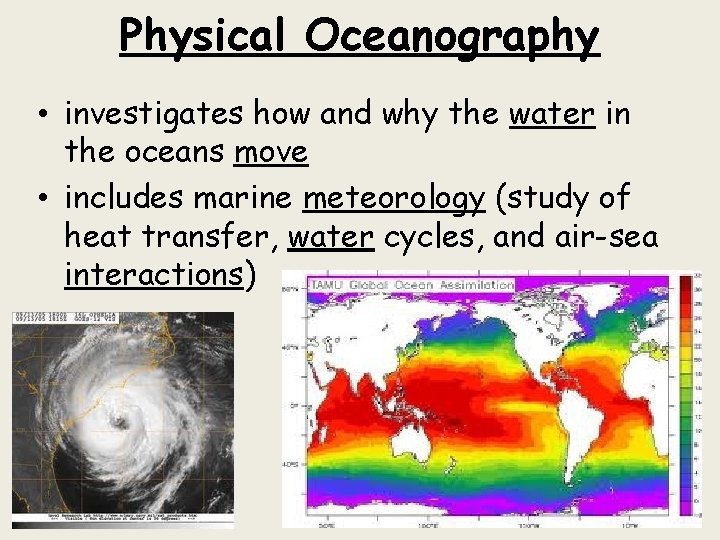
Physical Oceanography • investigates how and why the water in the oceans move • includes marine meteorology (study of heat transfer, water cycles, and air-sea interactions)
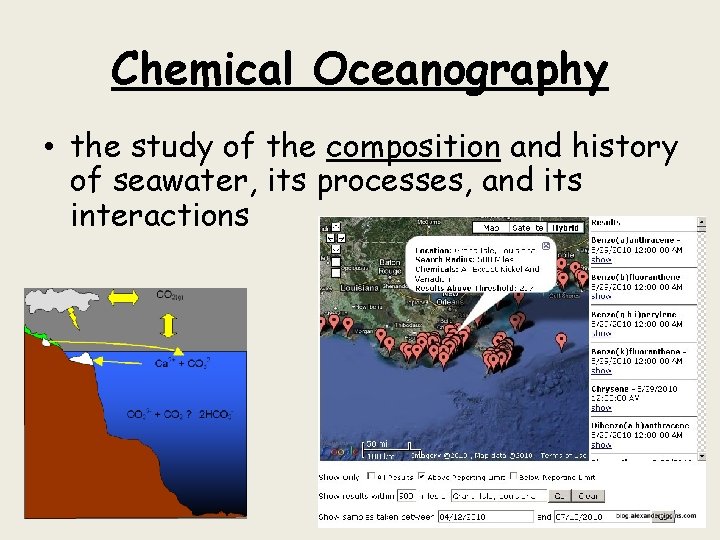
Chemical Oceanography • the study of the composition and history of seawater, its processes, and its interactions
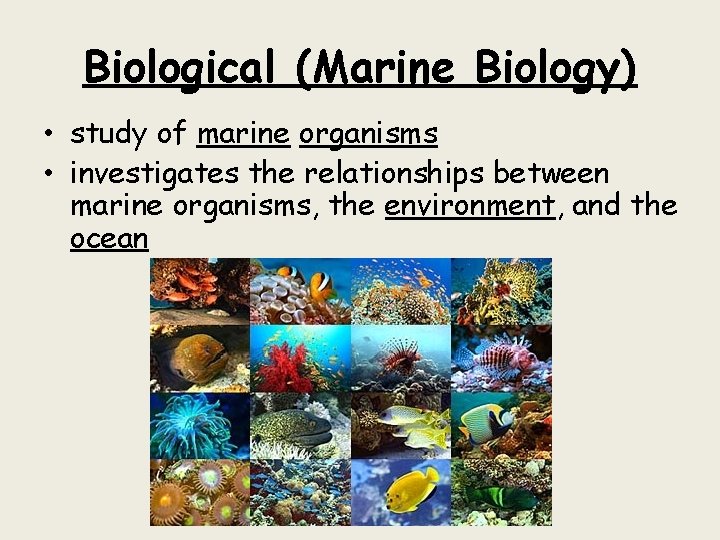
Biological (Marine Biology) • study of marine organisms • investigates the relationships between marine organisms, the environment, and the ocean
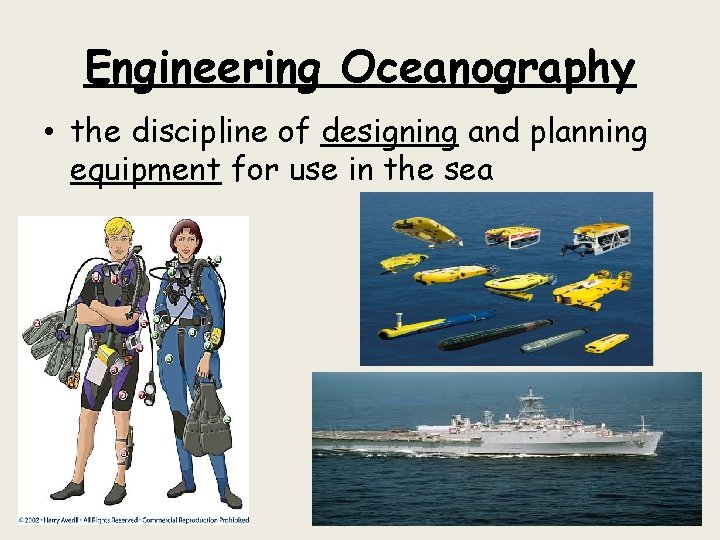
Engineering Oceanography • the discipline of designing and planning equipment for use in the sea
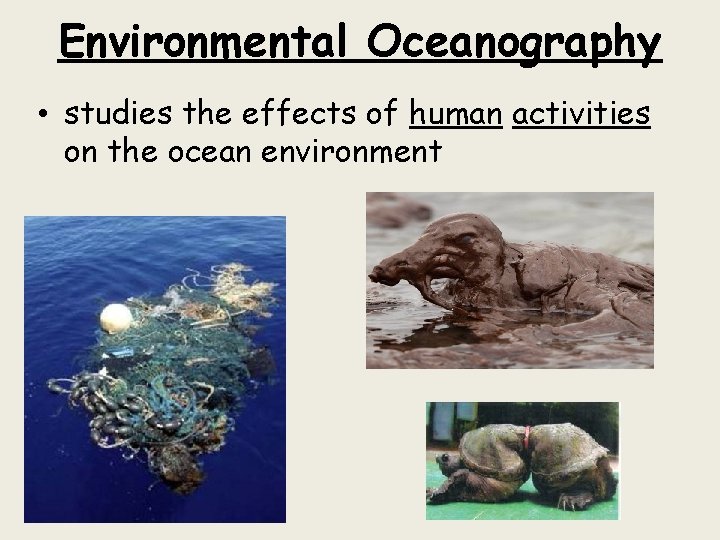
Environmental Oceanography • studies the effects of human activities on the ocean environment
- Slides: 13