
Brainbased learning By Laleh Ghotbi Stacy Robinson Brain
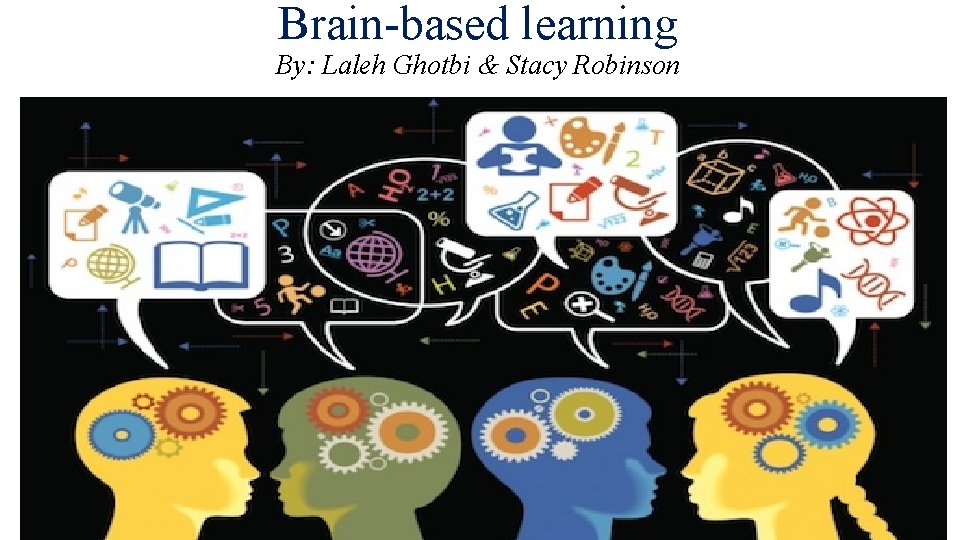
Brain-based learning By: Laleh Ghotbi & Stacy Robinson
“Brain compatible learning environments are places where students’ curiosities are piqued and potential anxiety, frustration or confusion is diminished. ” -Martha Kaufeldt Author of “Begin with the brain”
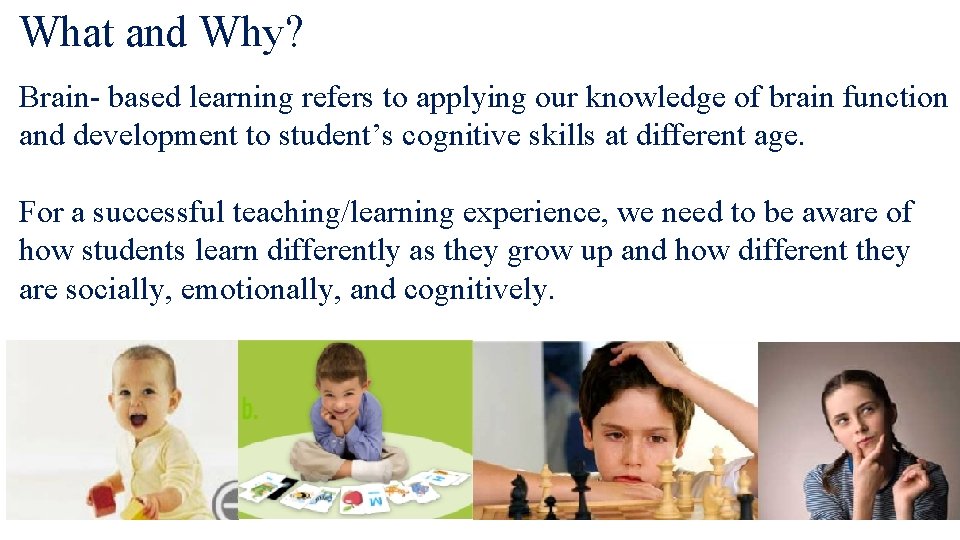
What and Why? Brain- based learning refers to applying our knowledge of brain function and development to student’s cognitive skills at different age. For a successful teaching/learning experience, we need to be aware of how students learn differently as they grow up and how different they are socially, emotionally, and cognitively.
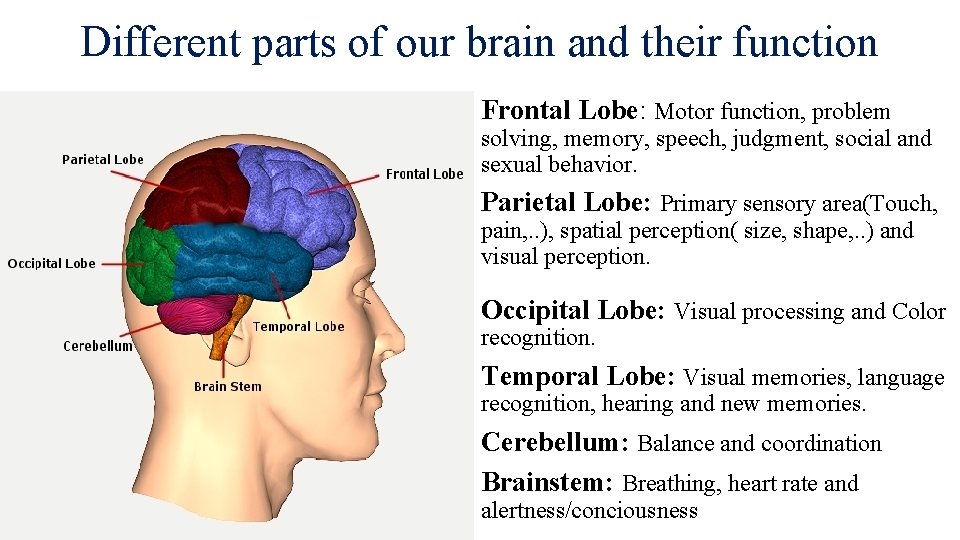
Different parts of our brain and their function Frontal Lobe: Motor function, problem solving, memory, speech, judgment, social and sexual behavior. Parietal Lobe: Primary sensory area(Touch, pain, . . ), spatial perception( size, shape, . . ) and visual perception. Occipital Lobe: Visual processing and Color recognition. Temporal Lobe: Visual memories, language recognition, hearing and new memories. Cerebellum: Balance and coordination Brainstem: Breathing, heart rate and alertness/conciousness
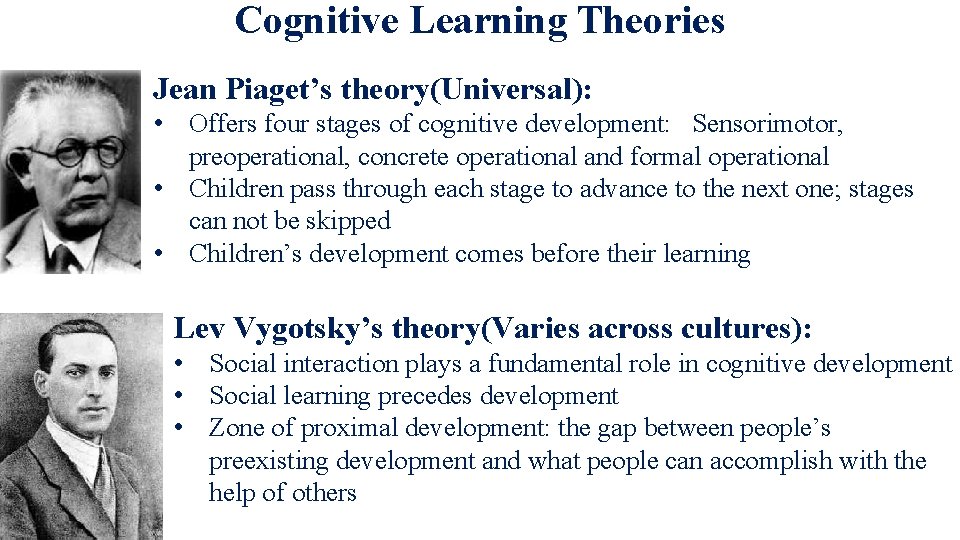
Cognitive Learning Theories Jean Piaget’s theory(Universal): • Offers four stages of cognitive development: Sensorimotor, preoperational, concrete operational and formal operational • Children pass through each stage to advance to the next one; stages can not be skipped • Children’s development comes before their learning Lev Vygotsky’s theory(Varies across cultures): • Social interaction plays a fundamental role in cognitive development • Social learning precedes development • Zone of proximal development: the gap between people’s preexisting development and what people can accomplish with the help of others
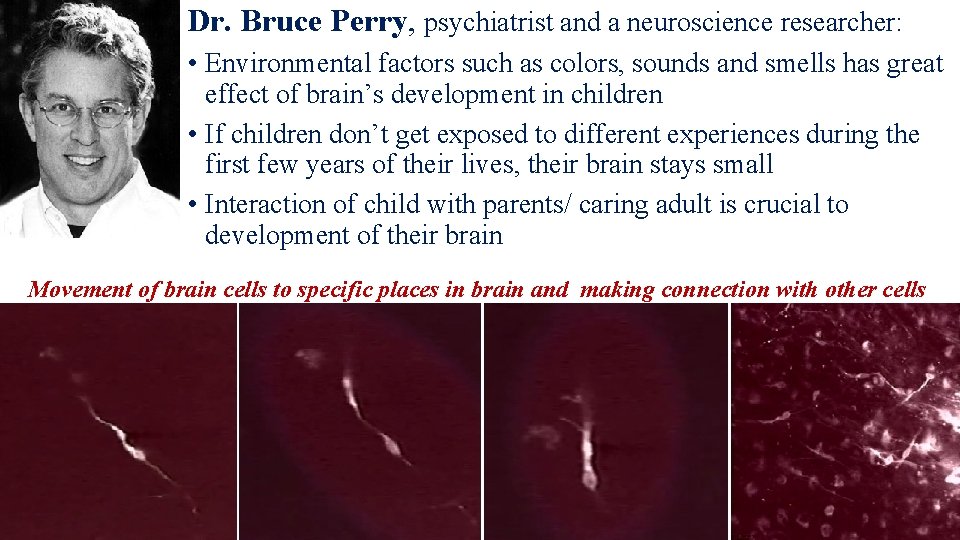
Dr. Bruce Perry, psychiatrist and a neuroscience researcher: • Environmental factors such as colors, sounds and smells has great effect of brain’s development in children • If children don’t get exposed to different experiences during the first few years of their lives, their brain stays small • Interaction of child with parents/ caring adult is crucial to development of their brain Movement of brain cells to specific places in brain and making connection with other cells
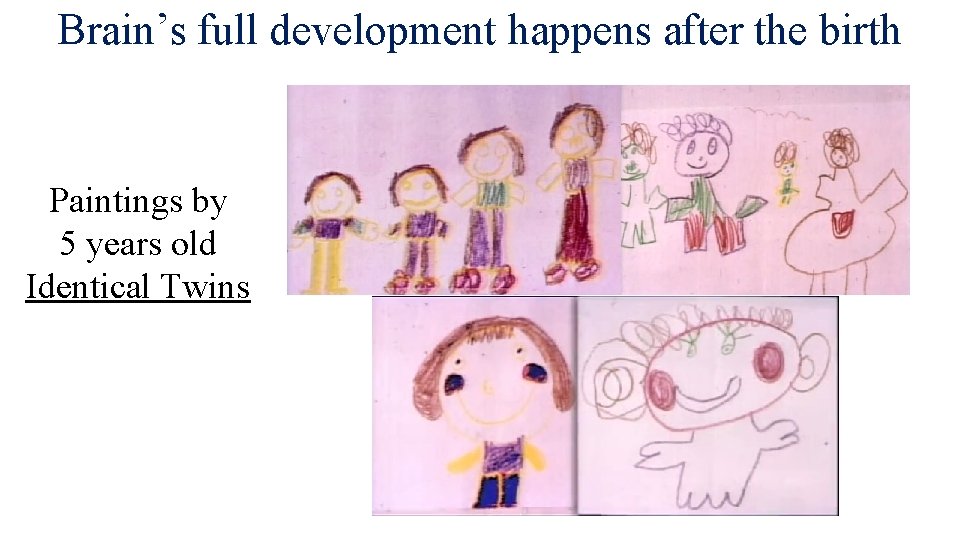
Brain’s full development happens after the birth Paintings by 5 years old Identical Twins
Brain- Compatible Elements That Influence Learning 1) 2) 3) 4) 5) 6) 7) 8) 9) Absence of threat/nurturing reflective thinking Collaboration Adequate time Enriched environment Meaningful content Choices Immediate feedback Mastery/competence Movement to enhance learning
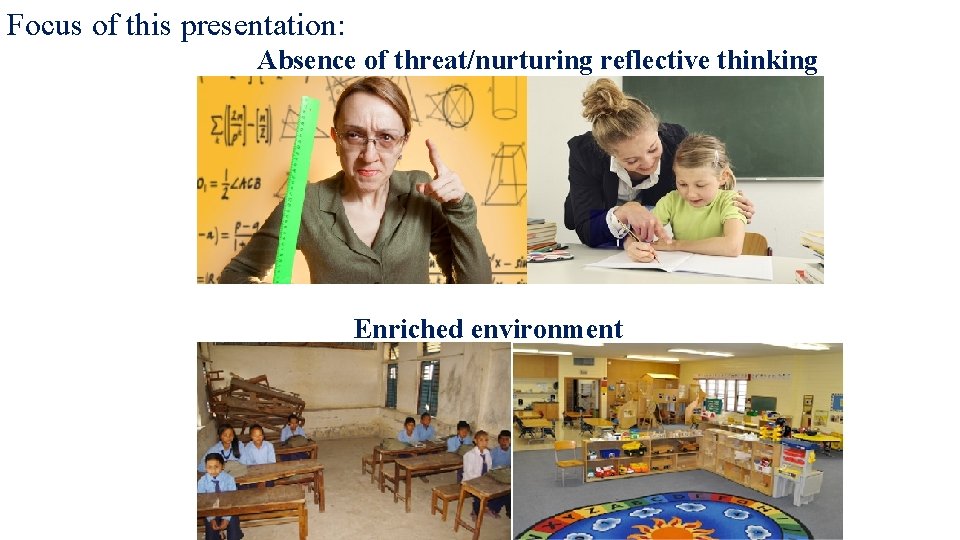
Focus of this presentation: Absence of threat/nurturing reflective thinking Enriched environment
How can we create brain based learning environments? • 1 - Create a safe learning space. • 2 - Provide indoor and outdoor activities as much as possible. • 3 - Change displays/environment often. • 4 - Try to integrate different types of learning spaces. • 5 - BE FLEXIBLE • 6 - Use the community as a learning space/tool.
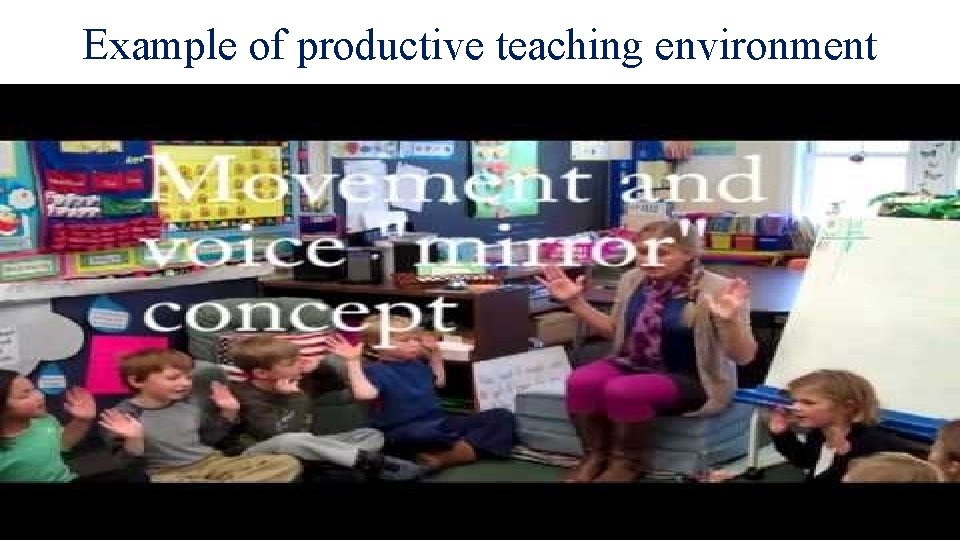
Example of productive teaching environment
Brain Based Teaching • Not all students need to do the same thing at the same time • Involve students in decision making and lesson planning. • Help students construct meaning with various interactions and resources. • Students do not all have the same learning level or style. • Students need to be competent and confident with verbal learning and participation • Peer Teaching can be valuable for both students involved.
Review Testing your knowledge about brain based learning • Do you think brain based teaching strategies could be useful? • What are some ideas you saw in the video or thoughts of yourself that you'd use in a real classroom? • How does brain based learning differ from more traditional teaching/learning styles? • After learning more about BBL can your recognize any of these methods your teachers have used (past or present? )
Citation: • "Technology Articles. " Technology Articles. Web. • "Brain Structures and Their Functions. " Brain Structures and Their Functions. Web. • "Nine Brain-Compatible Elements. " Nine Brain-Compatible Elements. Web. • "Developmental Standards Project. " Developmental Standards Project. Web. • "Whole Brain Teaching: Grade 1 Classroom. " You. Tube. Web. • "Vygotsky | Simply Psychology. " Vygotsky | Simply Psychology. Web • “ 10 things every child needs” https: //vimeo. com/24786384. Web.
- Slides: 14