
BrainAddiction Nicotine from cigarettes is as addictive as
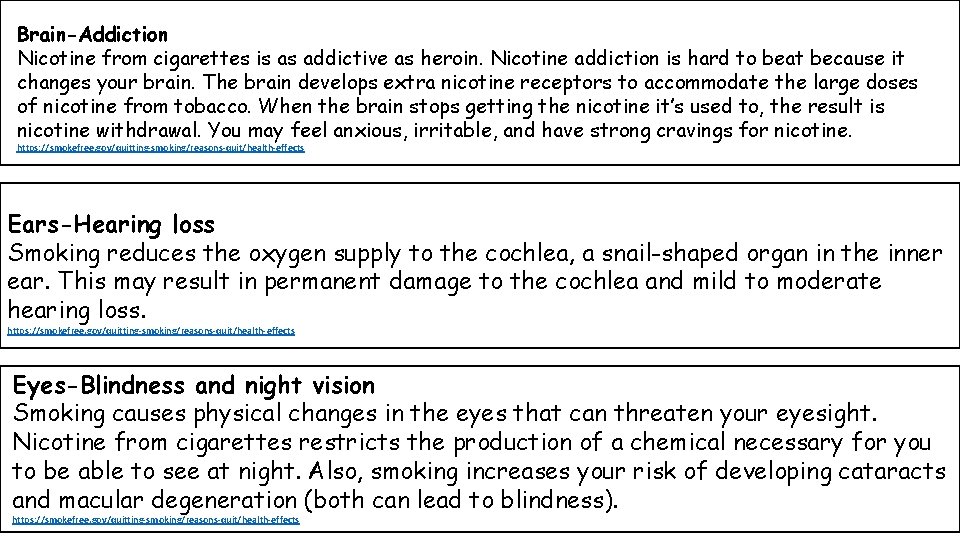
Brain-Addiction Nicotine from cigarettes is as addictive as heroin. Nicotine addiction is hard to beat because it changes your brain. The brain develops extra nicotine receptors to accommodate the large doses of nicotine from tobacco. When the brain stops getting the nicotine it’s used to, the result is nicotine withdrawal. You may feel anxious, irritable, and have strong cravings for nicotine. https: //smokefree. gov/quitting-smoking/reasons-quit/health-effects Ears-Hearing loss Smoking reduces the oxygen supply to the cochlea, a snail-shaped organ in the inner ear. This may result in permanent damage to the cochlea and mild to moderate hearing loss. https: //smokefree. gov/quitting-smoking/reasons-quit/health-effects Eyes-Blindness and night vision Smoking causes physical changes in the eyes that can threaten your eyesight. Nicotine from cigarettes restricts the production of a chemical necessary for you to be able to see at night. Also, smoking increases your risk of developing cataracts and macular degeneration (both can lead to blindness). https: //smokefree. gov/quitting-smoking/reasons-quit/health-effects
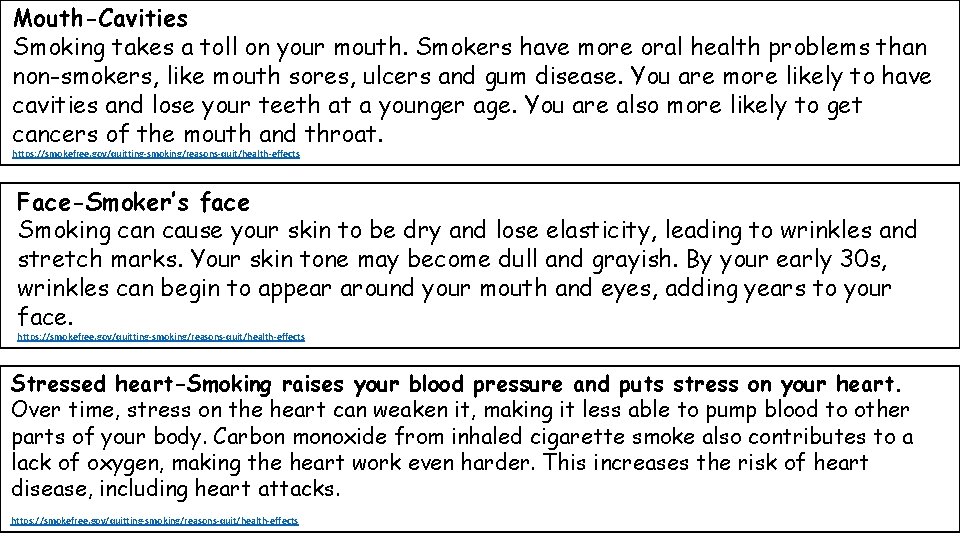
Mouth-Cavities Smoking takes a toll on your mouth. Smokers have more oral health problems than non-smokers, like mouth sores, ulcers and gum disease. You are more likely to have cavities and lose your teeth at a younger age. You are also more likely to get cancers of the mouth and throat. https: //smokefree. gov/quitting-smoking/reasons-quit/health-effects Face-Smoker’s face Smoking can cause your skin to be dry and lose elasticity, leading to wrinkles and stretch marks. Your skin tone may become dull and grayish. By your early 30 s, wrinkles can begin to appear around your mouth and eyes, adding years to your face. https: //smokefree. gov/quitting-smoking/reasons-quit/health-effects Stressed heart-Smoking raises your blood pressure and puts stress on your heart. Over time, stress on the heart can weaken it, making it less able to pump blood to other parts of your body. Carbon monoxide from inhaled cigarette smoke also contributes to a lack of oxygen, making the heart work even harder. This increases the risk of heart disease, including heart attacks. https: //smokefree. gov/quitting-smoking/reasons-quit/health-effects
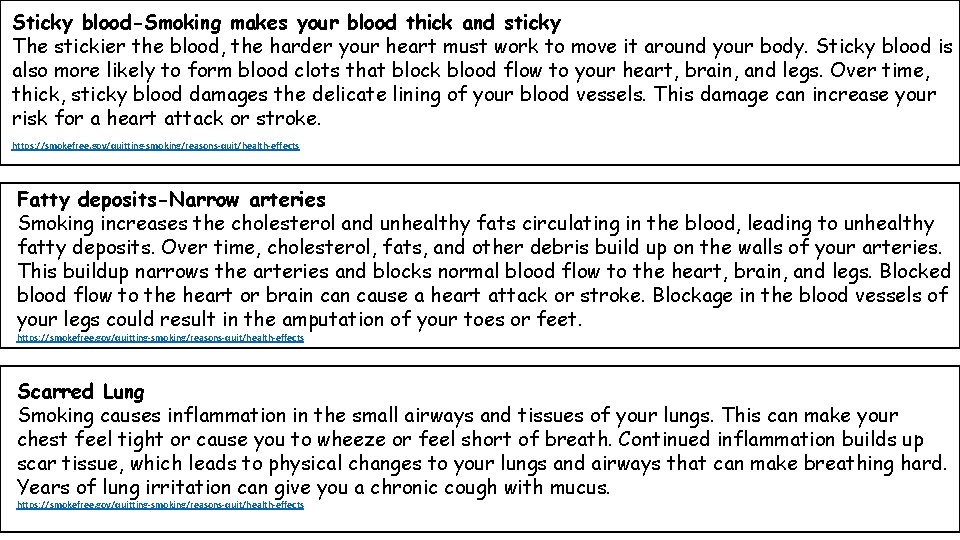
Sticky blood-Smoking makes your blood thick and sticky The stickier the blood, the harder your heart must work to move it around your body. Sticky blood is also more likely to form blood clots that block blood flow to your heart, brain, and legs. Over time, thick, sticky blood damages the delicate lining of your blood vessels. This damage can increase your risk for a heart attack or stroke. https: //smokefree. gov/quitting-smoking/reasons-quit/health-effects Fatty deposits-Narrow arteries Smoking increases the cholesterol and unhealthy fats circulating in the blood, leading to unhealthy fatty deposits. Over time, cholesterol, fats, and other debris build up on the walls of your arteries. This buildup narrows the arteries and blocks normal blood flow to the heart, brain, and legs. Blocked blood flow to the heart or brain cause a heart attack or stroke. Blockage in the blood vessels of your legs could result in the amputation of your toes or feet. https: //smokefree. gov/quitting-smoking/reasons-quit/health-effects Scarred Lung Smoking causes inflammation in the small airways and tissues of your lungs. This can make your chest feel tight or cause you to wheeze or feel short of breath. Continued inflammation builds up scar tissue, which leads to physical changes to your lungs and airways that can make breathing hard. Years of lung irritation can give you a chronic cough with mucus. https: //smokefree. gov/quitting-smoking/reasons-quit/health-effects
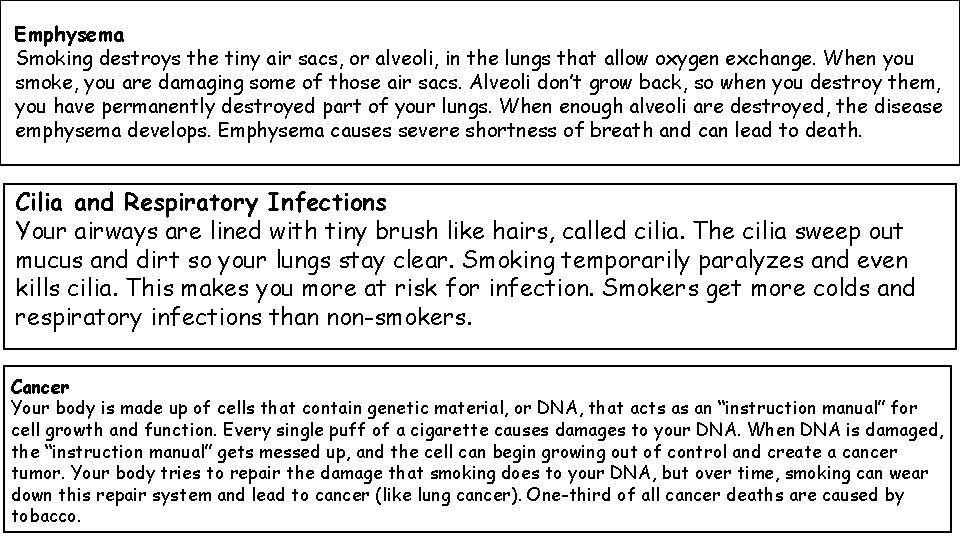
Emphysema Smoking destroys the tiny air sacs, or alveoli, in the lungs that allow oxygen exchange. When you smoke, you are damaging some of those air sacs. Alveoli don’t grow back, so when you destroy them, you have permanently destroyed part of your lungs. When enough alveoli are destroyed, the disease emphysema develops. Emphysema causes severe shortness of breath and can lead to death. Cilia and Respiratory Infections Your airways are lined with tiny brush like hairs, called cilia. The cilia sweep out mucus and dirt so your lungs stay clear. Smoking temporarily paralyzes and even kills cilia. This makes you more at risk for infection. Smokers get more colds and respiratory infections than non-smokers. Cancer Your body is made up of cells that contain genetic material, or DNA, that acts as an “instruction manual” for cell growth and function. Every single puff of a cigarette causes damages to your DNA. When DNA is damaged, the “instruction manual” gets messed up, and the cell can begin growing out of control and create a cancer tumor. Your body tries to repair the damage that smoking does to your DNA, but over time, smoking can wear down this repair system and lead to cancer (like lung cancer). One-third of all cancer deaths are caused by tobacco.
Belly Bigger belly. Smokers have bigger bellies and less muscle than non-smokers. They are more likely to develop type 2 diabetes, even if they don’t smoke every day. Smoking also makes it harder to control diabetes once you already have it. Diabetes is a serious disease that can lead to blindness, heart disease, kidney failure, and amputations. https: //smokefree. gov/quitting-smoking/reasons-quit/health-effects Resources: § https: //smokefree. gov/quitting-smoking/reasons-quit/health-effects § Tobacco Control Research Branch of the National Cancer Institute
A Diversion Program is an alternative program to the juvenile justice system. Instead of serious consequences for juvenile delinquency that may not help the youth, alternative, more helpful consequences handled outside the justice system are given. For example: writing assignments to learn more about the effects of tobacco use; Health Department class on tobacco; community service learning projects, etc. https: //www. ncjrs. gov/html/ojjdp/9909 -3/div. html
Scenario I: You ask to go the bathroom during geometry class. When you arrive at the bathroom, there are two other students smoking an e-cig. You are a 7 th grader and they are both in 8 th grade. You know both of them, but they are not close friends. They invite you to take a hit of the e-cig. They tell you they are initiating you into being ‘one of them’ and if you take a hit, they and the other 8 th graders will hang out with you at lunch and during breaks – even though you are a 7 th grader. Scenario II: You are at a cousin’s party, you are in the 8 th grade. There are several older cousins at the party who are chewing tobacco and none of the adults seems to care or notice. Your cousins invite you to go ride ‘quads’ in the river. After driving through some mud patches, you all stop to talk. Your favorite cousin offers you some chewing tobacco. He says he thinks you are old enough for some ‘chaw’ and it will make you fit in better with them.
Scenario III: You are in the little league championships; your team has earned a spot at the state championship and you get to travel to Springville Arizona to play. While on the bus you discover a few of your friends use chewing tobacco. They have snuck some on the bus ride and are using an empty soda can to spit the tobacco / saliva juice into. Your friends say that now you are on a championship team, it’s time to ‘step up to the plate, become an adult, and chew tobacco’. Scenario IV: You just turned 16, you got your driver’s license, and your parents have asked you to run an errand. Mom and dad ask you to go to the store to pick up some chips and soda for your little bother/sister’s birthday. You gladly accept the request and head off in the family car. As you are driving down the street you notice your best friend walking. You pull over and ask if he/she needs a ride. Your friend accepts the ride and jumps in the van with you. As you two are heading to the store, your friend pulls out a pack of cigarettes and starts to light up. Your friend says because the tobacco is mixed with cloves, it is actually healthy for you, and offers one to you.
- Slides: 8