
Brain White Matter Lesions New Insights of Leukoaraiosis
Brain White Matter Lesions; New Insights of Leukoaraiosis Control #: 2128 Mohammad Salehi Sadaghiani, MD, MPH; Meng-Kang Hsieh, MS; Ilya Nasrallah, MD, Ph. D; Ragini Verma; Ph. D, Guray Erus, Ph. D; Drew Parker, Sc. B; Suyash Mohan, MD; Emmanuel Botzolakis, MD, Ph. D; Lisa Desiderio, RT; R. Nick Bryan, MD, Ph. D 1 - Department of Radiology, University of Pennsylvania, Philadelphia, PA 2 - Center for Biomedical Image Computing and Analytics, Department of Radiology, University of Pennsylvania, Philadelphia, PA

Disclosure Authors have nothing to disclose
Outline • • • Abbreviations What is White Matter Lesion? Risk Factors for SVD Clinical associations of SVD Pathology Clinical Imaging Pathophysiology “Hypothesis”: insights to development of WMLs and related imaging changes Penumbra: insights to normal appearing white matter in conventional MRI NAWM Significance Summary References
Abbreviations • • CBF: Cerebral blood flow NAWM: normal appearing white matter SVD= Small vessel disease WML= White matter lesion
What is White Matter Lesion? • Brain WML, also known as leukoaraiosis, is a descriptive terminology for WML observed on brain scans (1, 2). • They were first identified using MRI and, though relatively non-specific, are most frequently thought to reflect small vessel ischemic disease. • Leukoaraiosis is from the Greek word “Leuko” (White) and “araiosis” (rarefaction)
Risk Factors • • Age History of hypertension Smoking Diabetes mellitus Genetics Inflammation Dyslipoproteinemia
Clinical Associations • Lesions often “asymptomatic” when burden is low • Cognitive decline: executive functioning, processing speed and attention are primarily affected • Depression • Gait disturbance and falls • Increased risk of future cerebrovascular disease
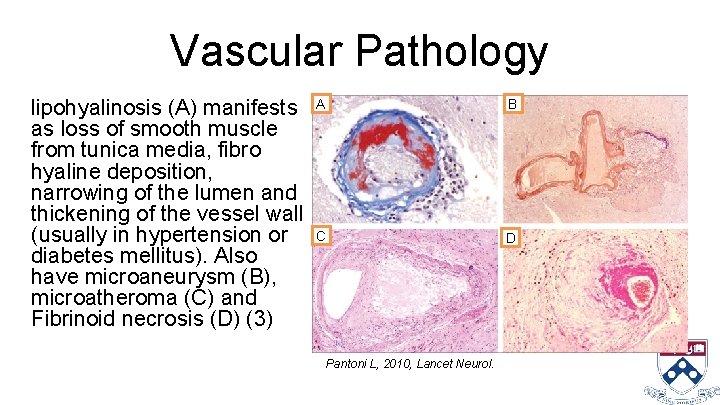
Vascular Pathology lipohyalinosis (A) manifests A as loss of smooth muscle from tunica media, fibro hyaline deposition, narrowing of the lumen and thickening of the vessel wall (usually in hypertension or C diabetes mellitus). Also have microaneurysm (B), microatheroma (C) and Fibrinoid necrosis (D) (3) Pantoni L, 2010, Lancet Neurol. B D
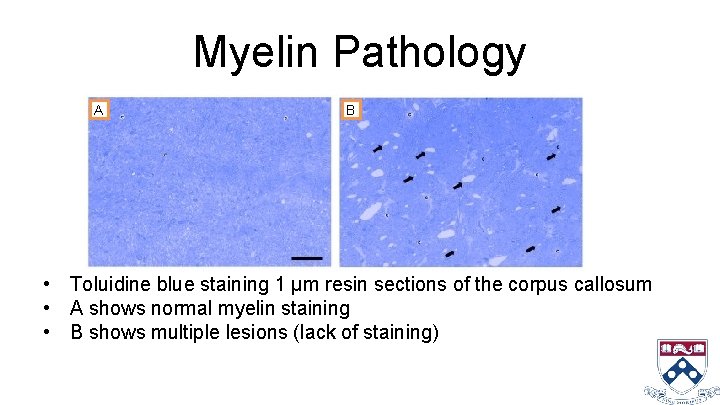
Myelin Pathology A B • Toluidine blue staining 1 μm resin sections of the corpus callosum • A shows normal myelin staining • B shows multiple lesions (lack of staining)
Clinical Imaging • CT: low attenuation areas in the white matter • MRI: FLAIR and T 2 -weighted: high signal • Visual quantification is challenging. Scoring systems have been developed, such as the Fazekas score and CHS scoring system (4). • Newer quantitative computer techniques offer greater dynamic range & better reproducibility (5).
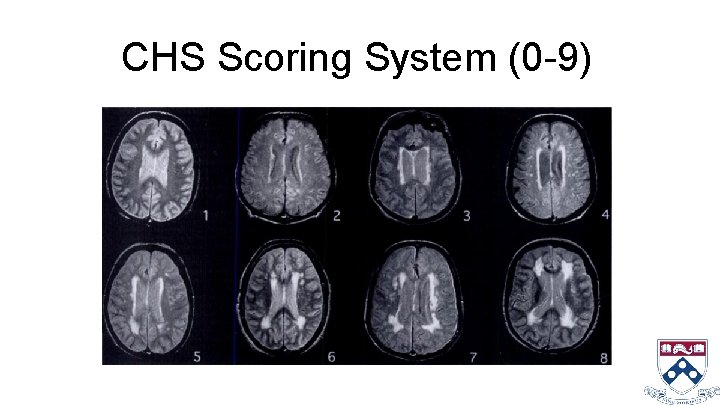
CHS Scoring System (0 -9)
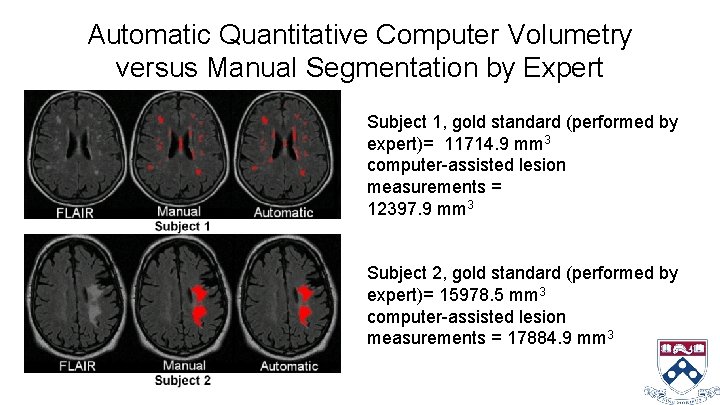
Automatic Quantitative Computer Volumetry versus Manual Segmentation by Expert Subject 1, gold standard (performed by expert)= 11714. 9 mm 3 computer-assisted lesion measurements = 12397. 9 mm 3 Subject 2, gold standard (performed by expert)= 15978. 5 mm 3 computer-assisted lesion measurements = 17884. 9 mm 3
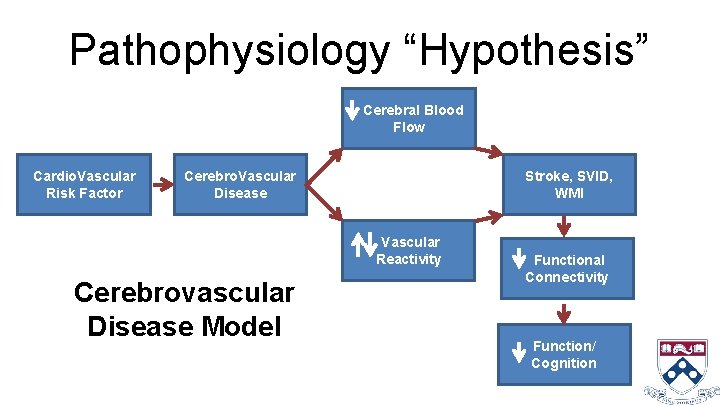
Pathophysiology “Hypothesis” Cerebral Blood Flow Cardio. Vascular Risk Factor Cerebro. Vascular Disease Stroke, SVID, WMI Vascular Reactivity Cerebrovascular Disease Model Functional Connectivity Function/ Cognition
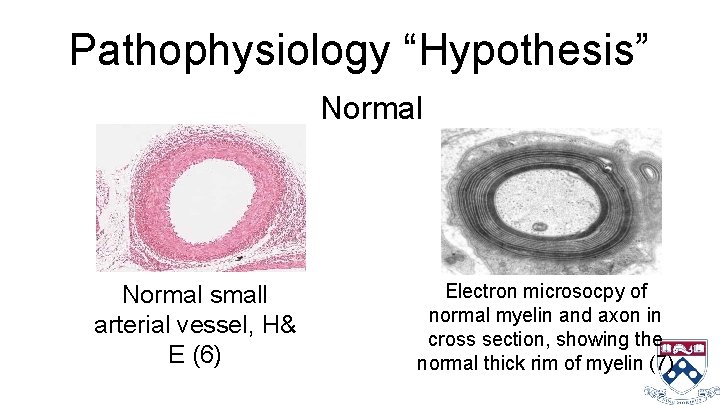
Pathophysiology “Hypothesis” Normal small arterial vessel, H& E (6) Electron microsocpy of normal myelin and axon in cross section, showing the normal thick rim of myelin (7)
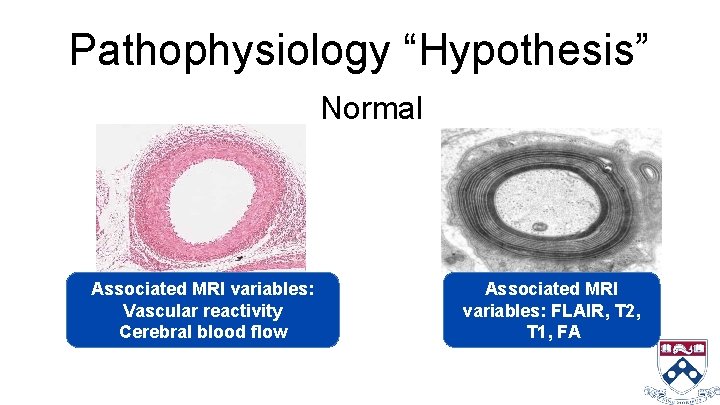
Pathophysiology “Hypothesis” Normal Associated MRI variables: Vascular reactivity Cerebral blood flow Associated MRI variables: FLAIR, T 2, T 1, FA
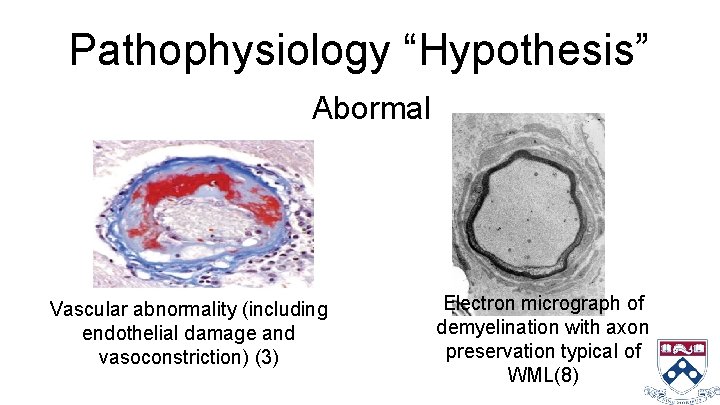
Pathophysiology “Hypothesis” Abormal Vascular abnormality (including endothelial damage and vasoconstriction) (3) Electron micrograph of demyelination with axon preservation typical of WML(8)
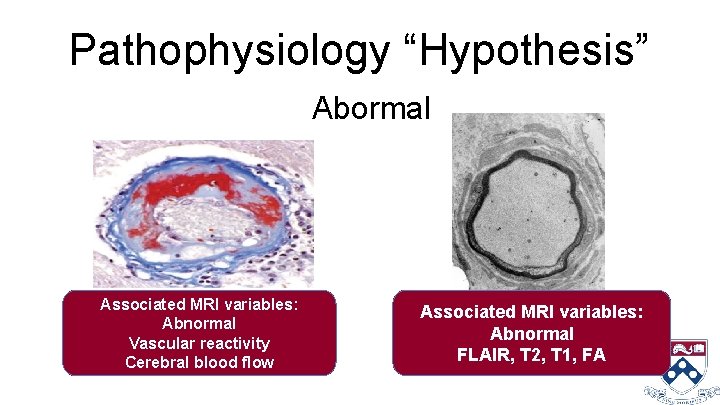
Pathophysiology “Hypothesis” Abormal Associated MRI variables: Abnormal Vascular reactivity Cerebral blood flow Associated MRI variables: Abnormal FLAIR, T 2, T 1, FA
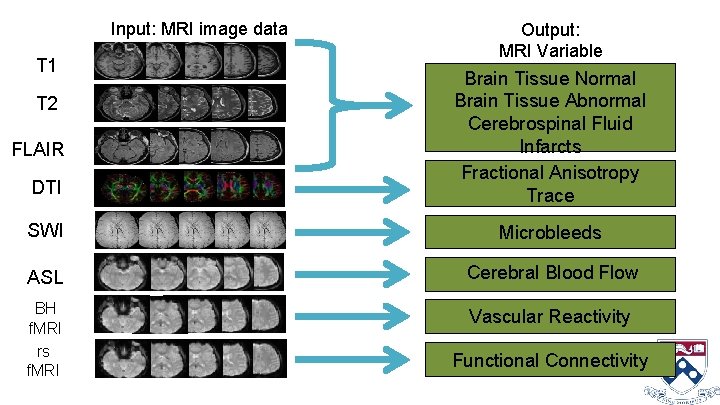
Input: MRI image data T 1 Output: MRI Variable DTI Brain Tissue Normal Brain Tissue Abnormal Cerebrospinal Fluid Infarcts Fractional Anisotropy Trace SWI Microbleeds ASL Cerebral Blood Flow BH f. MRI rs f. MRI Vascular Reactivity T 2 FLAIR Functional Connectivity
WML Pathology and Imaging Correlation • Periventricular WML and deep WML show similar microscopic features. • In comparison to normal appearing white matter distant to the lesion, they show lower axonal density, more microglial activation (based on HLA-DR immunohistochemical staining) and more myelin loss (9)
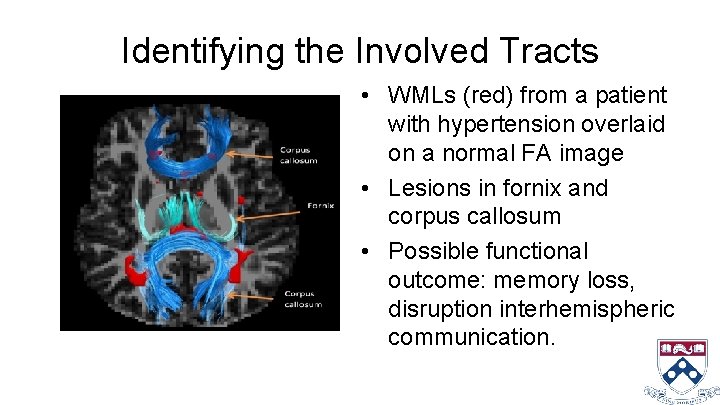
Identifying the Involved Tracts • WMLs (red) from a patient with hypertension overlaid on a normal FA image • Lesions in fornix and corpus callosum • Possible functional outcome: memory loss, disruption interhemispheric communication.
‘Tip of the Iceberg’ Studies of the white matter outside visually evident WML indicates that the structurally visible lesions are the “tip of the iceberg. ” (10)
NAWM Pathology and Imaging Correlation • In addition to obvious WML, Subclinical small vessel disease is associated with normal appearing WML on imaging which microscopically is not normal. • Microscopically this manifest as cortical microinfarcts with microglial/macrophage activation (HLA-DR staining) and astrogliosis (glial fibrilary acidic protein staining) in the white matter.
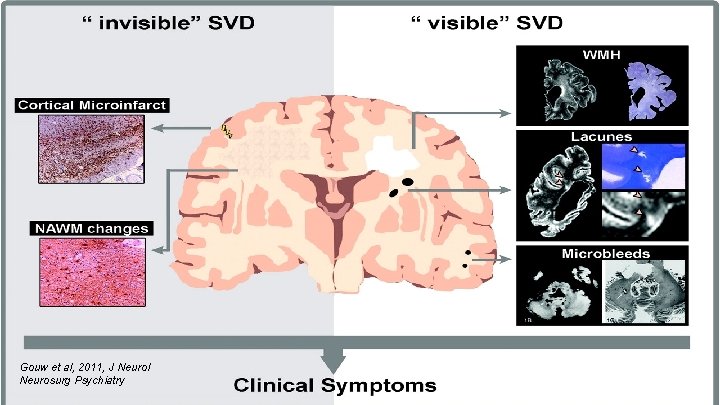
Gouw et al, 2011, J Neurol Neurosurg Psychiatry
Penumbra Versus more Distant White Matter • Penumbra is defined as tissue around lesions. • The white matter around the lesion that is visually normal and classified as ‘normal’ by standard human observer based methods, but that statistical algorithms identify as ‘abnormal. ’ • The area immediately surrounding WML aka ‘WML penumbra” is associated with increase in FLAIR, T 2 and MD and decrease in T 1, CBF and FA measures versus distant white matter. Vascular reactivity increases in penumbra but does not change in the lesion.
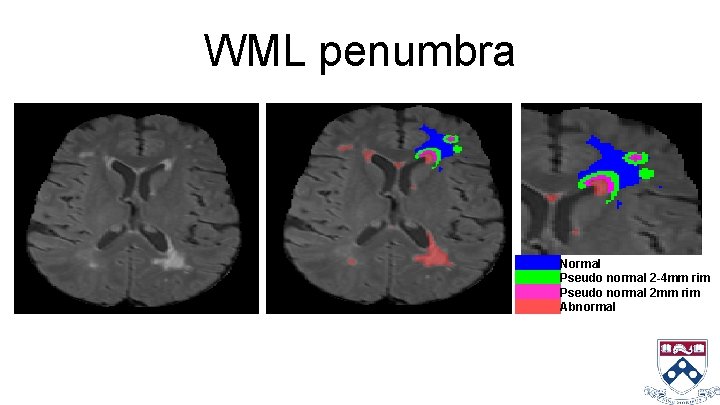
WML penumbra Normal Pseudo normal 2 -4 mm rim Pseudo normal 2 mm rim Abnormal
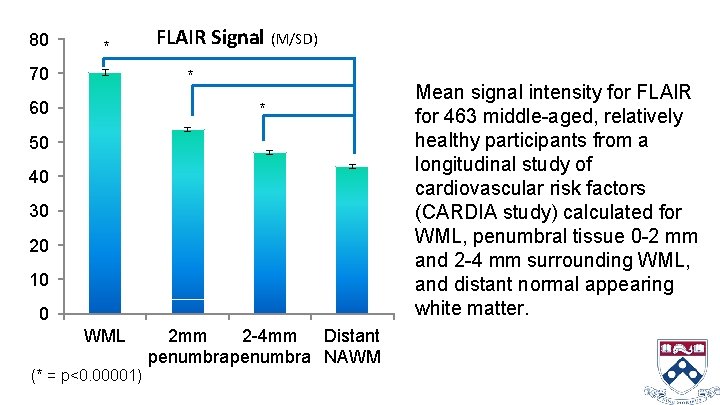
80 * 70 FLAIR Signal (M/SD) * 60 * 50 40 30 20 10 0 WML (* = p<0. 00001) 2 mm 2 -4 mm Distant penumbra NAWM Mean signal intensity for FLAIR for 463 middle-aged, relatively healthy participants from a longitudinal study of cardiovascular risk factors (CARDIA study) calculated for WML, penumbral tissue 0 -2 mm and 2 -4 mm surrounding WML, and distant normal appearing white matter.
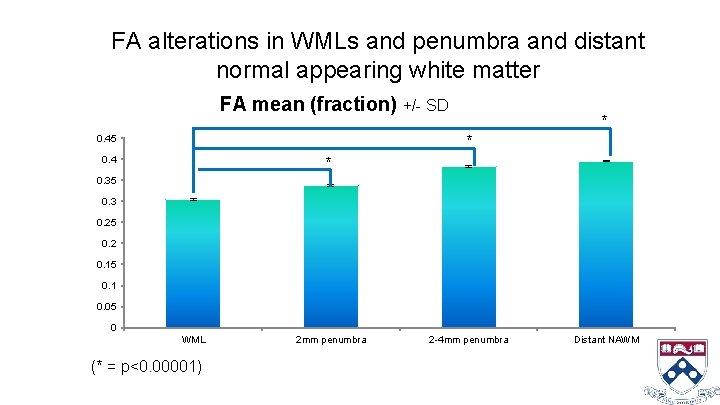
FA alterations in WMLs and penumbra and distant normal appearing white matter FA mean (fraction) +/- SD * * 0. 45 * 0. 4 0. 35 0. 3 0. 25 0. 2 0. 15 0. 1 0. 05 0 WML (* = p<0. 00001) 2 mm penumbra 2 -4 mm penumbra Distant NAWM
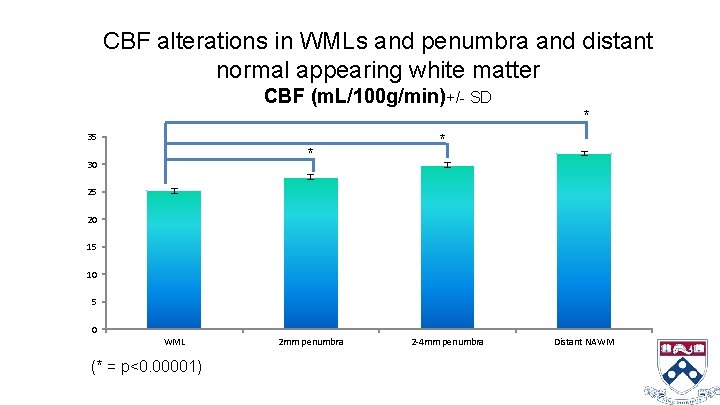
CBF alterations in WMLs and penumbra and distant normal appearing white matter CBF (m. L/100 g/min)+/SE CBF (m. L/100 g/min)+/- SD 35 * 30 * * 25 20 15 10 5 0 WML (* = p<0. 00001) 2 mm penumbra 2 -4 mm penumbra Distant NAWM
NAWM Significance • The extent of the SVD is greater from the obvious lesions. • Additional white matter tracts likely involved based on tractography • Possible predictive of future obvious lesions (10) • Future studies should be directed towards assessing the whole spectrum of SVD because all expressions may contribute to clinical symptoms.
Summary • Pathologically, leukoaraiosis shows demyelination with axonal preservation. • Generally considered a consequence of small vessel disease, though not specific. • Nature and significance of NAWM/penumbra unclear • Functional correlates not clearly understood. • MRI provides an opportunity to investigate WML from the tissue level to clinical outcome.
References 1 - Bryan RN 1, Wells SW, Miller TJ, Elster AD, Jungreis CA, Poirier VC, Lind BK, Manolio TA. Infarctlike lesions in the brain: prevalence and anatomic characteristics at. MR imaging of the elderly--data from the Cardiovascular Health Study. Radiology. 1997 Jan; 202(1): 47 -54. 2 - Pantoni L, Garcia JH. Pathogenesis of leukoaraiosis: a review. Stroke. 1997 Mar; 28(3): 652 -9. 3 - Pantoni L, Lancet Neurol. 2010 Jul; 9(7): 689 -701. doi: 10. 1016/S 1474 -4422(10)70104 -6 4 - Yue NC 1, Arnold AM, Longstreth WT Jr, Elster AD, Jungreis CA, O'Leary DH, Poirier VC, Bryan RN. Sulcal, ventricular, and white matter changes at MR imaging in the aging brain: data from the cardiovascular health study. Radiology. 1997 Jan; 202(1): 33 -9. 5 - Lao Z, Shen D, Liu D, Jawad AF, Melhem ER, Launer LJ, Bryan RN, Davatzikos C. Computer-assisted segmentation of white matter lesions in 3 D MR images using support vector machine. Acad Radiol. 2008 Mar; 15(3): 300 -13 6 - http: //www. iupui. edu/ 7 - path. upmc. edu. jpg 8 - vetneuromuscular. ucsd. edu 9 - Gouw et al, Heterogeneity of small vessel disease: a systematic review of MRI and histopathology correlations, J Neurol Neurosurg Psychiatry. 2011 Feb; 82(2): 126 -35 10 - de Groot M et al, Changes in normal-appearing white matter precede development of white matter lesions. Stroke. 2013 Apr; 44(4): 1037 -42.
- Slides: 31