
Brain Warmer 19 Which of the following best
Brain Warmer 19 Which of the following best describes viral reproduction? A. The genetic material of a virus enters a living host cell and takes over the translational and transcriptional mechanisms of the cell in order to replicate the virus's nucleic acids. B. The chromosomes of a virus line up and condense into rod-like structures inside of the virus's capsid, then slowly divide as a viral envelope forms around each chromosome. C. The chromosomes of a virus replicate themselves inside of the virus's capsid, then line up and slowly divide as a viral envelope forms around each set. D. The genetic material of a virus enters a living host cell and combines with the cell's nucleotides in order to form a hybrid cell that is capable of asexual reproduction.
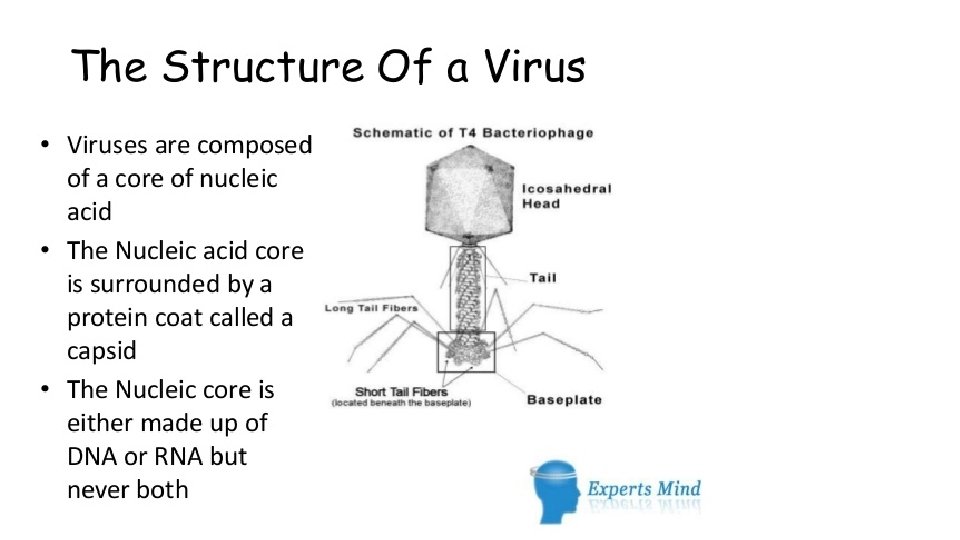
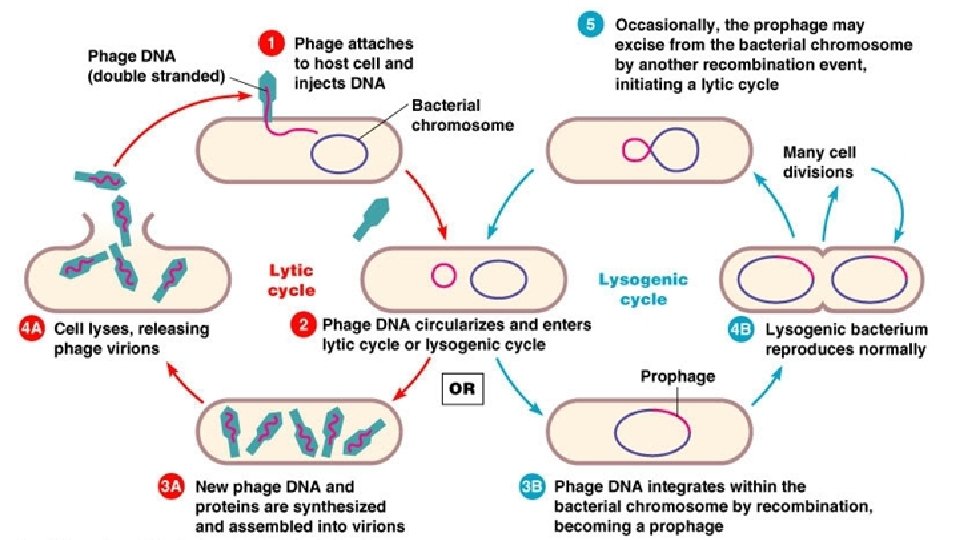
Scientific Explanation: A Viruses are unable to reproduce independently. Viruses must infect a living host cell in order to replicate their genetic material. Viral reproduction occurs when the genetic material of a virus enters a living host cell and takes over the host cell in order to replicate the virus's nucleic acids (DNA and RNA).

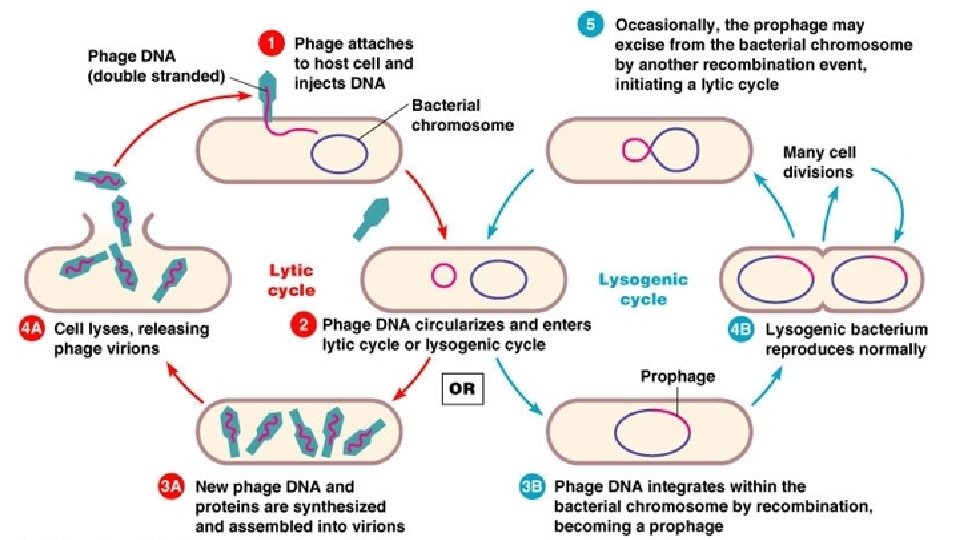
video clip Lytic Cycle and Lysogenic Cycle https: //www. youtube. com/watch? v=h. Fw. A 0 a. BX 5 b. E Brightstorm Video Clip
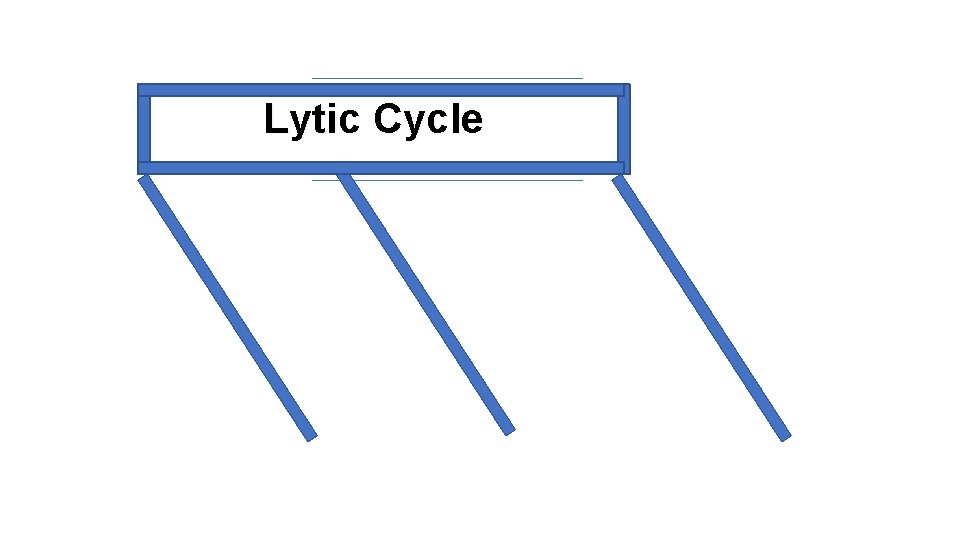
Lytic Cycle
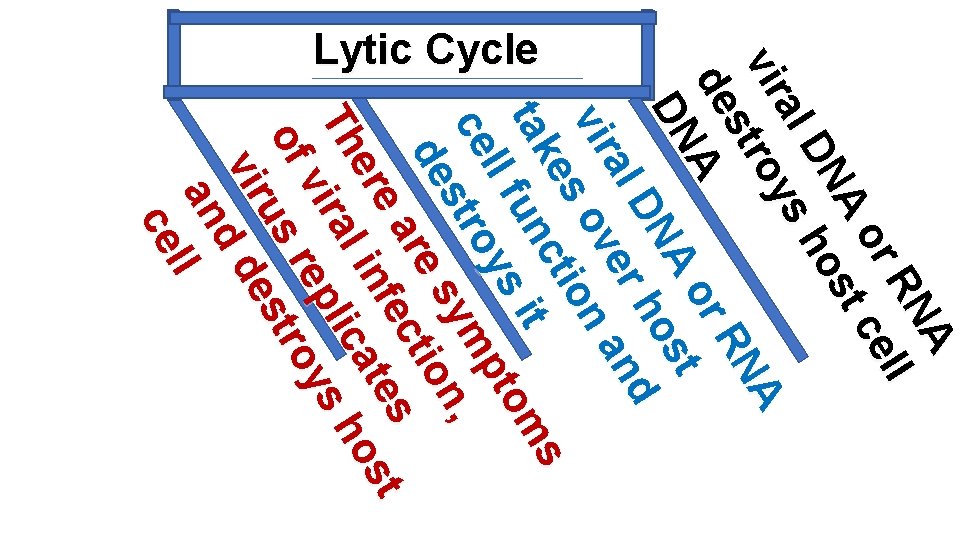
NA R l l or t ce NA os l D h r a ys vi tro NA s r R de A o t DN NA os l D r h d ra ve an vi o on es cti s k n t ta fu s i tom l y l mp , ce tro y s n e s tio de r c e a fe es t e r l in cat os Th ira pli ys h v e of s r stro u vir de d an l l ce Lytic Cycle
Lysogenic Cycle
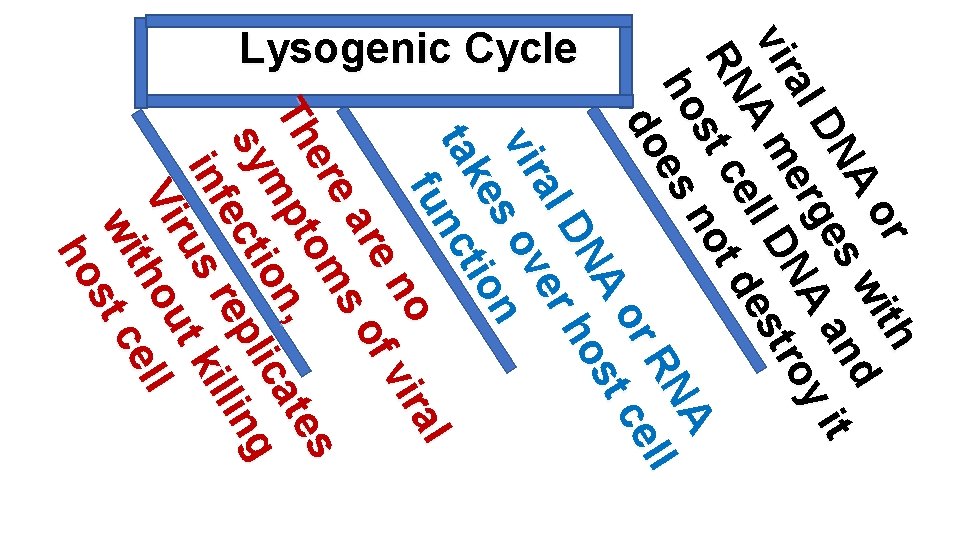
h or wit NA es and t l D rg A oy i e N r ra t D m s vi l l e A e d RN t c o t s n ho es NA r R c ell do o t NA o s l D r h ira ove v s on e i tak ct n l o i ra f u e n f v a r s o s er e om T h pt n, ate m tio lic g sy p c n i e e l inf s r kil ru ut o Vi ll h e t wi st c ho Lysogenic Cycle
All about plants – STAAR academic vocabulary
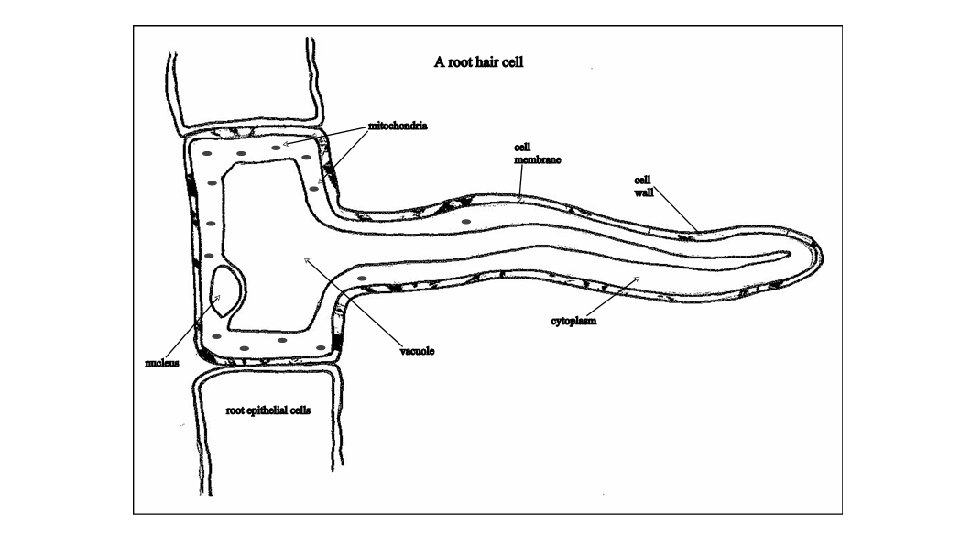
1. root hair - each of a large number of elongated microscopic outgrowths from the outer layer of cells in a root, absorbing moisture and nutrients from the soil
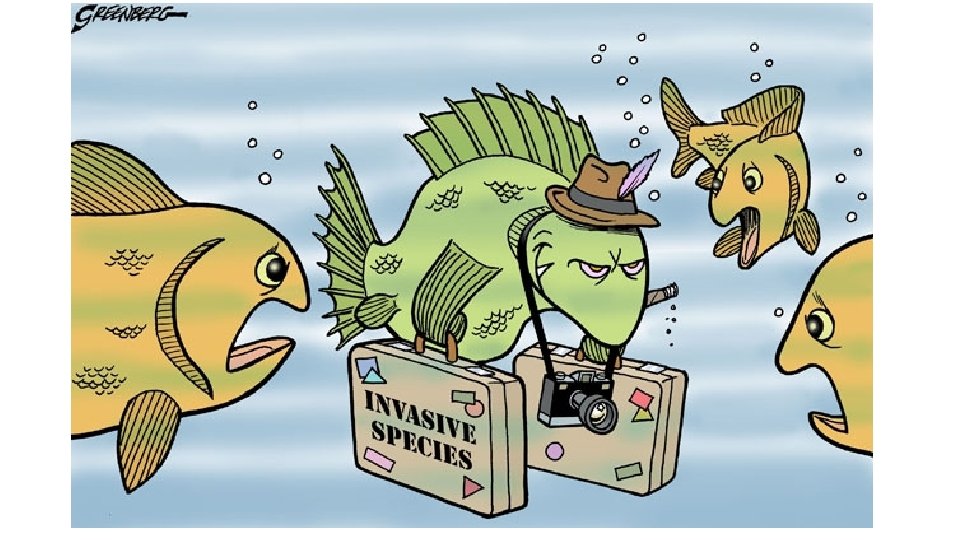
2. Invasive species - is defined as a species that is: 1) non-native (or alien) to the ecosystem under consideration and. 2) whose introduction causes or is likely to cause economic or environmental harm or harm to human health.
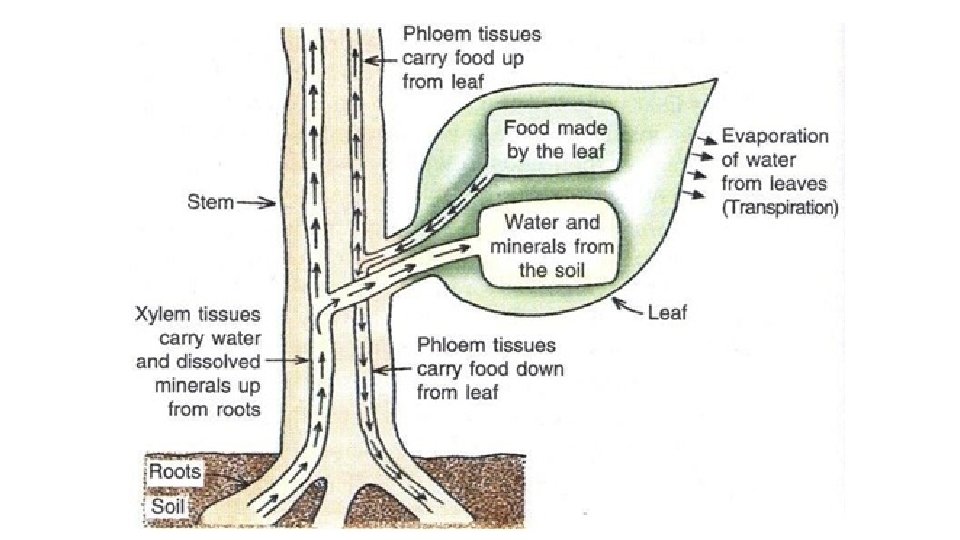
3. Vascular tissue is found in all the plant's vegetative organs, the roots, stems, and leaves. There are 2 types of vascular tissues – xylem, phloem Xylem transports and stores water and watersoluble nutrients in vascular plants. Phloem is responsible for transporting sugars, proteins, and other organic molecules in plants.
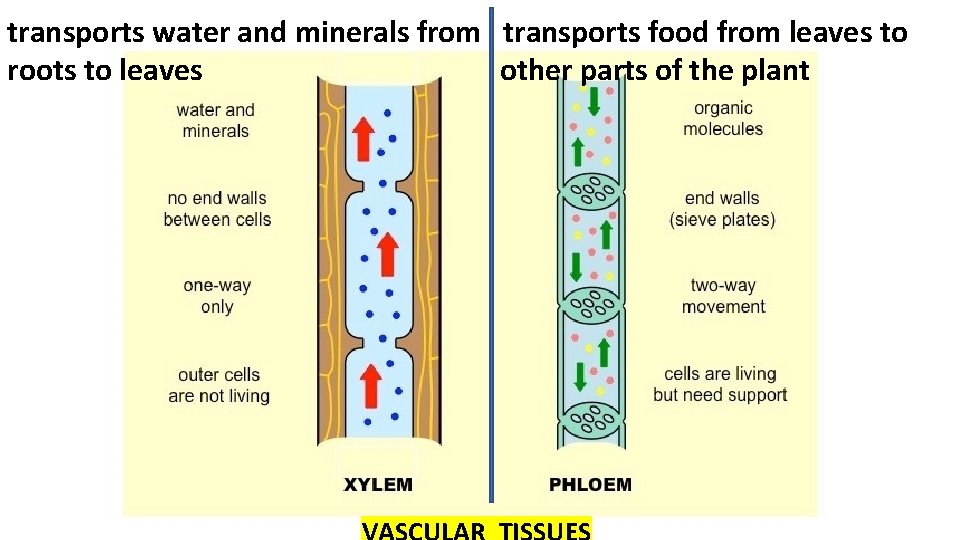
transports water and minerals from transports food from leaves to roots to leaves other parts of the plant
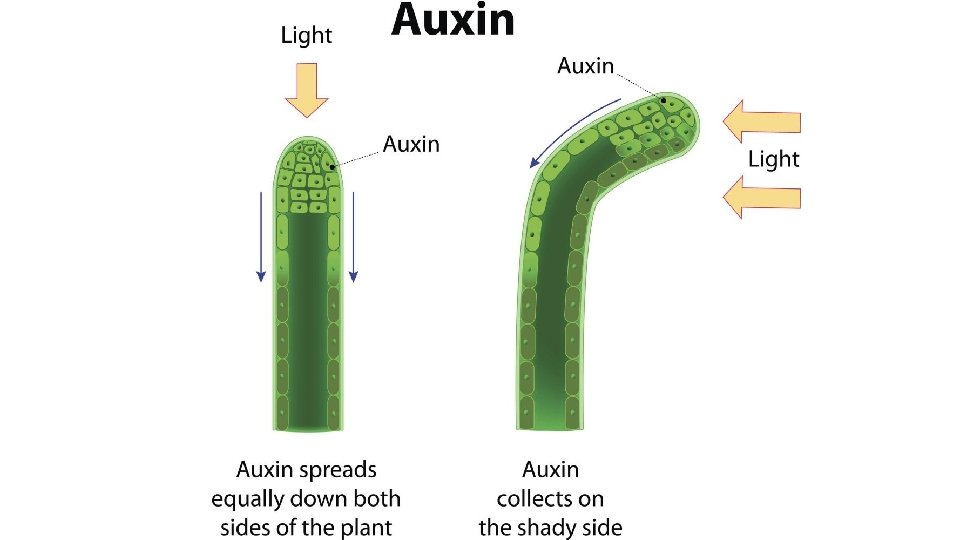
4. phototropism –is the orientation of a plant or other organism in response to light, either toward the source of light ( positive phototropism ) or away from it ( negative phototropism ).
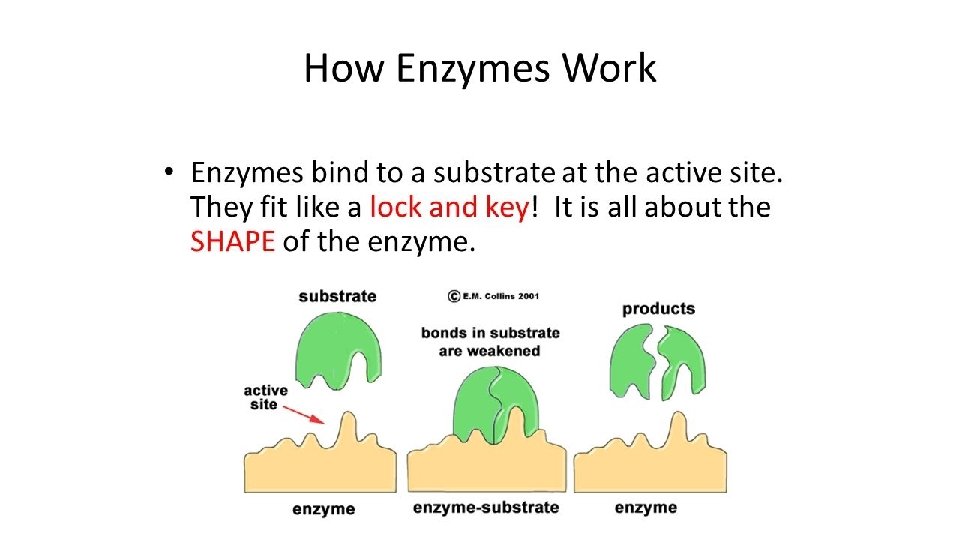
5. enzymes - a substance produced by a living organism which acts as a catalyst to bring about a specific biochemical reaction.
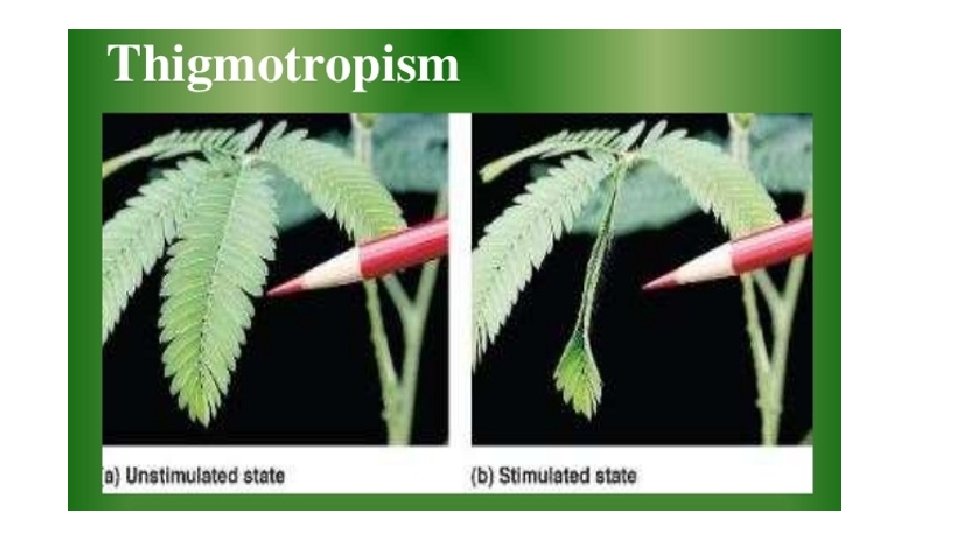
6. thigmotropism - the turning or bending of a plant or other organism in response to a touch stimulus
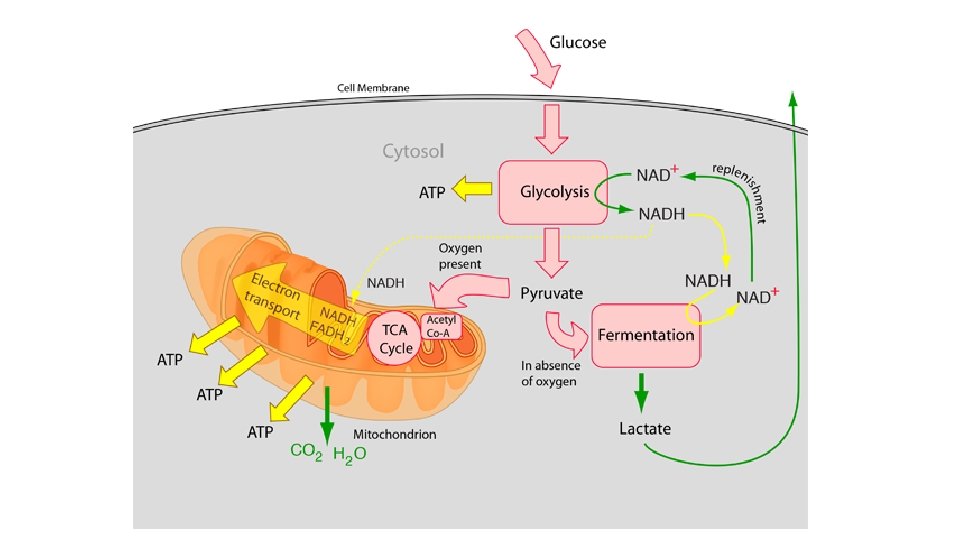
7. Cellular respiration is a set of metabolic reactions and processes that take place in the cells of organisms to convert biochemical energy from nutrients into adenosine triphosphate (ATP), and then release waste products
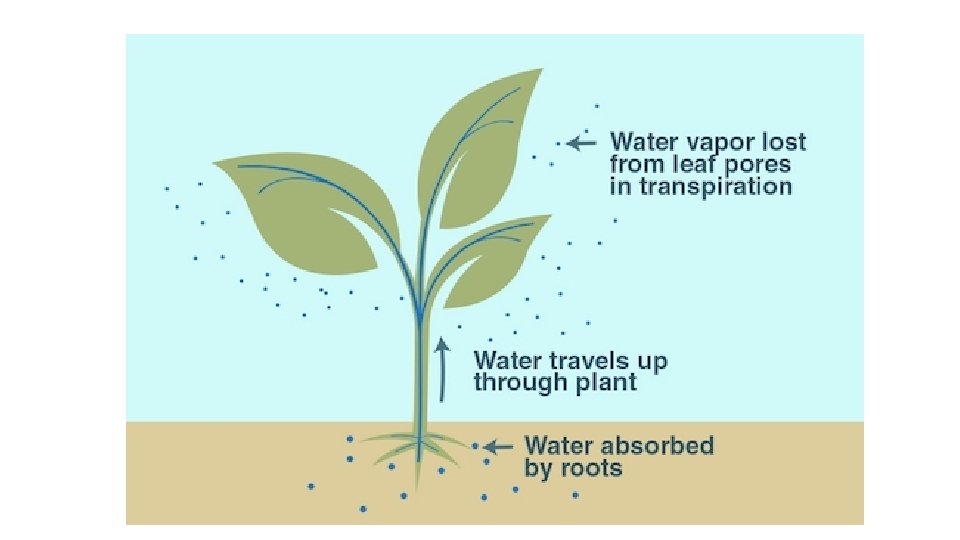
8. Transpiration is the process by which moisture is carried through plants from roots to small pores on the underside of leaves, where it changes to vapor and is released to the atmosphere. Transpiration is essentially evaporation of water from plant leaves.
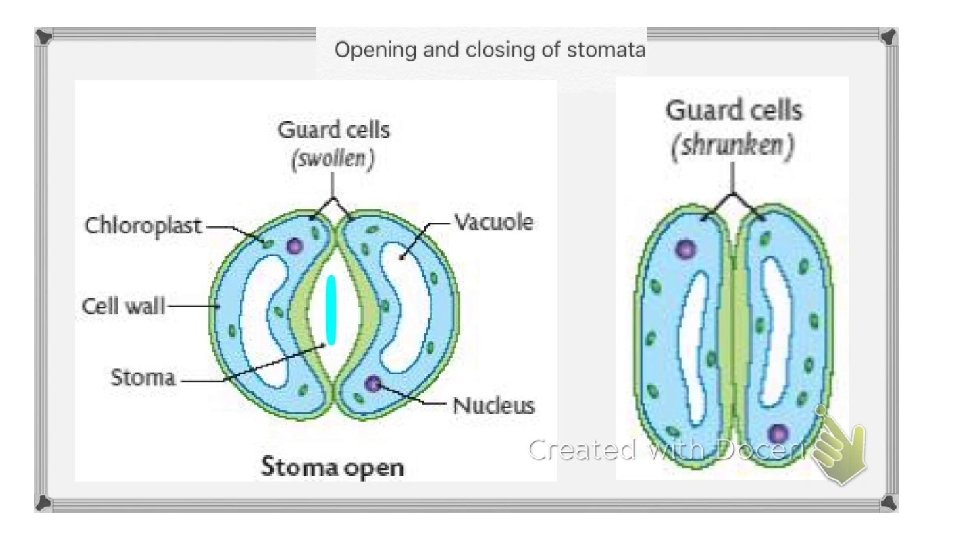
9. stomata - Taking in oxygen is very important because it allows your cells to do things, like make energy from the food you eat. Plants 'breathe' too, but they do it through tiny openings in leaves called stomata (singular: stoma). Stomata open and close to allow the intake of carbon dioxide and the release of oxygen.
All about plants – STAAR problems
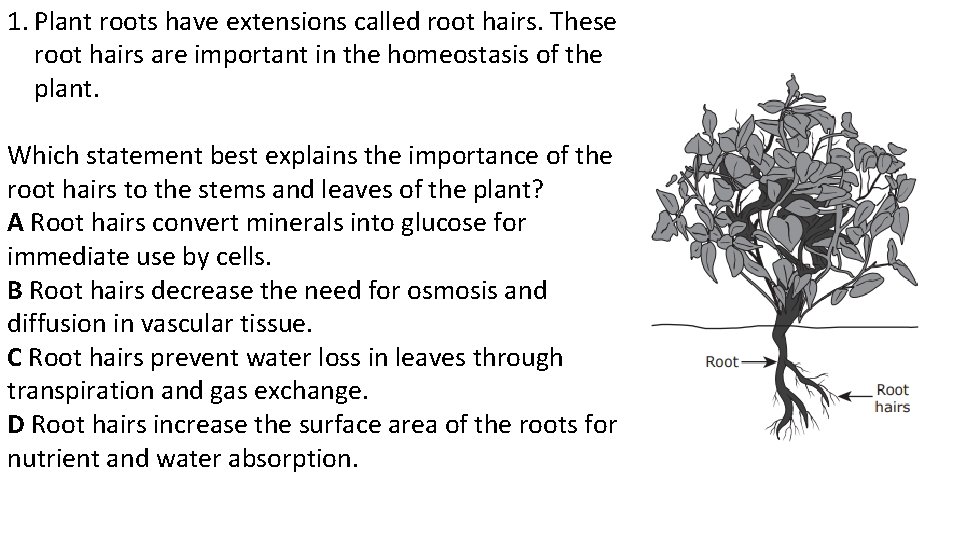
1. Plant roots have extensions called root hairs. These root hairs are important in the homeostasis of the plant. Which statement best explains the importance of the root hairs to the stems and leaves of the plant? A Root hairs convert minerals into glucose for immediate use by cells. B Root hairs decrease the need for osmosis and diffusion in vascular tissue. C Root hairs prevent water loss in leaves through transpiration and gas exchange. D Root hairs increase the surface area of the roots for nutrient and water absorption.

1. D
2. Invasive plant species affect the interactions of living and nonliving components of an ecosystem, so the removal of invasive plants is often necessary. The goal of most plant-control methods is to disrupt or inhibit the function of different plant systems. For example, insects can be used to chew through roots in order to reduce a plant’s ability to absorb water. Which of these functions would be most immediately affected by a reduction in water uptake by roots? F Disease resistance G Seed dispersal H Sunlight absorption J Photosynthesis

2. J
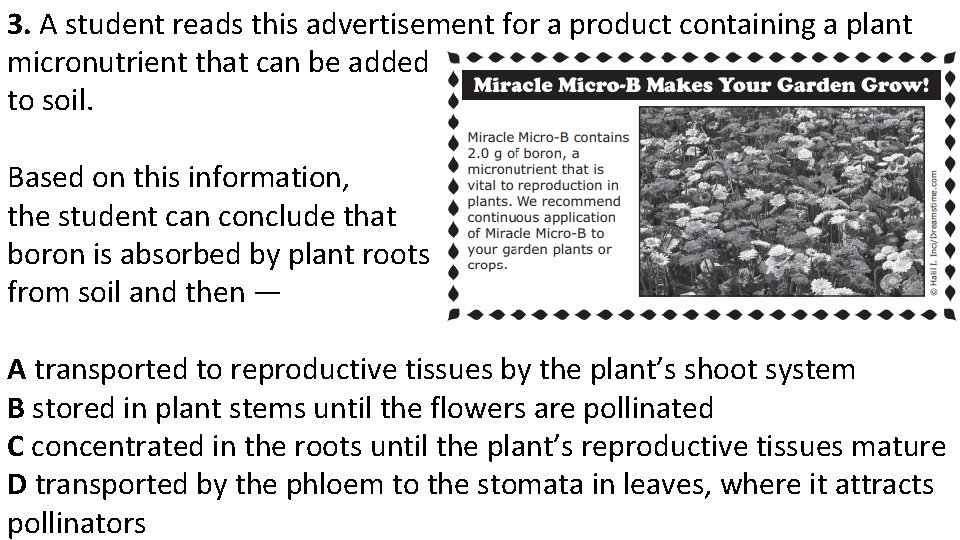
3. A student reads this advertisement for a product containing a plant micronutrient that can be added to soil. Based on this information, the student can conclude that boron is absorbed by plant roots from soil and then — A transported to reproductive tissues by the plant’s shoot system B stored in plant stems until the flowers are pollinated C concentrated in the roots until the plant’s reproductive tissues mature D transported by the phloem to the stomata in leaves, where it attracts pollinators

3. A
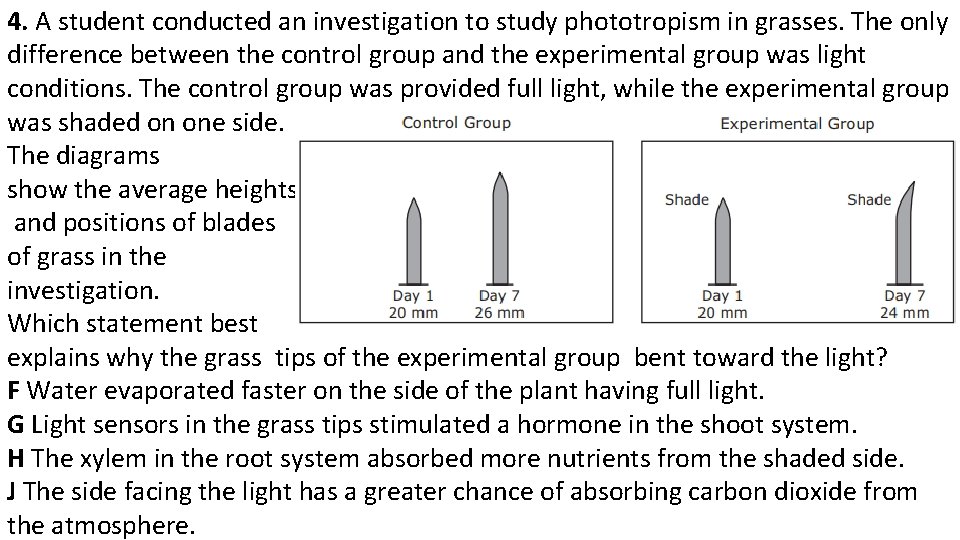
4. A student conducted an investigation to study phototropism in grasses. The only difference between the control group and the experimental group was light conditions. The control group was provided full light, while the experimental group was shaded on one side. The diagrams show the average heights and positions of blades of grass in the investigation. Which statement best explains why the grass tips of the experimental group bent toward the light? F Water evaporated faster on the side of the plant having full light. G Light sensors in the grass tips stimulated a hormone in the shoot system. H The xylem in the root system absorbed more nutrients from the shaded side. J The side facing the light has a greater chance of absorbing carbon dioxide from the atmosphere.

4. G
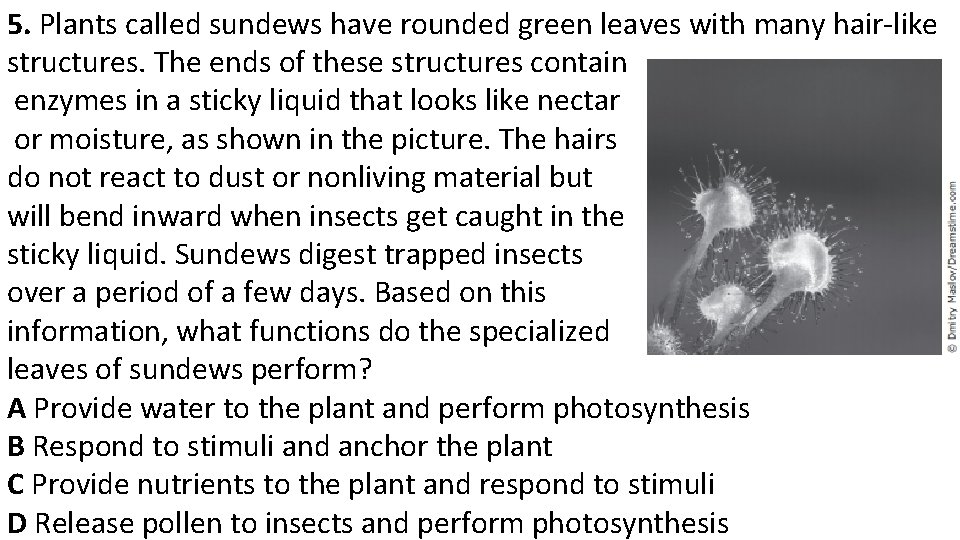
5. Plants called sundews have rounded green leaves with many hair-like structures. The ends of these structures contain enzymes in a sticky liquid that looks like nectar or moisture, as shown in the picture. The hairs do not react to dust or nonliving material but will bend inward when insects get caught in the sticky liquid. Sundews digest trapped insects over a period of a few days. Based on this information, what functions do the specialized leaves of sundews perform? A Provide water to the plant and perform photosynthesis B Respond to stimuli and anchor the plant C Provide nutrients to the plant and respond to stimuli D Release pollen to insects and perform photosynthesis

5. C
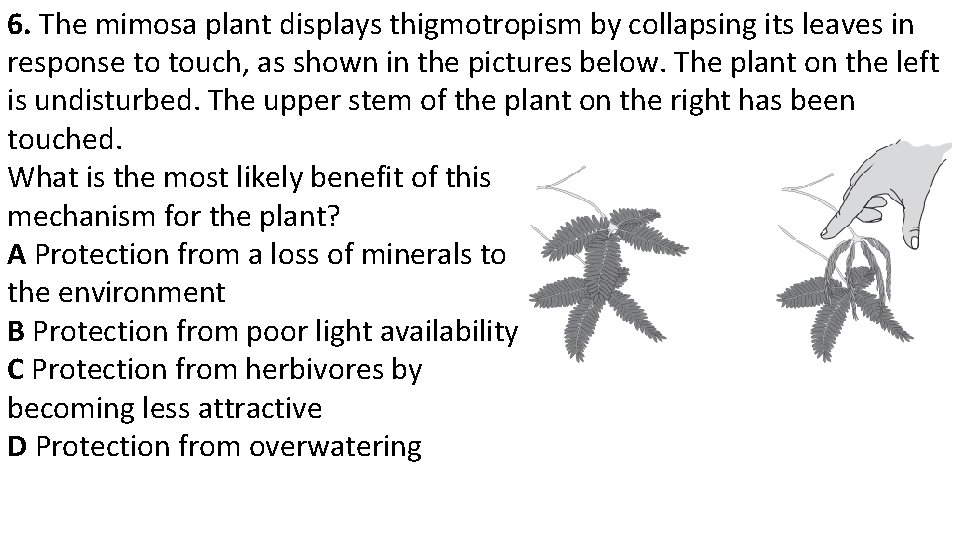
6. The mimosa plant displays thigmotropism by collapsing its leaves in response to touch, as shown in the pictures below. The plant on the left is undisturbed. The upper stem of the plant on the right has been touched. What is the most likely benefit of this mechanism for the plant? A Protection from a loss of minerals to the environment B Protection from poor light availability C Protection from herbivores by becoming less attractive D Protection from overwatering

6. C
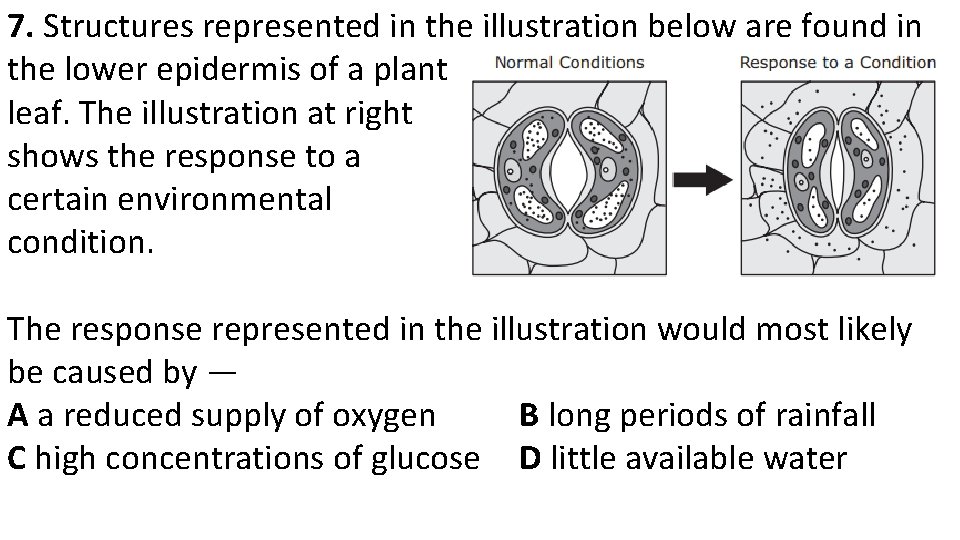
7. Structures represented in the illustration below are found in the lower epidermis of a plant leaf. The illustration at right shows the response to a certain environmental condition. The response represented in the illustration would most likely be caused by — A a reduced supply of oxygen B long periods of rainfall C high concentrations of glucose D little available water

7. D
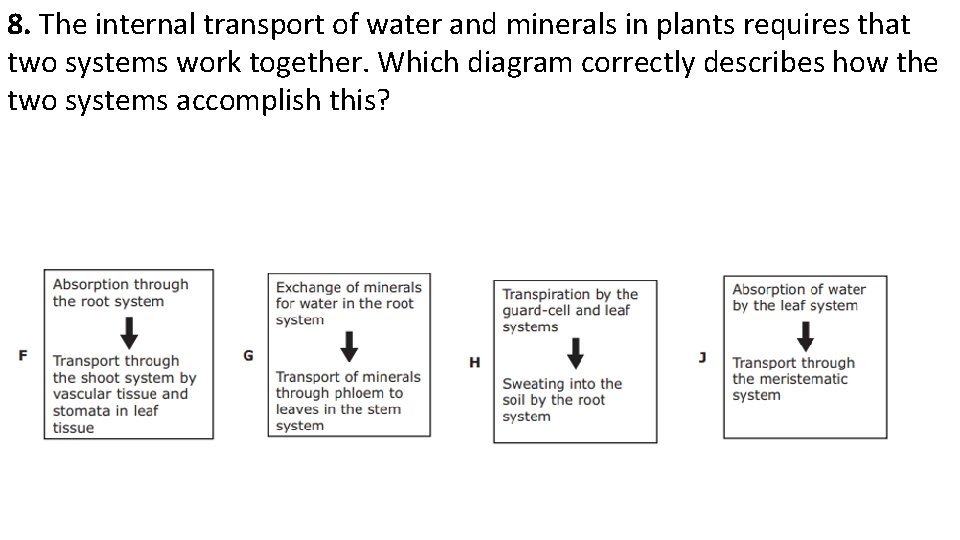
8. The internal transport of water and minerals in plants requires that two systems work together. Which diagram correctly describes how the two systems accomplish this?

8. F
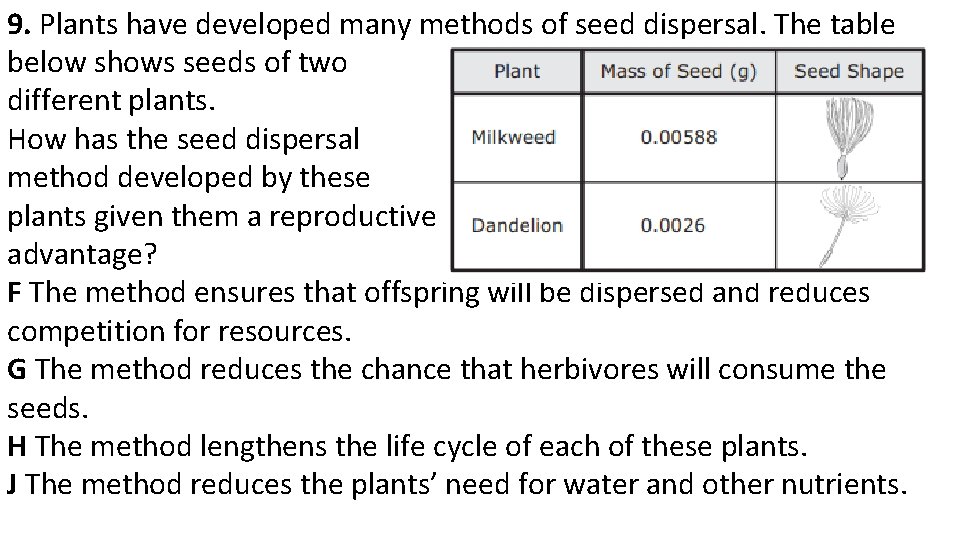
9. Plants have developed many methods of seed dispersal. The table below shows seeds of two different plants. How has the seed dispersal method developed by these plants given them a reproductive advantage? F The method ensures that offspring will be dispersed and reduces competition for resources. G The method reduces the chance that herbivores will consume the seeds. H The method lengthens the life cycle of each of these plants. J The method reduces the plants’ need for water and other nutrients.

9. F
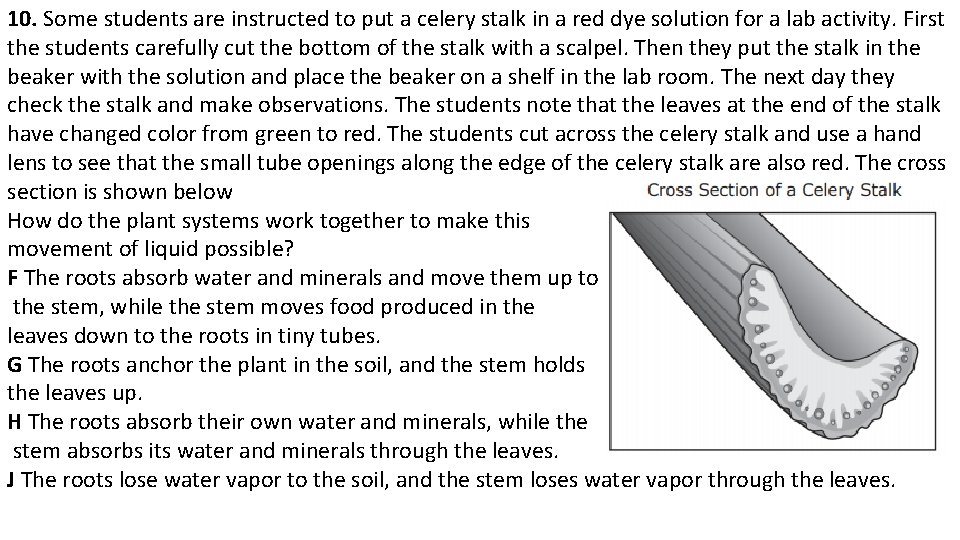
10. Some students are instructed to put a celery stalk in a red dye solution for a lab activity. First the students carefully cut the bottom of the stalk with a scalpel. Then they put the stalk in the beaker with the solution and place the beaker on a shelf in the lab room. The next day they check the stalk and make observations. The students note that the leaves at the end of the stalk have changed color from green to red. The students cut across the celery stalk and use a hand lens to see that the small tube openings along the edge of the celery stalk are also red. The cross section is shown below How do the plant systems work together to make this movement of liquid possible? F The roots absorb water and minerals and move them up to the stem, while the stem moves food produced in the leaves down to the roots in tiny tubes. G The roots anchor the plant in the soil, and the stem holds the leaves up. H The roots absorb their own water and minerals, while the stem absorbs its water and minerals through the leaves. J The roots lose water vapor to the soil, and the stem loses water vapor through the leaves.

10. F
All about plants – STAAR problems 2
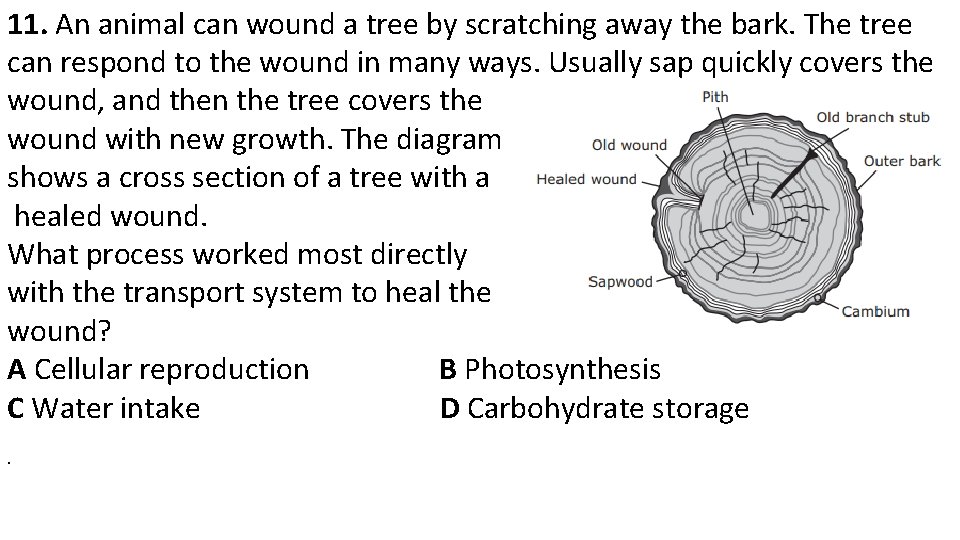
11. An animal can wound a tree by scratching away the bark. The tree can respond to the wound in many ways. Usually sap quickly covers the wound, and then the tree covers the wound with new growth. The diagram shows a cross section of a tree with a healed wound. What process worked most directly with the transport system to heal the wound? A Cellular reproduction B Photosynthesis C Water intake D Carbohydrate storage.

11. A
12. Most plants have hair-like cells called trichomes that project from the surface and help the plants in many ways. In some plants trichomes secrete toxic substances that most likely perform which function? A Absorb carbon dioxide B Protect against herbivorous insects C Reflect light off leaves D Reduce water loss from evaporation.

12. B
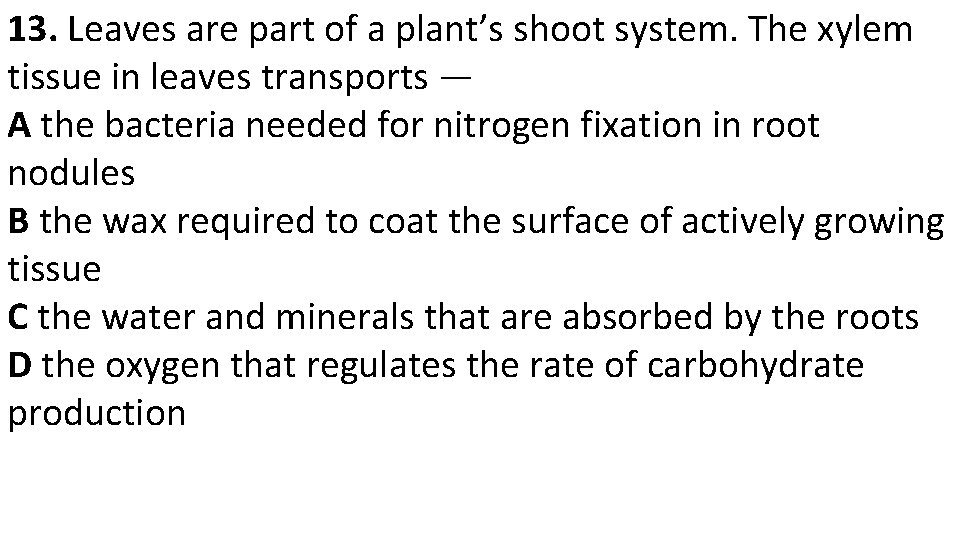
13. Leaves are part of a plant’s shoot system. The xylem tissue in leaves transports — A the bacteria needed for nitrogen fixation in root nodules B the wax required to coat the surface of actively growing tissue C the water and minerals that are absorbed by the roots D the oxygen that regulates the rate of carbohydrate production
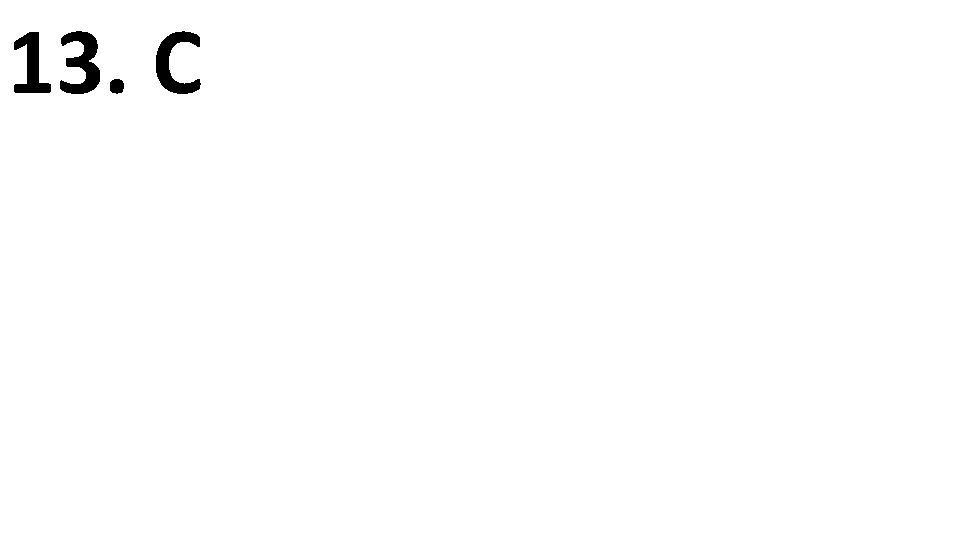
13. C
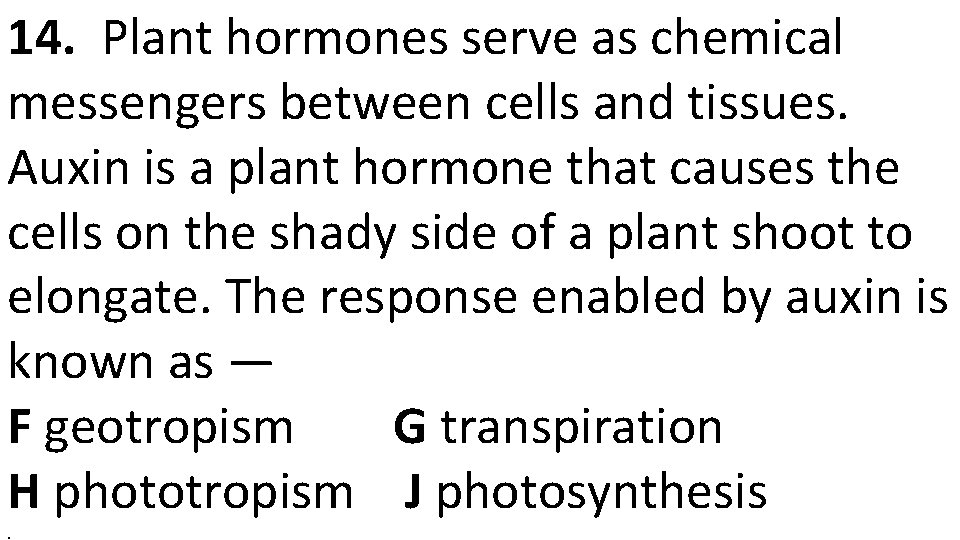
14. Plant hormones serve as chemical messengers between cells and tissues. Auxin is a plant hormone that causes the cells on the shady side of a plant shoot to elongate. The response enabled by auxin is known as — F geotropism G transpiration H phototropism J photosynthesis.

14. H
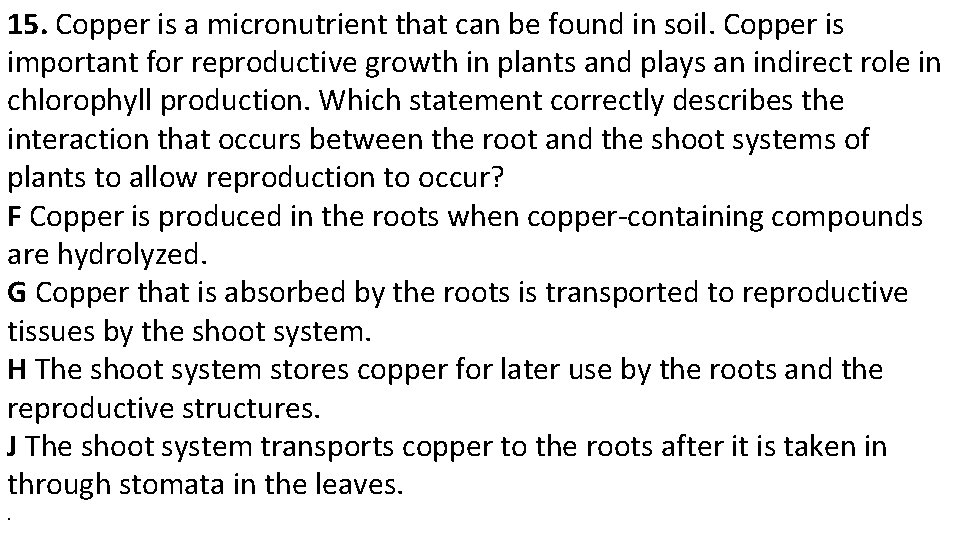
15. Copper is a micronutrient that can be found in soil. Copper is important for reproductive growth in plants and plays an indirect role in chlorophyll production. Which statement correctly describes the interaction that occurs between the root and the shoot systems of plants to allow reproduction to occur? F Copper is produced in the roots when copper-containing compounds are hydrolyzed. G Copper that is absorbed by the roots is transported to reproductive tissues by the shoot system. H The shoot system stores copper for later use by the roots and the reproductive structures. J The shoot system transports copper to the roots after it is taken in through stomata in the leaves. .

15. G
16. Changes in water pressure within guard cells cause the cells to open or close the stoma. This response helps the plant maintain homeostasis by — A stabilizing the plant’s temperature through the evaporation of water B regulating the amount of water the plant loses during transpiration C allowing oxygen needed for photosynthesis to enter the plant D enabling the plant to release more carbon dioxide at night for photosynthesis

16. B
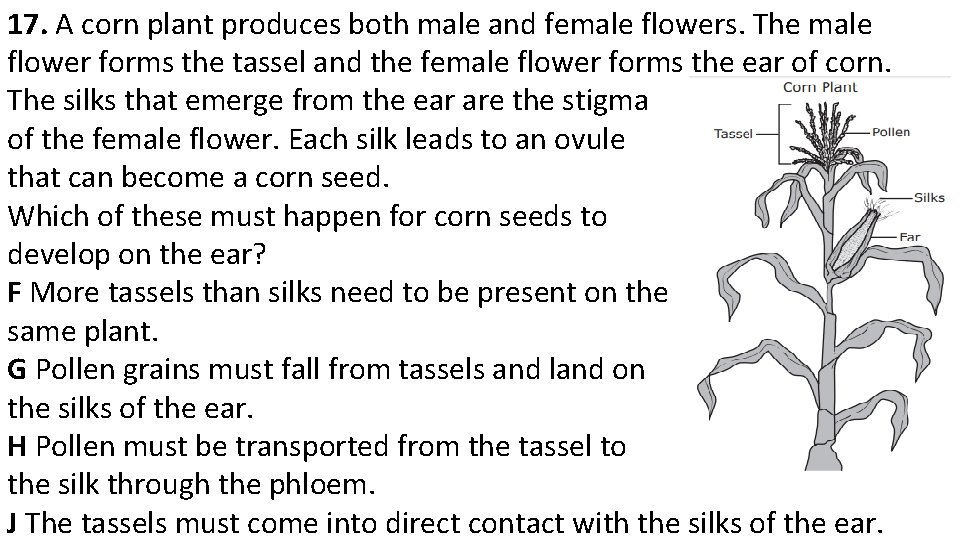
17. A corn plant produces both male and female flowers. The male flower forms the tassel and the female flower forms the ear of corn. The silks that emerge from the ear are the stigma of the female flower. Each silk leads to an ovule that can become a corn seed. Which of these must happen for corn seeds to develop on the ear? F More tassels than silks need to be present on the same plant. G Pollen grains must fall from tassels and land on the silks of the ear. H Pollen must be transported from the tassel to the silk through the phloem. J The tassels must come into direct contact with the silks of the ear.

17. G
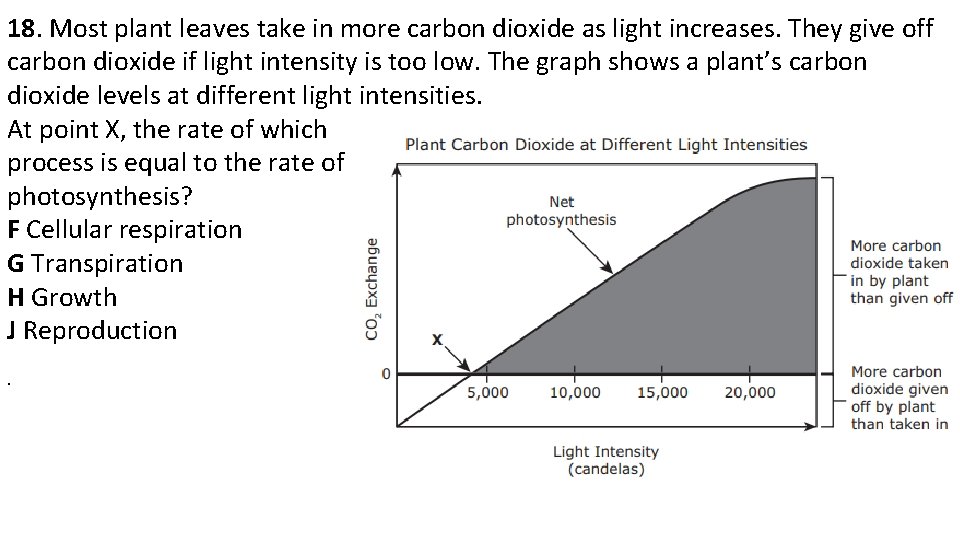
18. Most plant leaves take in more carbon dioxide as light increases. They give off carbon dioxide if light intensity is too low. The graph shows a plant’s carbon dioxide levels at different light intensities. At point X, the rate of which process is equal to the rate of photosynthesis? F Cellular respiration G Transpiration H Growth J Reproduction.

18. F
All about viruses STAAR problems
1. In the 1880 s, Louis Pasteur developed a method of weakening viruses. The weakened viruses could be injected into healthy individuals. How is this method effective in fighting viral diseases? A The immune system develops antibodies in response to the weakened viruses. B The weakened viruses attach to unaffected viruses in the host and interrupt the viral reproductive cycle. C The rate of genetic mutation in the host is decreased due to the introduction of weakened viruses. D Weakened viruses are unable to enter the host organism.
1. In the 1880 s, Louis Pasteur developed a method of weakening viruses. The weakened viruses could be injected into healthy individuals. How is this method effective in fighting viral diseases? A The immune system develops antibodies in response to the weakened viruses. B The weakened viruses attach to unaffected viruses in the host and interrupt the viral reproductive cycle. C The rate of genetic mutation in the host is decreased due to the introduction of weakened viruses. D Weakened viruses are unable to enter the host organism.
2. Which of these describes a difference between viruses and cells? F Cells contain protein, and viruses contain only carbohydrates. G Viruses have flagella, and cells have only cilia. H Cells reproduce independently, and viruses require a host to reproduce. J Viruses have membranes made of proteins, and cells have membranes made of nucleic acid.
2. Which of these describes a difference between viruses and cells? F Cells contain protein, and viruses contain only carbohydrates. G Viruses have flagella, and cells have only cilia. H Cells reproduce independently, and viruses require a host to reproduce. J Viruses have membranes made of proteins, and cells have membranes made of nucleic acid.
3. The human immunodeficiency virus (HIV) often infects and destroys CD 4 T cells. These CD 4 T cells are one of many kinds of white blood cells that are an important part of the immune system. The most common danger related to the destruction of CD 4 T cells is — A an increase in the risk of high blood pressure B an increase in the threat of diseases caused by microorganisms and viruses C a decrease in the flow of blood to vital organs D a decrease in the amount of oxygen being transported to tissues
3. The human immunodeficiency virus (HIV) often infects and destroys CD 4 T cells. These CD 4 T cells are one of many kinds of white blood cells that are an important part of the immune system. The most common danger related to the destruction of CD 4 T cells is — A an increase in the risk of high blood pressure B an increase in the threat of diseases caused by microorganisms and viruses C a decrease in the flow of blood to vital organs D a decrease in the amount of oxygen being transported to tissues
4. Viruses can be transmitted through air, water, food, insect bites, and direct skin contact. Once a virus gains entry to the body, it invades a host cell in order to — F deactivate the host cell’s defenses G synthesize antibodies for defense H metabolize host proteins and grow J access cellular processes for replication
4. Viruses can be transmitted through air, water, food, insect bites, and direct skin contact. Once a virus gains entry to the body, it invades a host cell in order to — F deactivate the host cell’s defenses G synthesize antibodies for defense H metabolize host proteins and grow J access cellular processes for replication
5. The 1918 influenza epidemic killed between 50 million and 100 million people worldwide. This epidemic happened near the end of World War I. More people died from the influenza epidemic than were killed in the war. Which of the following explains why this virus was so deadly worldwide? F Infected soldiers returning from the war spread the virus when they coughed. G Food was scarce because of the war, so people were undernourished, and their immune systems were weakened. H Medical personnel often became ill as a result of exposure to airborne virus particles. J All of the above
5. The 1918 influenza epidemic killed between 50 million and 100 million people worldwide. This epidemic happened near the end of World War I. More people died from the influenza epidemic than were killed in the war. Which of the following explains why this virus was so deadly worldwide? F Infected soldiers returning from the war spread the virus when they coughed. G Food was scarce because of the war, so people were undernourished, and their immune systems were weakened. H Medical personnel often became ill as a result of exposure to airborne virus particles. J All of the above
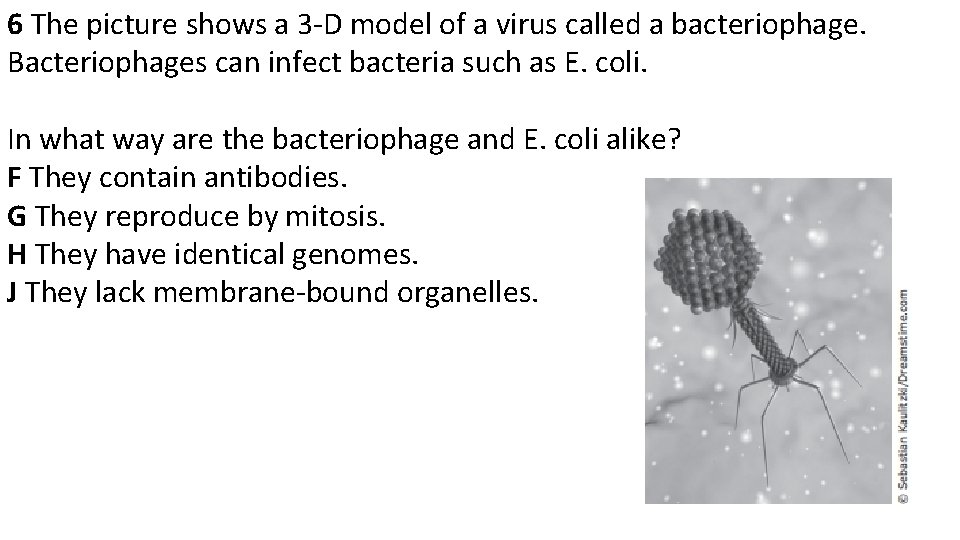
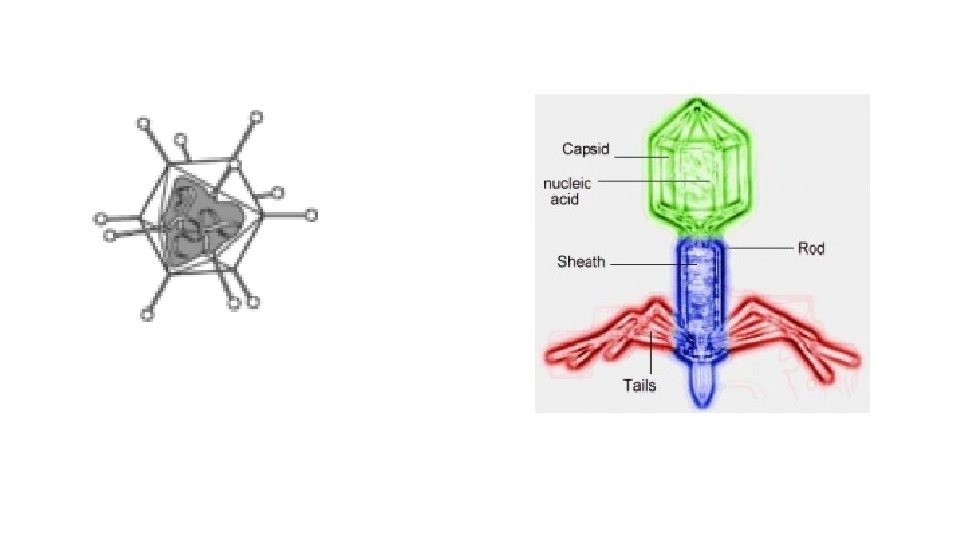
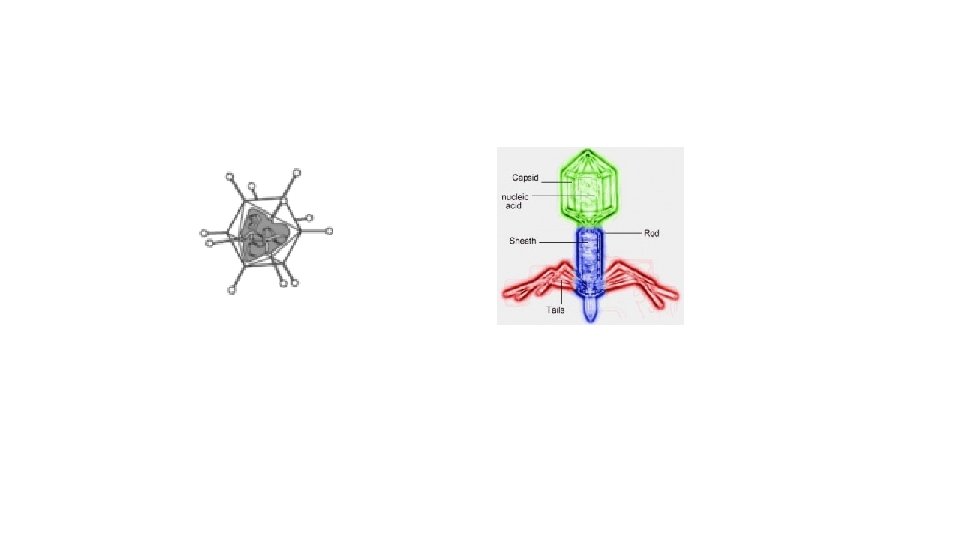
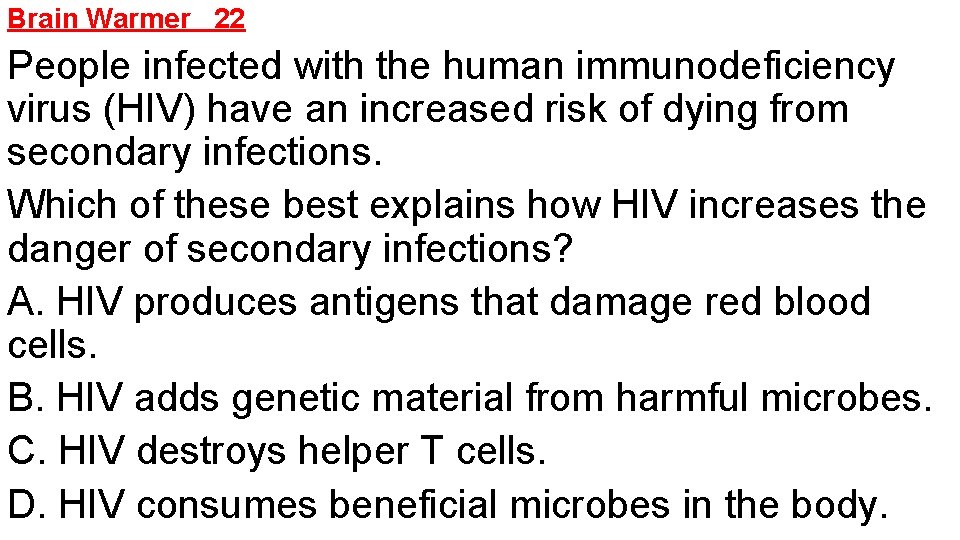
6 The picture shows a 3 -D model of a virus called a bacteriophage. Bacteriophages can infect bacteria such as E. coli. In what way are the bacteriophage and E. coli alike? F They contain antibodies. G They reproduce by mitosis. H They have identical genomes. J They lack membrane-bound organelles.
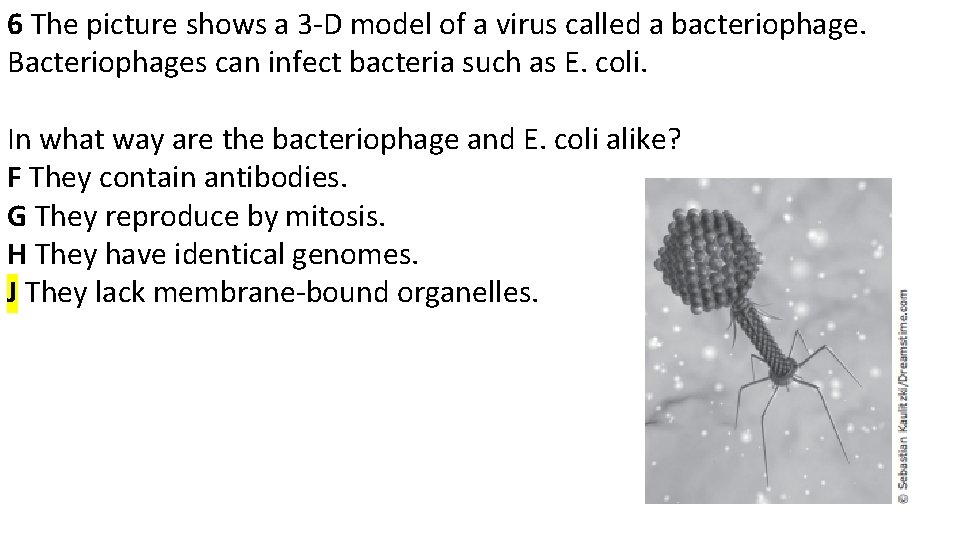
6 The picture shows a 3 -D model of a virus called a bacteriophage. Bacteriophages can infect bacteria such as E. coli. In what way are the bacteriophage and E. coli alike? F They contain antibodies. G They reproduce by mitosis. H They have identical genomes. J They lack membrane-bound organelles.
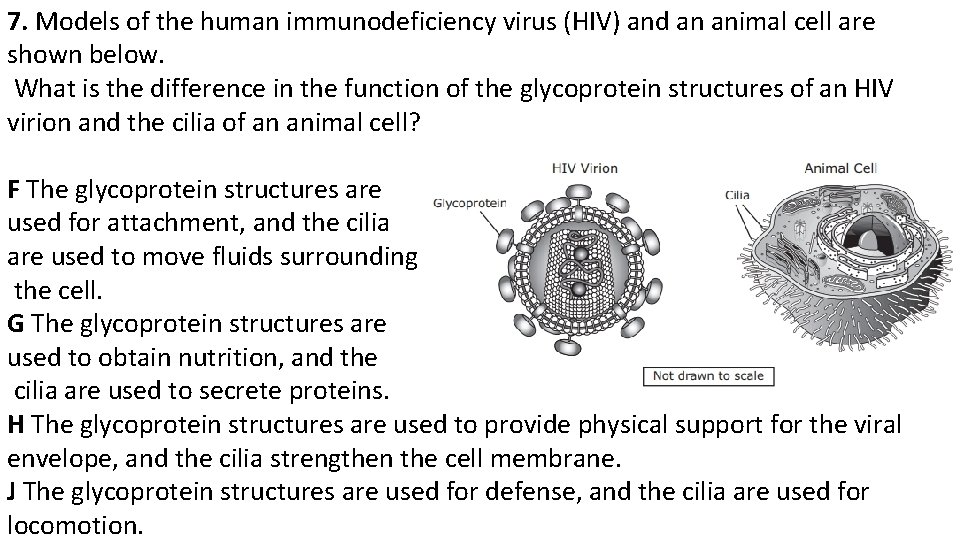
7. Models of the human immunodeficiency virus (HIV) and an animal cell are shown below. What is the difference in the function of the glycoprotein structures of an HIV virion and the cilia of an animal cell? F The glycoprotein structures are used for attachment, and the cilia are used to move fluids surrounding the cell. G The glycoprotein structures are used to obtain nutrition, and the cilia are used to secrete proteins. H The glycoprotein structures are used to provide physical support for the viral envelope, and the cilia strengthen the cell membrane. J The glycoprotein structures are used for defense, and the cilia are used for locomotion.
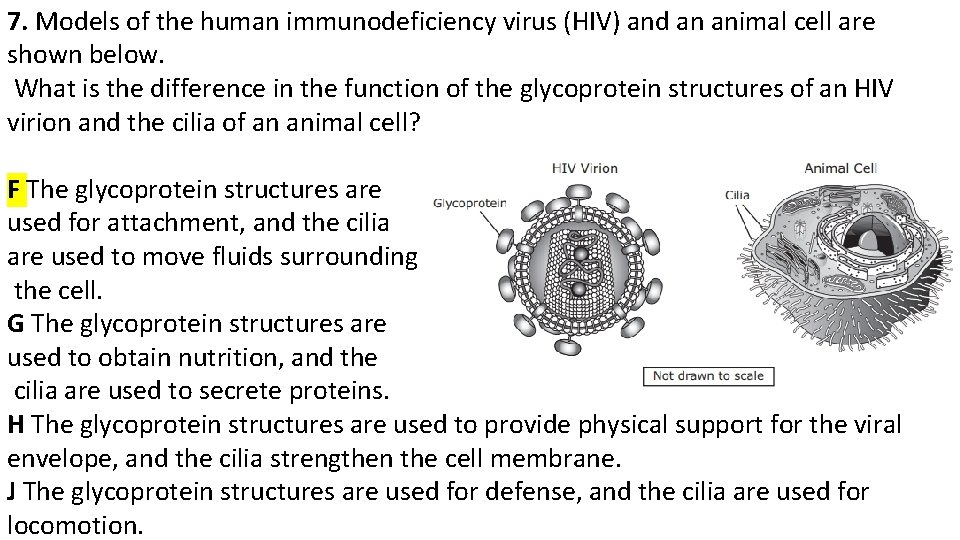
7. Models of the human immunodeficiency virus (HIV) and an animal cell are shown below. What is the difference in the function of the glycoprotein structures of an HIV virion and the cilia of an animal cell? F The glycoprotein structures are used for attachment, and the cilia are used to move fluids surrounding the cell. G The glycoprotein structures are used to obtain nutrition, and the cilia are used to secrete proteins. H The glycoprotein structures are used to provide physical support for the viral envelope, and the cilia strengthen the cell membrane. J The glycoprotein structures are used for defense, and the cilia are used for locomotion.
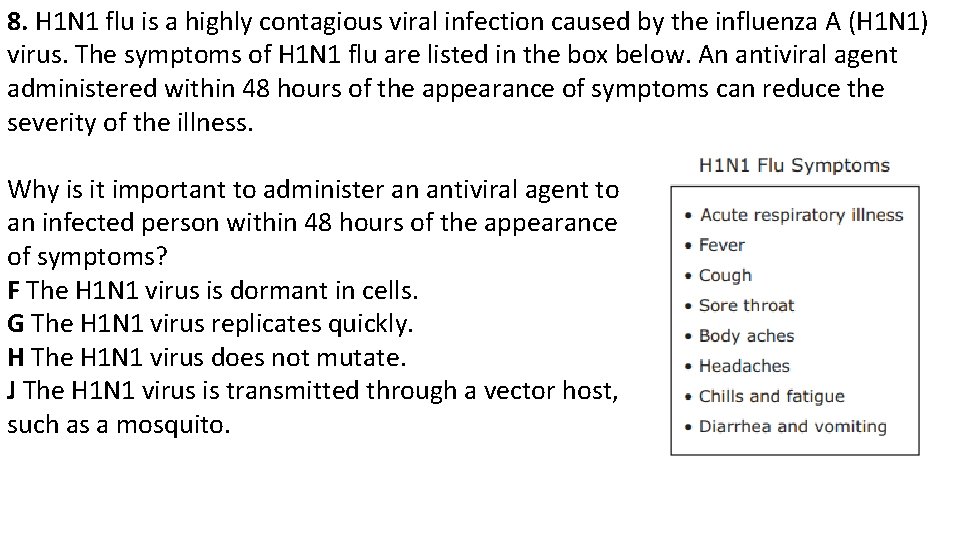
8. H 1 N 1 flu is a highly contagious viral infection caused by the influenza A (H 1 N 1) virus. The symptoms of H 1 N 1 flu are listed in the box below. An antiviral agent administered within 48 hours of the appearance of symptoms can reduce the severity of the illness. Why is it important to administer an antiviral agent to an infected person within 48 hours of the appearance of symptoms? F The H 1 N 1 virus is dormant in cells. G The H 1 N 1 virus replicates quickly. H The H 1 N 1 virus does not mutate. J The H 1 N 1 virus is transmitted through a vector host, such as a mosquito.
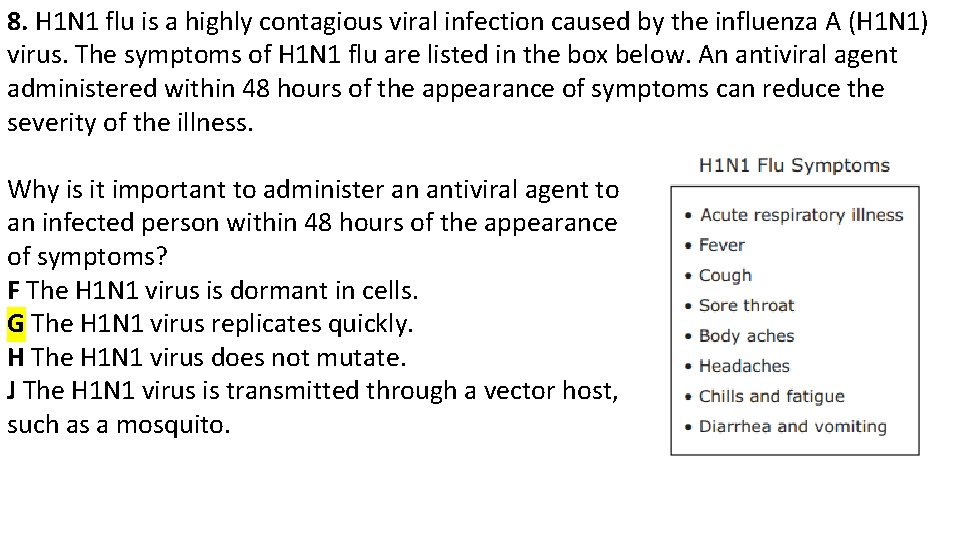
8. H 1 N 1 flu is a highly contagious viral infection caused by the influenza A (H 1 N 1) virus. The symptoms of H 1 N 1 flu are listed in the box below. An antiviral agent administered within 48 hours of the appearance of symptoms can reduce the severity of the illness. Why is it important to administer an antiviral agent to an infected person within 48 hours of the appearance of symptoms? F The H 1 N 1 virus is dormant in cells. G The H 1 N 1 virus replicates quickly. H The H 1 N 1 virus does not mutate. J The H 1 N 1 virus is transmitted through a vector host, such as a mosquito.
9. A person infected with the human immunodeficiency virus (HIV) may not have any symptoms for a period of time. During this period the virus affects the body by doing which of the following? A The virus produces toxins that weaken immune cells and prevent them from reproducing. B The virus damages immune cells while using their machinery to produce copies of itself. C The virus uses nutrients meant for immune cells to fuel its own cellular respiration. D The virus changes the identity of the nucleotides of immune cells to prevent the immune system from functioning normally.
9. A person infected with the human immunodeficiency virus (HIV) may not have any symptoms for a period of time. During this period the virus affects the body by doing which of the following? A The virus produces toxins that weaken immune cells and prevent them from reproducing. B The virus damages immune cells while using their machinery to produce copies of itself. C The virus uses nutrients meant for immune cells to fuel its own cellular respiration. D The virus changes the identity of the nucleotides of immune cells to prevent the immune system from functioning normally.
10. Severe acute respiratory syndrome (SARS) is an illness caused by a coronavirus. Symptoms including a high fever, headaches, and body aches typically occur two to seven days after infection by the virus. SARS is more serious in elderly patients. This information suggests that the reproductive cycle of the SARS virus is — A lysogenic, because the virus is a coronavirus B lytic, because the virus causes respiratory illness C lysogenic, because the virus primarily affects older people D lytic, because of the quick onset of symptoms after infection
10. Severe acute respiratory syndrome (SARS) is an illness caused by a coronavirus. Symptoms including a high fever, headaches, and body aches typically occur two to seven days after infection by the virus. SARS is more serious in elderly patients. This information suggests that the reproductive cycle of the SARS virus is — A lysogenic, because the virus is a coronavirus B lytic, because the virus causes respiratory illness C lysogenic, because the virus primarily affects older people D lytic, because of the quick onset of symptoms after infection
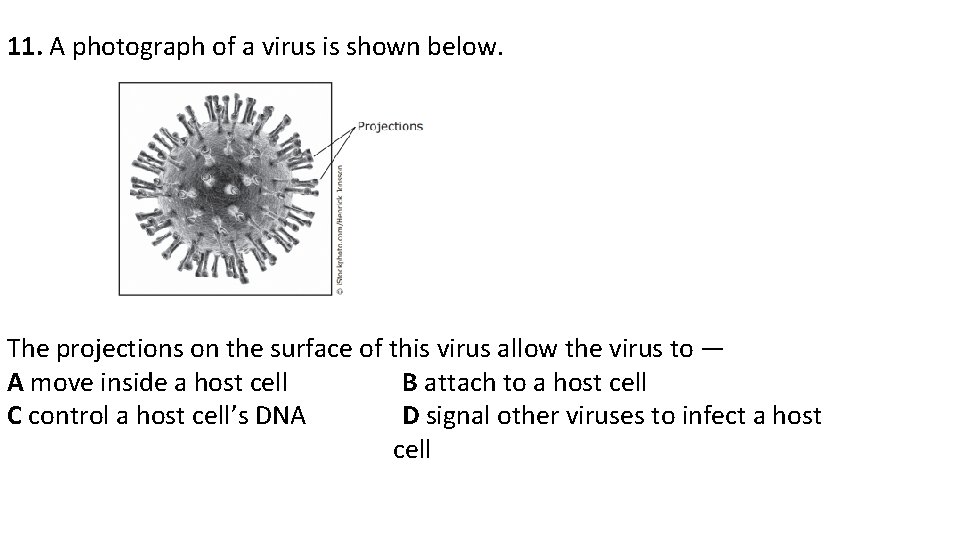
11. A photograph of a virus is shown below. The projections on the surface of this virus allow the virus to — A move inside a host cell B attach to a host cell C control a host cell’s DNA D signal other viruses to infect a host cell
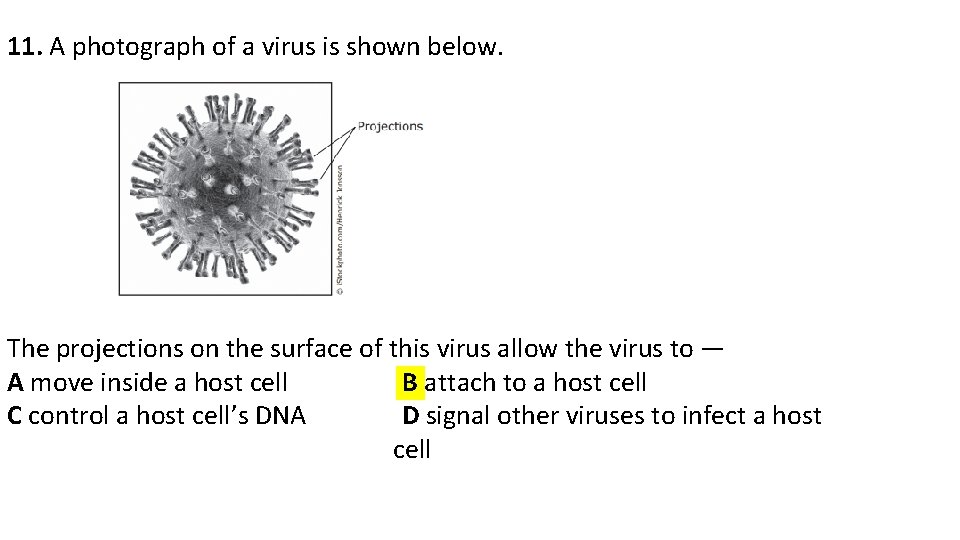
11. A photograph of a virus is shown below. The projections on the surface of this virus allow the virus to — A move inside a host cell B attach to a host cell C control a host cell’s DNA D signal other viruses to infect a host cell
12. Cold sores are caused by the herpes simplex virus type 1. A company that wants to develop antiviral drugs would ask a research immunologist to study - A the mechanism used by the virus to infect cells B how closely related the virus is to cold viruses C the metabolism of the virus D meiosis in the virus
12. Cold sores are caused by the herpes simplex virus type 1. A company that wants to develop antiviral drugs would ask a research immunologist to study - A the mechanism used by the virus to infect cells B how closely related the virus is to cold viruses C the metabolism of the virus D meiosis in the virus
Brain Warmer 20 Which of the following can be found in both viruses and cells? A. genetic material B. mitochondria C. cell membrane D. protein coat
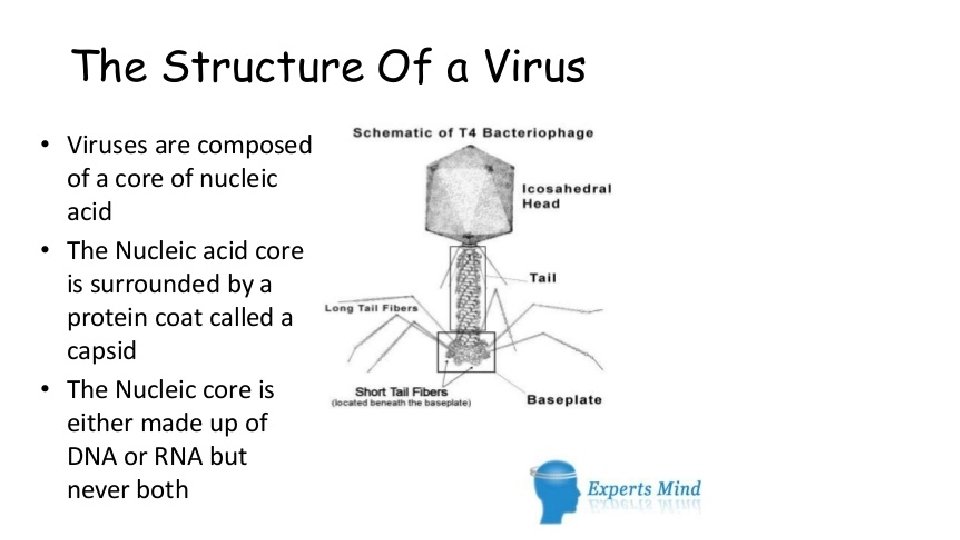
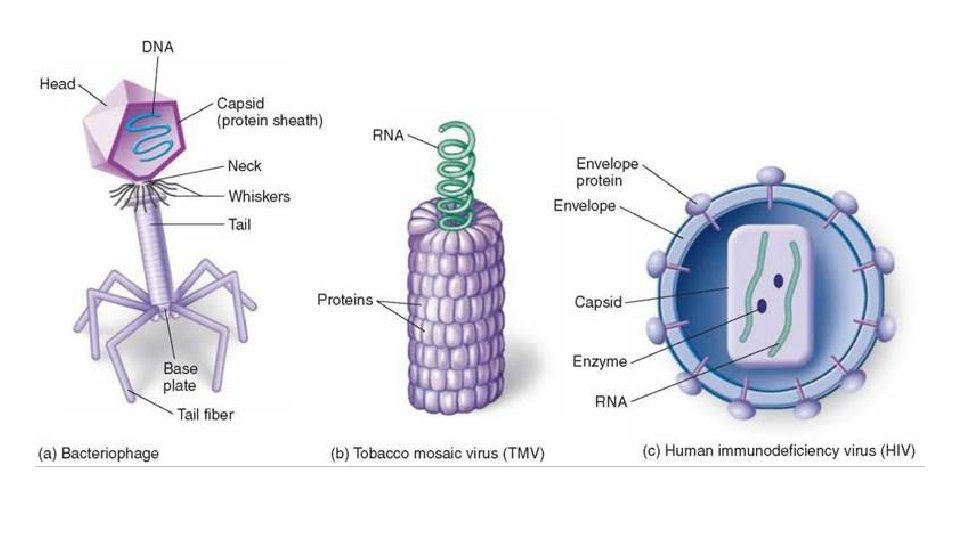
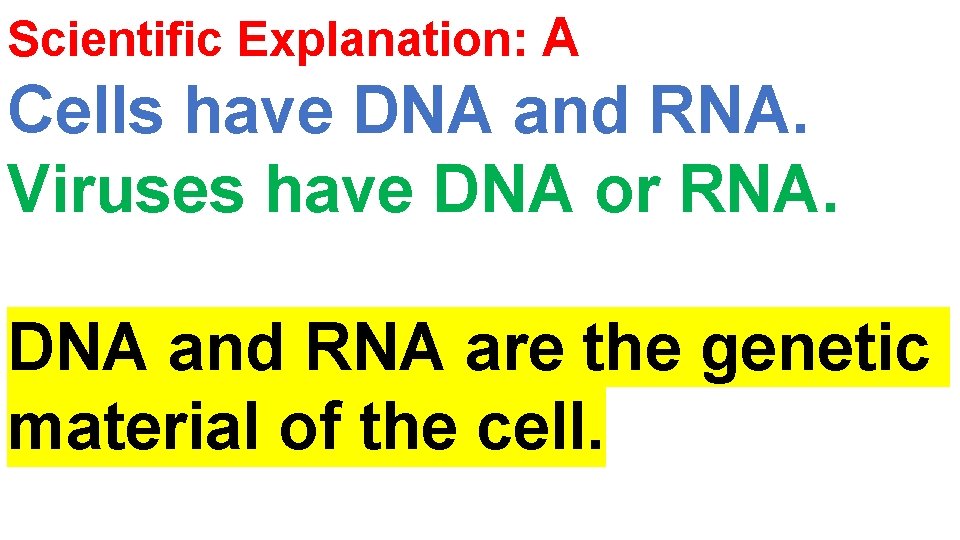
Scientific Explanation: A Cells have DNA and RNA. Viruses have DNA or RNA. DNA and RNA are the genetic material of the cell.
DOL’s 1 and 2 and Review Power Point Case 1 Go to www. mazarelloscience. com Use your password students. Go to the tab Science 7, 2019 -20 Instructions: You must write 7 learning statements from each of the following Review Power Points. 1. week of 8/26/19 - REVIEW POWER POINT - levels of organization in living things 2. week of 9/2/19 - REVIEW POWER POINT - cells and cell theory 3. week of 9/9/19 - REVIEW POWER POINT - plant and animal cells - cell organelles 4. week of 9/16/19 REVIEW POWER POINT- cell organelles, cell analogy Remember: A “learning statement” is a knowledge based statement. It is sentence about a slide in the power point. It must explain what you have learned from the slide.
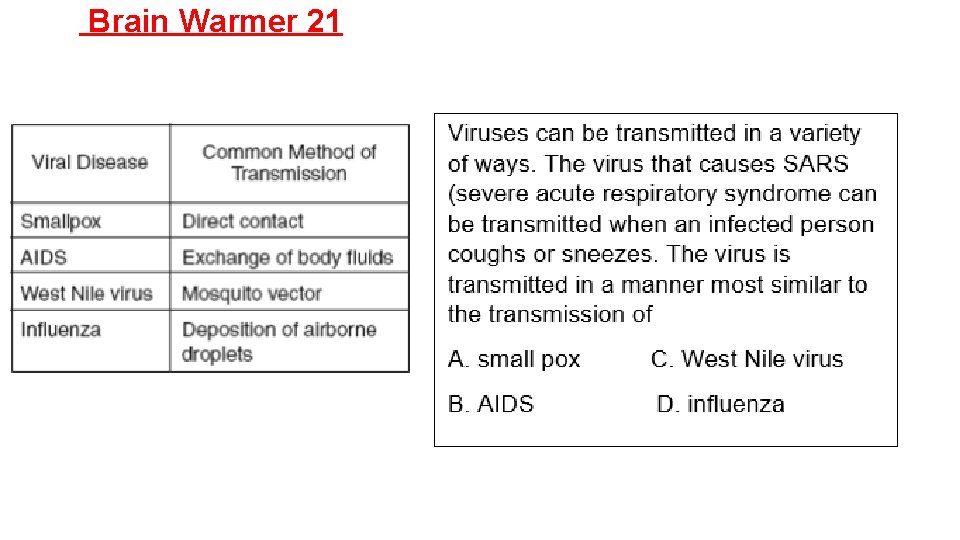
Brain Warmer 21
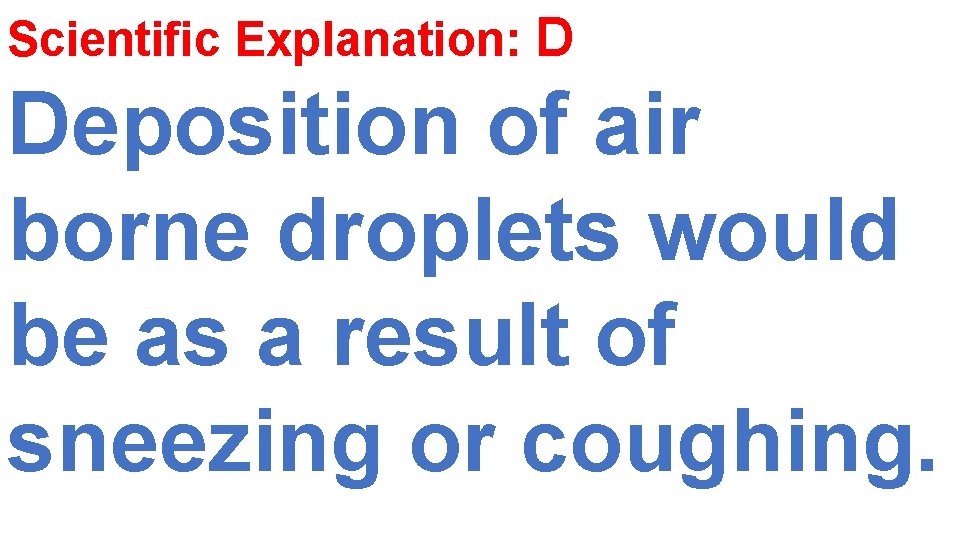
Scientific Explanation: D Deposition of air borne droplets would be as a result of sneezing or coughing.
Brain Warmer 22 People infected with the human immunodeficiency virus (HIV) have an increased risk of dying from secondary infections. Which of these best explains how HIV increases the danger of secondary infections? A. HIV produces antigens that damage red blood cells. B. HIV adds genetic material from harmful microbes. C. HIV destroys helper T cells. D. HIV consumes beneficial microbes in the body.
Scientific Explanation: C When another virus (Ex. Flu virus) enters the human body, infection is easily spread because the helper T cells have already been destroyed by the HIV virus.
. Brain Warmer 23 Some bacteria can make you sick, while other bacteria helps you. There are many strains of E. coli, for instance. Some of these strains make humans sick. Other strains live harmlessly inside your large intestines. Because both bacteria and viruses can be pathogenic, or cause disease, people often confuse them. But they are not the same thing. A virus is genetic material coated in protein. Since viruses lack cells, scientists debate whether viruses should be considered living or not. There is no debate about bacteria though. They are alive. Fortunately, doctors and scientists have developed medicines called antibiotics that can help kill some types of harmful bacteria. These medicines do not protect us from viruses and should not be taken without a prescription from a doctor. Some fungi can also cause infections. But bacteria and fungi are not the same either. 130
. How are viruses and bacteria similar? A They are both types of fungi. B They are both living things with cells. C They are both treated with antibiotics. D They can both cause sickness in humans. 131
Scientific Explanation: D 132
- Slides: 132