
Brain Warmer 1 create a 5 sentence story

Brain Warmer 1– create a 5 sentence story. Give a title.
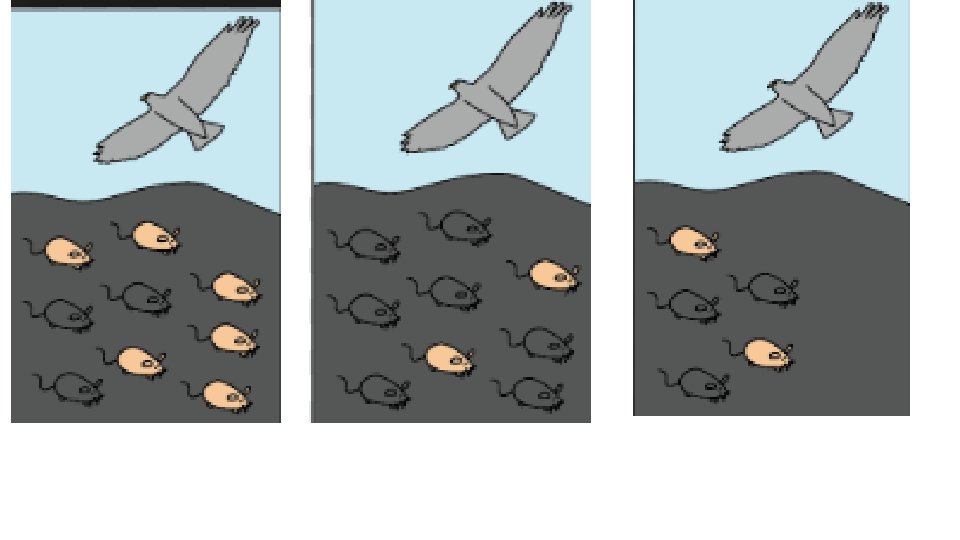

Brain Warmer 2– Create a 5 sentence story. Give a title.
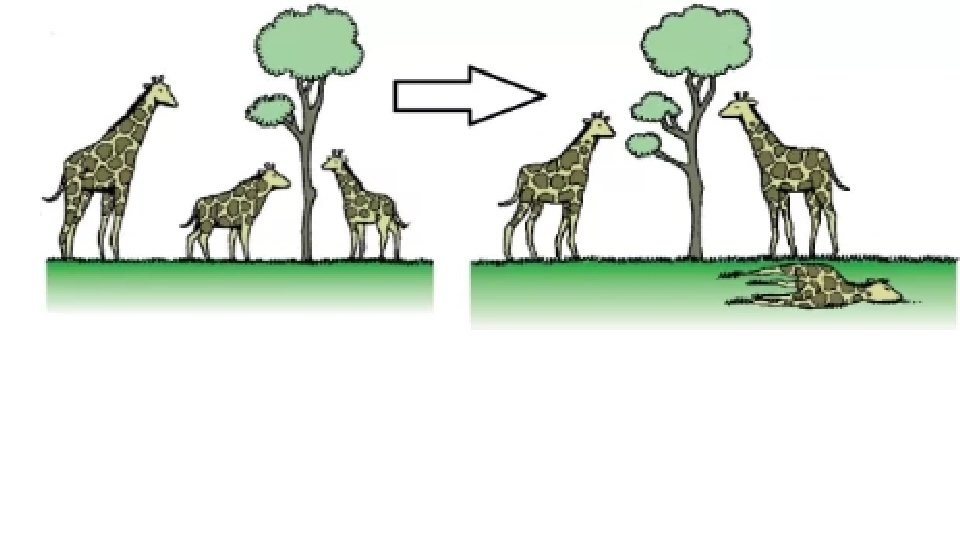
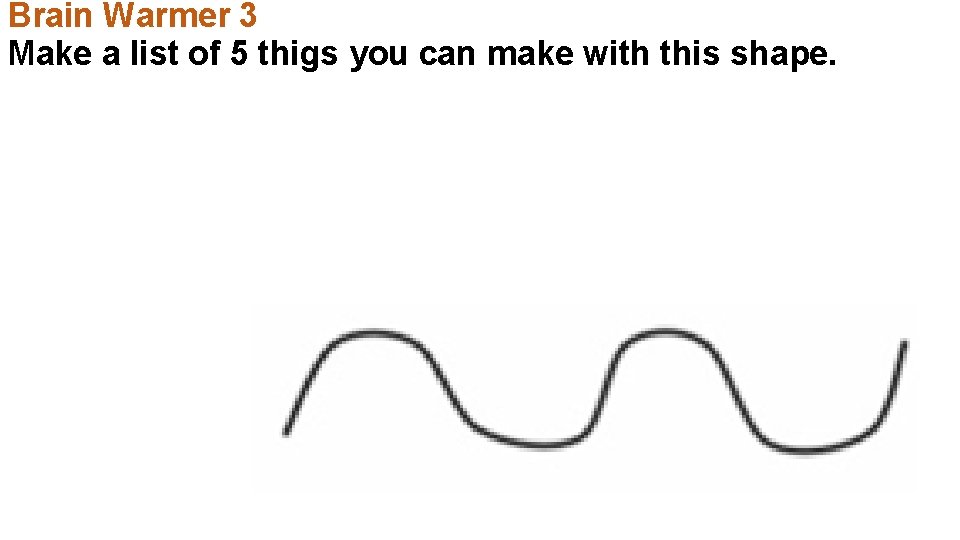
Brain Warmer 3 Make a list of 5 thigs you can make with this shape.
Brain Warmer 4 - Read & Respond. Select the correct answer, and give a scientific explanation for your answer. When we say active listening is a “two-way street, ” we mean that both people are contributing and receiving something. You don’t listen just to make the speaker feel good. You learn from what they say, too. No two people think in the exact same way. Your classroom, like the world around you, is full of rich and diverse perspectives. By actively listening, you can work toward understanding those different perspectives and challenge and stretch your own ideas. Through reflecting on what you hear, paraphrasing and asking follow-up questions you can learn and grow. How can active listening help you? A It allows you to receive something without giving anything. B It allows you to stretch your ideas and perspectives. C It allows you to believe the exact same things as someone else. D It allows others to believe the exact same things as you.
Brain Warmer 4 - Read & Respond. The answer is A. According to the passage, “Through reflecting on what you hear, paraphrasing and asking follow-up questions you can learn and grow. ” The skills of active listening can help you stretch your ideas and perspectives.
Binder Sections 1. Bell Ringer 2. Notes 3. Vocabulary 4. Labs 5. Data, Assesments / Resources
Instructions for Lab Report Names of team members = Lab Report 1. Problem 2. Hypothesis 3. Procedure 4. Data (drawing/ table) 5. Conclusion
Team roles Leader Materials Manager Timer Scribe Presenter
Brain Warmer 5 - Read & Respond Select the correct answer, and give a scientific explanation for your answer. There are two basic mindsets: a fixed mindset and a growth mindset. People with fixed mindsets believe their intelligence and skills are already set. Nothing they can do will change them. People with fixed mindsets tend to focus on outcomes and results, on looking smart compared to others. For example, if a girl with a fixed mindset does poorly on a math test, she might think she just isn't good at math and that no amount of studying can change that. Instead of listening to the teacher explain what she did wrong, she might find somebody with a worse grade to make herself look better in comparison. And next time there's a math test, she might make the same mistakes again. A person with a growth mindset believes intelligence and talent can be developed through hard work and good strategies. People with growth mindsets focus on the process of learning, growing and getting better. If a girl with a growth mindset does badly on a math test, she sees it as an opportunity to learn. She listens to the teacher's suggestions and learns from her mistakes. The next time there's a math test, she studies hard, and her grade improves.
Brain Warmer 5 - Read & Respond Select the correct answer, and give a scientific explanation for your answer. Stella gets a bad grade on a paper and wants to do better next time. She should A. ignore her teacher's comments, and write her next paper the same way. B. tell herself that she's bad at writing, and give up on the idea of improving. C. stand next to Fionn, whose paper was even worse than hers, so she feels better. D. read her teacher's suggestions, and use these new methods when writing her next paper
Brain Warmer 5 - Read & Respond. Answer is D Stella must listen to the teacher's suggestions and learn from her mistakes. She can apply what she learns to her next paper.
Instructions for Lab Report Names of team members = Lab Report 1. Problem 2. Hypothesis 3. Procedure 4. Data (drawing/ table) 5. Conclusion
Team roles Leader Materials Manager Timer Scribe Presenter
Brain Warmer 6 Read and Respond Which is the independent and dependent variable in the Lab done below? Explain. Don't you hate it when the bread goes moldy before you get to it? What sort of bread will last the longest without starting a penicillin factory? Should I store it on the counter, in the cupboard, or in the fridge? To test this, I bought six different loaves of bread, everything from seven-grain to Wonderbread (TM). Even though it was a pain, I made sure they all had the same "best before" date. I split each loaf into thirds, and stored a third of each in a sealed plastic bag on the counter in a closed cupboard in the fridge
Which is the independent and dependent variable in the Lab done below? Explain. Don't you hate it when the bread goes moldy before you get to it? What sort of bread will last the longest without starting a penicillin factory? Should I store it on the counter, in the cupboard, or in the fridge? To test this, I bought six different loaves of bread, everything from seven-grain to Wonderbread (TM). Even though it was a pain, I made sure they all had the same "best before" date. I split each loaf into thirds, and stored a third of each in a sealed plastic bag on the counter in a closed cupboard in the fridge
(Remember the independent variable is changed by the experimenter to find out what happens. The dependent variable is always a result or outcome of part of the experiment. It's always something the experimenter has to test, measure or observe. ) Independent variable: _________________________ Dependent variable: _________________________ (Answer bank - bread and storage location, number of days to go moldy)
(Remember the independent variable is changed by the experimenter to find out what happens. The dependent variable is always a result or outcome of part of the experiment. It's always something the experimenter has to test, measure or observe. ) Independent variable is bread and storage location. It would be useful to know not just what type of bread lasts longest but also whether storage makes a difference. Dependent variable is number of days for bread to go moldy. Your dependent variable is something you measure or observe.
Independent variable is bread and storage location. It would be useful to know not just what type of bread lasts longest but also whether storage makes a difference. Dependent variable is number of days for bread to go moldy. Your dependent variable is something you measure or observe (result/outcome).
1. Problem. State the problem as a question. 2. Hypothesis. Make a prediction about what will happen. 3. Procedure. 1. 2. 3.
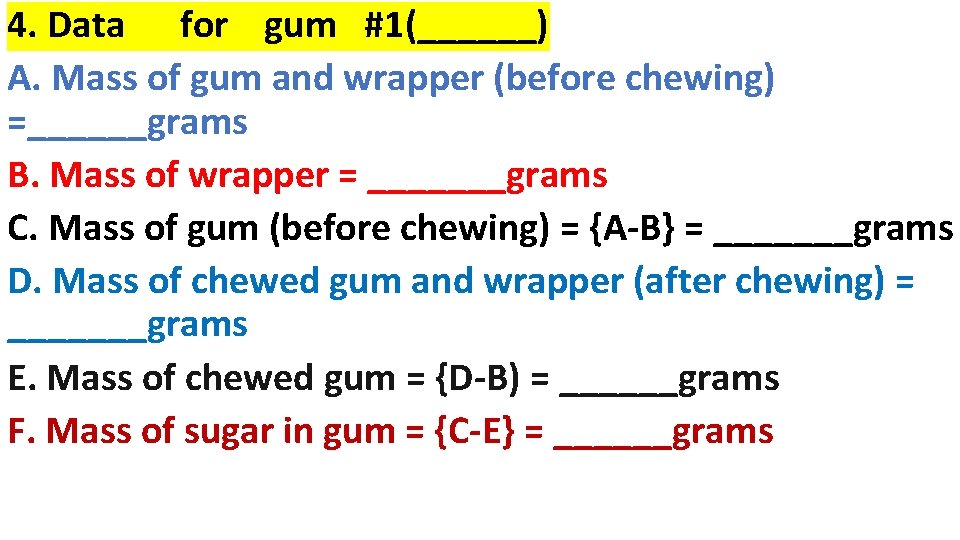
4. Data for gum #1(______) A. Mass of gum and wrapper (before chewing) =______grams B. Mass of wrapper = _______grams C. Mass of gum (before chewing) = {A-B} = _______grams D. Mass of chewed gum and wrapper (after chewing) = _______grams E. Mass of chewed gum = {D-B) = ______grams F. Mass of sugar in gum = {C-E} = ______grams
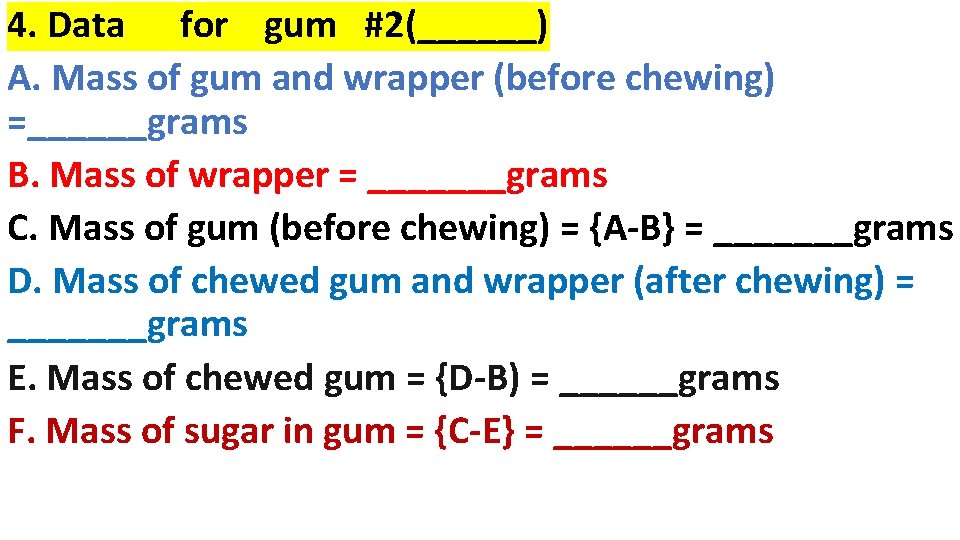
4. Data for gum #2(______) A. Mass of gum and wrapper (before chewing) =______grams B. Mass of wrapper = _______grams C. Mass of gum (before chewing) = {A-B} = _______grams D. Mass of chewed gum and wrapper (after chewing) = _______grams E. Mass of chewed gum = {D-B) = ______grams F. Mass of sugar in gum = {C-E} = ______grams
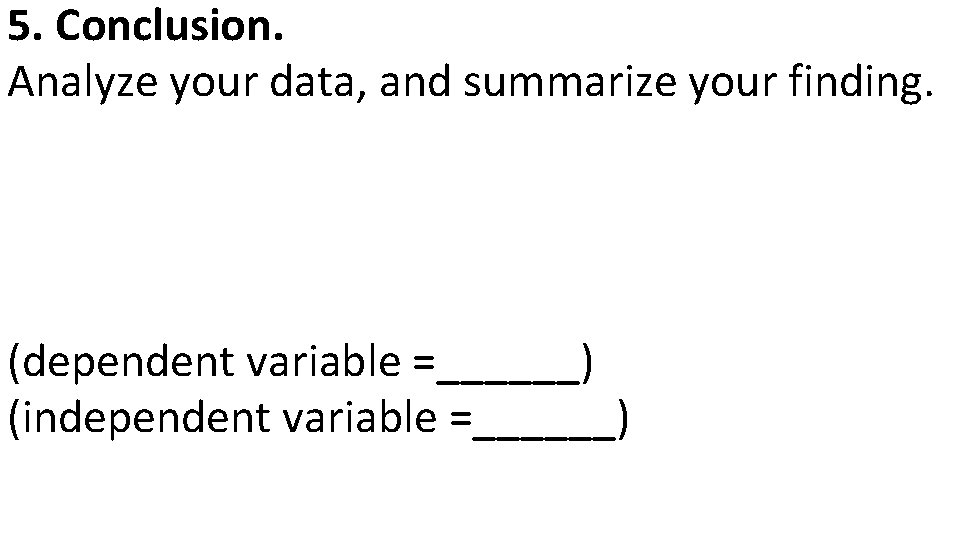
5. Conclusion. Analyze your data, and summarize your finding. (dependent variable =______) (independent variable =______)
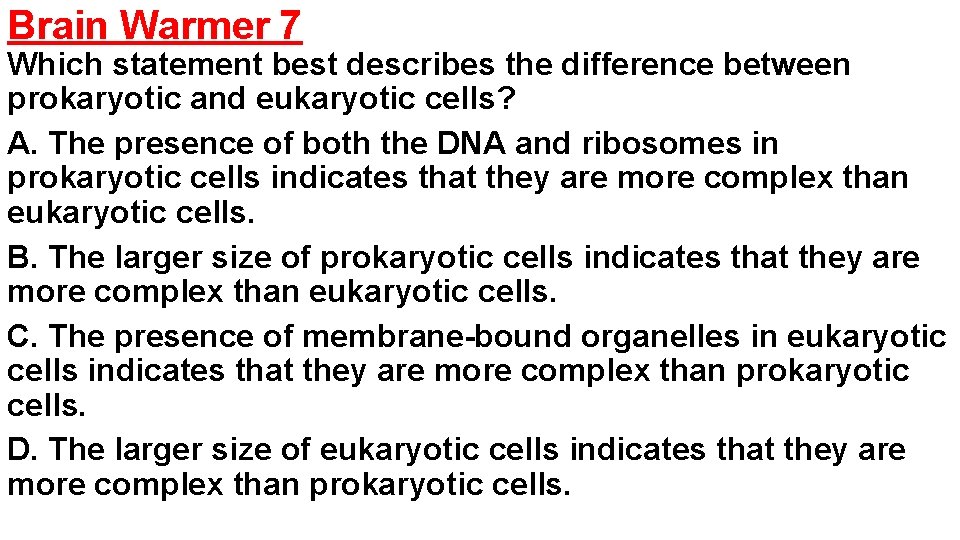
Brain Warmer 7 Which statement best describes the difference between prokaryotic and eukaryotic cells? A. The presence of both the DNA and ribosomes in prokaryotic cells indicates that they are more complex than eukaryotic cells. B. The larger size of prokaryotic cells indicates that they are more complex than eukaryotic cells. C. The presence of membrane-bound organelles in eukaryotic cells indicates that they are more complex than prokaryotic cells. D. The larger size of eukaryotic cells indicates that they are more complex than prokaryotic cells.
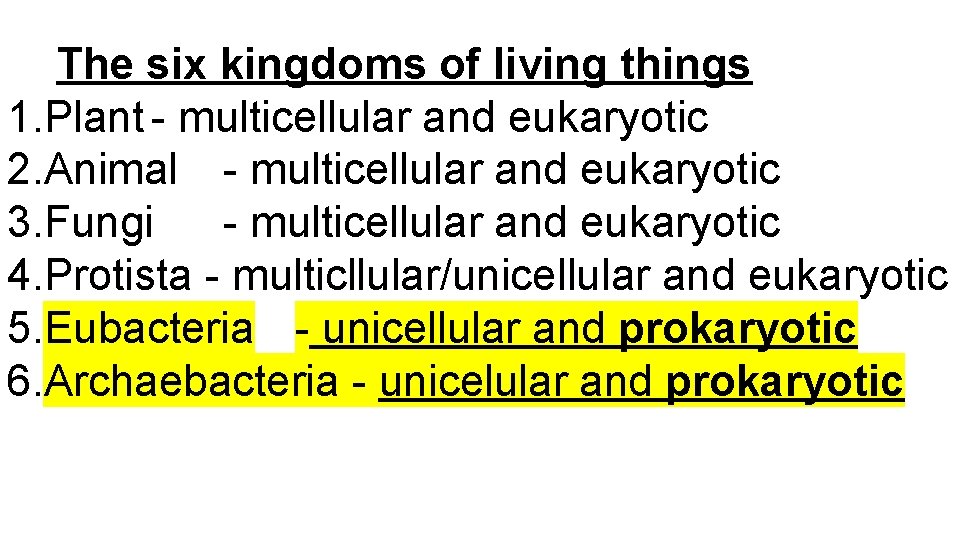
The six kingdoms of living things 1. Plant - multicellular and eukaryotic 2. Animal - multicellular and eukaryotic 3. Fungi - multicellular and eukaryotic 4. Protista - multicllular/unicellular and eukaryotic 5. Eubacteria - unicellular and prokaryotic 6. Archaebacteria - unicelular and prokaryotic
The correct answer is C. Scientific Explanation: _______________________

Lab Report
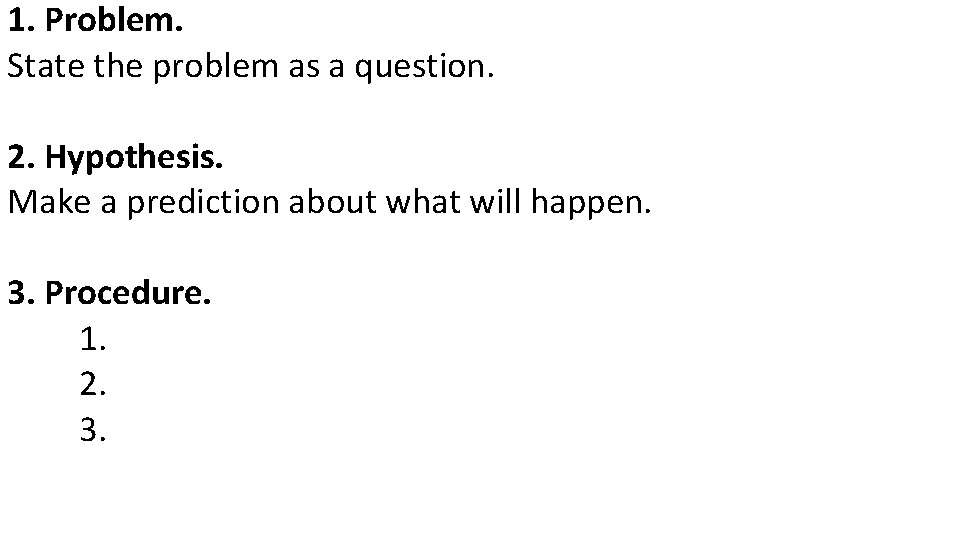
1. Problem. State the problem as a question. 2. Hypothesis. Make a prediction about what will happen. 3. Procedure. 1. 2. 3.
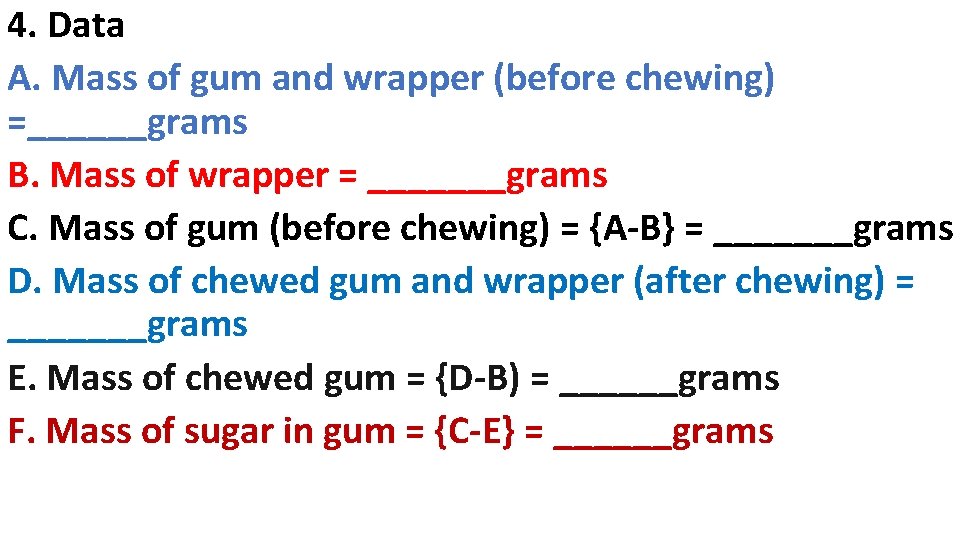
4. Data A. Mass of gum and wrapper (before chewing) =______grams B. Mass of wrapper = _______grams C. Mass of gum (before chewing) = {A-B} = _______grams D. Mass of chewed gum and wrapper (after chewing) = _______grams E. Mass of chewed gum = {D-B) = ______grams F. Mass of sugar in gum = {C-E} = ______grams
5. Conclusion. Analyze your data, and summarize your finding.
Step 3 Identify the independent variable, experimental and control groups in the following studies.
1. A group of college students were given a short course in speed-reading. The instructor was curious if a monetary incentive would influence performance on a reading test taken at the end of the course. Half the students were offered $5 for obtaining a certain level of performance on the test, the other half were not offered money. Independent variable: Dependent variable: Control group:
1. Independent variable: Monetary incentive ($5 or no money) Dependent variable: Performance on reading test Control group: $0 group (no monetary incentive)
2. A social psychologist thinks that people are more likely to conform to a large crowd than to a single person. To test this hypothesis, the social psychologist had either one person or five persons stand on a busy walking path on campus and look up. The psychologist stood nearby and counted the number of people passing by who also looked up. Independent variable: Dependent variable: Control group:
2. Independent variable: Size of group (5 people or 1 person) Dependent variable: Conformity (measured by number of people looking up) Control group: People passingle person. (This group gets “less” of the independent variable)
3. My two roommates and I have all got The Flu Virus. We've also got midterms this week so we need some symptomatic relief quick. We picked up three different flu medications. Which one works faster? Before anybody took anything, we jotted down some notes: our temperatures and how we'd each rate our other symptoms (headache, stuffiness, cough, body ache) on a scale from 1 to 5. We each took a different medication according to the package directions, then we kept track of our temps and symptoms hourly throughout the day. We ate the same stuff and drank the same copious fluids. No one was allowed to nap or take any other remedies all day. Independent variable: Dependent variable: Control group:
3. Independent variable: 3 different flu Medication We each took a different medication to compare their effectiveness. Dependent variable: All symptoms We kept track of all the symptoms, not just our feverish temperatures. Control group: Now to keep the test fair, we'll all have to eat, sleep and drink the same way.
DOL (Give a scientific explanation for your answer. ) Which of the following characteristics is unique to eukaryotic cells? A. Contain DNA arranged into chromosomes B. Filled with semi-transparent cytoplasm C. Contain ribosomes for protein synthesis D. Surrounded by a cell membrane
Brain Warmer 8 Living Organisms can be classified as prokaryotes or eukaryotes. Which two structures are common to both prokaryotic and eukaryotic cells? A. Cell wall and nucleus B. Plasma membrane and nucleus C. Cell wall and chloroplast D. Plasma membrane and cytoplasm
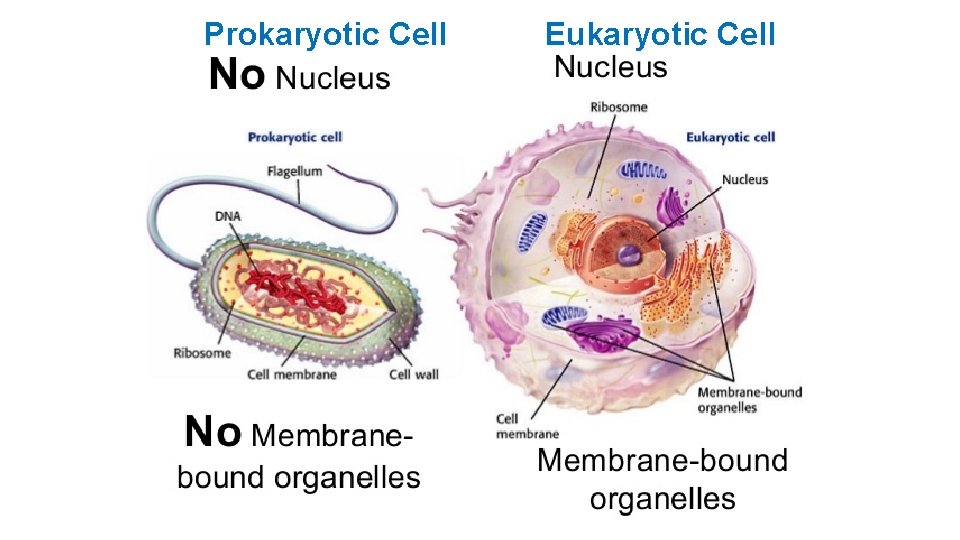
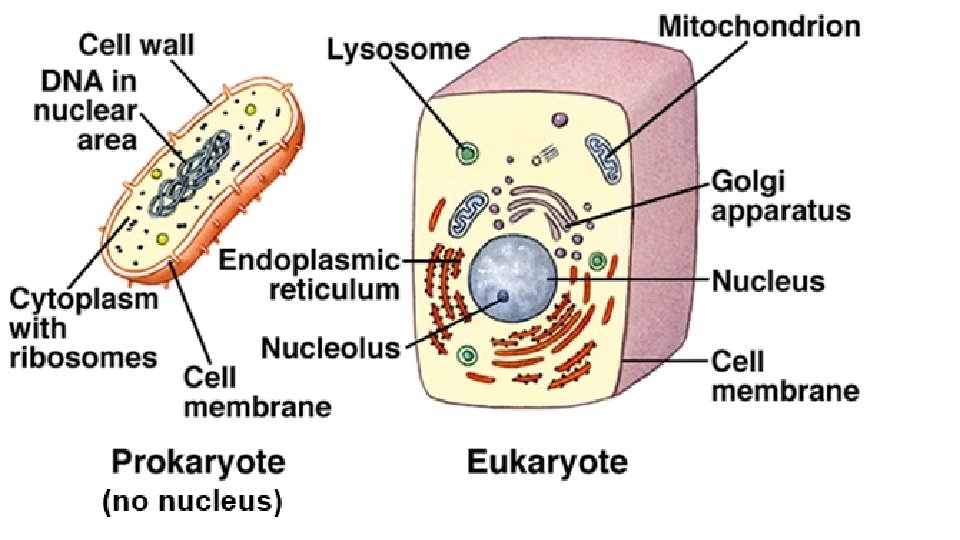
Prokaryotic Cell Eukaryotic Cell

Step 2 Vocabulary Lesson – step by step instructions from Teacher
Vocabulary words – Prokaryotic Cell and Eukaryotic Cell
(7 minutes) 1. Write a paragraph explaining what it means to feel like a “prokaryotic cell”. (You must write 5 sentences) Sentence Stem: I feel like______ because________
(4 minutes) 2. _____ is a prokaryotic because__________. Draw a picture to explain your example of prokaryotic cell.
(7 minutes) 3. Write a paragraph explaining what it means to feel like a “eukaryotic cell”. (You must write 5 sentences) Sentence Stem: I feel like______ because________
(4 minutes) 4. _____ is a eukaryotic cell because__________. Draw a picture to explain your example of eukaryotic cell.
(4 minutes) 5. List 4 characteristics of a prokaryotic cell.
(4 minutes) 6. List 4 characteristics of a eukaryotic cell.
Brain Warmer 9 Living Organisms can be classified as prokaryotes or eukaryotes. Which two structures are common to both prokaryotic and eukaryotic cells? A. Cell wall and nucleus B. Plasma membrane and nucleus C. Cell wall and chloroplast D. Plasma membrane and cytoplasm
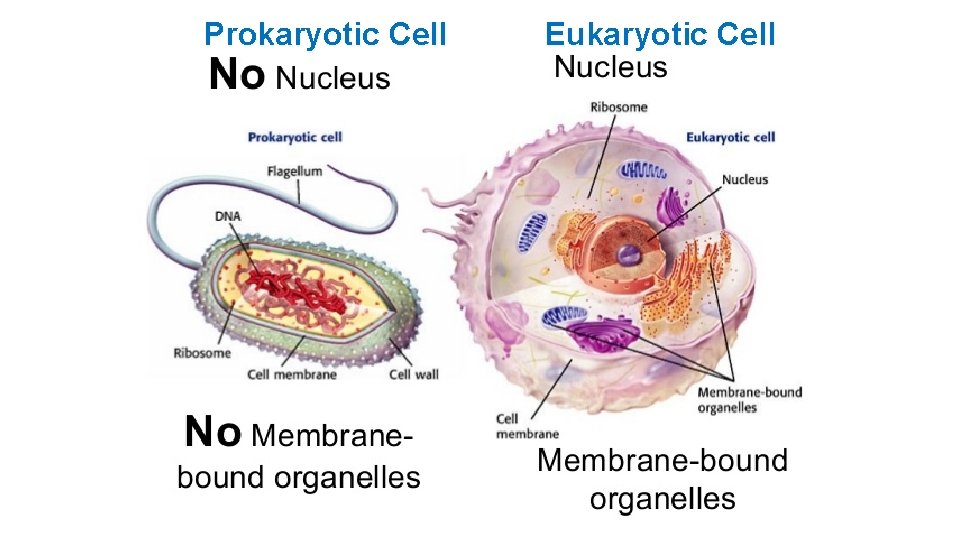
Prokaryotic Cell Eukaryotic Cell
Review Tri Chart – prokaryotic cell, eukaryotic cell, and virus 3 levels of learning
Brain Warmer 10 Prokaryotic cells are generally much smaller than eukaryotic cells. Part A Identify a structural difference between prokaryotic and eukaryotic cells that is directly related to their difference in size.
Prokaryotic cells contain less genetic material and lack nuclei.
Part B Based on the structural difference, explain why prokaryotic cells can be much smaller than eukaryotic cells.
Prokaryotic cells are smaller and less complex than eukaryotic cells. Therefore, they require less genetic material. This genetic material is packaged into a plasmid. Eukaryotic cells require more genetic material, which they store in multiple chromosomes. These chromosomes are stored in the nucleus.
Part C Describe one similarity between prokaryotic cells and eukaryotic cells that is independent of size.
Prokaryotes and eukaryotes both contain ribosomes, cell walls, and cell membranes. None of these are a function of size.
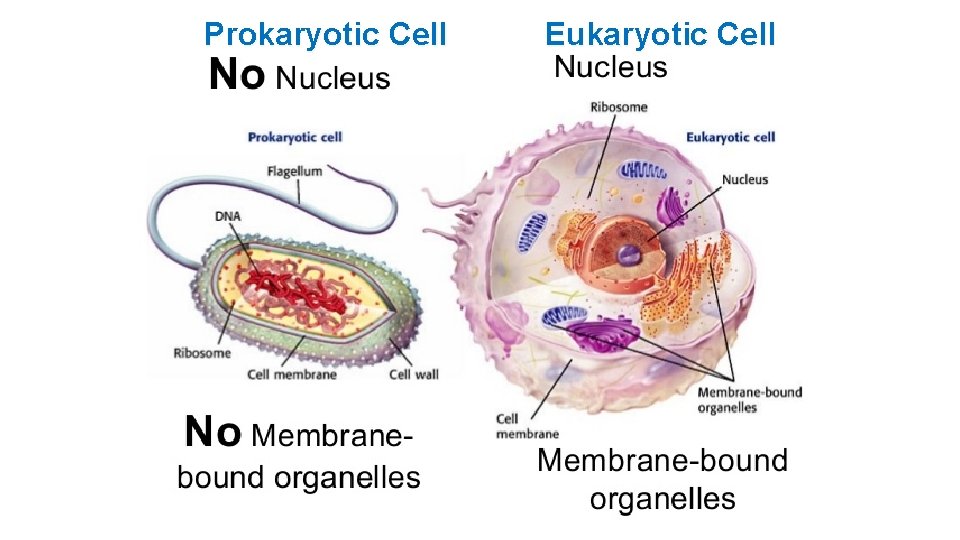
Prokaryotic Cell Eukaryotic Cell

Brightstorm Videos Prokaryotic Cells
1. Prokaryotic cells are one of the most basic kinds of cells. They are the cells of _____.
1. Prokaryotic cells are one of the most basic kinds of cells. They are the cells of bacteria.
2. Now their name tells you one of their most important things; pro means ______kary means ______, so this tells you that this is what cells that evolved before the _____ came about look like, so they do not possess internal ______ inside their cells that have double _______ around them.
2. Now their name tells you one of their most important things; pro means before kary means nucleus, so this tells you that this is what cells that evolved before the nucleus came about look like, so they do not possess internal organelles inside their cells that have double membranes around them.
3. Eukaryotic cells do not have a _____. The DNA is found floating in the _______.
3. Eukaryotic cells do not have a nucleus. The DNA is found floating in the cytoplasm.
4. They have their own special kind of ______ that are different from the Eukaryotic ribosomes that your cells have or plant cells or fungi.
4. They have their own special kind of ribosomes that are different from the Eukaryotic ribosomes that your cells have or plant cells or fungi.
5. They will have a _______ but that is often wrapped in an external wall sometimes called a ______ or a cell wall.
5. They will have a cell membrane but that is often wrapped in an external wall sometimes called a capsule or a cell wall.
6. You'll see the ribosomes those are the small little things ______ around and then they may have a few other small organelles like some small little _______ or vesicles but that's pretty much it, the one thing that is a little bit different on the outside is they have ____ much like our cells do but our cells do this kind of motion called _____.
6. You'll see the ribosomes those are the small little things floating around and then they may have a few other small organelles like some small little vacuoles or vesicles but that's pretty much it, the one thing that is a little bit different on the outside is they have flagella much like our cells do but our cells do this kind of motion called undulation.

Brightstorm Videos Eukaryotic Cells
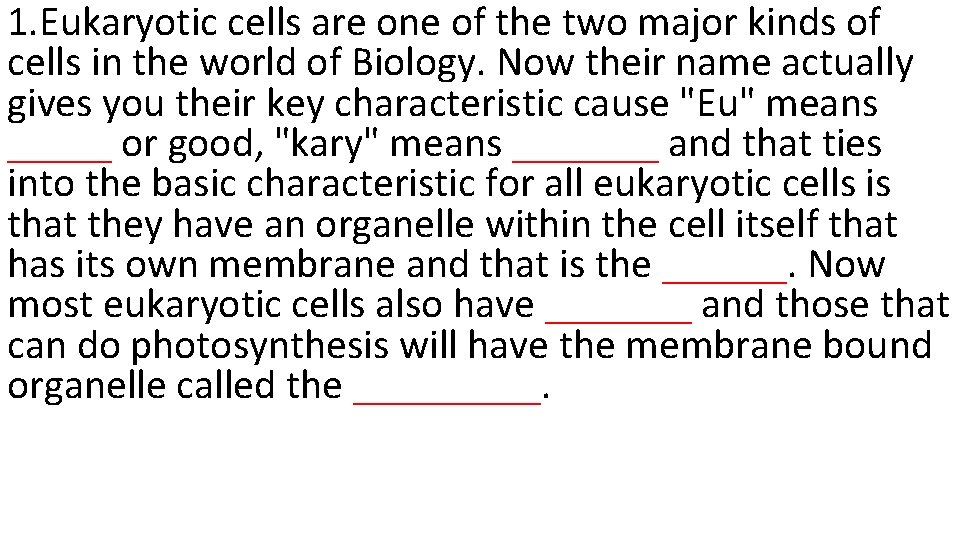
1. Eukaryotic cells are one of the two major kinds of cells in the world of Biology. Now their name actually gives you their key characteristic cause "Eu" means _____ or good, "kary" means _______ and that ties into the basic characteristic for all eukaryotic cells is that they have an organelle within the cell itself that has its own membrane and that is the ______. Now most eukaryotic cells also have _______ and those that can do photosynthesis will have the membrane bound organelle called the _____.
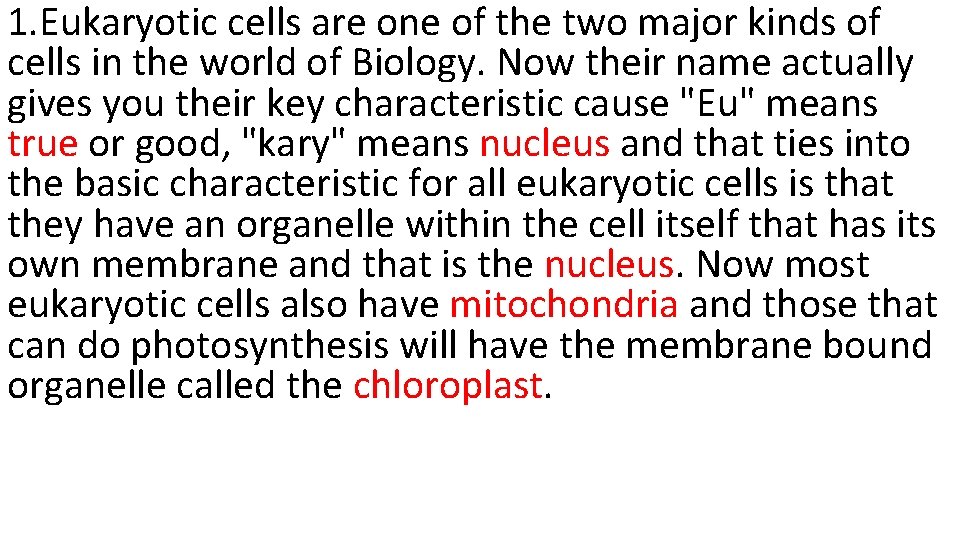
1. Eukaryotic cells are one of the two major kinds of cells in the world of Biology. Now their name actually gives you their key characteristic cause "Eu" means true or good, "kary" means nucleus and that ties into the basic characteristic for all eukaryotic cells is that they have an organelle within the cell itself that has its own membrane and that is the nucleus. Now most eukaryotic cells also have mitochondria and those that can do photosynthesis will have the membrane bound organelle called the chloroplast.
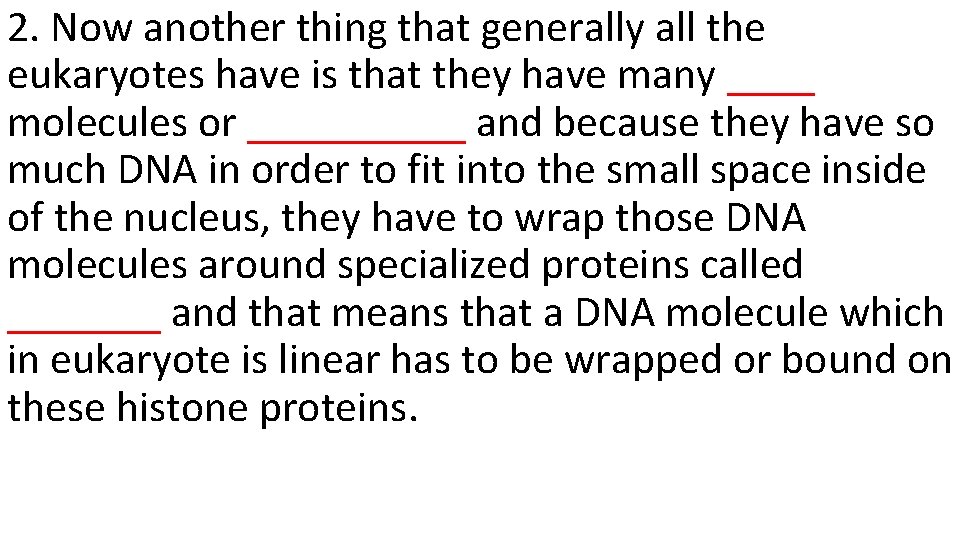
2. Now another thing that generally all the eukaryotes have is that they have many ____ molecules or _____ and because they have so much DNA in order to fit into the small space inside of the nucleus, they have to wrap those DNA molecules around specialized proteins called _______ and that means that a DNA molecule which in eukaryote is linear has to be wrapped or bound on these histone proteins.
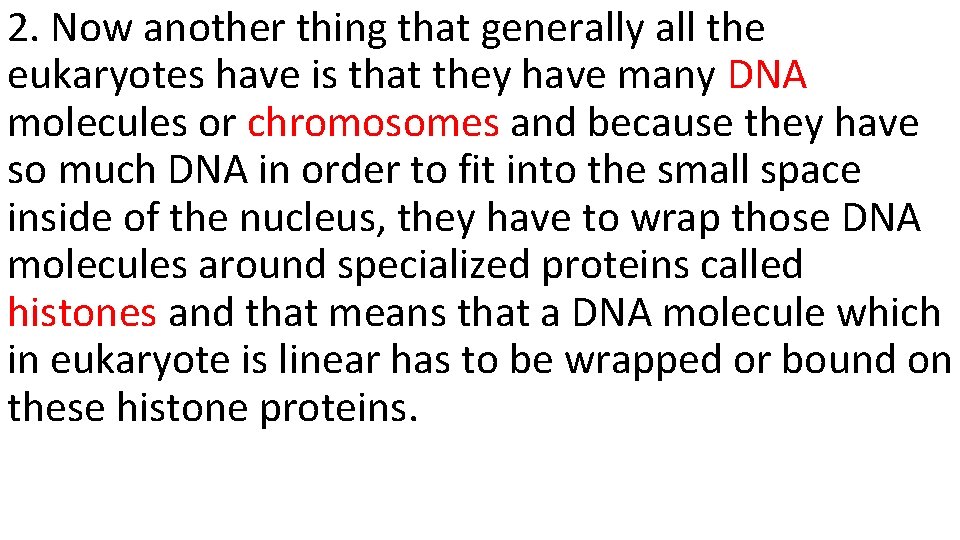
2. Now another thing that generally all the eukaryotes have is that they have many DNA molecules or chromosomes and because they have so much DNA in order to fit into the small space inside of the nucleus, they have to wrap those DNA molecules around specialized proteins called histones and that means that a DNA molecule which in eukaryote is linear has to be wrapped or bound on these histone proteins.
3. Now the two most common kinds of eukaryotic cells are the ______ cells and the ______ cells.
3. Now the two most common kinds of eukaryotic cells are the animal cells and the plant cells.
4. They have the membrane around it with the _______ that has you can see its own membrane wrapped around it. The other key eukaryotic organelle here is the ____, now animal cells differ from plant cells in that they also have these things here, these two barrel shaped things that are 90 degrees to each other, those are called _____.
4. They have the membrane around it with the nucleus that has you can see its own membrane wrapped around it. The other key eukaryotic organelle here is the mitochondria, now animal cells differ from plant cells in that they also have these things here, these two barrel shaped things that are 90 degrees to each other, those are called centrioles.
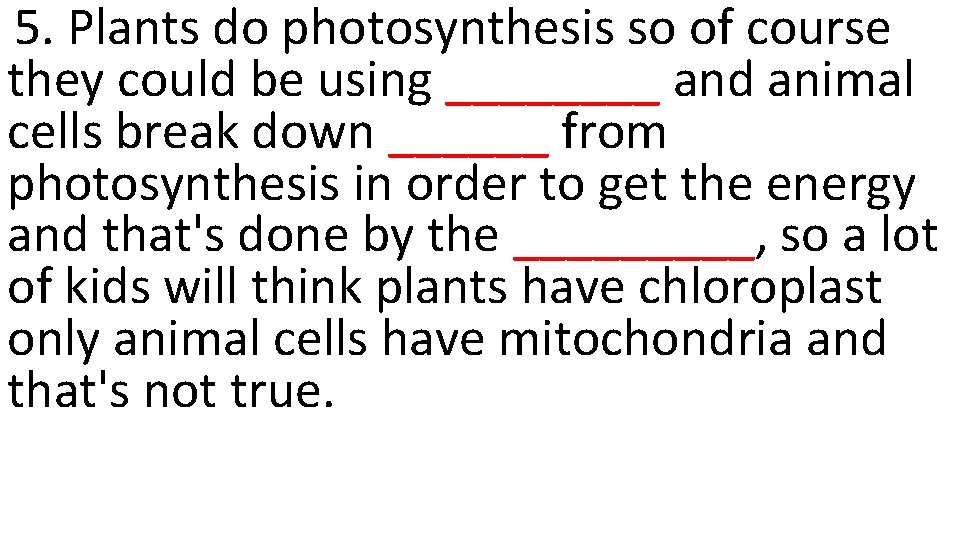
5. Plants do photosynthesis so of course they could be using ____ and animal cells break down ______ from photosynthesis in order to get the energy and that's done by the _____, so a lot of kids will think plants have chloroplast only animal cells have mitochondria and that's not true.
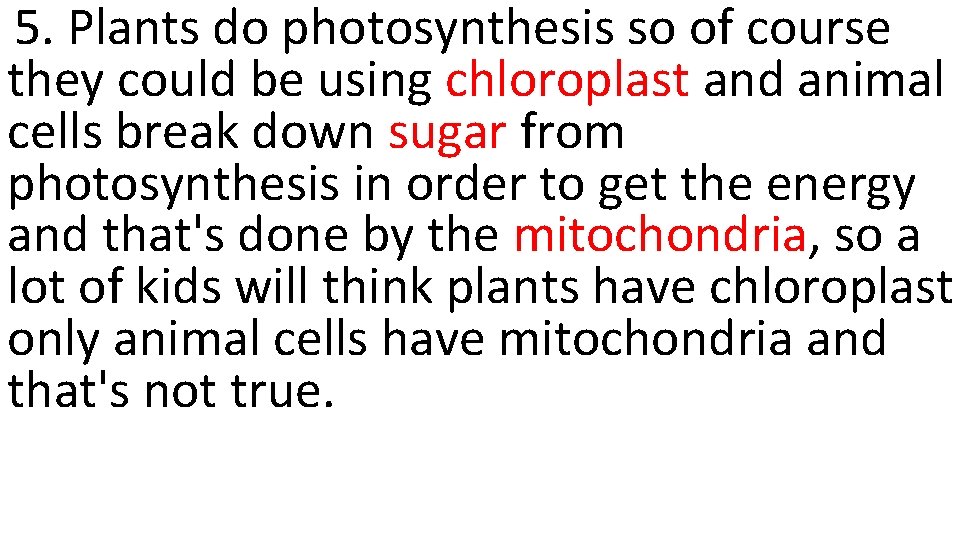
5. Plants do photosynthesis so of course they could be using chloroplast and animal cells break down sugar from photosynthesis in order to get the energy and that's done by the mitochondria, so a lot of kids will think plants have chloroplast only animal cells have mitochondria and that's not true.
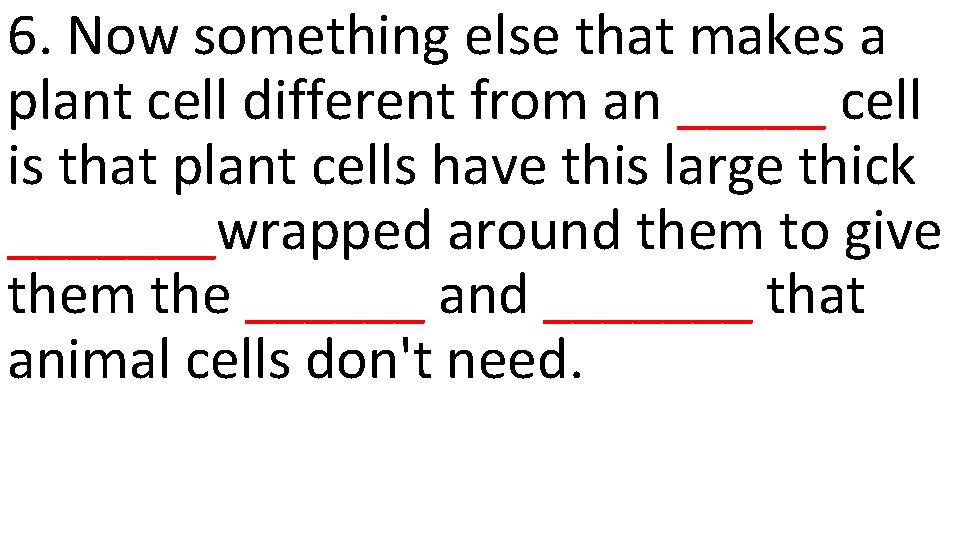
6. Now something else that makes a plant cell different from an _____ cell is that plant cells have this large thick _______wrapped around them to give them the ______ and _______ that animal cells don't need.
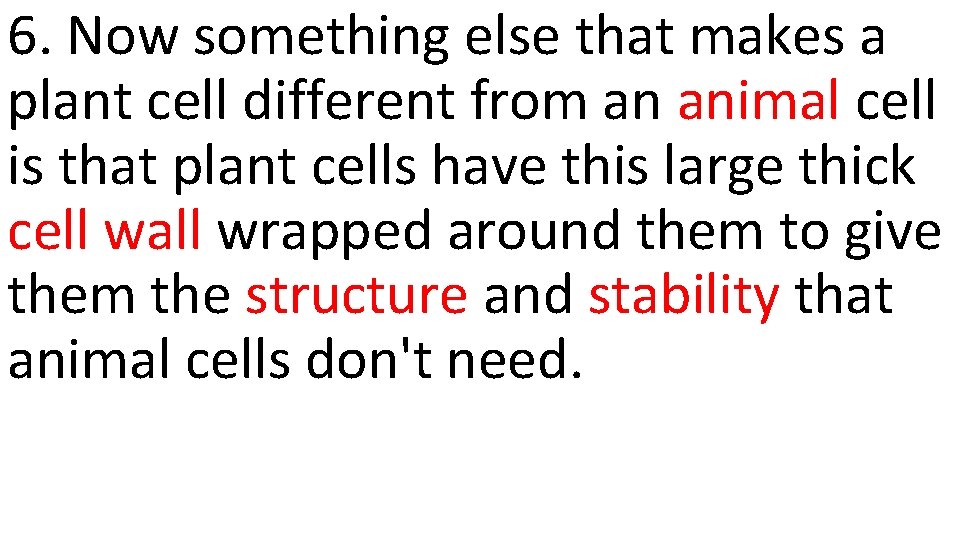
6. Now something else that makes a plant cell different from an animal cell is that plant cells have this large thick cell wall wrapped around them to give them the structure and stability that animal cells don't need.
Review Tri Chart – prokaryotic cell, eukaryotic cell, and virus 3 levels of learning
Construct a Venn diagram for Prokaryotic and Eukaryotic Cells.
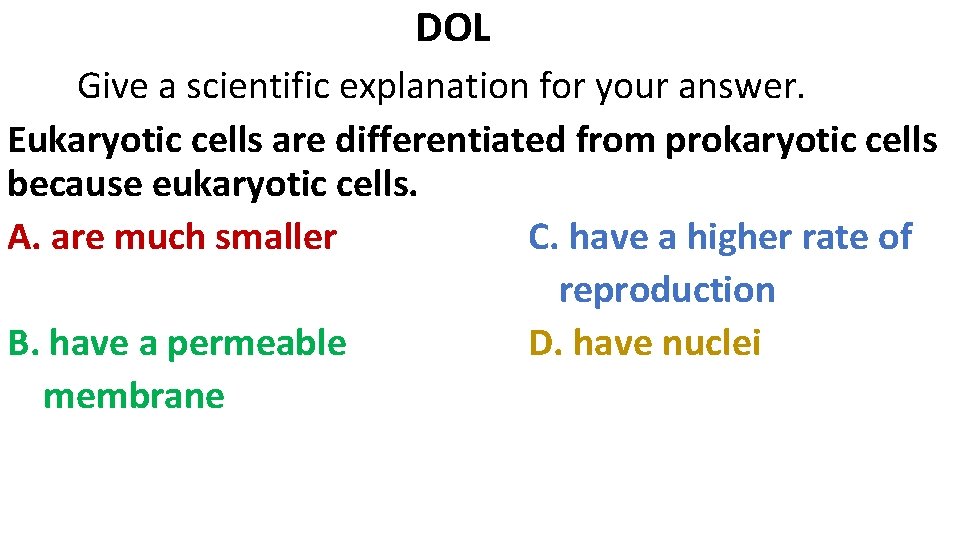
DOL Give a scientific explanation for your answer. Eukaryotic cells are differentiated from prokaryotic cells because eukaryotic cells. A. are much smaller C. have a higher rate of reproduction B. have a permeable D. have nuclei membrane
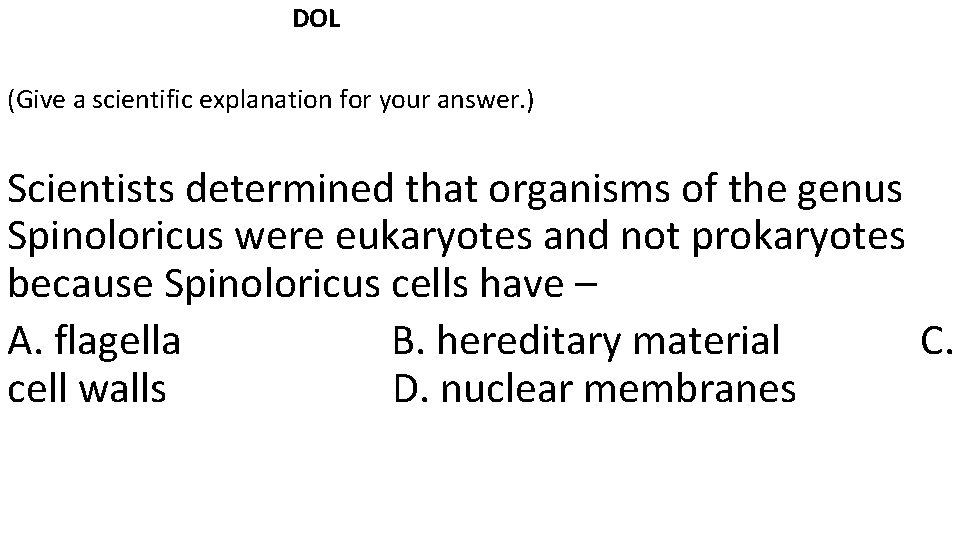
DOL (Give a scientific explanation for your answer. ) Scientists determined that organisms of the genus Spinoloricus were eukaryotes and not prokaryotes because Spinoloricus cells have – A. flagella B. hereditary material C. cell walls D. nuclear membranes
DOL (Give a scientific explanation for your answer. ) Scientists determined that organisms of the genus Spinoloricus were eukaryotes and not prokaryotes because Spinoloricus cells have – A. flagella B. hereditary material C. cell walls D. nuclear membranes
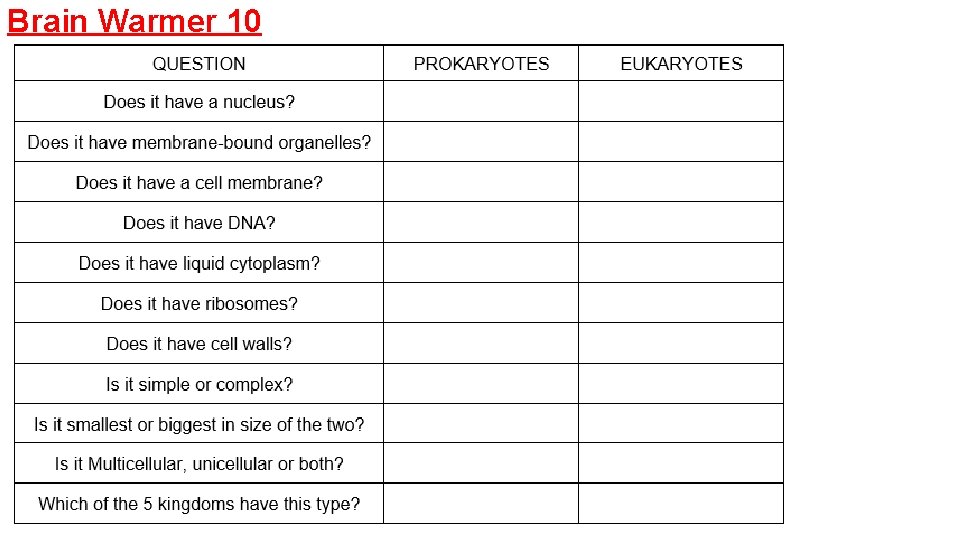
Brain Warmer 10
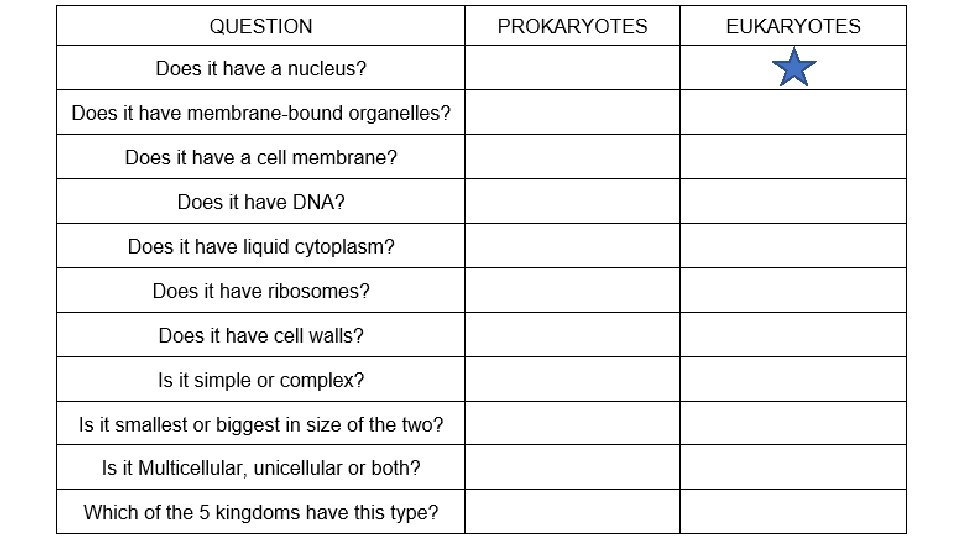
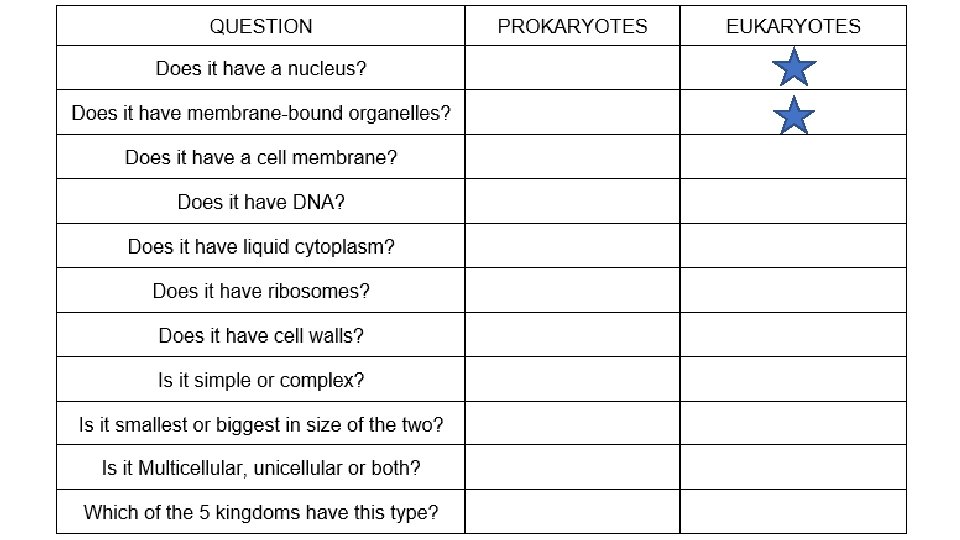
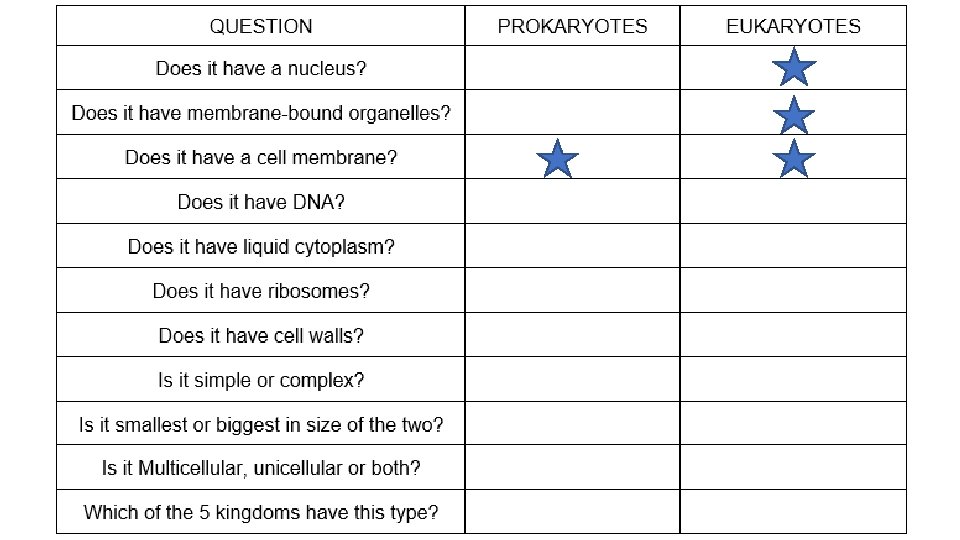
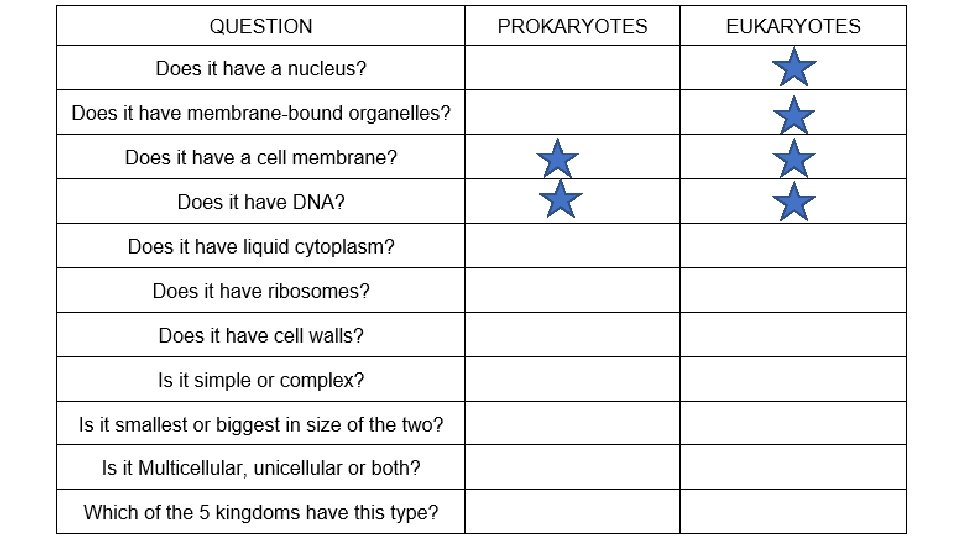
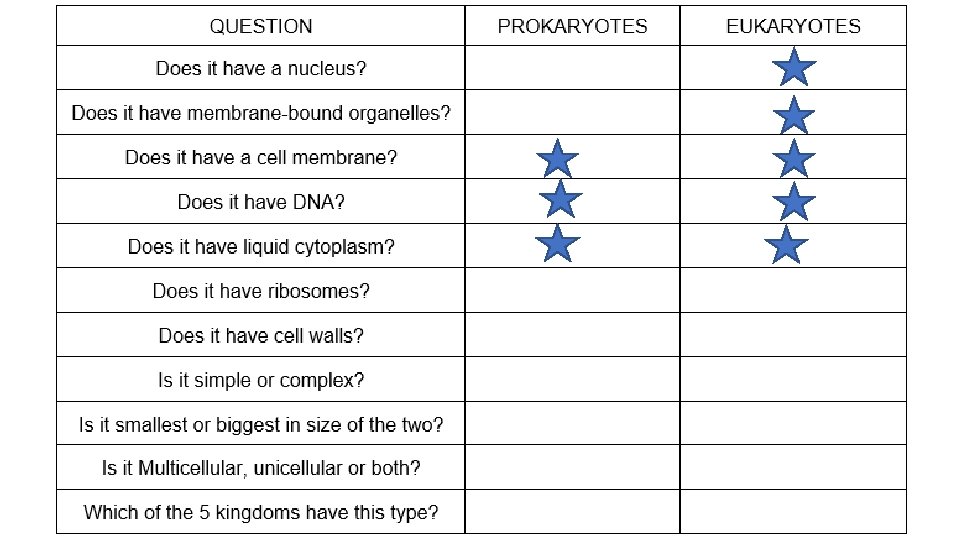
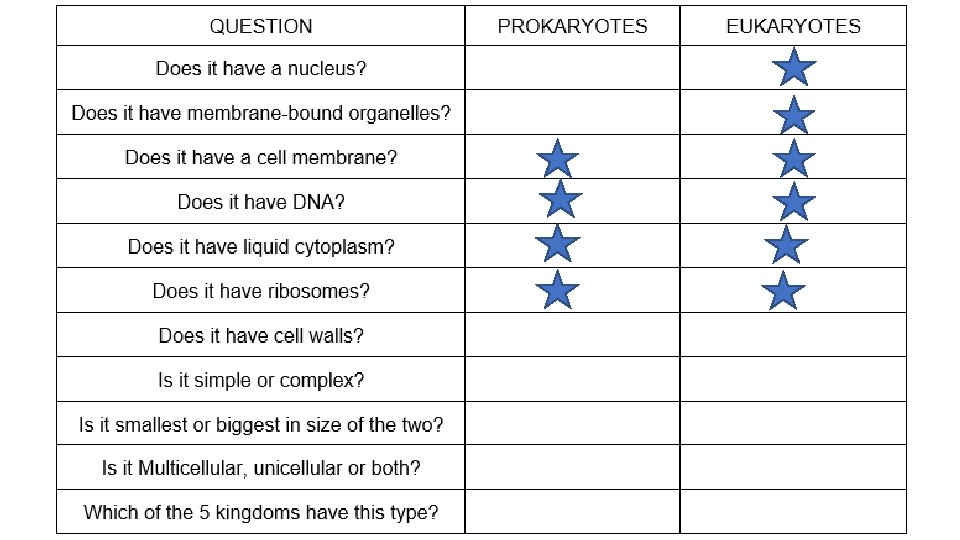
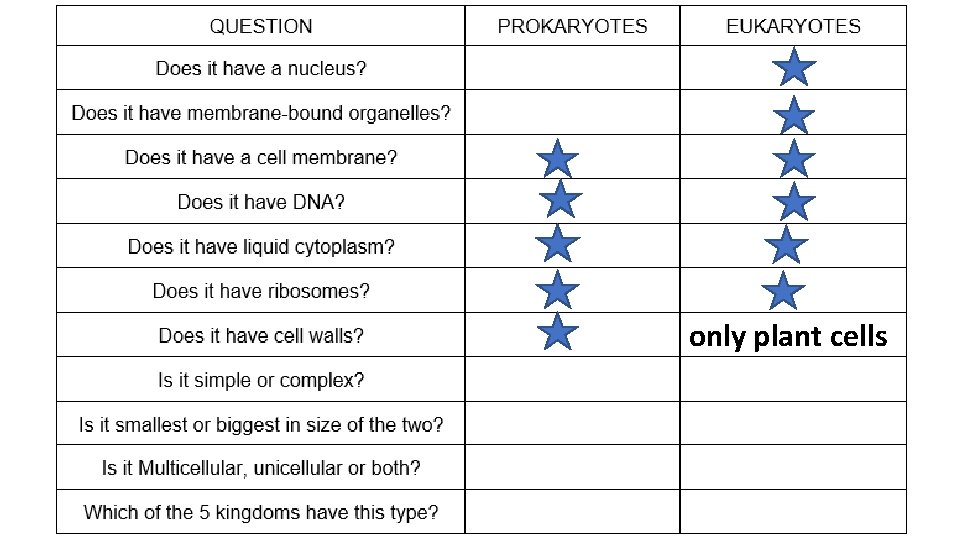
only plant cells

only plant cells simple complex
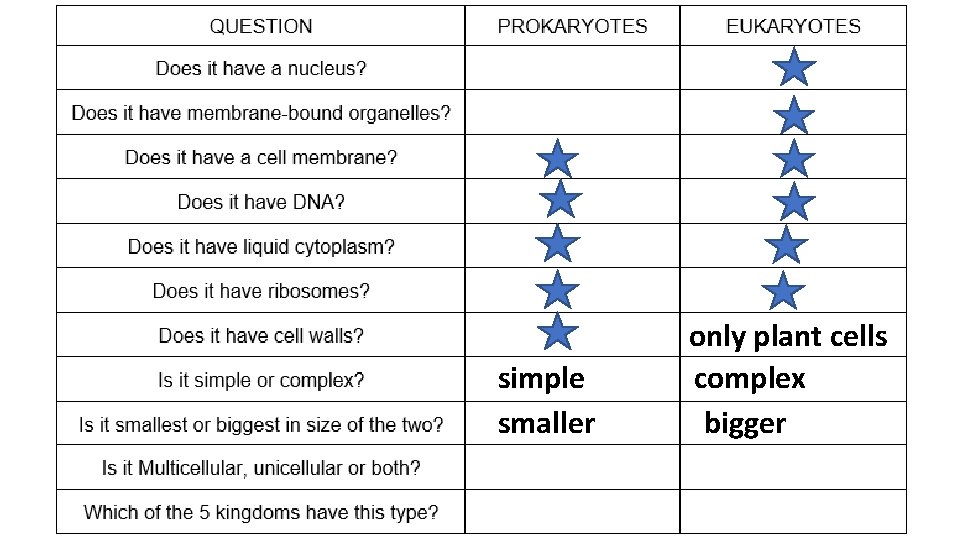
only plant cells simple complex smaller bigger
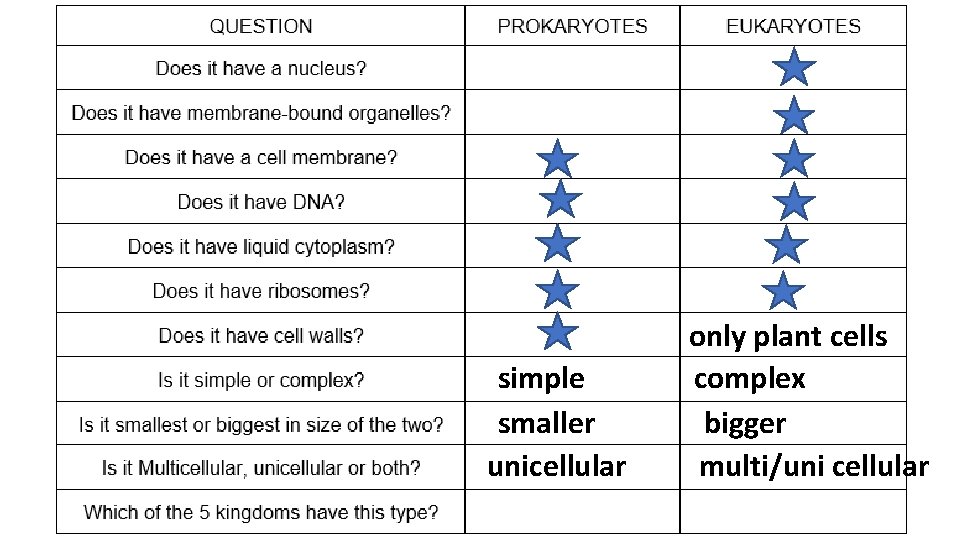
only plant cells simple complex smaller bigger unicellular multi/uni cellular
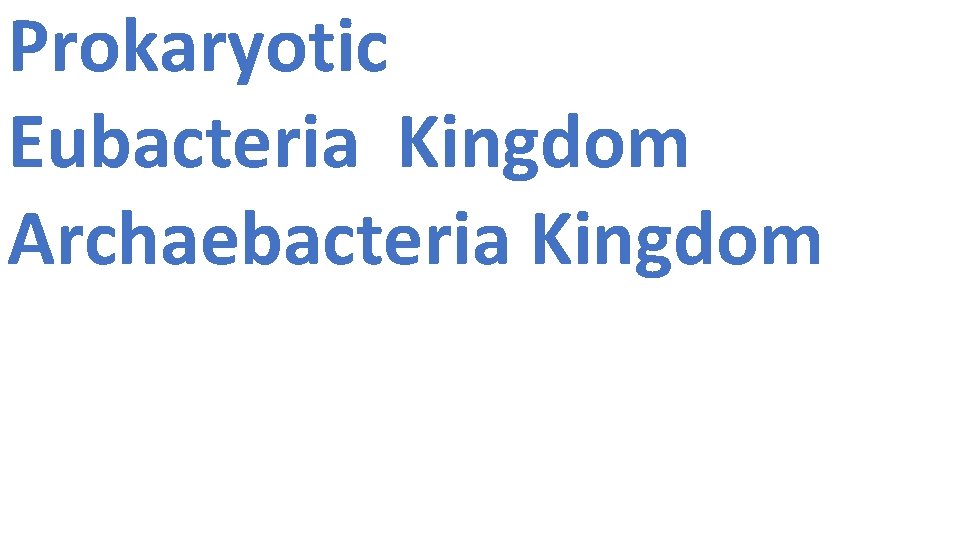
Prokaryotic Eubacteria Kingdom Archaebacteria Kingdom

Eukaryotic Plant Kingdom Animal Kingdom Fungi Kingdom Protista Kingdom
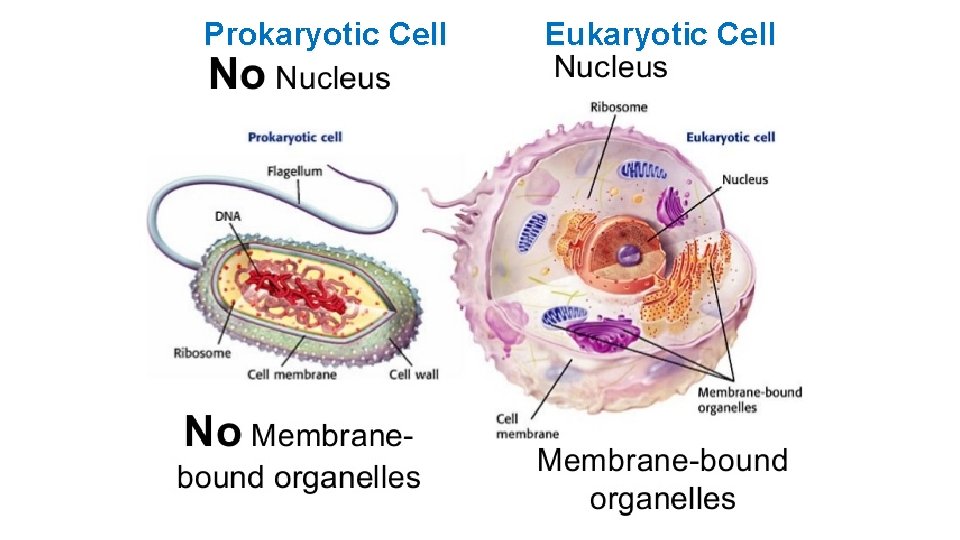
Prokaryotic Cell Eukaryotic Cell
Review Tri Chart – prokaryotic cell, eukaryotic cell, and virus 3 levels of learning
DOL Give a scientific explanation for your answer. Eukaryotic cells are differentiated from prokaryotic cells because eukaryotic cells. A. are much smaller C. have a higher rate of reproduction B. have a permeable D. have nuclei membrane
- Slides: 107