
Brain Tumors Physical Symptoms and Side Effects Presented
![Brain Tumors: Physical Symptoms and Side Effects Presented by [NAME]](https://slidetodoc.com/presentation_image_h2/151c09199d932eec9a5ca57d77d18e35/image-1.jpg "Brain Tumors: Physical Symptoms and Side Effects Presented by [NAME]")
Brain Tumors: Physical Symptoms and Side Effects Presented by [NAME]

Overview of physical symptoms • Causes – From the tumor itself: symptoms based on tumor size/location – From treatment: Fatigue, dizziness, headaches • Permanent or temporary? • Symptoms are important

Common tumor symptoms
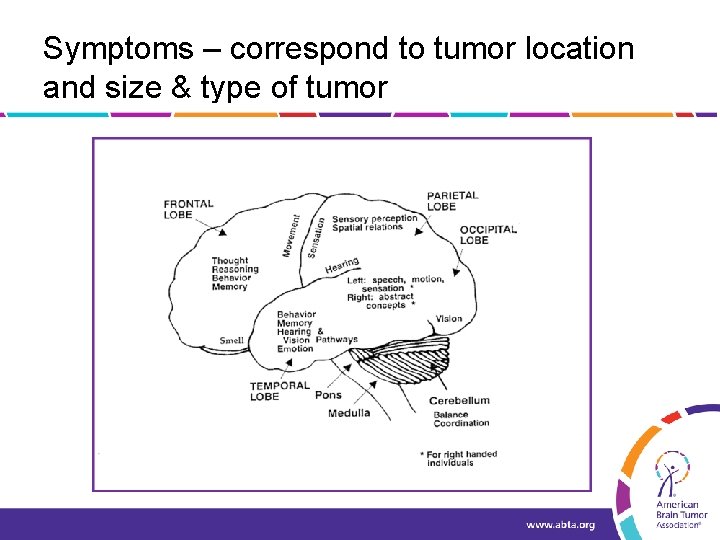
Symptoms – correspond to tumor location and size & type of tumor
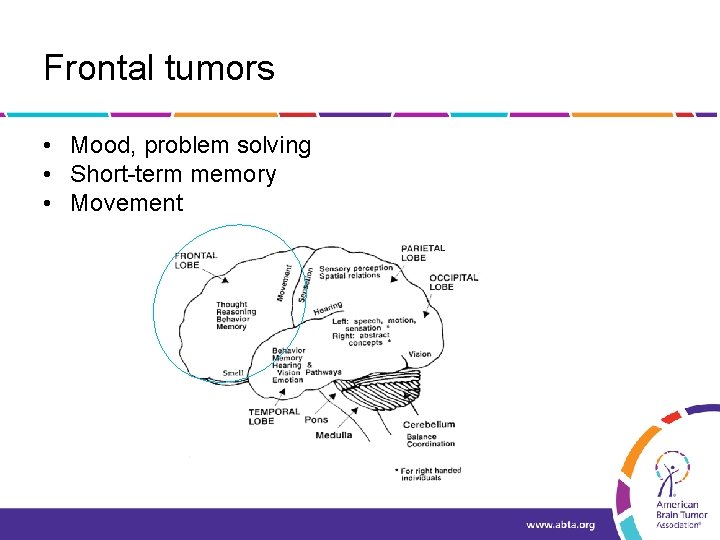
Frontal tumors • Mood, problem solving • Short-term memory • Movement

Parietal tumors • • Decreased awareness of sensation Difficulty with body position Left/right confusion Language/arithmetic
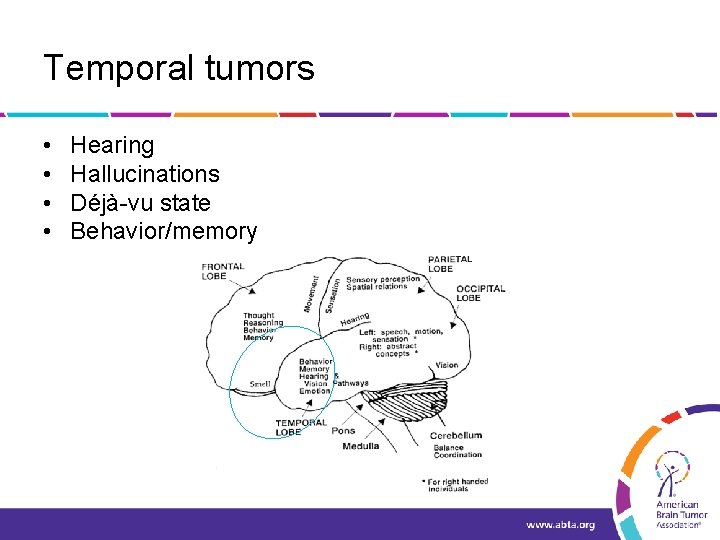
Temporal tumors • • Hearing Hallucinations Déjà-vu state Behavior/memory

Occipital tumors • Visual issues: recognition, double vision, loss of vision • Hallucinations/dreamy state
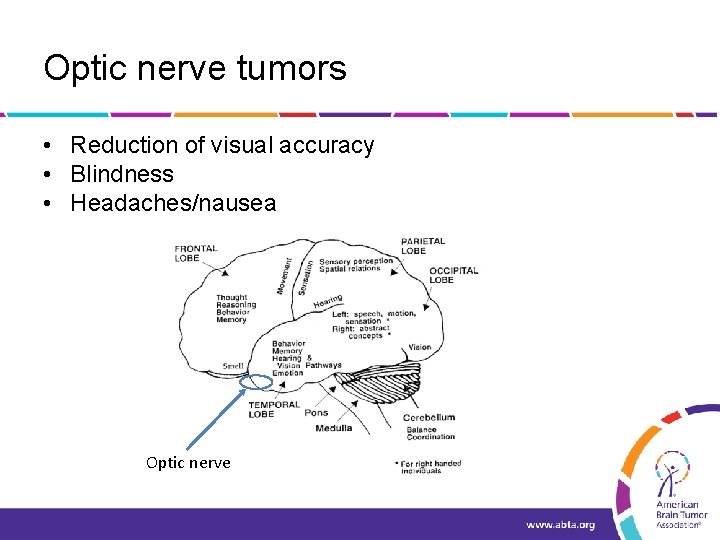
Optic nerve tumors • Reduction of visual accuracy • Blindness • Headaches/nausea Optic nerve
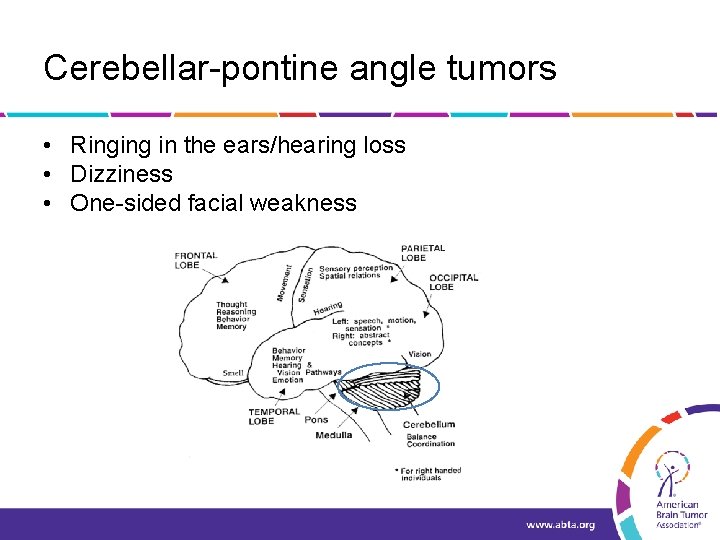
Cerebellar-pontine angle tumors • Ringing in the ears/hearing loss • Dizziness • One-sided facial weakness
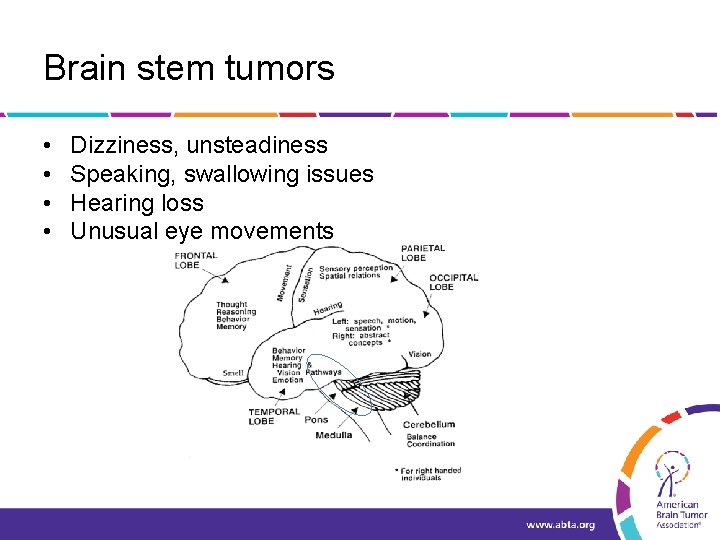
Brain stem tumors • • Dizziness, unsteadiness Speaking, swallowing issues Hearing loss Unusual eye movements
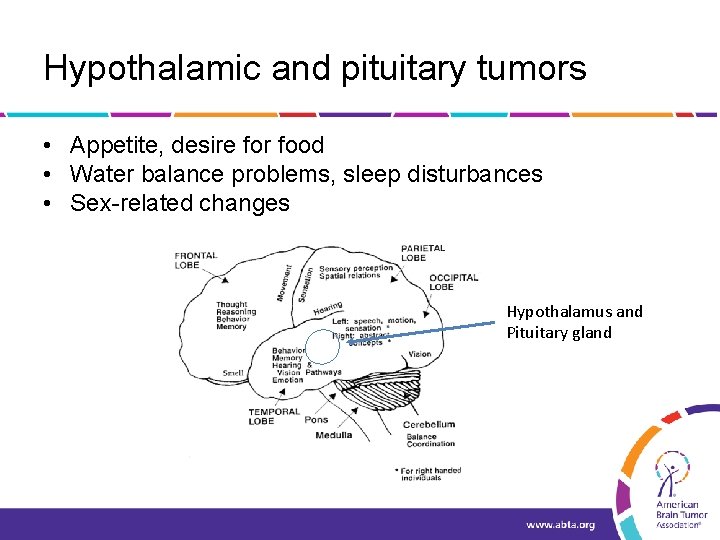
Hypothalamic and pituitary tumors • Appetite, desire for food • Water balance problems, sleep disturbances • Sex-related changes Hypothalamus and Pituitary gland
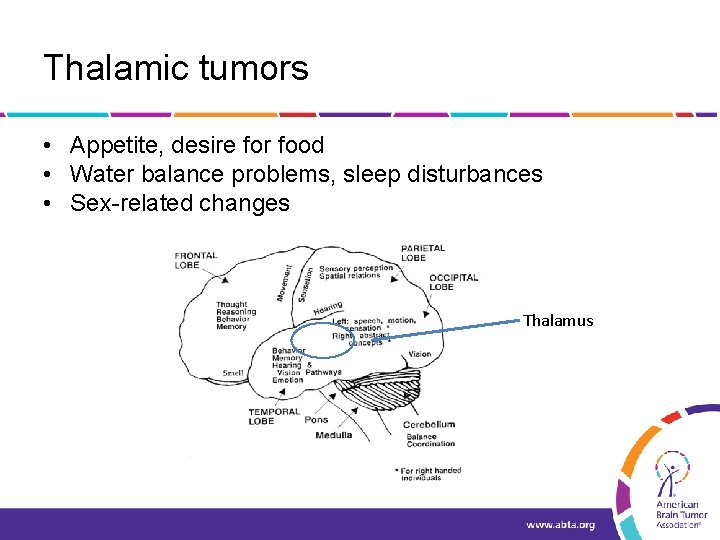
Thalamic tumors • Appetite, desire for food • Water balance problems, sleep disturbances • Sex-related changes Thalamus
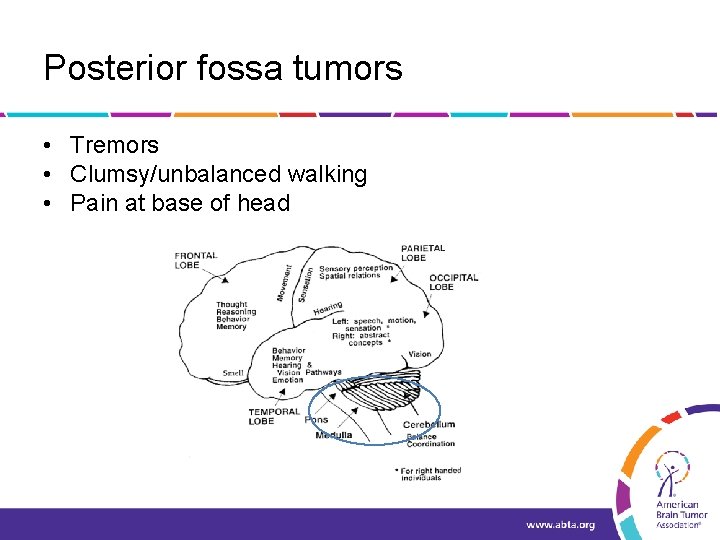
Posterior fossa tumors • Tremors • Clumsy/unbalanced walking • Pain at base of head

PHYSICAL SIDE EFFECTS OF TREATMENT
Potential side effects from treatment • Takes a toll on the body • Varies for everyone • Causes changes – Appearance – Ability to lead a normal life • Be realistic – Talk to health care team about symptoms – Set priorities
Fatigue • What it feels/looks like – Profound lack of energy – Body weakness/heaviness of limbs – Inability to concentrate – Sleeplessness • Management – Note/log symptoms – Energy conservation strategies – Nutritious meals – Moderate exercise – Short naps
Headaches • 50% of patients experience headaches • What they feel/look like – Steady pain, worse upon waking, gets better within a few hours – May be accompanied by vomiting – May worsen with cough, exercise or a change in body position • Management – Prescription pain medication – Watch for decreasing effectiveness of medication – Headache journal
Seizures • 40 -60% of patients experience seizures • What they feel/look like – Tonic-clonic: sudden onset, loss of consciousness, twitching – Other seizures: unresponsiveness, little movement • Management – Don’t panic – often end within minutes – Make sure patient is breathing – Protect patient – Rest, record incident
Seizures (cont. ) • When to call 911 – Breathing stops – Lasts for more than 5 minutes – Patient is injured – Patient is pregnant/has diabetes – Occurs in water – Second seizure follows first • General precautions – Follow prescription directions – Limit/stop driving – Use caution around water
Nausea and Vomiting • Causes – Tumor itself – Chemotherapy/radiation – Triggers/thoughts/sights/sounds • Management – Note/log symptoms – Anti-nausea drugs – Food choices – After vomiting: • Ice chips/cool liquid • Crackers/mild foods • Relaxation
Sensory and motor loss • What it looks/feels like: – Difficulty with fine/gross motor skills – Muscle weakness: whole body, certain parts of the body, or one side of the body – Awkward/stiff movements in arms or legs – Asymmetrical or lopsided facial expressions – Tingling or numbness in body/areas of the body • Management – Log symptoms – Rehabilitation therapy – Prevent falls • Avoid slippery surfaces • Secure shoes • Walking aid • Limit distractions when walking
Deep venous thrombosis (DVT) and pulmonary embolisms • Affects up to 19 percent of patients • What is DVT/PE? – Blood clot that travels from the extremities (DVT) – Can travel to pulmonary vein (pulmonary embolism, or PE) – Highly treatable • Signs/symptoms – Swelling/tenderness in leg/extremity – One leg appears larger than other – Skin on leg turns red • Management – Call physician or go to emergency room – Inform emergency room about condition/recent surgeries
Hearing and Vision Loss • Hearing – Ringing, dizziness – Occurs on one side – During treatment or late-onset – Rarely an emergency • Vision – Inability to recognize objects – Hallucinations – Vision limitations: double vision, loss of peripheral vision, blind spots – Sudden blindness: Call 911
Pain • Affects all aspects of life – Eating – Sleeping – Performing daily tasks – Outlook/mental health • Management – Analysis of pain (when/where/description, etc. ) – Drugs: Over-the-counter and prescription • Barriers – “Tough it out” – Reluctance to bring up subject – Avoidance of side effects – Fear of addiction “My husband won’t take his pain medication until the pain is excruciating. I’m pretty sure if he took it regularly the pain wouldn’t get so bad, but he won’t listen. ”
Pediatric side effects • Muscle weakness, diminished coordination • Hearing and vision problems • Seizures and other neurological issues • Hormonal problems • Slowed growth • Hypo- or hyperthyroidism • Diabetes • Early or late puberty, infertility • Damage to internal organs and/or other body systems • Secondary cancers in other parts of the body or a recurrence of a tumor in the brain • Higher likelihood of late-onset symptoms
Managing physical symptoms • Wide variety of physical symptoms – Type, severity of tumor • Management by – Keeping a log – Talking to care team • Keep educating yourself – Ask questions – Don’t dismiss symptoms – Knowledge is peace of mind “What should I be doing now? Should I give him a different diet? What can I control that would help him? ”
Contact information Phone: Email: 1 -800 -886 -ABTA (2282) abtacares@abta. org Online: www. abta. org www. facebook. com/the. ABTA www. twitter. com/the. ABTA
- Slides: 28