
Brain Structures Hindbrain Functions essential to maintaining life
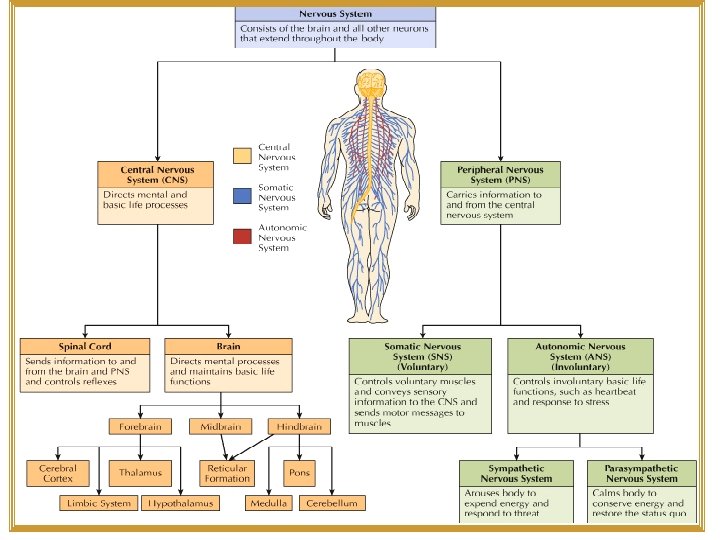
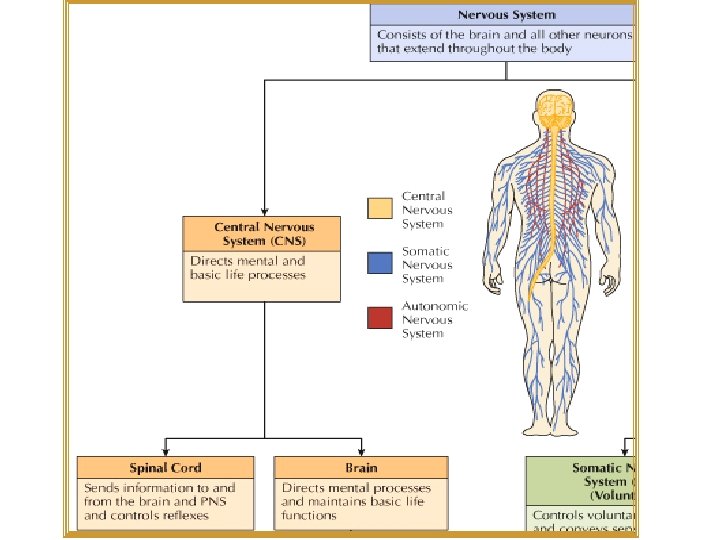
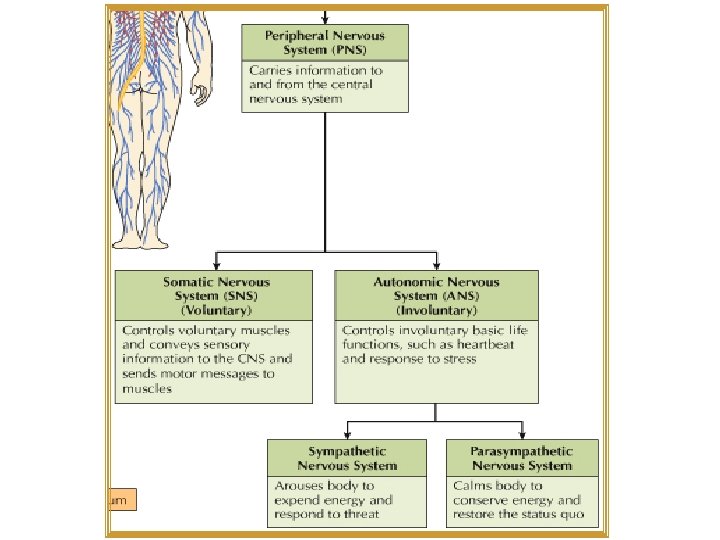
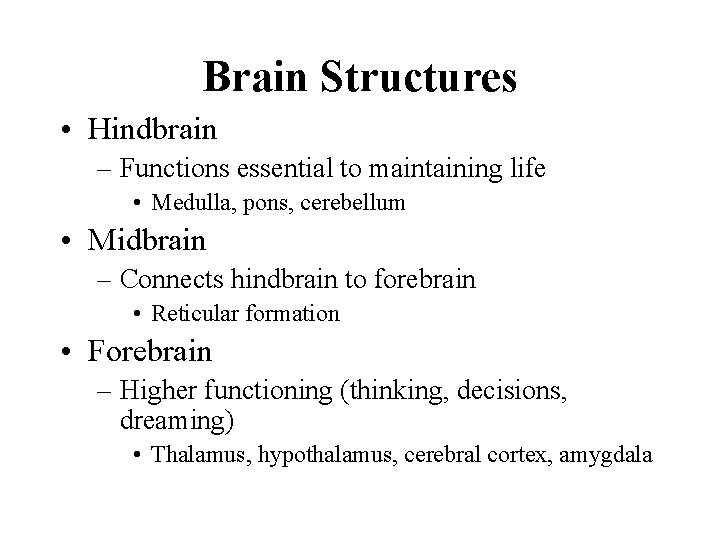
Brain Structures • Hindbrain – Functions essential to maintaining life • Medulla, pons, cerebellum • Midbrain – Connects hindbrain to forebrain • Reticular formation • Forebrain – Higher functioning (thinking, decisions, dreaming) • Thalamus, hypothalamus, cerebral cortex, amygdala

http: //www. thepsychfiles. com/2008/09/episode-72 -video-memorize-the-parts-of-the-brain/
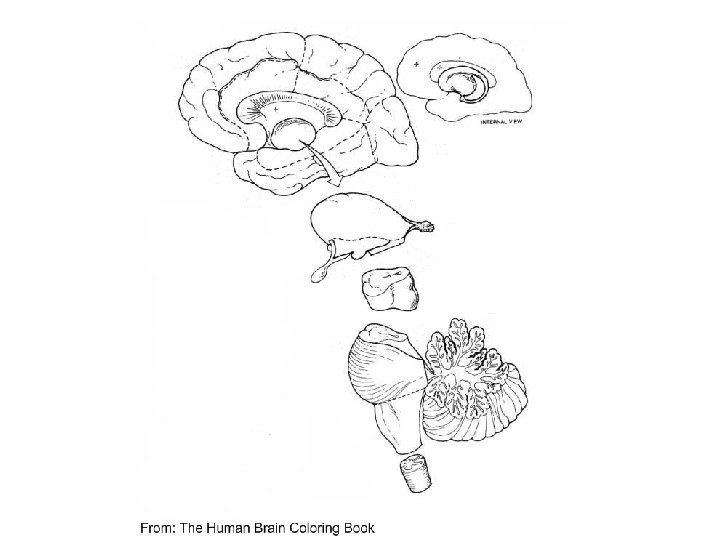
• Corpus Callosum: Connects the right and left brains to allow integration of information between the brain hemispheres • Association Areas: Interpreting, integrating, and acting on info processed by other parts of the brain • Thalamus: Relay system to the cerebral cortex for most of the senses (not smell) and pain • Hypothalamus: Controls body temperature, food intake, drink, sex drive • Pituitary Gland: Stimulates or inhibits the release of hormones • Amygdala: Aggression and fear
• Hippocampus: Memory (esp. moving from short term to long term), spatial navigation • Medulla: Involuntary actions, heartbeat, blood pressure, breathing, swallowing • Reticular Formation: Screens incoming sensory information, habituation, and controls arousal (being awake / alert / paying attention) • Pons: Waking and sleeping, dreams • Cerebellum: Balance, coordination, fine motor movement, learned motor skills • Nucleus Accumbens: Reward, laughter, pleasure, addiction, fear
Discussion • In order to save your life, one part of your brain must be removed. Which part are you willing to live without and why?
Lobes of the Cerebral Cortex • Frontal Lobe – Thinking, reasoning, emotions, judgment, decision-making, complex mental tasks, voluntary movement (motor cortex), and speech production (Broca’s Area) • Parietal Lobe – Interprets information from the pressure senses (somatosensory cortex: pressure, pain, touch, temperature), recognizing objects
Lobes of the Cerebral Cortex • Temporal Lobe – Some kinds of memory, hearing, speaking, remembering, language comprehension (Wernicke’s Area), some emotional control (includes hippocampus) • Occipital Lobe – Vision, visual perception, reading ability
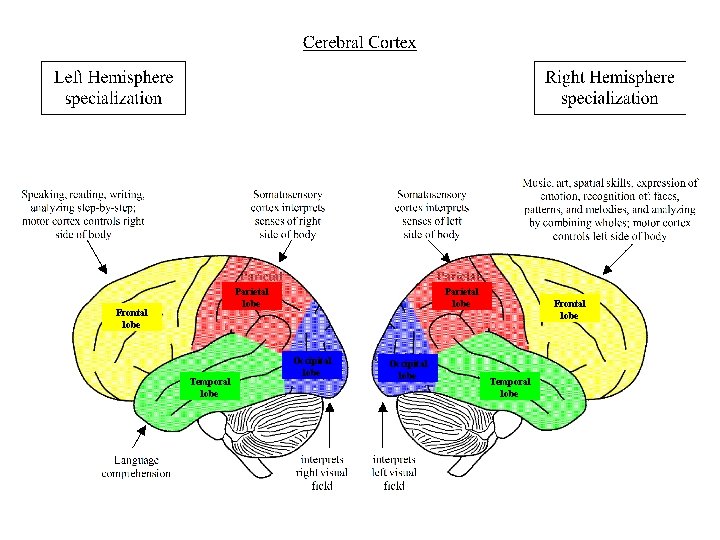
Parietal lobe Frontal lobe Temporal lobe Parietal lobe Occipital lobe Frontal lobe Temporal lobe
Brain Damage • Localization of function: parts are specialized – Ex: face blindness video • Neuroplasticity: brain can grow and change • Coma vs. “Brain dead” – Reticular formation vs. cerebral cortex
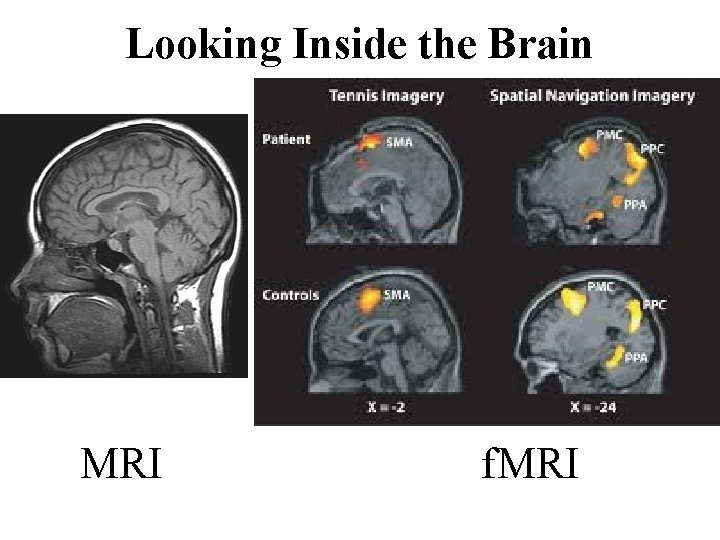
Looking Inside the Brain MRI f. MRI
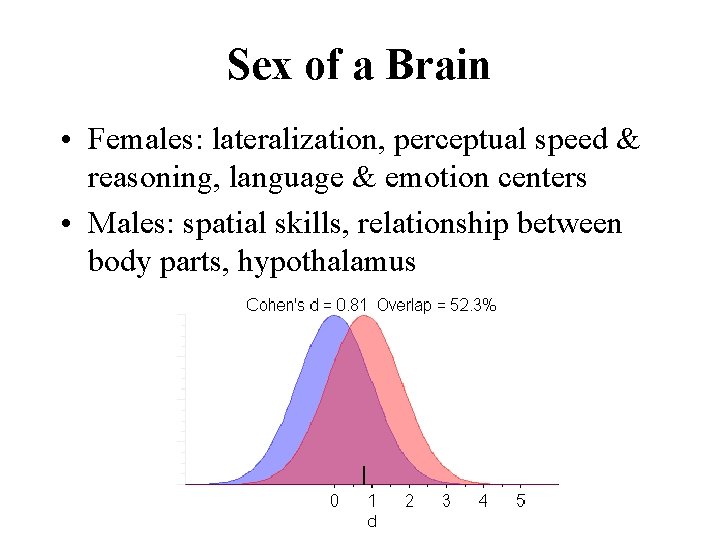
Sex of a Brain • Females: lateralization, perceptual speed & reasoning, language & emotion centers • Males: spatial skills, relationship between body parts, hypothalamus
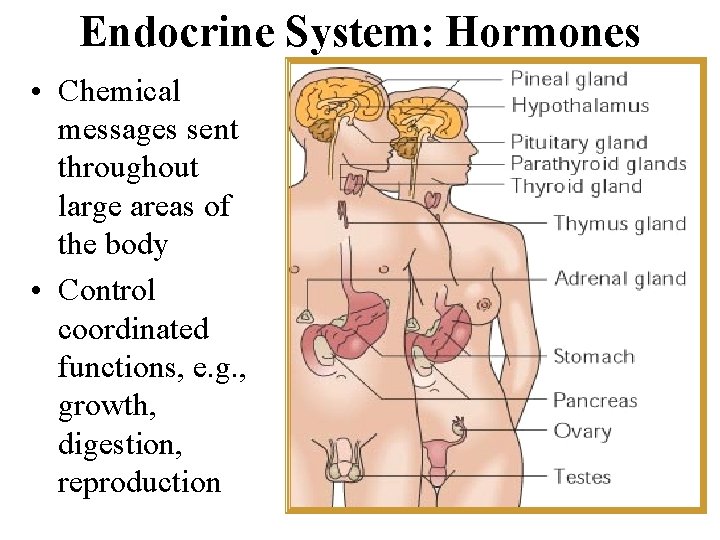
Endocrine System: Hormones • Chemical messages sent throughout large areas of the body • Control coordinated functions, e. g. , growth, digestion, reproduction
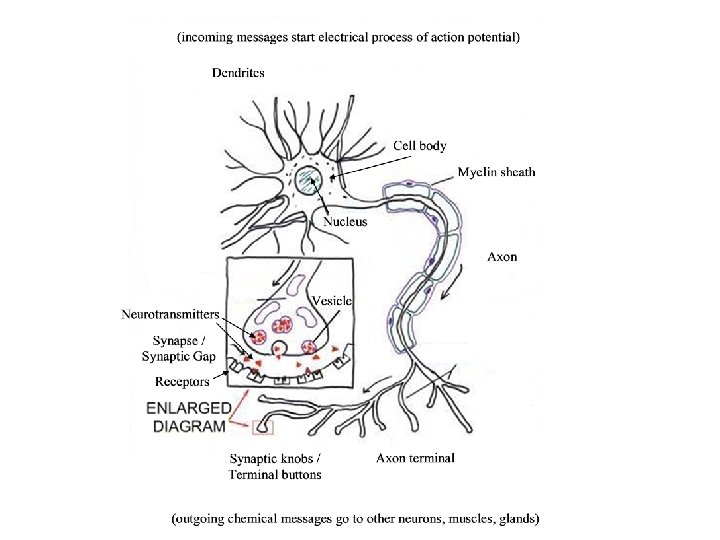
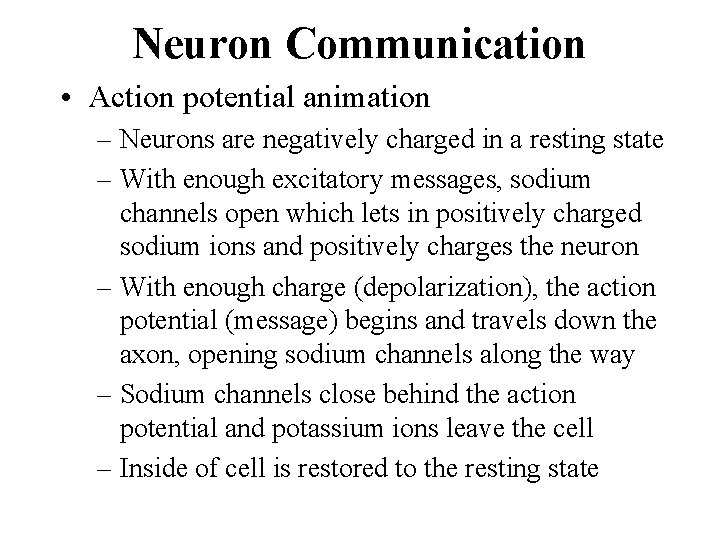
Neuron Communication • Action potential animation – Neurons are negatively charged in a resting state – With enough excitatory messages, sodium channels open which lets in positively charged sodium ions and positively charges the neuron – With enough charge (depolarization), the action potential (message) begins and travels down the axon, opening sodium channels along the way – Sodium channels close behind the action potential and potassium ions leave the cell – Inside of cell is restored to the resting state
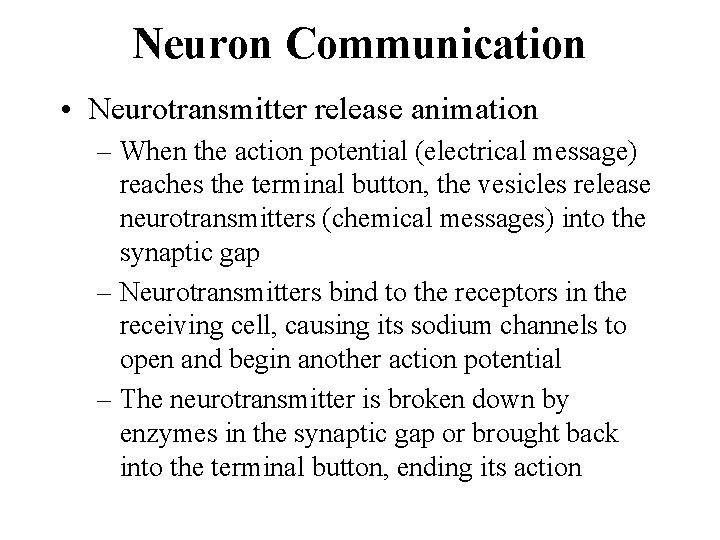
Neuron Communication • Neurotransmitter release animation – When the action potential (electrical message) reaches the terminal button, the vesicles release neurotransmitters (chemical messages) into the synaptic gap – Neurotransmitters bind to the receptors in the receiving cell, causing its sodium channels to open and begin another action potential – The neurotransmitter is broken down by enzymes in the synaptic gap or brought back into the terminal button, ending its action
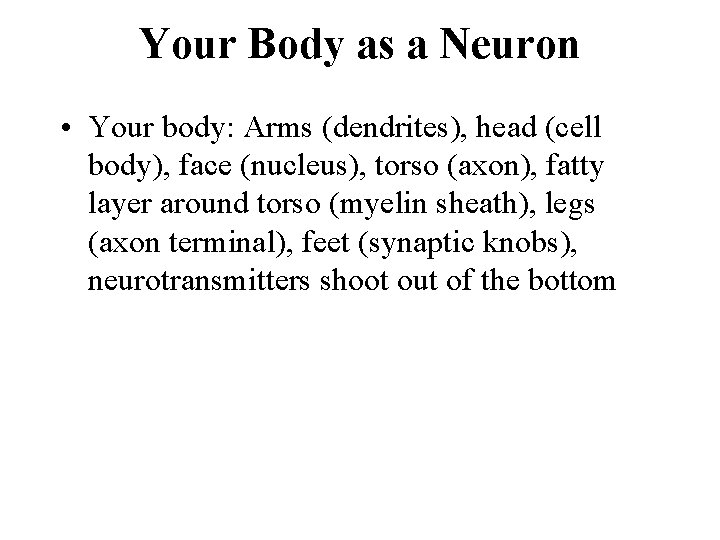
Your Body as a Neuron • Your body: Arms (dendrites), head (cell body), face (nucleus), torso (axon), fatty layer around torso (myelin sheath), legs (axon terminal), feet (synaptic knobs), neurotransmitters shoot out of the bottom
Normal Neurotransmitter Action • Action potential triggers release of neurotransmitter (NT) • NT spreads message to next neuron • NT is either broken down in the synapse by enzymes or pumped back into the neuron (reuptake), ending its action
Nervous System Demonstration • Count your heartbeats for 10 seconds
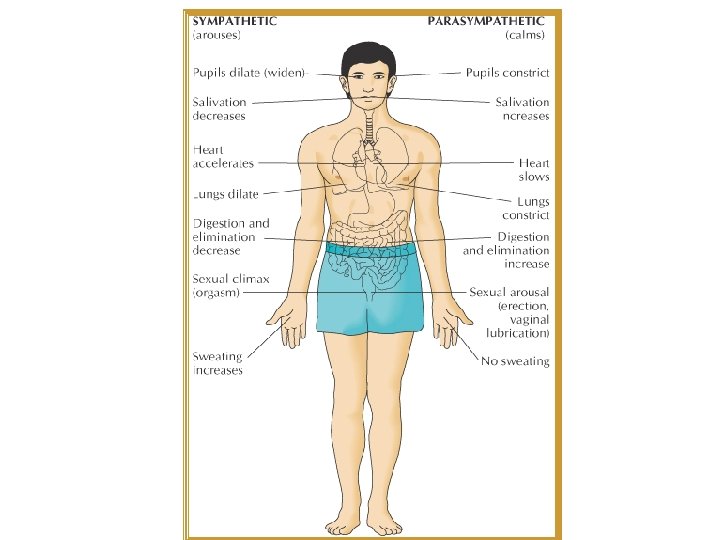
Stress • Mental and physical condition that occurs when a person must adjust or adapt to the environment – Good vs. bad stress • Stress Reaction: – (Physical) ANS is aroused = HR, BP, hormones, respiration, muscle tension; stomach, constricts blood vessels • Short-term vs. long-term stresses
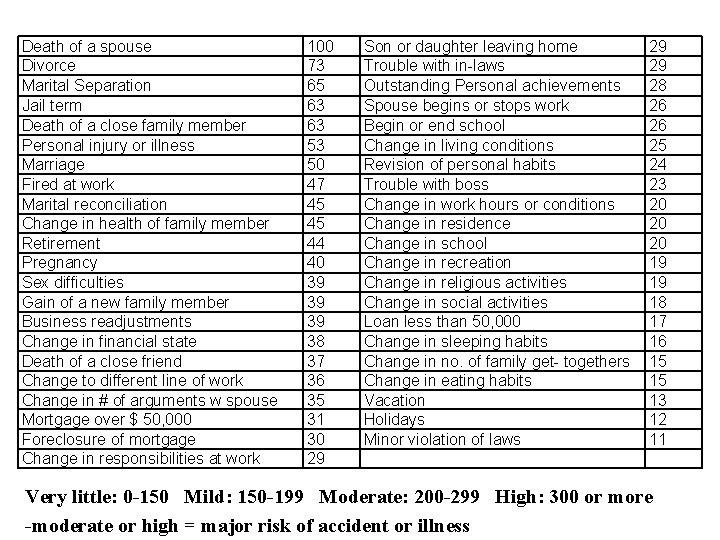
Death of a spouse Divorce Marital Separation Jail term Death of a close family member Personal injury or illness Marriage Fired at work Marital reconciliation Change in health of family member Retirement Pregnancy Sex difficulties Gain of a new family member Business readjustments Change in financial state Death of a close friend Change to different line of work Change in # of arguments w spouse Mortgage over $ 50, 000 Foreclosure of mortgage Change in responsibilities at work 100 73 65 63 63 53 50 47 45 45 44 40 39 39 39 38 37 36 35 31 30 29 Son or daughter leaving home Trouble with in-laws Outstanding Personal achievements Spouse begins or stops work Begin or end school Change in living conditions Revision of personal habits Trouble with boss Change in work hours or conditions Change in residence Change in school Change in recreation Change in religious activities Change in social activities Loan less than 50, 000 Change in sleeping habits Change in no. of family get- togethers Change in eating habits Vacation Holidays Minor violation of laws 29 29 28 26 26 25 24 23 20 20 20 19 19 18 17 16 15 15 13 12 11 Very little: 0 -150 Mild: 150 -199 Moderate: 200 -299 High: 300 or more -moderate or high = major risk of accident or illness
General Adaptation Syndrome (G. A. S. ) • Alarm Reaction: – Increased hormones (adrenaline, noradren. , & cortisol) • Stage of Resistance: – Bodily adjustments stabilize – Symptoms of alarm reaction disappear but still using resources • Stage of Exhaustion: – Continuous stress leads to draining of the body’s resources and depletion of stress hormones – Poor immune function, cardiovascular health, mood regulation, memory, decision-making
Stress & Disorders – An Analogy • Sockets become overloaded when you plug in too many appliances – Different sockets can handle different amounts of energy – Each appliance uses different amounts of energy – Outcome: • Nervous system is overloaded when you have too much stress – Different nervous sys. can handle different amounts of stress – Each type of event creates different amounts of stress – Outcome: heart, digest, cancer, diabetes, schizophrenia, bipolar – Solution?
Dealing with Stress • Imagine you are having a horrible day. You feel overwhelming negative emotions. Your stress level is extremely high. What are three things you might do to feel better?
Dealing with Stress • Emotion-focused coping: change emotions • Problem-focused coping: change situation • Control: children 6 -14 yrs, Thailand & U. S. – went to a doctor's office to get a shot • ran away, screamed vs. thought it was good for me – had an accident and was physically hurt • Clean the wound vs. try to relax – a peer said unkind things • Corrected them vs. thought about favorite things
Dealing with Stress • Feeling in control, exercise, positive beliefs, social support, relaxation, using your skills, helping other people, trusting others • Meditation: focus attention, block out distractions – Video: Meditation changes brain – Can change brain waves, heart rate, oxygen consumption, sweat gland activity – Increases emotional control, positive emotions, hopefulness
Questions about Drugs • Write down your questions about drugs
- Slides: 31