
Brain stem Brain stem 1 Medulla oblongata 2
Brain stem
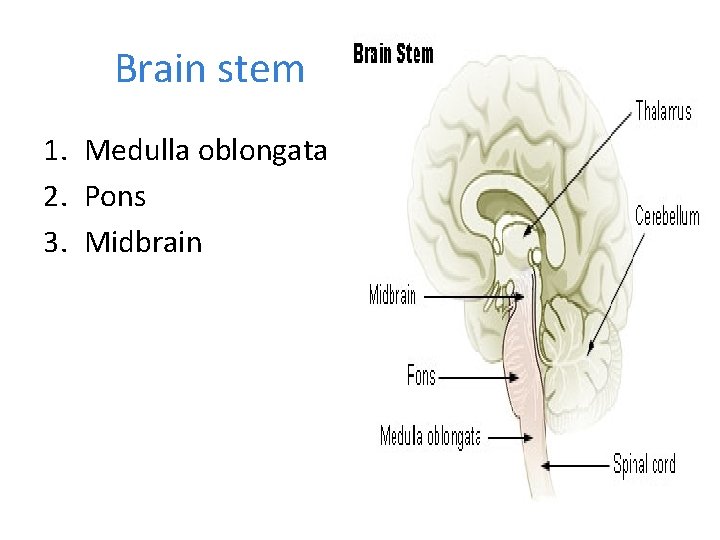
Brain stem 1. Medulla oblongata 2. Pons 3. Midbrain
Brainstem • Stalk like in shape • Connects spinal cord to higher centers of forebrain
Functions 1. Conduit for ascending and descending tracts connecting spinal cord and cortex 2. Contains reflex centers (cardiac and respiratory centers) levels of consciousness 3. Contains important nuclei of cranial nerves (3 rd to 12 th cranial nerves)
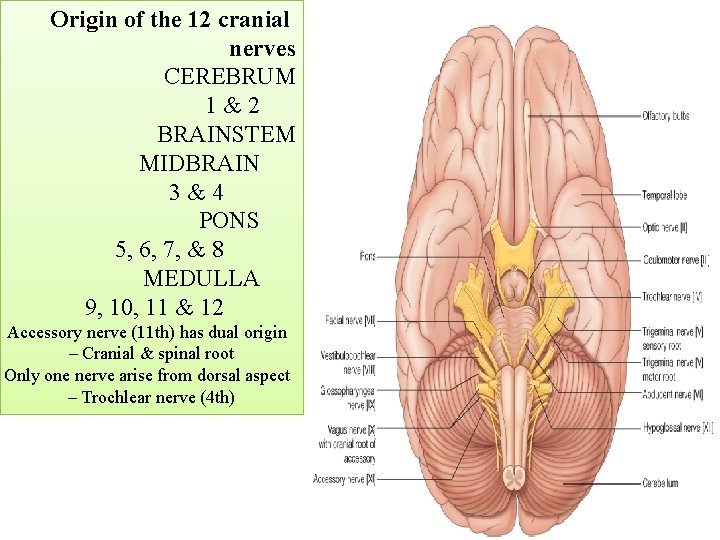
Origin of the 12 cranial nerves CEREBRUM 1&2 BRAINSTEM MIDBRAIN 3&4 PONS 5, 6, 7, & 8 MEDULLA 9, 10, 11 & 12 Accessory nerve (11 th) has dual origin – Cranial & spinal root Only one nerve arise from dorsal aspect – Trochlear nerve (4 th)
Medulla oblongata �Most caudal level of the brain stem Continuous with the spinal cord �Connects pons to spinal cord �Conical in shape � Cranial nerves VIII–XII attach to the medulla �Central canal of spinal cord continues into the lower medulla (close medulla) �Upper medulla contains cavity of 4 th ventricle(open medulla)


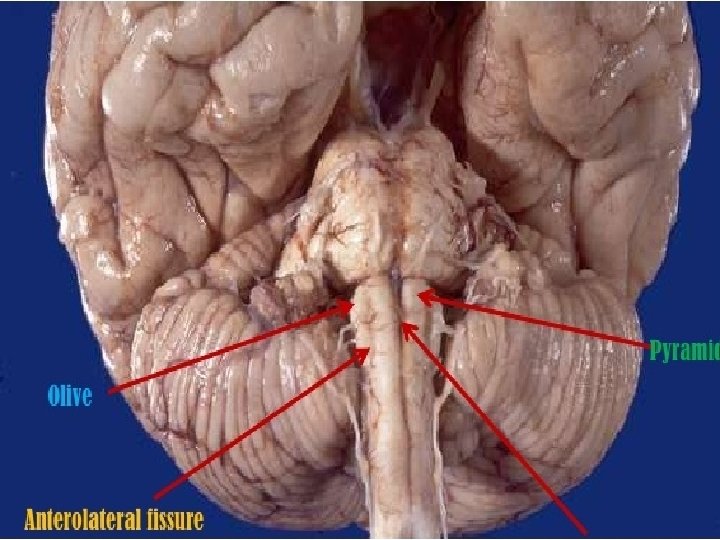
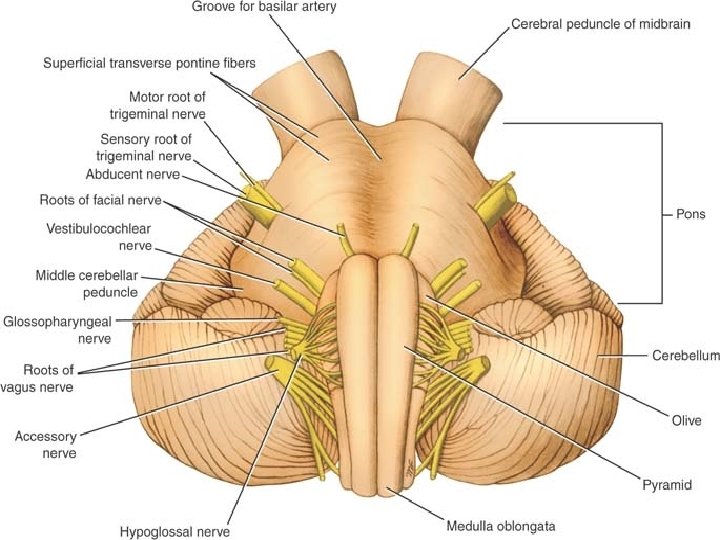
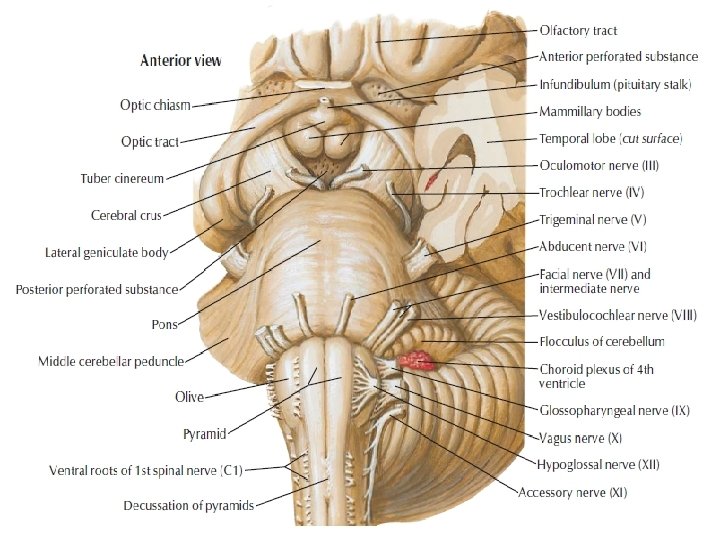
Medulla Oblongata • Along with the pons, forms the ventral wall of the fourth ventricle • Contains a choroid plexus on the roof of the fourth ventricle • Pyramids – two longitudinal ridges formed by corticospinal tracts • Decussation of the pyramids – crossover points of the corticospinal tracts
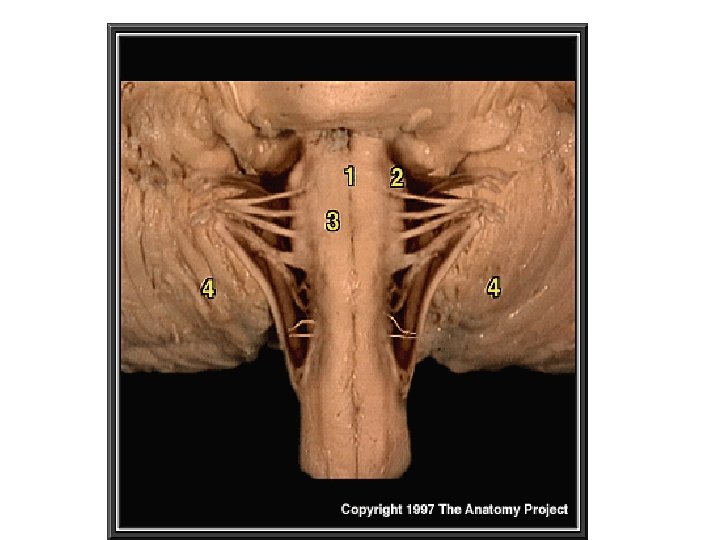
Gross appearance (ant. surface) • • • Anterior median fissure Pyramid – pyramidal decussation Olives Groove bt pyramid and olive (12 th emerges) Inferior cerebellar peduncle Groove bt olive and ICP (10 th 9 th & cranial 11 th emerge)
Gross appearance(post. Surface) • • Floor of 4 th ventricle (upper 1/2) Posterior median sulcus Gracile tubercle Cuneate tubercle
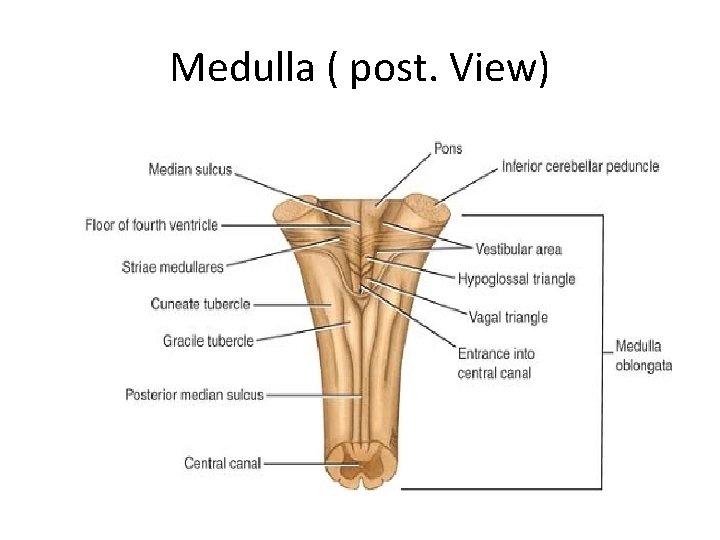
Medulla ( post. View)
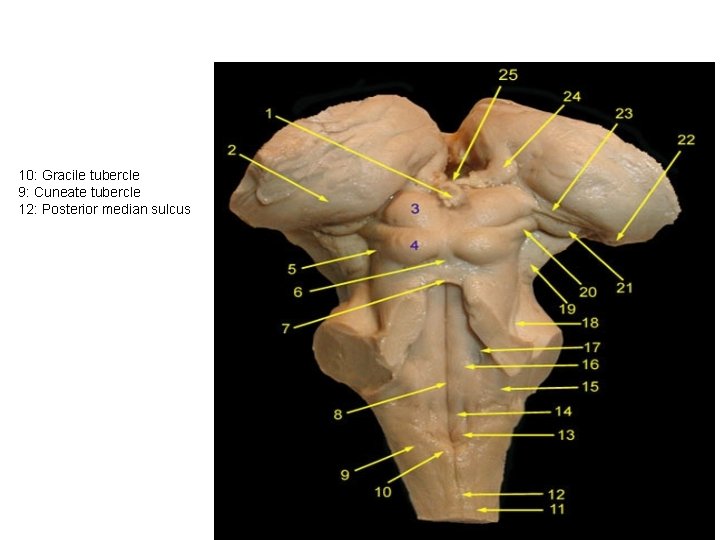
10: Gracile tubercle 9: Cuneate tubercle 12: Posterior median sulcus
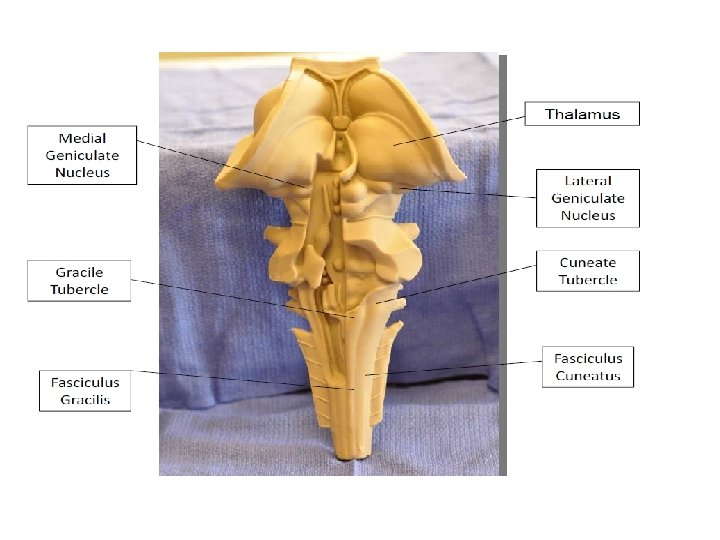
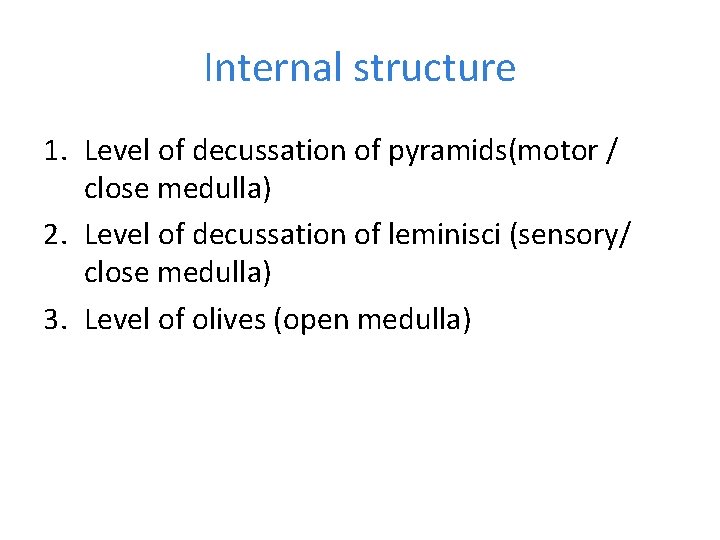
Internal structure 1. Level of decussation of pyramids(motor / close medulla) 2. Level of decussation of leminisci (sensory/ close medulla) 3. Level of olives (open medulla)
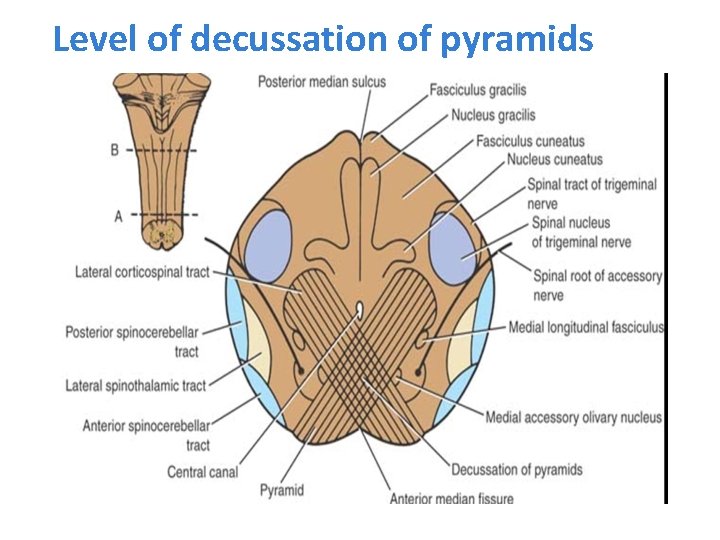
Level of decussation of pyramids
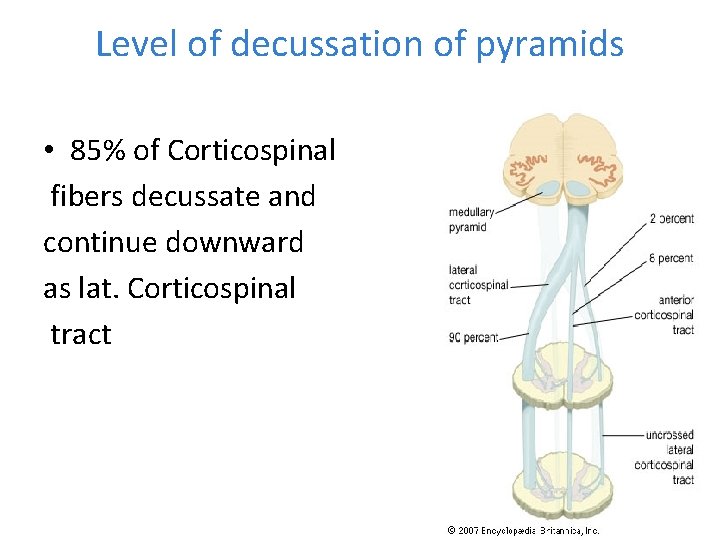
Level of decussation of pyramids • 85% of Corticospinal fibers decussate and continue downward as lat. Corticospinal tract
Level of decussation of leminsci • Sensory decussation • Leminisci are formed by internal arcuate fibers • internal arcuate fibers emerge from anterior aspect of nucleus gracilis and nucleus cuneatus • Decussation takes place posterior to pyramids
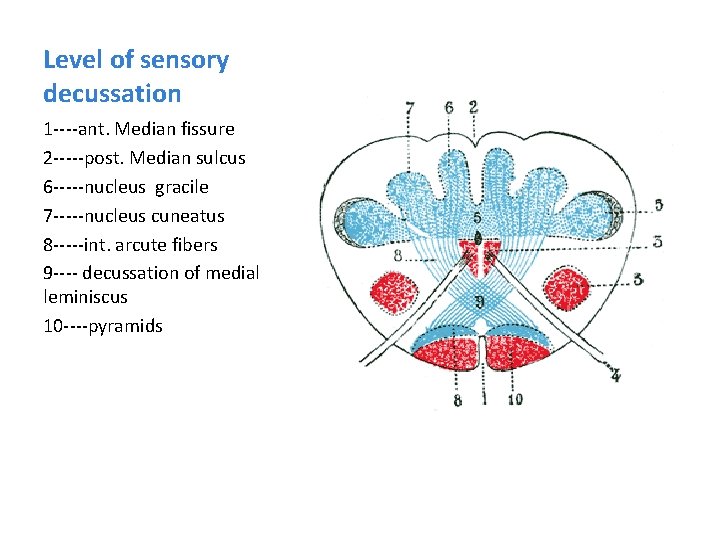
Level of sensory decussation 1 ----ant. Median fissure 2 -----post. Median sulcus 6 -----nucleus gracile 7 -----nucleus cuneatus 8 -----int. arcute fibers 9 ---- decussation of medial leminiscus 10 ----pyramids
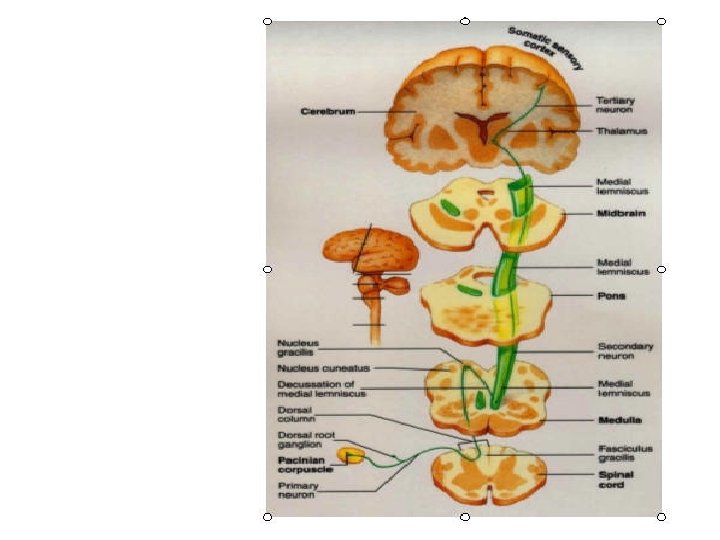
Medial leminiscus
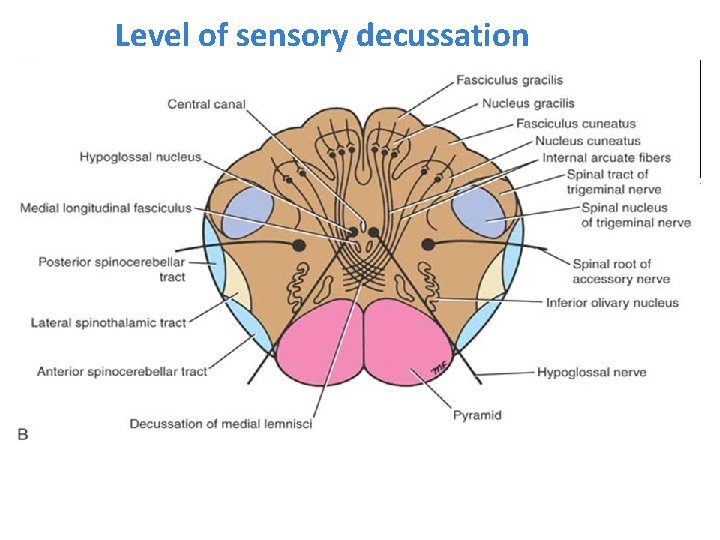
Level of sensory decussation
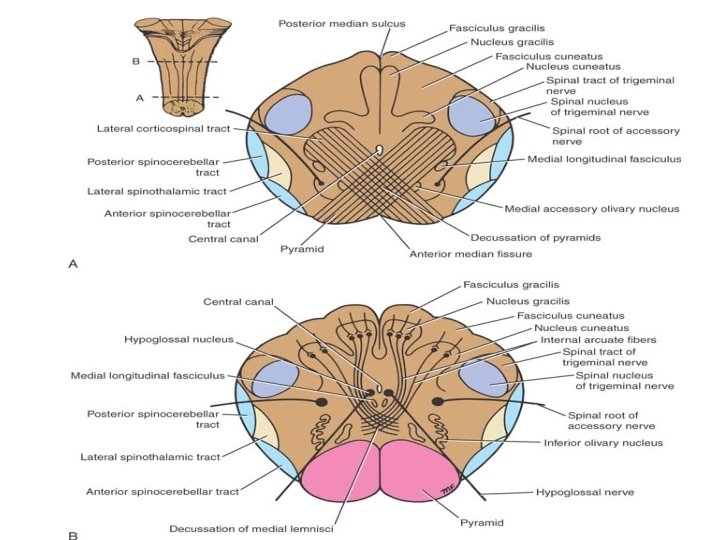

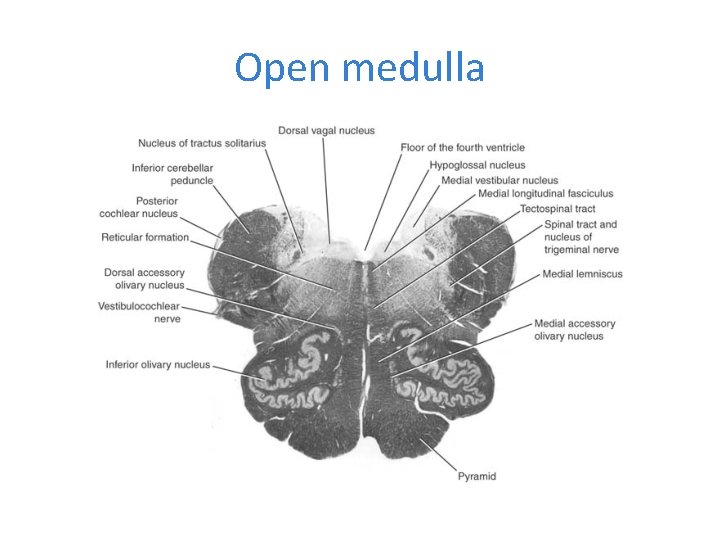
Level of olives (open medulla) • • Passes across the inferior part of 4 th ventricle Nuclei of 12 th 11 th 10 th & 9 th Inf Olivary nucleus Pyramids ICP Medial leminiscus RF Spinal nucleus of trigeminal and its tract
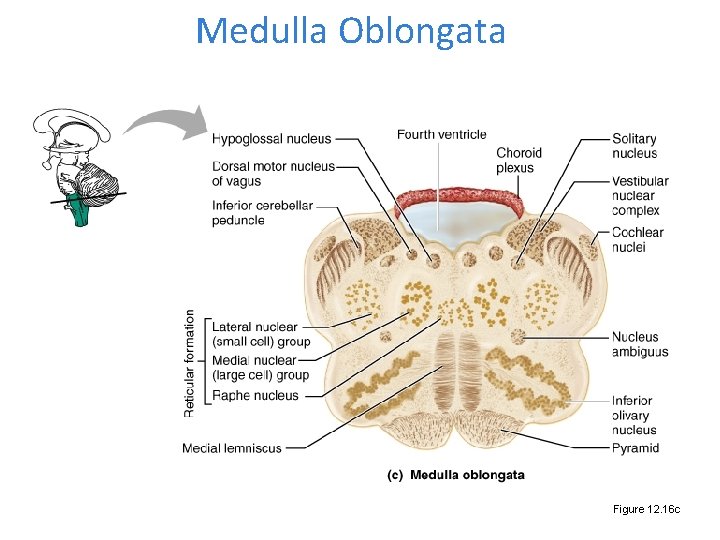
Medulla Oblongata Figure 12. 16 c
Olivary nuclear complex �Mainly Inf. Olivary nucleus �Gray matter is shaped like a crumpled bag with its mouth directed medially �Responsible of the elevation olive �Has communications with spinal cord, cerebellum & cortex �Function is associated with voluntary muscle movement
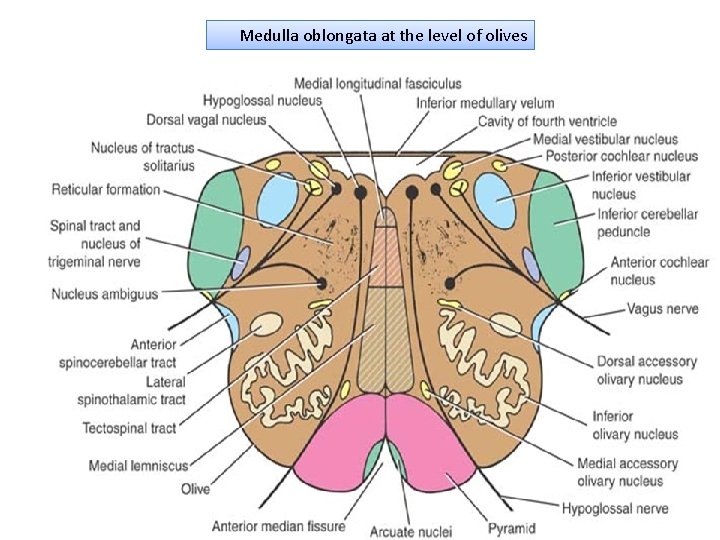
Medulla oblongata at the level of olives
Nucleus ambiguus • • Large motor neurons Situated deep in RF Emerging fibers join 9 th 10 th cranial accessory an elongated nucleus in the medulla oblongata that gives rise to the motor fibers of the glossopharyngeal, vagus, and accessory nerves supplying striated muscle of the larynx and pharynx
Central gray matter �Lies beneath the floor of 4 th ventricle �Passing from M to L: 1. Hypoglossal nucleus 2. Dorsal nucleus of vagus 3. Solitary nucleus 4. Vestibular nuclei
Others • • • Pyramids (corticospinal&corticonuclear fibers) Medial leminiscus Medial longitudinal fasciculus Inferior cerebellar peduncle Reticular formation 9 th 10 th cranial 11 th & 12 th emerge at this section
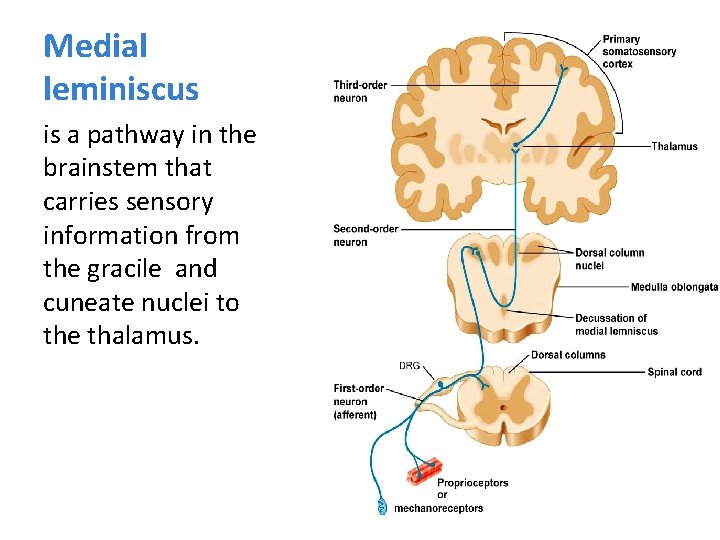
Medial leminiscus is a pathway in the brainstem that carries sensory information from the gracile and cuneate nuclei to the thalamus.
Medial longitudinal fasciculus • • • Small tract of nerve fibers situated on each side of the midline Posterior to med. Leminiscus Anterior to 12 th nucleus It is composed largely of ascending fibers from the vestibular nuclei and cochlear nuclei ascending to the motor nuclei (third, fourth and sixth)
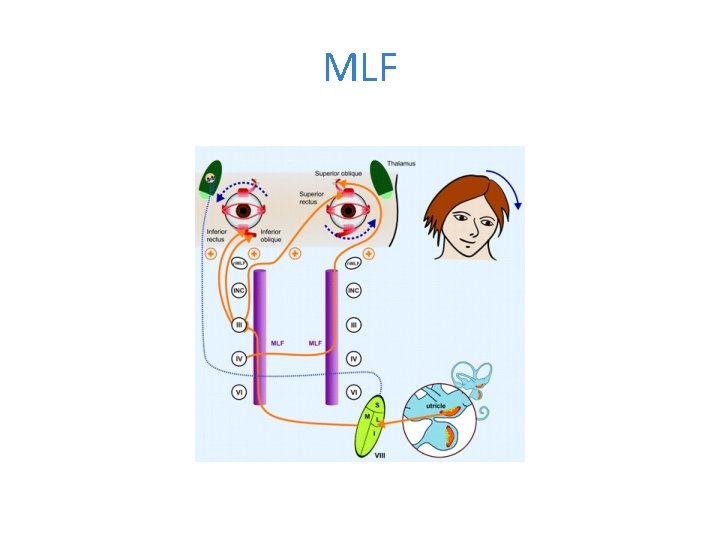
MLF
Spinal nucleus of trigeminal and its tract • Its found anteriomedial to ICP • Seen in all 3 levels of medulla
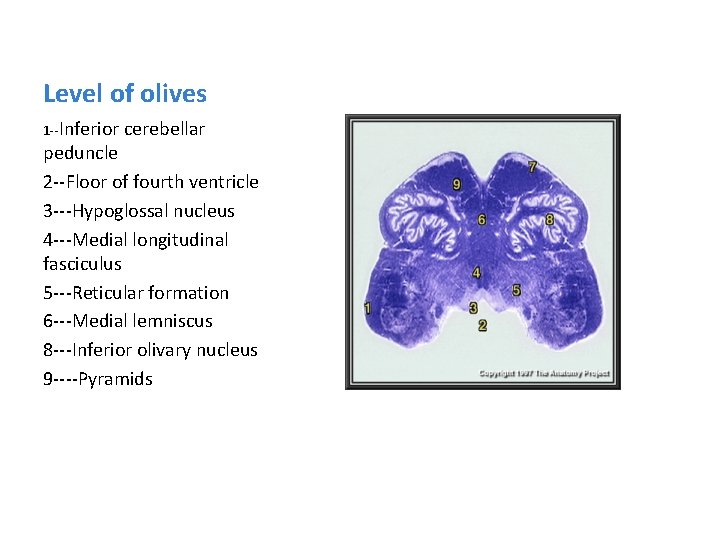
Level of olives 1 --Inferior cerebellar peduncle 2 --Floor of fourth ventricle 3 ---Hypoglossal nucleus 4 ---Medial longitudinal fasciculus 5 ---Reticular formation 6 ---Medial lemniscus 8 ---Inferior olivary nucleus 9 ----Pyramids
The Brain Stem – The Medulla Oblongata • The core of the medulla contains: – Much of the reticular formation • Nuclei influence autonomic functions – Visceral centers of the reticular formation include: • Cardiac center and Vasomotor center (adjusts force and rate of heart contraction) • The medullary respiratory center (control rate and depth of breathing) • Centers for hiccupping, sneezing, swallowing, and coughing
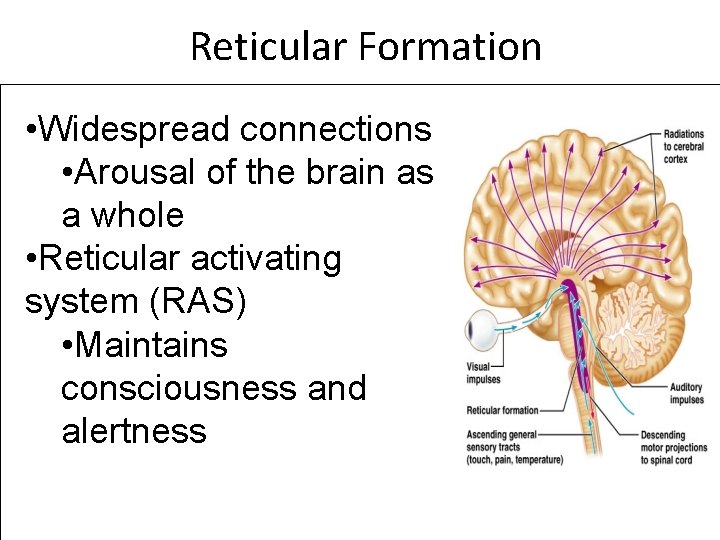
Reticular Formation • Widespread connections • Arousal of the brain as a whole • Reticular activating system (RAS) • Maintains consciousness and alertness
Open medulla
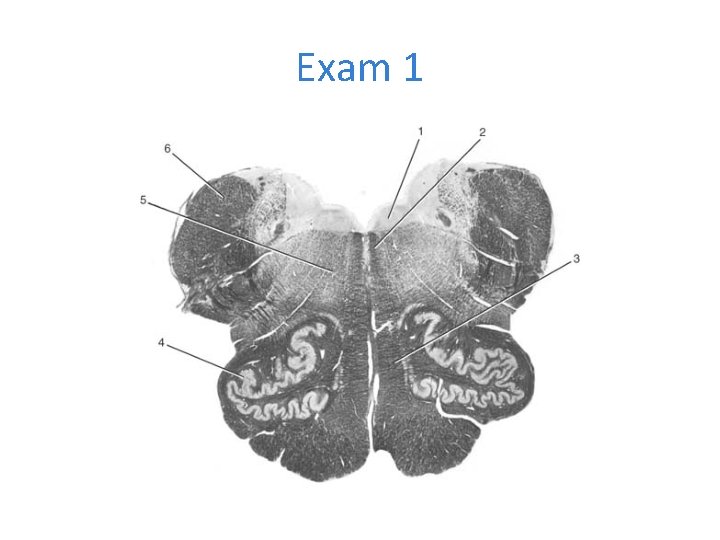
Exam 1
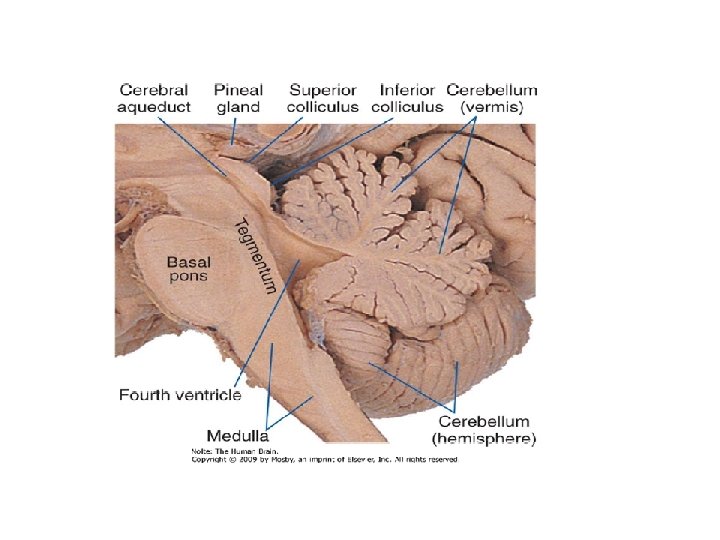
Ventricles of Brain Ø Hollow chambers filled with CSF Ø Four ventricles: (2) Lateral (1) third ventricle (1) fourth ventricle Ø Each lateral ventricle communicates with the third ventricle via a channel called an interventricular foramen (foramen of Monro) Ø Third ventricle is continuous with the fourth ventricle via the cerebral aqueduct
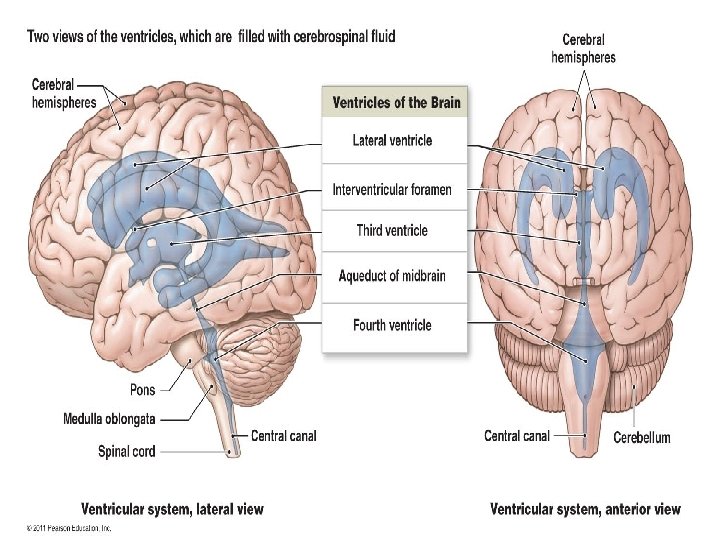
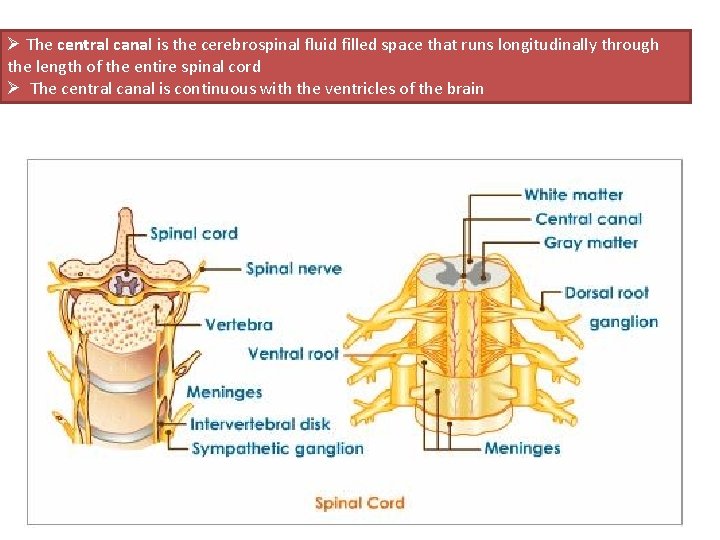
Ø The central canal is the cerebrospinal fluid filled space that runs longitudinally through the length of the entire spinal cord Ø The central canal is continuous with the ventricles of the brain
- Slides: 46