
Brain Plasticity and Brain Training 1 Activity Ten
Brain Plasticity and Brain Training 1
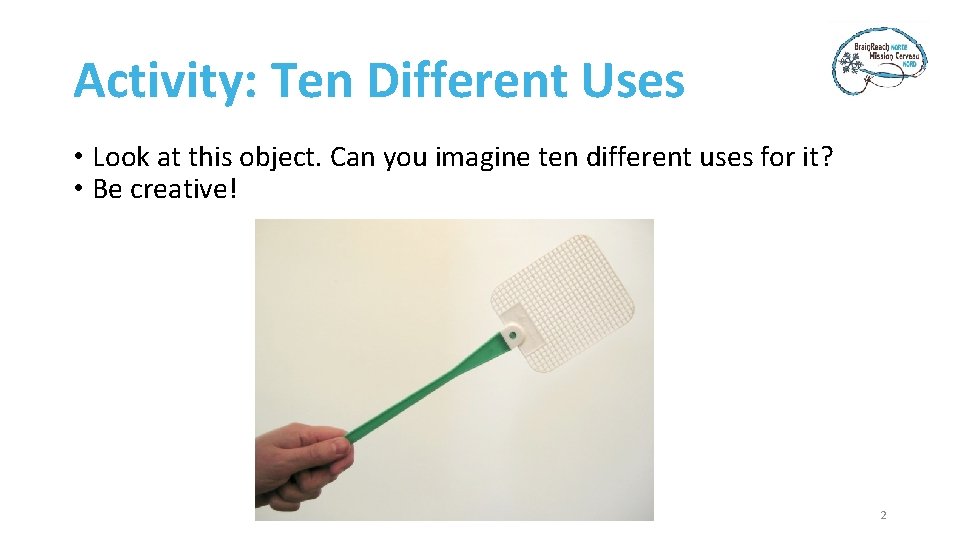
Activity: Ten Different Uses • Look at this object. Can you imagine ten different uses for it? • Be creative! 2
How do the things you do affect your brain? 3
Brain Plasticity is how the brain can change its “wiring” (the connections between the brain cells) - for better and for worse! It is also called Neuroplasticity. “Neuro” = from neurons, the cells that send messages in the brain. “Plasticity” = the possibility to be changed or molded 4
Why Does Brain Plasticity Matter? • Neuroplasticity can happen at any age. • Brain Plasticity means that the brain can change and adapt. • This is important for learning, remembering, and even shaping your personality. It’s part of what makes you, you! 5
Brain Plasticity • Neural connections are the “wiring” or the connections between the neurons • These connections are also called axons • They can be created, changed, or even totally lost, depending on how we use our brain in everyday life. 6
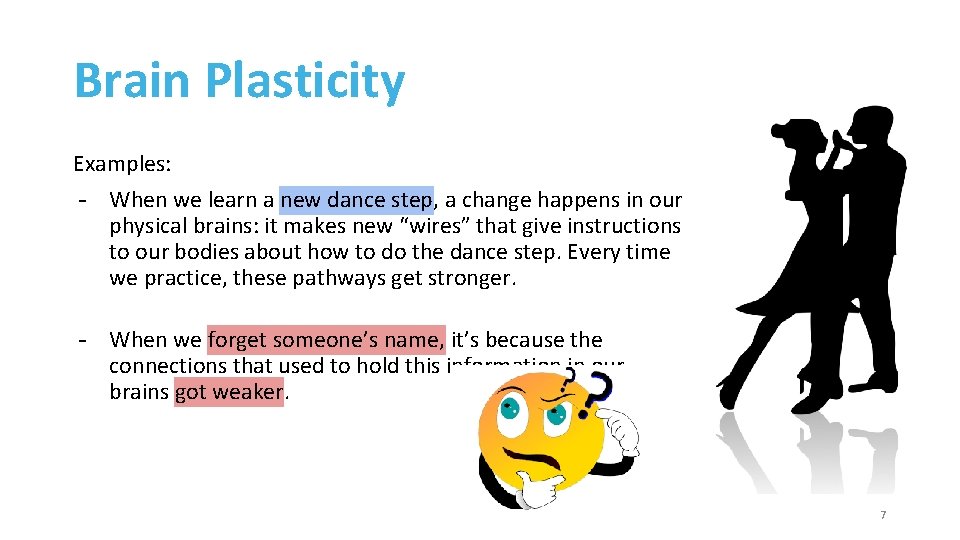
Brain Plasticity Examples: - When we learn a new dance step, a change happens in our physical brains: it makes new “wires” that give instructions to our bodies about how to do the dance step. Every time we practice, these pathways get stronger. - When we forget someone’s name, it’s because the connections that used to hold this information in our brains got weaker. 7

From Brain Plasticity to Brain Training - We can take advantage of Brain Plasticity to keep our brains active and functional - at any age! - Keeping your brain active is as important as keeping your body active in order to stay healthy. 8
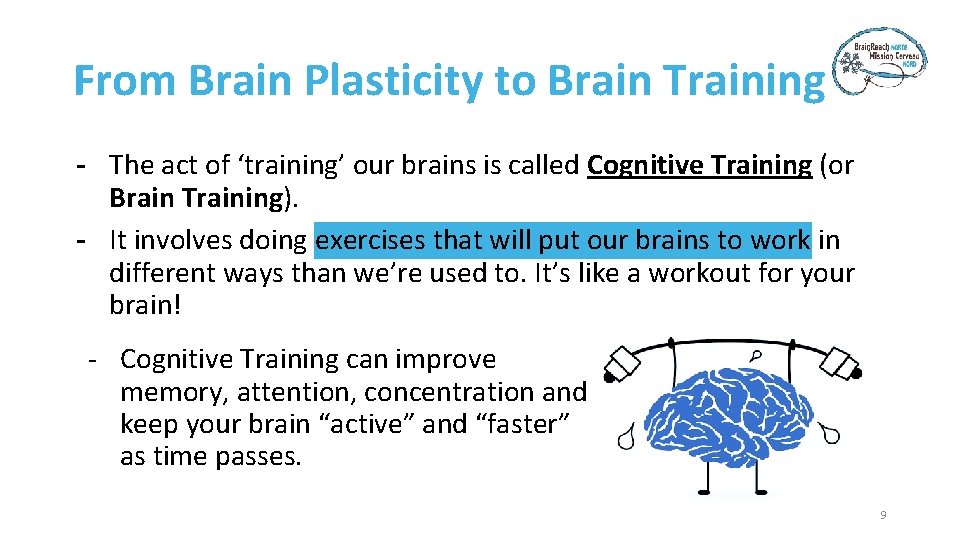
From Brain Plasticity to Brain Training - The act of ‘training’ our brains is called Cognitive Training (or Brain Training). - It involves doing exercises that will put our brains to work in different ways than we’re used to. It’s like a workout for your brain! - Cognitive Training can improve memory, attention, concentration and keep your brain “active” and “faster” as time passes. 9
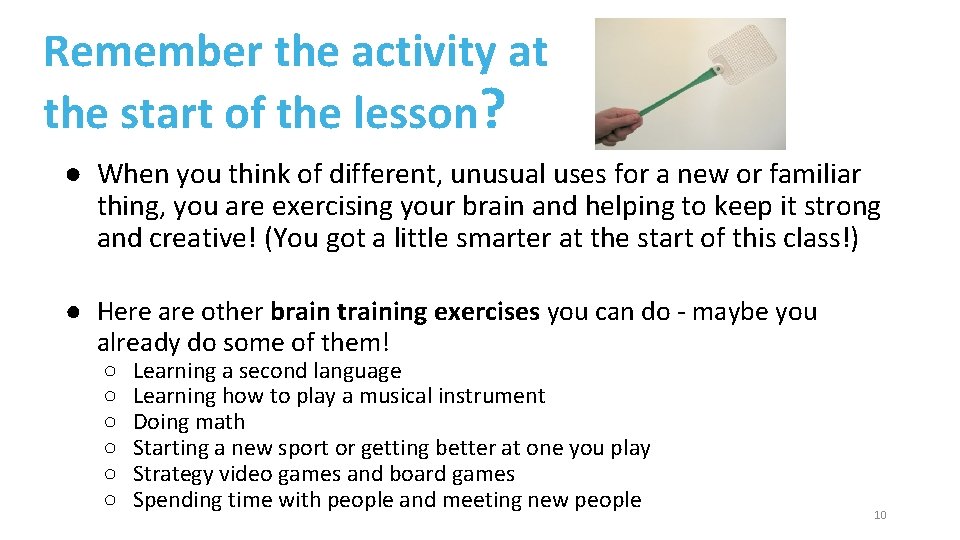
Remember the activity at the start of the lesson? ● When you think of different, unusual uses for a new or familiar thing, you are exercising your brain and helping to keep it strong and creative! (You got a little smarter at the start of this class!) ● Here are other brain training exercises you can do - maybe you already do some of them! ○ ○ ○ Learning a second language Learning how to play a musical instrument Doing math Starting a new sport or getting better at one you play Strategy video games and board games Spending time with people and meeting new people 10
Let’s train our brains even more! 11
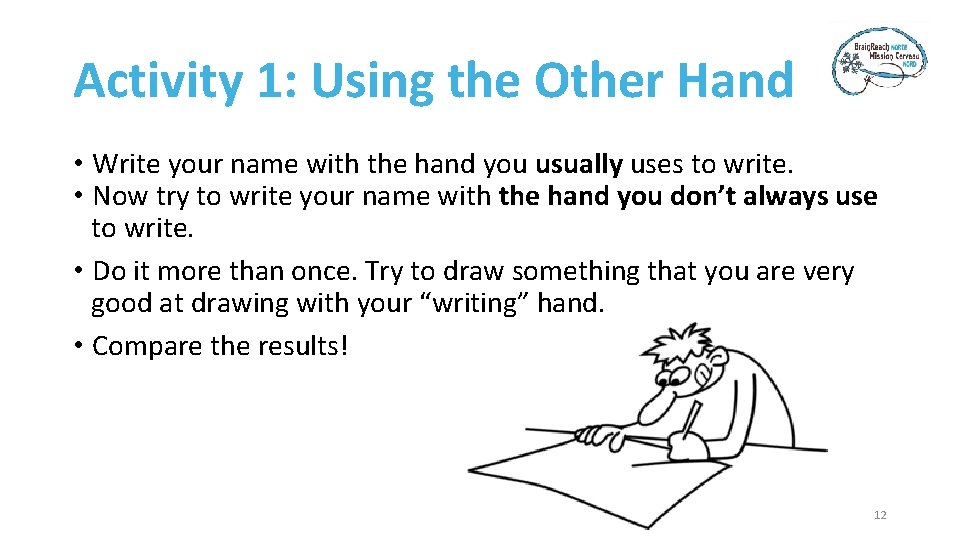
Activity 1: Using the Other Hand • Write your name with the hand you usually uses to write. • Now try to write your name with the hand you don’t always use to write. • Do it more than once. Try to draw something that you are very good at drawing with your “writing” hand. • Compare the results! 12
About “Using the Other Hand” • Was your “non-writing hand” as good as your “writing” hand? • How do you think brain plasticity is related at being better at writing with one hand than the other? • Did you get better with practice? What about when you concentrated harder? • Do you think people can be as good in writing, drawing or playing with both hands? How?
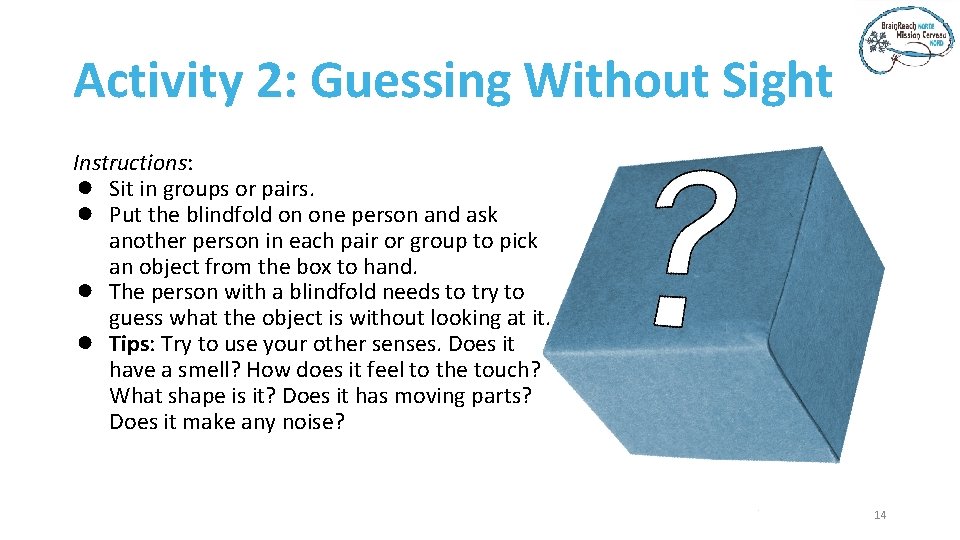
Activity 2: Guessing Without Sight Instructions: ● Sit in groups or pairs. ● Put the blindfold on one person and ask another person in each pair or group to pick an object from the box to hand. ● The person with a blindfold needs to try to guess what the object is without looking at it. ● Tips: Try to use your other senses. Does it have a smell? How does it feel to the touch? What shape is it? Does it has moving parts? Does it make any noise? 14
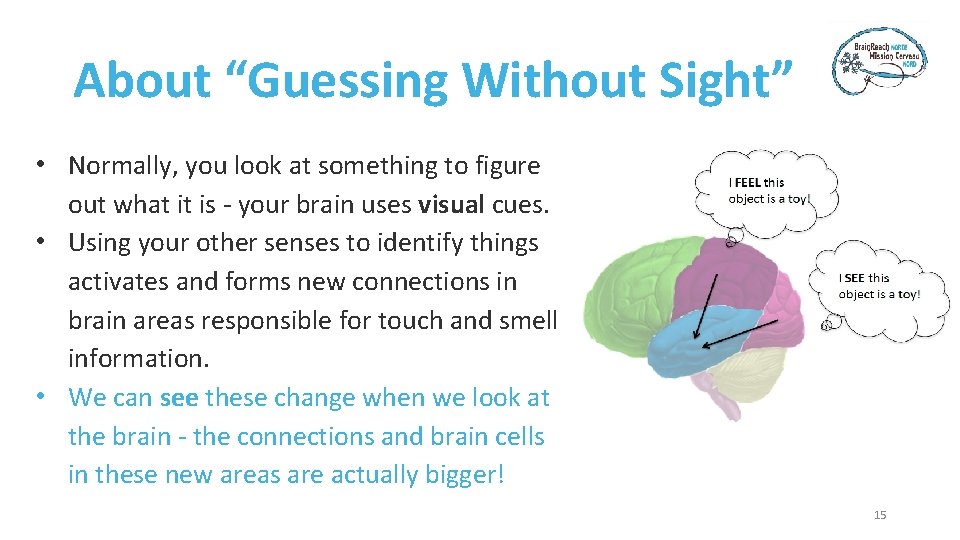
About “Guessing Without Sight” • Normally, you look at something to figure out what it is - your brain uses visual cues. • Using your other senses to identify things activates and forms new connections in brain areas responsible for touch and smell information. • We can see these change when we look at the brain - the connections and brain cells in these new areas are actually bigger! 15
Activity 3: Drawing a Map • You will need: • A sheet of paper • Pencils, crayons, etc. Instructions: ● Picture your school in your mind and drawn a map of it from memory. ● Try to include as many details as you can remember. Be sure to keep the size of everything in mind when drawing (is your classroom bigger than the principal’s office? ) 16
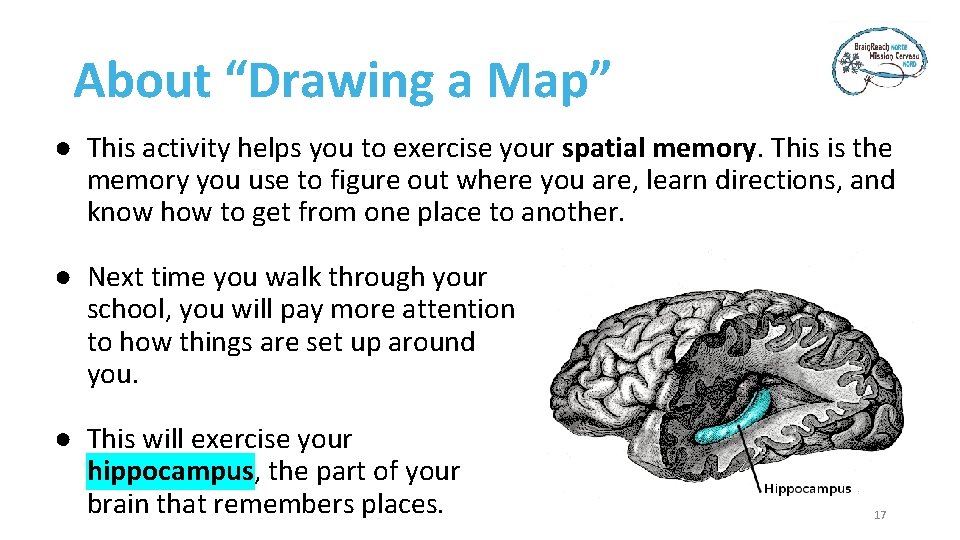
About “Drawing a Map” ● This activity helps you to exercise your spatial memory. This is the memory you use to figure out where you are, learn directions, and know how to get from one place to another. ● Next time you walk through your school, you will pay more attention to how things are set up around you. ● This will exercise your hippocampus, the part of your brain that remembers places. 17
Bonus! ● When you go to a new place, try to do the same when you get back home: close your eyes and remember being in the place, picturing where things were. ● With time, you’ll train your brain to become a great mapmaker (and you won’t get lost as often!) 18
What did We Learn Today? • Our life experiences - even just what we think about - can change our brains. This is called Brain Plasticity or Neuroplasticity. • We can use brain plasticity to keep our brains active by doing “brain exercises”. This is called Cognitive Training or Brain Training. • If you do it regularly, brain training can improve memory, attention, concentration and reduce the effects of ageing. • Brain training can also be fun! 19
More things you can do to challenge your brain: • Taste unfamiliar food. Try to figure out what ingredients and spices were used to make it. • Try to remember a list of items without a cheat sheet (like your grocery list or the names of all your classmates) • Take up a new hobby that involves a lot of hand ability, such as beadwork, drawing or painting. • Challenge yourself to do two or more things at once! Learn all the lyrics of a song while you do the dishes, or practice a new language while you go for a walk. 20
questions@brainreachnorth. com www. brainreachnorth. com 21
- Slides: 21