
Brain Phantoms for Ultra High Field MRI Sixweek
Brain Phantoms for Ultra High Field MRI Six-week project Lauren Villemaire MBP 3970 Z Department of Medical Biophysics University of Western Ontario

Outline �Introduction MRI Imaging at high magnetic fields Phantoms �Objective �Methods �Results �Discussion �Conclusion �Acknowledgements �References 2

Introduction to MRI �Uses nuclear magnetic resonance of protons to produce proton density images �Magnetism - proton spin �Larmor Frequency - rate of precession The 7 T MRI at Robarts Research Institute. 3
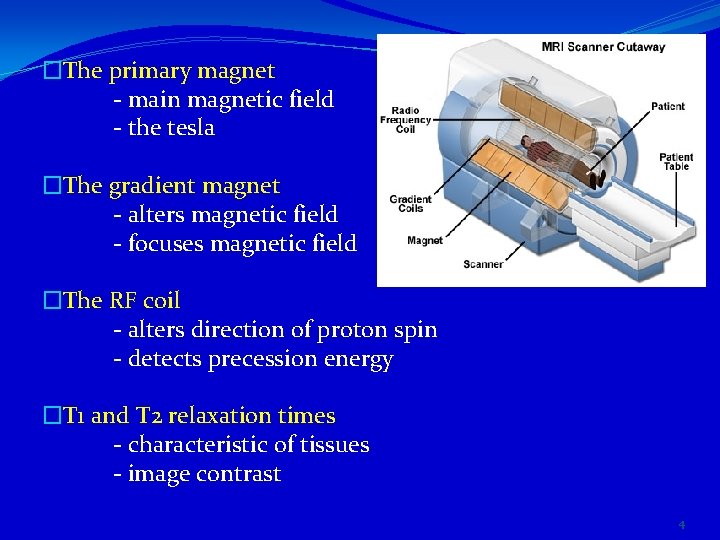
�The primary magnet - main magnetic field - the tesla �The gradient magnet - alters magnetic field - focuses magnetic field �The RF coil - alters direction of proton spin - detects precession energy �T 1 and T 2 relaxation times - characteristic of tissues - image contrast 4

Imaging at ultra high magnetic fields Advantages SNR Spatial Resolution Tissue Contrast Disadvantages RF heterogeneities Magnetic susceptibility artifacts Specific Absorption Rate (SAR) 5

Human hippocampus Images at 7 T have much higher spatial resolution and SNR than at 1. 5 T 1. 5 T 7 T Brain images at 7 T have shading and bright spots that compromise image homogeneity. 6

What are phantoms? An artificial object of known size and composition that is imaged to test, adjust or monitor an MRI system’s - homogeneity - imaging performance - orientation aspects. 7
Objective �To develop a brain-mimicking phantom for use in the 7 T MRI with the following characteristics in common with the brain: - Grey matter/white matter T 1 and T 2 relaxation times - Electrical and wave properties - Anatomical structure and size (not symmetrical) 8
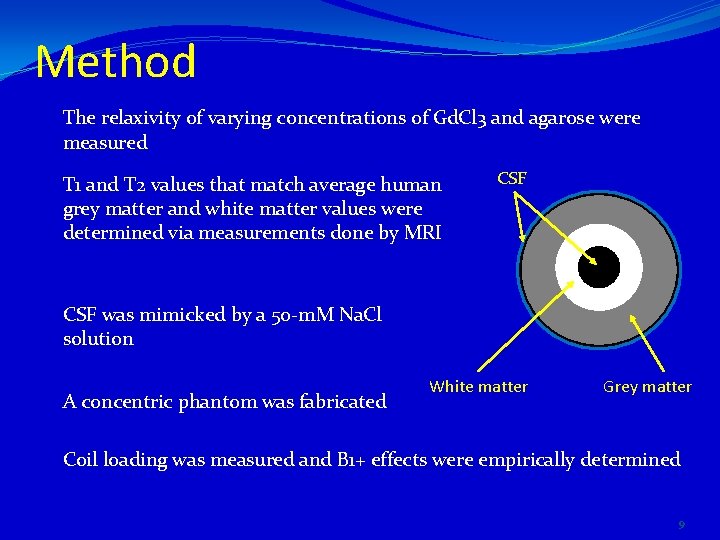
Method The relaxivity of varying concentrations of Gd. Cl 3 and agarose were measured T 1 and T 2 values that match average human grey matter and white matter values were determined via measurements done by MRI CSF was mimicked by a 50 -m. M Na. Cl solution A concentric phantom was fabricated White matter Grey matter Coil loading was measured and B 1+ effects were empirically determined 9
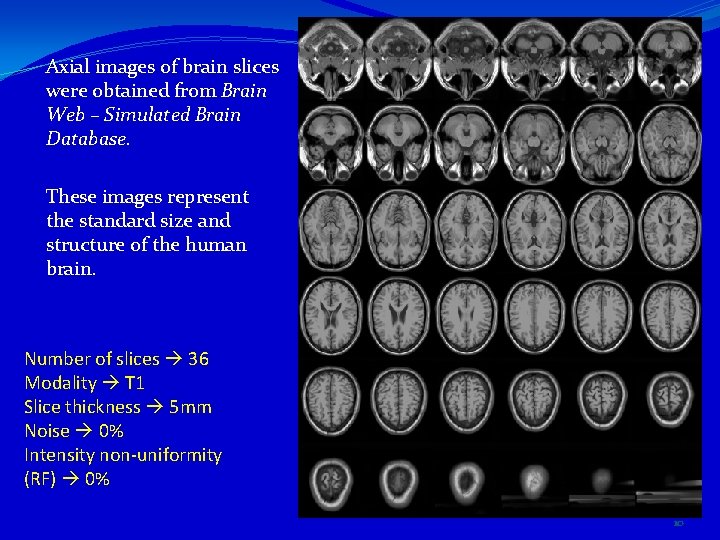
Axial images of brain slices were obtained from Brain Web – Simulated Brain Database. These images represent the standard size and structure of the human brain. Number of slices 36 Modality T 1 Slice thickness 5 mm Noise 0% Intensity non-uniformity (RF) 0% 10
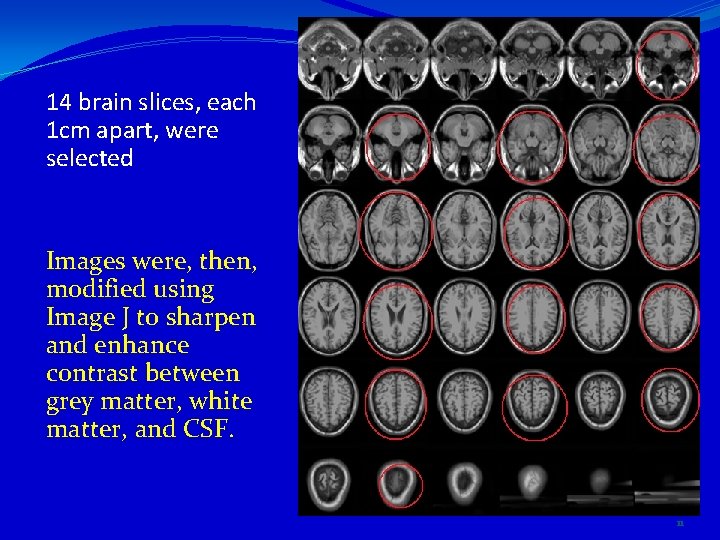
14 brain slices, each 1 cm apart, were selected Images were, then, modified using Image J to sharpen and enhance contrast between grey matter, white matter, and CSF. 11
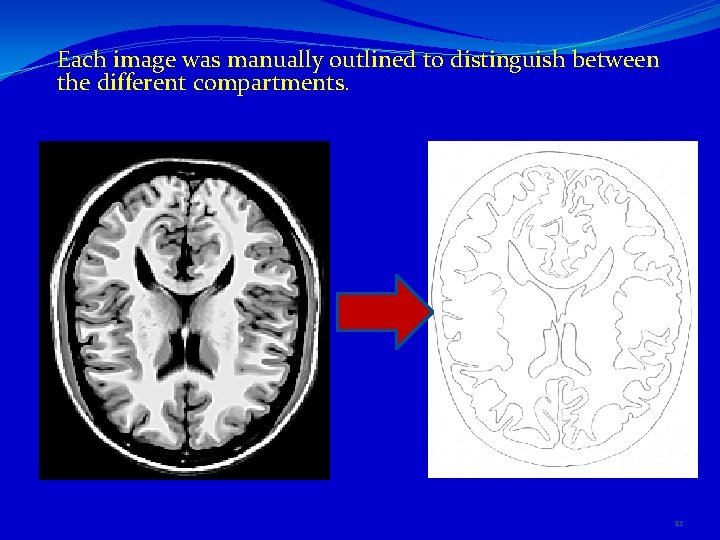
Each image was manually outlined to distinguish between the different compartments. 12
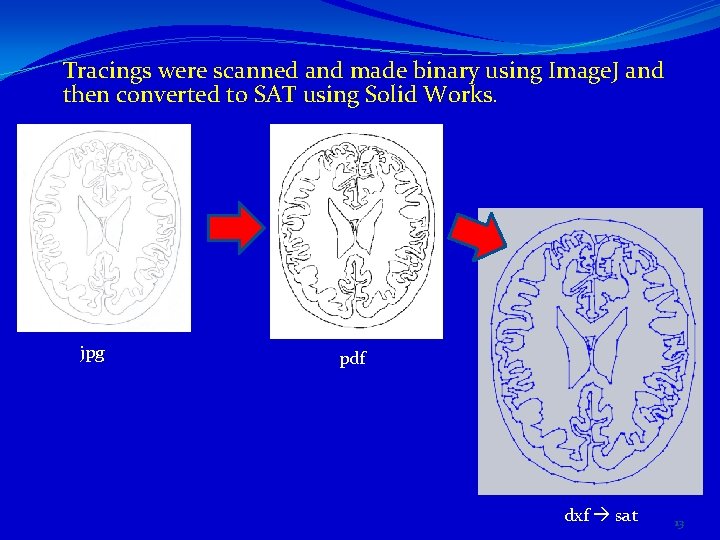
Tracings were scanned and made binary using Image. J and then converted to SAT using Solid Works. jpg pdf dxf sat 13
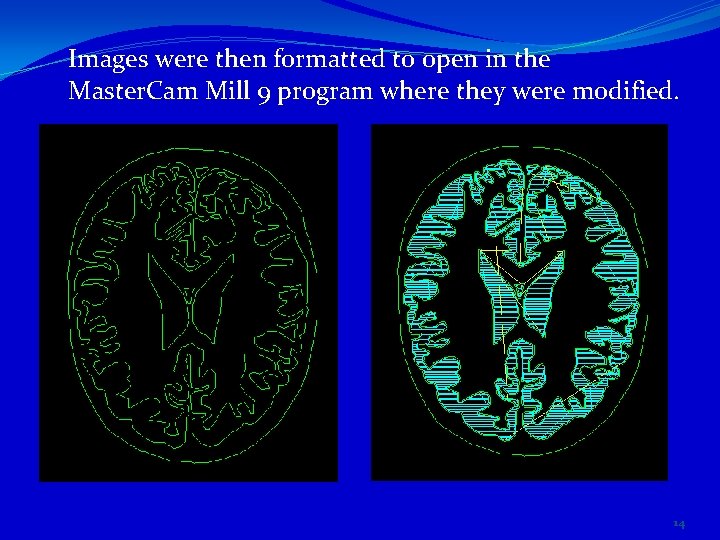
Images were then formatted to open in the Master. Cam Mill 9 program where they were modified. 14
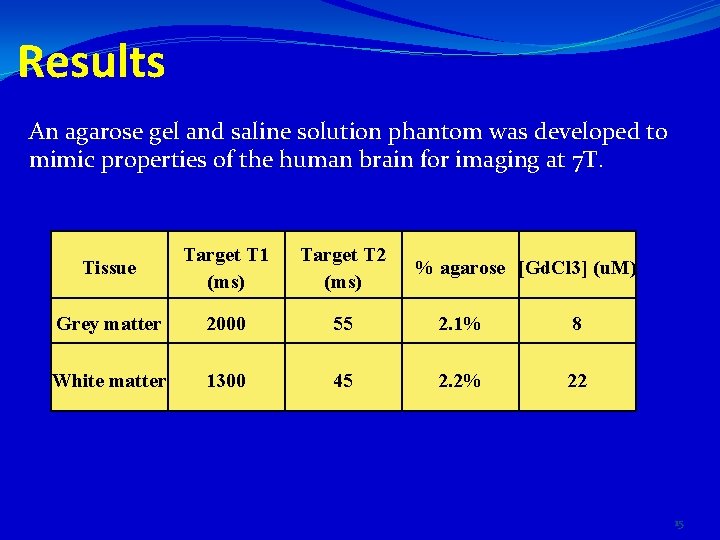
Results An agarose gel and saline solution phantom was developed to mimic properties of the human brain for imaging at 7 T. Tissue Target T 1 (ms) Target T 2 (ms) Grey matter 2000 55 2. 1% 8 White matter 1300 45 2. 2% 22 % agarose [Gd. Cl 3] (u. M) 15
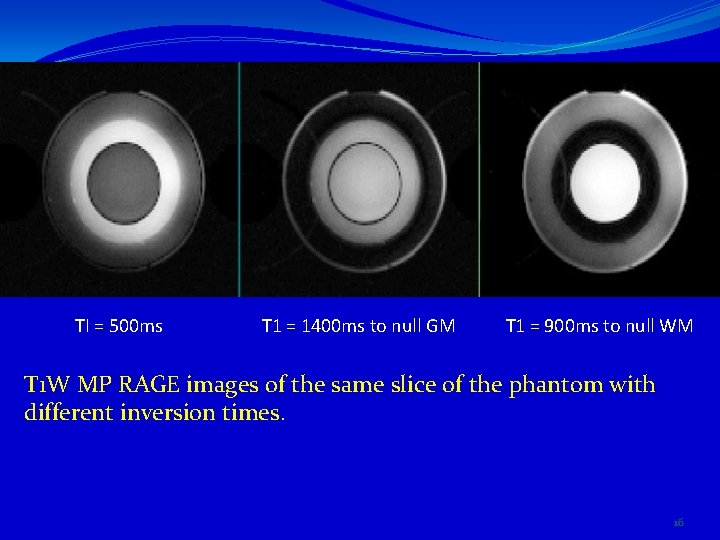
TI = 500 ms T 1 = 1400 ms to null GM T 1 = 900 ms to null WM T 1 W MP RAGE images of the same slice of the phantom with different inversion times. 16
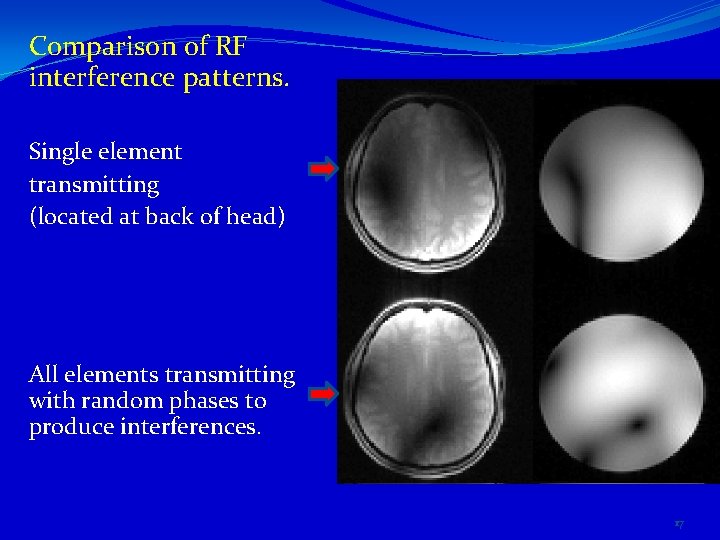
Comparison of RF interference patterns. Single element transmitting (located at back of head) All elements transmitting with random phases to produce interferences. 17
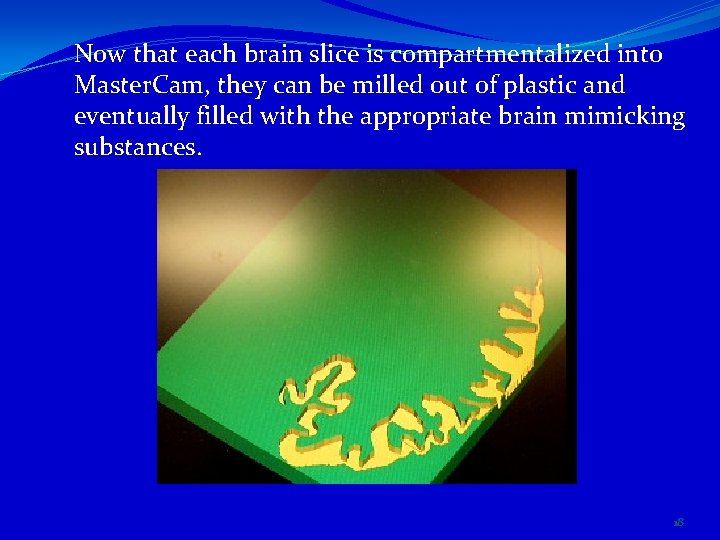
Now that each brain slice is compartmentalized into Master. Cam, they can be milled out of plastic and eventually filled with the appropriate brain mimicking substances. 18
Discussion I’ve successfully designed a head-mimicking phantom for use in the 7 T MRI. �The phantom exhibits very similar dielectric properties (conductivity and permittivity) to the human brain �The phantom is the same size and shape of the average brain �The phantom has similar anatomical structure to the average brain �The phantom has grey matter/ white matter contrast with the same T 1 and T 2 relaxation times as human brain tissue imaged at 7 T 19
Conclusion Such a phantom is unique. It would. . . (1) allow the ability to instrument the phantom and measure RF power deposition (SAR) and (2) optimize RF shimming techniques using multiple transmitters. Both of these are major challenges currently. 20
Acknowledgements Supervisor: Dr. Ravi S. Menon Post-doctoral student: Kyle Gilbert Graduate student: Andrew Curtis 21
References � Brain Web: Simulated Brain Database http: //mouldy. bic. mni. mcgill. ca/brainweb/ � Rooney WD, et al. Magn Reson Med 2007; 57: 308 -318 � Wright PJ et al. MAGMA 2008; 21: 121 -130 � Yoshida A et al. Int J Hyperthermia 2004; 20: 803 -814 22
- Slides: 22