
Brain Neurotransmitters Chemical substances released by electrical impulses
Brain Neurotransmitters
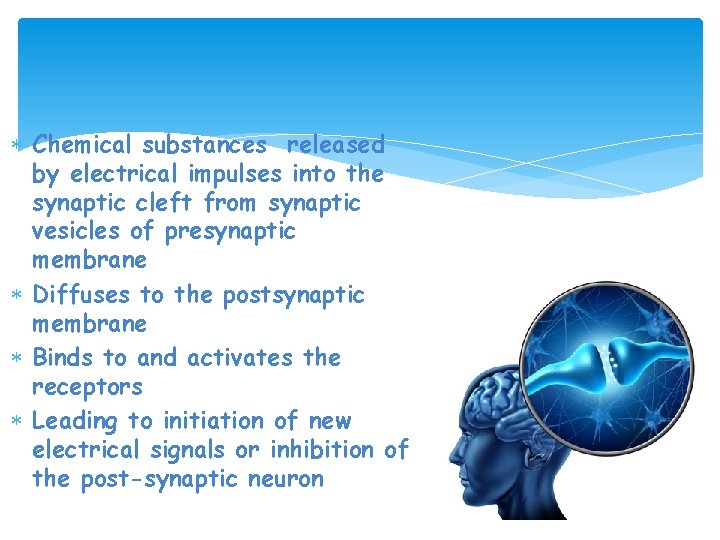
Chemical substances released by electrical impulses into the synaptic cleft from synaptic vesicles of presynaptic membrane Diffuses to the postsynaptic membrane Binds to and activates the receptors Leading to initiation of new electrical signals or inhibition of the post-synaptic neuron
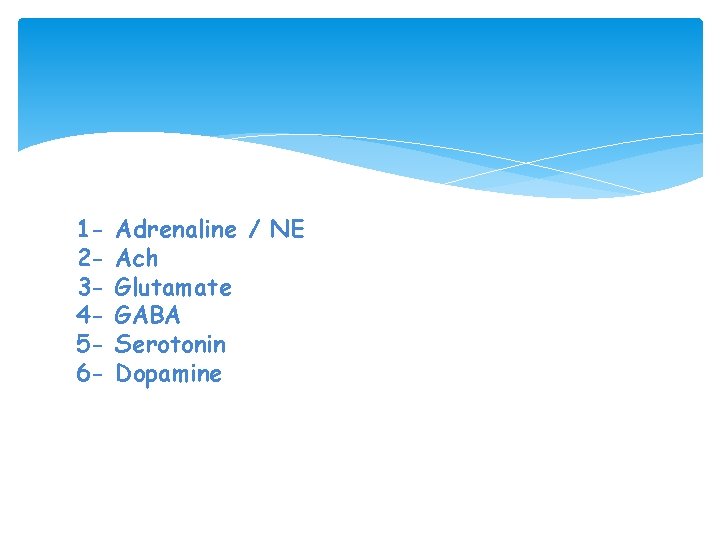
123456 - Adrenaline / NE Ach Glutamate GABA Serotonin Dopamine



Classes of Receptors Metabotropic = trans membrane receptor acts through a secondary messenger Ionotropic = Ligand gated ion channel 7

Norepinephrine System
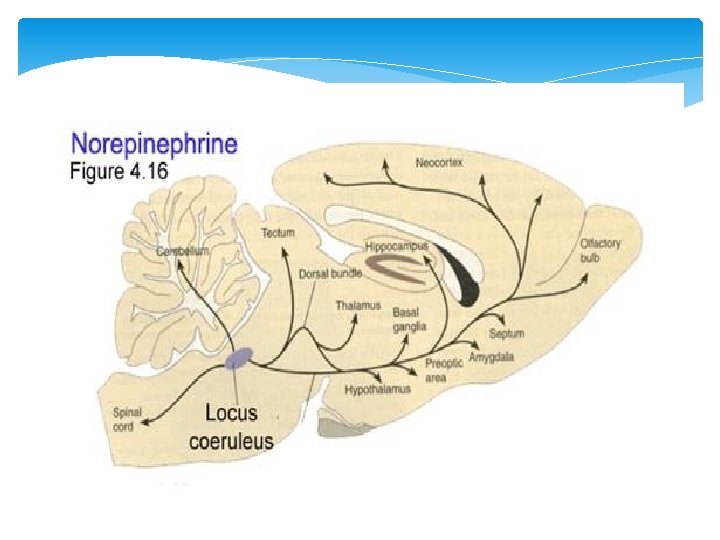
The Locus Coeruleus/Norepinephrine System • Very wide-spread projection system • LC is activated by stress and co-ordinates responses via projections to thalamus, cortex, hippocampus, amygdala, hypothalamus, autonomic brainstem centers, and the spinal cord • Sleep • Attention/Vigilance
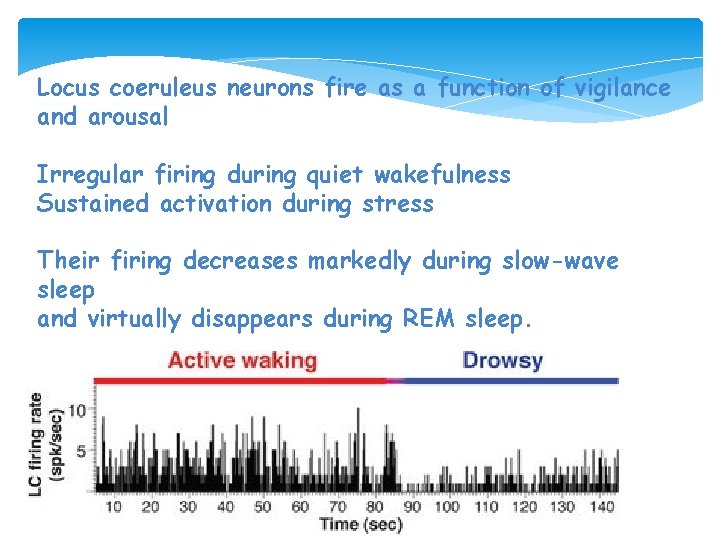
Locus coeruleus neurons fire as a function of vigilance and arousal Irregular firing during quiet wakefulness Sustained activation during stress Their firing decreases markedly during slow-wave sleep and virtually disappears during REM sleep. 10

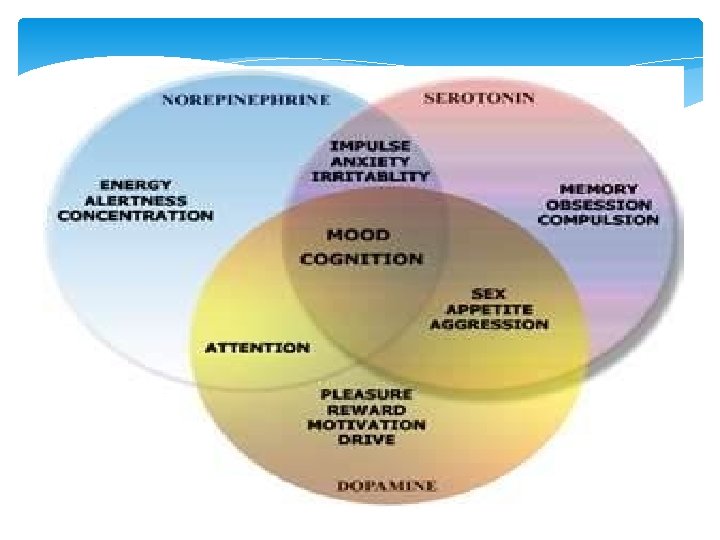
Norepinephrine (NE) Implicated in Stress. Related Disorders • Depression • Withdrawal from some drugs of abuse • Other stress-related disorders such as panic disorder.

PGi: Nucleus paragigantocellularis Pr. H: Perirhinal Cortex

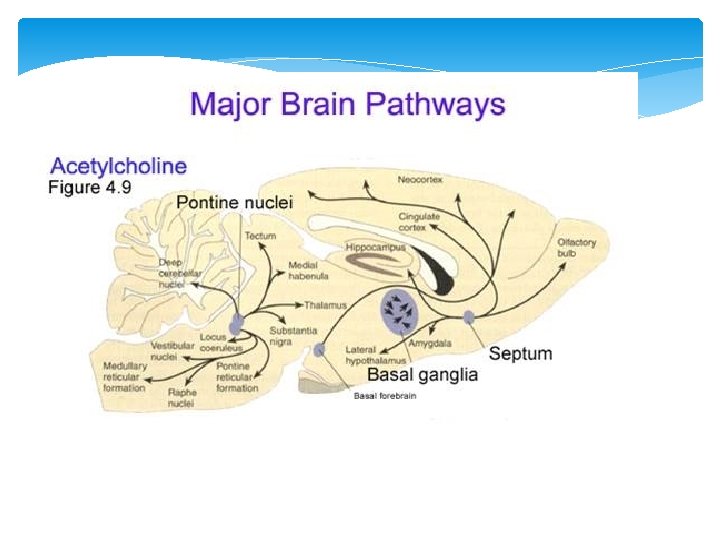
Major neurotransmitter in the peripheral nervous system Produced by the neurons in the parietal lobes of the brain Associated with Thought Memory Muscular coordination Speed of information processing in the brain Production of myelin sheath
ACh influences mental processes such as Learning Memory Sleeping Dreaming. Alzheimer’s Disease- the most common form of dementia that is associated with acetylcholine Damage to Ach producing cells in the basal forebrain Bipolar disorder Mood swings Depression


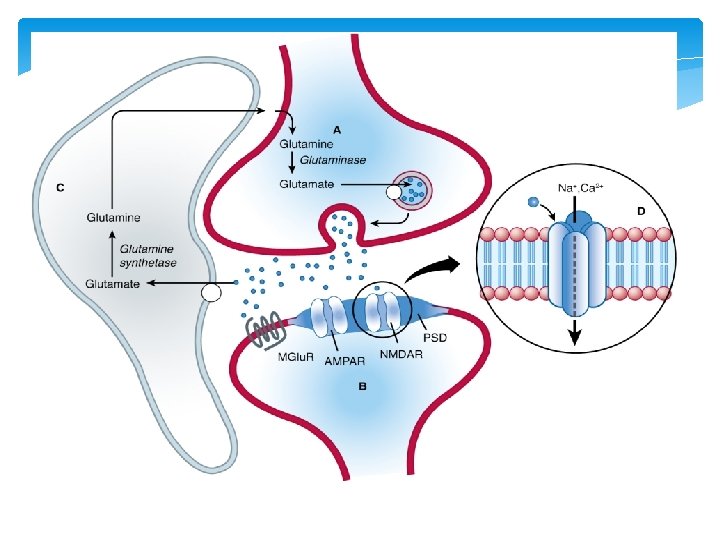
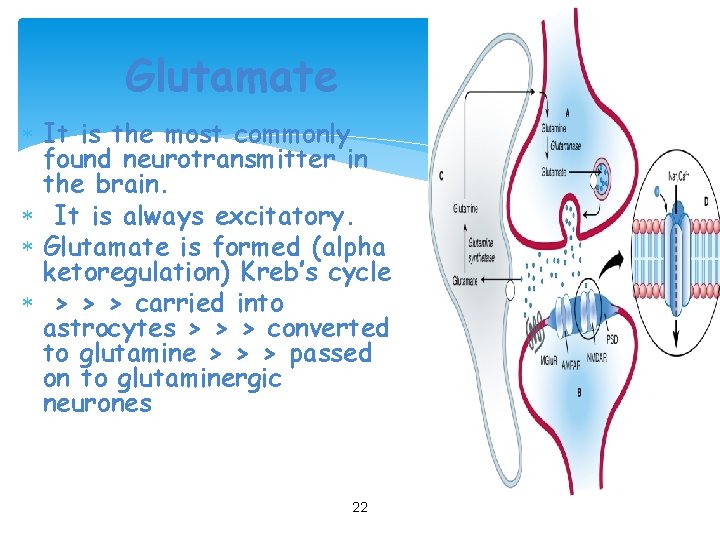
Glutamate It is the most commonly found neurotransmitter in the brain. It is always excitatory. Glutamate is formed (alpha ketoregulation) Kreb’s cycle > > > carried into astrocytes > > > converted to glutamine > > > passed on to glutaminergic neurones 22
Important role in Learning and memory 23
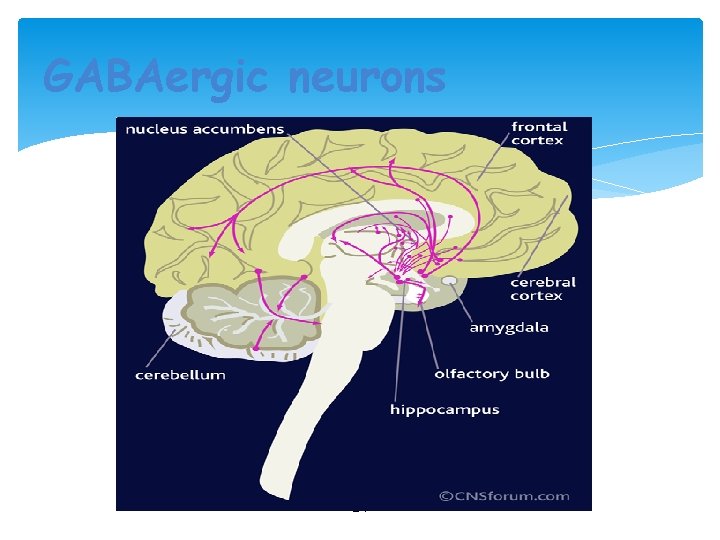
GABAergic neurons 24

Gamma Aminobutyric acid (GABA) Inhibitory neurotransmitter of CNS and is also found in retina. Formed by decarboxylation of glutamate. Three types of GABA receptors e. g. GABAA B & C. GABA A & B receptors are widely distributed in CNS. GABAC are found in retina only GABA B are metabotropic (Gprotein) in function. 25
GABA is the main inhibitory neurotransmitter in the central nervous system (CNS). GABAergic inhibition is seen at all levels of the CNC (Hypothalamus, hippocampus, cerebral cortex and cerebellar cortex. GABA interneurones are abundant in the brain, with 50% of the inhibitory synapses in the brain being GABA mediated. 26
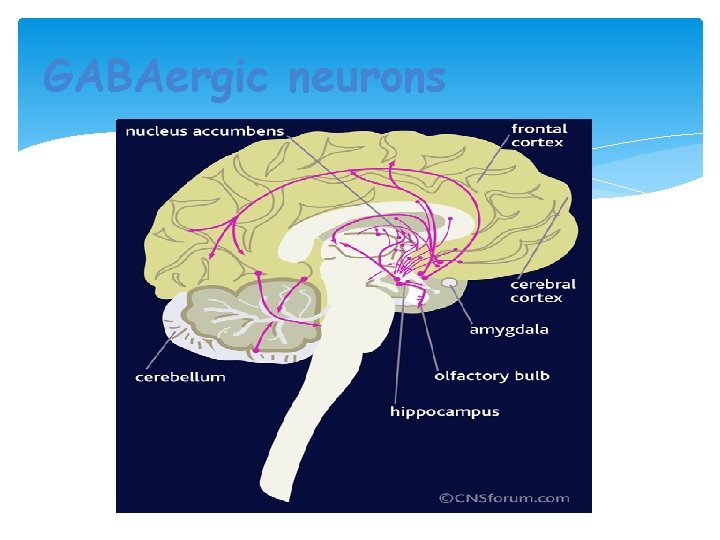
GABAergic neurons 27

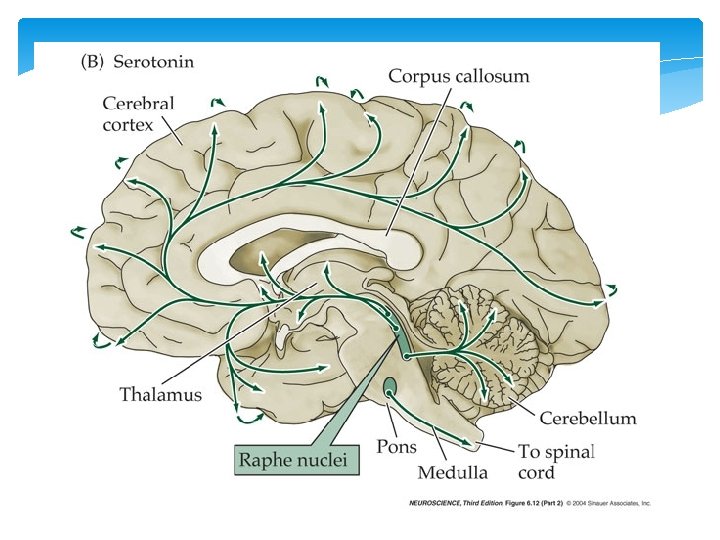

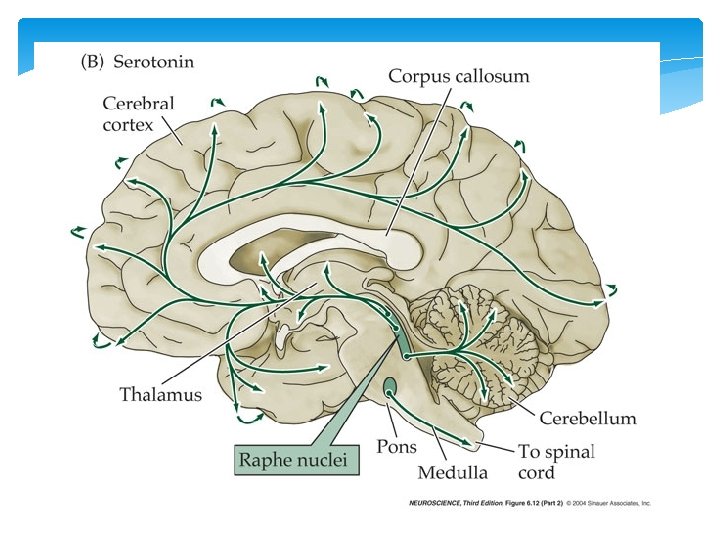
Serotonin The serotonin pathways in the brain: The principal centers for serotonergic neurons are the rostral and caudal raphe nuclei >>>> axons ascend to the cerebral cortex, limbic & basal ganglia Serotonergic nuclei in the brain stem >>>> descending axons (terminate in the medulla& spinal cord 30

Serotonin (5 -HT) Disorders • Depression • Anxiety

Dopaminergic Pathways 35

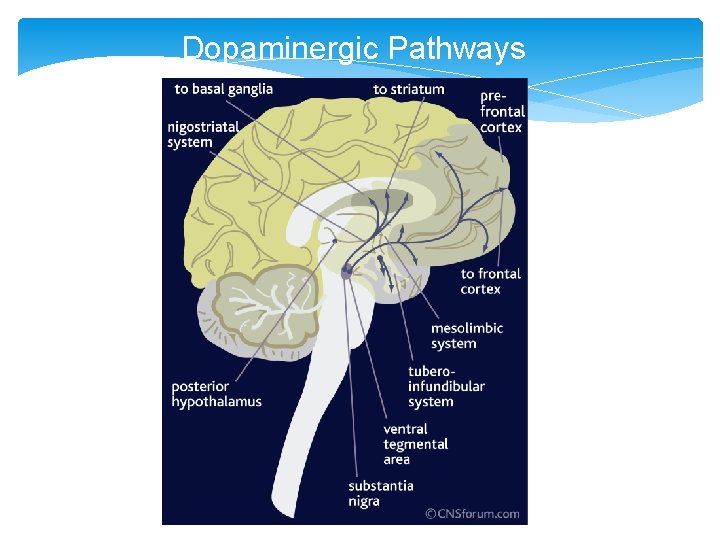
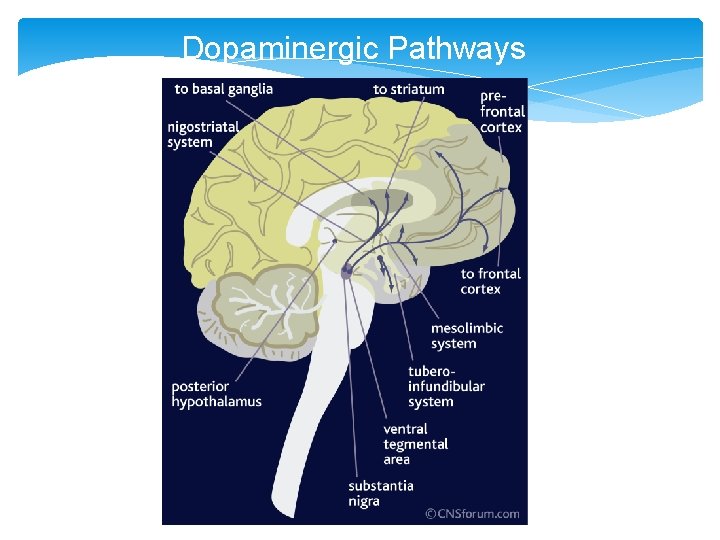
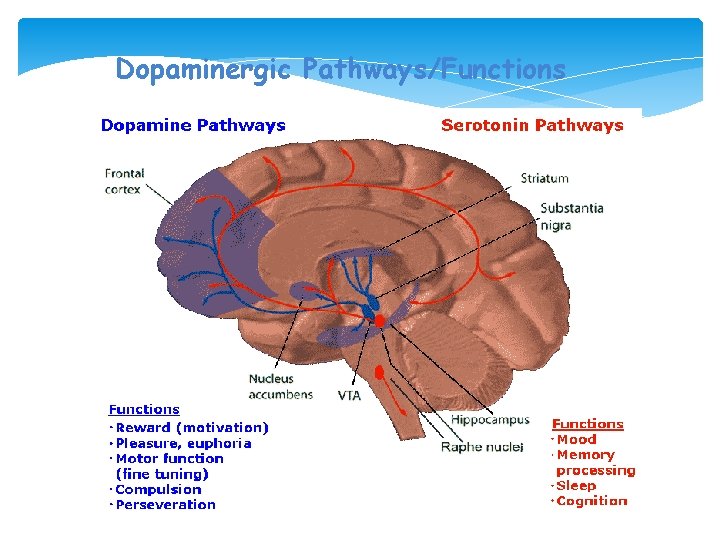
Dopaminergic Pathways Dopamine is transmitted via three major pathways: 1 - The first extends from the substantia nigra to the caudate nucleus-putamen (neostriatum) and is concerned with sensory stimuli and movement. 36
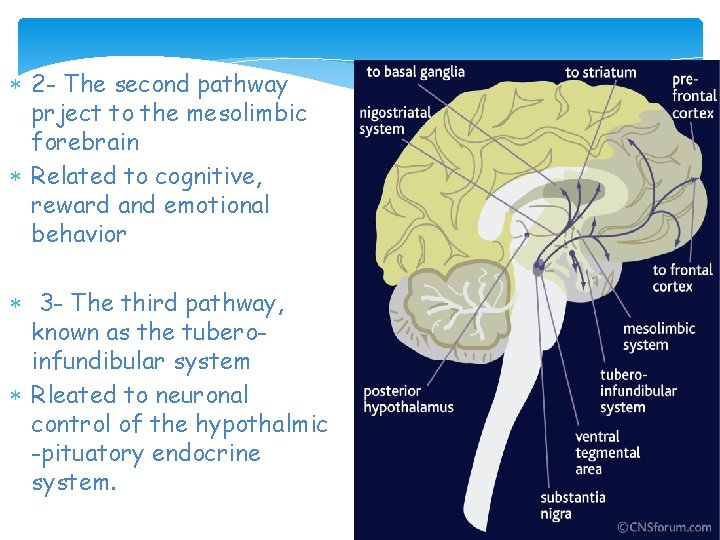
2 - The second pathway prject to the mesolimbic forebrain Related to cognitive, reward and emotional behavior 3 - The third pathway, known as the tuberoinfundibular system Rleated to neuronal control of the hypothalmic -pituatory endocrine system.
Dopaminergic Pathways 38
Dopaminergic Pathways/Functions 39
Dopaminergic neurons disorders Schezophrenia. Parkinson’s Disease. 40
41
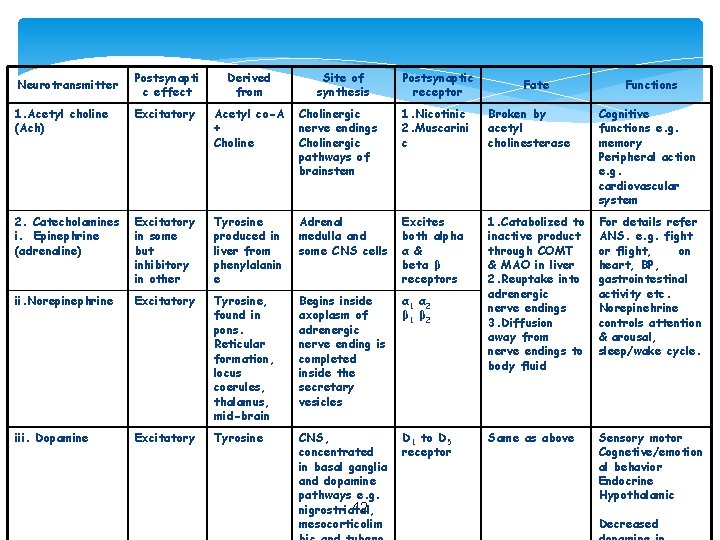
Postsynapti c effect Derived from 1. Acetyl choline (Ach) Excitatory Acetyl co-A + Cholinergic nerve endings Cholinergic pathways of brainstem 1. Nicotinic 2. Muscarini c Broken by acetyl cholinesterase Cognitive functions e. g. memory Peripheral action e. g. cardiovascular system 2. Catecholamines i. Epinephrine (adrenaline) Excitatory in some but inhibitory in other Tyrosine produced in liver from phenylalanin e Adrenal medulla and some CNS cells Excites both alpha α & beta β receptors ii. Norepinephrine Excitatory Tyrosine, found in pons. Reticular formation, locus coerules, thalamus, mid-brain Begins inside axoplasm of adrenergic nerve ending is completed inside the secretary vesicles α 1 α 2 β 1 β 2 1. Catabolized to inactive product through COMT & MAO in liver 2. Reuptake into adrenergic nerve endings 3. Diffusion away from nerve endings to body fluid For details refer ANS. e. g. fight or flight, on heart, BP, gastrointestinal activity etc. Norepinehrine controls attention & arousal, sleep/wake cycle. iii. Dopamine Excitatory Tyrosine CNS, concentrated in basal ganglia and dopamine pathways e. g. 42 nigrostriatal, mesocorticolim D 1 to D 5 receptor Same as above Sensory motor Cognetive/emotion al behavior Endocrine Hypothalamic Neurotransmitter Site of synthesis Postsynaptic receptor Fate Functions Decreased
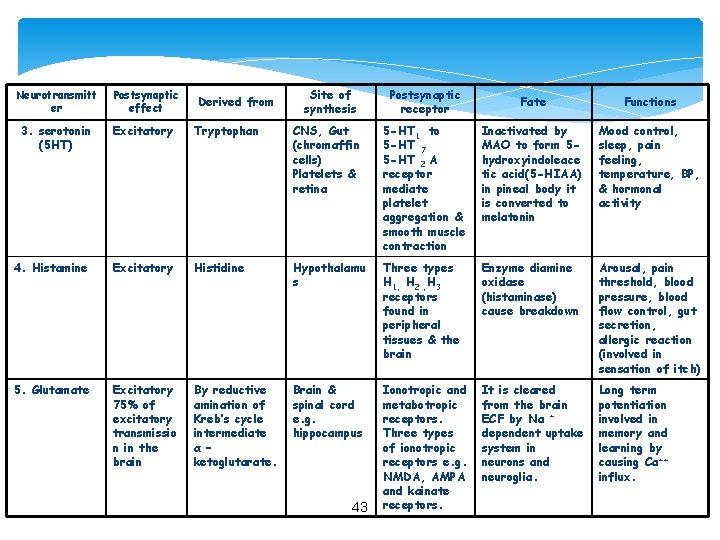
Site of synthesis Neurotransmitt er Postsynaptic effect 3. serotonin (5 HT) Excitatory Tryptophan CNS, Gut (chromaffin cells) Platelets & retina 4. Histamine Excitatory Histidine 5. Glutamate Excitatory 75% of excitatory transmissio n in the brain By reductive amination of Kreb’s cycle intermediate α – ketoglutarate. Derived from Postsynaptic receptor Fate Functions 5 -HT 1 to 5 -HT 7 5 -HT 2 A receptor mediate platelet aggregation & smooth muscle contraction Inactivated by MAO to form 5 hydroxyindoleace tic acid(5 -HIAA) in pineal body it is converted to melatonin Mood control, sleep, pain feeling, temperature, BP, & hormonal activity Hypothalamu s Three types H 1, H 2 , H 3 receptors found in peripheral tissues & the brain Enzyme diamine oxidase (histaminase) cause breakdown Arousal, pain threshold, blood pressure, blood flow control, gut secretion, allergic reaction (involved in sensation of itch) Brain & spinal cord e. g. hippocampus Ionotropic and metabotropic receptors. Three types of ionotropic receptors e. g. NMDA, AMPA and kainate receptors. It is cleared from the brain ECF by Na + dependent uptake system in neurons and neuroglia. Long term potentiation involved in memory and learning by causing Ca++ influx. 43
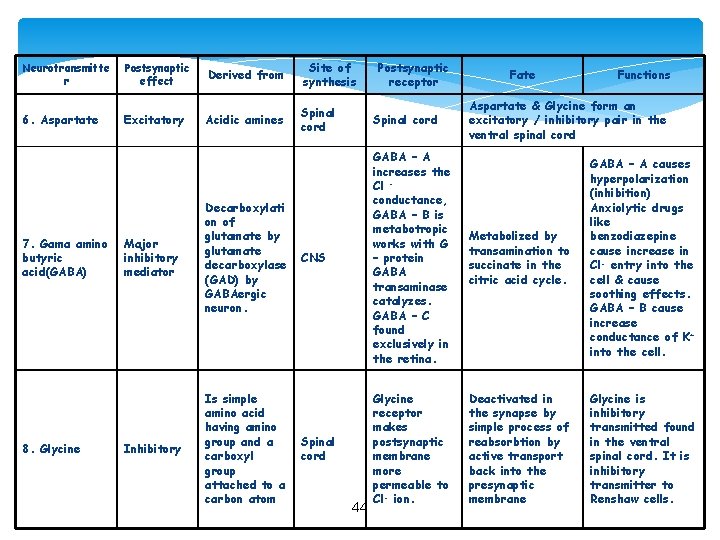
Neurotransmitte r 6. Aspartate 7. Gama amino butyric acid(GABA) 8. Glycine Postsynaptic effect Excitatory Derived from Site of synthesis Acidic amines Spinal cord CNS GABA – A increases the Cl conductance, GABA – B is metabotropic works with G – protein GABA transaminase catalyzes. GABA – C found exclusively in the retina. Metabolized by transamination to succinate in the citric acid cycle. GABA – A causes hyperpolarization (inhibition) Anxiolytic drugs like benzodiazepine cause increase in Cl- entry into the cell & cause soothing effects. GABA – B cause increase conductance of K+ into the cell. Spinal cord Glycine receptor makes postsynaptic membrane more permeable to Cl- ion. Deactivated in the synapse by simple process of reabsorbtion by active transport back into the presynaptic membrane Glycine is inhibitory transmitted found in the ventral spinal cord. It is inhibitory transmitter to Renshaw cells. Major inhibitory mediator Decarboxylati on of glutamate by glutamate decarboxylase (GAD) by GABAergic neuron. Inhibitory Is simple amino acid having amino group and a carboxyl group attached to a carbon atom 44 Postsynaptic receptor Fate Functions Aspartate & Glycine form an excitatory / inhibitory pair in the ventral spinal cord


- Slides: 46