
Brain Neurotransmitters and Other Chemicals When the brain
Brain, Neurotransmitters, and Other Chemicals When the brain is flooded by certain neurotransmitters in the form of medication or drugs (cocaine, heroin, morphine), it may naturally stop producing similar transmitters (called neuroadaption) What do you think happens when a person stops taking the drug after neuroadaption has occurred? When the medication or drug is withdrawn, the brain becomes deprived of any form of neurotransmitter until the brain can naturally start producing its own neurotransmitters again. �Explains the uncomfortable withdrawal period when a drug addict ceases using the drug.
Brain, Neurotransmitters, and Other Chemicals Various drugs and substances can effect communication at the synapse, by exciting or inhibiting a neuron to fire. Agonist – molecules that are similar to neurotransmitters and can mimic their effects. �Eg: the venom of a black widow spider floods the brain with agonists similar to ACh which results in muscle contractions, convulsions, and even death. Antagonist – a molecule that inhibits a neurotransmitter’s release �Eg: Botulin (a poison in improperly canned food), causes paralysis by blocking the release of ACh from the sending neuron. MOUSE PARTY!!!

REVIEW Communication WITHIN a neuron… ELECTRICAL – action potential Communication BETWEEN neurons… CHEMICAL – neurotransmission
Tuesday, September 26 1. How does one neuron Today’s topic: communicate with another Nervous System and Endocrine System neuron? 2. What are some things that Homework: your body involuntarily Read pages 66 -73 does when under stress? Brain Scan chart 3. How do hormones effect Terms someone’s behavior and Study for quiz mental processes? Give an Assessments: example (think puberty). Quiz on 3 A Thursday 4. What is a reflex? Test on Biological Bases: Monday
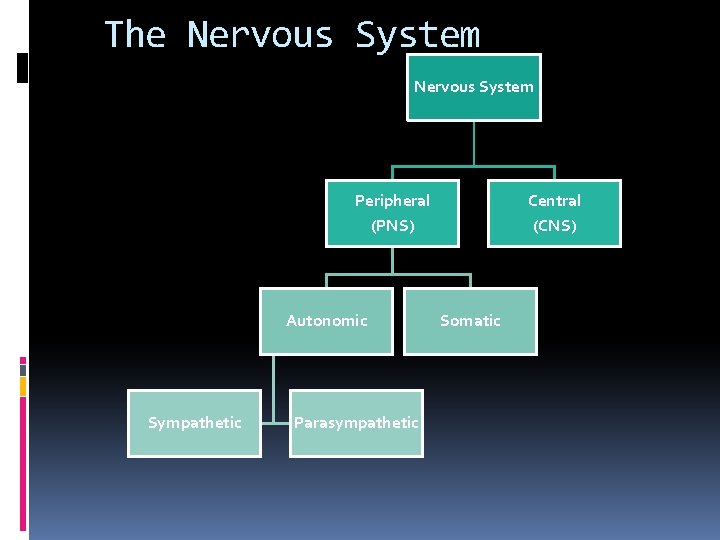
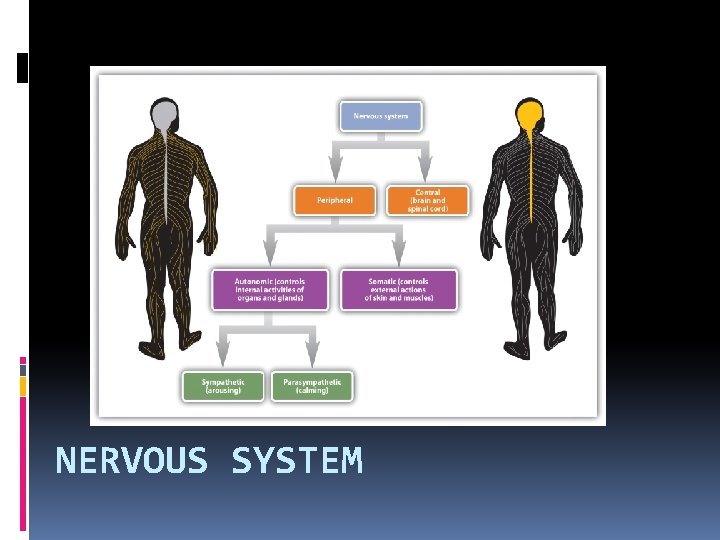
The Nervous System Peripheral (PNS) Autonomic Sympathetic Parasympathetic Central (CNS) Somatic
Nervous System Neurons Information travels through the nervous system in 3 type of neurons. 1. Sensory neurons – (aka afferent neurons) carry incoming information from the senses to the CNS 2. Motor Neurons – (aka efferent neurons) carry out going information from the CNS to muscles and glands 3. Interneurons – CNS neurons that internally communicate between sensory inputs and motor outputs Sensory feel… Inter interpret… Motor move http: //www. alsa. org/about-als/what-is-als. html What is ALS?
S. A. M. E. Sensory Neurons = Afferent Motor Neurons = Efferent
NERVOUS SYSTEM
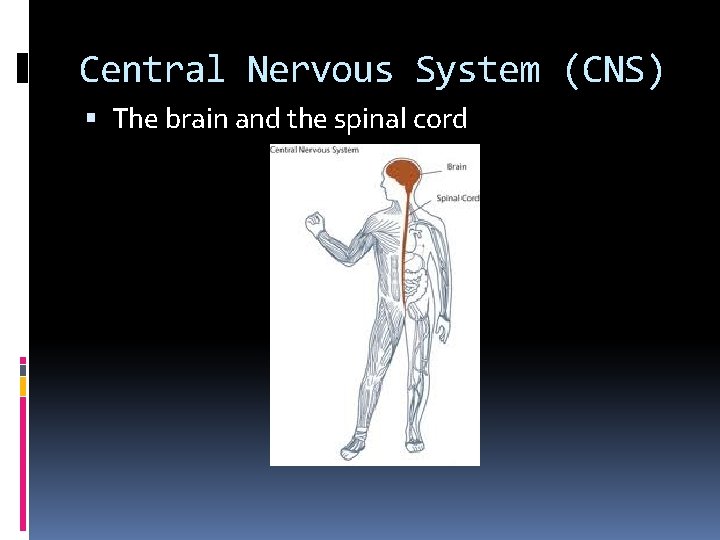
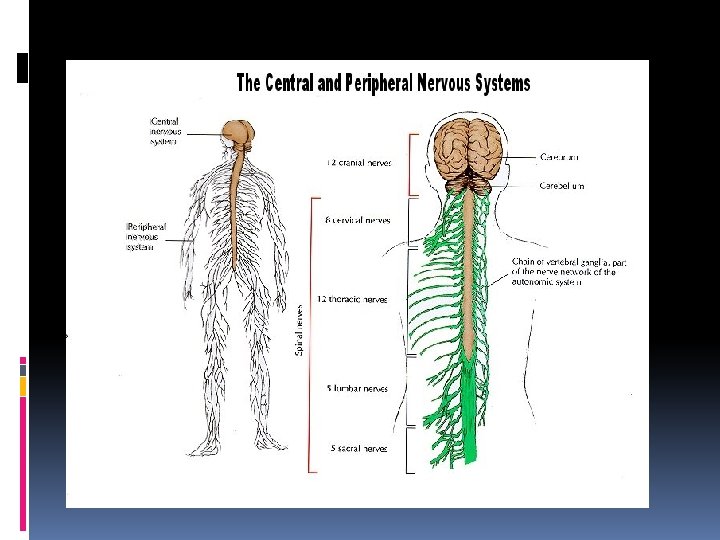
Central Nervous System (CNS) The brain and the spinal cord

Peripheral Nervous System (PNS) the sensory and motor neurons that connect the CNS to the rest of the body. Everything but the brain and spinal cord
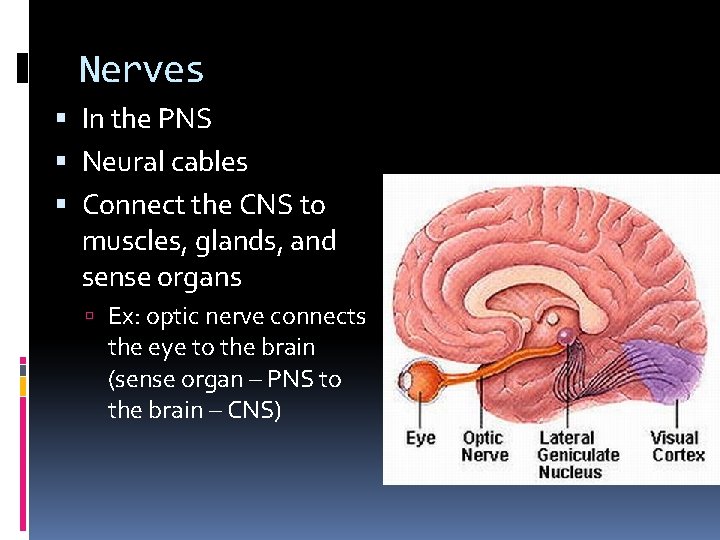
Nerves In the PNS Neural cables Connect the CNS to muscles, glands, and sense organs Ex: optic nerve connects the eye to the brain (sense organ – PNS to the brain – CNS)
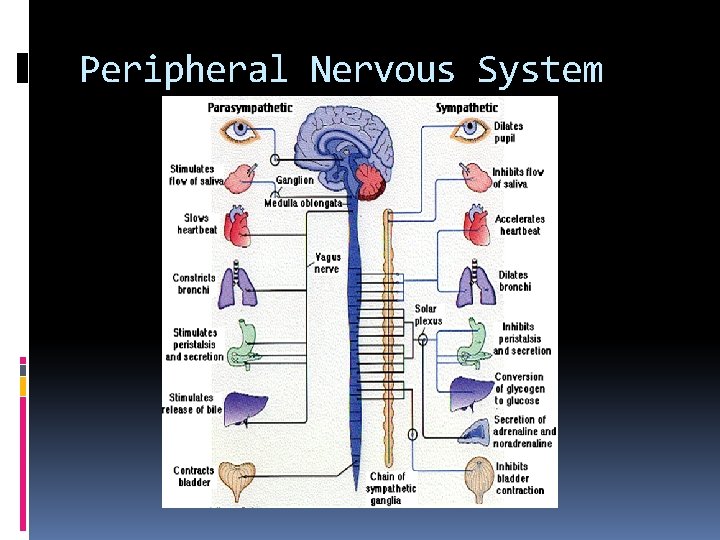
Peripheral Nervous System

Somatic and Autonomic Nervous Systems Somatic – controls the body’s skeletal muscles Running, dancing, etc Autonomic – controls the glands and the muscles of internal organs Heartbeat, digestion, sweating Somatic – Skeletal PNS Autonomic - Automatic Autonomic Somatic
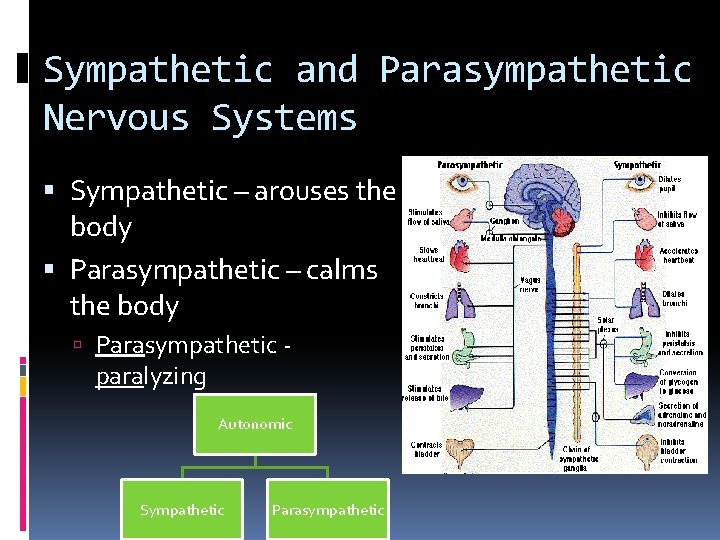
Sympathetic and Parasympathetic Nervous Systems Sympathetic – arouses the body Parasympathetic – calms the body Parasympathetic - paralyzing Autonomic Sympathetic Parasympathetic
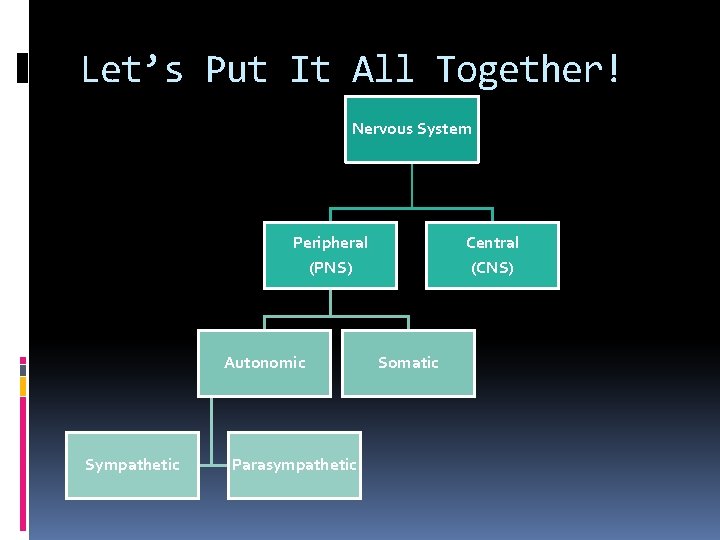
Let’s Put It All Together! Nervous System Peripheral (PNS) Autonomic Sympathetic Parasympathetic Central (CNS) Somatic
The Spinal Cord and Reflexes CNS is the highway between the brain and the PNS. However, sometimes the body can react without the message reaching the brain. Reflex – simple, autonomic, inborn response to a sensory stimulus, such as the knee-jerk response. Not for sensations like pain – that is a voluntary movement. The knee-jerk reflex is simple and involuntary.
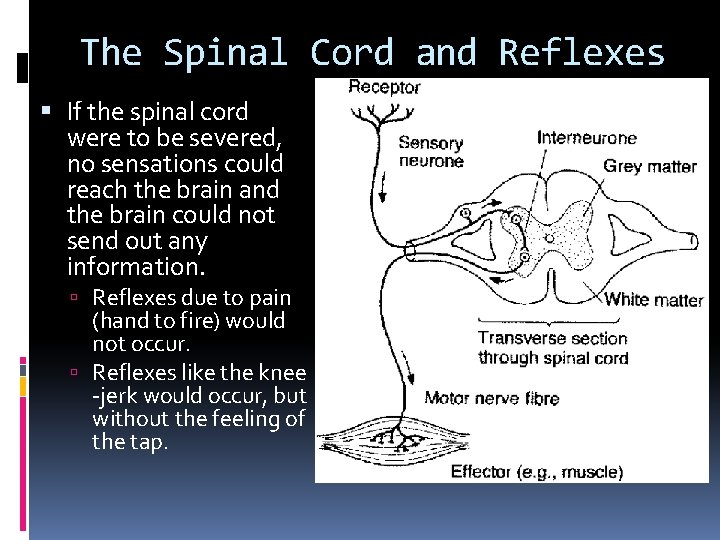
The Spinal Cord and Reflexes If the spinal cord were to be severed, no sensations could reach the brain and the brain could not send out any information. Reflexes due to pain (hand to fire) would not occur. Reflexes like the knee -jerk would occur, but without the feeling of the tap.
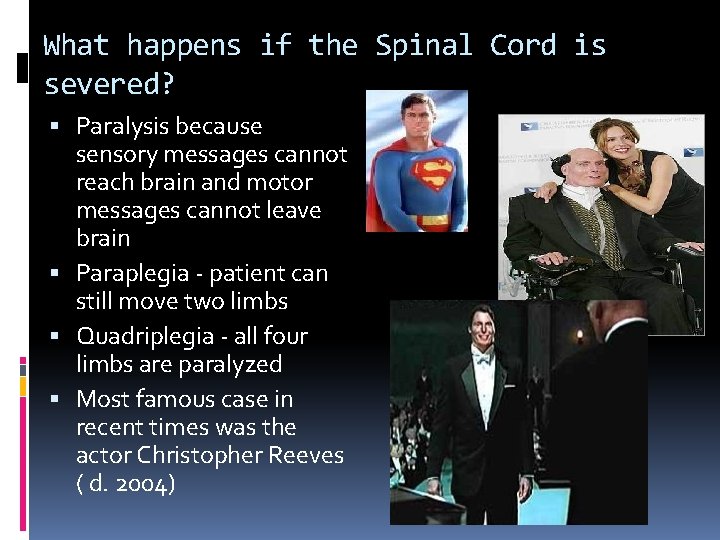
What happens if the Spinal Cord is severed? Paralysis because sensory messages cannot reach brain and motor messages cannot leave brain Paraplegia - patient can still move two limbs Quadriplegia - all four limbs are paralyzed Most famous case in recent times was the actor Christopher Reeves ( d. 2004)
Wednesday, September 27 1. What is a reflex? 2. How do hormones effect someone’s behavior and mental processes? Give an example (think puberty). 3. What is lesioning? 4. Which type of brain scan involves a radioactive form of glucose that lights up when the brain performs a given task? Today’s topic: Endocrine System and the Brain Homework: Read pages 73 Terms Study for quiz Assessments: Quiz on 3 A: Tomorrow Test on Biological Bases is now on Tuesday
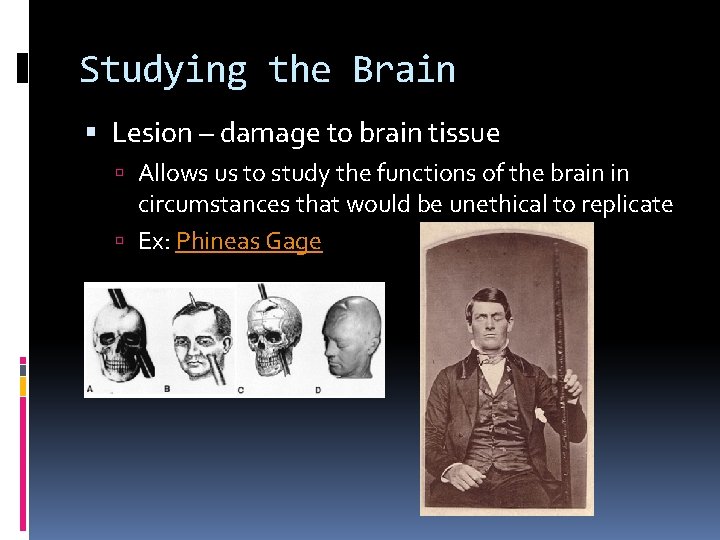
Studying the Brain Lesion – damage to brain tissue Allows us to study the functions of the brain in circumstances that would be unethical to replicate Ex: Phineas Gage
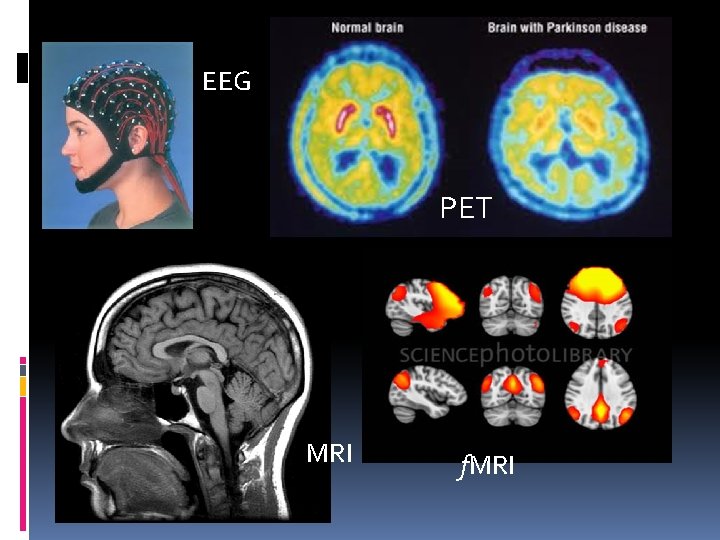
EEG PET MRI f. MRI
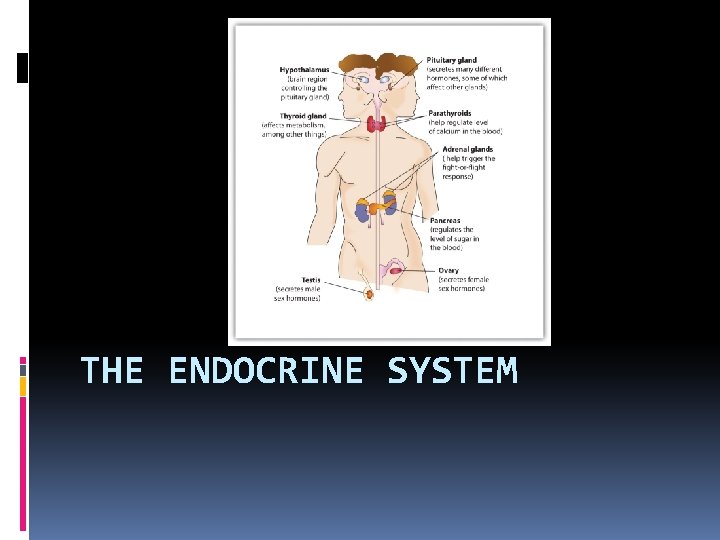
THE ENDOCRINE SYSTEM
Endocrine System The body’s “slow” chemical communication system made of glands that secrete hormones into the bloodstream Hormones – chemical messengers manufactured by glands Travel slowly in the bloodstream When hormones act on the brain, they can trigger interest in sex, food, aggression, “flight or fight” Gland - An organ in the body that secretes a substance for use somewhere else in the body
Hormones vs Neurotransmitters Hormones Neurotransmitters chemical messengers for the endocrine system Chemical messengers in the brain Travel in the blood stream Travel in the brain in the synapse between neurons The endocrine system tries to keep a balance in the body while we respond to feelings of stress, anger, fear, and exertion.
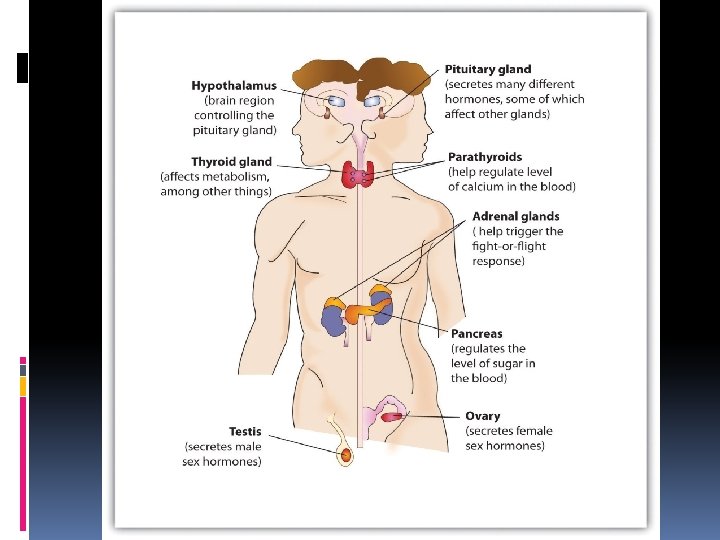
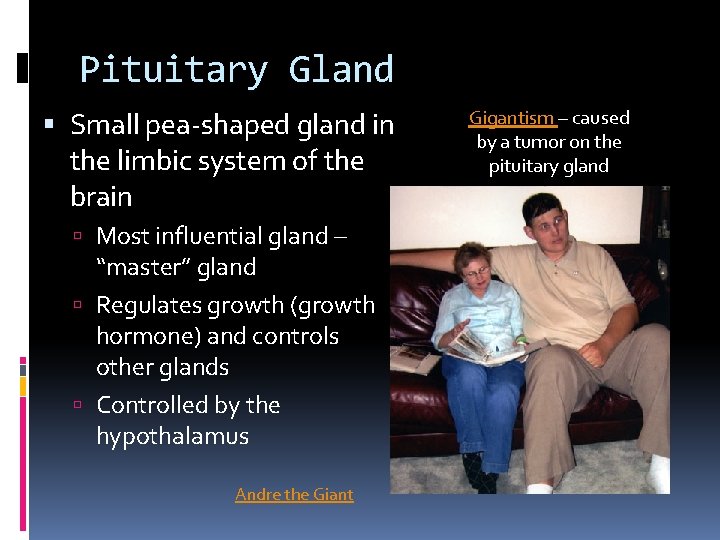
Pituitary Gland Small pea-shaped gland in the limbic system of the brain Most influential gland – “master” gland Regulates growth (growth hormone) and controls other glands Controlled by the hypothalamus Andre the Giant Gigantism – caused by a tumor on the pituitary gland
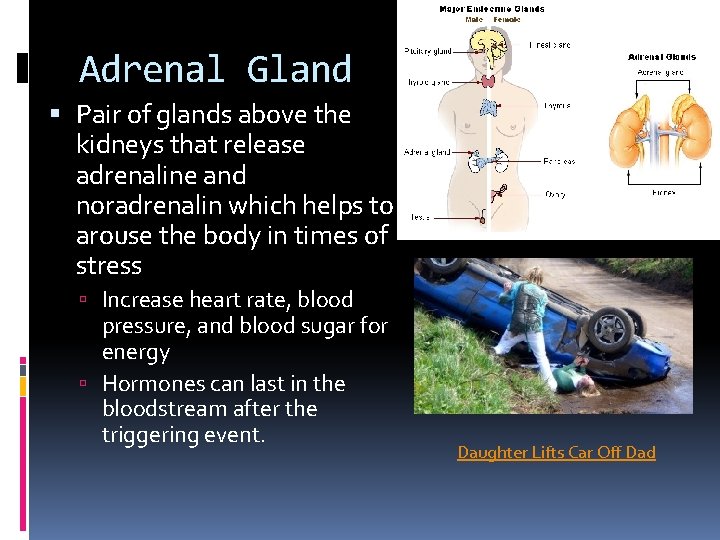
Adrenal Gland Pair of glands above the kidneys that release adrenaline and noradrenalin which helps to arouse the body in times of stress Increase heart rate, blood pressure, and blood sugar for energy Hormones can last in the bloodstream after the triggering event. Daughter Lifts Car Off Dad
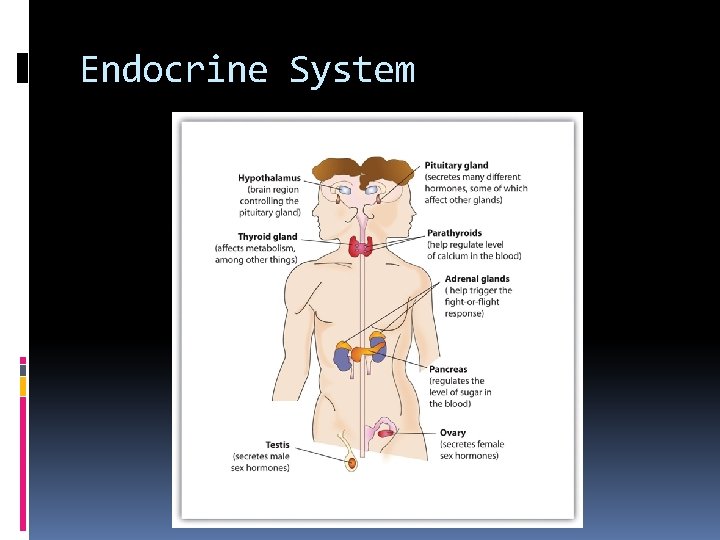
Endocrine System

CRASH COURSE PSYCHOLOGY REVIEW
- Slides: 30