
Brain Intro Cerebrum Right and Left Hemispheres 4
Brain Intro • Cerebrum • Right and Left Hemispheres • 4 Lobes of the brain (Frontal, Parietal, Occipital, and Temporal) • Brainstem (Midbrain, Pons, and Medulla) • Cerebellum • Hippocampus • Amygdala • Hypothalamus • Thalamus • Corpus Callosum

Frontal Lobe - Largest Lobe - Planning - Complex Thinking - Reasoning - Imagining

Parietal Lobe • Process messages related to: • Touch • Taste • Temperature • Controls muscle movements
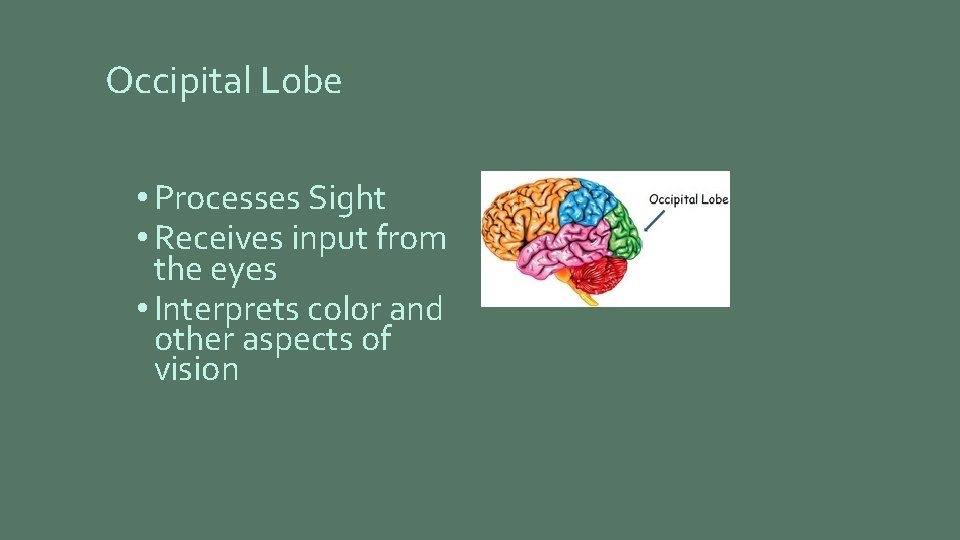
Occipital Lobe • Processes Sight • Receives input from the eyes • Interprets color and other aspects of vision
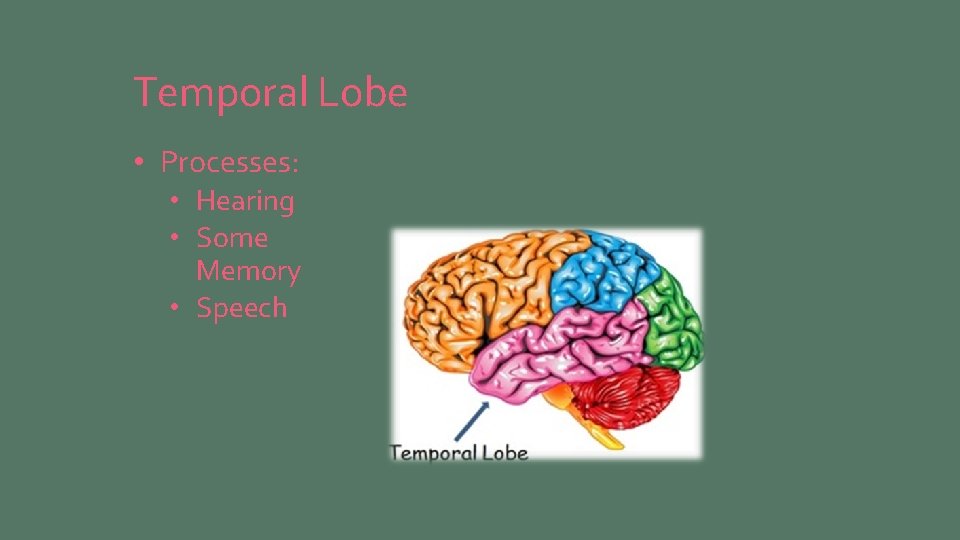
Temporal Lobe • Processes: • Hearing • Some Memory • Speech
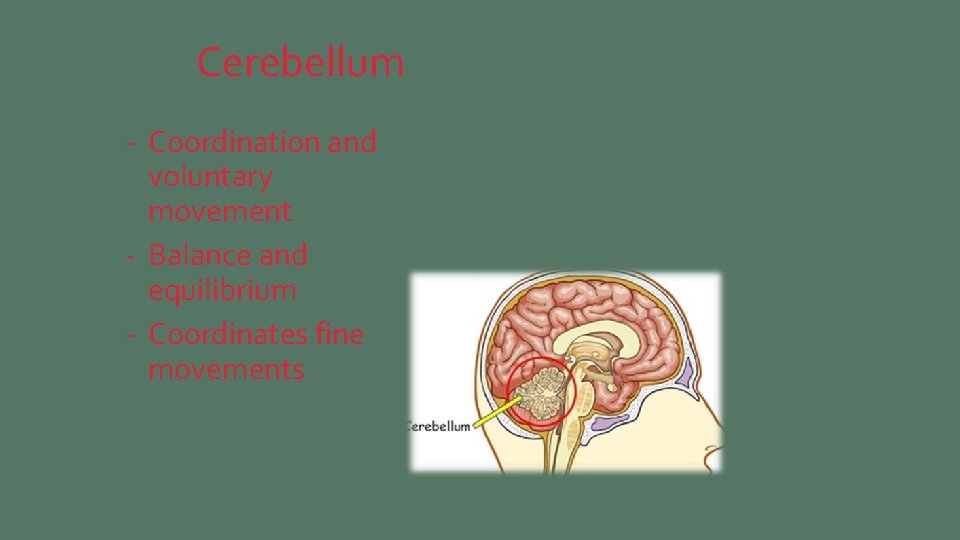
Cerebellum - Coordination and voluntary movement - Balance and equilibrium - Coordinates fine movements
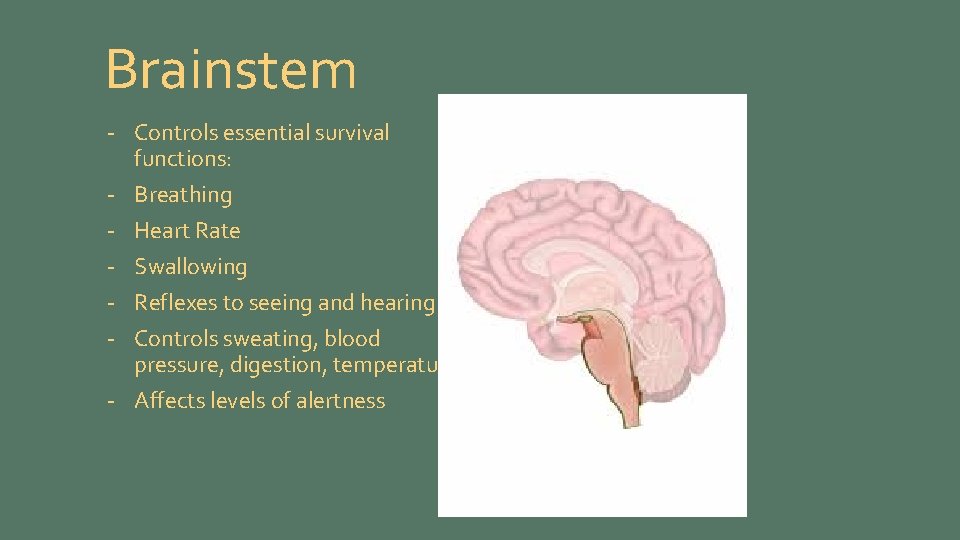
Brainstem - Controls essential survival functions: - Breathing - Heart Rate - Swallowing - Reflexes to seeing and hearing - Controls sweating, blood pressure, digestion, temperature - Affects levels of alertness
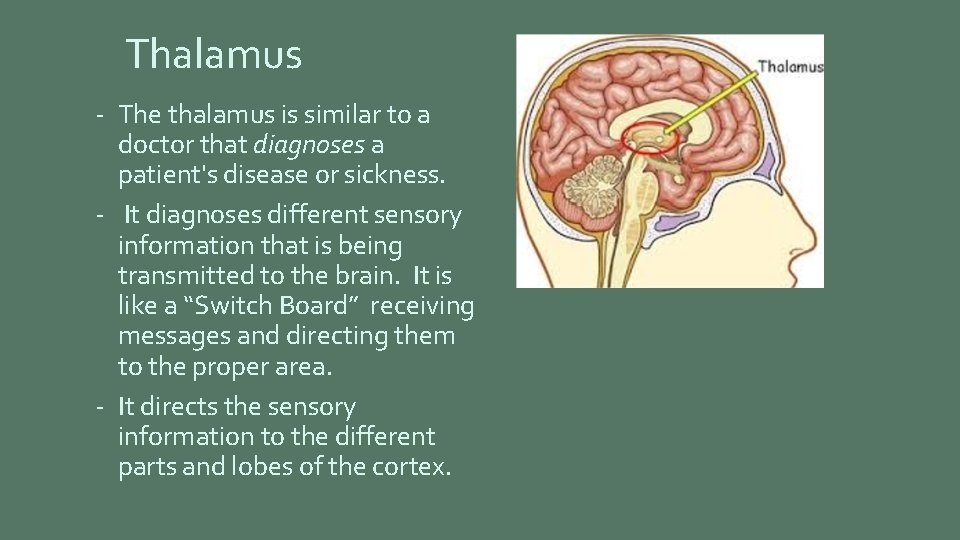
Thalamus - The thalamus is similar to a doctor that diagnoses a patient's disease or sickness. - It diagnoses different sensory information that is being transmitted to the brain. It is like a “Switch Board” receiving messages and directing them to the proper area. - It directs the sensory information to the different parts and lobes of the cortex.
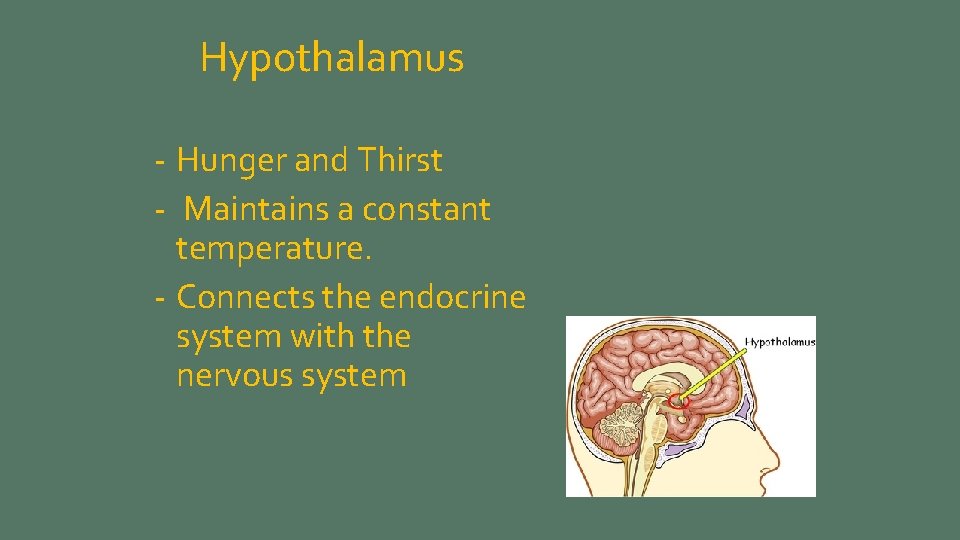
Hypothalamus - Hunger and Thirst - Maintains a constant temperature. - Connects the endocrine system with the nervous system
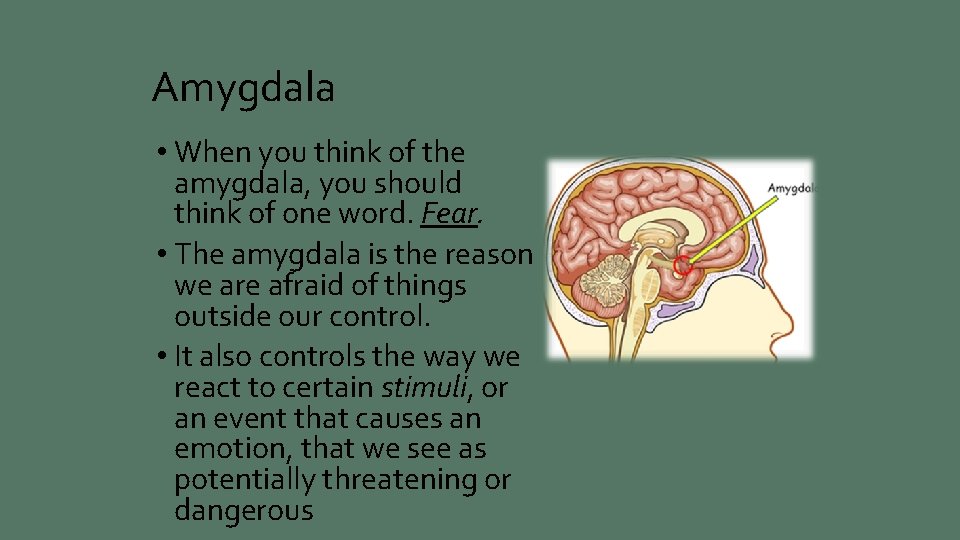
Amygdala • When you think of the amygdala, you should think of one word. Fear. • The amygdala is the reason we are afraid of things outside our control. • It also controls the way we react to certain stimuli, or an event that causes an emotion, that we see as potentially threatening or dangerous
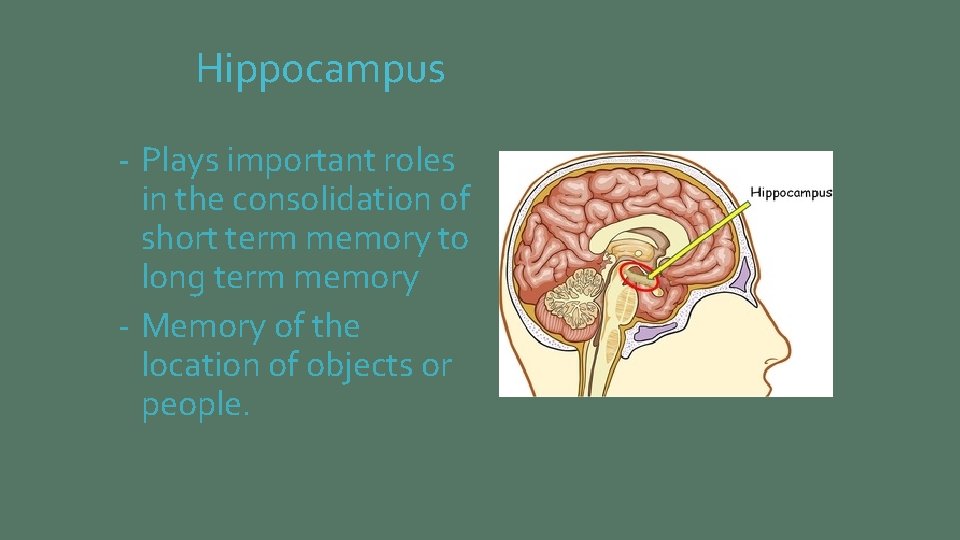
Hippocampus - Plays important roles in the consolidation of short term memory to long term memory - Memory of the location of objects or people.
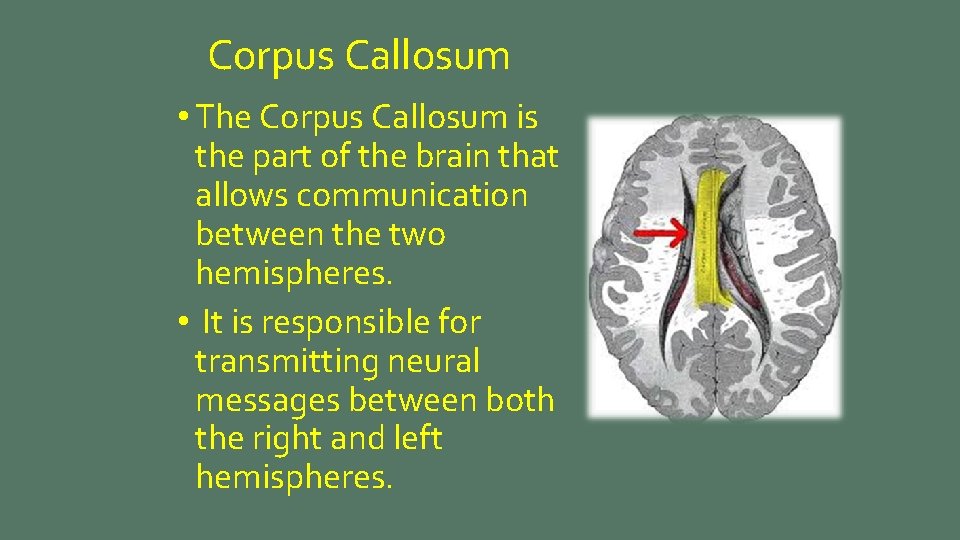
Corpus Callosum • The Corpus Callosum is the part of the brain that allows communication between the two hemispheres. • It is responsible for transmitting neural messages between both the right and left hemispheres.
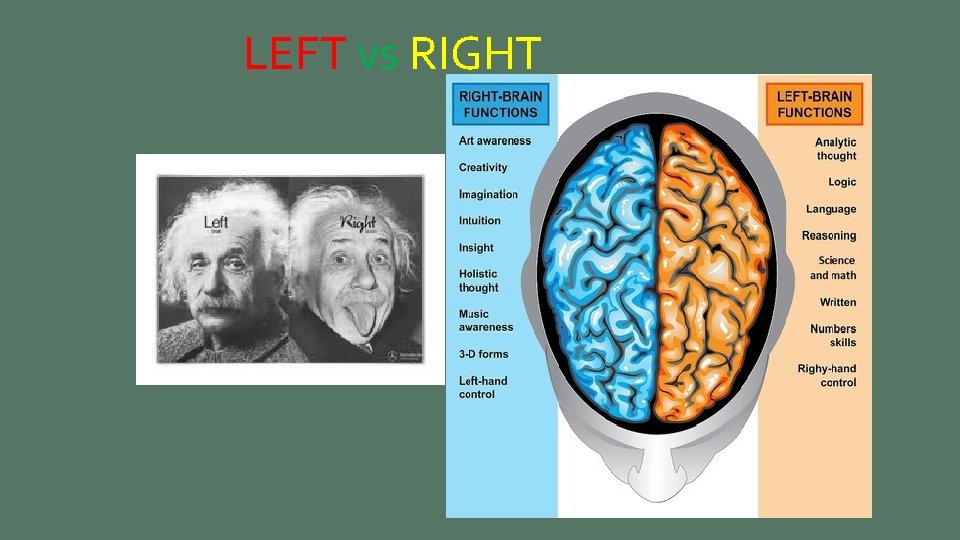
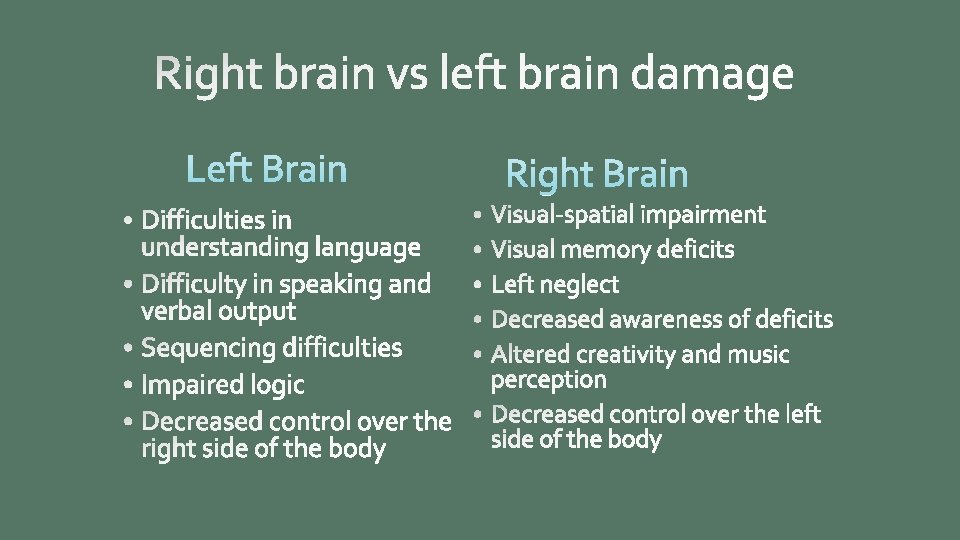
LEFT vs RIGHT
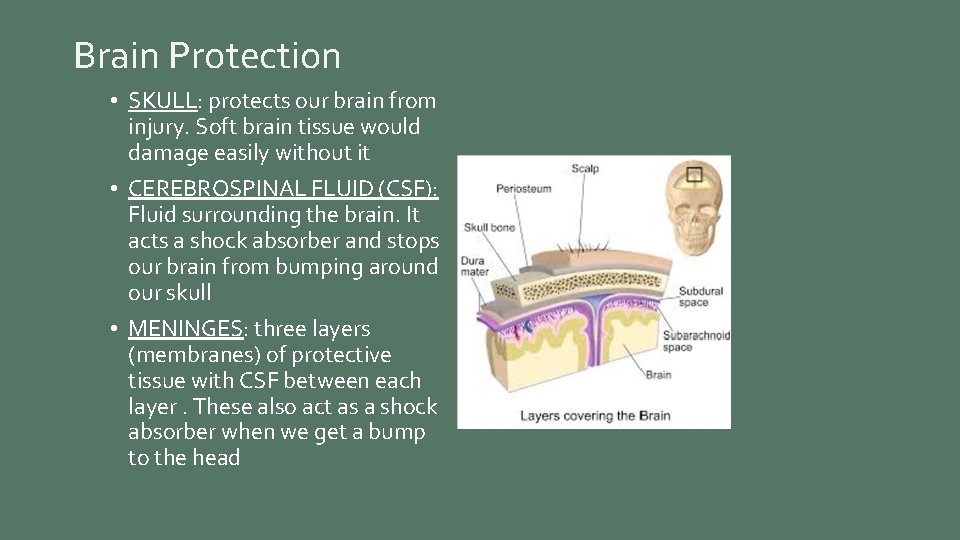
Brain Protection • SKULL: protects our brain from injury. Soft brain tissue would damage easily without it • CEREBROSPINAL FLUID (CSF): Fluid surrounding the brain. It acts a shock absorber and stops our brain from bumping around our skull • MENINGES: three layers (membranes) of protective tissue with CSF between each layer. These also act as a shock absorber when we get a bump to the head
- Slides: 16