
Brain Imaging Techniques CT Scan Computerized Tomography Scan
-Brain Imaging Techniques • • • CT Scan: Computerized Tomography Scan MRI: Magnetic Resonance Imaging f. MRI: Functional Magnetic Resonance Imaging PET Scan: Positron Emission Tomography Scan EEG: Electroencephalogram or electrical recordings
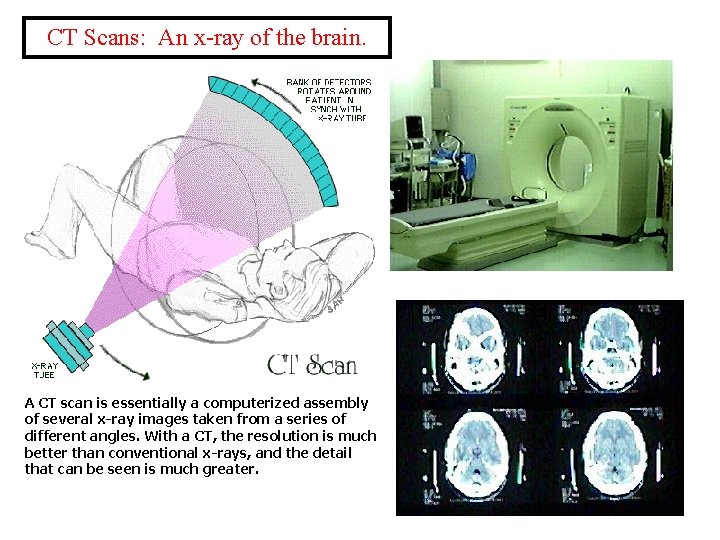
CT Scans: An x-ray of the brain. A CT scan is essentially a computerized assembly of several x-ray images taken from a series of different angles. With a CT, the resolution is much better than conventional x-rays, and the detail that can be seen is much greater.
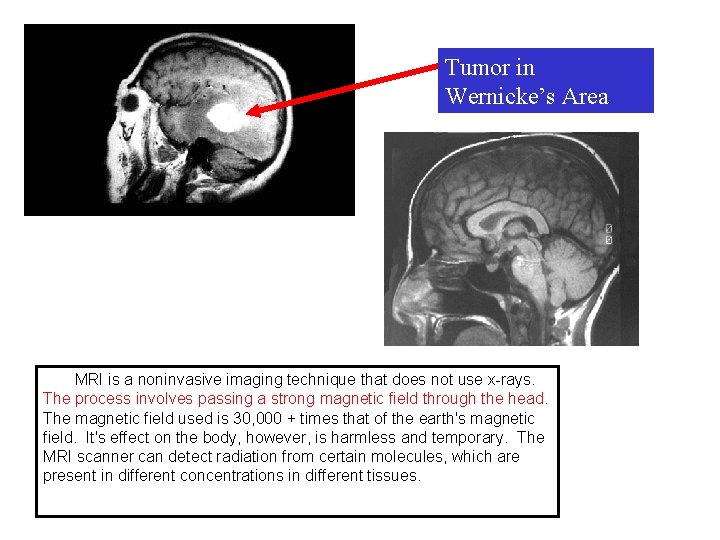
Tumor in Wernicke’s Area MRI is a noninvasive imaging technique that does not use x-rays. The process involves passing a strong magnetic field through the head. The magnetic field used is 30, 000 + times that of the earth's magnetic field. It's effect on the body, however, is harmless and temporary. The MRI scanner can detect radiation from certain molecules, which are present in different concentrations in different tissues.
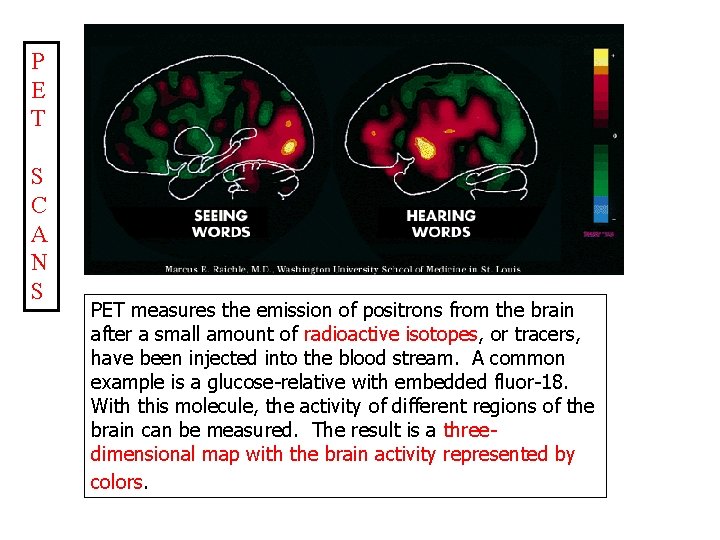
P E T S C A N S PET measures the emission of positrons from the brain after a small amount of radioactive isotopes, or tracers, have been injected into the blood stream. A common example is a glucose-relative with embedded fluor-18. With this molecule, the activity of different regions of the brain can be measured. The result is a threedimensional map with the brain activity represented by colors.
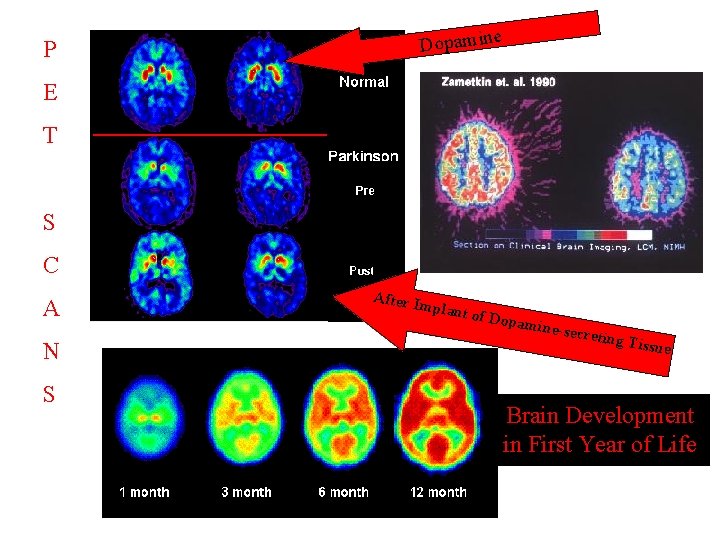
Dopamine P E T S C A N S After I mplant of Dopa mine-se creting Tissue Brain Development in First Year of Life
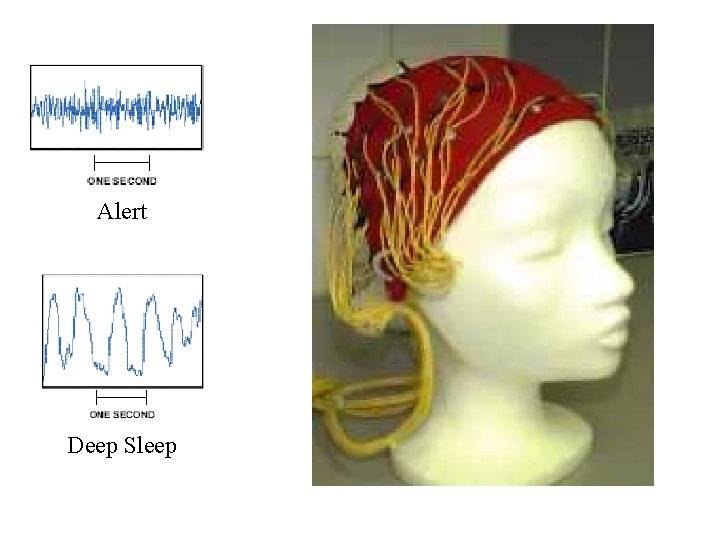
Alert Deep Sleep
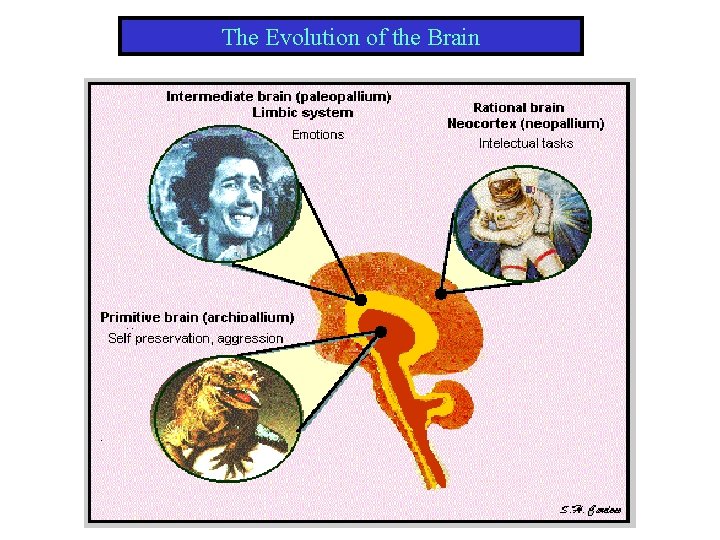
The Evolution of the Brain
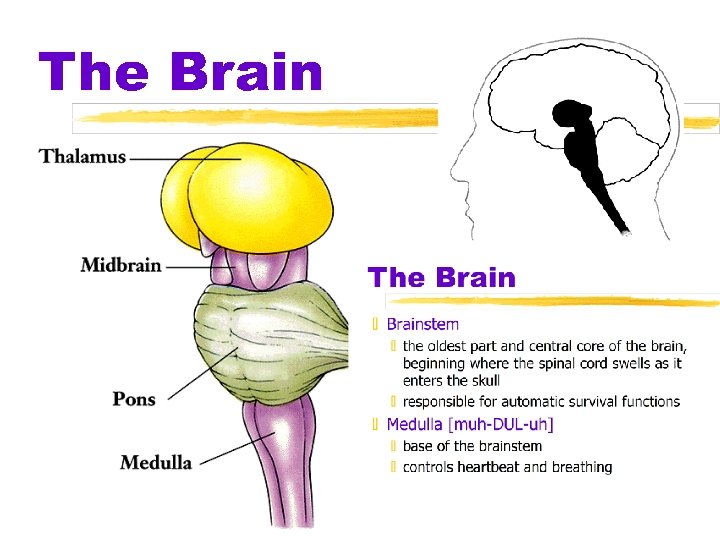
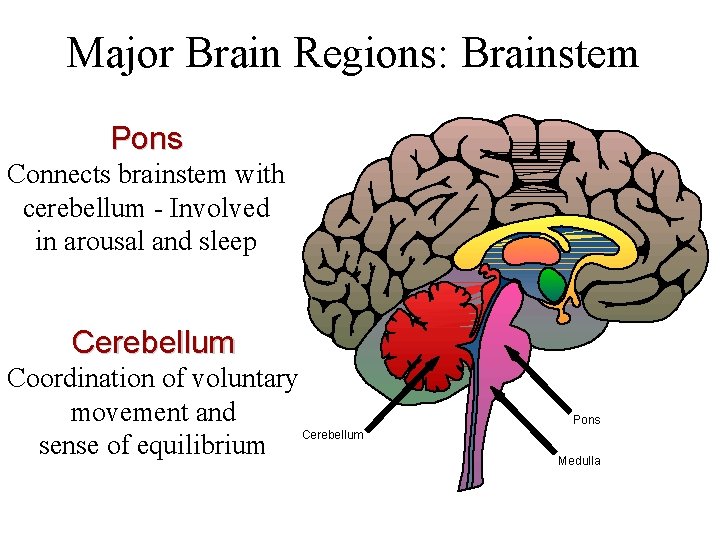
Major Brain Regions: Brainstem Pons Connects brainstem with cerebellum - Involved in arousal and sleep Cerebellum Cer r Thalamus l. C t Coordination of voluntary Corpus collosum movement and Cerebellum sense of equilibrium Hypothalamus Pons Medulla Spinal cord
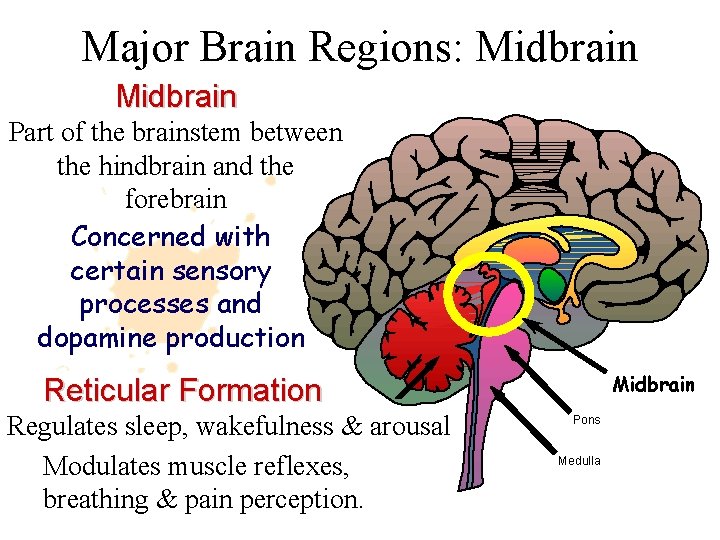
Major Brain Regions: Midbrain Part of the brainstem between the hindbrain and the forebrain Concerned with certain sensory processes and dopamine production l. C t Thalamus Hypothalamus Midbrain Reticular Formation Corpus collosum Regulates sleep, wakefulness & arousal Cerebellum Modulates muscle reflexes, breathing & pain perception. Pons Medulla Spinal cord
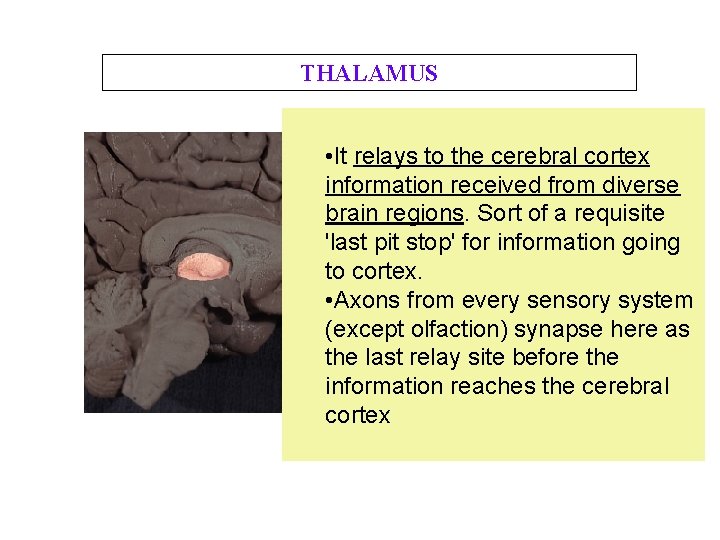
THALAMUS • It relays to the cerebral cortex information received from diverse brain regions. Sort of a requisite 'last pit stop' for information going to cortex. • Axons from every sensory system (except olfaction) synapse here as the last relay site before the information reaches the cerebral cortex
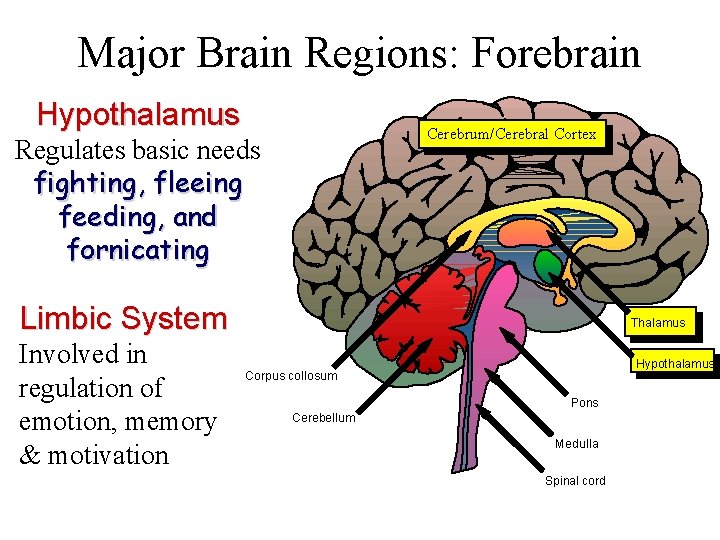
Major Brain Regions: Forebrain Hypothalamus Cerebrum/Cerebral Cortex Regulates basic needs fighting, fleeing feeding, and fornicating Limbic System Thalamus erebral Cortex Involved in regulation of emotion, memory & motivation Hypothalamus Corpus collosum Pons Cerebellum Medulla Spinal cord
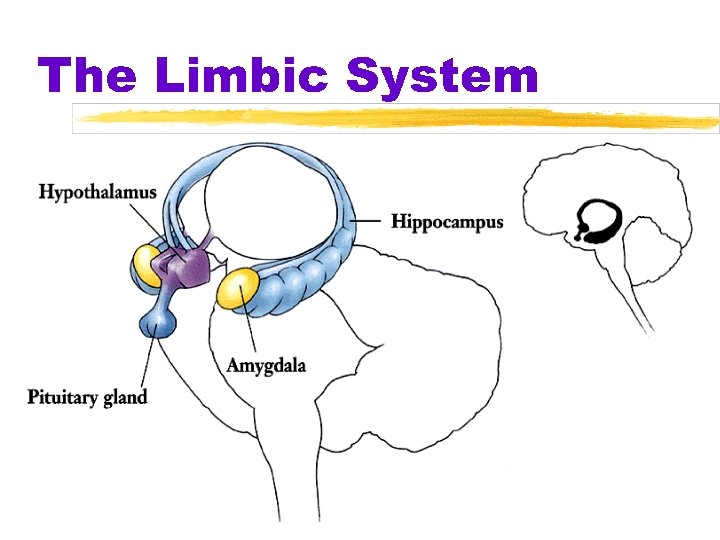
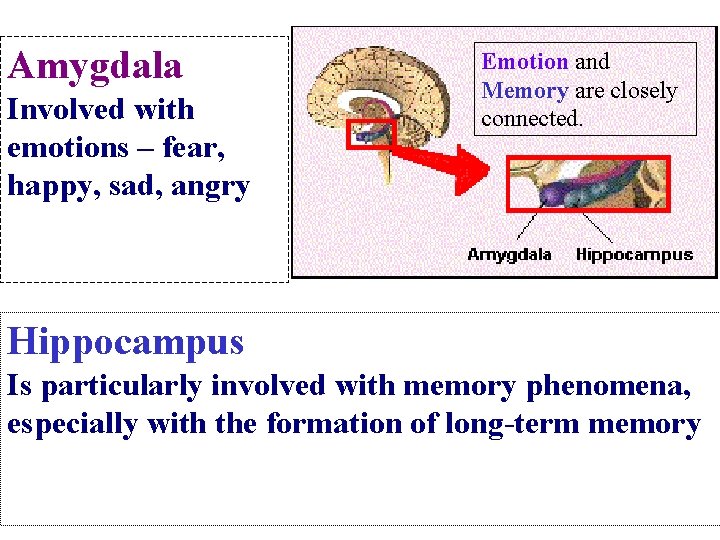
Amygdala Involved with emotions – fear, happy, sad, angry Emotion and Memory are closely connected. Hippocampus Is particularly involved with memory phenomena, especially with the formation of long-term memory
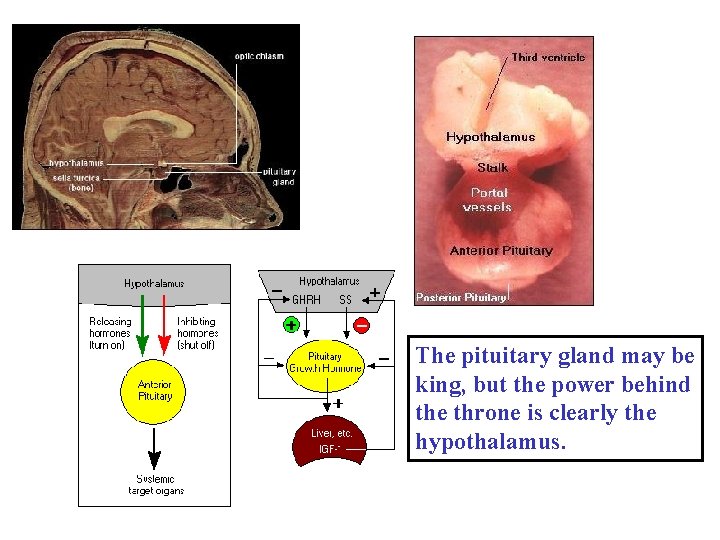
The pituitary gland may be king, but the power behind the throne is clearly the hypothalamus.
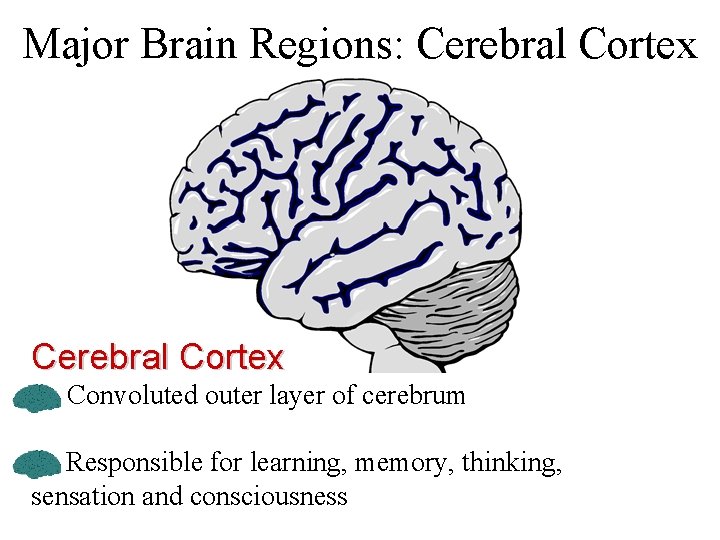
Major Brain Regions: Cerebral Cortex Convoluted outer layer of cerebrum Responsible for learning, memory, thinking, sensation and consciousness
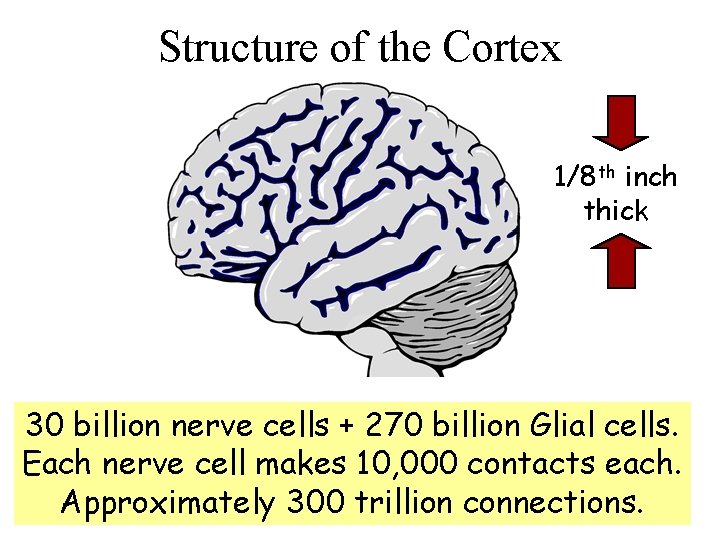
Structure of the Cortex 1/8 th inch thick 30 billion nerve cells + 270 billion Glial cells. Each nerve cell makes 10, 000 contacts each. Approximately 300 trillion connections.
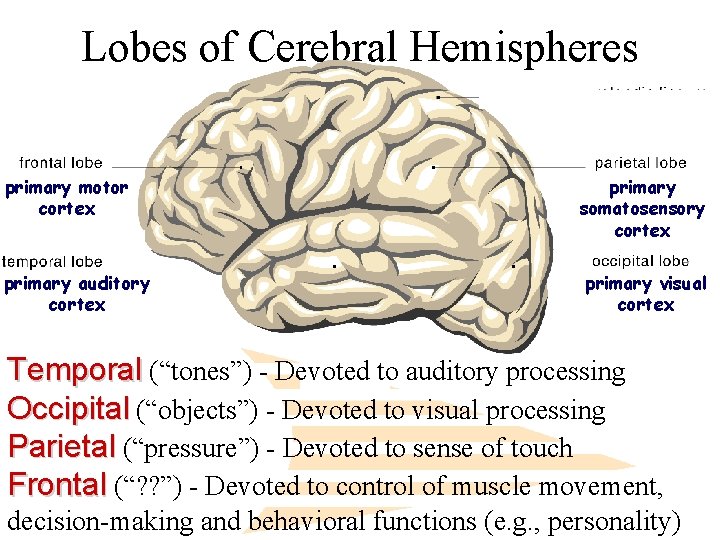
Lobes of Cerebral Hemispheres primary motor cortex primary auditory cortex primary somatosensory cortex primary visual cortex Temporal (“tones”) - Devoted to auditory processing Occipital (“objects”) - Devoted to visual processing Parietal (“pressure”) - Devoted to sense of touch Frontal (“? ? ”) - Devoted to control of muscle movement, decision-making and behavioral functions (e. g. , personality)
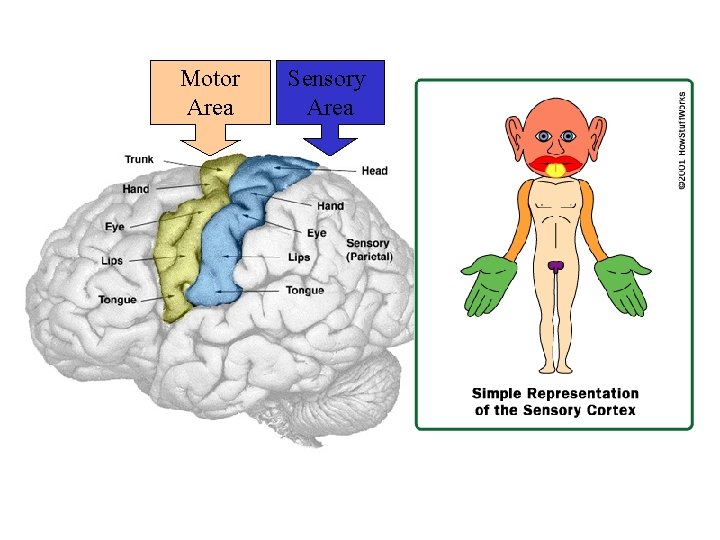
Motor Area Sensory Area
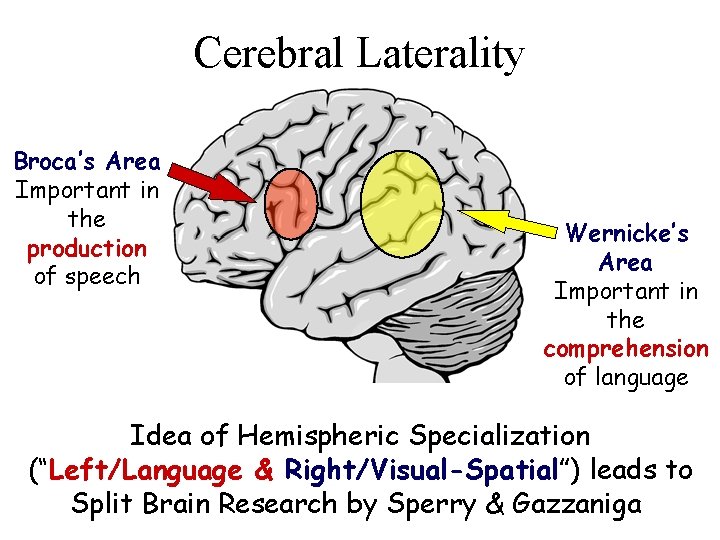
Cerebral Laterality Broca’s Area Important in the production of speech Wernicke’s Area Important in the comprehension of language Idea of Hemispheric Specialization (“Left/Language & Right/Visual-Spatial”) leads to Split Brain Research by Sperry & Gazzaniga
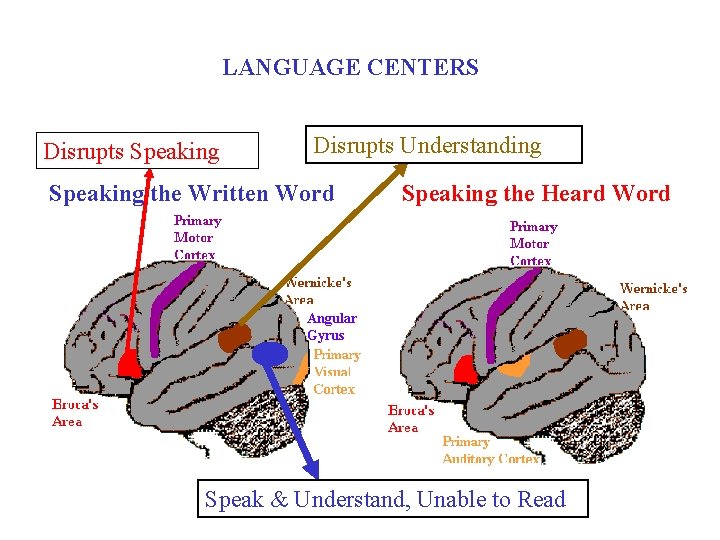
LANGUAGE CENTERS Disrupts Speaking Disrupts Understanding Speaking the Written Word Speaking the Heard Word Angular Gyrus Speak & Understand, Unable to Read
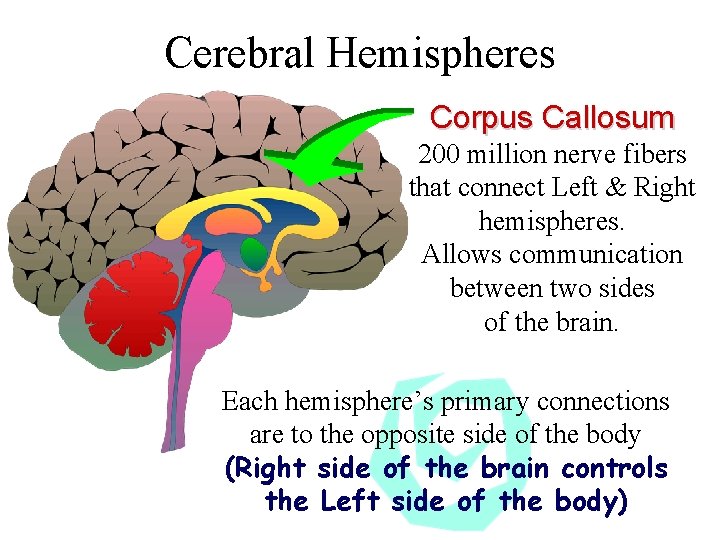
Cerebral Hemispheres Corpus Callosum 200 million nerve fibers that connect Left & Right hemispheres. Allows communication between two sides of the brain. Each hemisphere’s primary connections are to the opposite side of the body (Right side of the brain controls the Left side of the body)
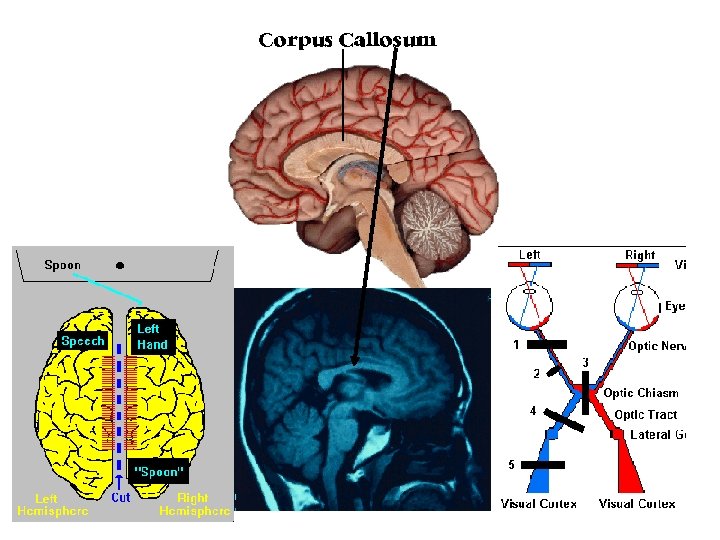
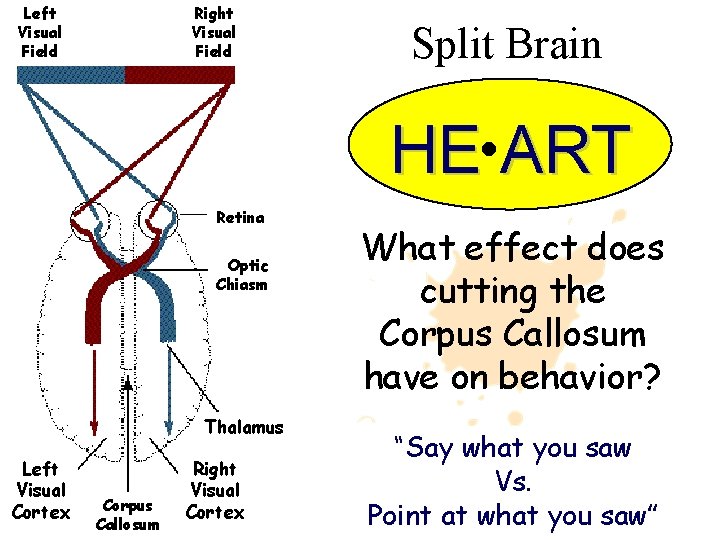
Left Visual Field Right Visual Field Split Brain HE ART l Retina Optic Chiasm Thalamus Left Visual Cortex Corpus Callosum Right Visual Cortex What effect does cutting the Corpus Callosum have on behavior? “Say what you saw Vs. Point at what you saw”
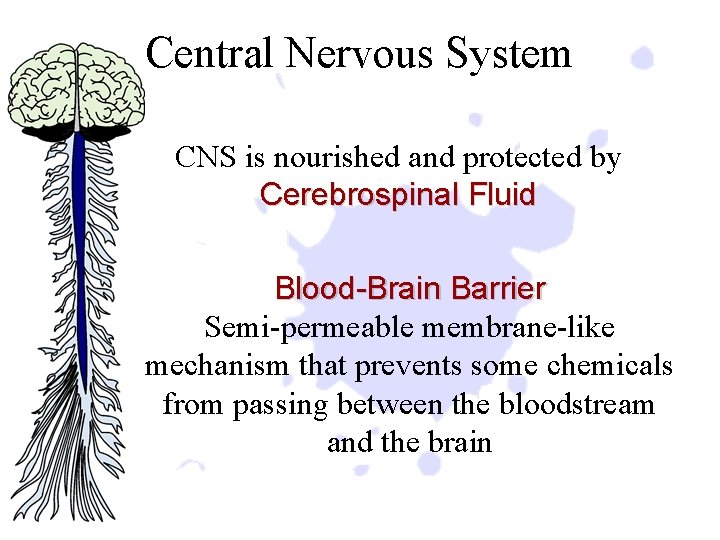
Central Nervous System CNS is nourished and protected by Cerebrospinal Fluid Blood-Brain Barrier Semi-permeable membrane-like mechanism that prevents some chemicals from passing between the bloodstream and the brain
- Slides: 25