
Brain imaging research Features of all methods PET
Brain imaging research

Features of all methods PET f. MRI excellent spatial resolution poor temporal resolution EEG MEG poor spatial resolution excellent temporal resolution
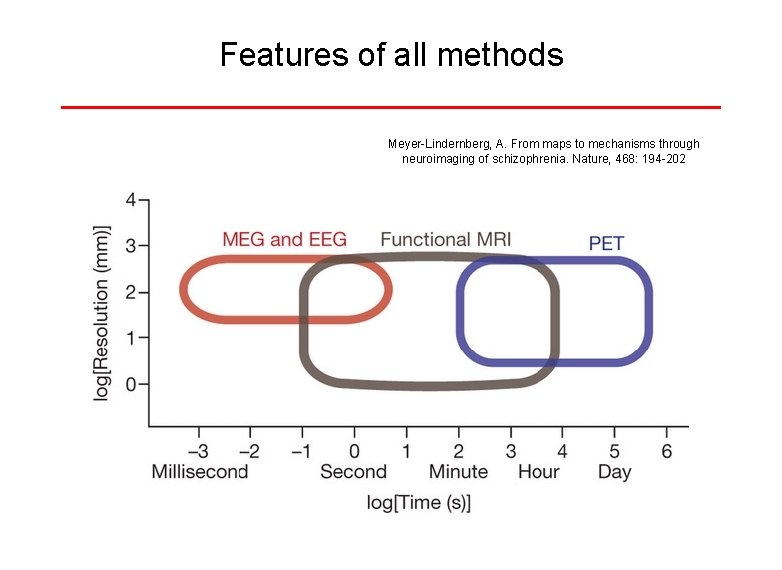
Features of all methods Meyer-Lindernberg, A. From maps to mechanisms through neuroimaging of schizophrenia. Nature, 468: 194 -202
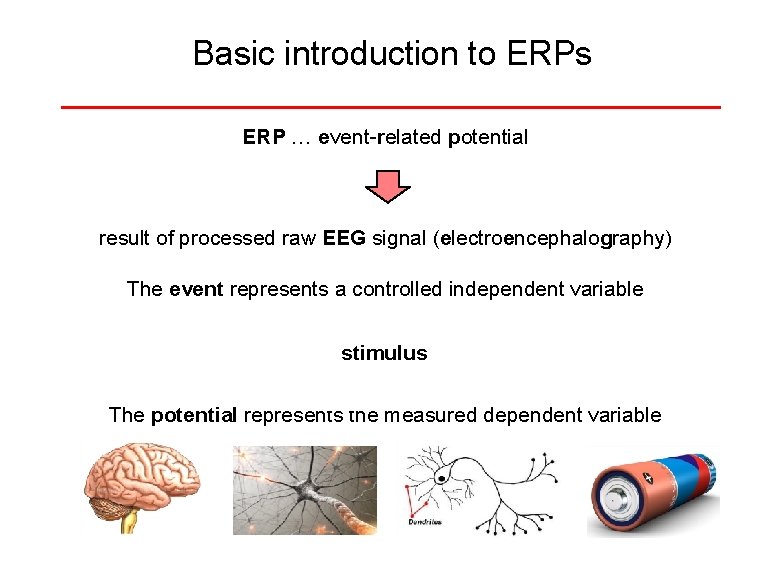
Basic introduction to ERPs ERP … event-related potential result of processed raw EEG signal (electroencephalography) The event represents a controlled independent variable stimulus odour taste WORD tactile tone The potential represents the measured dependent variable
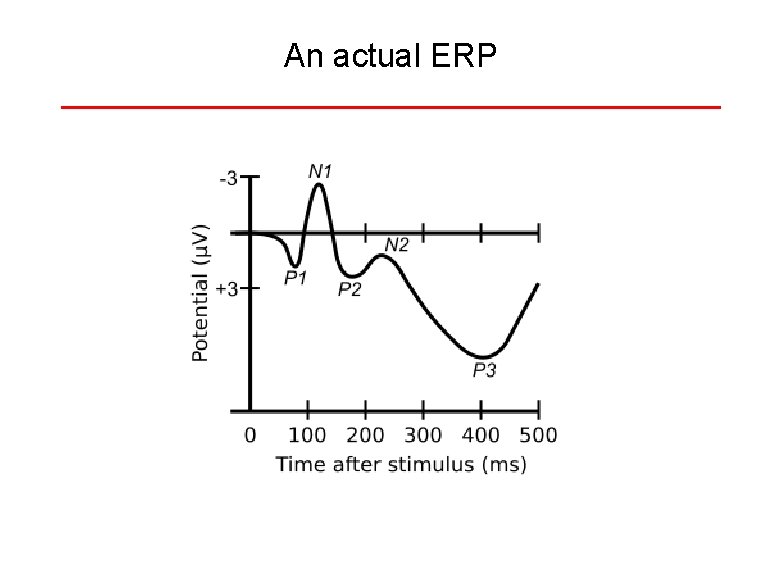
An actual ERP
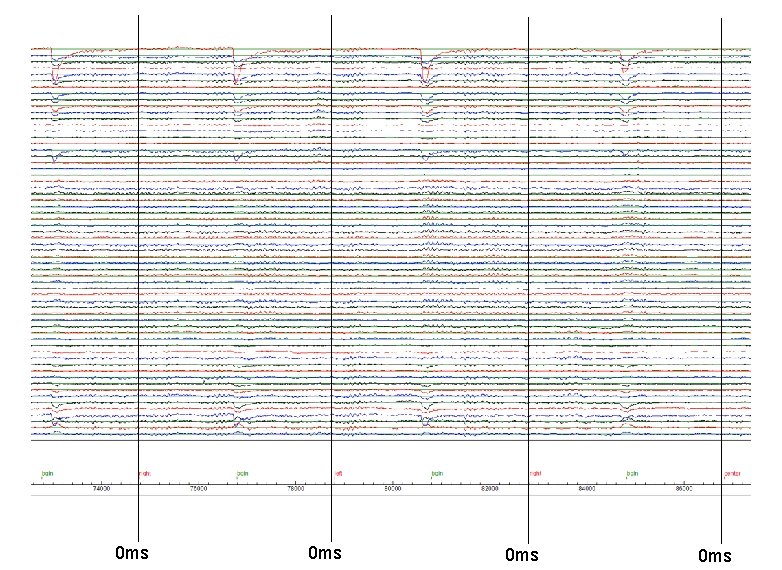
0 ms 0 ms
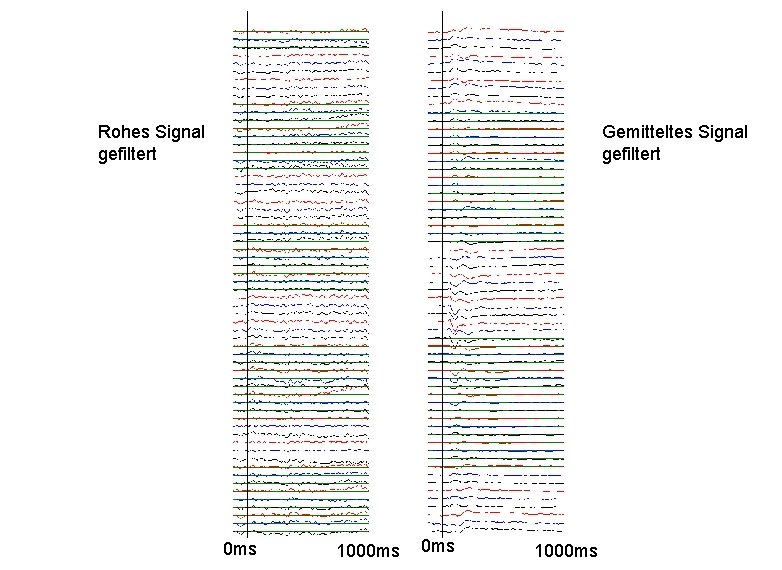
Rohes Signal gefiltert Gemitteltes Signal gefiltert 0 ms 1000 ms
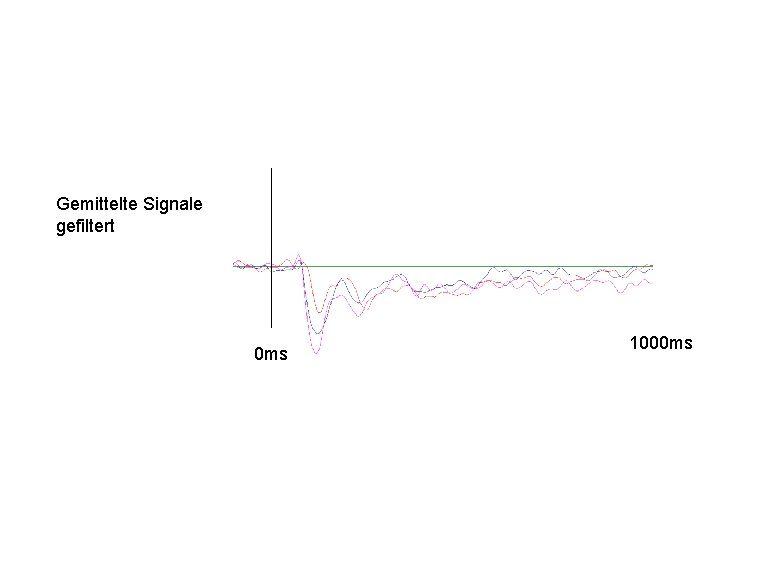
Gemittelte Signale gefiltert 0 ms 1000 ms
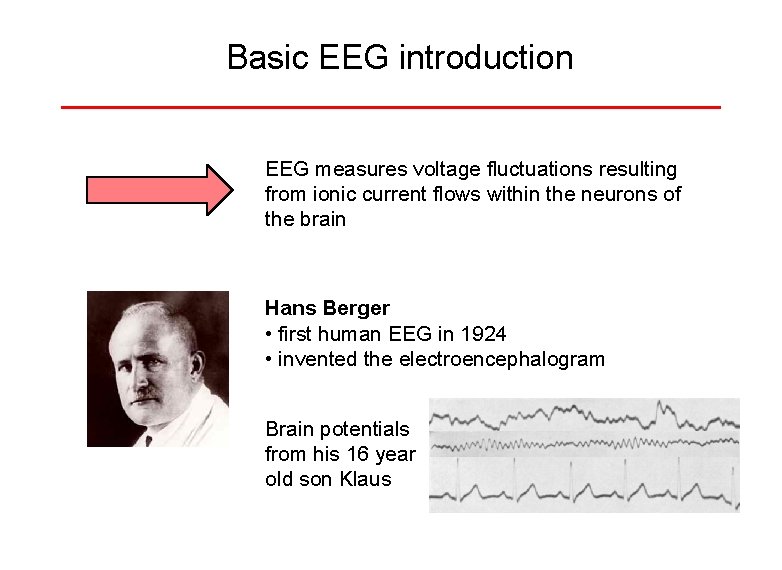
Basic EEG introduction EEG measures voltage fluctuations resulting from ionic current flows within the neurons of the brain Hans Berger • first human EEG in 1924 • invented the electroencephalogram Brain potentials from his 16 year old son Klaus
More history 1934/35: Confirmation by the labs of Adrian, Jasper, and Davis 1939: Single-trial ERPs reported by Pauline & Hallowell Davis 1940 -1960: Sensory ERPs recorded with primitive methods 1962: First publication of computer-averaged ERPs by Galambos
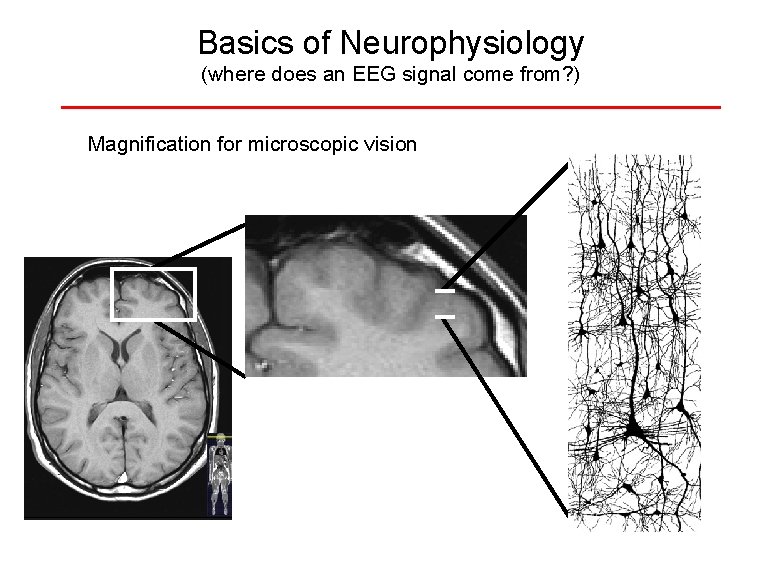
Basics of Neurophysiology (where does an EEG signal come from? ) Magnification for microscopic vision
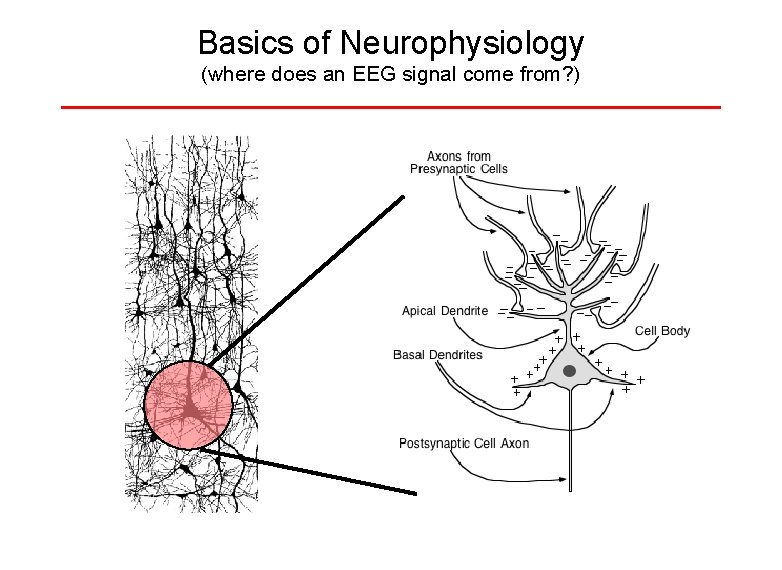
Basics of Neurophysiology (where does an EEG signal come from? )
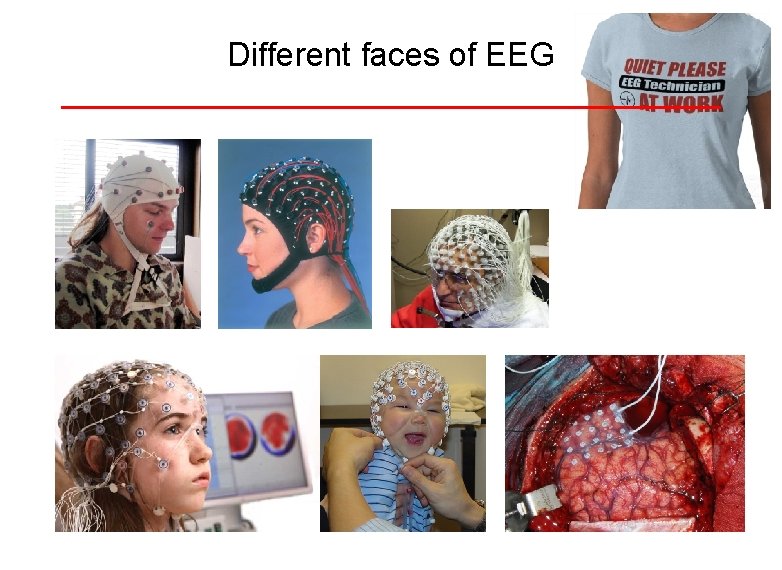
Different faces of EEG
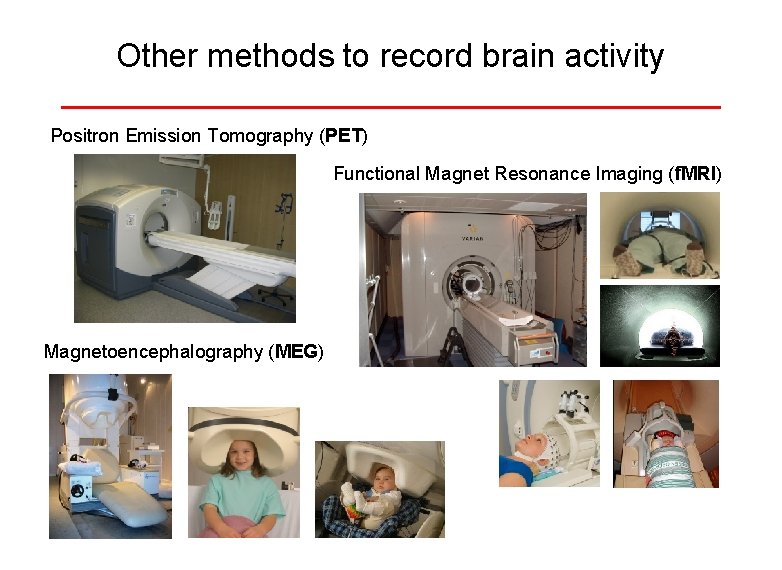
Other methods to record brain activity Positron Emission Tomography (PET) Functional Magnet Resonance Imaging (f. MRI) Magnetoencephalography (MEG)
- Slides: 14