
Brain Development Overview Describe brain development Behavioural effects
Brain Development
Overview: > Describe brain development > Behavioural effects of brain development > Attitudes and concerns > Solutions

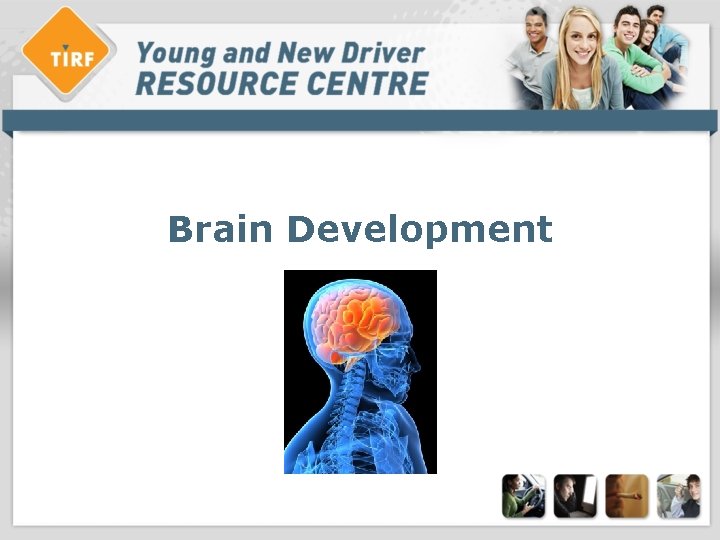
How does the brain develop? > Development begins in the womb and continues until age mid-20 s. > Brain size at age 6 is 95% of adult size. > Frontal lobe continues to develop into mid-20 s. > This area is responsible for planning, impulse control, reasoning and integration of information.
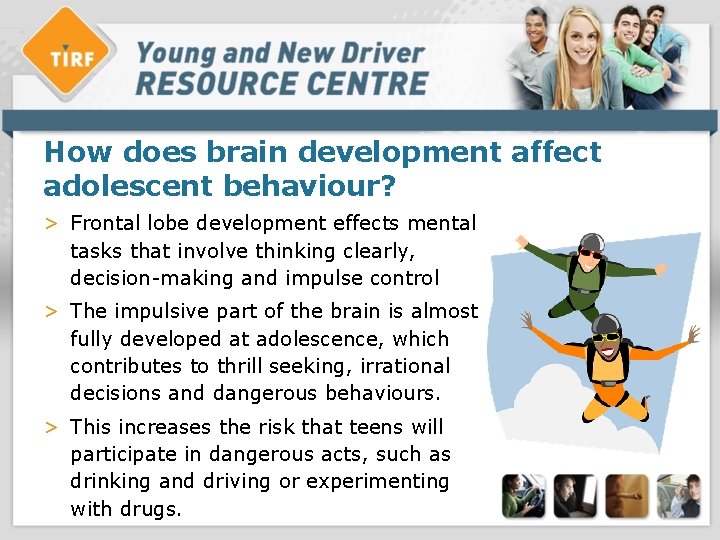
How does brain development affect adolescent behaviour? > Frontal lobe development effects mental tasks that involve thinking clearly, decision-making and impulse control > The impulsive part of the brain is almost fully developed at adolescence, which contributes to thrill seeking, irrational decisions and dangerous behaviours. > This increases the risk that teens will participate in dangerous acts, such as drinking and driving or experimenting with drugs.
How does brain development affect adolescent driving? > The frontal lobe is responsible for initiating and stopping attention and this is important to safe driving. > Safe driving involves skills that are underdeveloped until young drivers are in their the mid-20 s, including: » planning; » reasoning; » integration of information; and, » impulse control. > Young drivers are at higher risk of distraction (e. g. , by passengers, road signs and cell phones).
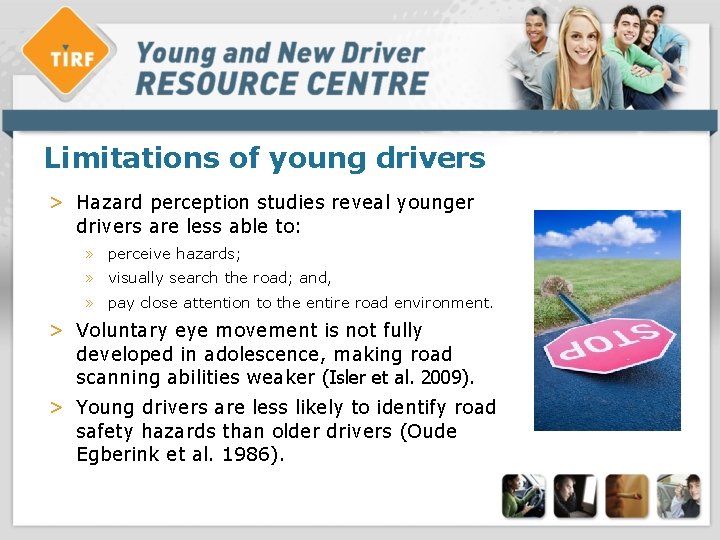
Limitations of young drivers > Hazard perception studies reveal younger drivers are less able to: » perceive hazards; » visually search the road; and, » pay close attention to the entire road environment. > Voluntary eye movement is not fully developed in adolescence, making road scanning abilities weaker (Isler et al. 2009). > Young drivers are less likely to identify road safety hazards than older drivers (Oude Egberink et al. 1986).
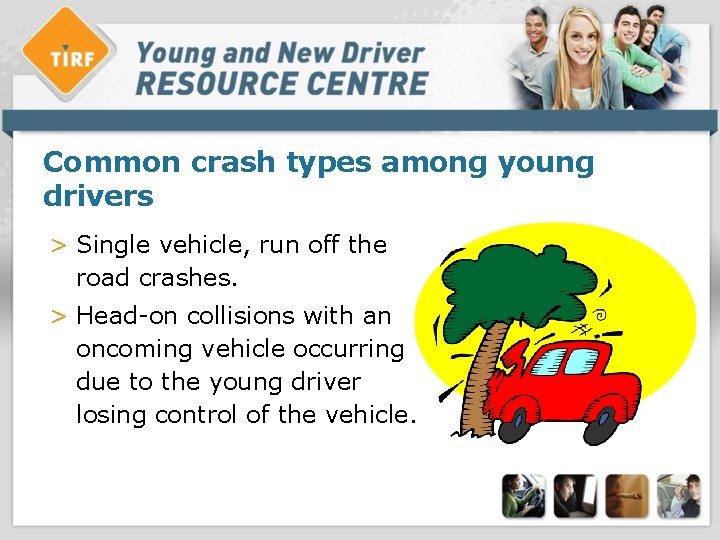
Common crash types among young drivers > Single vehicle, run off the road crashes. > Head-on collisions with an oncoming vehicle occurring due to the young driver losing control of the vehicle.
Alcohol and brain development > The last phase of brain development occurs between ages 11 to 24. > Adolescent brains are resistant to the effects of alcohol, contributing to them drinking too much and having no desire to stop. > Early tolerance to alcohol can lead to a greater risk of alcohol abuse, mental illness and social problems in the future.
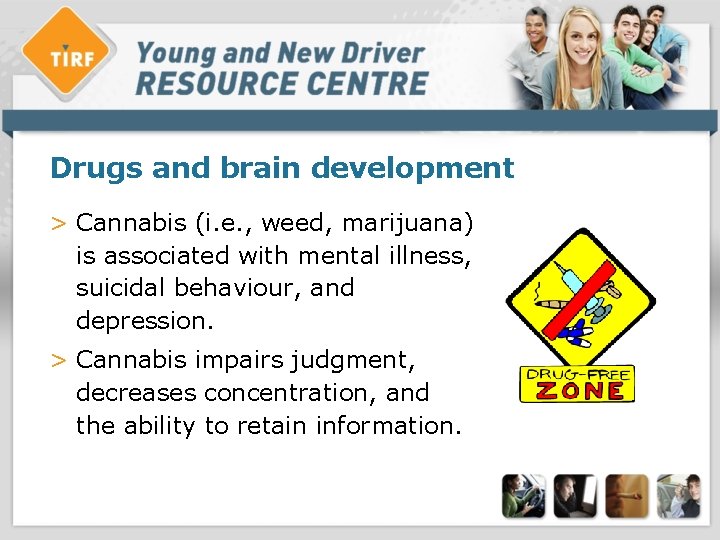
Drugs and brain development > Cannabis (i. e. , weed, marijuana) is associated with mental illness, suicidal behaviour, and depression. > Cannabis impairs judgment, decreases concentration, and the ability to retain information.
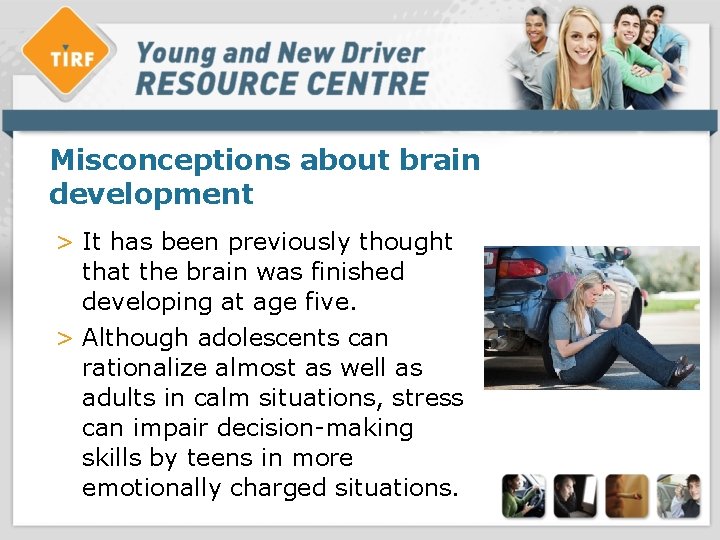
Misconceptions about brain development > It has been previously thought that the brain was finished developing at age five. > Although adolescents can rationalize almost as well as adults in calm situations, stress can impair decision-making skills by teens in more emotionally charged situations.
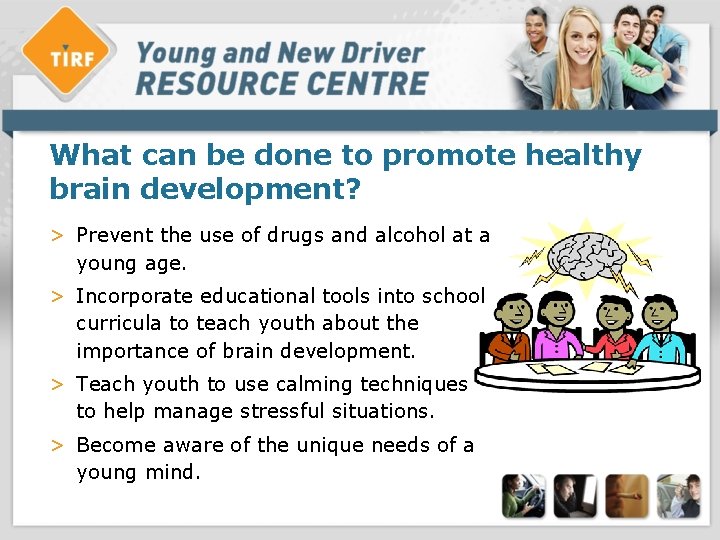
What can be done to promote healthy brain development? > Prevent the use of drugs and alcohol at a young age. > Incorporate educational tools into school curricula to teach youth about the importance of brain development. > Teach youth to use calming techniques to help manage stressful situations. > Become aware of the unique needs of a young mind.
Parental communication > Foster an open and supportive relationship with new drivers to encourage young drivers to make good choices. > I promise program - Teen Safe Driving Initiative: intended to initiate discussion between parents/adults and their teenagers about road safety issues.

For more information, visit us at: >www. yndrc. ca >www. tirf. ca y a St i m r o f n ! d e
- Slides: 13