
Brain Development In Infants and Toddlers Human Nervous
Brain Development In Infants and Toddlers
Human Nervous System • 2 Main Components: • Central Nervous System (CNS) • Brain • Spinal cord • Peripheral Nervous System (PNS) • Somatic NS • Autonomic NS • Sympathetic NS • Parasympathetic NS • Enteric NS
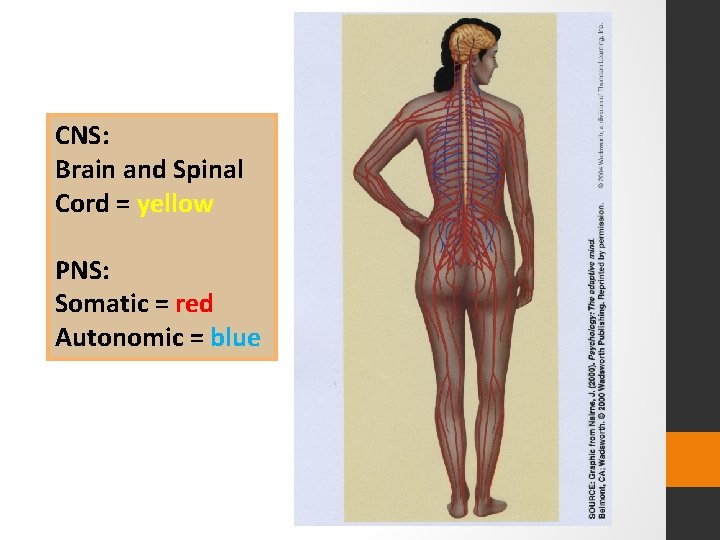
CNS: Brain and Spinal Cord = yellow PNS: Somatic = red Autonomic = blue
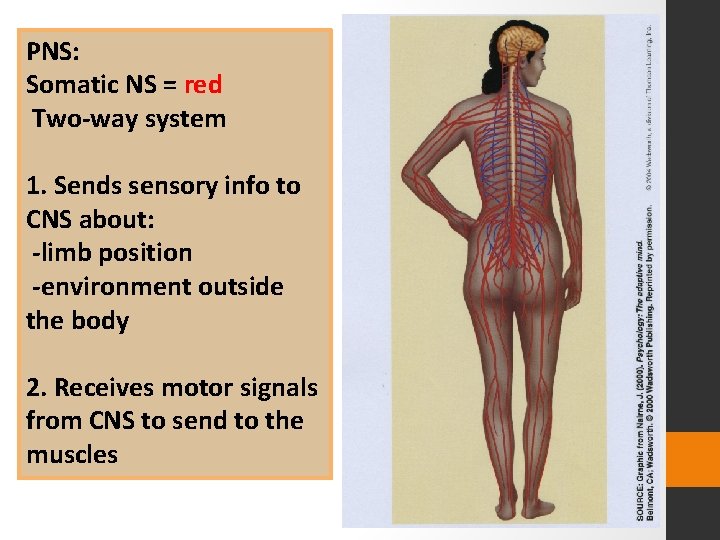
PNS: Somatic NS = red Two-way system 1. Sends sensory info to CNS about: -limb position -environment outside the body 2. Receives motor signals from CNS to send to the muscles
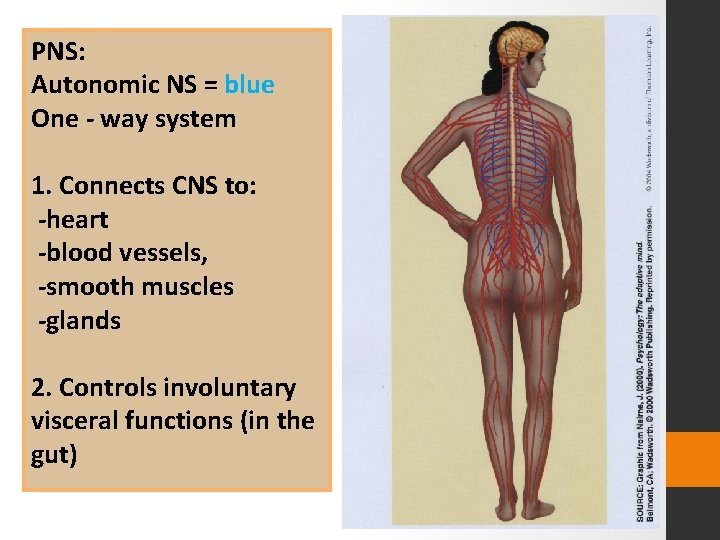
PNS: Autonomic NS = blue One - way system 1. Connects CNS to: -heart -blood vessels, -smooth muscles -glands 2. Controls involuntary visceral functions (in the gut)
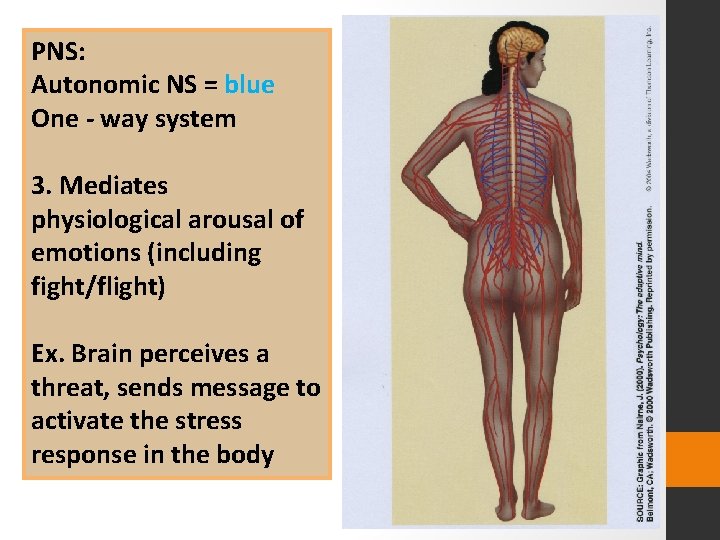
PNS: Autonomic NS = blue One - way system 3. Mediates physiological arousal of emotions (including fight/flight) Ex. Brain perceives a threat, sends message to activate the stress response in the body
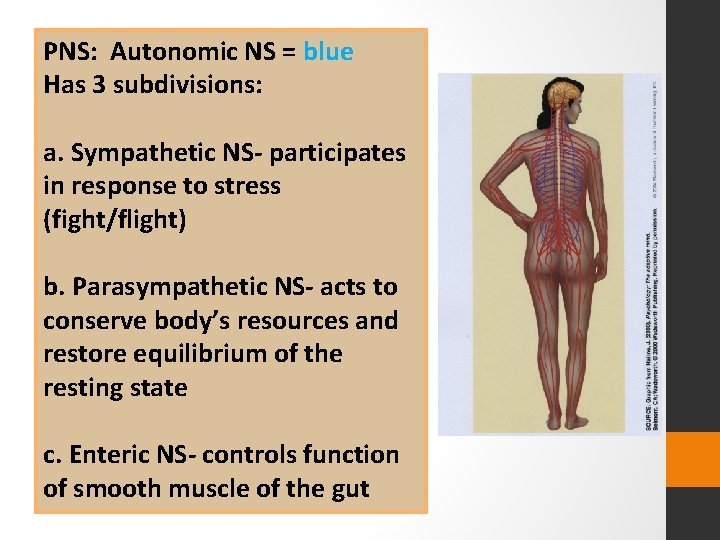
PNS: Autonomic NS = blue Has 3 subdivisions: a. Sympathetic NS- participates in response to stress (fight/flight) b. Parasympathetic NS- acts to conserve body’s resources and restore equilibrium of the resting state c. Enteric NS- controls function of smooth muscle of the gut
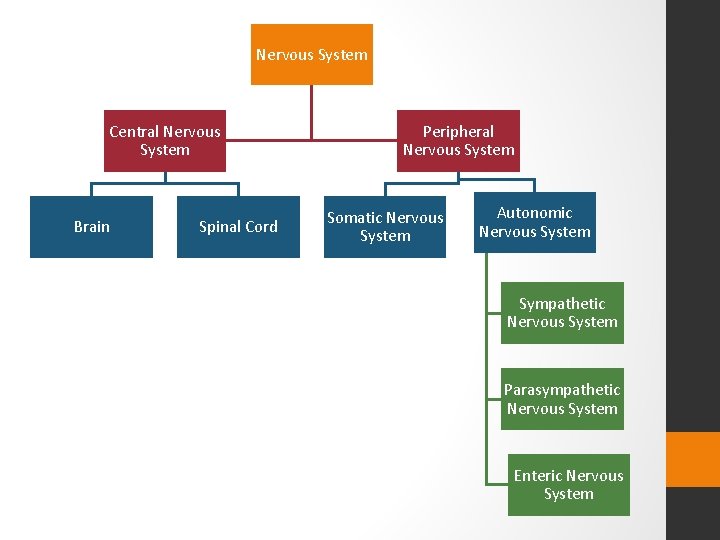
Nervous System Central Nervous System Brain Spinal Cord Peripheral Nervous System Somatic Nervous System Autonomic Nervous System Sympathetic Nervous System Parasympathetic Nervous System Enteric Nervous System
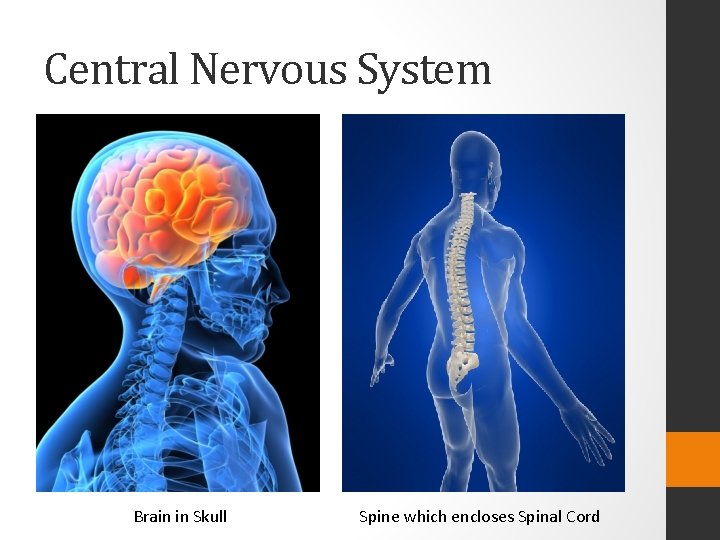
Central Nervous System Brain in Skull Spine which encloses Spinal Cord
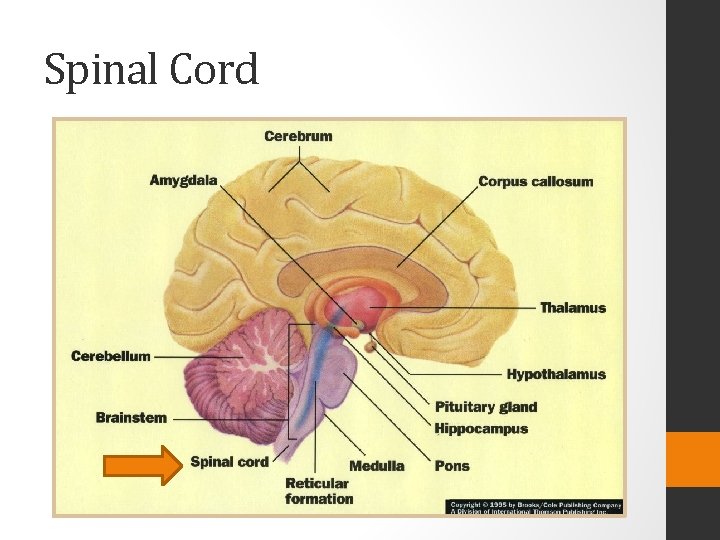
Spinal Cord
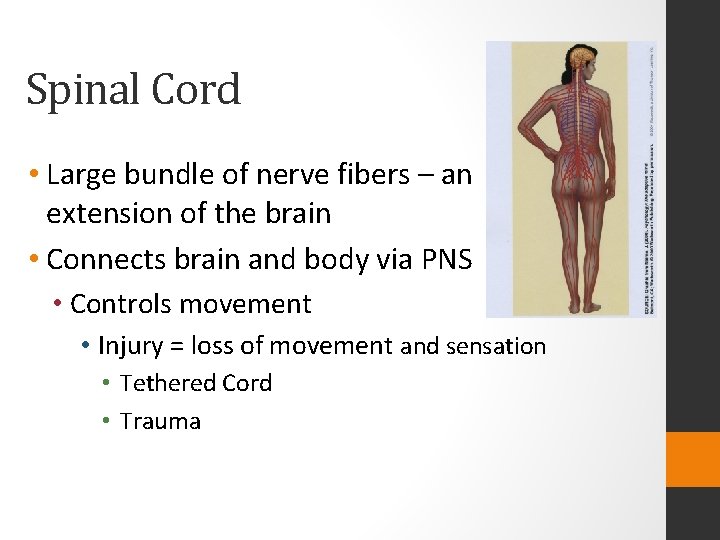
Spinal Cord • Large bundle of nerve fibers – an extension of the brain • Connects brain and body via PNS • Controls movement • Injury = loss of movement and sensation • Tethered Cord • Trauma
The Brain: Four Major Systems • Brain Stem • Limbic System • Cerebellum • Cortex
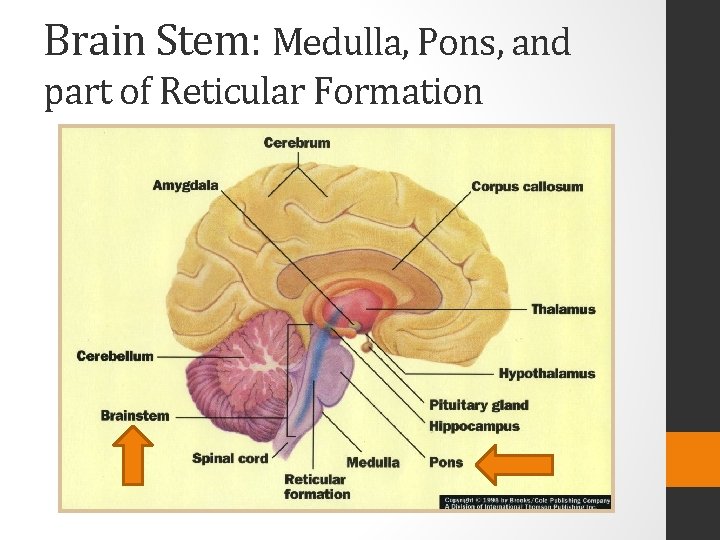
Brain Stem: Medulla, Pons, and part of Reticular Formation
Brainstem- develops first; functional at birth • Regulates: heartbeat breathing digestion sleep and arousal • Automatic reflexes sucking, swallowing, rooting, pupils • Visual fixation and following • Issues: very premature; SIDS; Shaken Baby
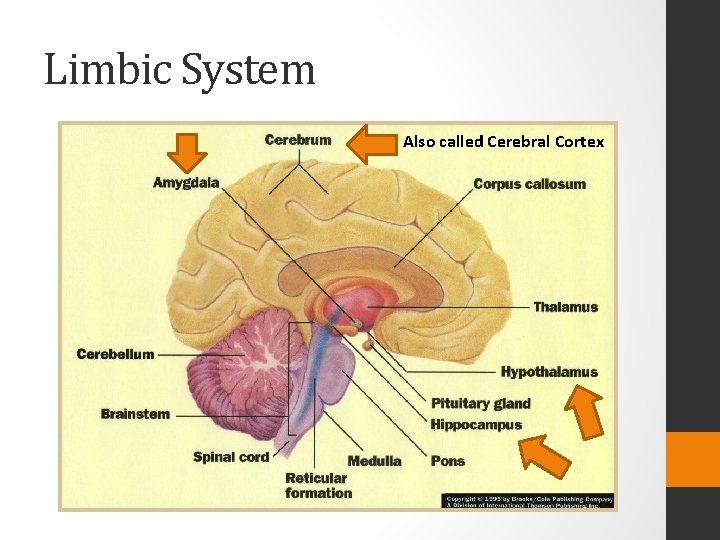
Limbic System Also called Cerebral Cortex
Limbic System • Above the Brain Stem • Parts of Limbic System functional at birth • Regulates: • Emotion • Motivation • Physiological regulation • Memory

Limbic System • Lower Limbic Structures • Amygdala, hypothalamus, hippocampus • Early development, mature at birth • Development is fairly universal in humans • Generate basic emotions (fear, anger, joy) • Body responses associated with emotion • Facial expressions (frown, smile) • Physiological changes (heart rate, blushing)
Limbic System • Higher Limbic Structures • Parts of the cortex • Develop over course of childhood • Dependent on culture and individual experiences • Conscious experience of emotion, emotional regulation, and the emotions of others • Comes later in infancy
Limbic System • Damage to amygdala impacts our ability to form and maintain relationships • Severe stress in infancy can cause the hypothalamus and amygdala to be hyperresponsive – cannot maintain homeostasis • Stress response goes off too easily
Limbic System • Emotions • Influence our thoughts and decisions • Influence how our bodies respond (like to fear or excitement) • The ability to process emotional experiences, expression, and regulation develops over time
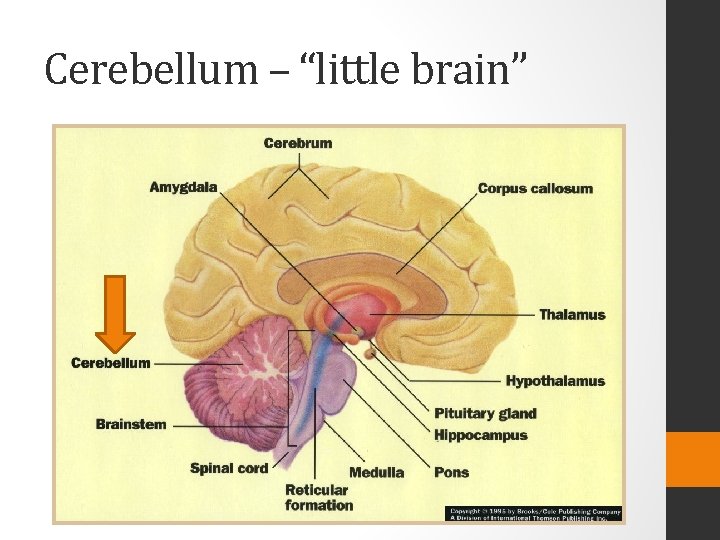
Cerebellum – “little brain”
Cerebellum • Functions: • Balance • Maintain body posture • Coordinates movement & muscle function • Develops slowly from birth through middle childhood
Cortex
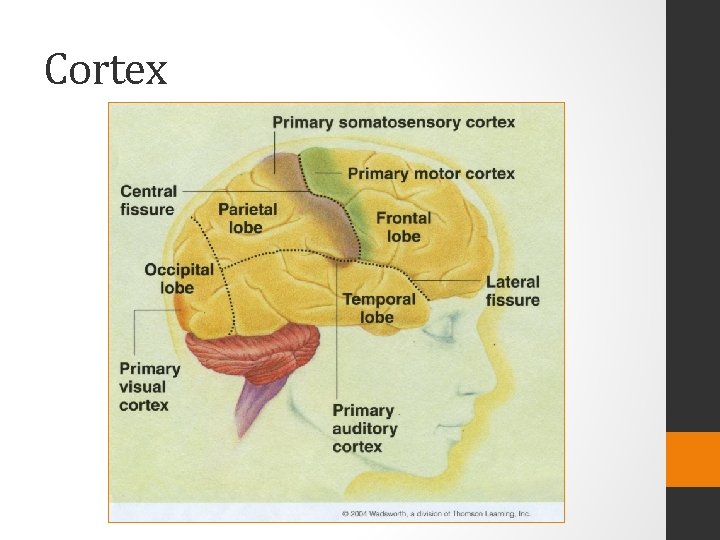
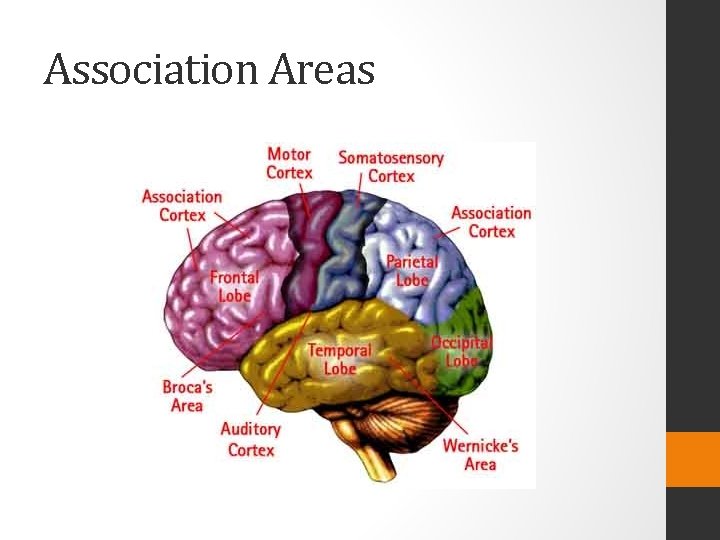
Cortex – “thinking” part of the brain • Conscious thought • Emotional experience and regulation • Has sensory, motor and association areas • Association areas integrate all information from all other brain areas. • Can take 20+ years to develop • Sensory and motor areas begin to develop in prenatal life • Between Birth to 5 years, rapid development of sensory and motor areas
Association Areas
Cortex • Major developmental events correlate with growth spurts in different areas of the cortex • Adult cortex is highly specialized • Child’s cortex is less specialized and still significantly shaped by experience
Cortex – sensory areas • Touch is first sense to develop – early in prenatal development (Somatosensory Cortex) • Mouth is first region to become sensitive; it is more sensitive than the hands • Primary sensory areas necessary for basic sensory processing (vision, hearing, touch) have specialized areas (vision- edges, brightness, texture, etc. ) • Association areas pull it together and attach meaning
Cortex – motor areas • Primary Motor Cortex: • First areas to develop control muscles • More area devoted to face and hands (speech and manipulation with hands) • Learn to govern speed and force of movements • Can move one body part independent of others
Cortex – motor areas • Primary Motor Cortex (cont. ) • Later developments include: • Inhibition of reflexes • Better control of motor planning and the sequencing of movements • Takes several years – preschoolers still struggle with this When we get to preschool years, we’ll look at cortex in more detail.
END
- Slides: 30