
Brain Development Essential Question How does a babys
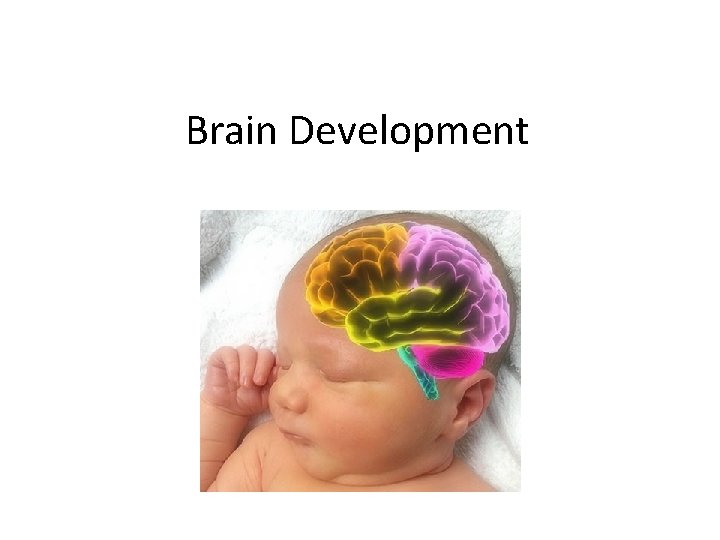
Brain Development
Essential Question: How does a baby’s brain develop and what can I do to help it?

Child development is a continuum. • Continuum: A continuous sequence or progression. A developmental continuum outlines the predictable order, or expected progression of skills. – Example:
Abilities Continuum Think to yourself… how well can you sew? • Not at all • Thread a needle • Make a pillow • Work a sewing machine • Make a dress • Pro Status
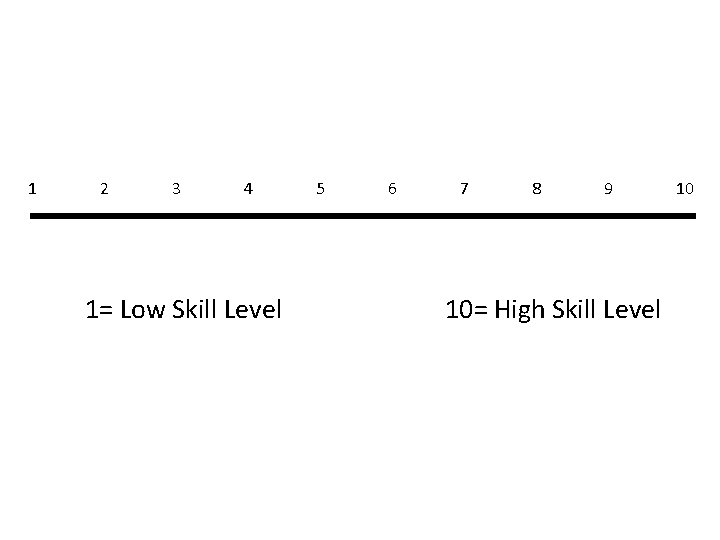
1 2 3 4 1= Low Skill Level 5 6 7 8 9 10= High Skill Level 10
Child development is nature & nurture • Nature: Genetics – Example: • Nurture: Environment – Example:
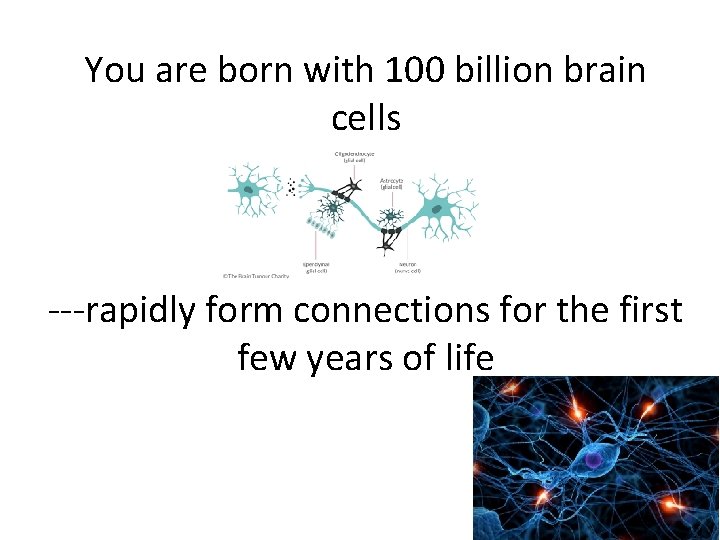
You are born with 100 billion brain cells ---rapidly form connections for the first few years of life
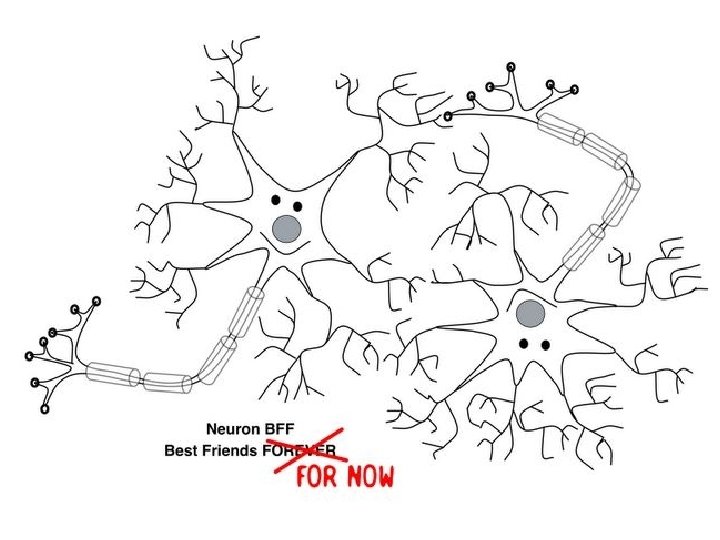
Neural Pathways: A series of connected nerves along which electrical impulses travel in the body.
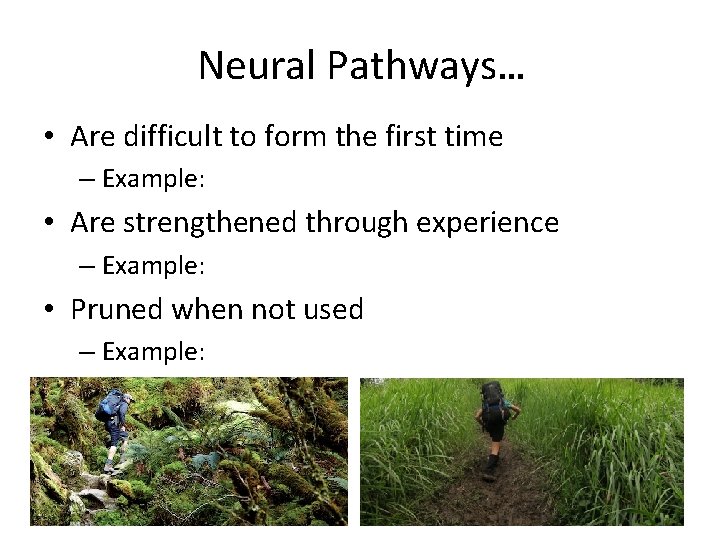
Neural Pathways… • Are difficult to form the first time – Example: • Are strengthened through experience – Example: • Pruned when not used – Example:

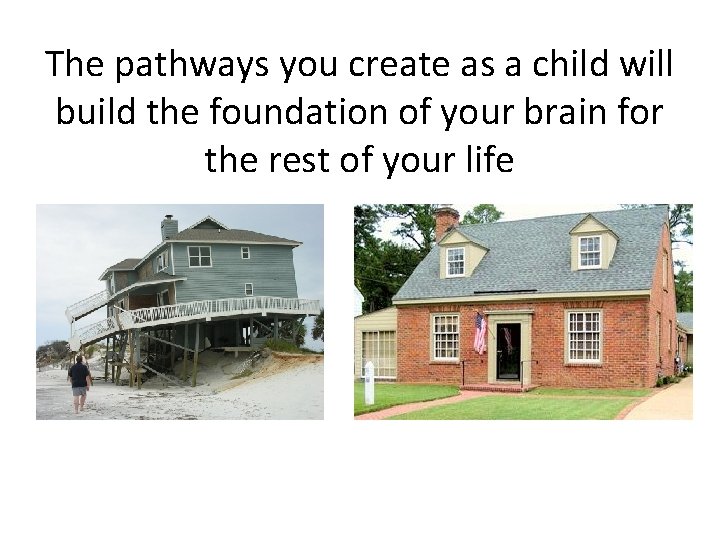
The pathways you create as a child will build the foundation of your brain for the rest of your life
Building Bridges • http: //learningandtheadolescentmind. org/res ources_02_learning. html (3: 15)
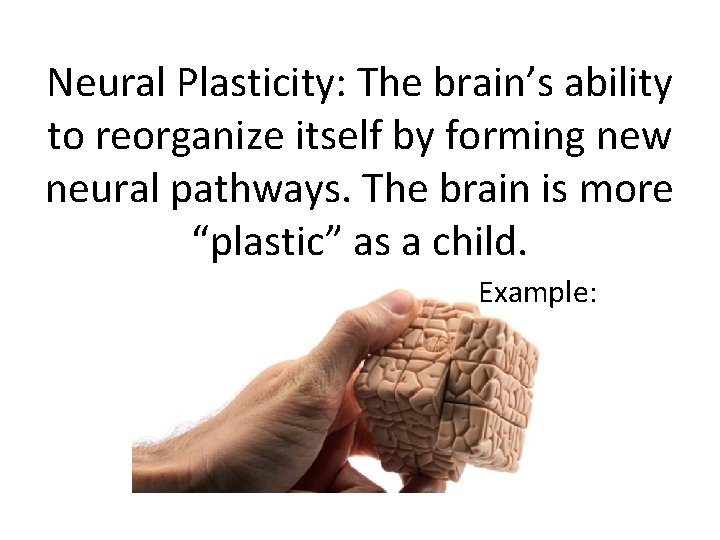
Neural Plasticity: The brain’s ability to reorganize itself by forming new neural pathways. The brain is more “plastic” as a child. Example:
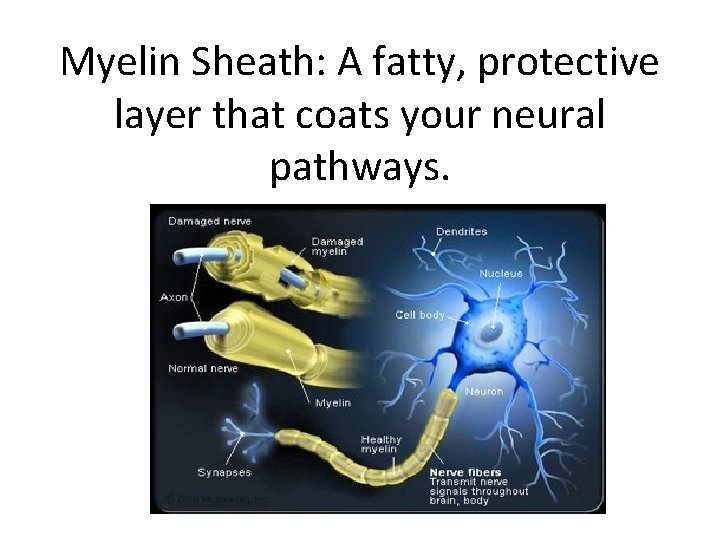
Myelin Sheath: A fatty, protective layer that coats your neural pathways.
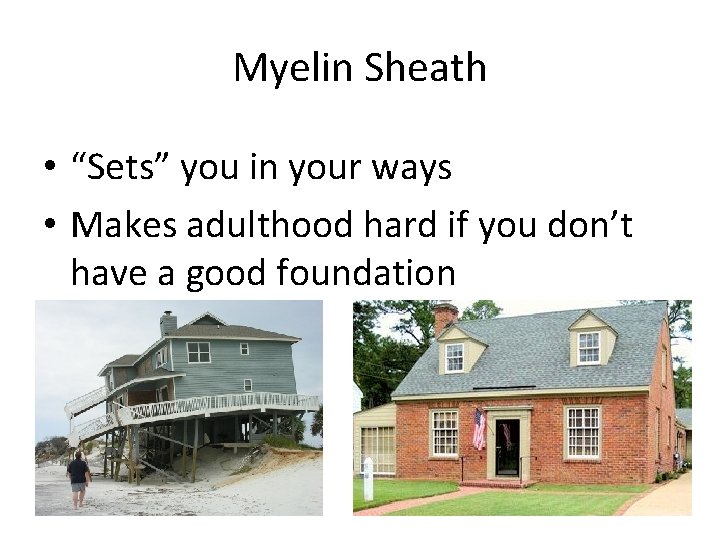
Myelin Sheath • “Sets” you in your ways • Makes adulthood hard if you don’t have a good foundation
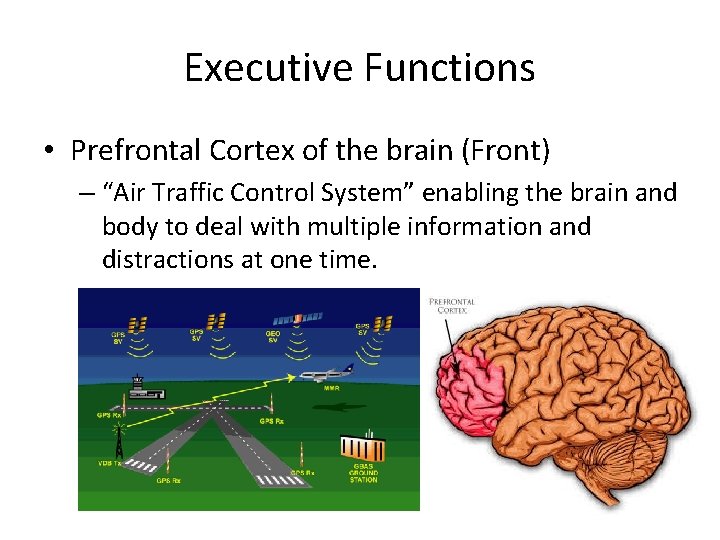
Executive Functions • Prefrontal Cortex of the brain (Front) – “Air Traffic Control System” enabling the brain and body to deal with multiple information and distractions at one time.
Working Memory, Inhibitory Control, Mental Flexibility • Working Memory – I remember what I should be doing • Inhibitory Control- I really want to look at my phone but then Ms. Hampel will take it • Mental Flexibility- The phone rings ( Is associated with good child outcomes, success in school, and life-long benefits – Executive Function http: //developingchild. harvard. edu/key_concepts/ex ecutive_function/
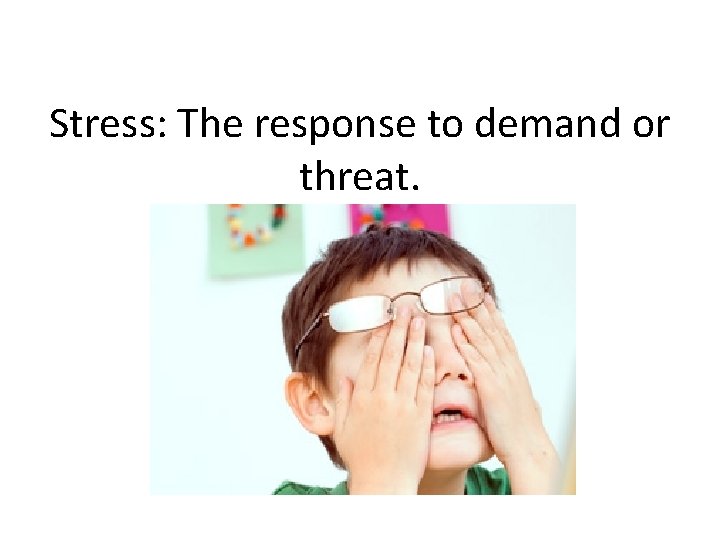
Stress: The response to demand or threat.
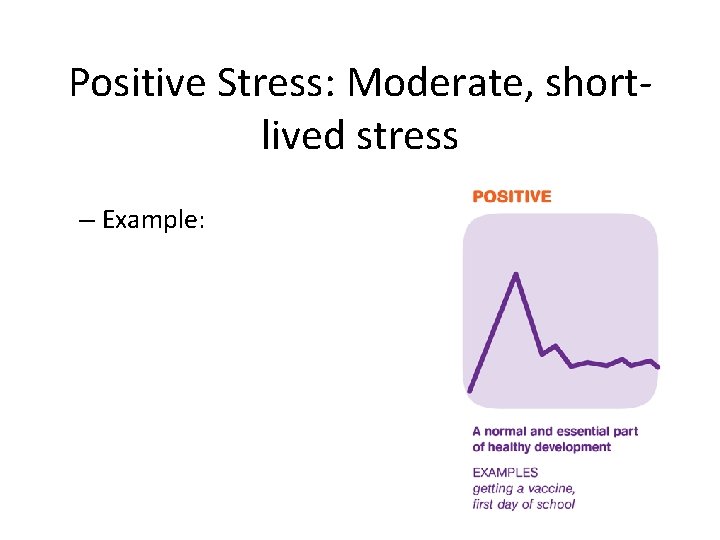
Positive Stress: Moderate, shortlived stress – Example:

Toxic Stress: Chronic, strong, unrelenting stress without a supportive adult – Example:
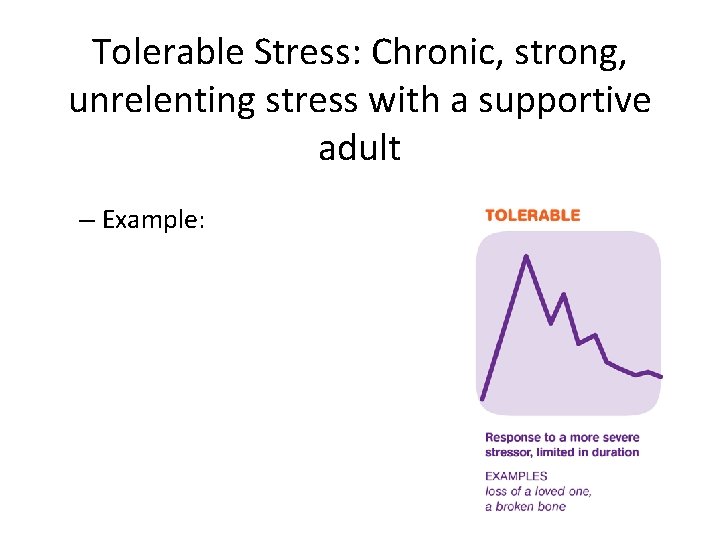
Tolerable Stress: Chronic, strong, unrelenting stress with a supportive adult – Example:

TOXIC Stress will prune neural pathways!
Screen Time & Children • Screen time (TV, video games, smart phones, computers, DVDs, etc. ) is associated with problems with executive functions such as attention, concentration, impulsivity, imagination, planning, language and social skills. Higher risk of being overweight, prejudiced, sedentary, aggressive, and/or unable to distinguish between fantasy and reality. • No screen time for children under 2. Older children, no more than 1 -2 hours per day • Even “educational” videos for babies (baby Einstein) actually do the opposite and delay intellectual and language development.
Summary: What can you do to help neural pathways form in the Tiny Timberwolves Preschoolers? What can you do to help neural pathways not be pruned?
- Slides: 25