
BRAIN DEATH Essentials in Organ Donation The process
BRAIN DEATH Essentials in Organ Donation

The process of Death Cessation of neurologic functions of CNS Cardiac arrest Respiratory arrest Death of all cells of the body Putrefaction

Death The most important diagnosis • Diagnosis based on: – neurologic criteria Brain death – cardiopulmonary criteria Cardiac death Prior to the advent of mechanical ventilation, death was defined as the cessation of circulation and breathing
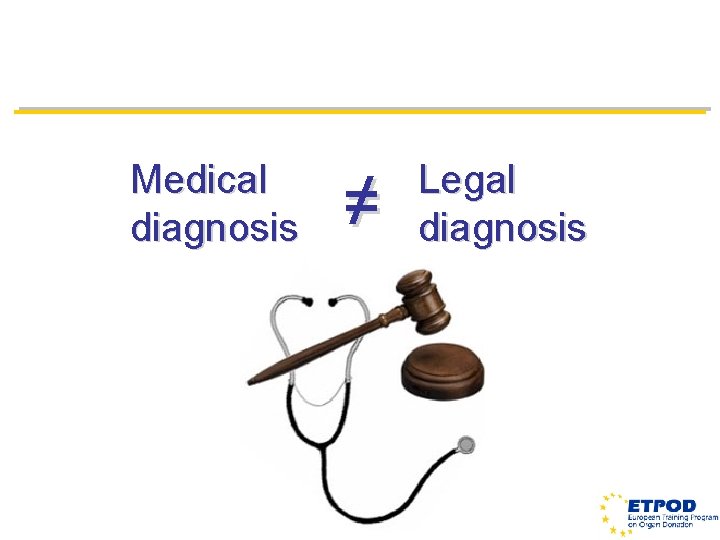
Medical diagnosis ≠ Legal diagnosis

Brain Death Concepts • Brainstem Death – midbrain, pons, medulla – RAS • Neocortical Death – – – cognition voluntary movement sensation Cerebral Cortex Brain Stem • Whole Brain Death – Cerebral hemispheres and brainstem – The most widespread Reticular Activating System
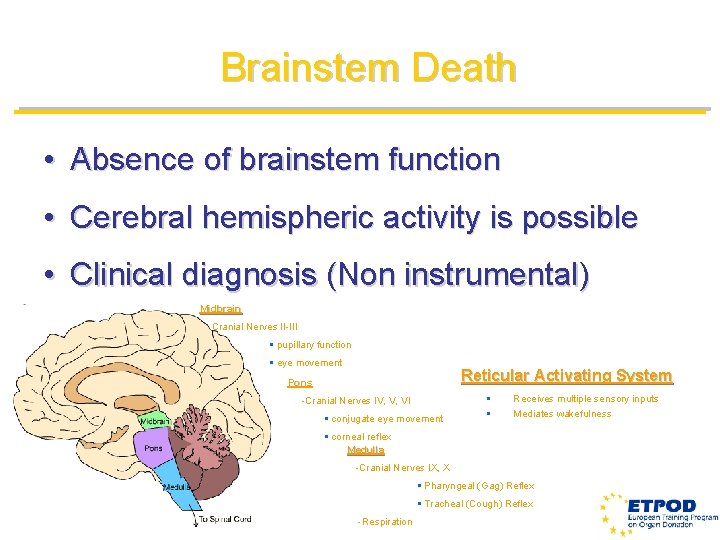
Brainstem Death • Absence of brainstem function • Cerebral hemispheric activity is possible • Clinical diagnosis (Non instrumental) Midbrain -Cranial Nerves II-III § pupillary function § eye movement Reticular Activating System Pons -Cranial Nerves IV, V, VI § conjugate eye movement § § Receives multiple sensory inputs Mediates wakefulness § corneal reflex Medulla -Cranial Nerves IX, X § Pharyngeal (Gag) Reflex § Tracheal (Cough) Reflex -Respiration

Whole Brain Death • Absence of neurological function of CNS • Cerebral neurological hemispheric activity is no possible • Clinical and Instrumental diagnosis
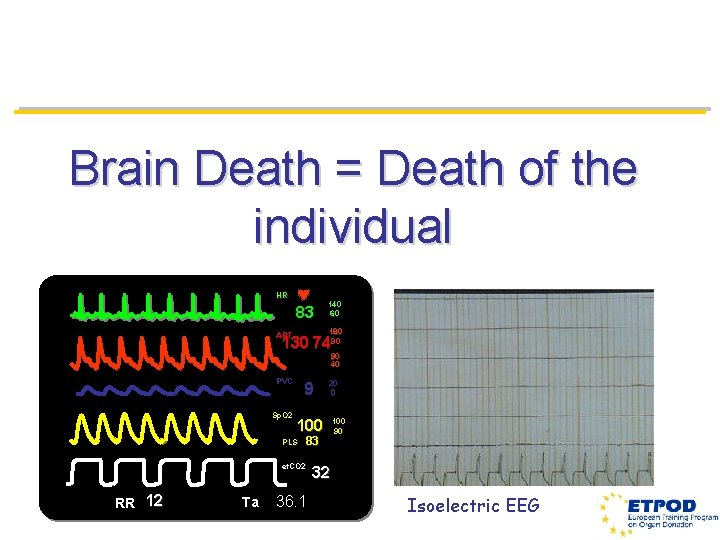
Brain Death = Death of the individual HR 83 140 60 180 90 ART 130 74 90 40 PVC Sp. O 2 9 100 PLS 83 et. CO 2 RR 12 Ta 20 0 36. 1 100 90 32 Isoelectric EEG
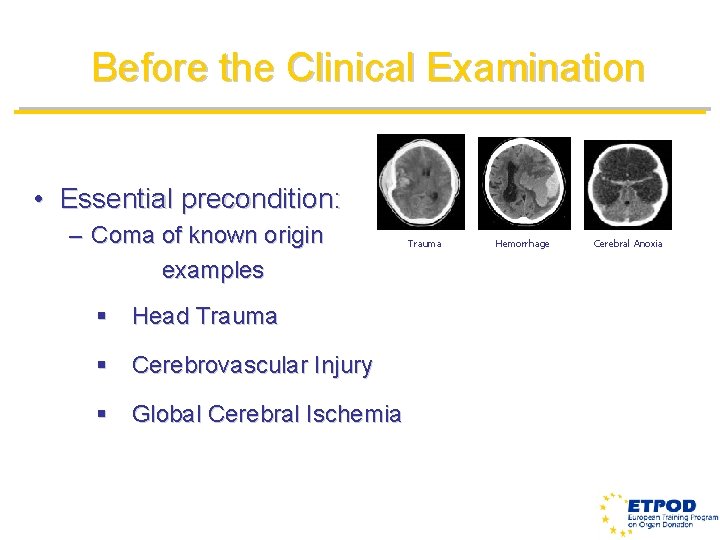
Before the Clinical Examination • Essential precondition: – Coma of known origin examples § Head Trauma § Cerebrovascular Injury § Global Cerebral Ischemia Trauma Hemorrhage Cerebral Anoxia
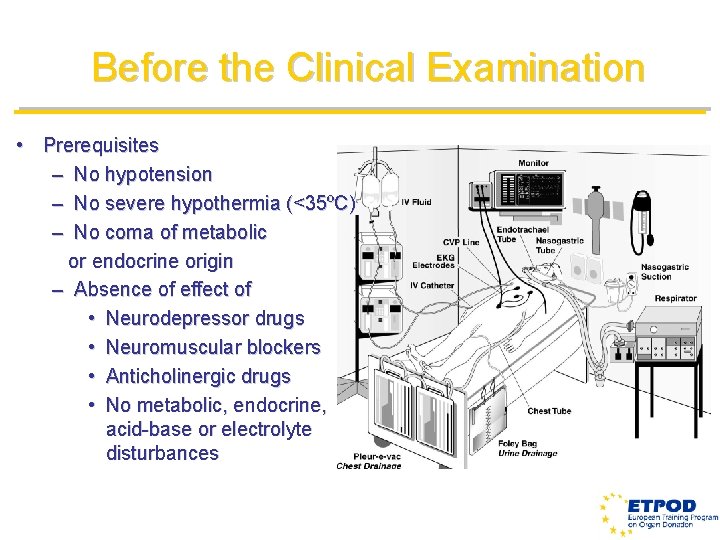
Before the Clinical Examination • Prerequisites – No hypotension – No severe hypothermia (<35ºC) – No coma of metabolic or endocrine origin – Absence of effect of • Neurodepressor drugs • Neuromuscular blockers • Anticholinergic drugs • No metabolic, endocrine, acid-base or electrolyte disturbances
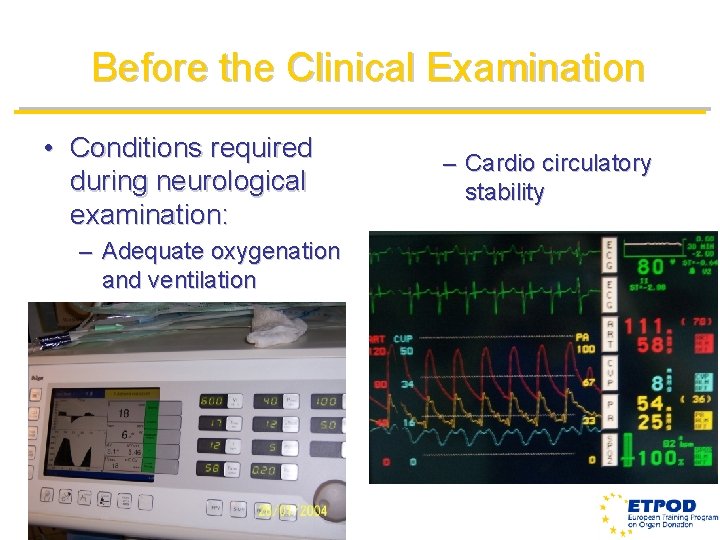
Before the Clinical Examination • Conditions required during neurological examination: – Adequate oxygenation and ventilation – Cardio circulatory stability
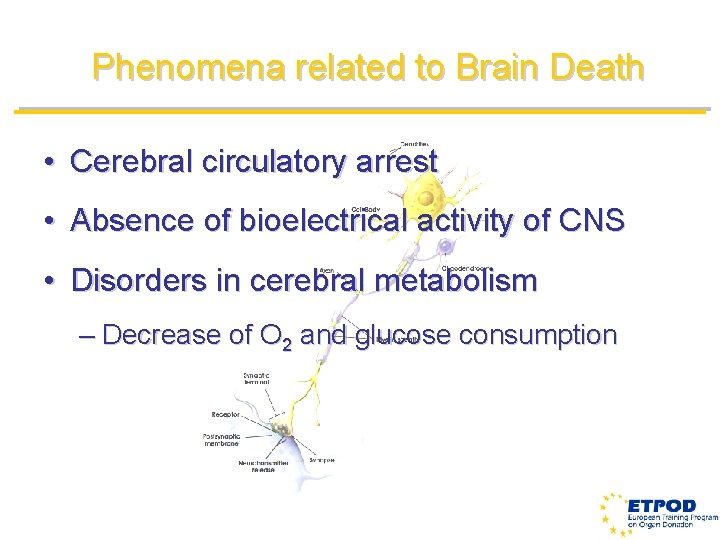
Phenomena related to Brain Death • Cerebral circulatory arrest • Absence of bioelectrical activity of CNS • Disorders in cerebral metabolism – Decrease of O 2 and glucose consumption
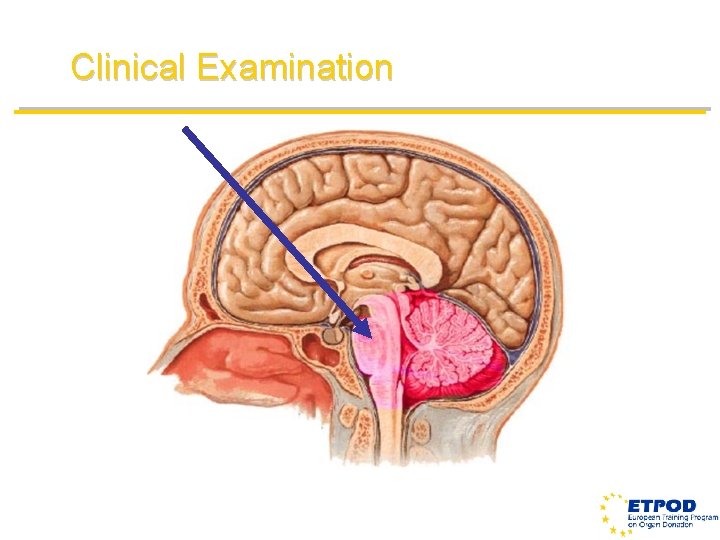
Clinical Examination
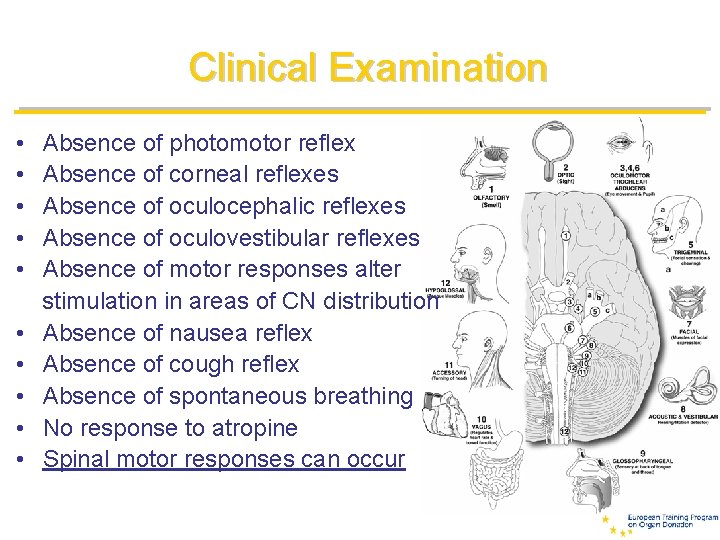
Clinical Examination • • • Absence of photomotor reflex Absence of corneal reflexes Absence of oculocephalic reflexes Absence of oculovestibular reflexes Absence of motor responses alter stimulation in areas of CN distribution Absence of nausea reflex Absence of cough reflex Absence of spontaneous breathing No response to atropine Spinal motor responses can occur
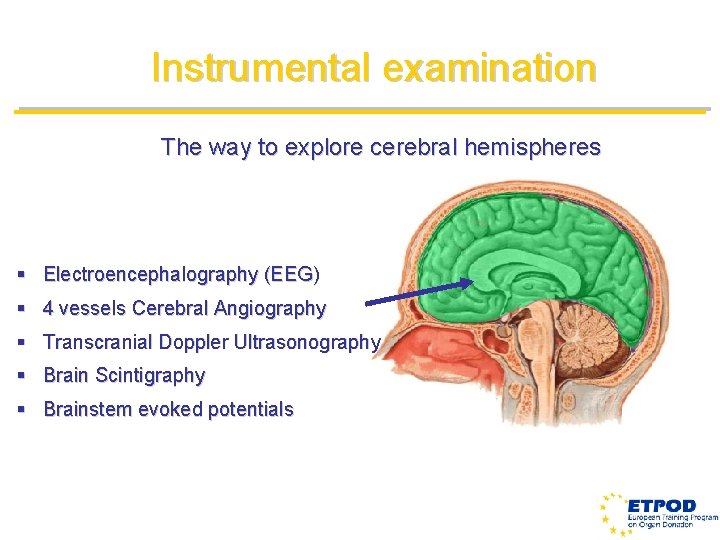
Instrumental examination The way to explore cerebral hemispheres § Electroencephalography (EEG) § 4 vessels Cerebral Angiography § Transcranial Doppler Ultrasonography § Brain Scintigraphy § Brainstem evoked potentials
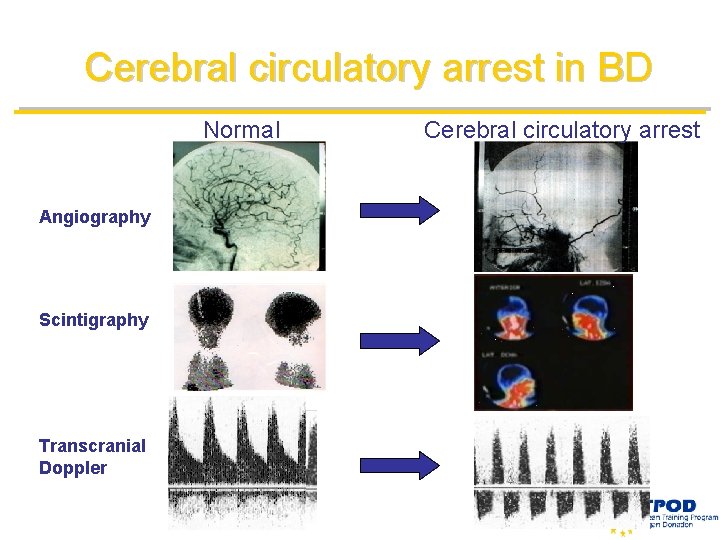
Cerebral circulatory arrest in BD Normal Angiography Scintigraphy Transcranial Doppler Cerebral circulatory arrest

Flat EEG
The Positive Predictive Value of a test for Brain Death Diagnosis must be 100 %.
Conflictive cases in the Diagnosis of Brain Death • Neurodepressor drugs • Hypothermia • Other – Severe facial trauma – Children – Hemorrhagic shock
Importance of Brain Death diagnosis • Organ donation Prolong life Improve quality of life • Treatment withdrawal In case of no donation
- Slides: 20