
Brain Aneurysm Esa Erlinda Intan Septin Restuti Rizqulloh
Brain Aneurysm
Esa Erlinda Intan Septin Restuti Rizqulloh Rifqi Haniffasyurika Christin Merlina Wattimury Qurrotu A'yuni Putu Rika Desyanti Handayani Ira Maulidah Dwi Julianti Indra Naufal Rabbani (16700097) (16700131) (16700135) (16700139) (16700145) (16700149) (16700159)
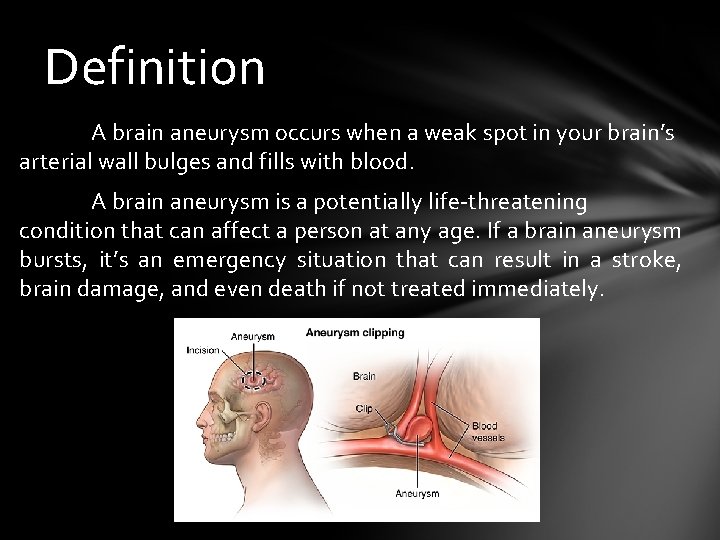
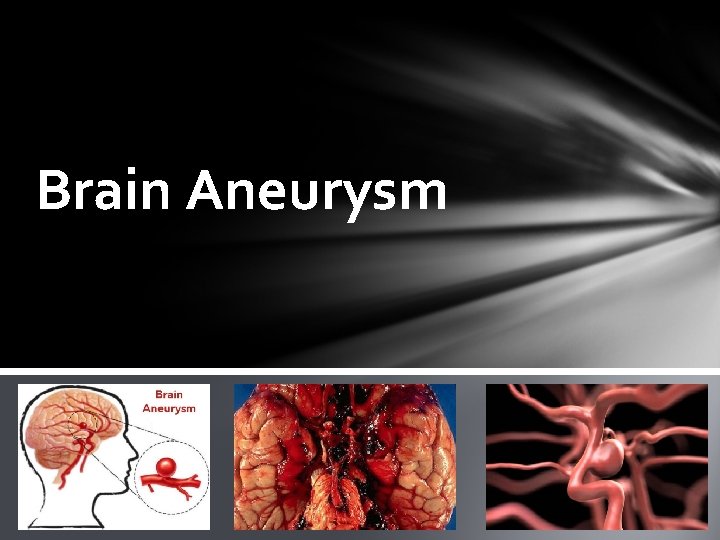
Definition A brain aneurysm occurs when a weak spot in your brain’s arterial wall bulges and fills with blood. A brain aneurysm is a potentially life-threatening condition that can affect a person at any age. If a brain aneurysm bursts, it’s an emergency situation that can result in a stroke, brain damage, and even death if not treated immediately.
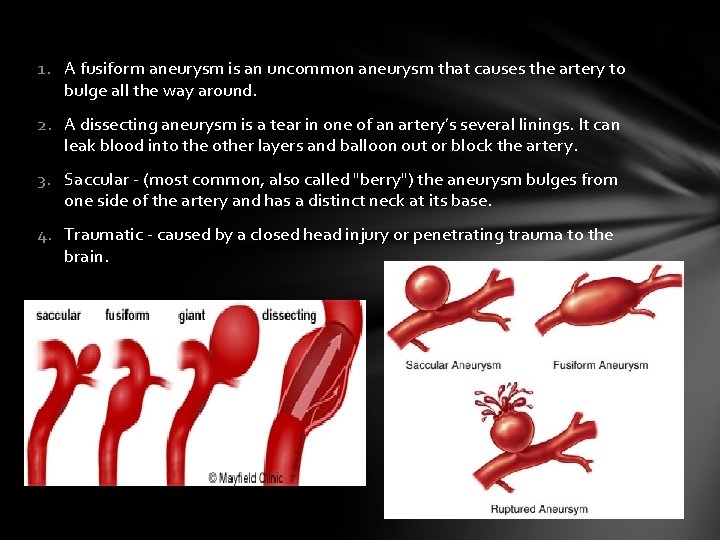
1. A fusiform aneurysm is an uncommon aneurysm that causes the artery to bulge all the way around. 2. A dissecting aneurysm is a tear in one of an artery’s several linings. It can leak blood into the other layers and balloon out or block the artery. 3. Saccular - (most common, also called "berry") the aneurysm bulges from one side of the artery and has a distinct neck at its base. 4. Traumatic - caused by a closed head injury or penetrating trauma to the brain.
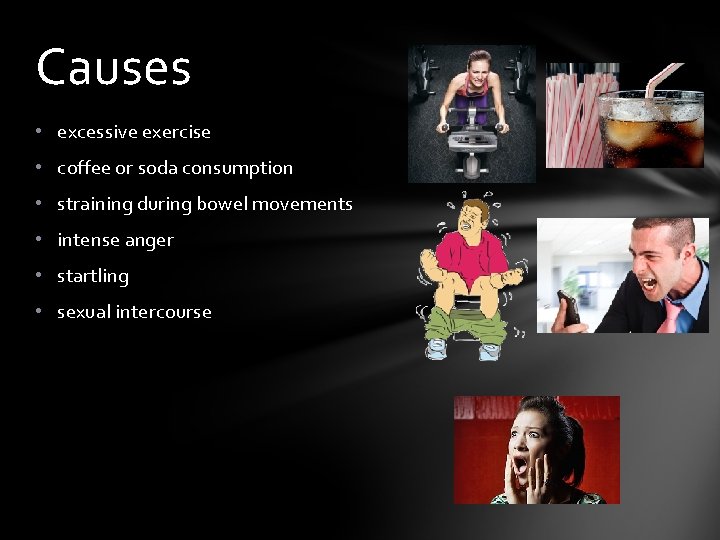
Causes • excessive exercise • coffee or soda consumption • straining during bowel movements • intense anger • startling • sexual intercourse
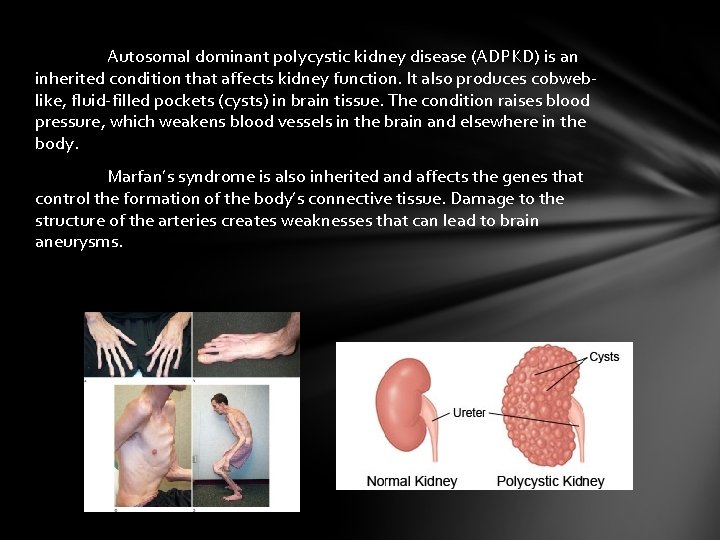
Autosomal dominant polycystic kidney disease (ADPKD) is an inherited condition that affects kidney function. It also produces cobweblike, fluid-filled pockets (cysts) in brain tissue. The condition raises blood pressure, which weakens blood vessels in the brain and elsewhere in the body. Marfan’s syndrome is also inherited and affects the genes that control the formation of the body’s connective tissue. Damage to the structure of the arteries creates weaknesses that can lead to brain aneurysms.
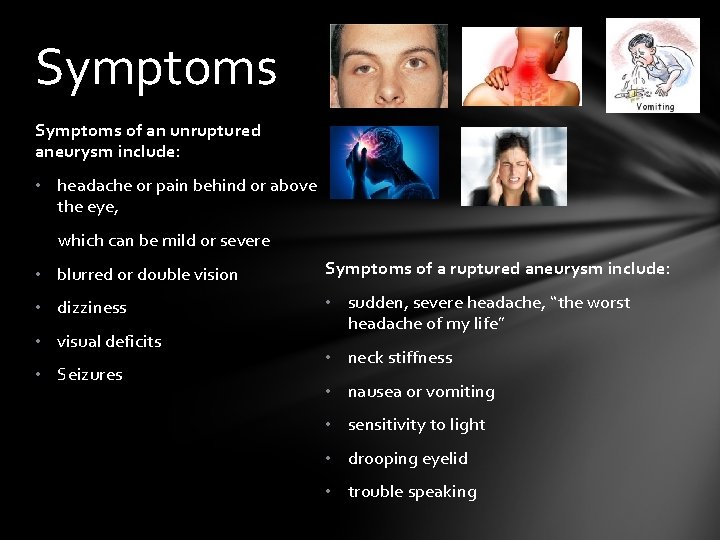
Symptoms of an unruptured aneurysm include: • headache or pain behind or above the eye, which can be mild or severe • blurred or double vision Symptoms of a ruptured aneurysm include: • dizziness • sudden, severe headache, “the worst headache of my life” • visual deficits • Seizures • neck stiffness • nausea or vomiting • sensitivity to light • drooping eyelid • trouble speaking
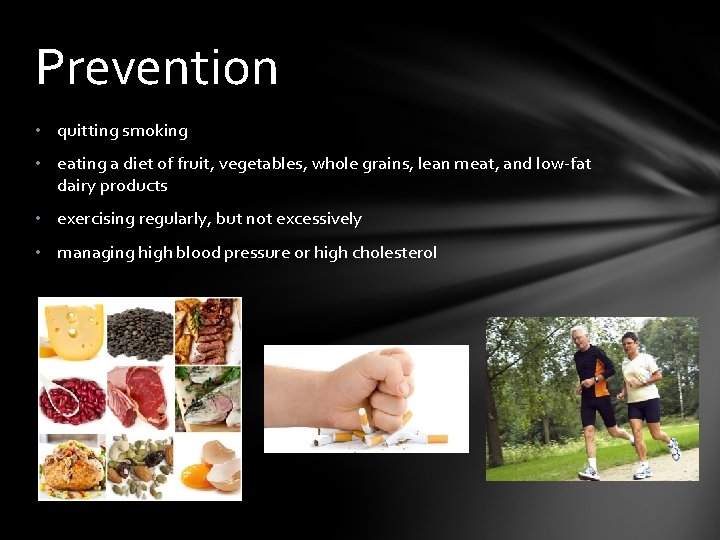
Prevention • quitting smoking • eating a diet of fruit, vegetables, whole grains, lean meat, and low-fat dairy products • exercising regularly, but not excessively • managing high blood pressure or high cholesterol
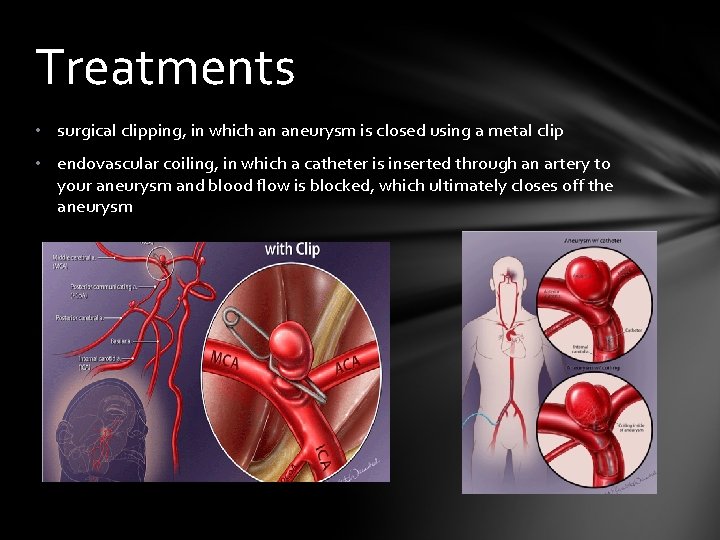
Treatments • surgical clipping, in which an aneurysm is closed using a metal clip • endovascular coiling, in which a catheter is inserted through an artery to your aneurysm and blood flow is blocked, which ultimately closes off the aneurysm
Source • http: //www. healthline. com/health/aneurysm-in-the-brain • https: //www. google. co. id/search? q=brain+aneurysm&biw=1600&bih=789 &source=lnms&tbm=isch&sa=X&ved=0 ah. UKEwj 8 k. NKJp. Ob. QAh. UBop. QK HQWTDUIQ_AUIBig. B • http: //www. mayoclinic. org/diseases-conditions/brainaneurysm/basics/treatment/con-20028457 • http: //www. mayfieldclinic. com/PE-Aneur. Rupt. htm

- Slides: 11