
Brain and toxic stress in early childhood How
Brain and toxic stress in early childhood: How brain structure and function can be altered and impacts life-long health A West Virginia Experience MITZI PAYNE, MD PROFESSOR NEUROLOGY, MARSHALL SCHOOL OF MEDICINE

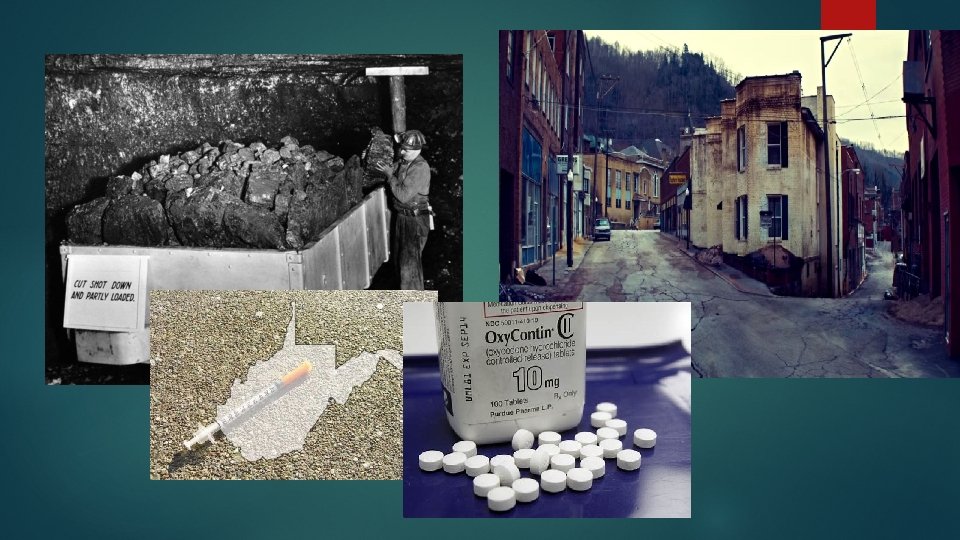
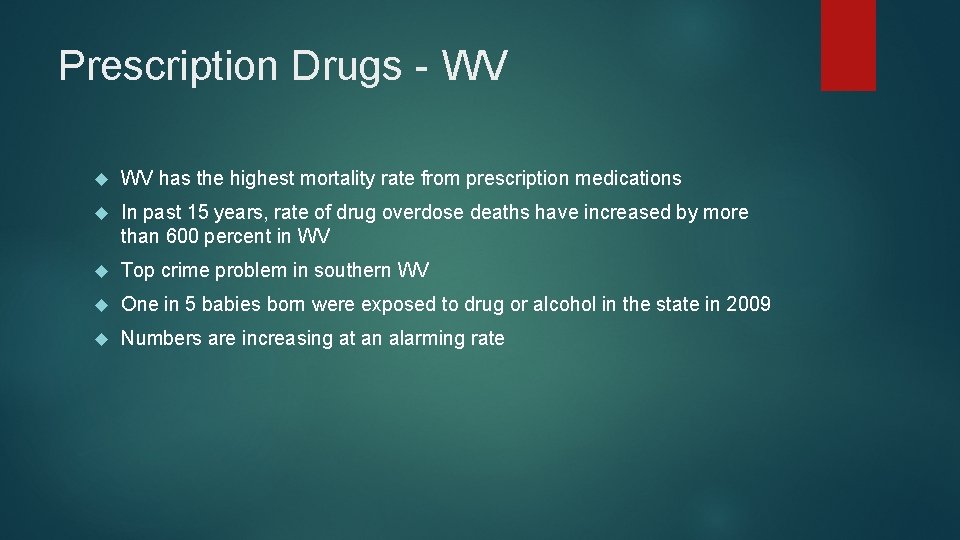
Prescription Drugs - WV has the highest mortality rate from prescription medications In past 15 years, rate of drug overdose deaths have increased by more than 600 percent in WV Top crime problem in southern WV One in 5 babies born were exposed to drug or alcohol in the state in 2009 Numbers are increasing at an alarming rate
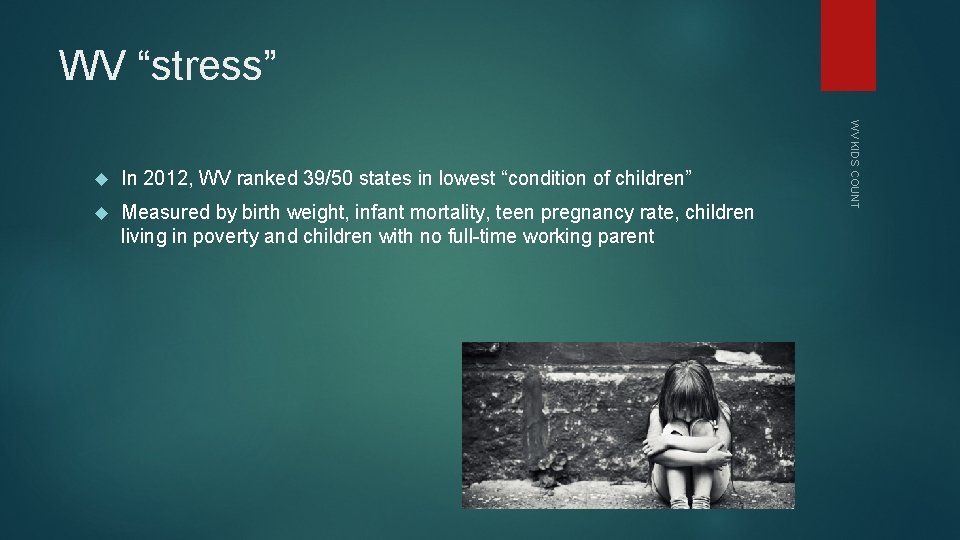
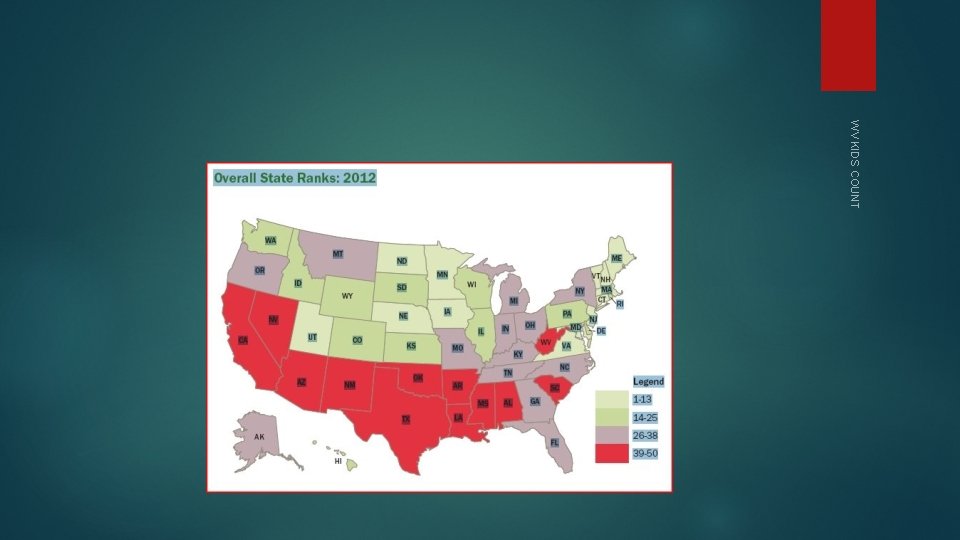
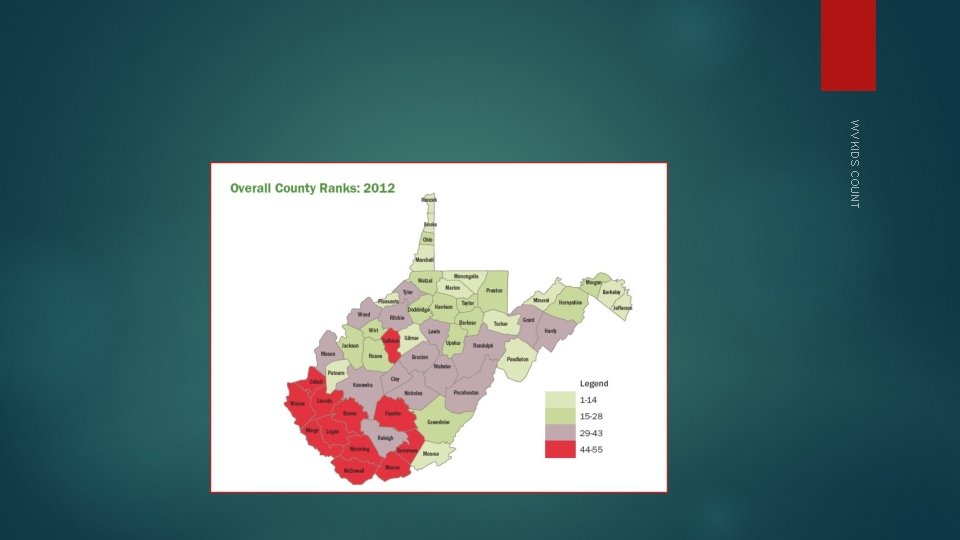
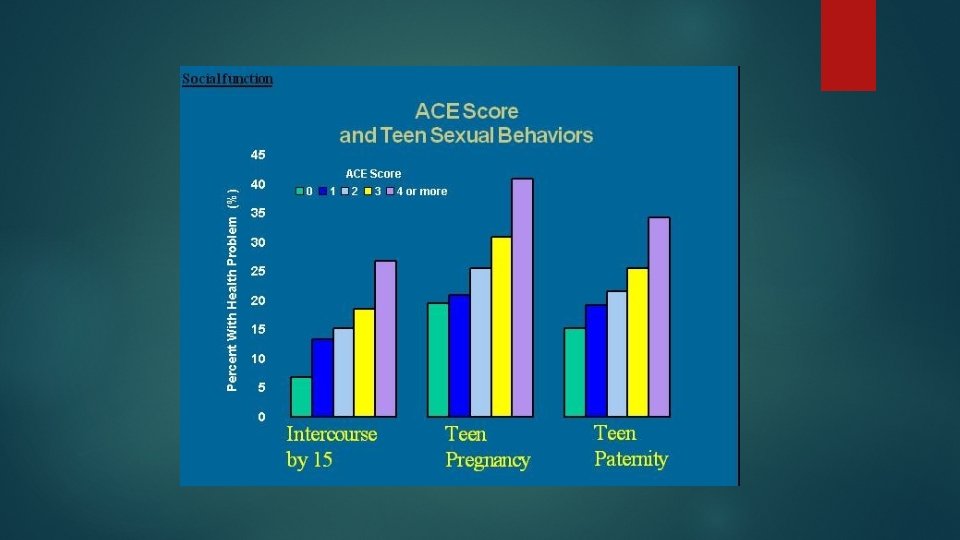
WV “stress” In 2012, WV ranked 39/50 states in lowest “condition of children” Measured by birth weight, infant mortality, teen pregnancy rate, children living in poverty and children with no full-time working parent WV KIDS COUNT
WV KIDS COUNT
WV KIDS COUNT
WV stats 2017 (US national average) Low birth weight babies 9. 5% (8. 3%) Child death rate 28 per 100, 000 (26) Child abuse/ neglect rate 16. 4 per 1000 (9. 2) Percent children in poverty 26% (18%) WV KIDS COUNT
Foster Care Crisis in WV Over 6600 children in foster care in WV (2 -3% of children in state) Half of these in kinship homes Up to 6% are out of state in psychiatric facilities or group homes Increase in foster children as opioid crisis worsens
Long term outlook Current stressors in our younger population poses increase health care needs in future Luckily, these risks being identified Resiliency training, early behavioral interventions Educate about lifestyle modifications to hopefully limit the multifactorial process Treating opioid crisis to prevent future generations
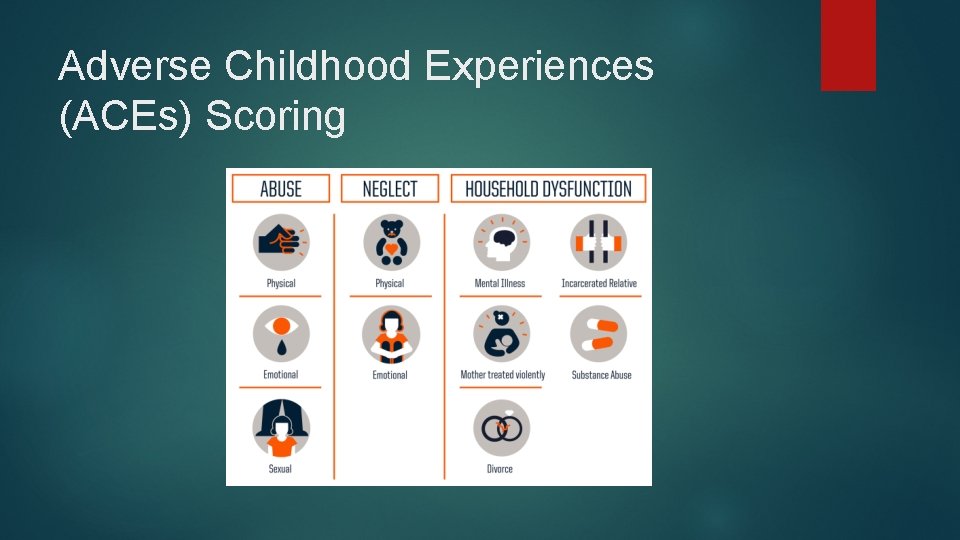
Adverse Childhood Experiences (ACEs) Scoring
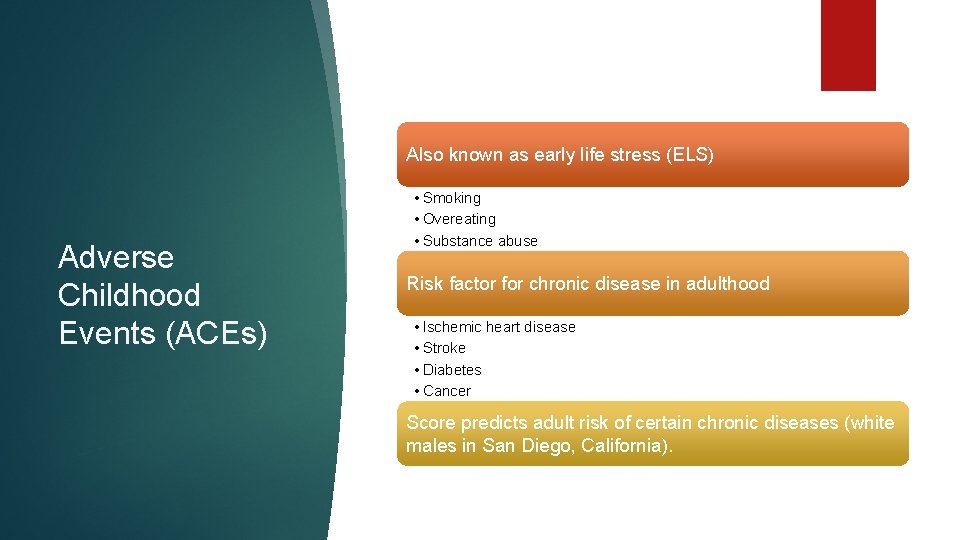
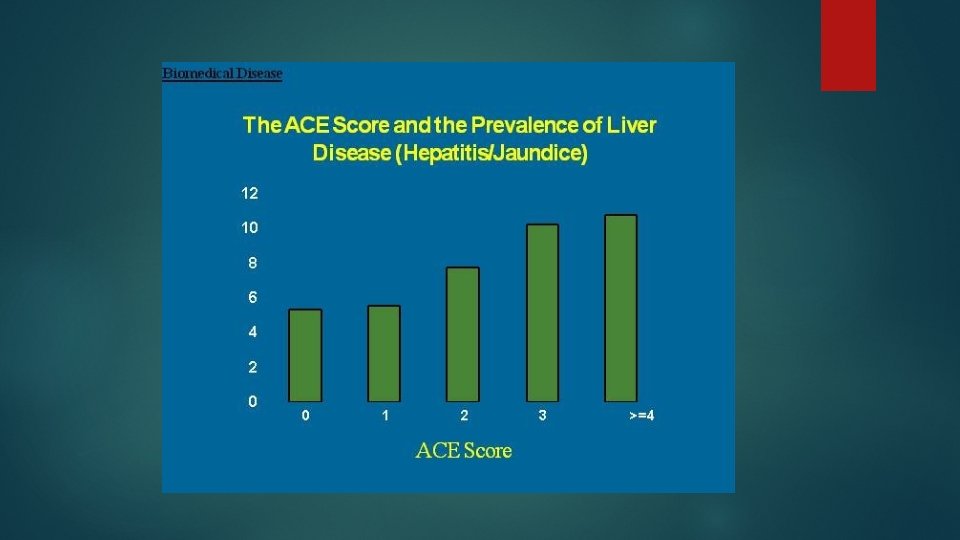
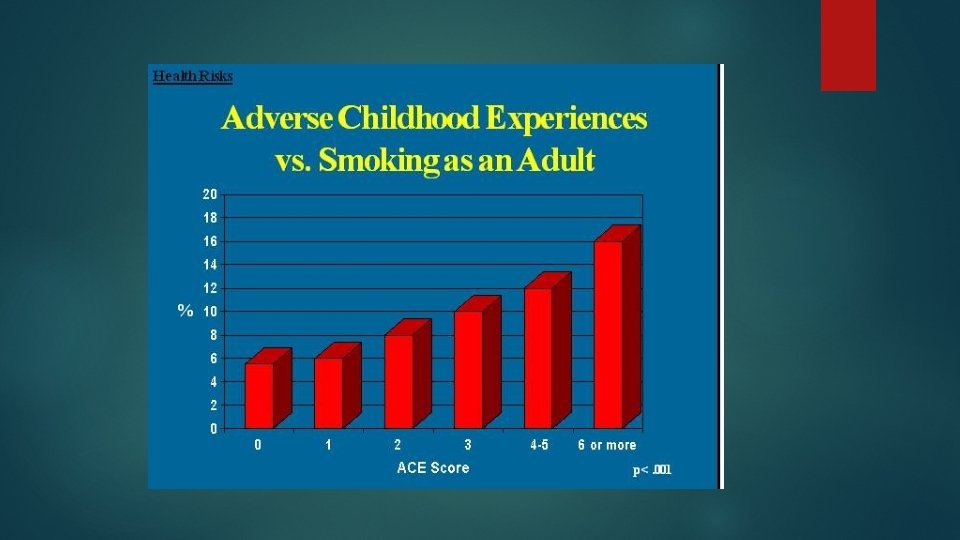
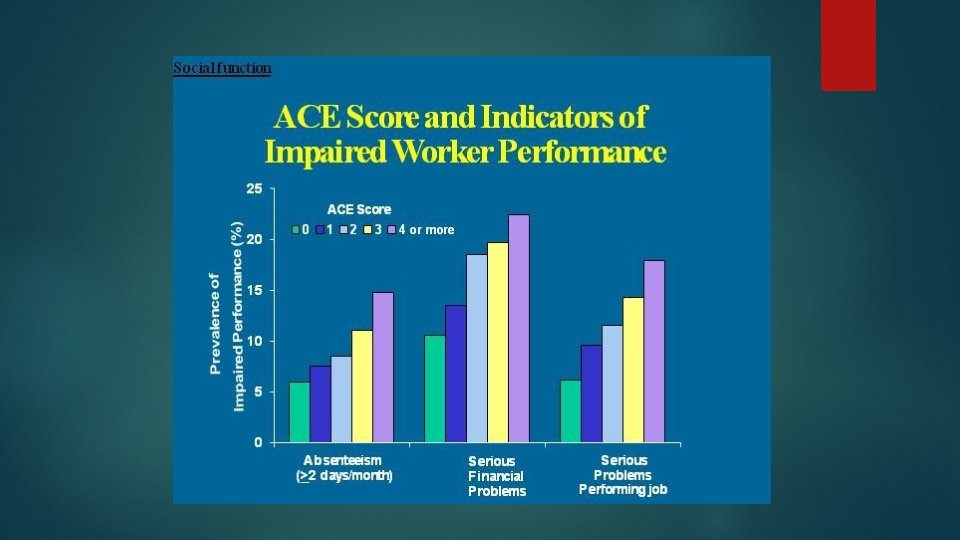
Also known as early life stress (ELS) Adverse Childhood Events (ACEs) • Smoking • Overeating • Substance abuse Risk factor for chronic disease in adulthood • Ischemic heart disease • Stroke • Diabetes • Cancer Score predicts adult risk of certain chronic diseases (white males in San Diego, California).
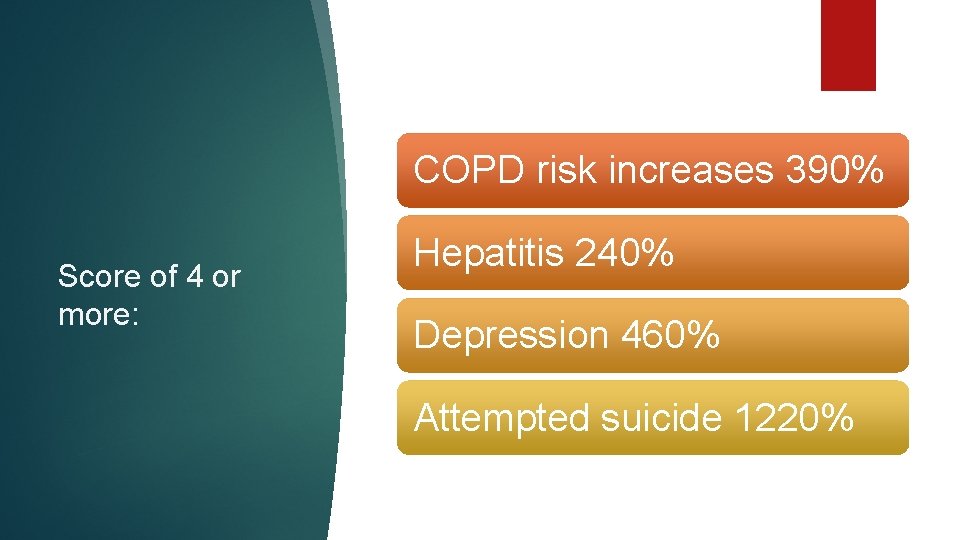
COPD risk increases 390% Score of 4 or more: Hepatitis 240% Depression 460% Attempted suicide 1220%
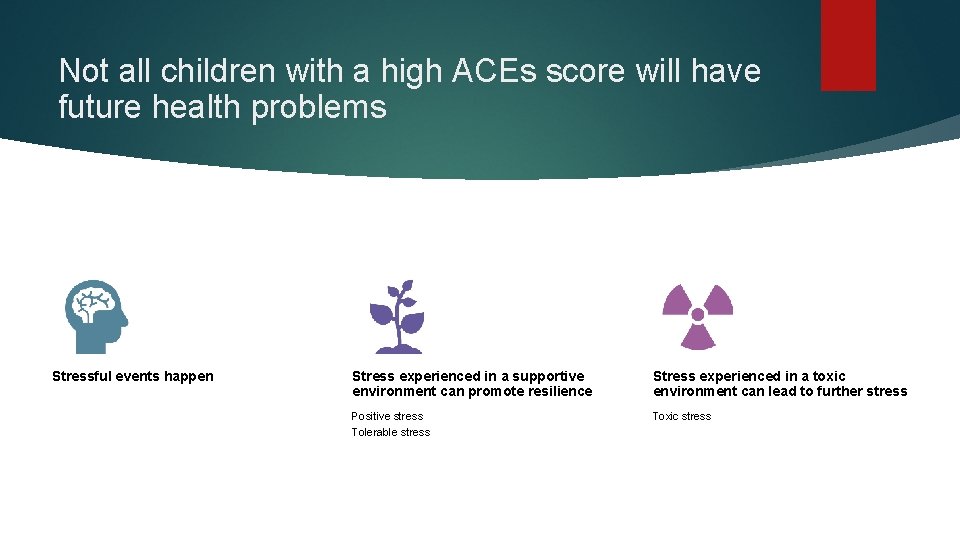
Not all children with a high ACEs score will have future health problems Stressful events happen Stress experienced in a supportive environment can promote resilience Stress experienced in a toxic environment can lead to further stress Positive stress Tolerable stress Toxic stress
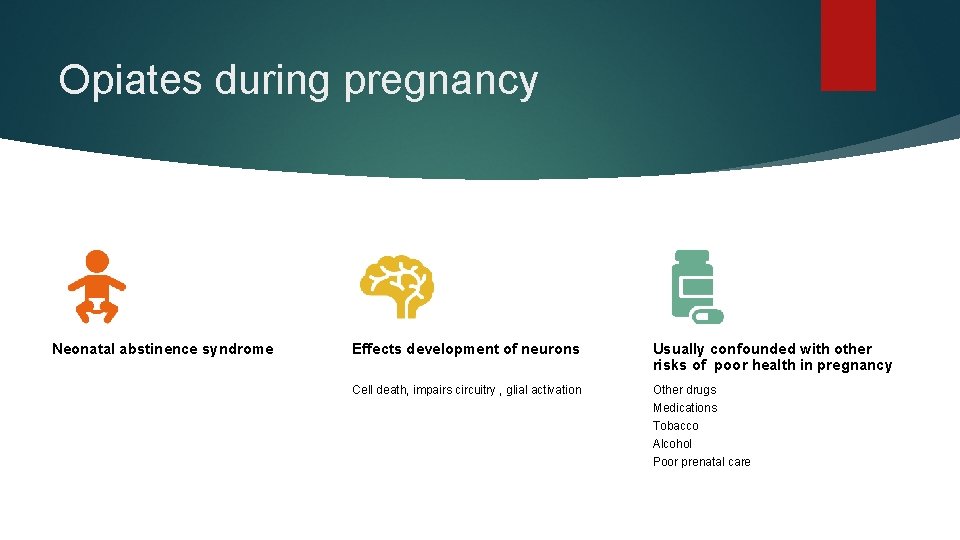
Opiates during pregnancy Neonatal abstinence syndrome Effects development of neurons Usually confounded with other risks of poor health in pregnancy Cell death, impairs circuitry , glial activation Other drugs Medications Tobacco Alcohol Poor prenatal care
Opioid research Studies underway Many confounding factors Infants have thinner cortices Oligodendrocites have opiate receptors Prenatal morphine exposure negatively affects the migration and survival of neurons in rat embryos Morphine increases apoptosis in human fetal microglia and neurons Prenatal heroin exposure in mice - memory deficits due to neuronal apoptosis

Critical periods of development Vision Language Cognition
ACEs and critical periods Cellular development occurs prenatally Damage caused by external stressors at this time can lead to irreversible changes Healthy environment during a critical period strengthens neuronal connectivity External stressors in a critical period have shown to lead to personality disorders and cognitive impairment
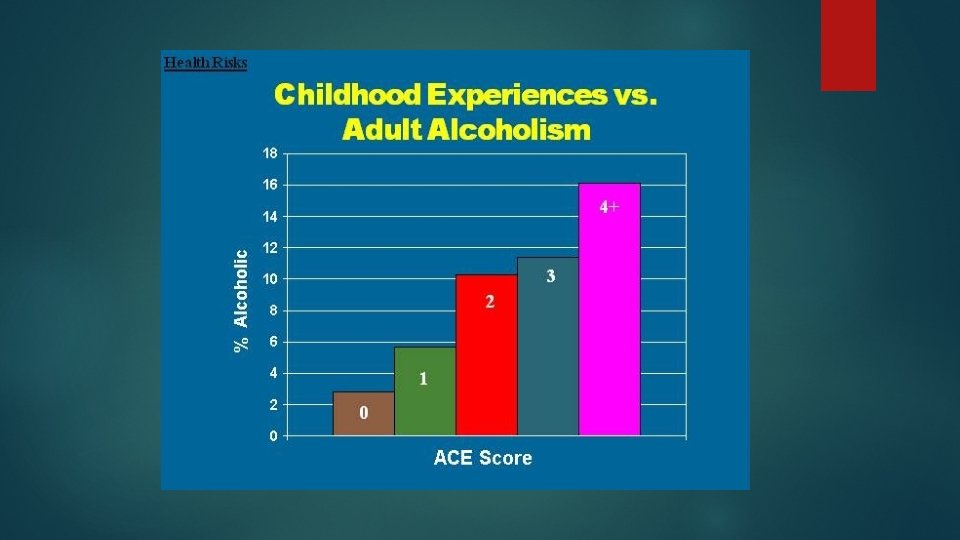
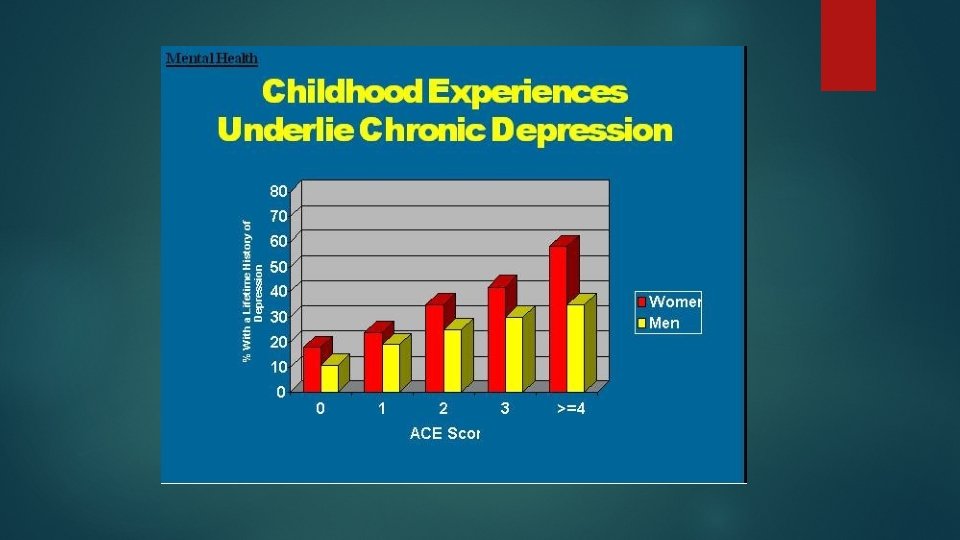
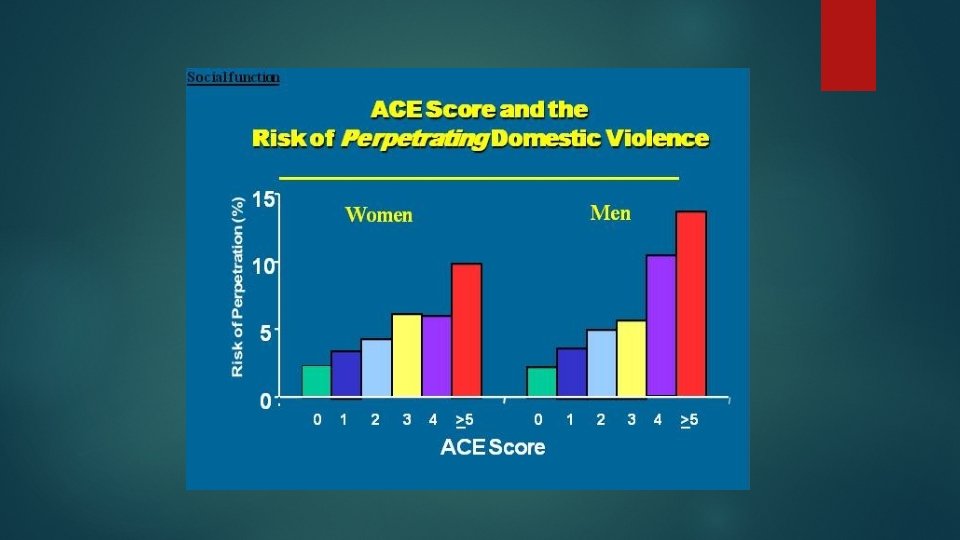
Cardiovascular markers ACES induce immediate increase in heart rate and blood pressure Also long term effects reaction to stress • Higher risk of HTN, CAD • High blood pressure persists even after stressful situation resolved
Cardiovascular disease studies Higher ischemic heart disease Low socio-economic status have higher BP in adulthood Children of abuse (sexual, physical, emotional) have higher risk of HTN, Cardiovascular disease, obesity Finnish children separated from parents during WWII had higher blood pressure as adults
Theories for cardiovascular dysfunction Effecting renin –angiotensin –aldosterone system Alterations in myocardium Changes expression of endothelial cell receptors
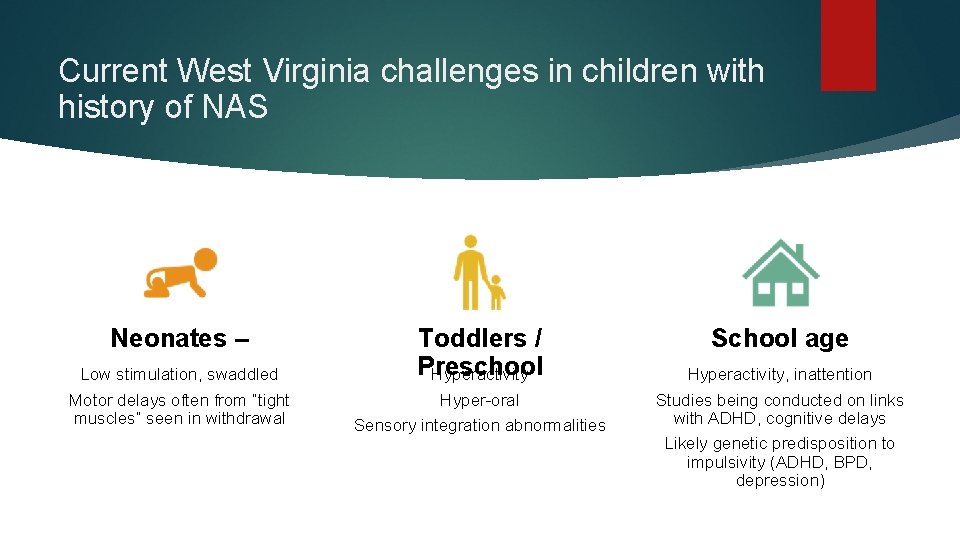
Current West Virginia challenges in children with history of NAS Neonates – Low stimulation, swaddled Motor delays often from “tight muscles” seen in withdrawal Toddlers / Preschool Hyperactivity Hyper-oral Sensory integration abnormalities School age Hyperactivity, inattention Studies being conducted on links with ADHD, cognitive delays Likely genetic predisposition to impulsivity (ADHD, BPD, depression)
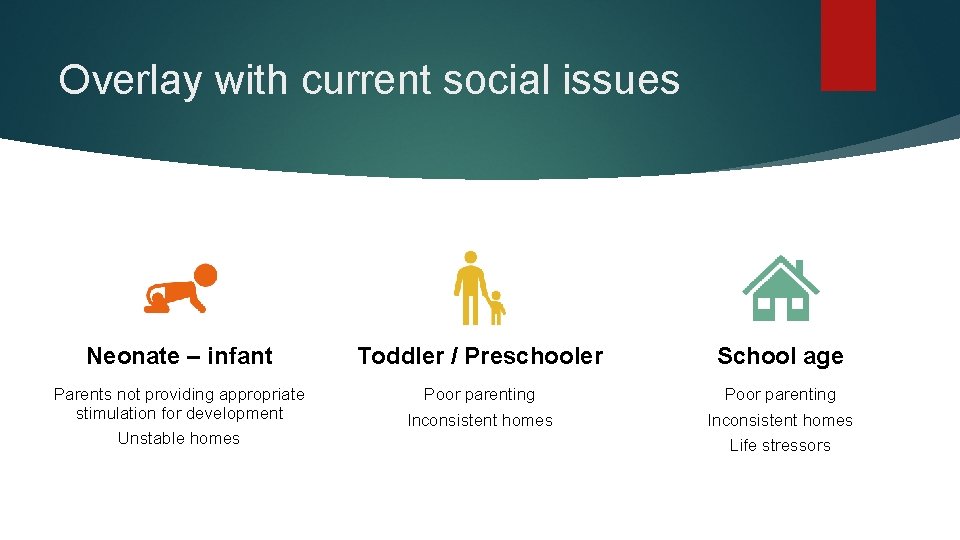
Overlay with current social issues Neonate – infant Toddler / Preschooler School age Parents not providing appropriate stimulation for development Unstable homes Poor parenting Inconsistent homes Life stressors
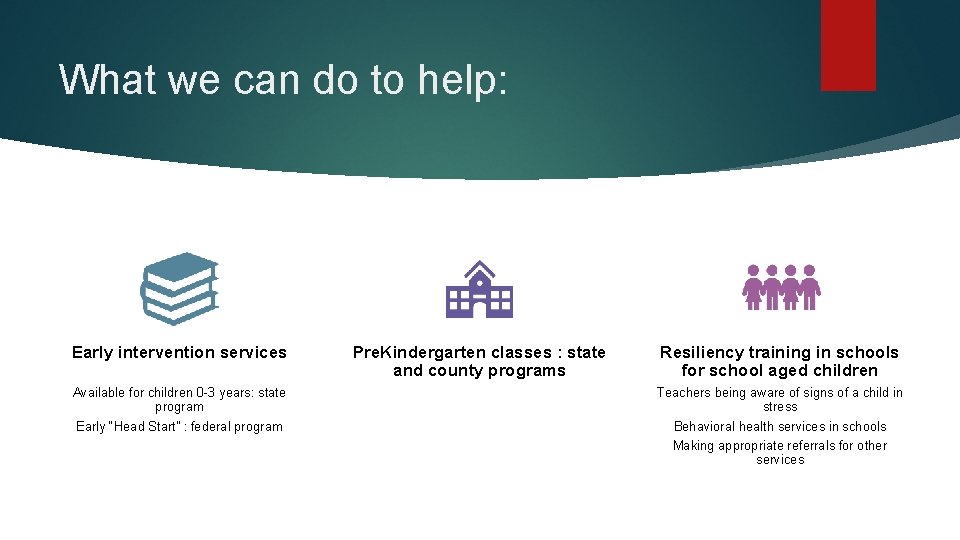
What we can do to help: Early intervention services Available for children 0 -3 years: state program Early “Head Start” : federal program Pre. Kindergarten classes : state and county programs Resiliency training in schools for school aged children Teachers being aware of signs of a child in stress Behavioral health services in schools Making appropriate referrals for other services
Awareness, educating, training
References KIDS COUNT: file: ///C: /Users/payne/App. Data/Local/Microsoft/Windows/INet. Cache/IE/E 3 L 3 QFYP/WV-KIDS-COUNT-2019 -Data-Book. pdf https: //www. drugabuse. gov/funding/advancing-research-effect-maternalopioid-exposure-developing-brain Opioid Addiction and Pregnancy: Perinatal Exposure to Buprenorphine Affects Myelination in the Developing Brain, EMILSE S. SANCHEZ, 1 JOHN W. BIGBEE, 2 WAMBURA FOBBS, 1 SUSAN E. ROBINSON, 3 and CARMEN SATO-BIGBEE 1, * Glia Effects of prenatal opiate exposure on brain development – a call for attention Kristine B. Walhovd, , Vibeke Moe, , Kari Slinning, , Torill Siqveland , Anders M. Fjell, , Astrid Bjørnebekk, & Lars Smith, Nature Reviews Neuroscience volume 10, page 390 (2009)
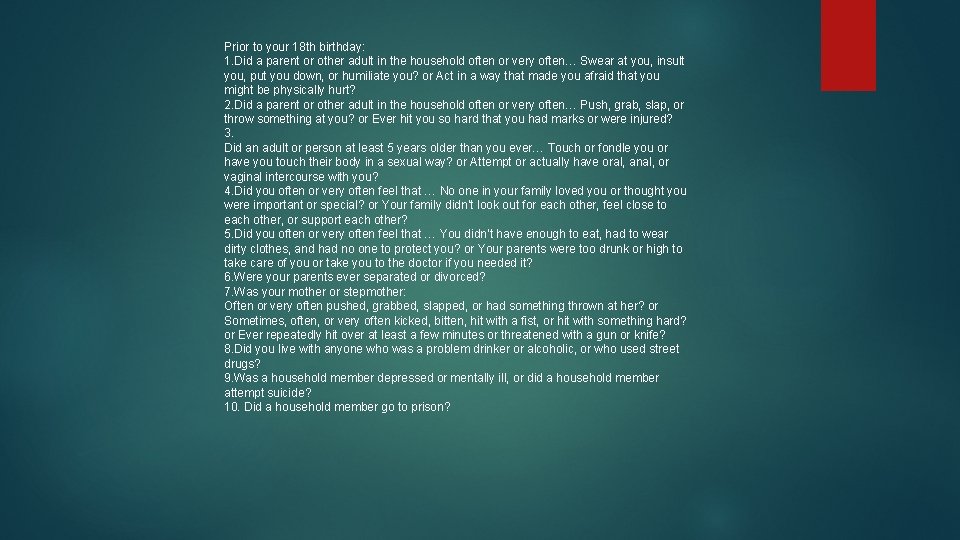
Prior to your 18 th birthday: 1. Did a parent or other adult in the household often or very often… Swear at you, insult you, put you down, or humiliate you? or Act in a way that made you afraid that you might be physically hurt? 2. Did a parent or other adult in the household often or very often… Push, grab, slap, or throw something at you? or Ever hit you so hard that you had marks or were injured? 3. Did an adult or person at least 5 years older than you ever… Touch or fondle you or have you touch their body in a sexual way? or Attempt or actually have oral, anal, or vaginal intercourse with you? 4. Did you often or very often feel that … No one in your family loved you or thought you were important or special? or Your family didn’t look out for each other, feel close to each other, or support each other? 5. Did you often or very often feel that … You didn’t have enough to eat, had to wear dirty clothes, and had no one to protect you? or Your parents were too drunk or high to take care of you or take you to the doctor if you needed it? 6. Were your parents ever separated or divorced? 7. Was your mother or stepmother: Often or very often pushed, grabbed, slapped, or had something thrown at her? or Sometimes, often, or very often kicked, bitten, hit with a fist, or hit with something hard? or Ever repeatedly hit over at least a few minutes or threatened with a gun or knife? 8. Did you live with anyone who was a problem drinker or alcoholic, or who used street drugs? 9. Was a household member depressed or mentally ill, or did a household member attempt suicide? 10. Did a household member go to prison?
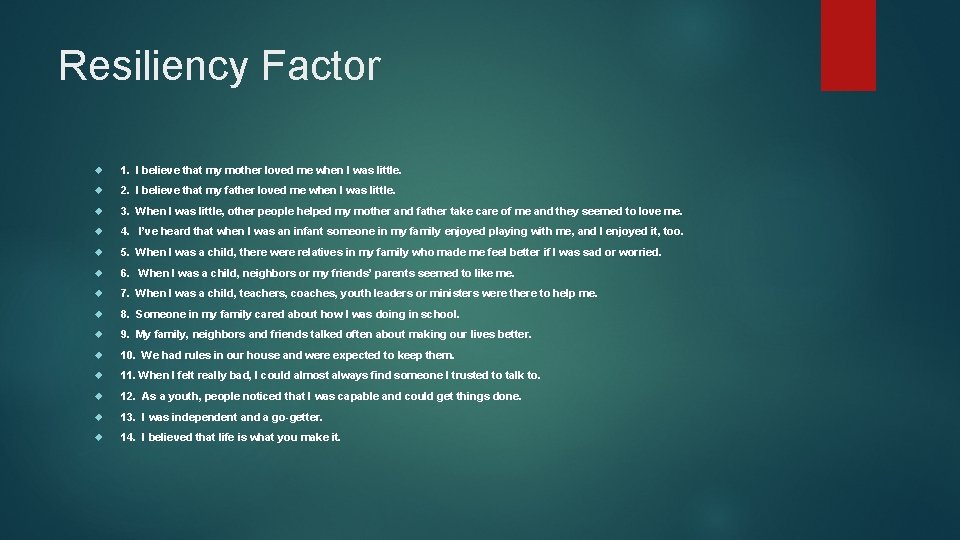
Resiliency Factor 1. I believe that my mother loved me when I was little. 2. I believe that my father loved me when I was little. 3. When I was little, other people helped my mother and father take care of me and they seemed to love me. 4. I’ve heard that when I was an infant someone in my family enjoyed playing with me, and I enjoyed it, too. 5. When I was a child, there were relatives in my family who made me feel better if I was sad or worried. 6. When I was a child, neighbors or my friends’ parents seemed to like me. 7. When I was a child, teachers, coaches, youth leaders or ministers were there to help me. 8. Someone in my family cared about how I was doing in school. 9. My family, neighbors and friends talked often about making our lives better. 10. We had rules in our house and were expected to keep them. 11. When I felt really bad, I could almost always find someone I trusted to talk to. 12. As a youth, people noticed that I was capable and could get things done. 13. I was independent and a go-getter. 14. I believed that life is what you make it.
- Slides: 36