
Brain and Cranial Nerves Terminology Hemispheres n Gyrus
Brain and Cranial Nerves
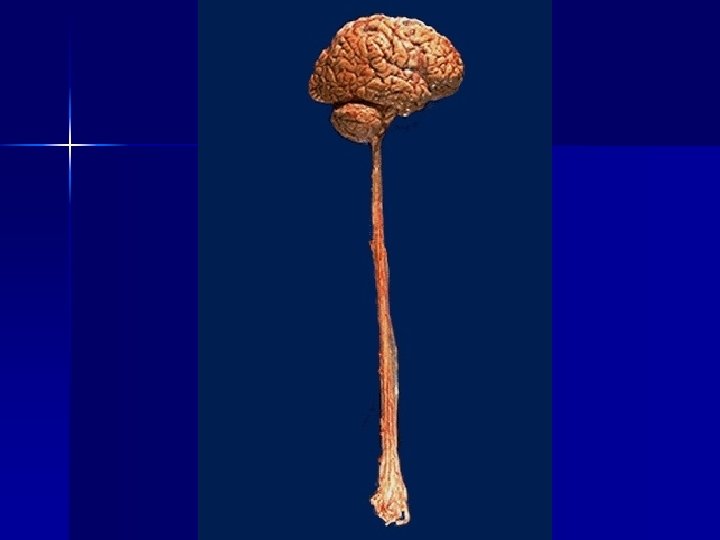
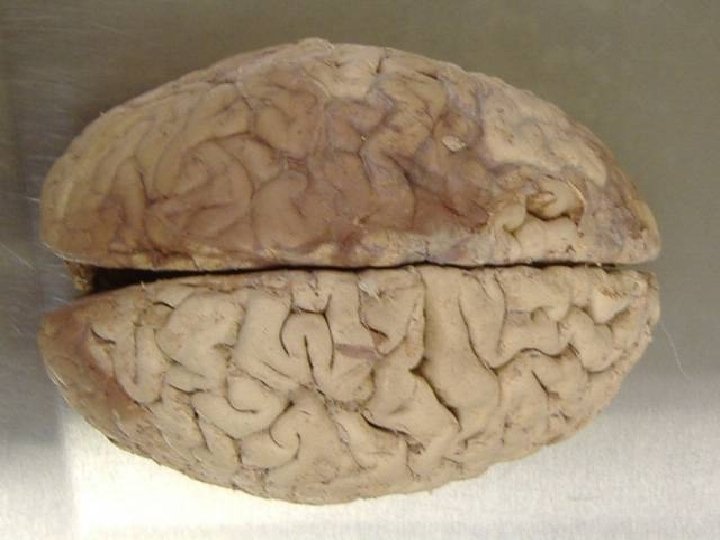
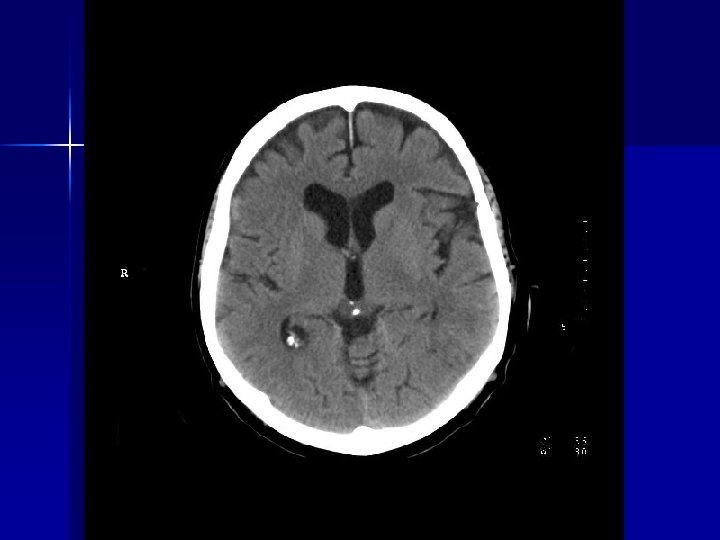
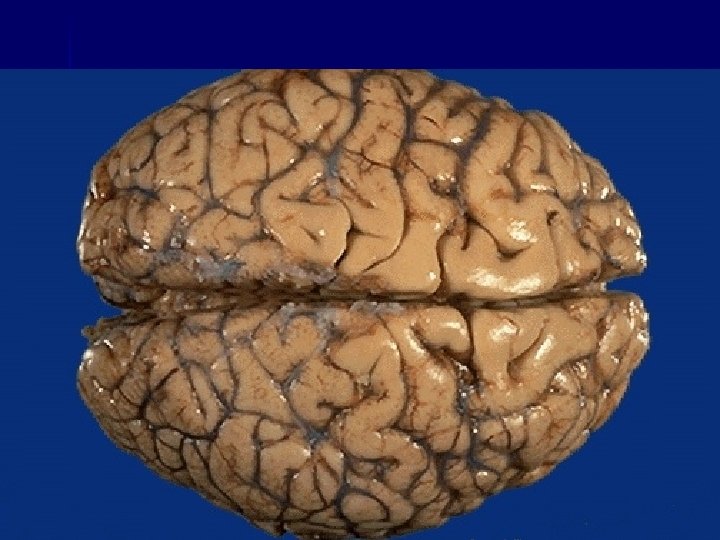
Terminology Hemispheres n Gyrus (Gyri) n Sulcus (Sulci) n Longitudinal Fissure n Ventricles n – CSF
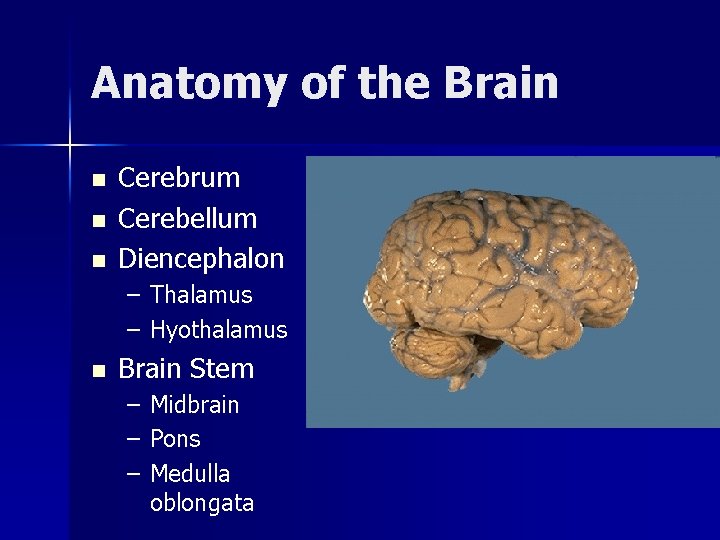
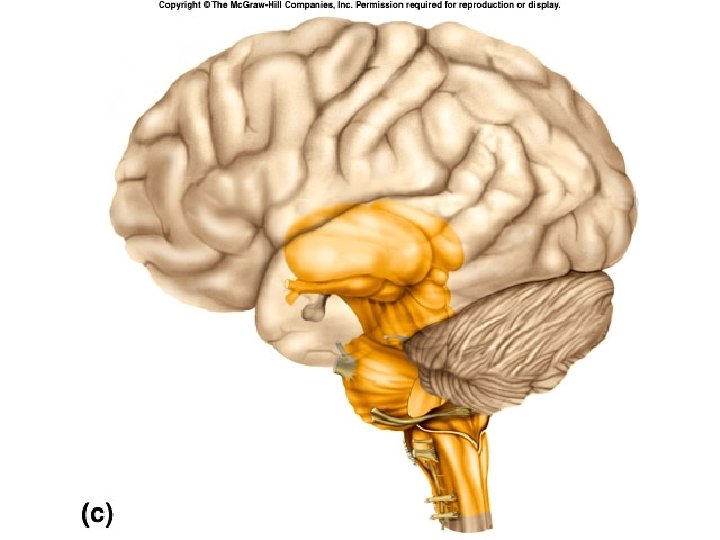
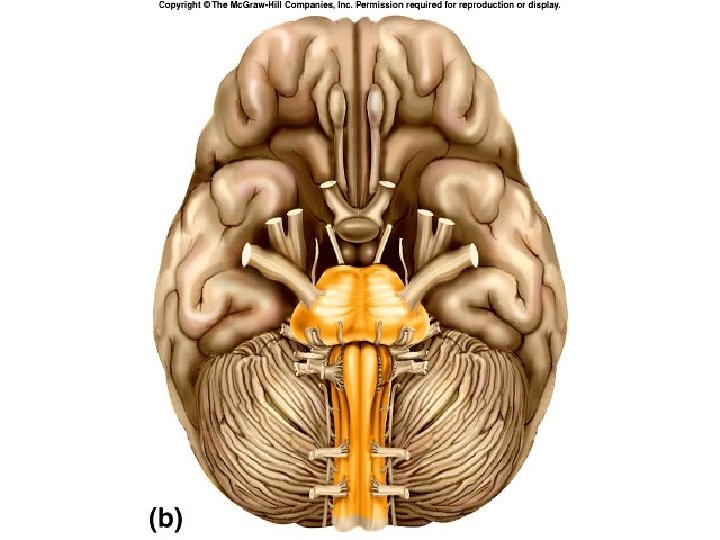
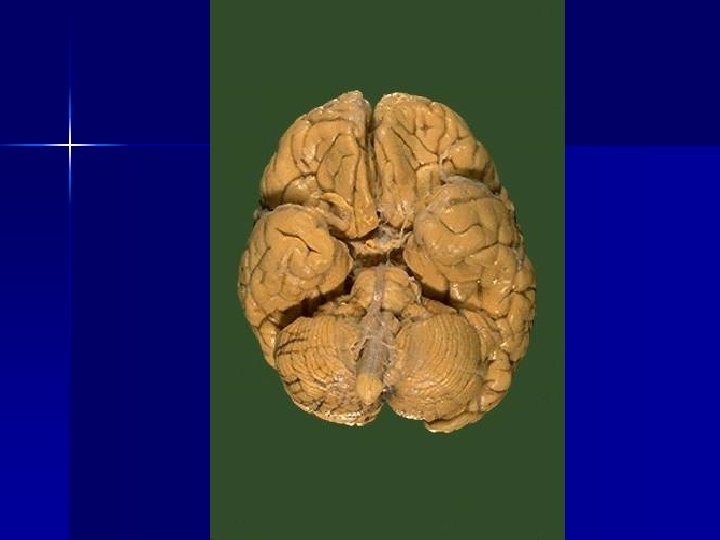
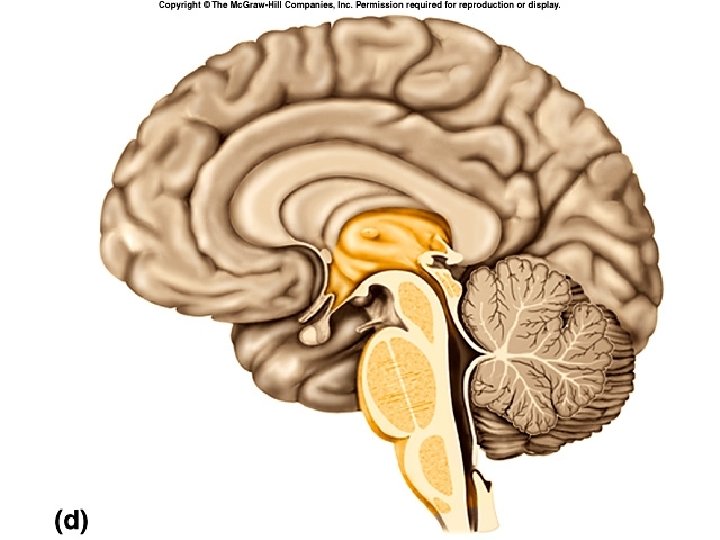
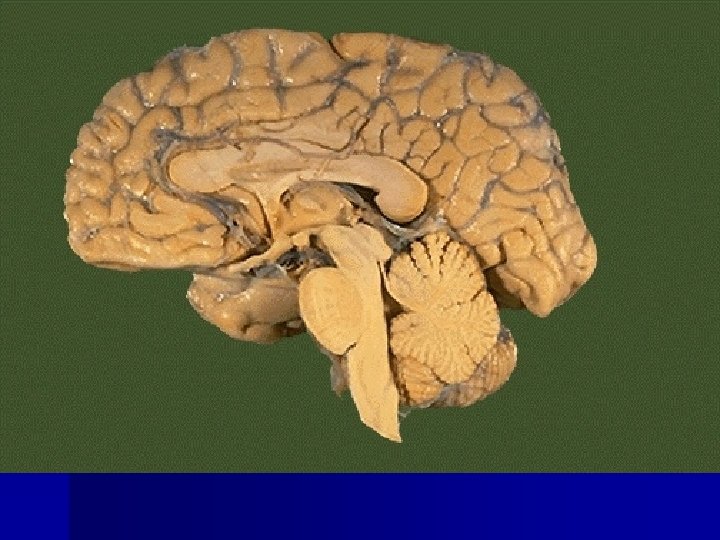
Anatomy of the Brain n Cerebrum Cerebellum Diencephalon – Thalamus – Hyothalamus n Brain Stem – – – Midbrain Pons Medulla oblongata
Cerebrum n Anatomy – – – Frontal lobe Parietal lobe Occipital lobe Precentral gyrus Postcentral gyrus n Functions – – – – Sensory cortex Motor cortex Emotion Intellectual processes Auditory Visual Speech

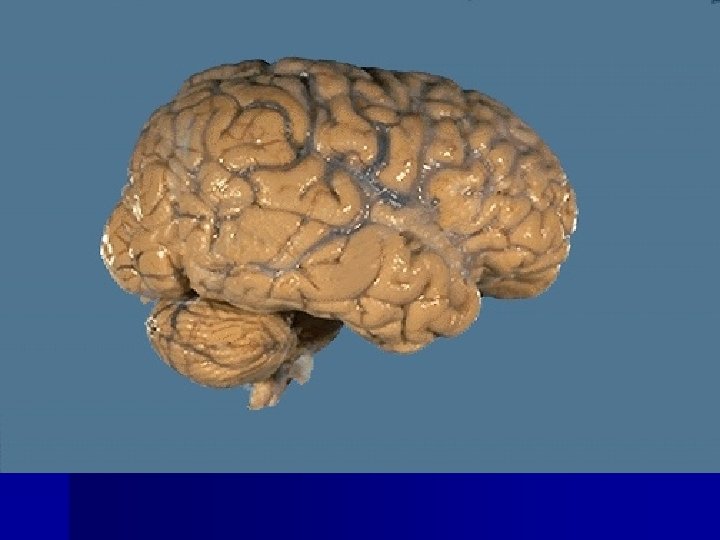
Cerebellum n Anatomy – Hemispheres n Functions – Compares intended movement with what is actually happening – Smooth, coordinated movements – Posture/balance
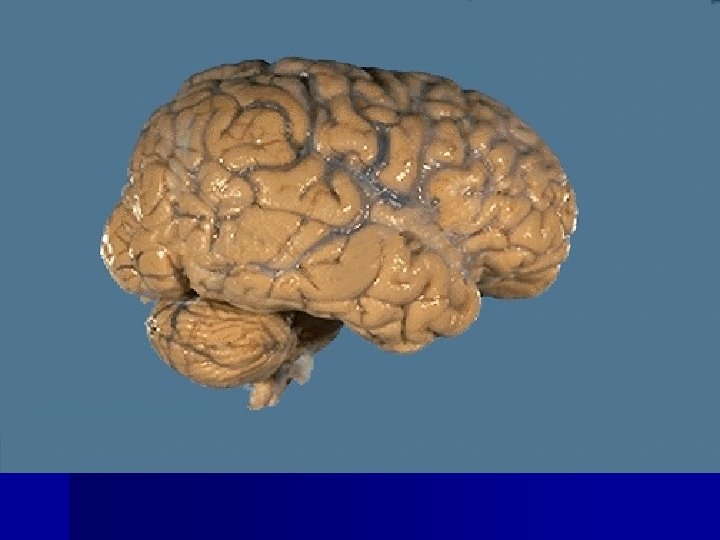
Brain Stem n Anatomy – – – Medulla oblongata Pons Midbrain n Functions – Medulla n n Relays motor and sensory information Regulates heartbeat, breathing and blood vessel dilation – Pons n Control breathing
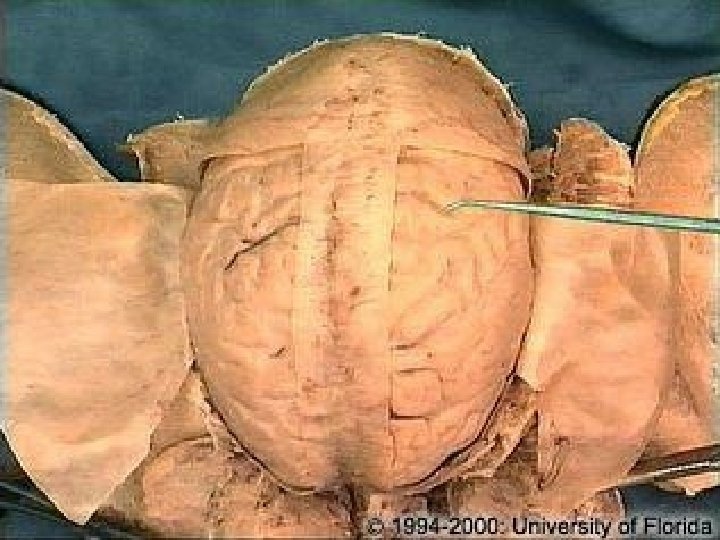
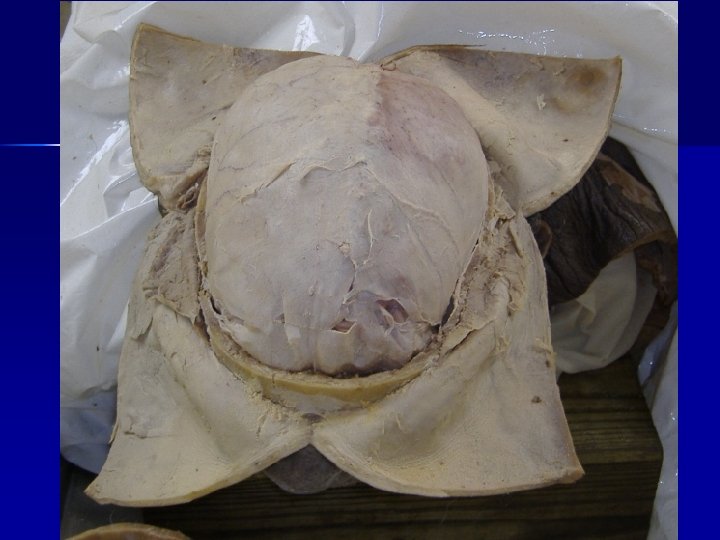
Protective Coverings (Meninges) n Dura mater Dense connective tissue n Arachnoid Nonvascular connective tissue n Pia mater Highly vascular Covers surface of the brain and spinal cord and invaginates along cortical surface to form perivascular spaces
Cerebral Spinal Fluid Formed in the choroid plexus n Reabsorbed into saggittal sinus by arachnoid villi n Protects brain against concussive trauma n removes waste products n

Foramen of Monro
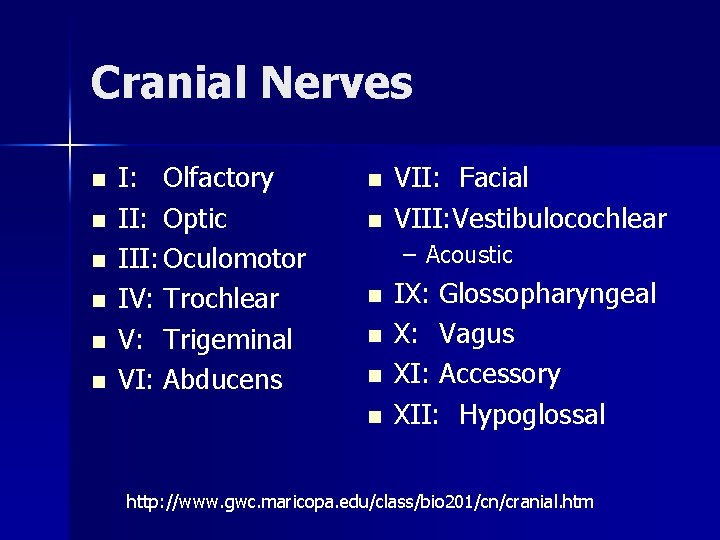
Cranial Nerves n n n I: Olfactory II: Optic III: Oculomotor IV: Trochlear V: Trigeminal VI: Abducens n n VII: Facial VIII: Vestibulocochlear – Acoustic n n IX: Glossopharyngeal X: Vagus XI: Accessory XII: Hypoglossal http: //www. gwc. maricopa. edu/class/bio 201/cn/cranial. htm
Mnemonic n n n On Old Olympus’ Tower Top A n n n Fin And German Viewed A Hop
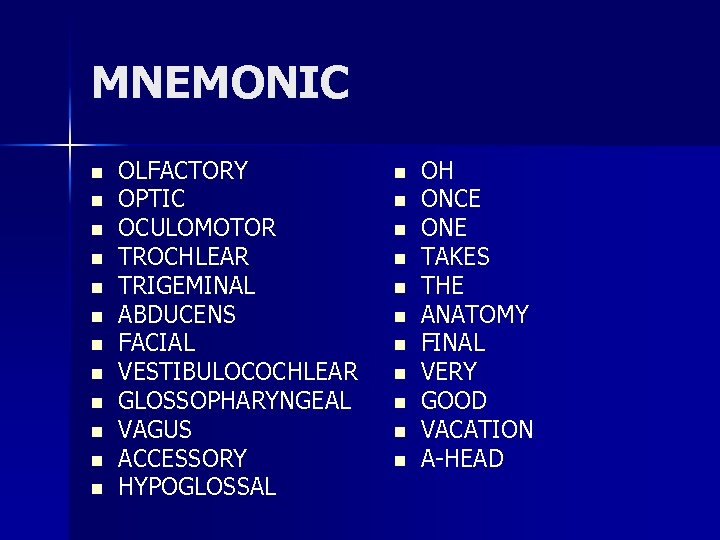
MNEMONIC n n n OLFACTORY OPTIC OCULOMOTOR TROCHLEAR TRIGEMINAL ABDUCENS FACIAL VESTIBULOCOCHLEAR GLOSSOPHARYNGEAL VAGUS ACCESSORY HYPOGLOSSAL n n n OH ONCE ONE TAKES THE ANATOMY FINAL VERY GOOD VACATION A-HEAD
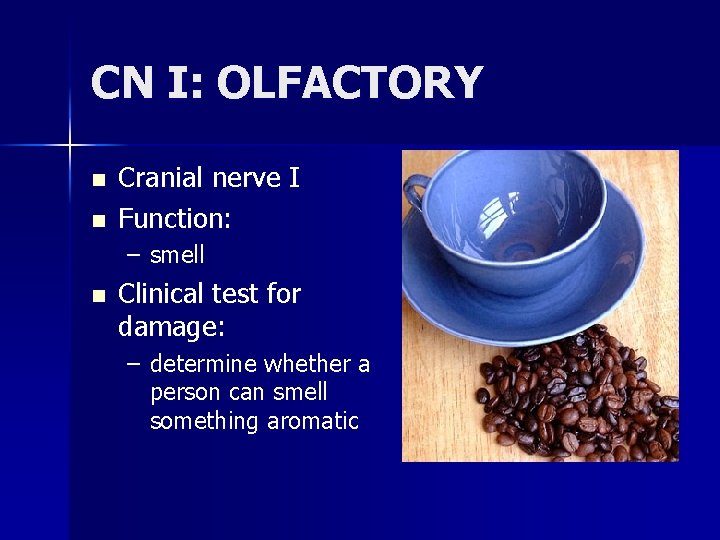
CN I: OLFACTORY n n Cranial nerve I Function: – smell n Clinical test for damage: – determine whether a person can smell something aromatic
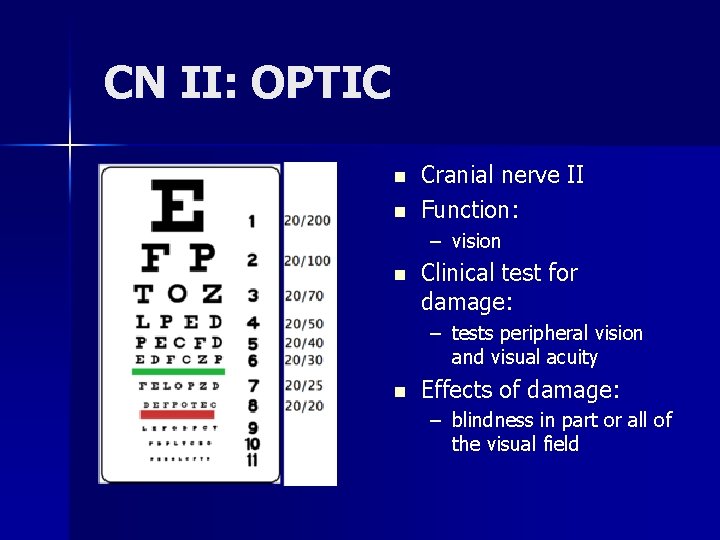
CN II: OPTIC n n Cranial nerve II Function: – vision n Clinical test for damage: – tests peripheral vision and visual acuity n Effects of damage: – blindness in part or all of the visual field
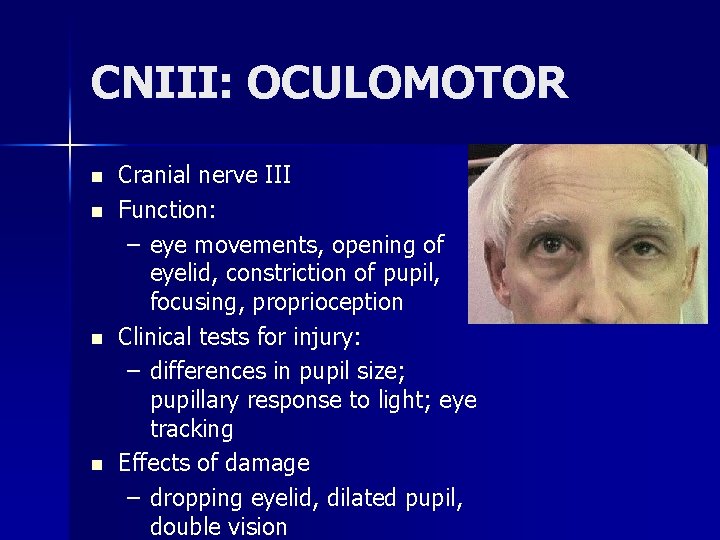
CNIII: OCULOMOTOR n n Cranial nerve III Function: – eye movements, opening of eyelid, constriction of pupil, focusing, proprioception Clinical tests for injury: – differences in pupil size; pupillary response to light; eye tracking Effects of damage – dropping eyelid, dilated pupil, double vision
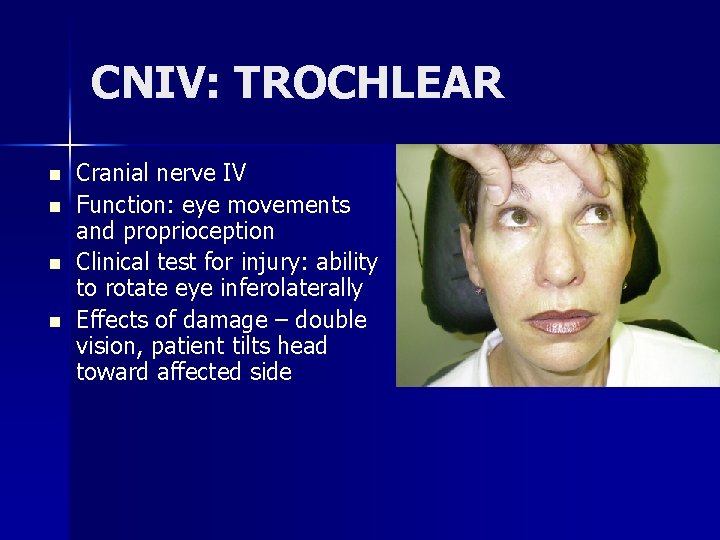
CNIV: TROCHLEAR n n Cranial nerve IV Function: eye movements and proprioception Clinical test for injury: ability to rotate eye inferolaterally Effects of damage – double vision, patient tilts head toward affected side
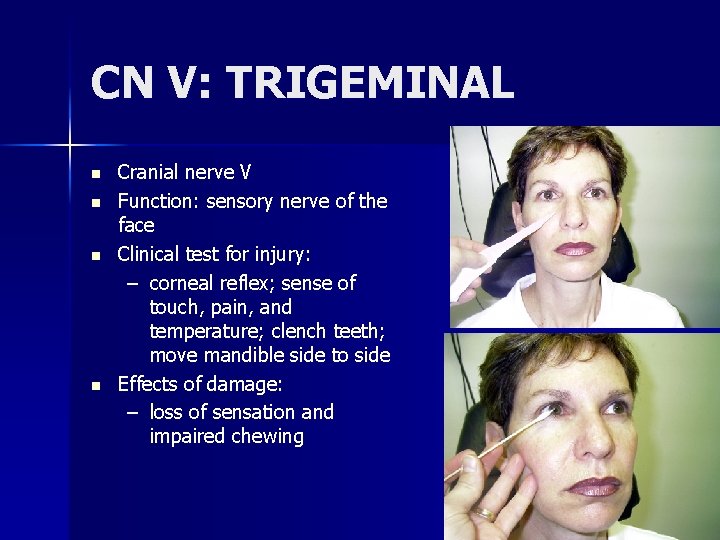
CN V: TRIGEMINAL n n Cranial nerve V Function: sensory nerve of the face Clinical test for injury: – corneal reflex; sense of touch, pain, and temperature; clench teeth; move mandible side to side Effects of damage: – loss of sensation and impaired chewing
CN VI: ABDUCENS AND CN VII: FACIAL n n Cranial Nerve VI Function: Eye movements Clinical test: lateral eye movement Effects of damage: inability to rotate eye laterally; at rest – eye rotates medially because of action of antagonistic muscles n n Cranial Nerve VII Function: facial expression; sense of taste Clinical test: motor functions – close eyes, smile, whistle, frown, raise eyebrows; taste Effects of damage: inability to control facial muscles; distorted sense of taste
CN VIII: VESTIBULOCOCHLEAR Cranial Nerve VIII n Function: hearing and equilibrium n Clinical tests: test hearing, balance, and ability to walk a straight line n Effects of damage: deafness, dizziness, nausea, loss of balance, and nystagmus n
CN IX: GLOSSOPHARANGEAL AND CN X: VAGUS n n Cranial Nerve IX Function: swallowing, salivation, gagging; touch, pressure, taste, and pain sensations from tongue, pharynx, and outer ear Clinical tests: gag reflex, swallowing, and coughing Effects of damage: difficulty swallowing n n Cranial Nerve X Function: swallowing; taste; speech; respiratory, CV, and GI regulation; sensations of hunger, fullness, and intestinal discomfort Clinical tests: test with cranial nerve IX Effects of damage: hoarseness or loss of voice; impaired swallowing and GI motility
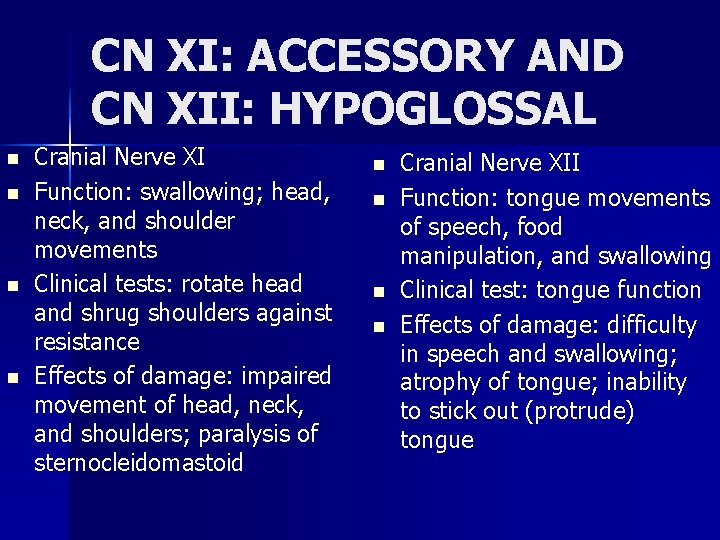
CN XI: ACCESSORY AND CN XII: HYPOGLOSSAL n n Cranial Nerve XI Function: swallowing; head, neck, and shoulder movements Clinical tests: rotate head and shrug shoulders against resistance Effects of damage: impaired movement of head, neck, and shoulders; paralysis of sternocleidomastoid n n Cranial Nerve XII Function: tongue movements of speech, food manipulation, and swallowing Clinical test: tongue function Effects of damage: difficulty in speech and swallowing; atrophy of tongue; inability to stick out (protrude) tongue
- Slides: 35