
Brain and Behaviour First Hour How is the

Brain and Behaviour First Hour –How is the Study of the Brain Relevant to Psychology? Central Nervous System (CNS) • Forebrain: “New and Old Cortex” • Midbrain • Hindbrain Peripheral Nervous System • Somatic • Autonomic
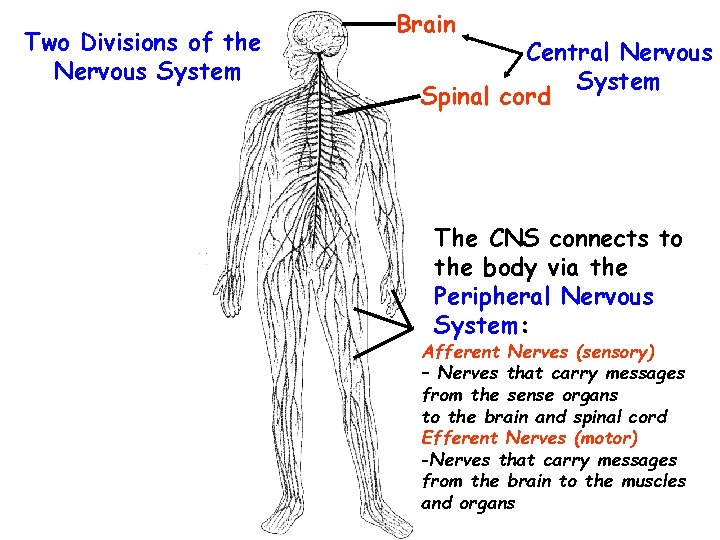
Two Divisions of the Nervous System Brain Central Nervous System Spinal cord The CNS connects to the body via the Peripheral Nervous System: Afferent Nerves (sensory) – Nerves that carry messages from the sense organs to the brain and spinal cord Efferent Nerves (motor) -Nerves that carry messages from the brain to the muscles and organs
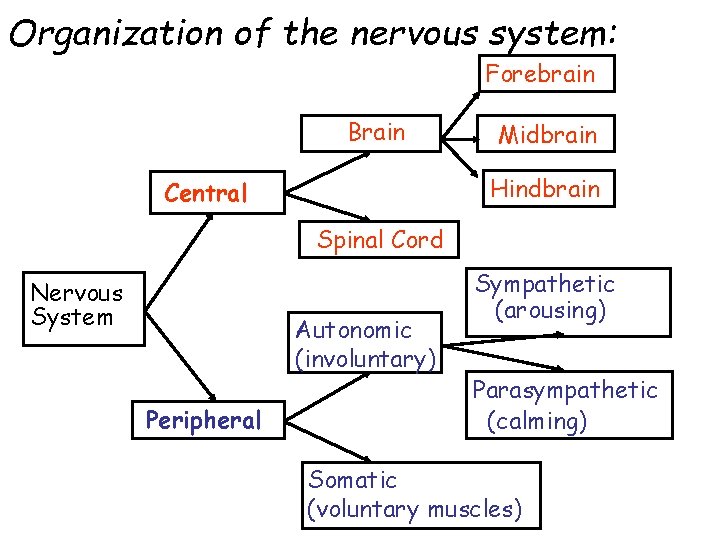
Organization of the nervous system: Forebrain Brain Midbrain Hindbrain Central Spinal Cord Nervous System Autonomic (involuntary) Peripheral Sympathetic (arousing) Parasympathetic (calming) Somatic (voluntary muscles)
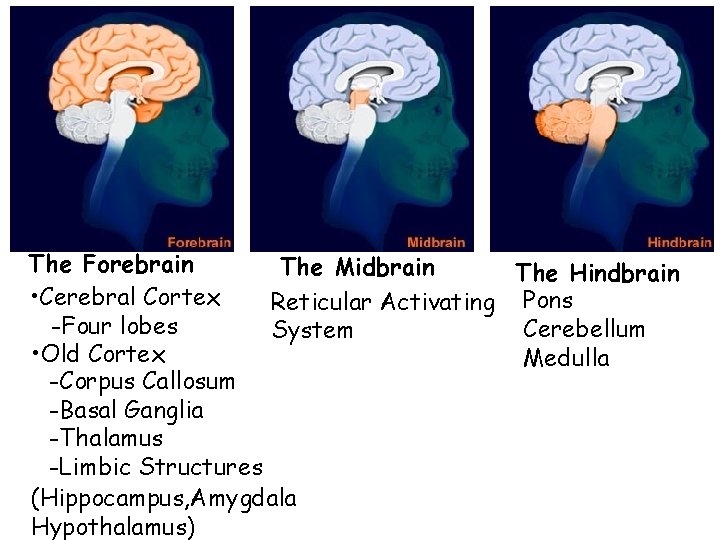
The Forebrain The Midbrain The Hindbrain • Cerebral Cortex Reticular Activating Pons -Four lobes Cerebellum System • Old Cortex Medulla -Corpus Callosum -Basal Ganglia -Thalamus -Limbic Structures (Hippocampus, Amygdala Hypothalamus)
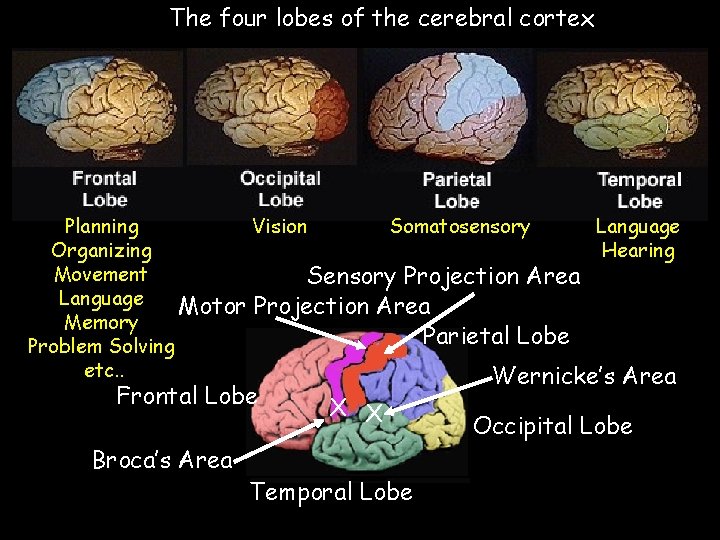
The four lobes of the cerebral cortex Planning Vision Somatosensory Language Organizing Hearing Movement Sensory Projection Area Language Motor Projection Area Memory Parietal Lobe Problem Solving etc. . Wernicke’s Area Frontal Lobe Broca’s Area X X Temporal Lobe Occipital Lobe
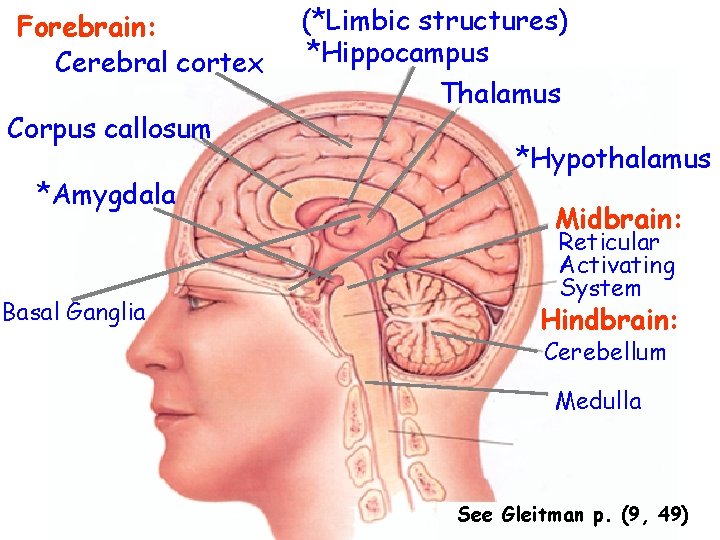
Forebrain: Cerebral cortex Corpus callosum *Amygdala Basal Ganglia (*Limbic structures) *Hippocampus Thalamus *Hypothalamus Midbrain: Reticular Activating System Hindbrain: Cerebellum Medulla See Gleitman p. (9, 49)
- Slides: 6