
BRAIN ANATOMY Done by Ahmed Abduljabbar Objectives q
BRAIN ANATOMY Done by: Ahmed Abduljabbar
Objectives q. Students will be able to describe the general structure of the Cerebrum and Cerebral Cortex. q. Students will be able to identify the Cerebrum, the Lobes of the Brain, the Cerebral Cortex, and its major regions/divisions. q. Students will be able to describe the primary functions of the Lobes and the Cortical Regions of the Brain.
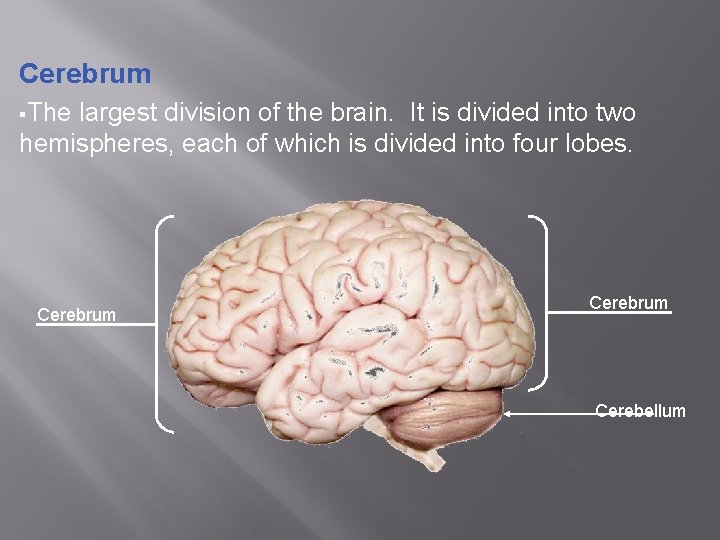
Cerebrum §The largest division of the brain. It is divided into two hemispheres, each of which is divided into four lobes. Cerebrum Cerebellum
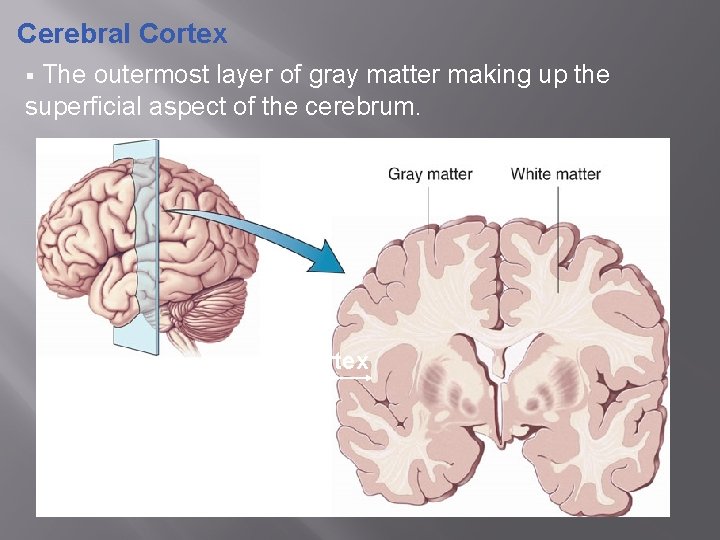
Cerebral Cortex The outermost layer of gray matter making up the superficial aspect of the cerebrum. § Cerebral Cortex
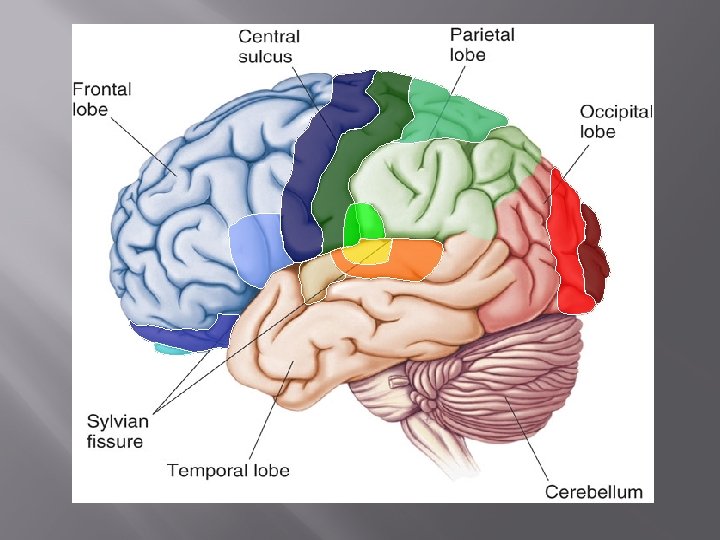
Cerebral features Gyri – Elevated ridges “winding” around the brain. Sulci– Small grooves dividing the gyri Central Sulcus – Divides the Frontal Lobe from the Parietal Lobe q q. Fissures the brain q – Deep grooves, generally dividing large regions/lobes of Longitudinal Fissure – Divides the two Cerebral Hemispheres q. Transverse Cerebellum Fissure – Separates the Cerebrum from the q. Sylvian/Lateral Fissure – Divides the Temporal Lobe from the Frontal and Parietal Lobes
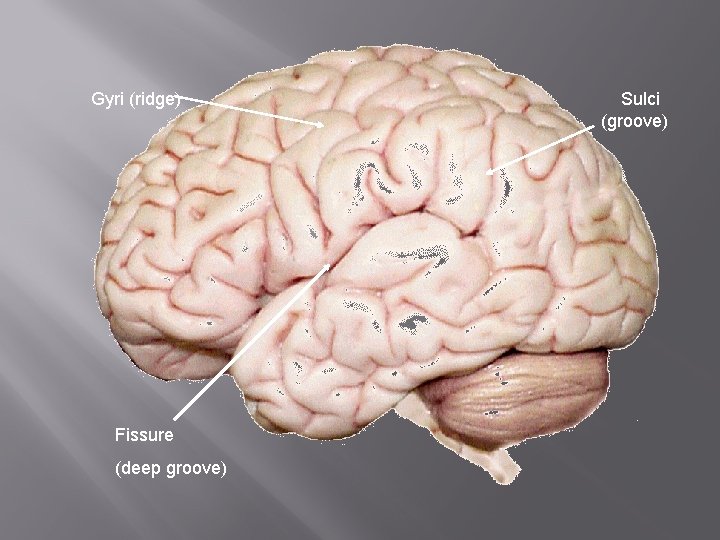
Gyri (ridge) Fissure (deep groove) Sulci (groove)
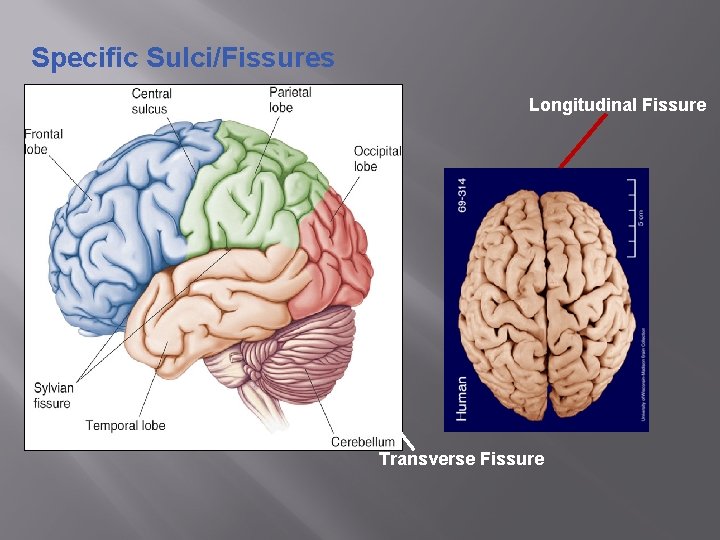
Specific Sulci/Fissures Longitudinal Fissure Transverse Fissure
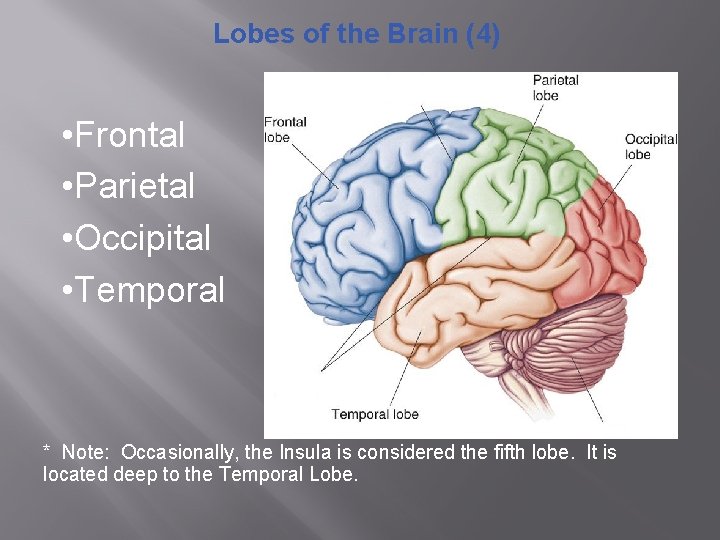
Lobes of the Brain (4) • Frontal • Parietal • Occipital • Temporal * Note: Occasionally, the Insula is considered the fifth lobe. It is located deep to the Temporal Lobe.
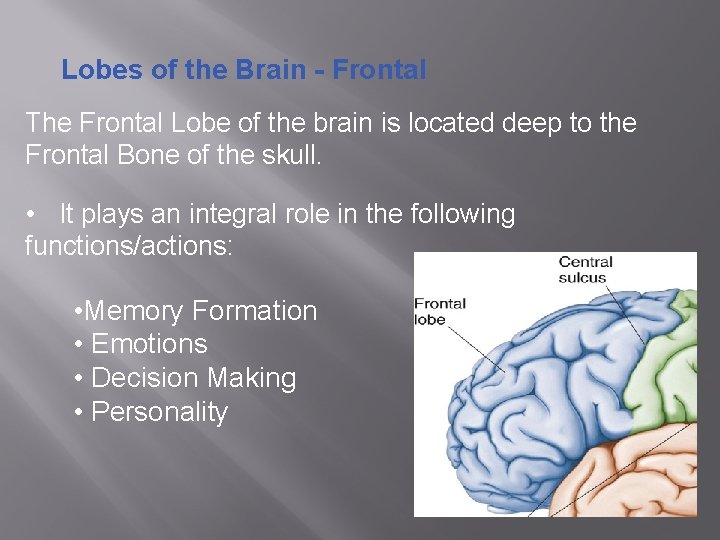
Lobes of the Brain - Frontal The Frontal Lobe of the brain is located deep to the Frontal Bone of the skull. • It plays an integral role in the following functions/actions: • Memory Formation • Emotions • Decision Making • Personality
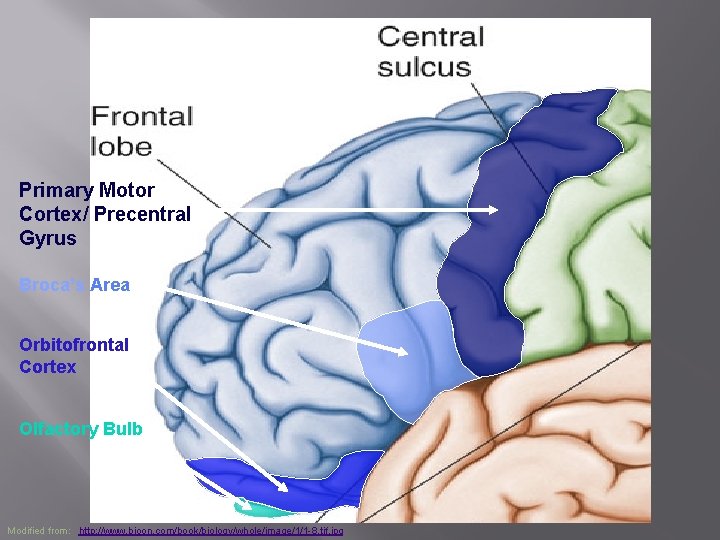
Primary Motor Cortex/ Precentral Gyrus Broca’s Area Orbitofrontal Cortex Olfactory Bulb Modified from: http: //www. bioon. com/book/biology/whole/image/1/1 -8. tif. jpg
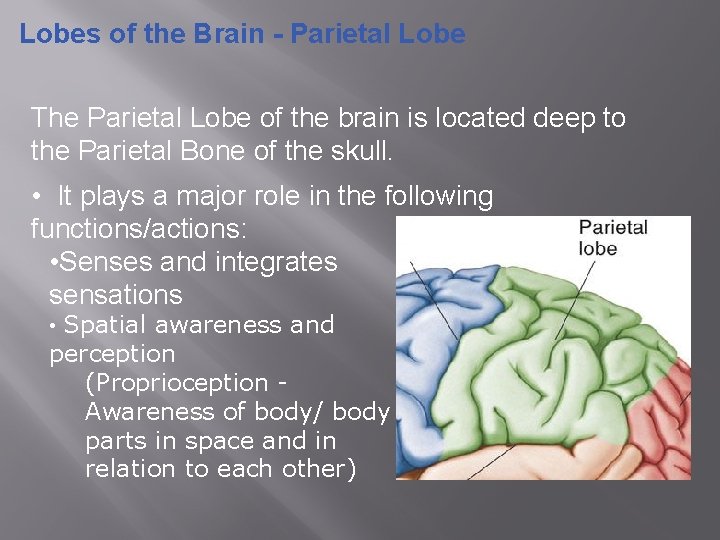
Lobes of the Brain - Parietal Lobe The Parietal Lobe of the brain is located deep to the Parietal Bone of the skull. • It plays a major role in the following functions/actions: • Senses and integrates sensations • Spatial awareness and perception (Proprioception Awareness of body/ body parts in space and in relation to each other)
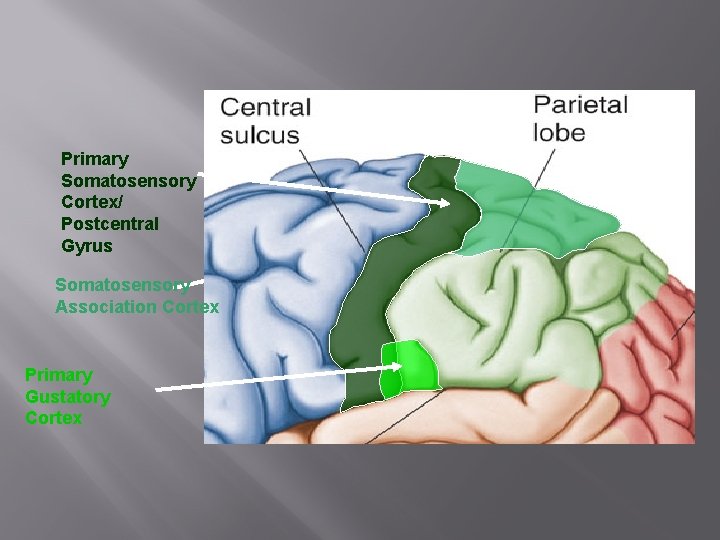
Primary Somatosensory Cortex/ Postcentral Gyrus Somatosensory Association Cortex Primary Gustatory Cortex
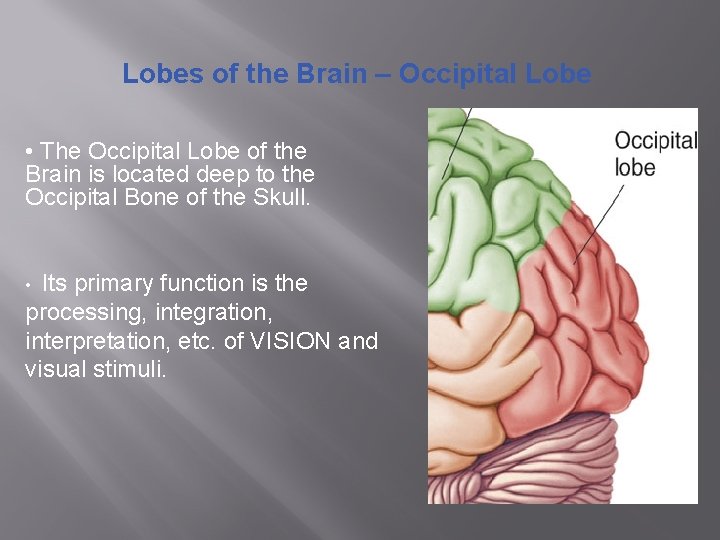
Lobes of the Brain – Occipital Lobe • The Occipital Lobe of the Brain is located deep to the Occipital Bone of the Skull. Its primary function is the processing, integration, interpretation, etc. of VISION and visual stimuli. •
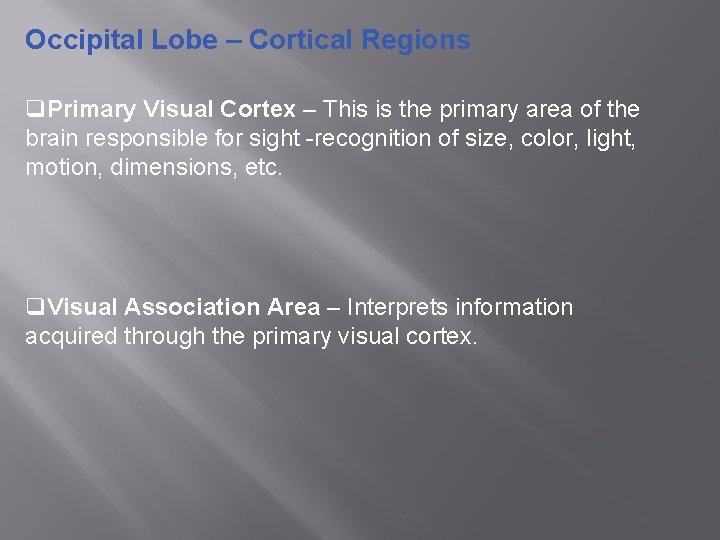
Occipital Lobe – Cortical Regions q. Primary Visual Cortex – This is the primary area of the brain responsible for sight -recognition of size, color, light, motion, dimensions, etc. q. Visual Association Area – Interprets information acquired through the primary visual cortex.
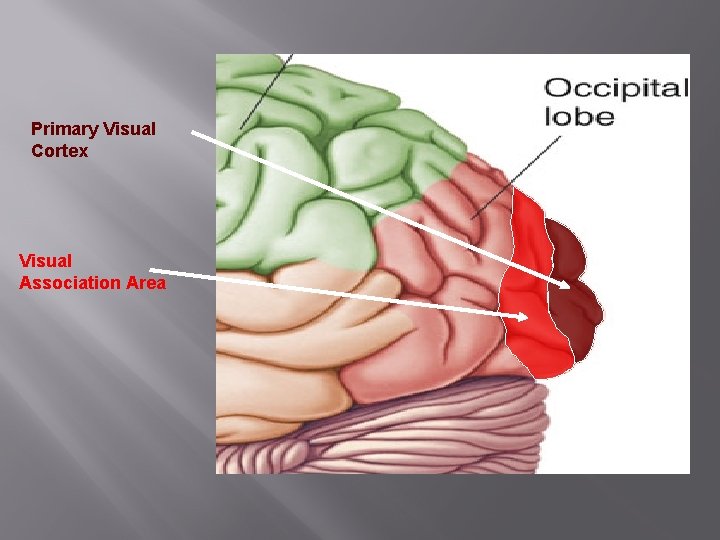
Primary Visual Cortex Visual Association Area
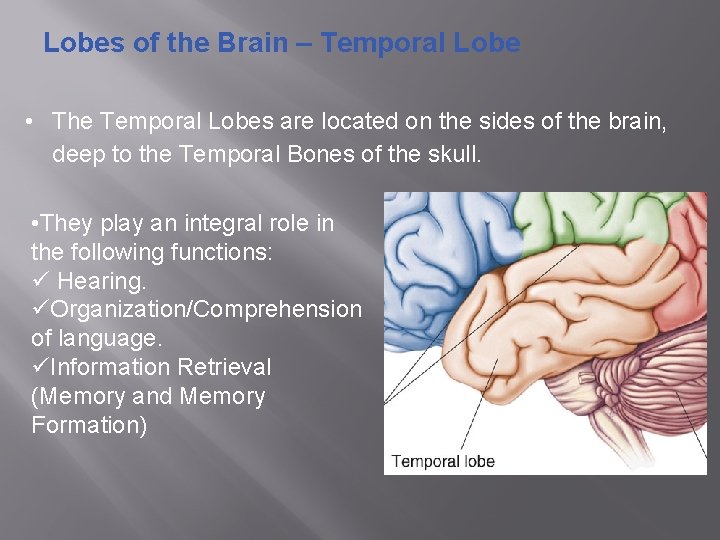
Lobes of the Brain – Temporal Lobe • The Temporal Lobes are located on the sides of the brain, deep to the Temporal Bones of the skull. • They play an integral role in the following functions: ü Hearing. üOrganization/Comprehension of language. üInformation Retrieval (Memory and Memory Formation)
Temporal Lobe – Cortical Regions q Primary Auditory Cortex – Responsible for hearing q Primary Olfactory Cortex – Interprets the sense of smell once it reaches the cortex via the olfactory bulbs. (Not visible on the superficial cortex) q Wernicke’s Area – Language comprehension. Located on the Left Temporal Lobe. q Wernicke’s Aphasia – Language comprehension is inhibited. Words and sentences are not clearly understood, and sentence formation may be inhibited or non-sensical.
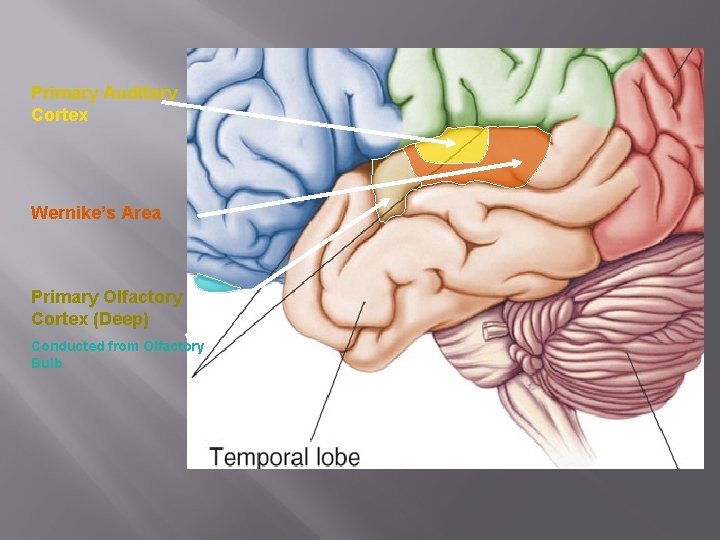
Primary Auditory Cortex Wernike’s Area Primary Olfactory Cortex (Deep) Conducted from Olfactory Bulb
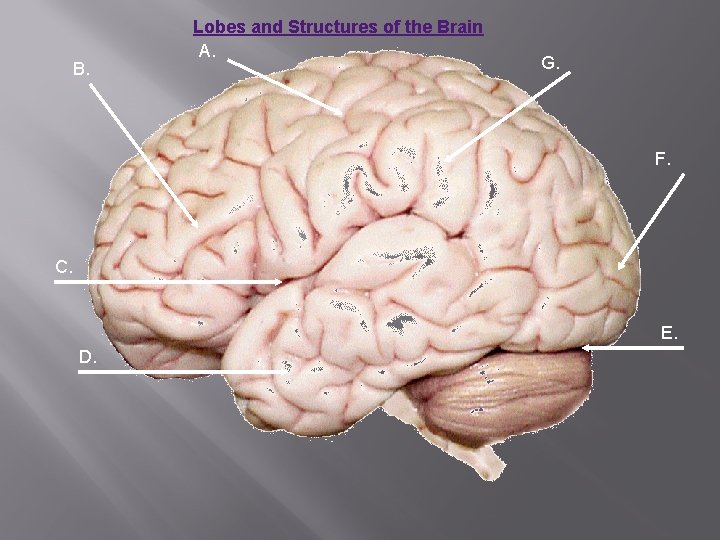
B. Lobes and Structures of the Brain A. G. F. C. E. D.
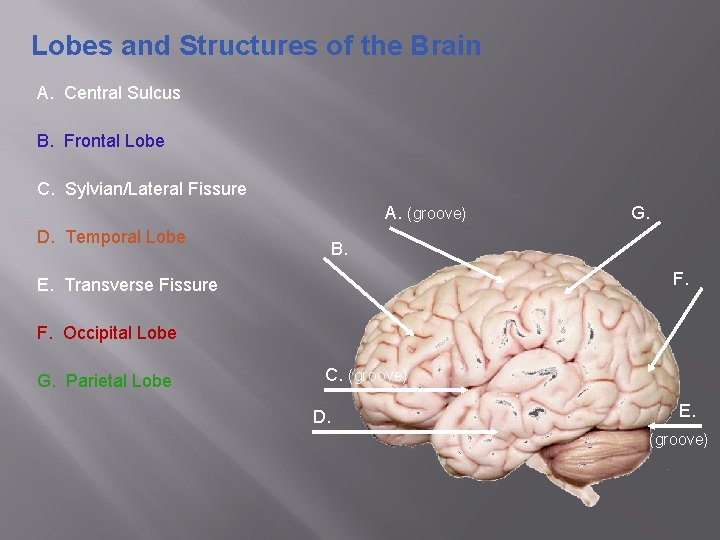
Lobes and Structures of the Brain A. Central Sulcus B. Frontal Lobe C. Sylvian/Lateral Fissure A. (groove) D. Temporal Lobe G. B. F. E. Transverse Fissure F. Occipital Lobe G. Parietal Lobe C. (groove) D. E. (groove)
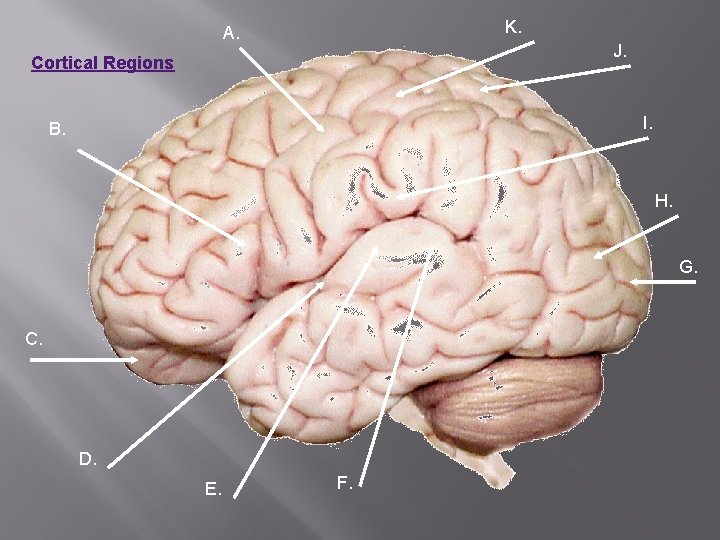
K. A. J. Cortical Regions I. B. H. G. C. D. E. F.
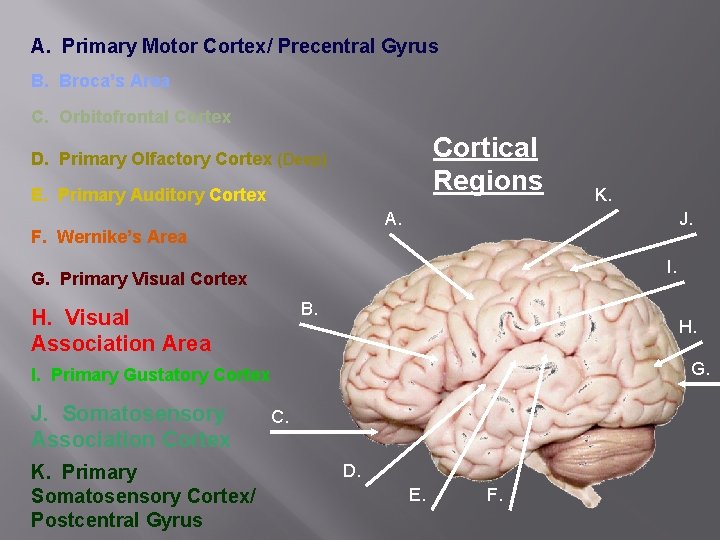
A. Primary Motor Cortex/ Precentral Gyrus B. Broca’s Area C. Orbitofrontal Cortex Cortical Regions D. Primary Olfactory Cortex (Deep) E. Primary Auditory Cortex A. F. Wernike’s Area J. I. G. Primary Visual Cortex B. H. Visual Association Area H. G. I. Primary Gustatory Cortex J. Somatosensory Association Cortex K. Primary Somatosensory Cortex/ Postcentral Gyrus K. C. D. E. F.

Thank you
- Slides: 24