
Brain 101 Stanford University In This Presentation tobaccopreventiontoolkit
Brain 101 © Stanford University
In This Presentation: tobaccopreventiontoolkit. stanford. edu Background on the Brain The Teenage Brain How Drugs Affect the Brain
Background on the Brain Image Credit: Pixabay. com
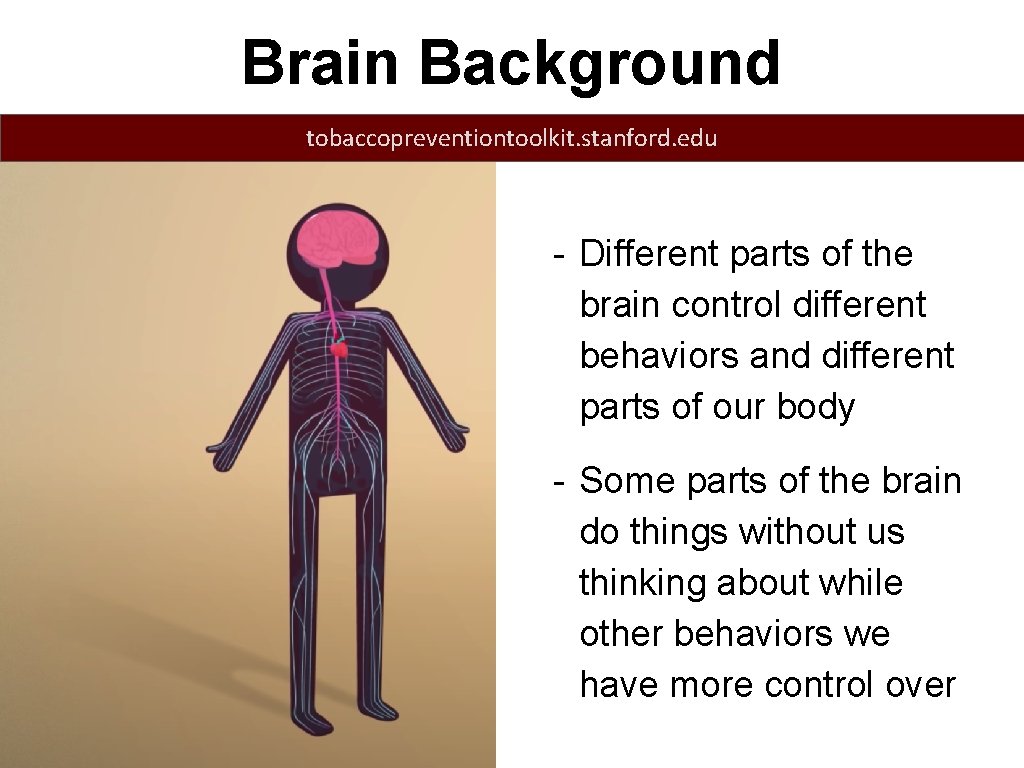
Brain Background tobaccopreventiontoolkit. stanford. edu - Different parts of the brain control different behaviors and different parts of our body - Some parts of the brain do things without us thinking about while other behaviors we have more control over
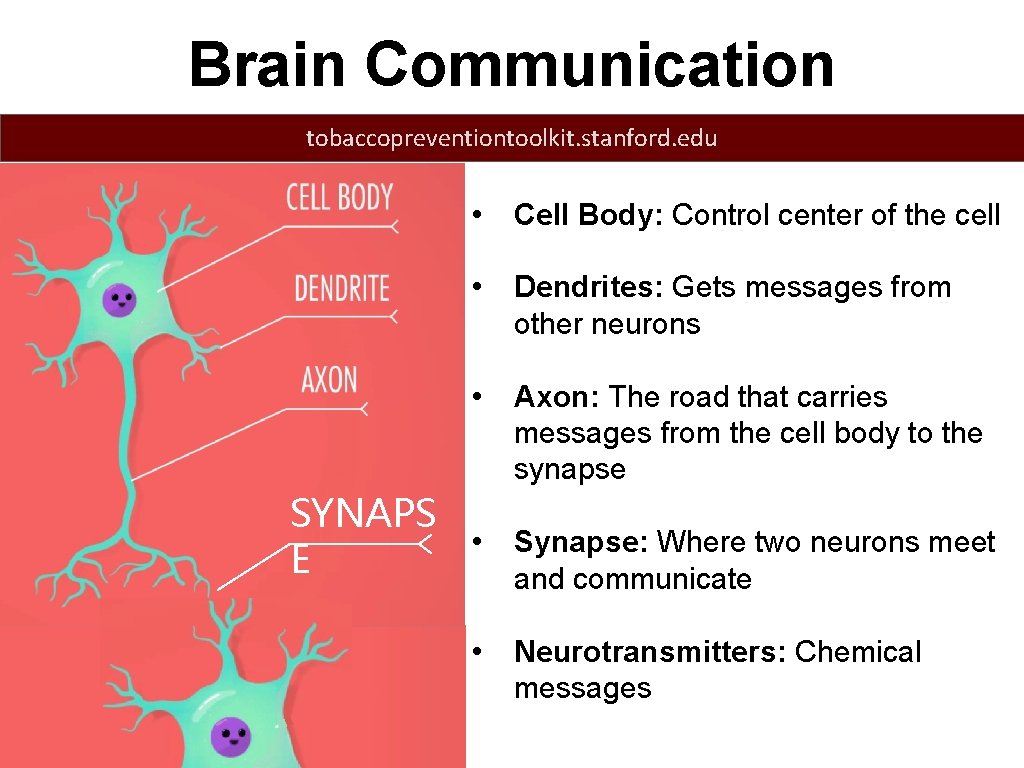
Brain Communication tobaccopreventiontoolkit. stanford. edu • Cell Body: Control center of the cell • Dendrites: Gets messages from other neurons • Axon: The road that carries messages from the cell body to the synapse SYNAPS • E • Synapse: Where two neurons meet and communicate Neurotransmitters: Chemical messages
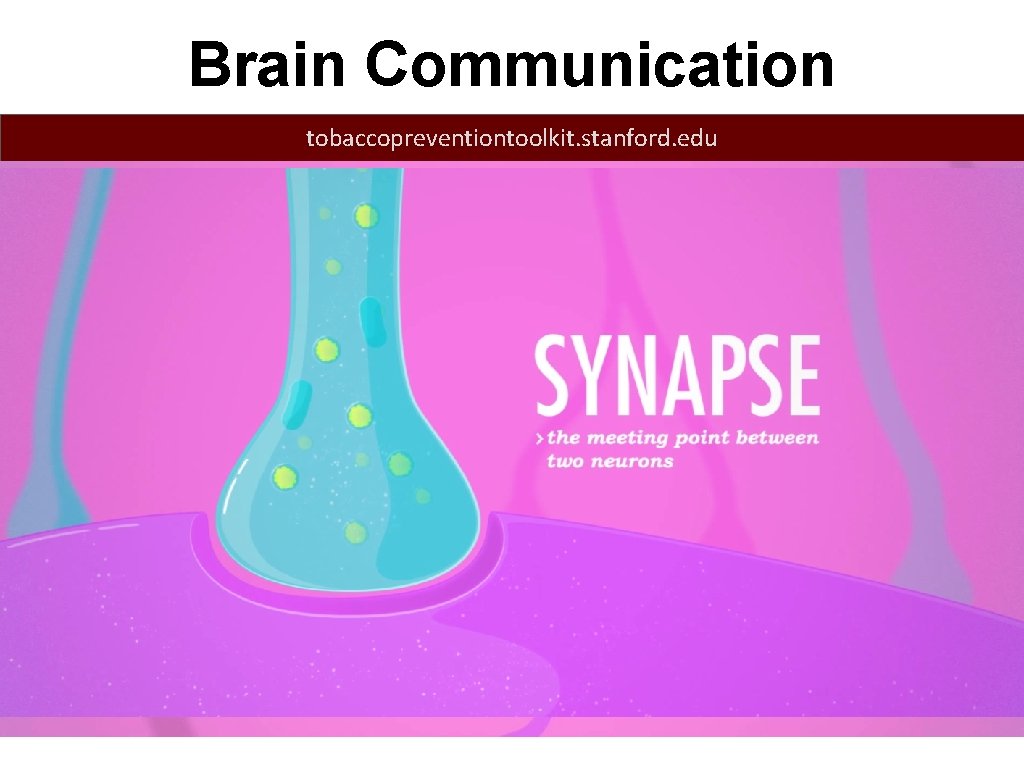
Brain Communication tobaccopreventiontoolkit. stanford. edu Electrical Message
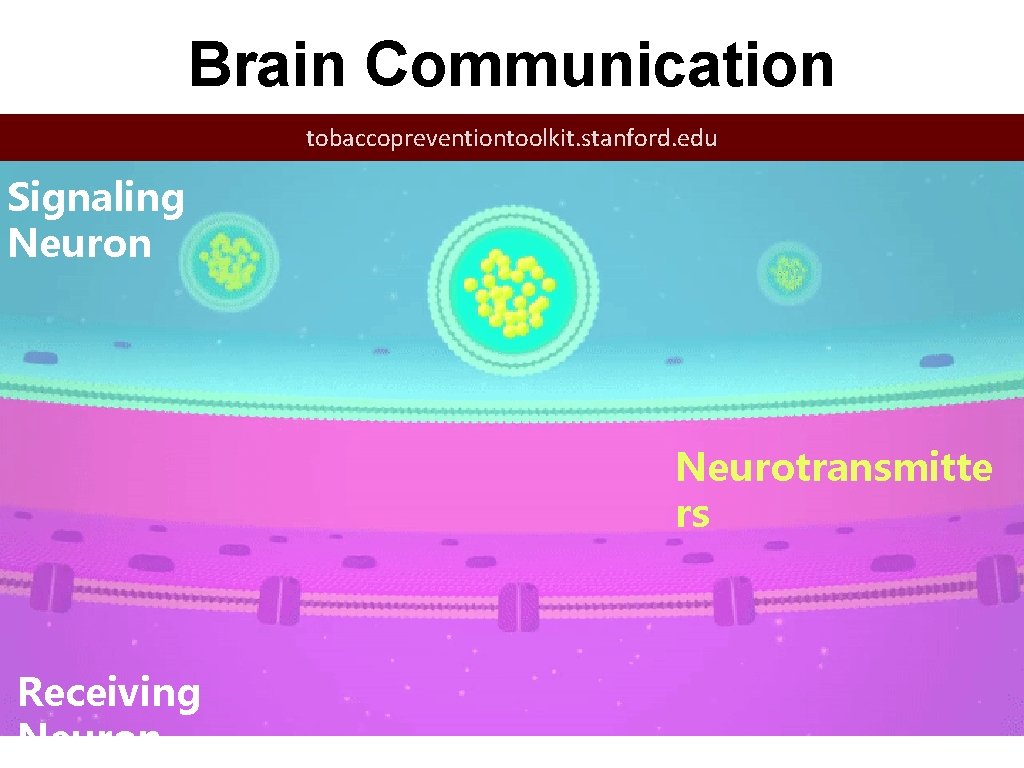
Brain Communication tobaccopreventiontoolkit. stanford. edu Signaling Neuron Neurotransmitte rs Receiving Neuron
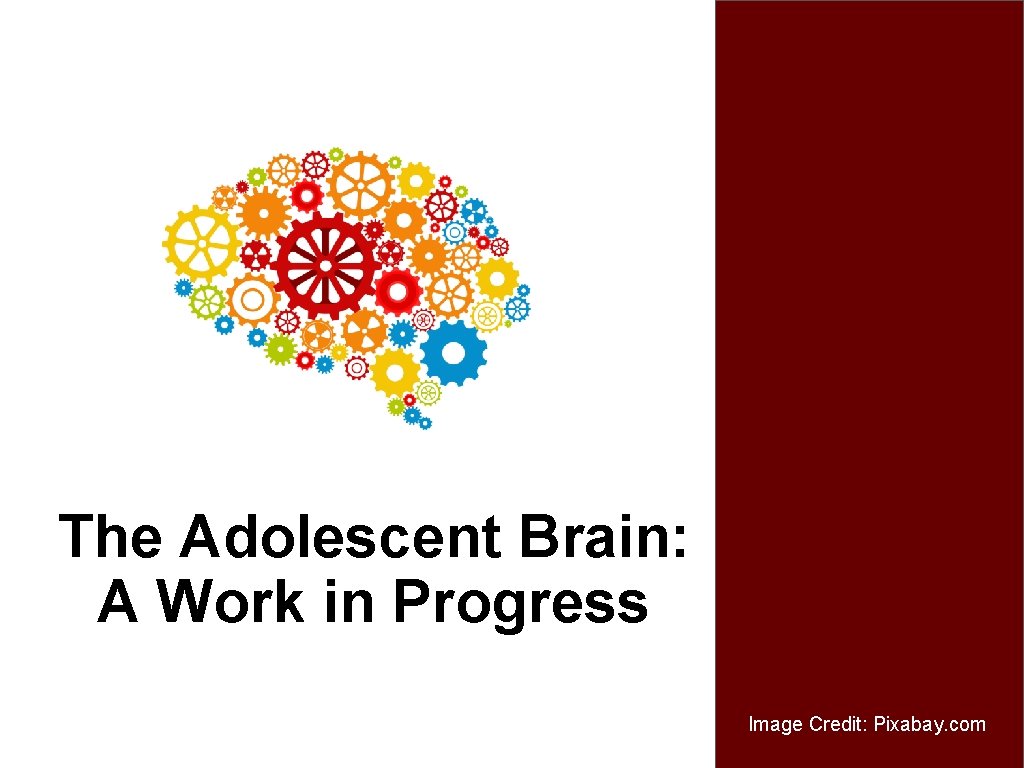
The Adolescent Brain: A Work in Progress Image Credit: Pixabay. com
The Adolescent Brain: Dispelling Some Myths tobaccopreventiontoolkit. stanford. edu • Yes, the adolescent brain is developing structurally. • But, it still functions! • It is elastic and has a great potential for learning new skills.
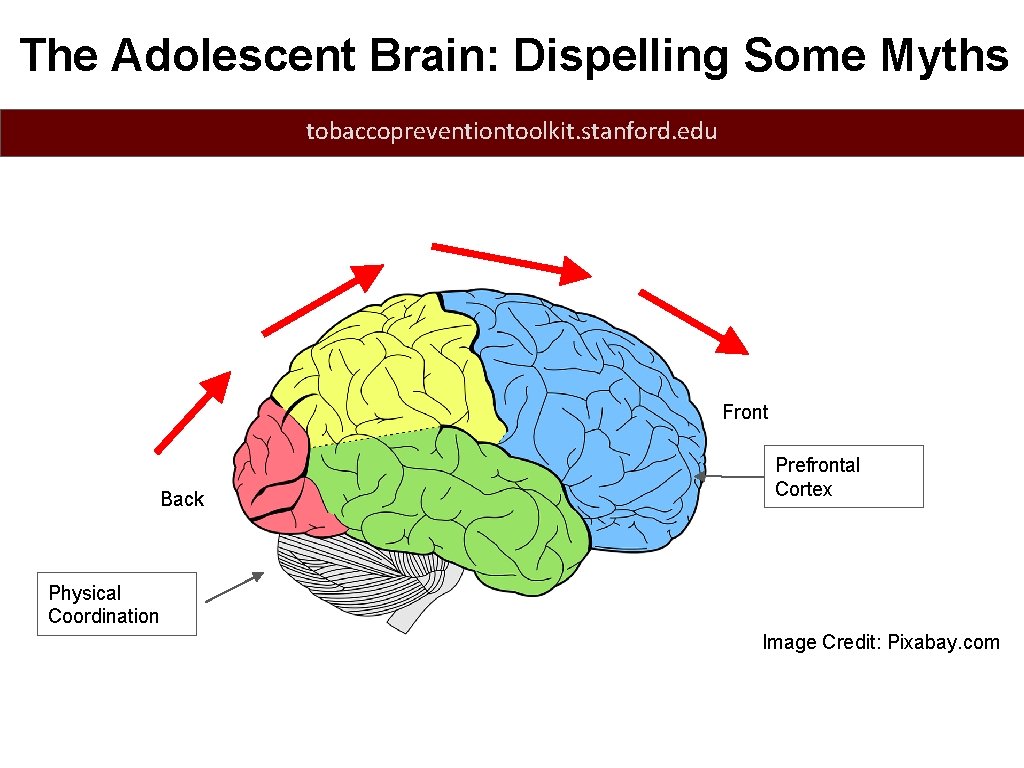
The Adolescent Brain: Dispelling Some Myths tobaccopreventiontoolkit. stanford. edu Front Back Prefrontal Cortex Physical Coordination Image Credit: Pixabay. com
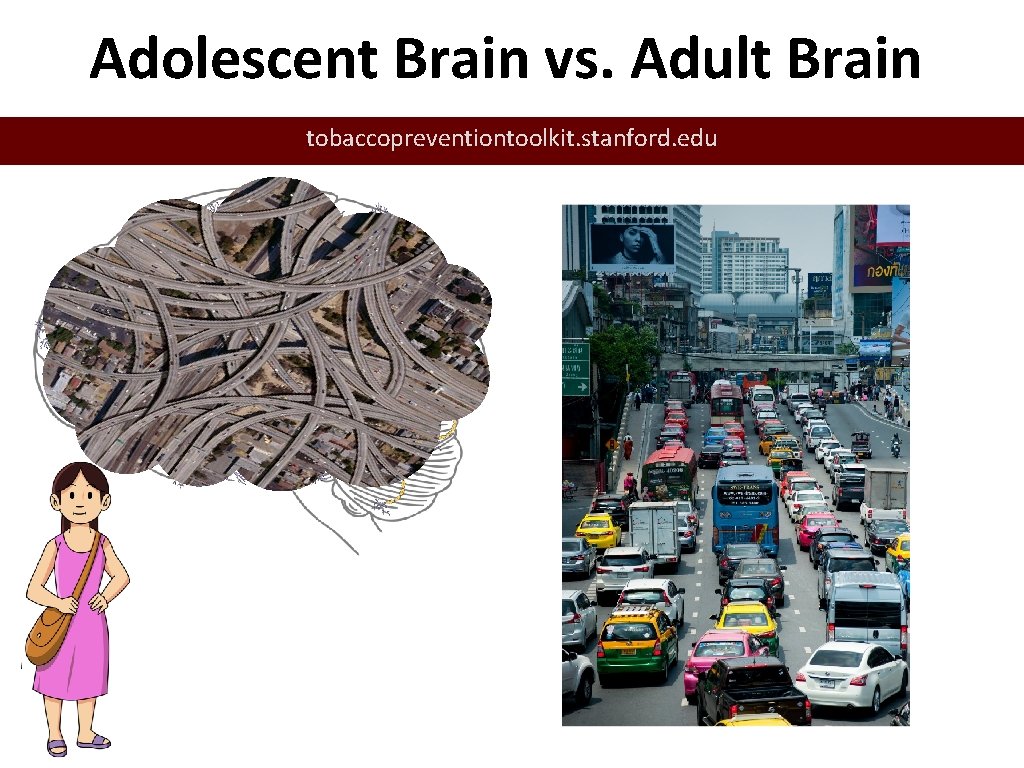
Adolescent Brain vs. Adult Brain tobaccopreventiontoolkit. stanford. edu
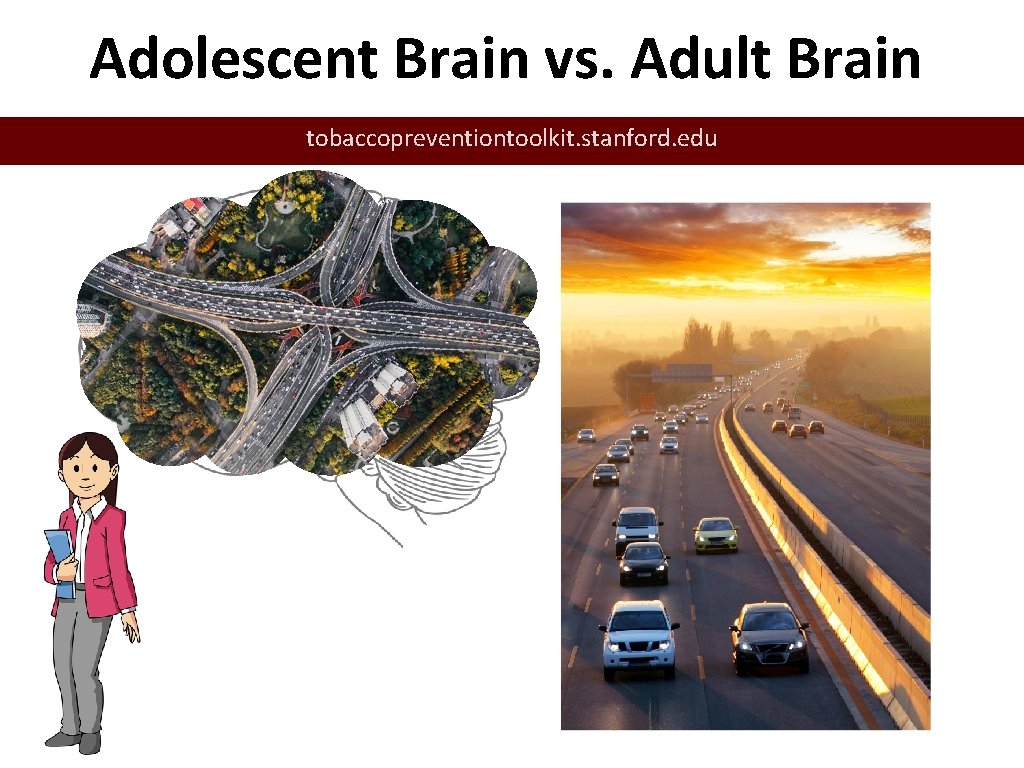
Adolescent Brain vs. Adult Brain tobaccopreventiontoolkit. stanford. edu
Synaptic Pruning tobaccopreventiontoolkit. stanford. edu
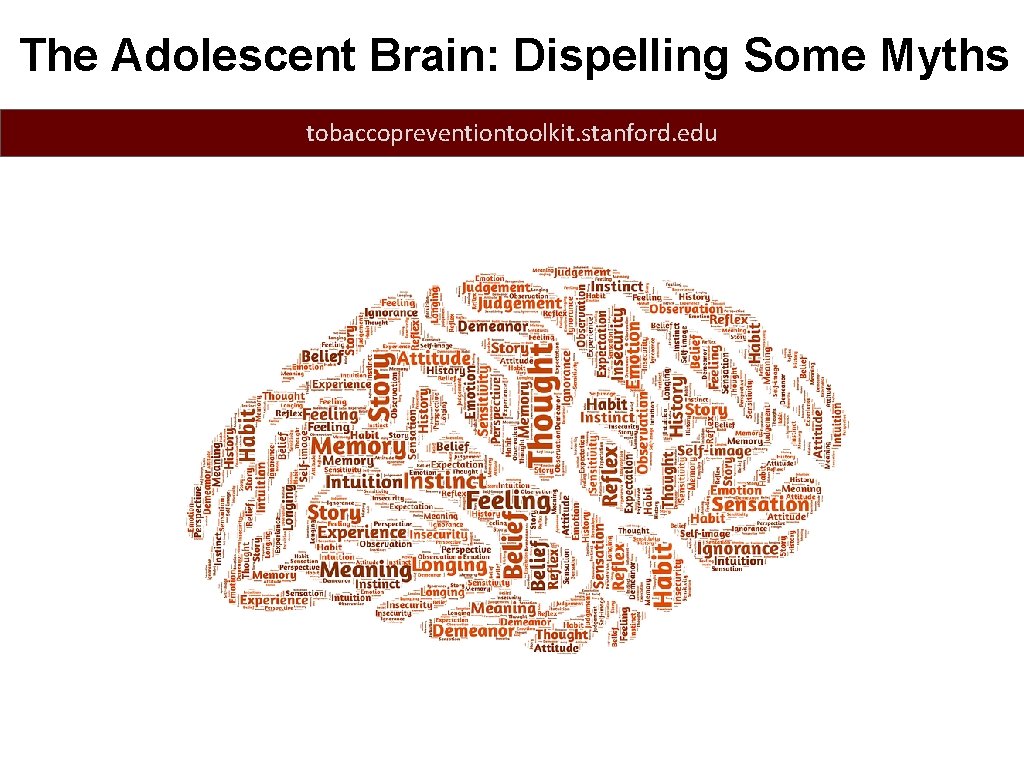
The Adolescent Brain: Dispelling Some Myths tobaccopreventiontoolkit. stanford. edu
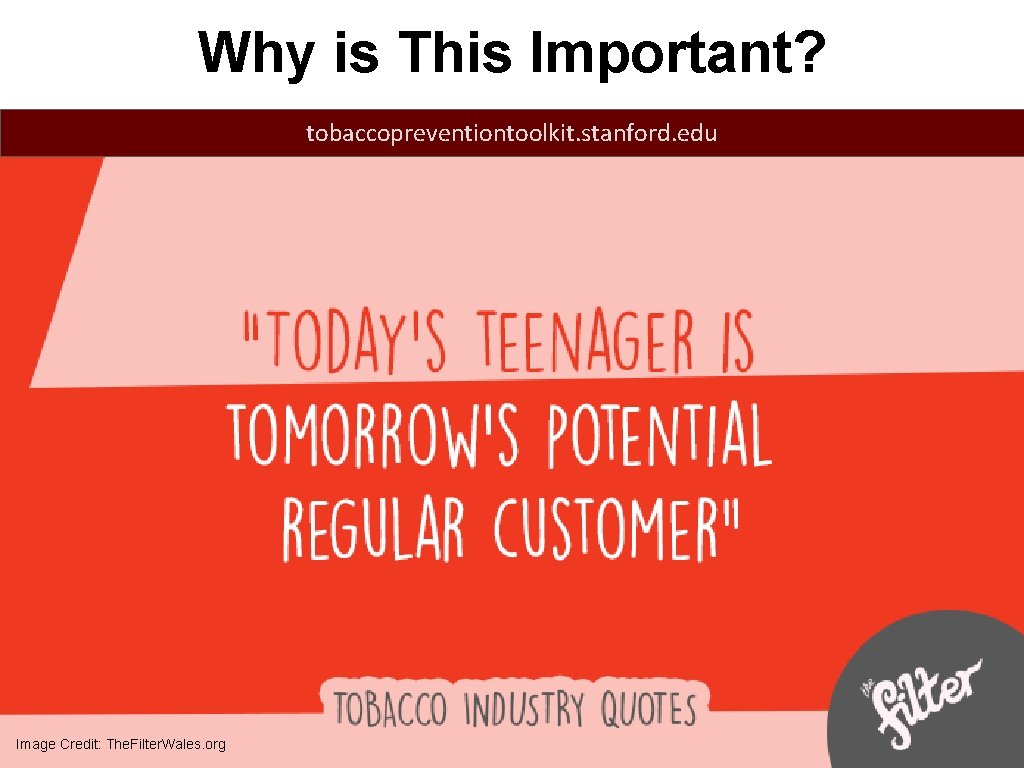
Why is This Important? tobaccopreventiontoolkit. stanford. edu Image Credit: The. Filter. Wales. org
How Drugs Affect the Brain Image Credit: Pixabay. com
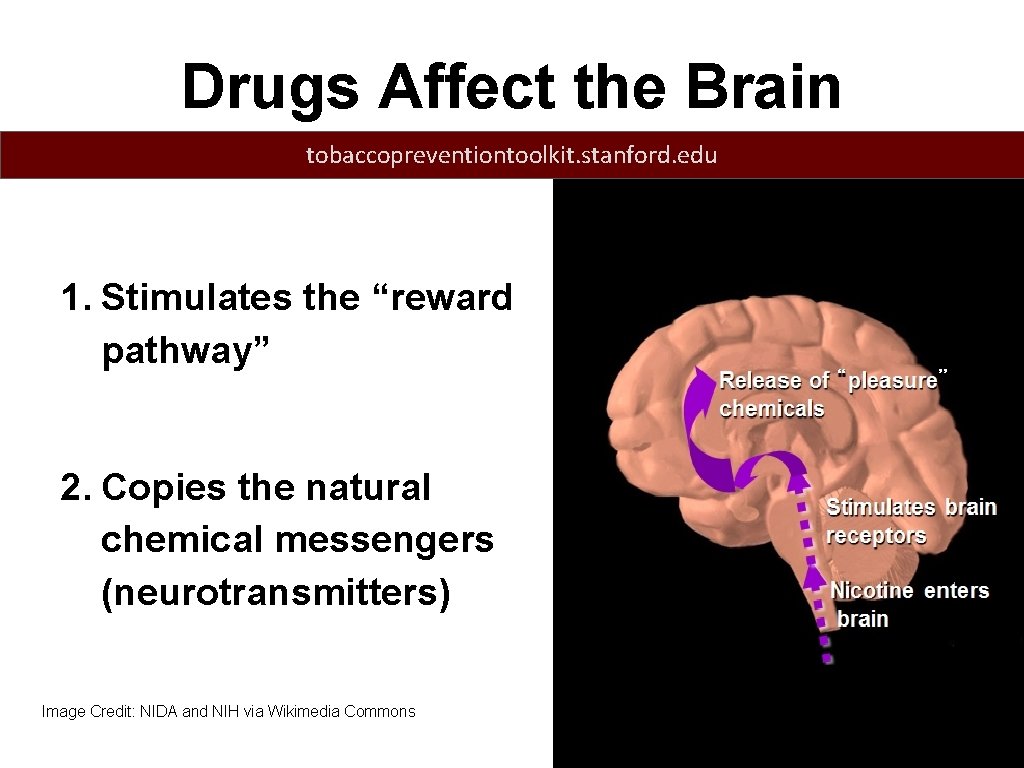
Drugs Affect the Brain tobaccopreventiontoolkit. stanford. edu 1. Stimulates the “reward pathway” 2. Copies the natural chemical messengers (neurotransmitters) Image Credit: NIDA and NIH via Wikimedia Commons
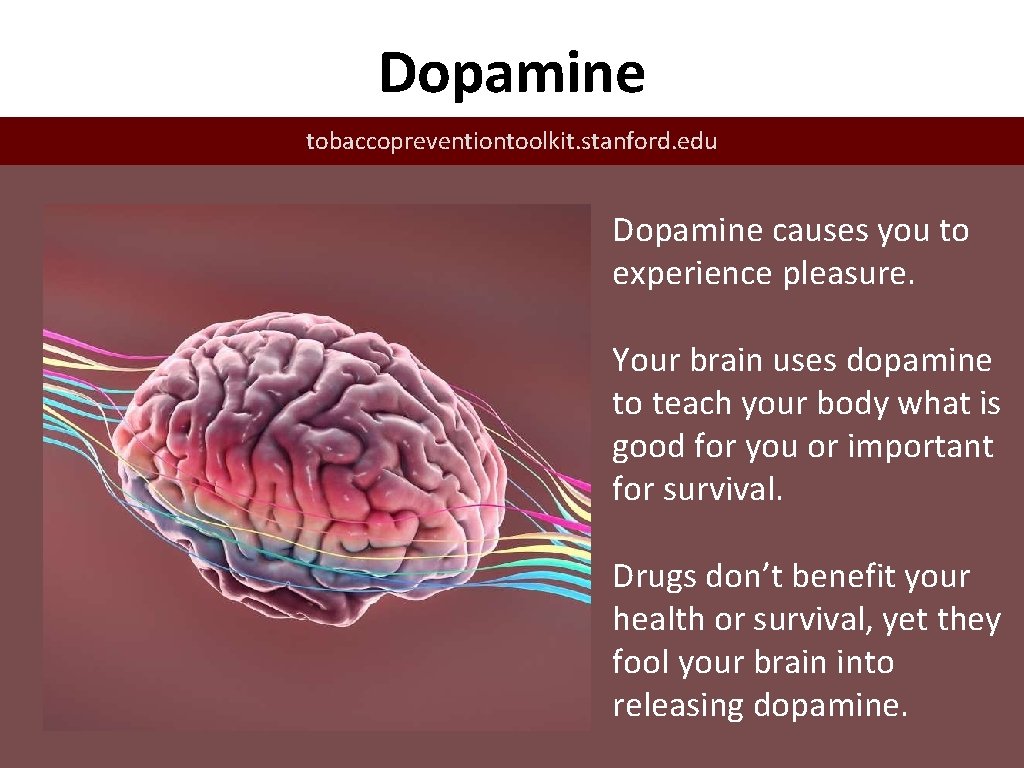
Dopamine tobaccopreventiontoolkit. stanford. edu Dopamine causes you to experience pleasure. Your brain uses dopamine to teach your body what is good for you or important for survival. Drugs don’t benefit your health or survival, yet they fool your brain into releasing dopamine.
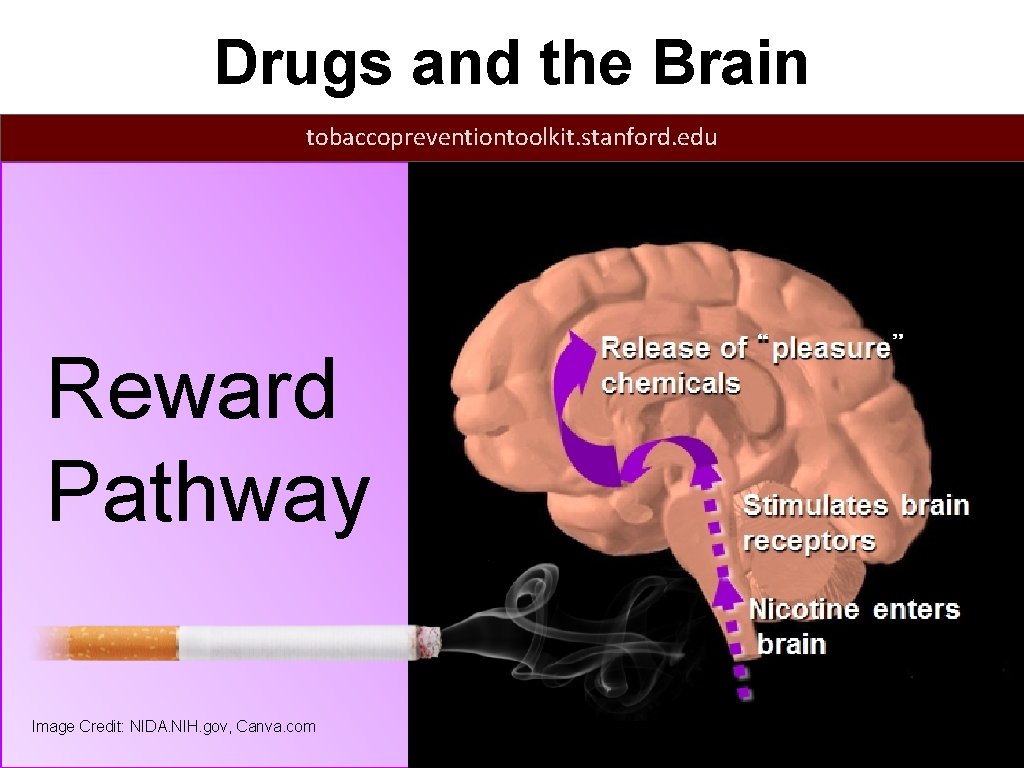
Drugs and the Brain tobaccopreventiontoolkit. stanford. edu Reward Pathway Image Credit: NIDA. NIH. gov, Canva. com
The Brain on Nicotine tobaccopreventiontoolkit. stanford. edu Nerve Cell with Acetylcholine Synapse Acetylcholine Receptors Nicotine Image Credit: By United States: National Institute of Health via Wikimedia Commons
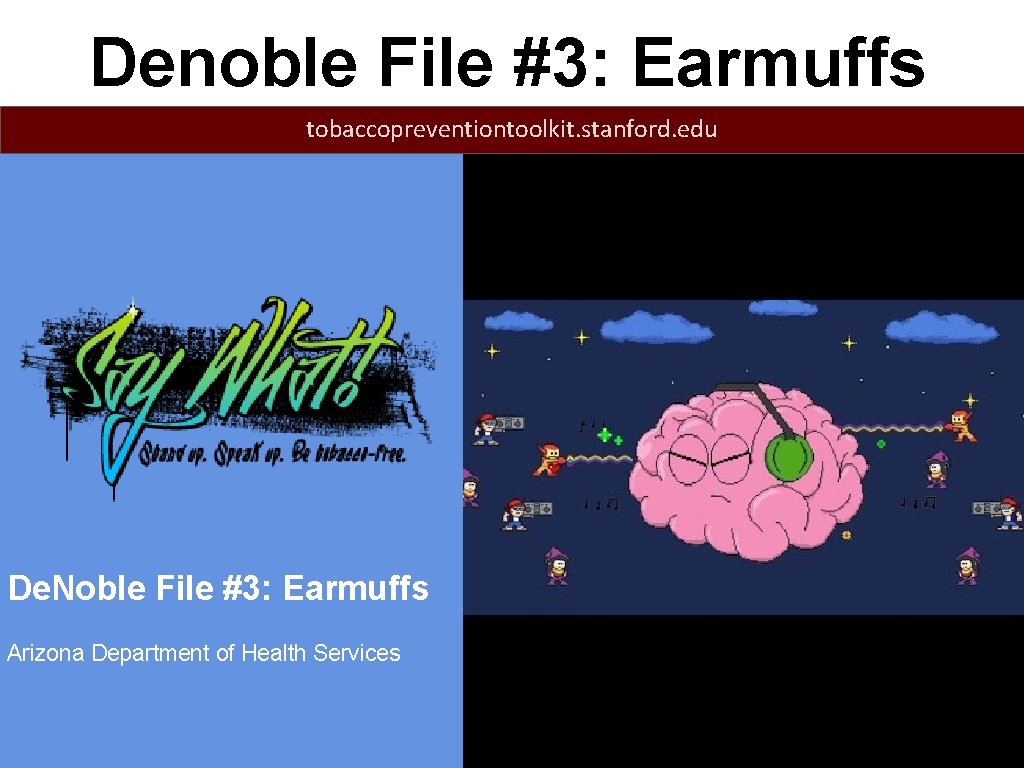
Denoble File #3: Earmuffs tobaccopreventiontoolkit. stanford. edu De. Noble File #3: Earmuffs Arizona Department of Health Services
Unit Quiz tobaccopreventiontoolkit. stanford. edu
- Slides: 22