
BRAF MUTATION RATES IN PRIMARY AND METASTATIC CUTANEOUS

BRAF MUTATION RATES IN PRIMARY AND METASTATIC CUTANEOUS MELANOMS BRISTOL 2016+2017 Dr Yve Zhang (Consultant, Cellular Pathology) Dr Jonathan Potts (Specialty Trainee, Cellular Pathology) Dr Kanwal Sohail (Specialty Trainee, Cellular Pathology) Claire Faulkner (Clinical Scientist, Genetics)
AIMS • Determine the frequency of BRAF mutation in primary and metastatic melanomas in Bristol and compare with published studies • Compare methods of test material preparation to determine if they are comparable • Characterise the clinical and pathological characteristics of BRAF-mutated melanomas in Bristol
BACKGROUND • Mutations in BRAF result in constitutional activation of the MAPK signaling pathway • The pathway regulates the transcription of numerous proteins that control cell division and differentiation • BRAF mutation is involved in many different malignancies • Also observed in naevi (70 -80%) • In melanomas, most common BRAF mutation is V 600 E
BRAF MUTATION • BRAF-mutated metastatic melanomas treated with BRAF and MEK inhibitors show improved survival compared with standard chemotherapy • BRAF mutation frequency in melanomas vary in different studies, usually around 40 -60% • Higher mutation rates associated with certain clinical and pathological characteristics – younger age group, superficial spreading subtype, non-sundamaged skin, non-mucosal melanoma, metastatic melanoma
METHODOLOGY Primary and metastatic cutaneous melanomas tested at Bristol Genetics Laboratory in 2016 and 2017 Patients from NBT and UHB Primary mucosal melanomas excluded Paraffin curls or mounted slides Melanoma dataset items from histopathology report
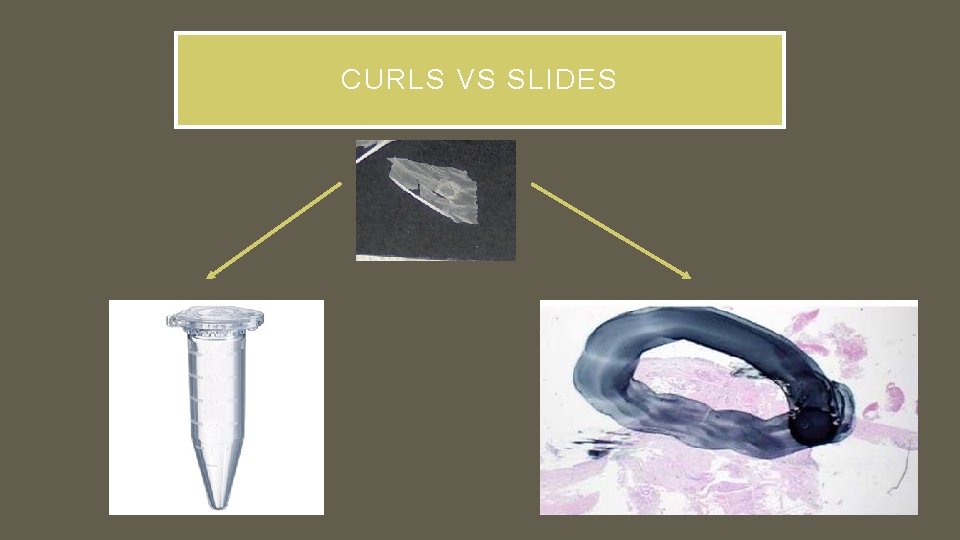
CURLS VS SLIDES
RESULTS • 312 patients identified over 2 years • Age range 31 -99 years • Mean age 69 years, median age 71 years • 64% male and 36% female
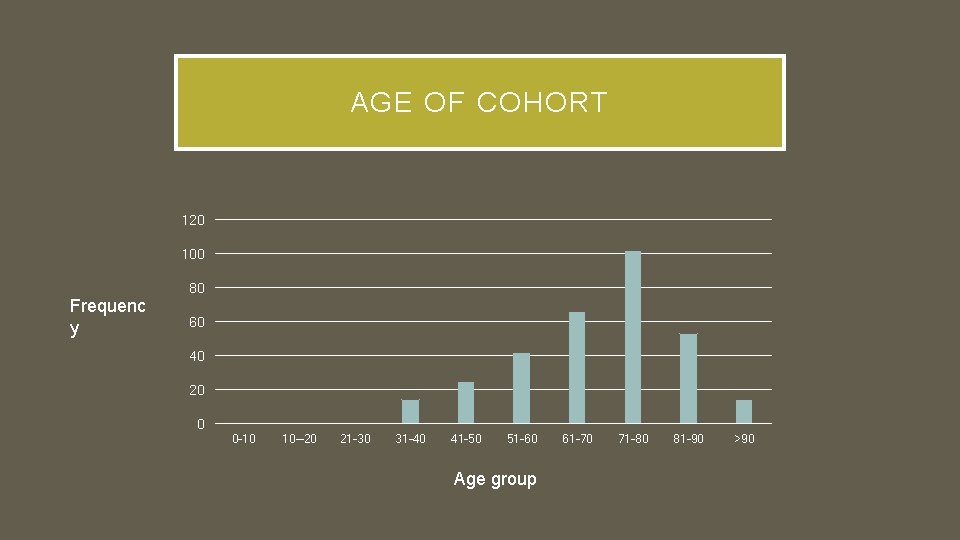
AGE OF COHORT 120 100 80 Frequenc y 60 40 20 0 0 -10 10 --20 21 -30 31 -40 41 -50 51 -60 Age group 61 -70 71 -80 81 -90 >90
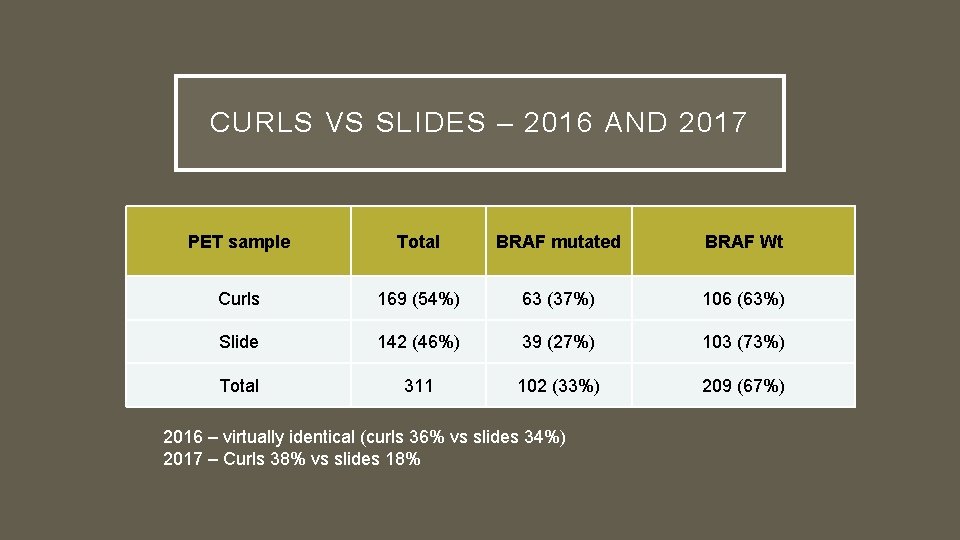
CURLS VS SLIDES – 2016 AND 2017 PET sample Total BRAF mutated BRAF Wt Curls 169 (54%) 63 (37%) 106 (63%) Slide 142 (46%) 39 (27%) 103 (73%) Total 311 102 (33%) 209 (67%) 2016 – virtually identical (curls 36% vs slides 34%) 2017 – Curls 38% vs slides 18%
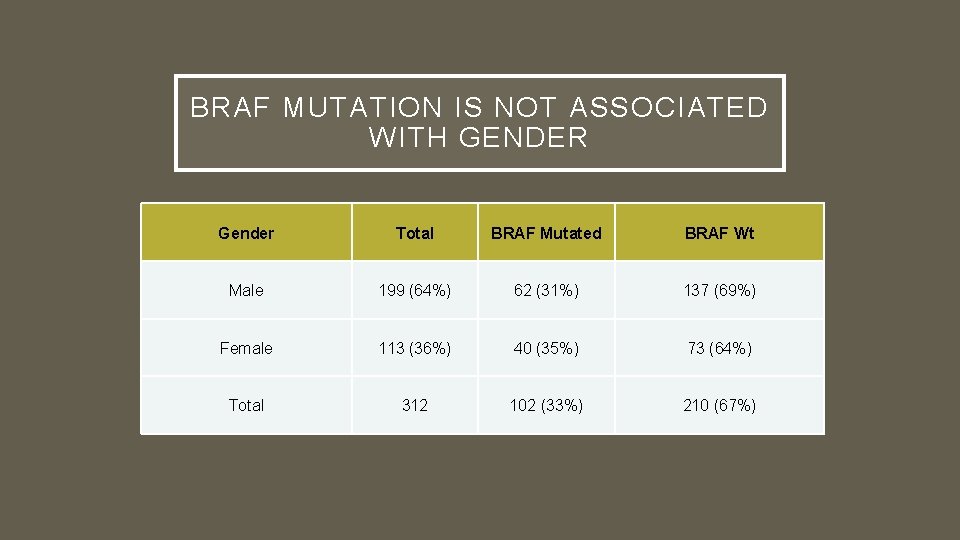
BRAF MUTATION IS NOT ASSOCIATED WITH GENDER Gender Total BRAF Mutated BRAF Wt Male 199 (64%) 62 (31%) 137 (69%) Female 113 (36%) 40 (35%) 73 (64%) Total 312 102 (33%) 210 (67%)
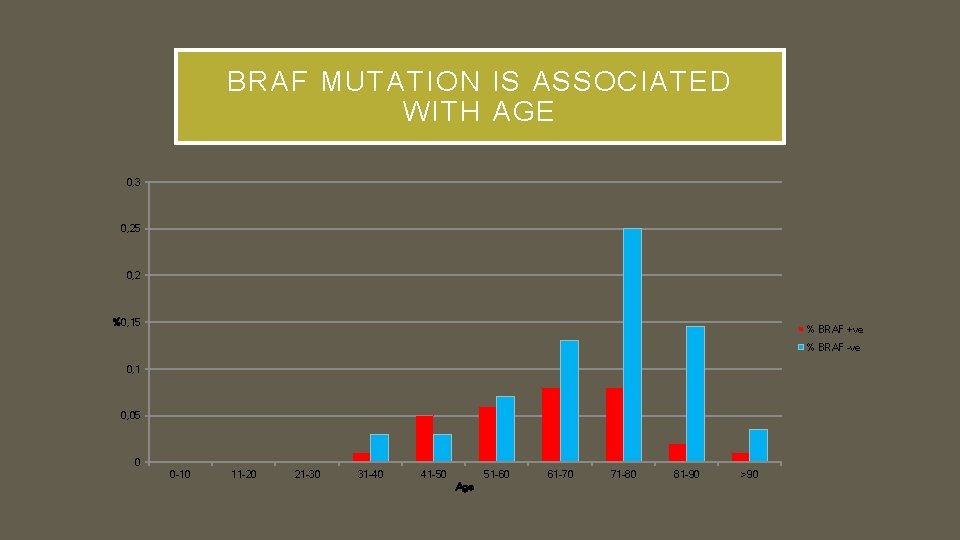
BRAF MUTATION IS ASSOCIATED WITH AGE 0, 3 0, 25 0, 2 %0, 15 % BRAF +ve % BRAF -ve 0, 1 0, 05 0 0 -10 11 -20 21 -30 31 -40 41 -50 51 -60 Age 61 -70 71 -80 81 -90 >90
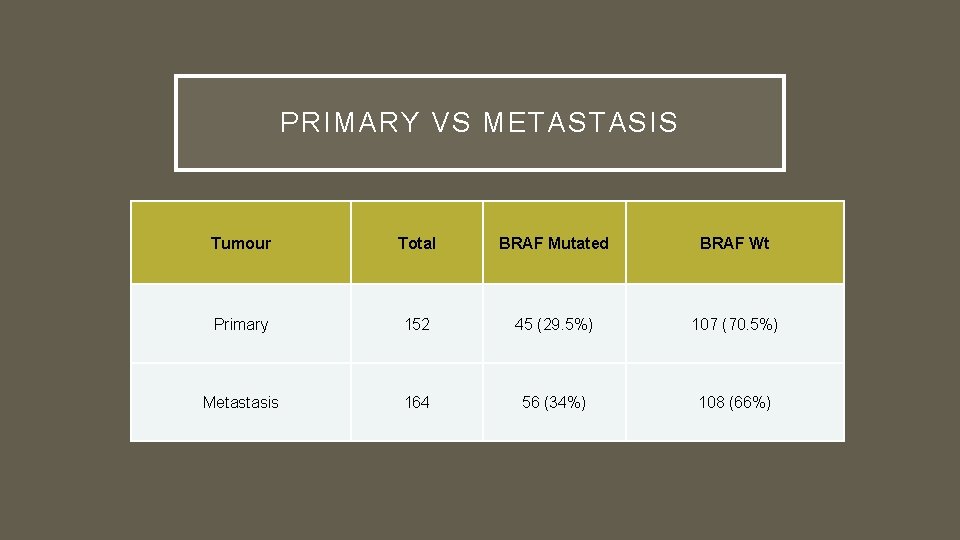
PRIMARY VS METASTASIS Tumour Total BRAF Mutated BRAF Wt Primary 152 45 (29. 5%) 107 (70. 5%) Metastasis 164 56 (34%) 108 (66%)
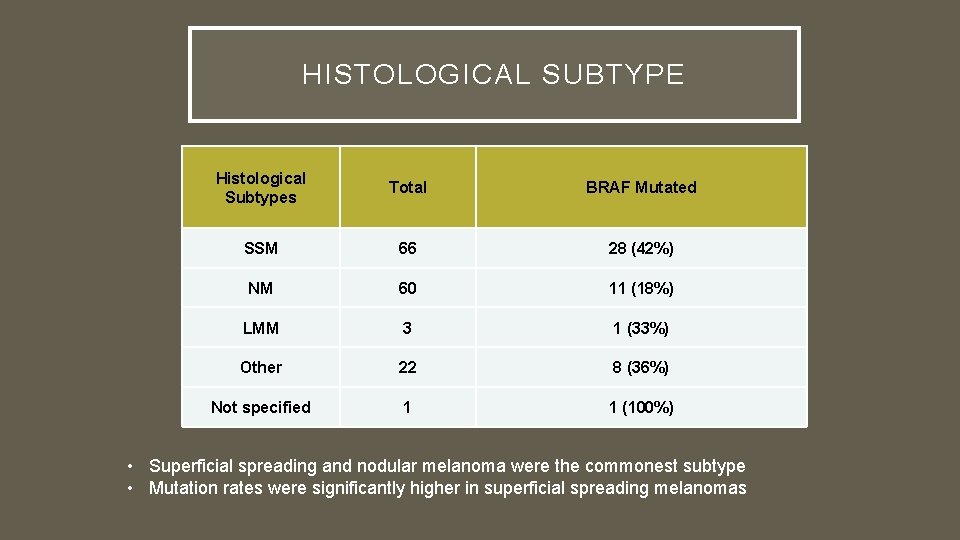
HISTOLOGICAL SUBTYPE Histological Subtypes Total BRAF Mutated SSM 66 28 (42%) NM 60 11 (18%) LMM 3 1 (33%) Other 22 8 (36%) Not specified 1 1 (100%) • Superficial spreading and nodular melanoma were the commonest subtype • Mutation rates were significantly higher in superficial spreading melanomas
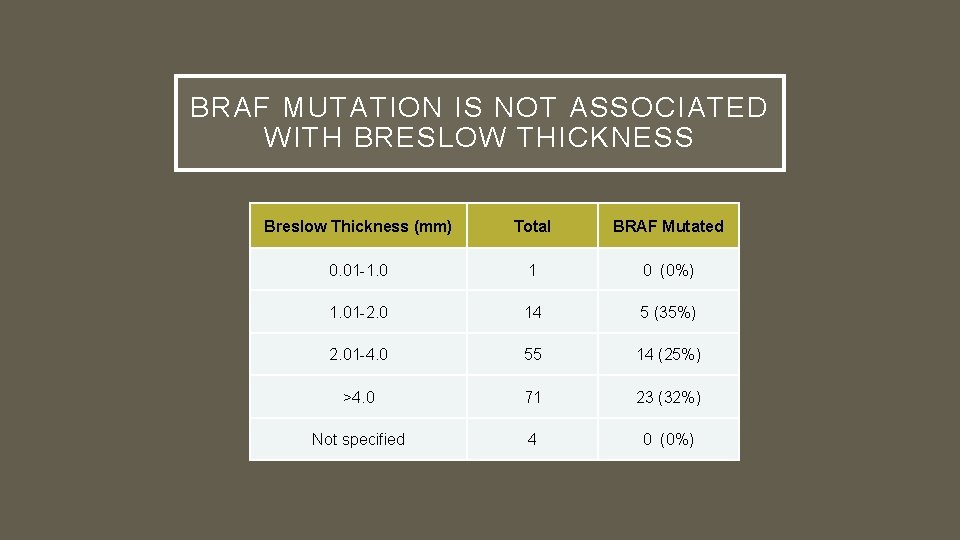
BRAF MUTATION IS NOT ASSOCIATED WITH BRESLOW THICKNESS Breslow Thickness (mm) Total BRAF Mutated 0. 01 -1. 0 1 0 (0%) 1. 01 -2. 0 14 5 (35%) 2. 01 -4. 0 55 14 (25%) >4. 0 71 23 (32%) Not specified 4 0 (0%)
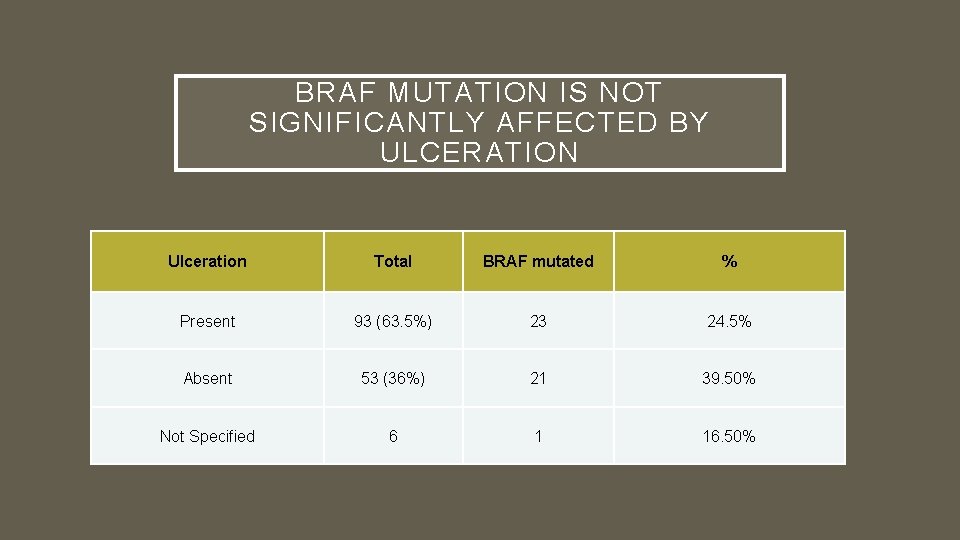
BRAF MUTATION IS NOT SIGNIFICANTLY AFFECTED BY ULCERATION Ulceration Total BRAF mutated % Present 93 (63. 5%) 23 24. 5% Absent 53 (36%) 21 39. 50% Not Specified 6 1 16. 50%
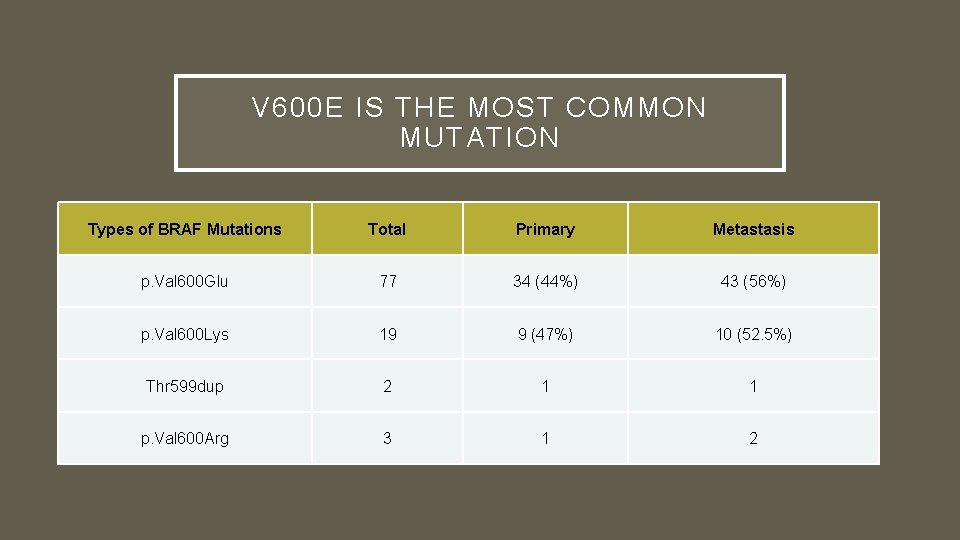
V 600 E IS THE MOST COMMON MUTATION Types of BRAF Mutations Total Primary Metastasis p. Val 600 Glu 77 34 (44%) 43 (56%) p. Val 600 Lys 19 9 (47%) 10 (52. 5%) Thr 599 dup 2 1 1 p. Val 600 Arg 3 1 2
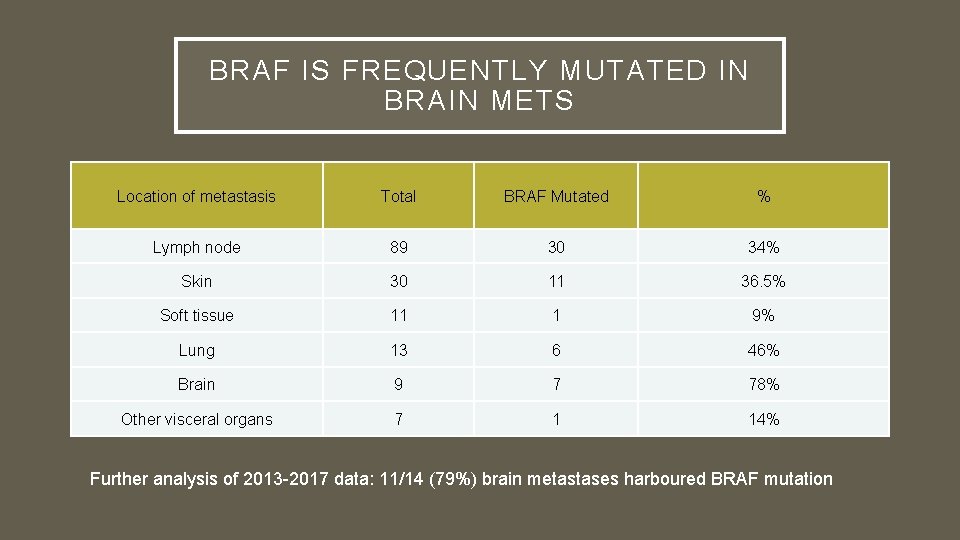
BRAF IS FREQUENTLY MUTATED IN BRAIN METS Location of metastasis Total BRAF Mutated % Lymph node 89 30 34% Skin 30 11 36. 5% Soft tissue 11 1 9% Lung 13 6 46% Brain 9 7 78% Other visceral organs 7 1 14% Further analysis of 2013 -2017 data: 11/14 (79%) brain metastases harboured BRAF mutation
IMPORTANT POINTS • Our BRAF mutation rates are slightly lower than most published studies at 33% • This may be explained by the skew to older patients tested • Ulceration does not significantly affect mutation rate, in fact non-ulcerated melanomas showed slightly higher mutation rates • Almost twice as many men tested as women • Brain metastases have a high rate of BRAF mutation • BRAF mutations slightly more frequent in paraffin curls than slides
FURTHER WORK • Re-audit yearly • Assess trend for BRAF mutation in paraffin curls vs slides • If only a small amount of tumour was tested and was BRAF wild-type, consider repeating the test on a different tumour especially if young patient/SSMM.

THANKS ANY QUESTIONS
- Slides: 20