
BRACING FOR EOS 6 TH ICEOS DUBLIN 2012
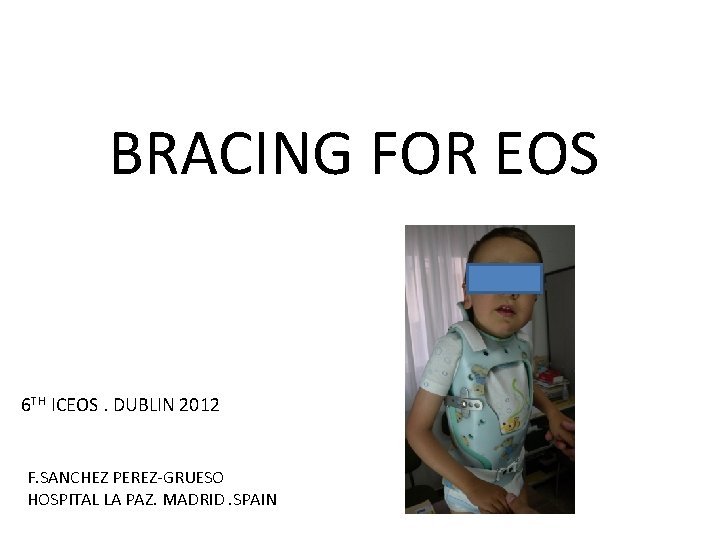
BRACING FOR EOS 6 TH ICEOS. DUBLIN 2012 F. SANCHEZ PEREZ-GRUESO HOSPITAL LA PAZ. MADRID. SPAIN
DISCLOSURE • DEPUY. • K 2 M a , b: Grants Research support Consulting a : Grants Research support
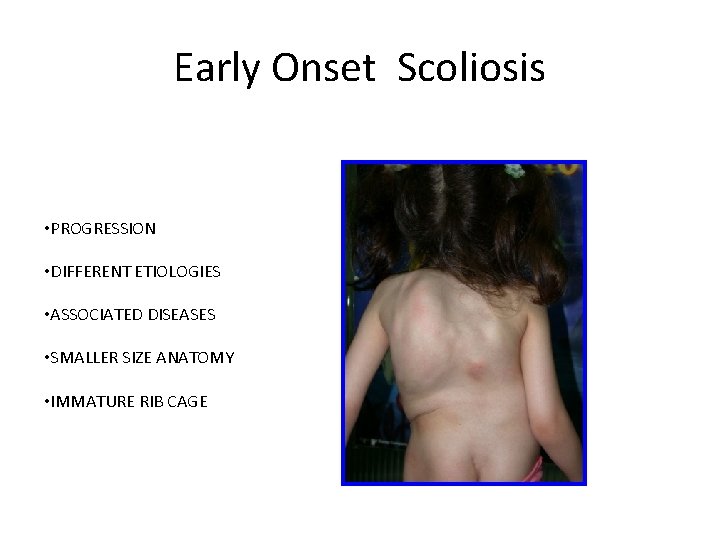
Early Onset Scoliosis • PROGRESSION • DIFFERENT ETIOLOGIES • ASSOCIATED DISEASES • SMALLER SIZE ANATOMY • IMMATURE RIB CAGE
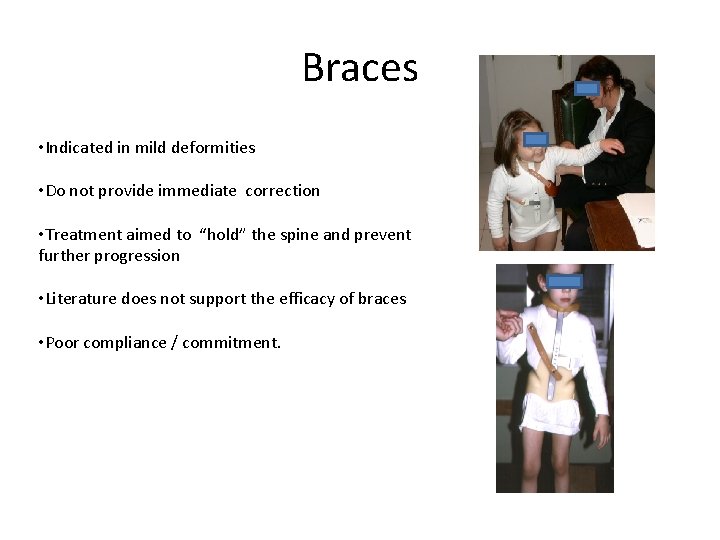
Braces • Indicated in mild deformities • Do not provide immediate correction • Treatment aimed to “hold” the spine and prevent further progression • Literature does not support the efficacy of braces • Poor compliance / commitment.
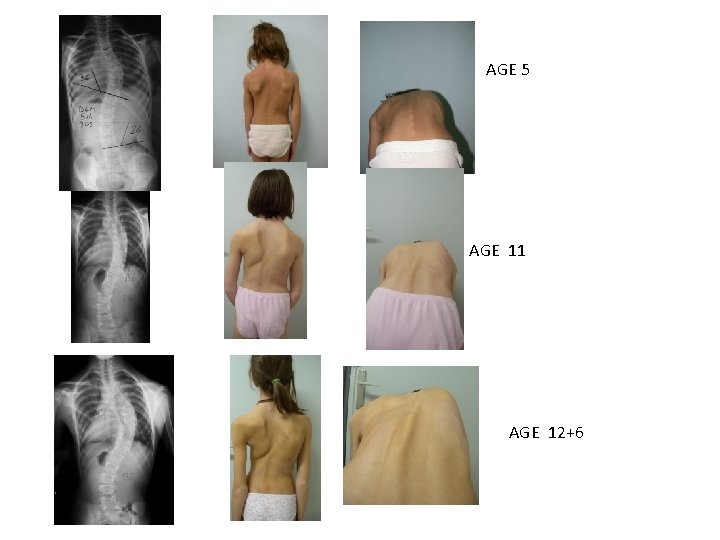
AGE 5 AGE 11 AGE 12+6
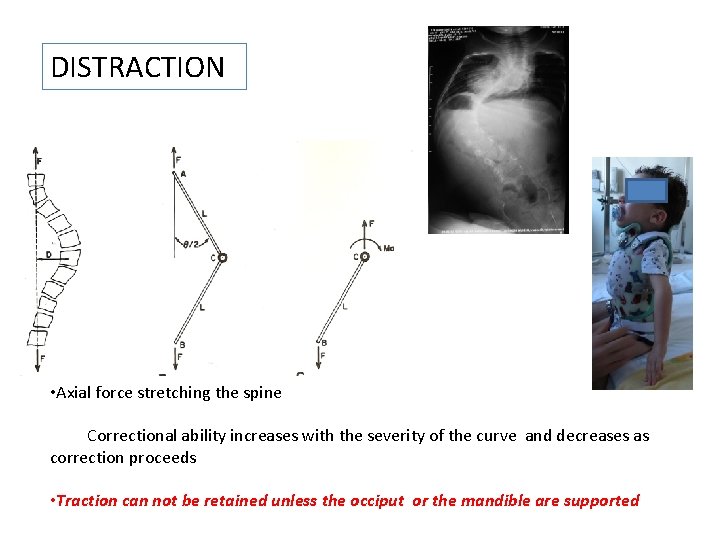
DISTRACTION • Axial force stretching the spine • The Correctional ability increases with the severity of the curve and decreases as correction proceeds • Traction can not be retained unless the occiput or the mandible are supported
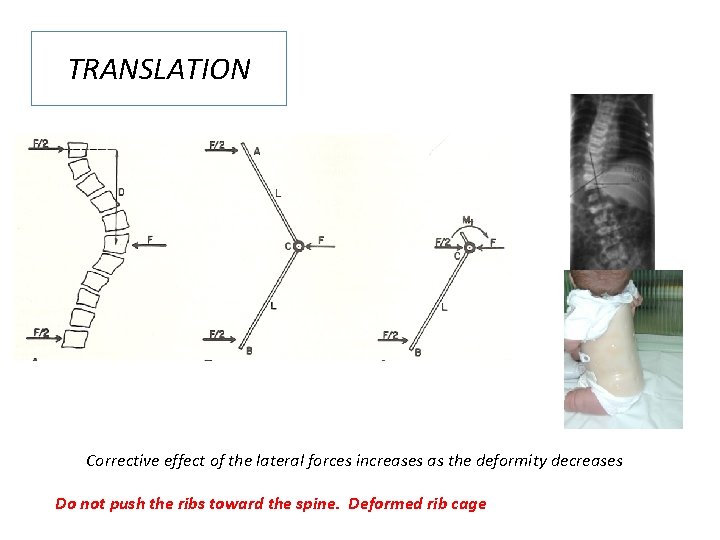
TRANSLATION The Corrective effect of the lateral forces increases as the deformity decreases Do not push the ribs toward the spine. Deformed rib cage
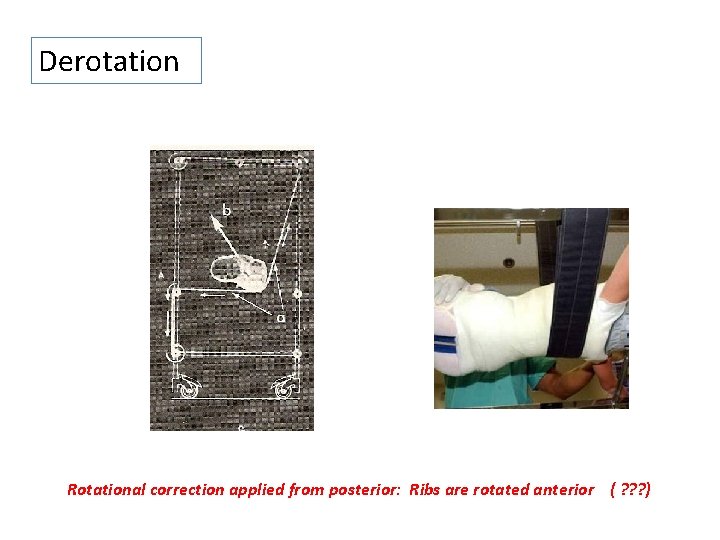
Derotation Rotational correction applied from posterior: Ribs are rotated anterior ( ? ? ? )
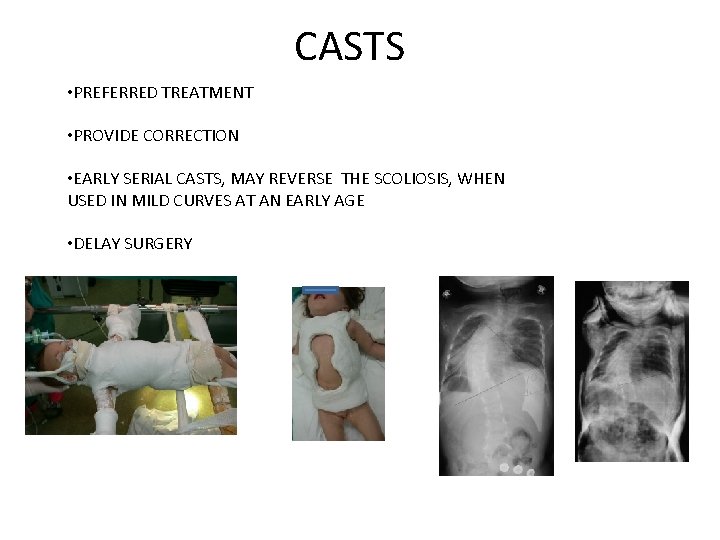
CASTS • PREFERRED TREATMENT • PROVIDE CORRECTION • EARLY SERIAL CASTS, MAY REVERSE THE SCOLIOSIS, WHEN USED IN MILD CURVES AT AN EARLY AGE • DELAY SURGERY
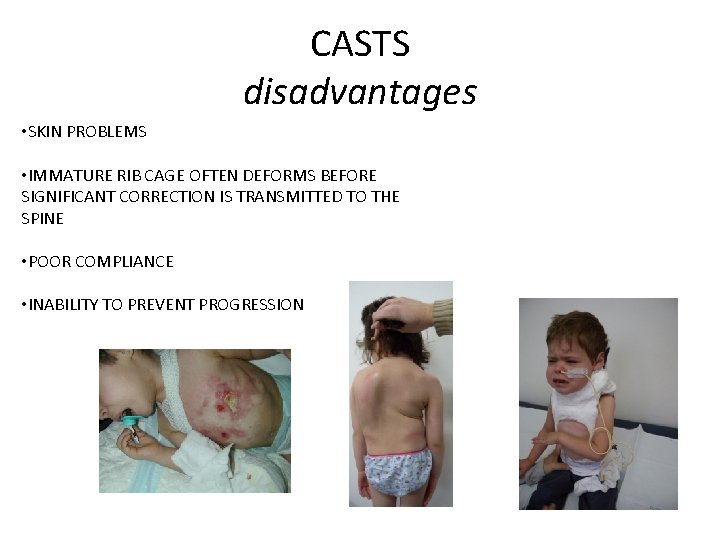
CASTS disadvantages • SKIN PROBLEMS • IMMATURE RIB CAGE OFTEN DEFORMS BEFORE SIGNIFICANT CORRECTION IS TRANSMITTED TO THE SPINE • POOR COMPLIANCE • INABILITY TO PREVENT PROGRESSION
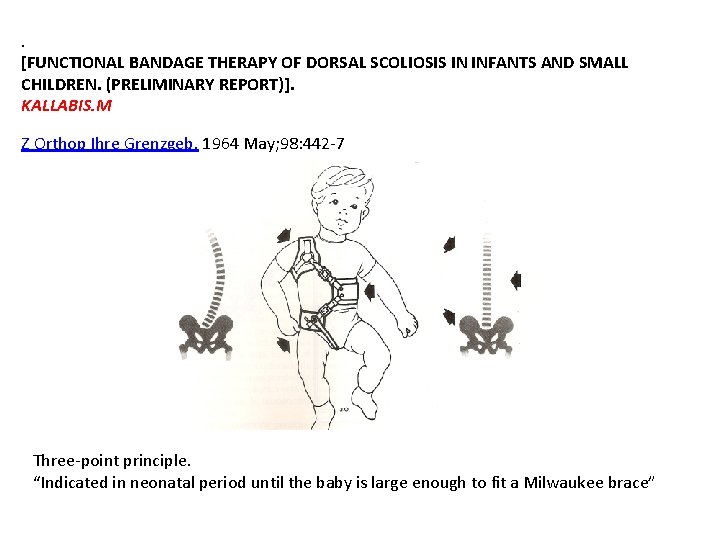
. [FUNCTIONAL BANDAGE THERAPY OF DORSAL SCOLIOSIS IN INFANTS AND SMALL CHILDREN. (PRELIMINARY REPORT)]. KALLABIS. M Z Orthop Ihre Grenzgeb. 1964 May; 98: 442 -7 Three-point principle. “Indicated in neonatal period until the baby is large enough to fit a Milwaukee brace”
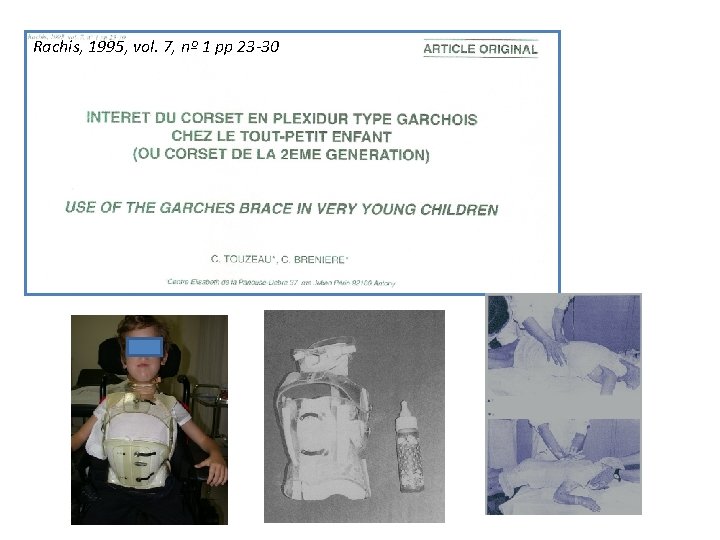
Rachis, 1995, vol. 7, nº 1 pp 23 -30
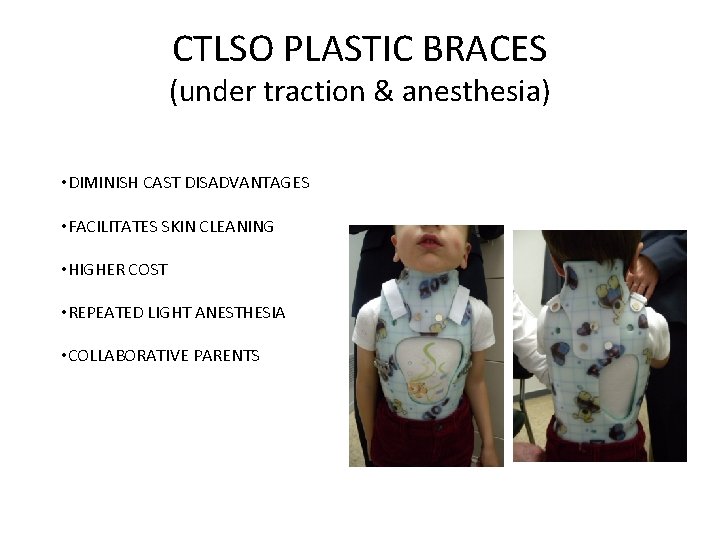
CTLSO PLASTIC BRACES (under traction & anesthesia) • DIMINISH CAST DISADVANTAGES • FACILITATES SKIN CLEANING • HIGHER COST • REPEATED LIGHT ANESTHESIA • COLLABORATIVE PARENTS
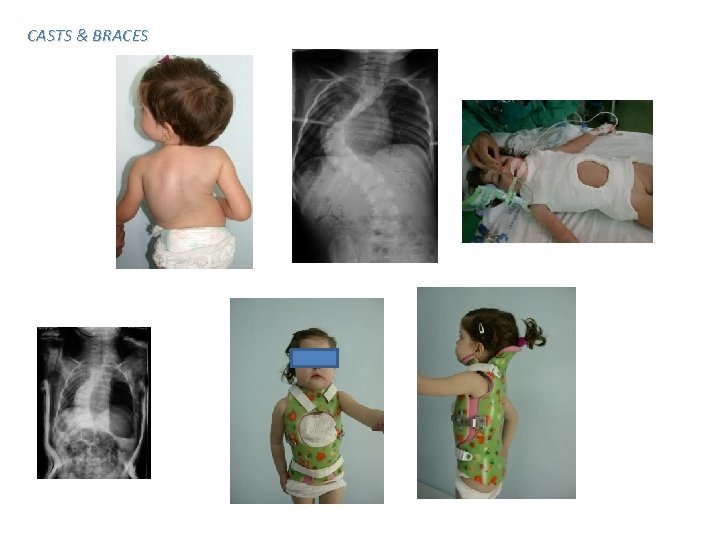
CASTS & BRACES
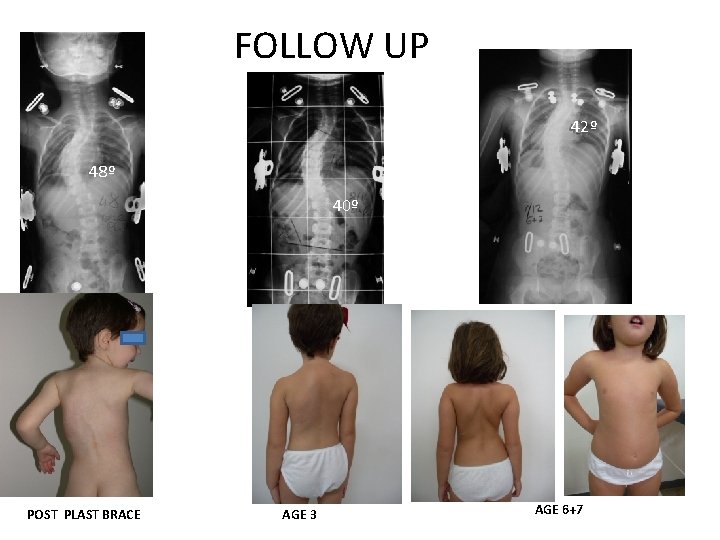
FOLLOW UP 42º 48º 40º POST PLAST BRACE AGE 3 AGE 6+7
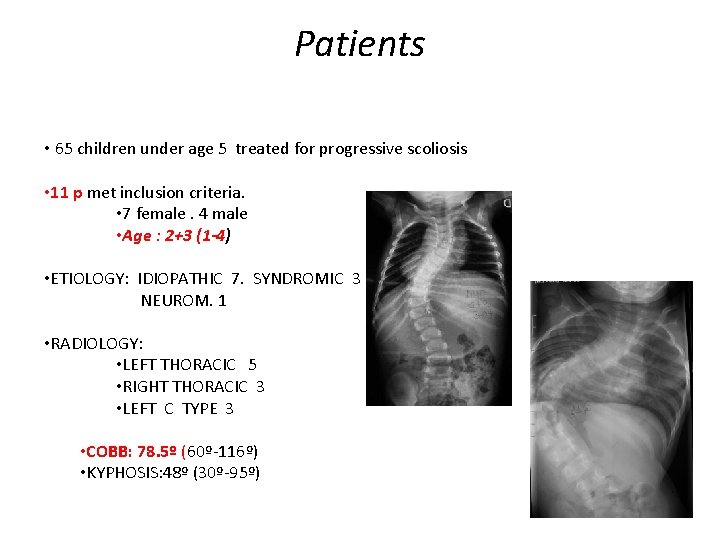
Patients • 65 children under age 5 treated for progressive scoliosis • 11 p met inclusion criteria. • 7 female. 4 male • Age : 2+3 (1 -4) • ETIOLOGY: IDIOPATHIC 7. SYNDROMIC 3 NEUROM. 1 • RADIOLOGY: • LEFT THORACIC 5 • RIGHT THORACIC 3 • LEFT C TYPE 3 • COBB: 78. 5º (60º-116º) • KYPHOSIS: 48º (30º-95º)
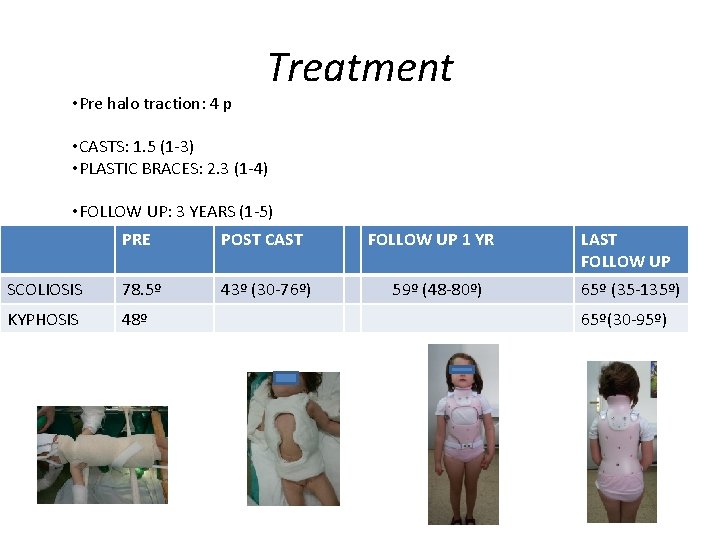
• Pre halo traction: 4 p Treatment • CASTS: 1. 5 (1 -3) • PLASTIC BRACES: 2. 3 (1 -4) • FOLLOW UP: 3 YEARS (1 -5) PRE POST CAST SCOLIOSIS 78. 5º 43º (30 -76º) KYPHOSIS 48º FOLLOW UP 1 YR 59º (48 -80º) LAST FOLLOW UP 65º (35 -135º) 65º(30 -95º)
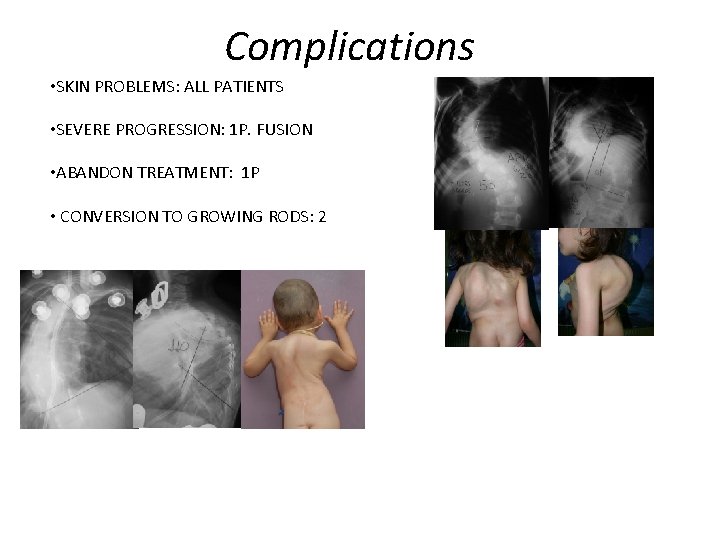
Complications • SKIN PROBLEMS: ALL PATIENTS • SEVERE PROGRESSION: 1 P. FUSION • ABANDON TREATMENT: 1 P • CONVERSION TO GROWING RODS: 2
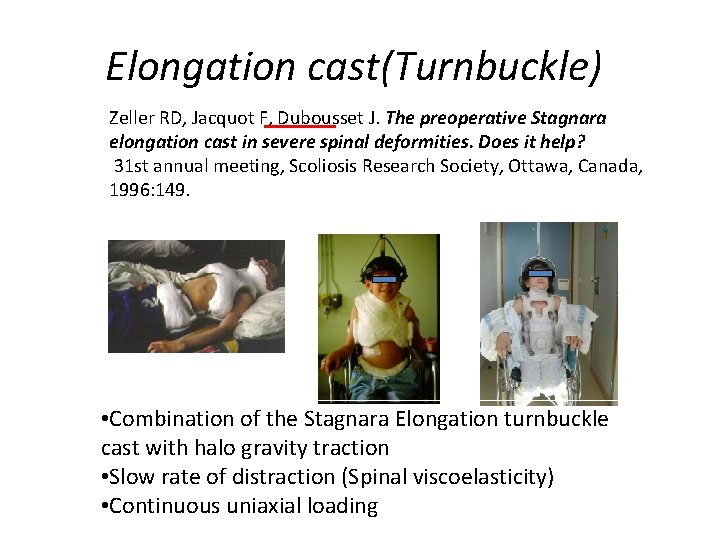
Elongation cast(Turnbuckle) Zeller RD, Jacquot F, Dubousset J. The preoperative Stagnara elongation cast in severe spinal deformities. Does it help? 31 st annual meeting, Scoliosis Research Society, Ottawa, Canada, 1996: 149. • Combination of the Stagnara Elongation turnbuckle cast with halo gravity traction • Slow rate of distraction (Spinal viscoelasticity) • Continuous uniaxial loading
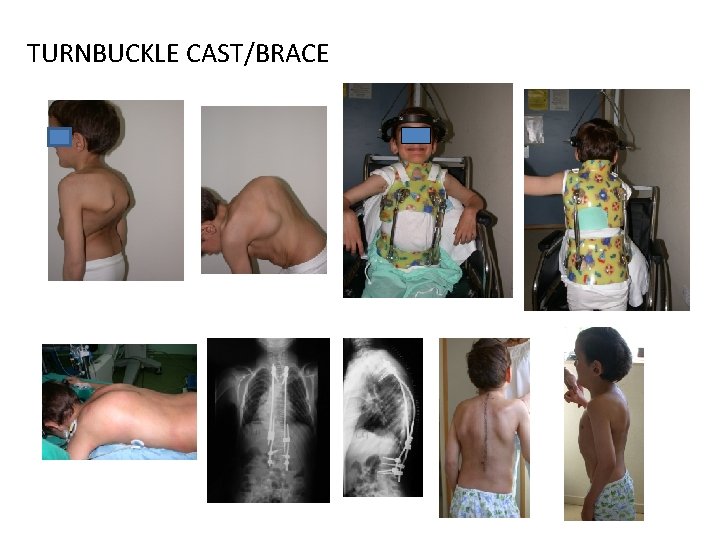
TURNBUCKLE CAST/BRACE
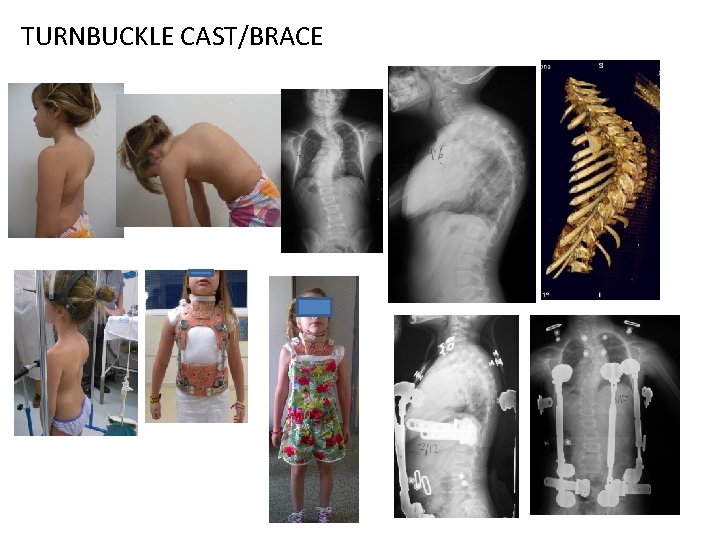
TURNBUCKLE CAST/BRACE
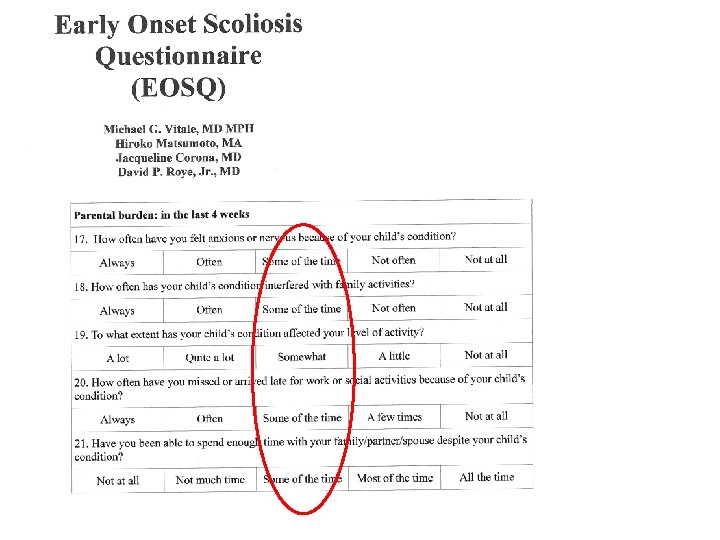
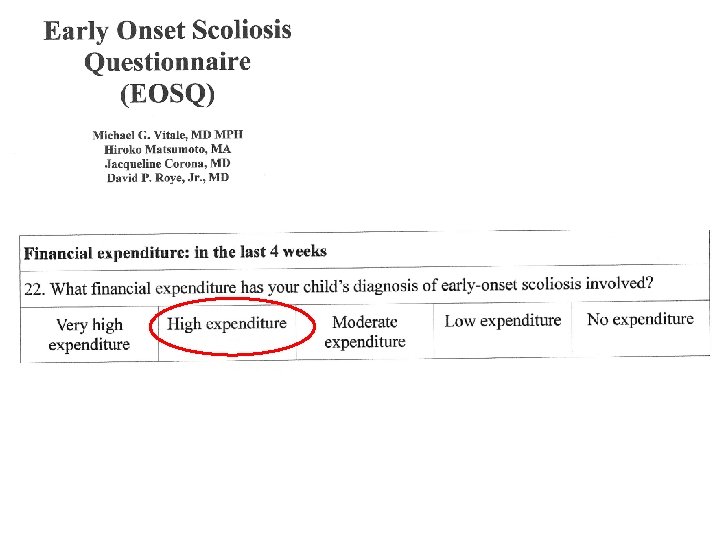
MESSAGE • CORRECTIVE CASTS & BRACES REDUCE INITIAL DEFORMITY BUT BARELY KEEP IT OVER TIME. • DELAY SURGERY BUT MOST PROBABLY WILL NOT AVOID IT • TREATMENT OF EOS BY MEANS OF CASTS & BRACES CAN NEGATIVELY AFFECT FAMILY LIFE
- Slides: 24