
Brace Yourself Physical Exam Functional Testing and Bracing
“Brace Yourself” Physical Exam, Functional Testing and Bracing of Common Upper Extremity Orthopedic Complaints
Objectives • Surface anatomy, muscle testing, special tests, & bracing – Cervical spine – Shoulder – Elbow, wrist, hand • Apply these skills to your clinical practice

Cervical Spine Exam • Surface Anatomy – C 3 thru 7

Cervical Spine Exam • Manual Muscle Tests • Special Tests – Spurlings Compression
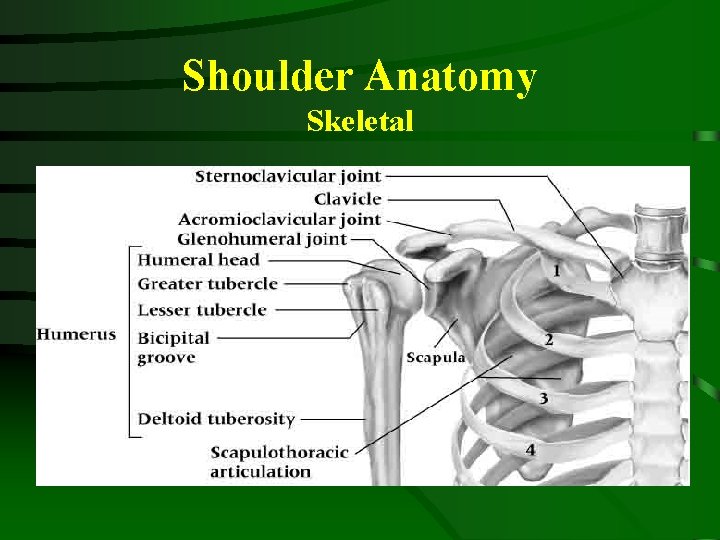
Shoulder Anatomy Skeletal
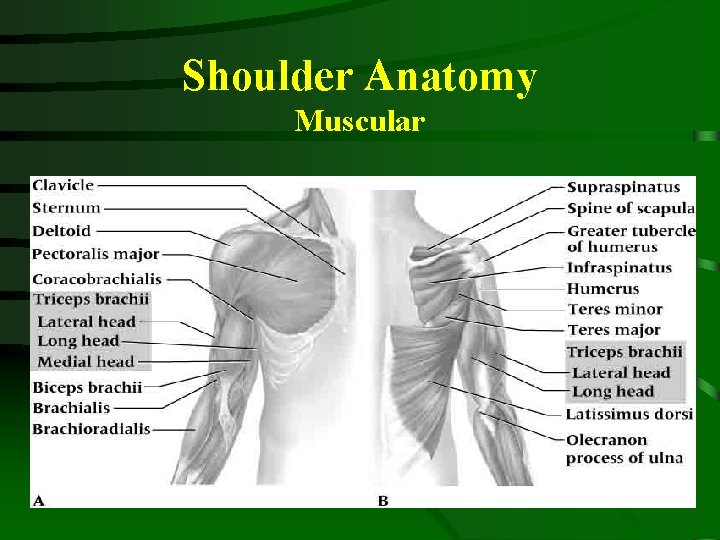
Shoulder Anatomy Muscular
Shoulder Exam • Surface Anatomy – Sternoclavicular joint – Clavicle – Acromoclavicular joint – Coracoid process – Tip of Acromion – Proximal Humerus – Spine of the Scapula
Shoulder Exam • Manual Muscle Tests • Special Tests – AC Spring Test – Sulcus Sign – Apprehension Test – Hawkins-Kennedy Impingement Test – Drop Arm Test
Shoulder Exam
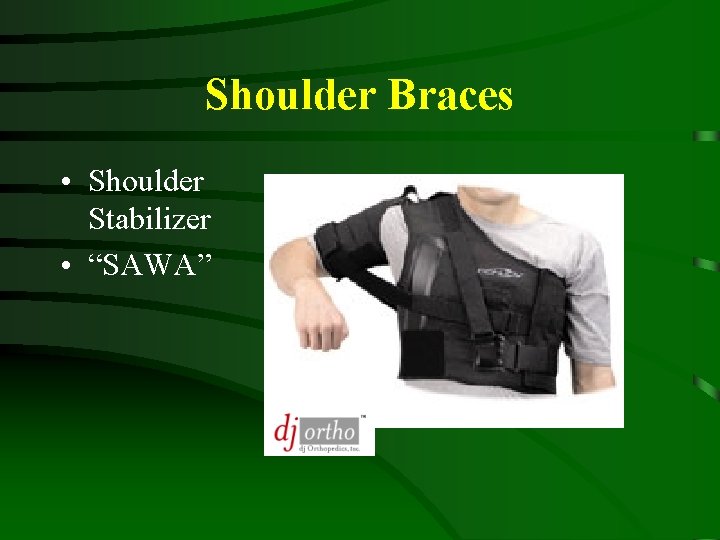
Shoulder Braces • Shoulder Stabilizer • “SAWA”
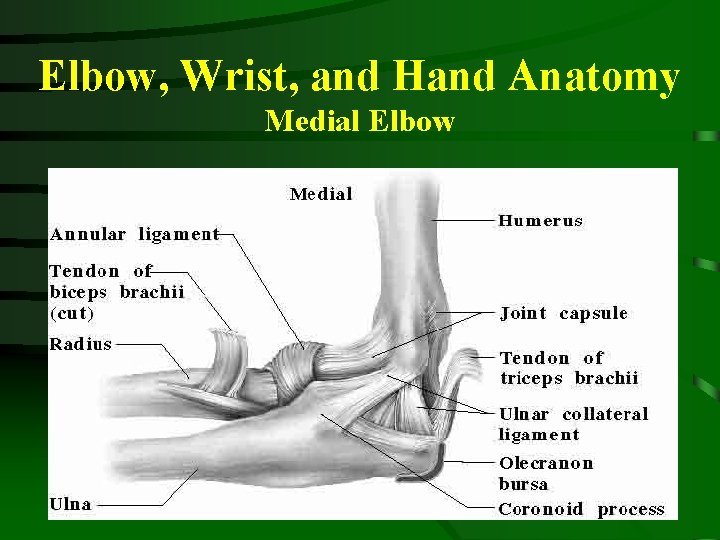
Elbow, Wrist, and Hand Anatomy Medial Elbow
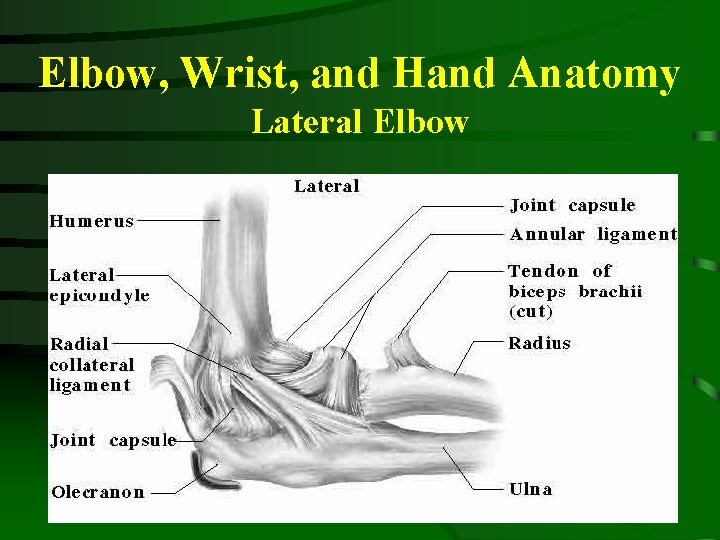
Elbow, Wrist, and Hand Anatomy Lateral Elbow
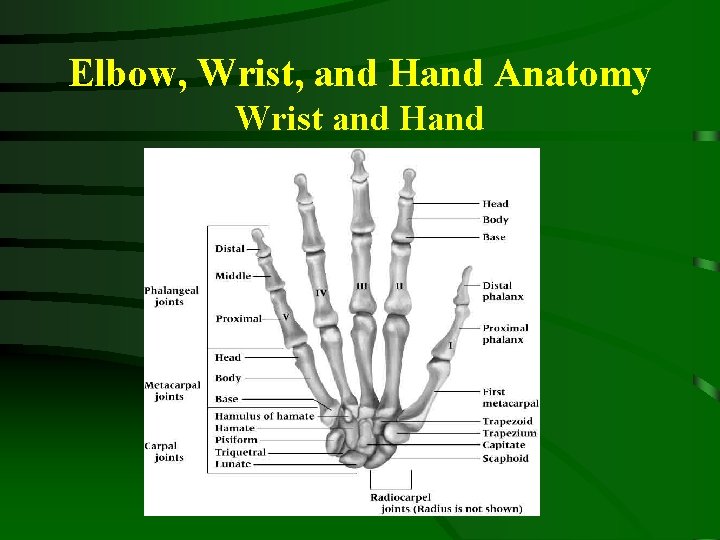
Elbow, Wrist, and Hand Anatomy Wrist and Hand
Elbow Exam • Surface Anatomy – Medial Epicondyle – Lateral Epicondyle – Olecranon – Ulnar groove
Wrist and Hand Exam • Surface Anatomy – Scaphoid – Pisiform – Radial Head – Ulnar Styloid

Elbow, Wrist, and Hand Exam • Manual Muscle Tests • Special Tests – Valgus Stress Test – Tennis Elbow Test (Lateral Epicondylitis) – Finkelstein Test

Elbow Exam
Wrist Exam

Hand Exam
Upper Extremity Function • Mirroring • Double/single arm balancing • Sport specific skill testing – Identify tasks – Progress intensity to game-like situation
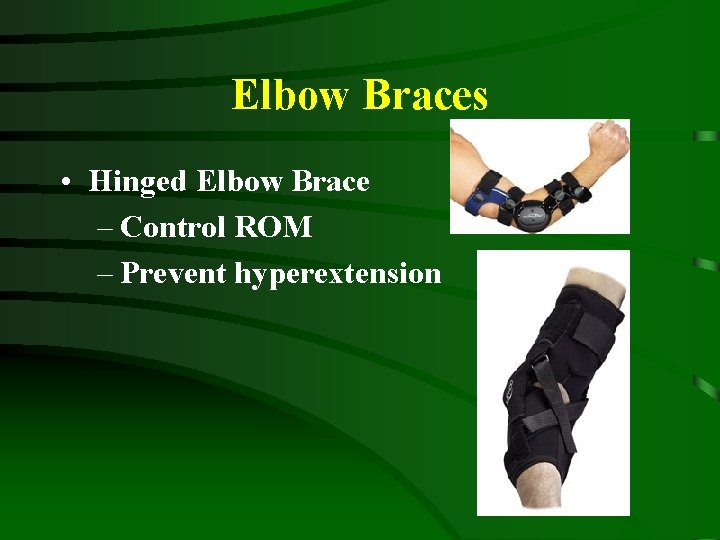
Elbow Braces • Hinged Elbow Brace – Control ROM – Prevent hyperextension
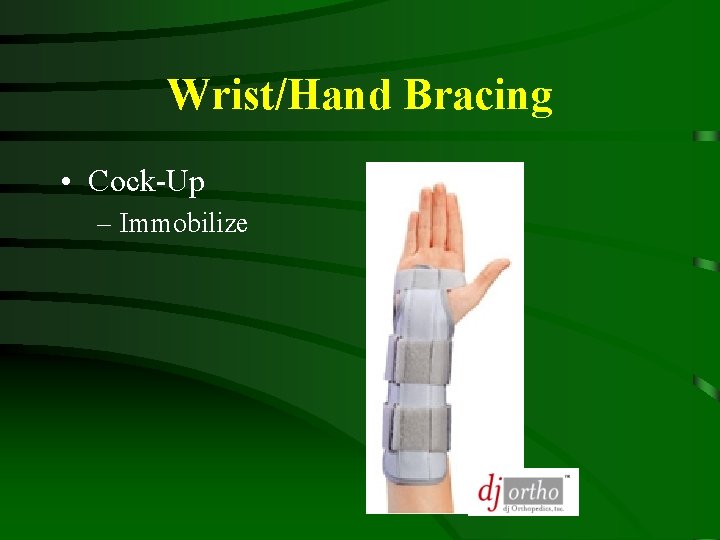
Wrist/Hand Bracing • Cock-Up – Immobilize
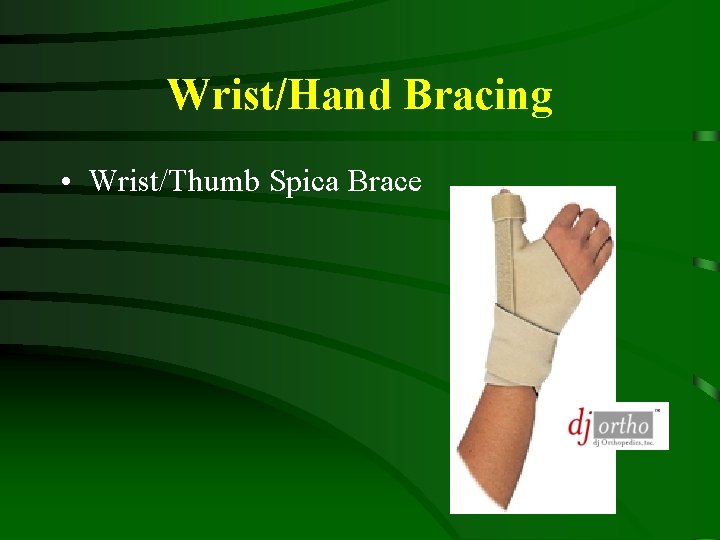
Wrist/Hand Bracing • Wrist/Thumb Spica Brace
Orthopedic Exam References Amato, H. , Venable-Hawkins, C. , Cole, S. 2002. Practical Exam Preparation Guide of Clinical Skills for Athletic Training. Thorofare, NJ: SLACK Incorporated.
Orthopedic Exam References • Magee, D. 2002. Orthopedic Physical Assessment, 4 th Ed. Philadelphia, PA: Saunders. • Kendall, F. , Mc. Creary, E. , Provance, P. 1993. Muscles, Testing and Function. Baltimore, MD: Williams & Wilkins.
Injury Scenario # 1 • A football player reaches out with his arm to tackle the ball carrier. After the play he walks to the sideline supporting the arm and is in a great deal of pain. – Discuss how to evaluate this problem and immediate care procedures.
Answer: Injury Scenario # 1 • Injury – Anterior shoulder dislocation • Plan – Attempt to reduce – Sling the arm (above heart) – Assess vascular integrity of the arm – Assess neurological integrity of the arm – Transport to doctor for immediate reduction
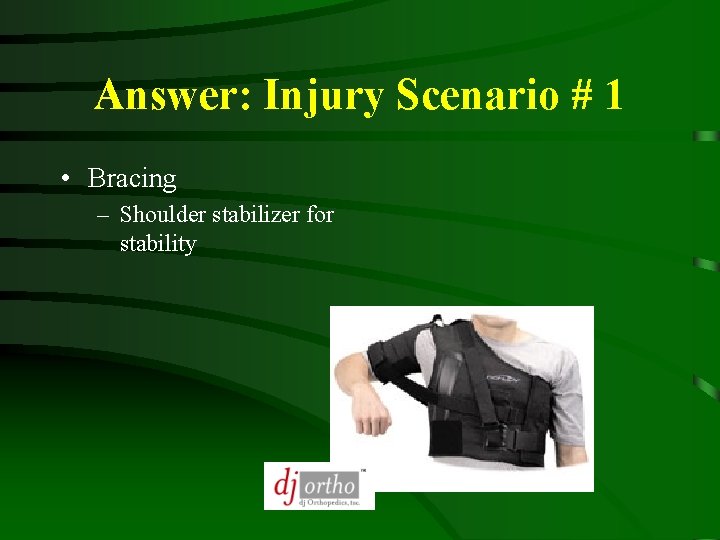
Answer: Injury Scenario # 1 • Bracing – Shoulder stabilizer for stability
Injury Scenario # 2 • A soccer player running downfield was tripped and fell on her shoulder with the arm extended. She complains of pain over the distal end of the clavicle. On examination she has a lump on the top of the shoulder (not found on bilateral examination) which is tender. – Demonstrate what you would do.
Answer: Injury Scenario # 2 • Injury – Acromioclavicular sprain • Evaluation – – – Palpable pain at acromion process and AC ligament Piano key sign Positive AC sprain special tests Holds arm in loose packed position Limited shoulder ROM
Injury Scenario # 3 • During a football game the quarterback makes a throw & just as he releases the ball is struck from his blindside. His head appears to be forced sideways with the shoulder already lowered from his follow-through. The athlete comes to you on the sideline complaining of pain, numbness & tingling in his neck & down his right arm. – Evaluate this injury and discuss what return to play criterion should be used.
Answer: Injury Scenario # 3 • Injury – Brachial plexus strain (Burner/Stinger) • Plan – Light stretch of injured area – Perform upper extremity neurological assessment – Light cervical traction – Brachial plexus tension tests
Answer: Injury Scenario # 3 • Plan (cont) – Assess grip strength – Ice over brachial plexus • Return to Play – Full sensation and full strength demonstrated
Injury Scenario # 4 • A tennis player reports with a chief complaint of elbow pain. Considering the injury has an insidious onset, the sport the athlete participates in and the joint injured. – Demonstrate the key components to the evaluation and list the plan of action for care of the athlete.
Findings: Injury Scenario # 4 • Evaluation – Pain with active and resistive extension of the wrist and forearm – Pain and weakness with manual muscle test for the extensor muscle group – Palpable pain over lateral epicondyle – Positive tennis elbow test – Positive Cozens test
Answer: Injury Scenario # 4 • Injury – Lateral Epicondylitis • Plan – Evaluate biomechanics with coaches assistance – Discuss racket tension – Discuss grip size – Ultrasound (phono if no improvement) for inflammation
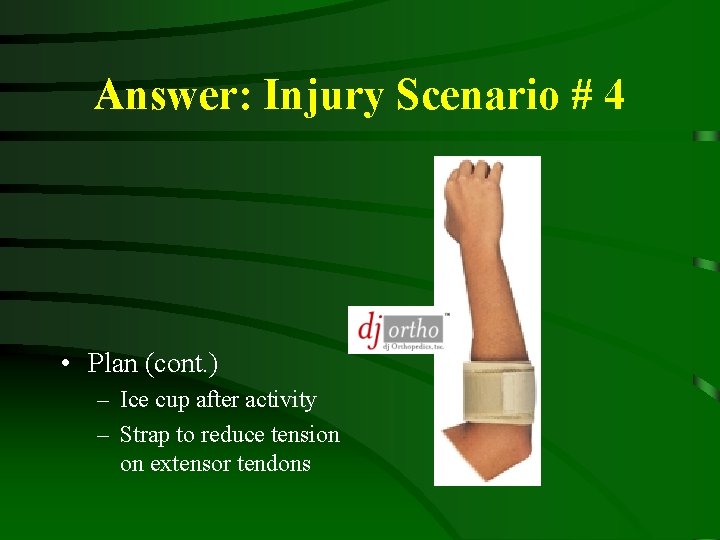
Answer: Injury Scenario # 4 • Plan (cont. ) – Ice cup after activity – Strap to reduce tension on extensor tendons
Injury Scenario #5 • The quarterback was injured during the first quarter of the contest while carrying the ball. The physician diagnosed the injury as trauma to the abdominal area also known as “getting the wind knocked out” and ruled that he could resume activity. During the fourth quarter, he started to talk about abdominal pain that was radiating up into the left shoulder. – Describe your evaluation process and recommended treatment for the athlete.
Answer: Injury Scenario # 5 • Plan – Assess respiratory integrity of athlete for pathology – Assess for other signs and symptoms of heart complications – Listen to heart sounds with stethoscope – Palpate abdomen for areas of rebound tenderness (especially around spleen) – Have athlete urinate and look for blood in urine
Injury Scenario #6 • During an ice hockey game a player catches a slap-shot directly in his chest. The athlete tries to get up but collapses back to the ice and cannot catch his breath. – Demonstrate what you would do.
Answer: Injury Scenario # 6 • Injury – Possible heart arrhythmia • Treatment – Monitor ABC’s – Activate emergency action plan – X-Ray ribs
- Slides: 41